
REVIEW · GERMANY PALACE TOURS
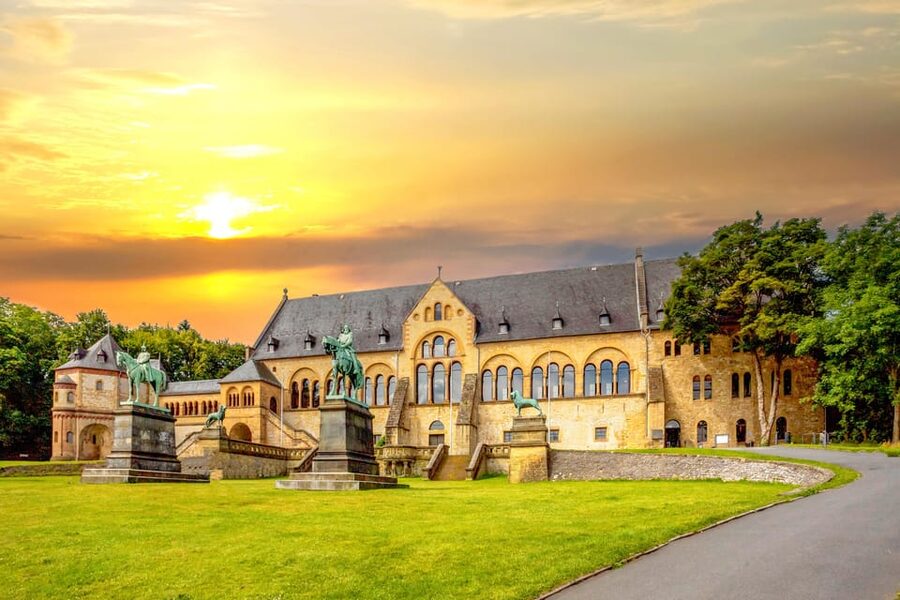
Goslar: Führung durch die Kaiserpfalz
Goslar’s Imperial Palace is not just a grand old building. In the St. Ulrich Chapel, the grave slab of Emperor Henry III marks the spot beneath which his heart still rests. That small, personal detail gives the palace a human edge. I like the wall-to-wall paintings by Hermann Wislicenus, and I like that the tour also reaches the chapel and the old winter hall exhibition.
The German-speaking guide keeps the visit to a useful 90 minutes, long enough for real context without swallowing your day. The main limitation is clear: the tour is offered in German, so you will get the most from it if you understand the language or are comfortable taking in the architecture and displays on your own.
Key points to know before you book
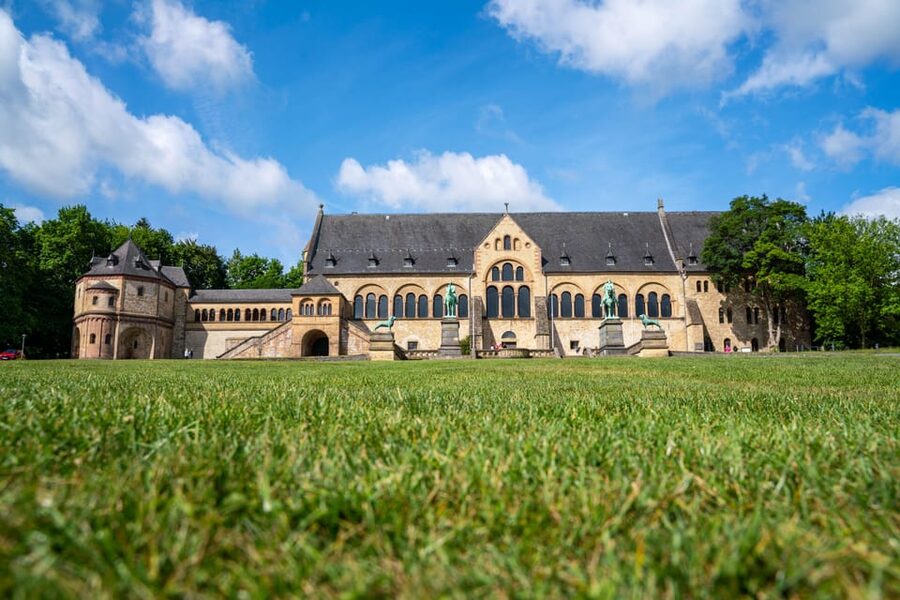
- Henry III’s heart remains beneath the chapel grave slab, a memorable detail in the Romanesque St. Ulrich Chapel.
- Hermann Wislicenus’s paintings cover every wall of the great hall, making the room itself the main visual event.
- The tour forms part of Goslar’s UNESCO World Heritage setting, recognized in 1992.
- The 90-minute route includes the imperial throne pieces and a winter hall exhibition, not just the palace’s main room.
- The live guide speaks German, and the interior tour is wheelchair accessible.
- The price is about $16 per person, with free cancellation up to 24 hours before the start.
Entering Goslar’s Imperial Palace
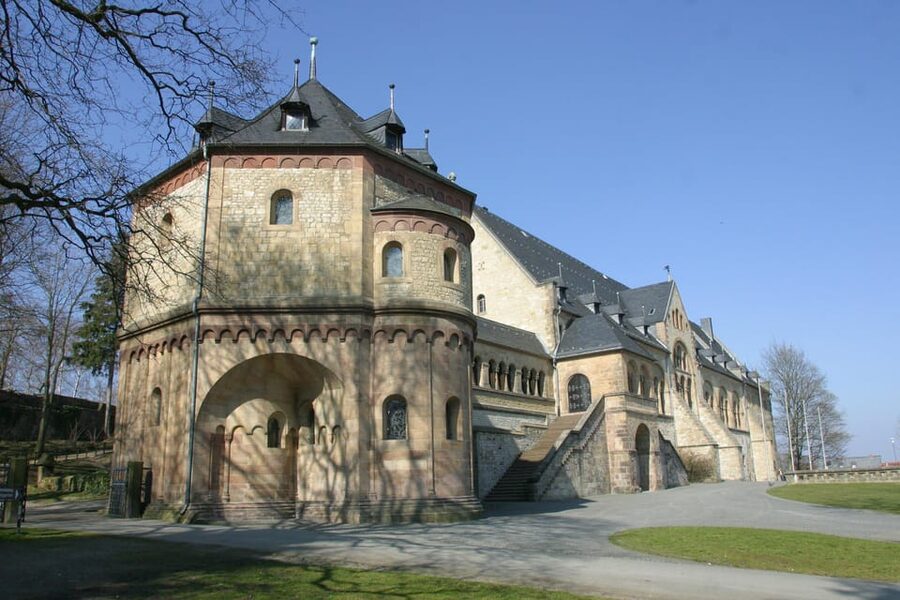
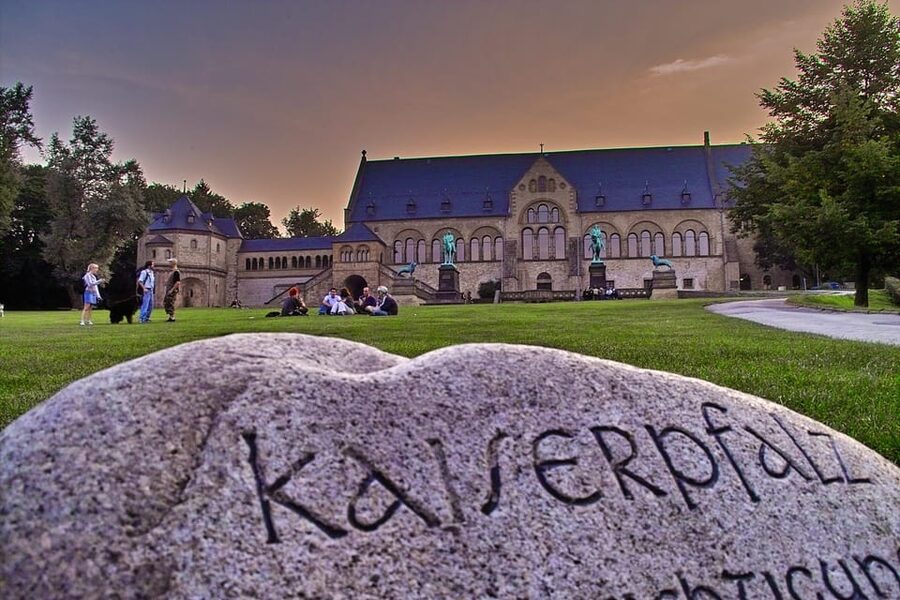
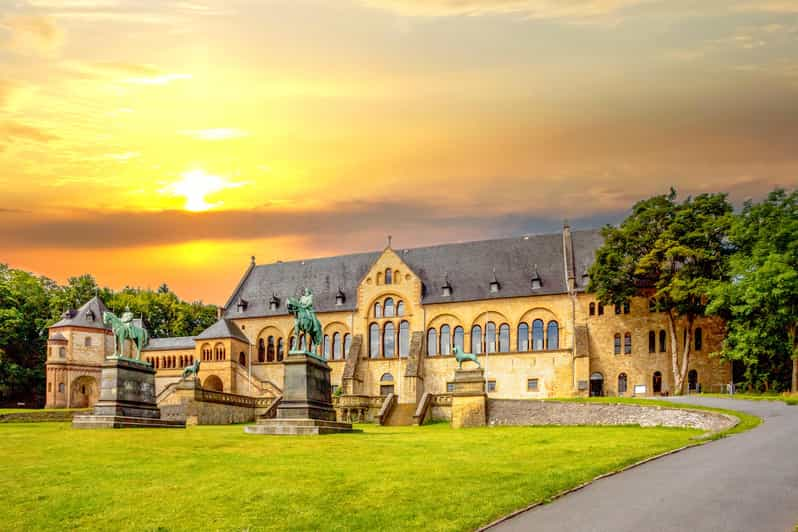
The tour begins in front of the Atrium, after a short walk through Goslar’s old town. That opening matters. You do not arrive at the palace as if it were an isolated museum. You first get a brief sense of the town around it, then move into the more formal setting of the Kaiserpfalz.
The palace carries part of Goslar’s UNESCO World Heritage designation, awarded in 1992. That label does not replace the visit, but it tells you that this is a place of wider cultural importance, not simply a handsome historic building. The tour gives that status a physical focus by taking you inside the Imperial Palace itself.
I would allow a little extra time before the meeting point so you can find the Atrium without rushing. The stated meeting place is in front of it, and the tour does not begin with a general pickup around town.
The 90-minute length is well judged for a palace visit. You have time to look up, listen, and move through the principal rooms, but the experience remains manageable for families and for anyone fitting the palace into a larger Goslar day.
Other palaces people book in Germany:
- From Munich: Neuschwanstein & Linderhof Castle Full-Day Trip
★ 4.6 · 14,646 reviews - Neuschwanstein & Linderhof Castle-Fairytale Day Tour from Munich
★ 4.5 · 7,275 reviews - Premium Neuschwanstein Castle and Linderhof VIP Tour from Munich
★ 5.0 · 2,480 reviews
The great hall and its wall-to-wall paintings
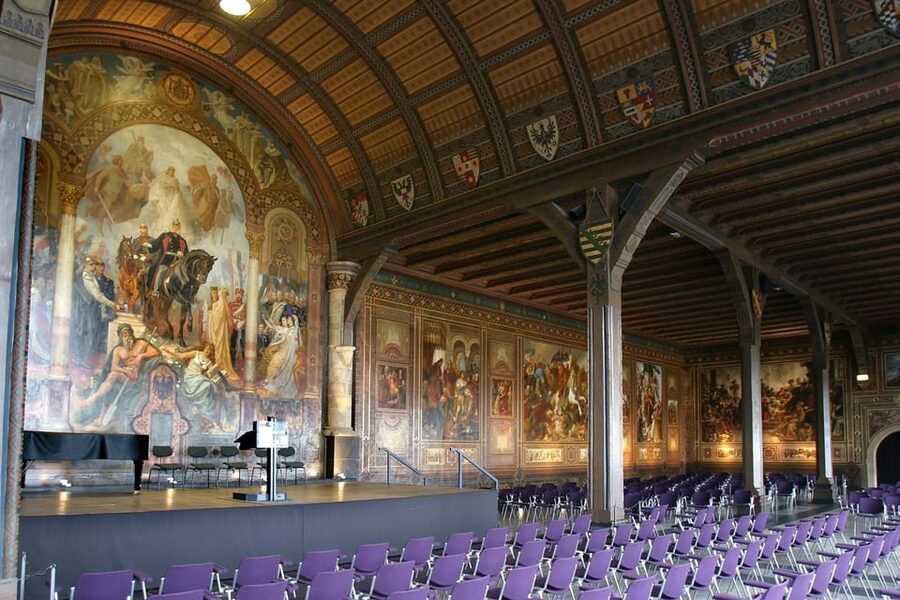
The great hall is likely to be the visual high point. Historical paintings by the art professor Hermann Wislicenus fill the wall surfaces from side to side. Instead of seeing a few framed works scattered through a plain room, you enter a space where the paintings are part of the room’s entire effect.
That makes the guide especially useful. A wall covered in historical scenes can be impressive at first glance, but without explanation it may be difficult to understand what you are looking at or why the paintings belong in this setting. A German-speaking guide can provide the thread that connects the images with the palace and its imperial role.
Give yourself time to look beyond the first impression. The scale of the paintings means that your eye may jump from one scene to another. Listen first, then use pauses in the explanation to take in the details. You do not need to rush from picture to picture, because the room itself is the stop.
This is also where the language issue matters most. The painting program is likely to receive some of the tour’s fullest explanation, and that information will be delivered in German. If you do not understand German, you can still appreciate the scale and decoration, but the experience becomes more visual than historical.
St. Ulrich Chapel and the heart of Henry III
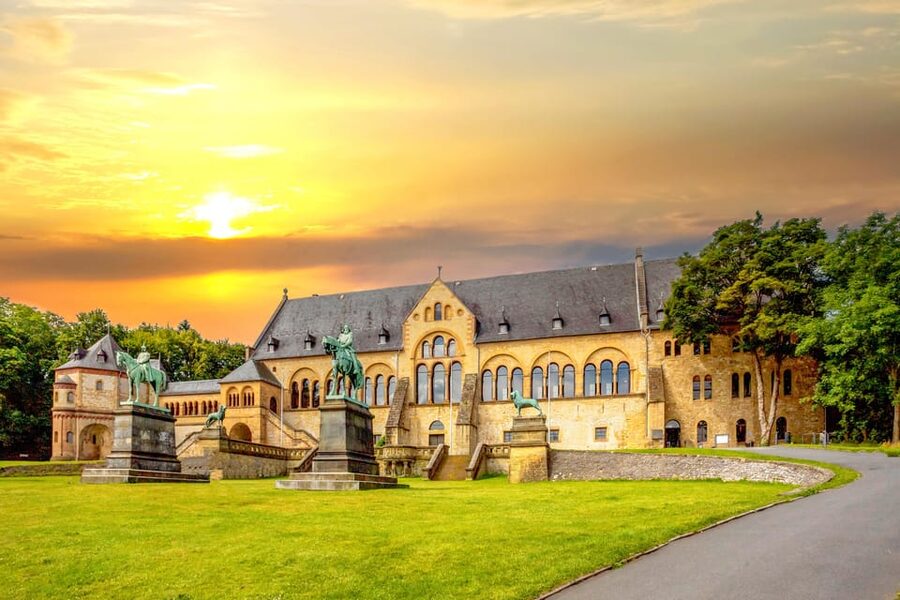
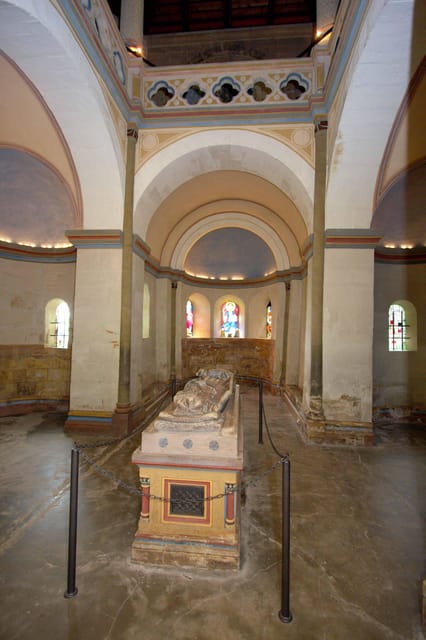
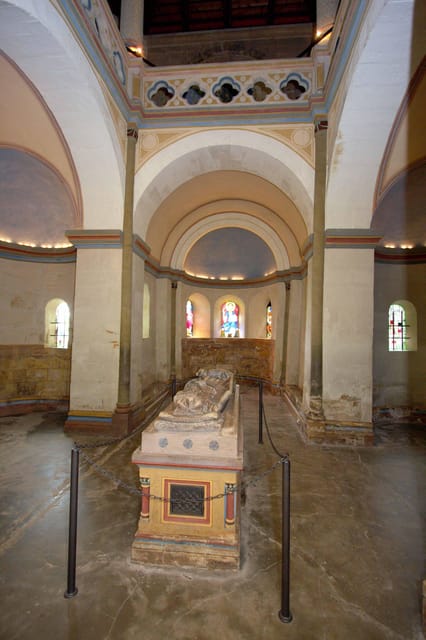
The Romanesque St. Ulrich Chapel offers a quieter change of mood. Here you see the grave slab of Emperor Henry III. Beneath it, the emperor’s heart still rests. It is an unusually direct link between a medieval ruler and the building where he is remembered.
The chapel is valuable because it brings the palace down to a more personal level. The great hall presents imperial ceremony and public history. The chapel points to death, memory, and the remains of one specific emperor. That contrast helps break up the visit and gives the tour more than grand rooms and painted walls.
The supplied information identifies the grave as a high grave, while also noting the grave slab and the heart beneath it. Expect the guide to explain this memorial within the chapel, but do not expect the tour to become a separate cemetery or crypt visit. The included activity is an interior tour of the Imperial Palace.
For many people, this will be the most distinctive detail of the route. Paintings can be seen in many historic buildings. Knowing that Henry III’s heart remains below the slab gives this particular chapel a detail you are likely to remember after the rest of the palace has blended together.
Imperial throne pieces and the winter hall exhibition
The route also includes the throne pieces, specifically the throne’s armrests or throne supports, as well as an extensive exhibition in the vaulted rooms of the winter hall. These stops add texture to the main palace rooms.
The throne pieces are worth taking seriously even if they are not as immediately dramatic as the great hall. Small surviving parts can make the idea of imperial power more tangible. You are looking at an object connected with ceremony, not merely decorative furniture. The guide’s explanation helps you understand why these pieces are shown and what they represent.
The winter hall’s vaulted exhibition gives the tour a more museum-like section. Here you move away from the open impact of the painted hall and toward displays arranged in older interior spaces. The change of setting keeps the 90-minute visit varied.
The information provided does not specify every object in the exhibition, so I would not book this tour expecting a particular list of artifacts. Think of it as a broad historical presentation in the palace’s vaulted rooms. Its value is in adding context to the building rather than offering a single blockbuster display.
Same city, a very different set of state rooms:
- Potsdam: Palace Tour by Boat
★ 4.5 · 2,369 reviews - Potsdam: Sanssouci Palace and Prussian Palaces Entry Ticket
★ 4.5 · 2,101 reviews - Berlin: Charlottenburg Palace Entry Ticket
★ 4.4 · 2,076 reviews - Koblenz: Rhine Valley Castles and Palaces Boat Tour
★ 4.4 · 1,824 reviews
A German guide who keeps the visit lively
The live guide speaks German, and the strongest praise centers on the way the story is presented. The guide is described as competent, engaged, informative, and entertaining. That combination is important in a palace, where a dry sequence of dates can make even a beautiful building feel remote.
The feedback also points to an explanation that works for children. That does not mean every child will enjoy a 90-minute historical tour, but the presentation can hold younger attention better than a formal lecture. Families should still consider the German-language format before booking.
You can expect the tour to focus on Goslar’s story and, above all, the Imperial Palace. It is not presented as a simple room-by-room walk with no explanation. The guide brings the city and the palace together, then uses the paintings, chapel, throne pieces, and exhibition to make the setting easier to understand.
No individual guide name is provided, so you cannot select a particular presenter. The quality of any live tour depends partly on the person leading it, but the format gives you something a self-guided visit cannot: an explanation in the rooms where the history took place.
Is $16 a fair price?
At about $16 per person, the tour is reasonably priced for a 90-minute guided interior visit. You are paying for more than entry into a single room. The route includes the great hall, St. Ulrich Chapel, throne pieces, and the winter hall exhibition, along with a live explanation in German.
The value is strongest if you care about context. If you only want to walk through the palace and take photographs, a guided visit may feel slower than necessary. If you want help understanding why the rooms, memorial, and objects matter, the fee is easier to justify.
The price also works well for a short Goslar itinerary. Ninety minutes leaves room for the old town, other sights, a meal, or a quiet look at the palace surroundings. You are not committing to a full-day program.
You can reserve now and pay later, which helps if you are still arranging your schedule. Cancellation is free up to 24 hours before the tour for a full refund. Those terms reduce the risk of booking ahead, though you should still check the available starting time before finalizing your plans.
Who will get the most from this tour?
I would recommend it first to visitors who enjoy historic buildings but want an interpreter to connect the pieces. The guide’s role is important here because the palace combines large painted spaces, a memorial chapel, ceremonial objects, and a museum-style exhibition.
It is also a good match for families who want a structured activity. The presentation has been described as lively enough for children to enjoy, but the German language remains the key condition. A family that does not understand German may find the visual elements engaging while missing much of the explanation.
History-minded visitors will appreciate the 1992 UNESCO connection and the link to Henry III. Art-focused visitors will probably spend the most time admiring Wislicenus’s enormous wall paintings. You do not need to be an expert in medieval history or art to follow the visit, but curiosity will make the details more rewarding.
The tour is less suitable if you need an English-language guide or prefer to explore entirely at your own pace. It is also not designed for visitors bringing pets. Assistance dogs are allowed, but other pets are not.
Practical details for your Goslar day
Meet in front of the Atrium. The tour lasts 1.5 hours, and start times depend on availability. Build a little flexibility into your day rather than planning another fixed activity immediately afterward.
The interior tour is wheelchair accessible, an important advantage in a historic site. The available information does not give further details about every room or route, so anyone with specific mobility needs should confirm the arrangements when booking.
The guide language is German. No English, French, or other language option is specified. If language is a concern, plan to use the visit mainly for the rooms, paintings, memorial, and objects unless you can follow German comfortably.
The tour does not include a broad city tour, transport, or a meal. Its focus is the interior of the Imperial Palace. The short old-town walk mentioned at the beginning serves as the approach to the palace, not as a separate full tour of Goslar.
Should you book the Kaiserpfalz tour?
Book it if you want the Imperial Palace explained rather than simply entered. The Wislicenus paintings, the heart grave of Henry III, and the winter hall exhibition give the 90-minute route several distinct points of interest. At $16, it offers solid value for a focused historical visit.
Skip it if you require an English guide, dislike scheduled tours, or only want a quick look at the exterior. For German-speaking visitors, families, and anyone interested in the palace’s art and memorials, this is a sensible way to give Goslar’s UNESCO-listed setting some meaning.
FAQ
Where does the tour meet?
The meeting point is in front of the Atrium.
How long does the Imperial Palace tour last?
The tour lasts 1.5 hours.
What language is the tour in?
The live tour guide speaks German.
How much does the tour cost?
The listed price is $16 per person.
What does the tour include?
It includes an interior tour of the Imperial Palace.
Is the Imperial Palace part of a UNESCO World Heritage site?
Yes. Goslar’s Imperial Palace is part of the UNESCO World Heritage title awarded in 1992.
What can I see in St. Ulrich Chapel?
You can see the grave slab of Emperor Henry III. His heart rests beneath it.
Are Hermann Wislicenus’s paintings included?
Yes. The tour visits the great hall, where historical paintings by Hermann Wislicenus fill the wall surfaces.
Is the tour wheelchair accessible?
Yes. The activity is listed as wheelchair accessible.
Can I bring a pet?
Pets are not allowed. Assistance dogs are allowed.
Can I cancel for a refund?
Yes. You can cancel up to 24 hours in advance for a full refund.
Do I have to pay when I reserve?
No. The reserve-now, pay-later option lets you book without paying immediately.
Just added around Germany
- Skip-the-line Charlottenburg Palace Private Tour & Transfers★ 5.0 · 6 reviews
- From Berlin: Potsdam Highlights & Sanssouci half day Walking Tour★ 4.5 · 60 reviews
- Private taxi tour to Potsdam and Sanssouci 6-8h★ 5.0 · 30 reviews
- Potsdam Palaces Private Tour -Sanssouci Palace entrance included!★ 5.0 · 3 reviews
- Potsdam: Private Walking Tour – Time for Palace Entries Included!★ 5.0 · 2 reviews
- Sanssouci & Postdam Private Tour from Berlin – English or Español★ 5.0 · 3 reviews
- Bamberg – Excursion to Seehof Palace★ 5.0 · 3 reviews
- The Tower Keeper of Ludwigsburg – a really cool city tour★ 5.0 · 3 reviews
Germany Palace Tours, compared.

Neuschwanstein & Linderhof Castle Full-Day Trip
Read our review →
Neuschwanstein & Linderhof Castle-Fairytale Day Tour from Munich
Read our review →
Premium Neuschwanstein Castle and Linderhof VIP Tour from Munich
Read our review →
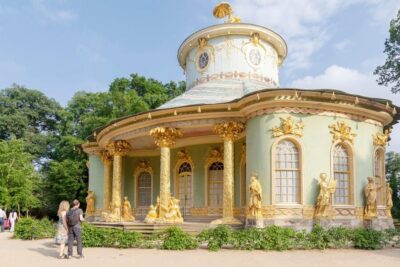
Potsdam: Sanssouci Palace and Prussian Palaces Entry Ticket
Read our review →
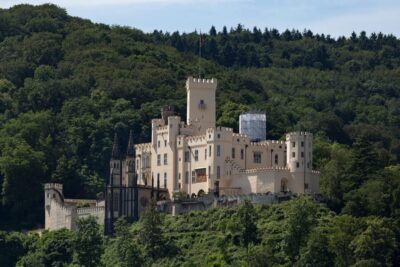
Koblenz: Rhine Valley Castles and Palaces Boat Tour
Read our review →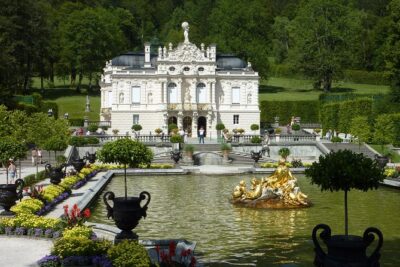
Neuschwanstein Castle and Linderhof Palace Day Trip from Munich
Read our review →Browse the lists this tour appears in