
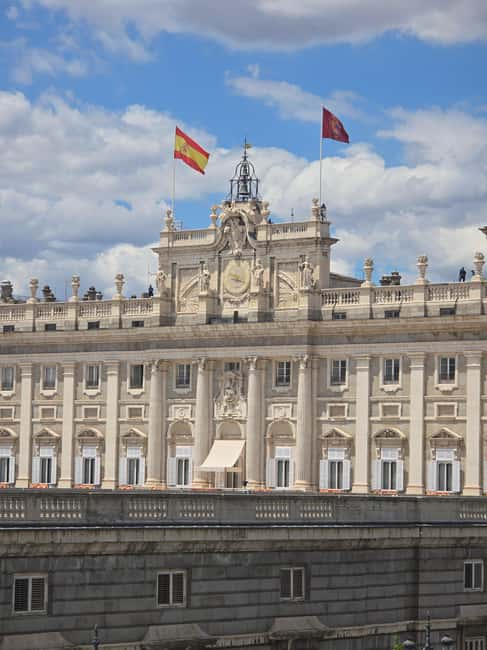
REVIEW · MADRID PALACE TOURS
Madrid: Royal Palace Small Group Tour with Skip-the-Line
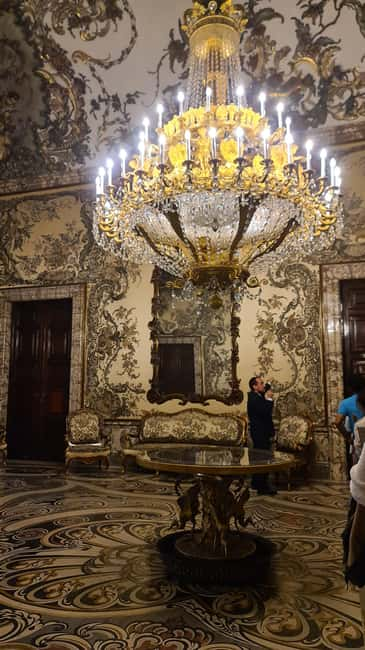
Madrid’s Royal Palace is much easier to appreciate when someone explains what each room was for. This two-hour visit takes you from the Opera subway station into the palace’s grand interiors, including the Gasparini Room, Porcelain Room, Dining Hall, and the room holding the Stradivari Palatinos.
I like the small group of no more than eight, which makes it easier to hear the guide and ask questions. I also like the skip-the-ticket-line setup, especially after one April booking found the regular line stretching to three hours in rainy, off-peak weather. The drawback is the meeting point, which can be confusing if you are not sure where to look for the blue umbrella at the Opera station.
- The Stradivari Palatinos: Learn about the palace’s famous instruments and where you may hear them in concert.
- The Gasparini and Porcelain Rooms: See some of the palace’s most ornate interiors with their purpose explained.
- A maximum of eight people: The compact group makes it easier to follow the guide through crowded rooms.
- A two-hour route: You get the main palace highlights without giving up half a day.
- The Patio de Armas finish: End in the palace courtyard with a clearer sense of the building’s scale and role.
- Enrique’s storytelling: His clear English, answers to questions, and practical Madrid suggestions earn especially strong praise.
Why the Royal Palace Needs a Guide
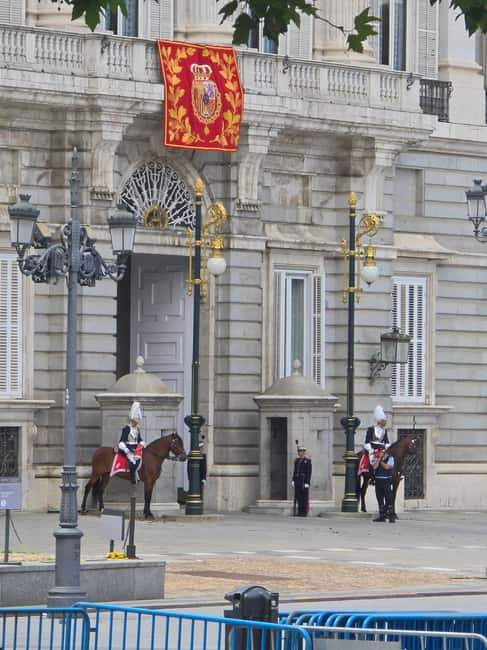
The Royal Palace of Madrid is not just a large collection of decorated rooms. Its location connects directly to the growth of Madrid and the decision to build the present palace in the 18th century on the site of the former Alcazar.
That context matters. Without it, you may see a grand staircase, a ceremonial hall, or a glittering ceiling and simply move on. With a guide, those spaces become part of a story about Madrid’s position, royal power, and the changing use of the building.
I like that this tour begins with the city itself rather than rushing straight toward the palace doors. The short walk from Plaza de Isabel II gives the guide a chance to explain Madrid’s setting and why this particular site became important. It is a small start, but it helps you read the building once you enter.
The palace visit lasts about two hours. That is enough time to cover the major rooms and hear useful explanations, though it is not a full, slow study of every object and architectural detail. If you want to stop at length in each room, a self-guided visit may give you more control. If you want the main story told clearly, the fixed route works well.
Meeting at Opera Station
Your guide waits in front of the entrance to the Opera subway station, holding a blue umbrella. The meeting point is at Plaza de Isabel II, also known as Opera, and the group takes a short walk to the palace entrance.
Give yourself time to find the correct station entrance. The blue umbrella is the key detail, but the location has caused some confusion. I would not arrive at the last minute and expect to spot a small group instantly. Look carefully around the front of the Opera entrance and keep your phone available in case you need to confirm the meeting instructions.
The walk itself is brief and is listed as a sightseeing stop of about five minutes. It is not a separate tour of the plaza, so think of it as an introduction and transfer rather than a major sightseeing segment.
The guide leads the group to the entrance used for the visit. The skip-the-line benefit is important here. The normal entry queue can become very long, even outside the busiest summer period. One April booking encountered a three-hour line in the rain, making the extra value of an organized entry route very clear.
Skip-the-line does not mean you should ignore timing or palace procedures. You still enter with the group and follow the venue’s rules. But avoiding the regular ticket line can save a large part of your day.
More skip-the-line palace tickets in Madrid:
- Madrid: Royal Palace Expert Guided Tour with Skip-the-Line
★ 4.7 · 8,407 reviews - Madrid: Royal Palace Skip-the-line Guided Tour
★ 4.9 · 3,146 reviews - Madrid: Royal Palace Skip-the-Line Guided Tour
★ 4.5 · 2,140 reviews
From the Former Alcazar to the Present Palace
Once inside, the guide connects the current palace with the former Alcazar that occupied the site. The existing Royal Palace was built in the 18th century, and that change gives the visit its basic historical shape.
I find this opening useful because it explains why the palace feels both monumental and practical. It was designed to express royal authority, but its rooms also had specific jobs. Some were used for formal meals, some for private or ceremonial activity, and others for display.
The guide’s role is especially helpful in a building where decorative detail can overwhelm you. Rather than trying to absorb every ceiling, wall covering, and piece of furniture at once, you can listen for the purpose of each room and the reason it looks the way it does.
Enrique is the guide most often named in the booking feedback. His strengths are clear English, a friendly manner, and a habit of inviting questions. He also adds suggestions for other tours and places in Madrid, which can be useful if this is your first day in the city. Guide assignments can vary, so Enrique should not be treated as guaranteed, but the activity is conducted in English by a live guide.
The Gasparini Room and Its Ornate Detail
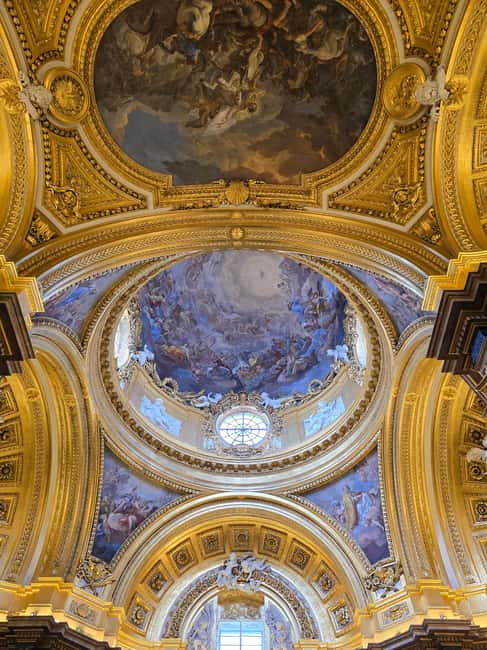
The Gasparini Room is one of the major visual stops. Its decoration is elaborate, and the guide helps you notice more than the general impression of luxury.
This is the kind of room where a short explanation adds real value. You can look at the patterns and materials on your own, but you may not understand how the room was used or why its decoration was considered suitable for a royal palace.
Expect the pace to be measured but not leisurely. A small group allows the guide to stop and explain details without having to shout to a large crowd. It also makes it easier for you to ask a question before the group moves on.
The room is part of the palace’s larger message: visitors were meant to feel the power and wealth of the monarchy. You do not need to be an architecture specialist to enjoy it. The guide’s job is to translate that visual excess into a story you can follow.
The Dining Hall and Porcelain Room
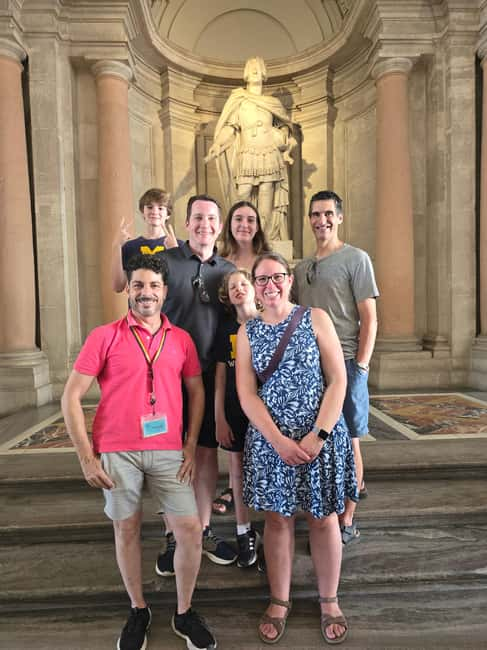
The Dining Hall shifts the focus from decoration alone to royal ceremony and daily function. You learn how a grand room could be used, rather than viewing it only as an impressive backdrop.
That distinction is worth keeping in mind throughout the palace. The Royal Palace was not decorated simply to look attractive for modern sightseers. Its rooms helped organize royal life, public appearances, meals, and formal occasions.
The Porcelain Room offers another change of mood. Its delicate decoration makes it one of the palace’s memorable interiors, and it shows how far ornamental design could be taken in a royal setting.
I recommend looking up as well as straight ahead. The palace’s most striking details may be on ceilings, walls, and upper sections of the rooms. Since backpacks are not allowed and flash photography is forbidden, you should plan to travel light and take in the rooms without relying on constant picture taking.
Photography rules can feel restrictive, especially in such decorated interiors. Still, no flash means less distraction for other people and helps protect sensitive objects and surfaces. Ask the guide or palace staff if you are unsure about a particular camera rule.
A few more palace visits around Madrid worth a look
- Madrid: Segovia and Toledo Tour, Alcazar, and Cathedral
★ 4.7 · 7,797 reviews - Madrid Essential: Historic Center, Plaza Mayor & Royal Palace
★ 5.0 · 6,416 reviews - Madrid: Toledo & Segovia Tour w/ Cathedral, Alcazar & Lunch
★ 4.6 · 5,846 reviews - Toledo & Segovia Tour with Cathedral and Alcazar Tickets & Lunch
★ 4.5 · 4,046 reviews
The Stradivari Palatinos and Palace Music
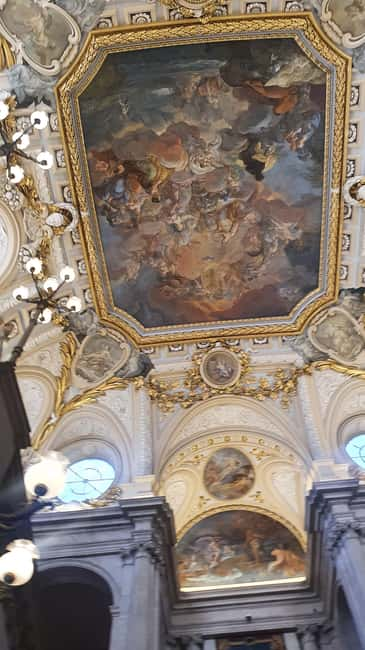
One of the more unusual stops is the room containing the musical instruments associated with the Stradivari Palatinos. This gives the tour a welcome change from rooms and furniture.
The guide explains the instruments’ place in the palace and tells you how and where you can hear them in concert. That practical link is a nice touch. You are not just looking at rare instruments behind the scenes; you are also given a way to connect them with live music.
I would pay close attention here, since this is a detail easy to miss on a quick independent visit. Palace tours often focus on rooms, portraits, and royal ceremony. The instruments show another side of court life, where music was part of the institution’s public and private world.
The information also gives you a possible follow-up activity in Madrid. The tour itself does not include a concert, so do not expect a performance during the visit. You are learning where and how to seek one out later.
Finishing at the Patio de Armas
The visit ends at the Patio de Armas, the palace’s principal courtyard. After the richly decorated rooms, the open space gives you a useful change of scale.
Here you can better understand the palace as a whole rather than as a chain of interiors. The courtyard helps explain the building’s ceremonial importance and provides a natural point for the guide to bring the story together.
Ending here is also practical. You finish at a clear, major part of the palace instead of being left in the middle of a room with no sense of direction. From there, you can continue your own sightseeing, although the tour does not include additional palace attractions beyond the guided visit.
The Patio de Armas is not simply a final photo stop. It helps you see why the palace required such a large footprint and how the formal approach supported the building’s role.
Why Eight People Makes a Difference
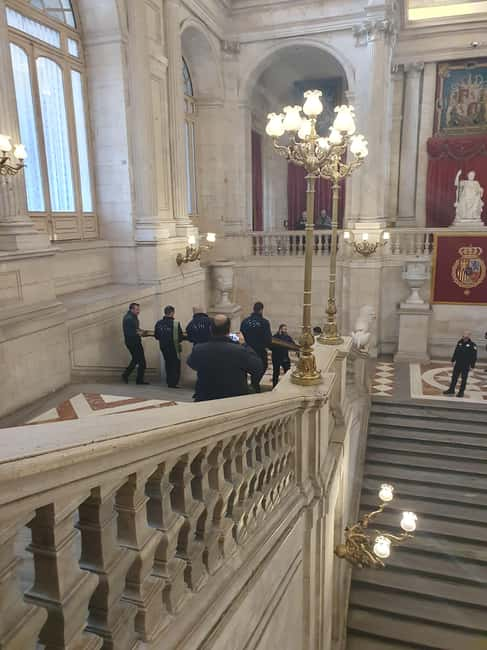
The group is limited to eight participants. That is small enough to feel close to a private visit without the cost of hiring a private guide.
I like this format for the Royal Palace because indoor rooms can become hard to navigate when a large group gathers around one speaker. With eight people, you can usually stay near the guide, hear the explanation, and ask a question without interrupting a crowd.
The small size also helps with the palace’s rhythm. You move from room to room as a unit, but you are less likely to lose the guide in a busy passage. One family group ranging from age nine to 64 found the format worked across different ages, which suggests the presentation is not aimed only at serious history fans.
The tradeoff is that the route remains group-based. You cannot set your own pace or linger indefinitely in one favorite room. If a room fascinates you, note its name and consider returning to it independently if palace access allows.
Timing, Crowds, and Summer Heat
The tour lasts two hours, but the best start time depends on your priorities. An afternoon booking around 2:00 or 2:30 p.m. was considered comfortable by one participant, partly because the palace was easier to handle then. Another visitor recommended going earlier to avoid crowds.
That is not really a contradiction. Afternoon may suit you if you prefer a later start and want to work around Madrid’s midday rhythm. Earlier may be better if your main concern is crowd levels. The palace can feel very different depending on the day and season, so treat timing as a choice rather than a fixed rule.
Madrid can be hot, especially in summer. A guide named Enrique was praised for finding shade during the outdoor portions and watching the group’s comfort. The walk to the entrance and the courtyard are short, but you should still carry water and use sensible sun protection.
The tour began and ended on time for one family booking. That makes it easier to plan the rest of your day, but I would still avoid scheduling an important reservation immediately afterward. Palace entry and crowd control can vary.
Is $56 Good Value?
At $56 per person, the tour costs more than buying a basic admission ticket on your own, assuming you can get one. The price includes palace entry and the two-hour guided visit, with no separate ticket charge listed.
The value comes from three things: access to the skip-the-line route, an English-speaking guide, and the small group. If the regular queue is long, saving several hours can make the price difference worthwhile. The guide also provides historical context and points out details you could easily pass without noticing.
The value is strongest for first-time visitors, people with limited time in Madrid, and anyone who prefers a clear story instead of reading labels room by room. It is weaker for independent sightseers who already know the palace, want to move at their own pace, or are happy to wait in line.
You can reserve now and pay later, which helps if your schedule is still changing. Cancellation is free up to 24 hours before the start time for a full refund. Those terms reduce the risk of booking early, though you should still check the available start times before committing.
Practical Details Before You Book
The activity is conducted in English. It is described as wheelchair accessible in one section, but the same information also says it is not suitable for wheelchair users. That is a direct inconsistency, so anyone using a wheelchair should confirm access arrangements with the provider before paying.
Backpacks are not allowed, and flash photography is forbidden. Plan to bring only what you need and do not assume a large daypack will be accepted at the entrance.
The tour includes the Royal Palace entrance and guided tour. It does not list transportation, meals, a concert, or other Madrid attractions. The starting point is Plaza de Isabel II at Opera station, not the palace itself.
This tour suits you best if you want:
- A short, focused introduction to the palace
- A small group rather than a large headset tour
- Help understanding room functions and royal history
- A guide who can answer questions in English
- A better chance of avoiding a long ticket queue
- A structured visit for a family or mixed-age group
You may prefer an independent visit if you need full control over timing, want to photograph freely, or plan to spend much longer than two hours inside.
Should You Book This Royal Palace Tour?
I would book it if the Royal Palace is high on your Madrid list and you want the main rooms explained without spending hours in the ticket queue. The small group, clear English guidance, and strong praise for Enrique’s storytelling make this more personal than a standard large-group outing.
The main things to watch are the meeting point, the no-backpack rule, and the unclear wheelchair information. Arrive early enough to find the blue umbrella, travel light, and confirm accessibility if needed.
For most first-time visitors, $56 is a fair price when queue time is uncertain. You get the palace’s key interiors, the Stradivari Palatinos, the Patio de Armas, and a usable explanation of how Madrid and the palace developed together. If you want a friendly, efficient introduction rather than a slow architectural study, this is a sensible choice.
FAQ
Where does the Royal Palace tour meet?
The guide waits at Plaza de Isabel II, in front of the entrance to Madrid’s Opera subway station. Look for a blue umbrella.
How long does the tour last?
The experience lasts two hours, including the guided visit to the Royal Palace of Madrid.
What language is the tour conducted in?
The tour is conducted in English with a live guide.
How many people are in the group?
The group is limited to eight participants.
Does the tour include Royal Palace admission?
Yes. The price includes entrance to the Royal Palace of Madrid and the guided tour.
Are backpacks and flash photography allowed?
Backpacks are not allowed, and flash photography is forbidden.
Is the tour wheelchair accessible?
The activity information gives conflicting details. It lists the tour as wheelchair accessible but also says it is not suitable for wheelchair users, so confirm access with the provider before booking.
Just added around Madrid
- Madrid: Royal Palace Guided Tour with Entry Ticket★ 5.0 · 58 reviews
- The Royal Palace of Madrid: Small Group Guided Tour★ 3.2 · 6 reviews
- The Most Complete Tour of Madrid: Austrias, Cathedral, Palace – Local Guides★ 4.2 · 41 reviews
- Segovia Private Guided Visit & Alcazar with High Speed Train★ 4.2 · 11 reviews
- Private Visit to the Royal Palace and Walking Tour of Madrid★ 5.0 · 4 reviews
- Private guided tour Royal Palace & Royal Collections Gallery★ 5.0 · 4 reviews
- Madrid: Toledo Excursion with a Visit to the Alcázar and the Army Museum★ 5.0 · 3 reviews
- Royal Palace of Madrid Skip-the-Line and Retiro Park Tour★ 4.5 · 78 reviews
Madrid Palace Tours, compared.
Royal Palace Expert Guided Tour with Skip-the-Line
Read our review →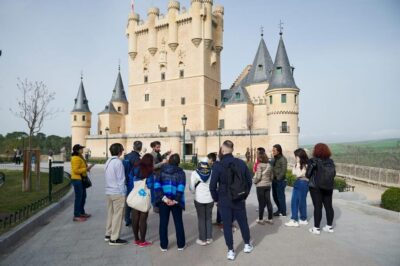
Segovia and Toledo Tour, Alcazar, and Cathedral
Read our review →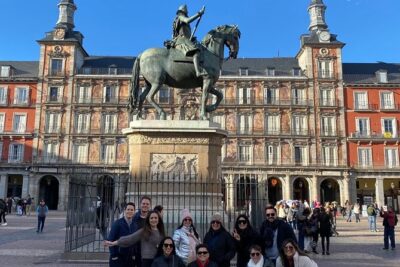
Madrid Essential: Historic Center, Plaza Mayor & Royal Palace
Read our review →
Toledo & Segovia Tour w/ Cathedral, Alcazar & Lunch
Read our review →
Toledo & Segovia Tour with Cathedral and Alcazar Tickets & Lunch
Read our review →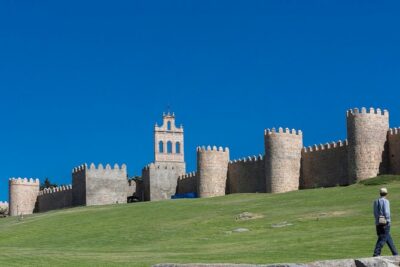
Avila with Walls and Segovia with Alcazar from Madrid
Read our review →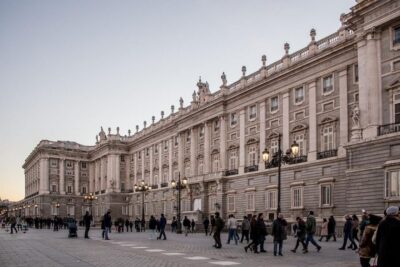
Browse the lists this tour appears in