
REVIEW · 3-HOUR EXPERIENCES
Mantova City Center and Ducal Palace: 3-Hour Guided Tour
Mantua rises from three small lakes, with the Mincio River and medieval Rio canal woven into the city’s story. This three-hour private walk gives you the big picture before leading you into the immense Ducal Palace, where the Gonzaga family filled about 1,000 rooms with art, courtyards, gardens, and grand corridors.
I like the tour’s mix of outdoor city sights and serious art, and I like that guide Manuela Roversi can make the palace easier to understand rather than leaving you to wander its huge rooms alone. The main consideration is cost: $124.61 covers a private group of up to five, but the €13 Ducal Palace admission is extra.
Key points to know before booking
- Mantua’s water setting: Three lakes, the Mincio River, and the Rio canal help explain the city’s unusual shape and traditions.
- A private group of up to five: The price can be good value for a small family or group, especially compared with separate private guiding.
- The Ducal Palace is the main event: Expect a vast complex of roughly 1,000 rooms, with Mantegna’s Camera degli Sposi as its best-known treasure.
- Manuela Roversi is the named guide: Her style is described as patient, generous with time, and good at connecting art with personal stories.
- The town walk covers major landmarks: You see Piazza Sordello, Piazza delle Erbe, Basilica of Sant’Andrea, Rigoletto’s House, and several medieval palaces.
- Church timing matters: Churches close at noon and reopen at 3 p.m., and covered shoulders and no shorts are required inside.
Why Mantua makes a fine walking-tour town
Mantua, or Mantova in Italian, is easy to underestimate if you only glance at it on a map. It is not simply another handsome northern Italian city. Water nearly surrounds it, and that setting gives the old center a distinctive sense of separation from the countryside around it.
The city’s connection with the Mincio River, its three lakes, and the medieval Rio canal is not just a scenic detail. It shaped Mantua’s defenses, trade, and daily life. On this walk, you get a useful explanation of how earth and water work together here, instead of seeing the lakes as a pretty backdrop with no story attached.
The city also carries an impressive list of literary and musical connections. Virgil was born here, Shakespeare sent Romeo to Mantua after his flight from Verona, and Verdi set Rigoletto in the city. Those references add character, but the Gonzaga family is the real key to understanding what you see.
From the 14th through the 17th century, the Gonzagas ruled Mantua and turned it into a court where artists, architects, and musicians found work. Their influence is visible at nearly every major stop. A guide helps you connect the family’s political power to the churches, palaces, paintings, and theatrical spaces around town.
A few more palace visits around Italy worth a look
- Prague: 3-Hour Walking Tour of Old Town & Prague Castle
★ 4.7 · 5,696 reviews - Prague: 3-Hour Old Town and Prague Castle Tour in German
★ 4.8 · 5,671 reviews - Prague 3-hour Afternoon Walking Tour including Prague Castle
★ 5.0 · 1,899 reviews
Starting at Rigoletto’s House in Piazza Sordello
The meeting point is Rigoletto’s House at Piazza Sordello 23, near the entrance to the inner courtyard. The house is tied to Verdi’s opera, though the value of this stop is less about proving a fictional character lived there and more about seeing how Mantua’s literary identity is built into the city center.
Piazza Sordello is one of the best places to begin because several major sights gather around it. You can look toward the façade of the Ducal Palace, the Cathedral, Vicolo Bonacolsi, and the medieval buildings around Piazza Broletto.
The guide can help you read the square as a political center rather than just a large open space. You see the Palazzo del Podesta, Palazzo del Massaro, and the Arengario, each part of the old civic and court setting.
This opening section should suit you if you like context before decoration. Instead of rushing straight into the palace, you first learn how Mantua’s ruling family occupied and shaped the town. That makes the later palace visit easier to follow.
The Ducal Palace and the Gonzaga court
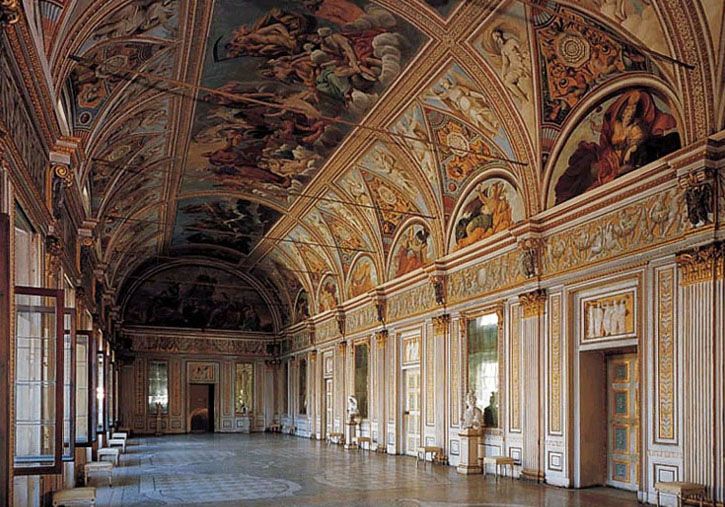
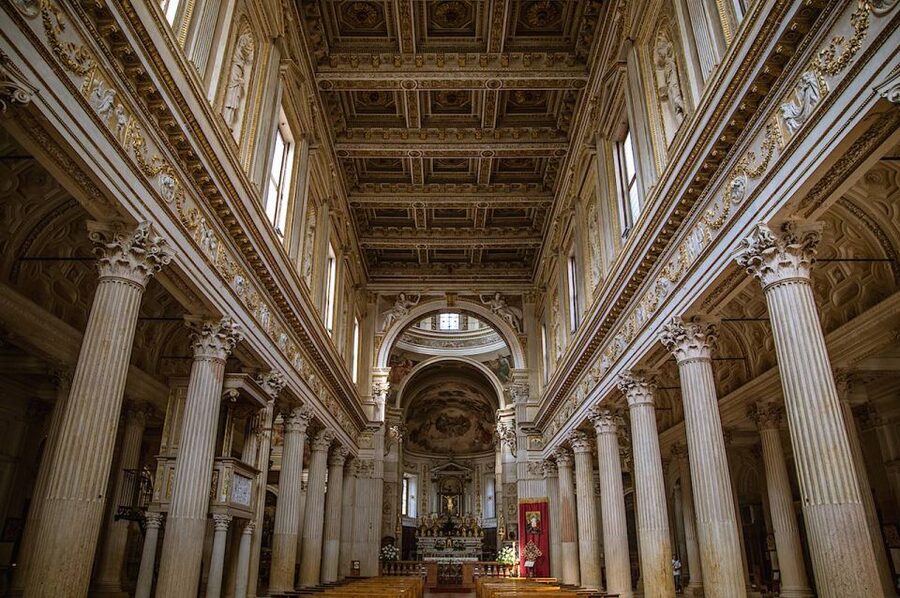
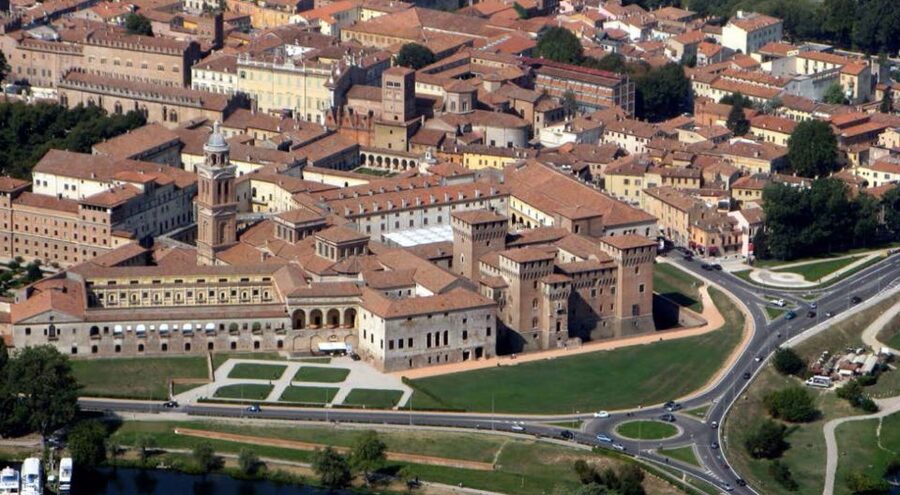
The Ducal Palace is the core of the experience. It was built and expanded over several centuries as the Gonzaga family’s residence in the capital of their duchy. The result is not one tidy palace but a sprawling group of connected buildings, corridors, galleries, courtyards, and gardens.
The scale is hard to grasp from the outside. The complex contains about 1,000 rooms and covers roughly 34,000 square meters. You will not see every corner in a three-hour tour, of course, but you will get a guided route through the parts that best explain the family’s power and taste.
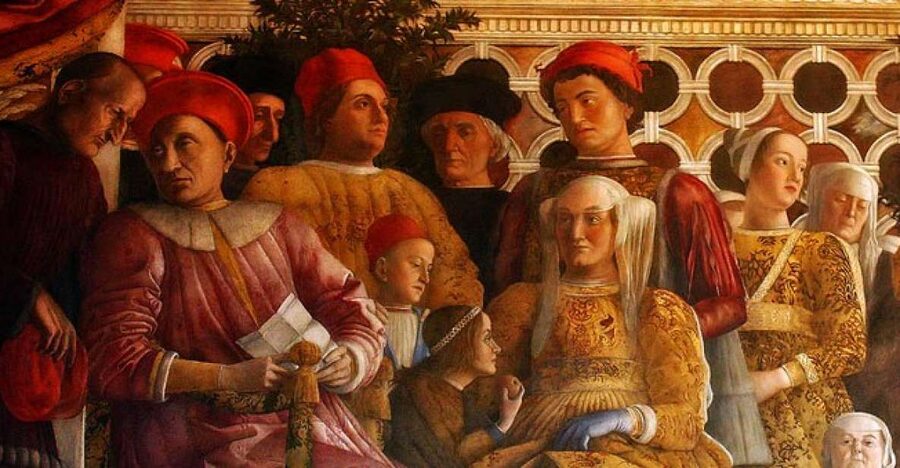
The most famous room is Mantegna’s Camera degli Sposi, or Wedding Room. Its frescoes are a major reason to visit the palace, and a guide can point out what makes the room important instead of treating it as one more decorated chamber.
The palace also contains other major architectural and painted elements. The pleasure here is seeing how the Gonzagas used art as part of court life and public image. Paintings, rooms, passageways, and grand spaces all served a purpose. The palace feels less like a single monument and more like a city within the city.
Admission is not included. The stated entrance fee is €13, and the guide provides assistance with booking palace admission. That help is useful because the castle and palace limit group entry to 25 people. Your private group of up to five fits comfortably within that limit, but larger parties need extra guides and advance arrangements.
The first Sunday of each month brings free admission to the Ducal Palace, but there is a catch. You cannot book ahead on that day, and only 1,500 people per day can enter the room painted by Mantegna. If that room matters most to you, paying for a regular timed visit may be more sensible than gambling on a free Sunday.
Piazza Castello, Saint Barbara, and courtly Mantua
The route includes the exterior of Saint George Castle and Piazza Castello. The castle is part of the Ducal Palace complex, so this stop helps you see how the residence was connected to defense as well as ceremony.
You also visit Piazza Santa Barbara and Piazza Lega Lombarda. These spaces give the palace area more shape. They show that the Gonzaga court was not an isolated building but a network of religious, residential, and civic places.
The tour stays outdoors at several points, which gives the three hours a good rhythm. After palace interiors, squares and lanes let you reset your eyes and understand the city’s layout. The tradeoff is that the route includes a lot of architectural information, so you may want to ask the guide to slow down when a particular building catches your attention.
More guided palace visits in Italy:
- Venice: Doge’s Palace, Bridge of Sighs & Prisons Guided Tour
★ 4.3 · 2,549 reviews - Skip-the-Line: Doge’s Palace & St. Mark’s Basilica Fully Guided Tour
★ 4.5 · 1,892 reviews - Florence: Palazzo Vecchio Guided Tour
★ 4.8 · 1,260 reviews - Venice: Doge’s Palace, Bridge of Sighs, Prisons, Correr & Audio Guide
★ 4.1 · 980 reviews
Medieval streets and Piazza Broletto
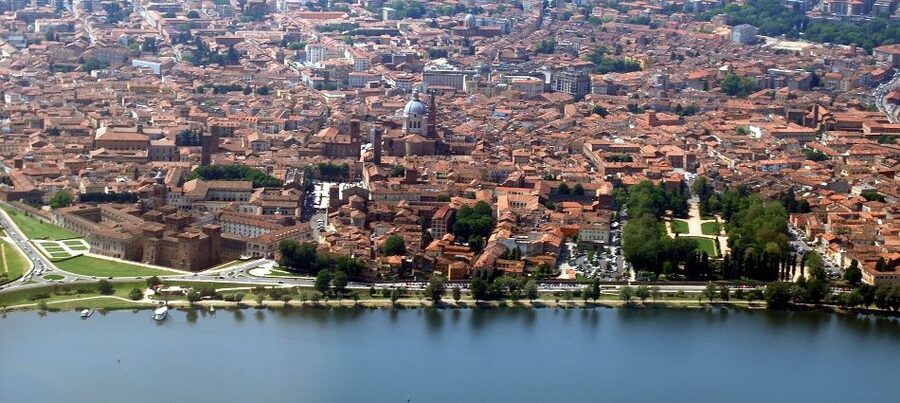
From Piazza Sordello, the walk moves through older parts of Mantua, including Vicolo Bonacolsi and Piazza Broletto. The medieval Palazzo del Podesta and Palazzo del Massaro line this part of the route, along with the Arengario.
This is where a private guide earns its keep. A name on a façade can mean little without an explanation of who used the building and how it related to the neighboring palace or square. You can ask about the layers of civic and court life as you move through the compact center.
Mantua’s old town is well preserved, but it is not a museum set frozen in one era. Medieval structures, later additions, churches, and active public squares sit close together. The guide’s job is to separate those layers without turning every stop into a lecture.
Piazza delle Erbe and the city’s working center
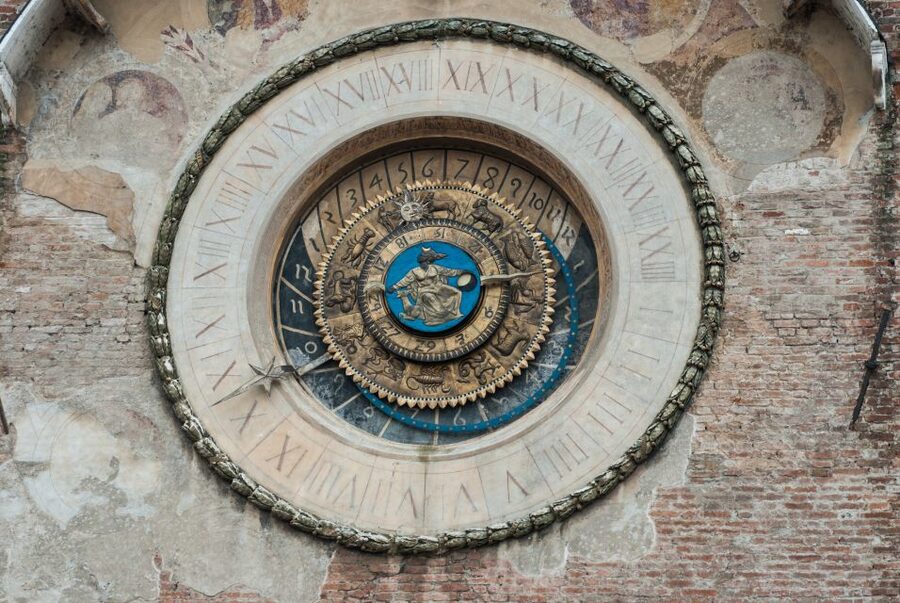
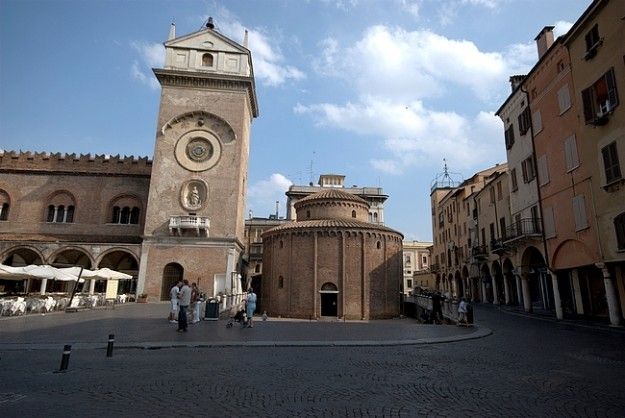
Piazza delle Erbe offers a different mood from the courtly spaces near the Ducal Palace. It is surrounded by the Palazzo della Ragione, the Clock Tower, and the Church of San Lorenzo.
The Palazzo della Ragione and Clock Tower help show Mantua’s civic side. This is a good section for understanding how daily government, commerce, and public life fit beside the Gonzaga court. The Church of San Lorenzo adds another period and purpose to the square.
Church visits depend on the time of day and on services. Churches close at noon and reopen at 3 p.m., and you cannot enter for sightseeing during a service. If your tour begins near midday, ask about the church stops before you book, especially if interior visits are important to you.
You also need to dress properly. Shoulders must be covered, and shorts are not allowed inside churches. A wide scarf or sarong is a practical item to carry.
Basilica of Sant’Andrea and the work of Alberti

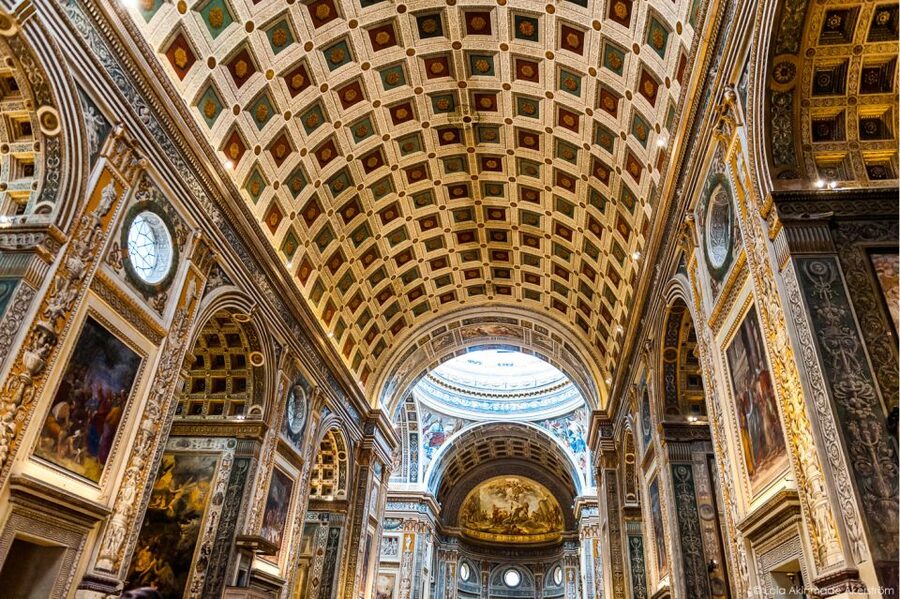
Piazza Mantegna brings you to the Basilica of Sant’Andrea, designed by Leon Battista Alberti. The building is one of Mantua’s major architectural sights and gives the tour a strong change of pace after the palace and medieval civic buildings.
The route continues to Piazza Leon Battista Alberti, where you can see the former cloister of the Sant’Andrea Monastery. These stops are valuable because they widen the story beyond the Gonzagas’ residence. You see how major architecture also shaped religious space and the city’s public identity.
If you enjoy architecture, give this part your full attention. Alberti’s name carries real weight in Renaissance design, and the basilica provides a chance to see how an architect’s ideas affected the whole feel of a square. If your main interest is painting, you may find the palace more immediately rewarding.
The Bibiena Theatre option
The Bibiena Theatre is not part of the included tour admission, but you can add it for €2. Mozart played there when he was 13 years old, which gives the small theater an appealing musical connection.
Because the ticket is inexpensive, it is an easy extra if the theater is open and your schedule allows. Do not assume it will be available at every moment of the walk, though. The tour details identify it as an optional visit rather than a guaranteed stop, so confirm the timing with your guide.
What the guide adds to the experience
The named experience provider is Manuela Roversi, and the strongest praise centers on her personal guiding style. She is described as patient, generous with her time, and able to bring Mantua’s art and buildings to life.
One particularly useful detail is her willingness to adjust the pace. On one occasion, she waited for a late arrival and began with the Palazzo Ducale so the visitor could understand its importance before exploring it. That kind of flexibility matters on a private tour, especially when your day does not go exactly to plan.
A personal connection also became part of one palace visit. A visitor recognized a Raphael-related textile from an earlier exhibition in New York after Manuela pointed it out. You may not have the same connection, but the story shows the advantage of having a guide who can identify works and respond to your interests rather than delivering a fixed script.
The tour is offered in English, Italian, Spanish, and German. Since it is a private group, you can ask questions and steer attention toward architecture, painting, music, literature, or Gonzaga history. That is a better fit for curious visitors than for someone who wants a quick list of photo stops.
Price, group size, and overall value
The price is $124.61 per group of up to five people, with palace admission extra. For one person, that is a substantial spend. For five people sharing the cost, it becomes a more attractive way to get a private introduction to Mantua.
You should add the €13 Ducal Palace ticket to your budget for each person who enters. The Bibiena Theatre costs another €2 if you choose to visit it. Because the palace is the central sight, do not compare the tour price with a simple museum ticket. You are paying for the city walk, the palace explanation, help with admission, and the ability to ask questions throughout.
The tour lasts three hours and ends back at Rigoletto’s House. That return to the starting point is convenient if you have left luggage, arranged a nearby meeting, or want to continue exploring from the same central area.
You can cancel up to 24 hours before the activity for a full refund, and the reserve-now, pay-later option keeps your plans flexible. Those terms are useful if your Mantua visit sits inside a changeable northern Italy itinerary.
Who should book this Mantua tour
I would choose this experience if you have only a few hours in Mantua and want both the city center and the Ducal Palace. It also suits anyone who prefers a private guide to a large group, particularly families or small groups of friends who want the guide’s attention.
It is a good match for art lovers, architecture fans, and visitors curious about how a ruling family shaped an entire city. The links to Virgil, Romeo, and Rigoletto add charm, but you should book for the palace, Mantegna, Alberti, and the Gonzaga story.
You might skip it if you only want a quick palace entry with no town walk, or if you dislike a schedule that depends on church hours. You also need to accept that the palace ticket is separate and that the full three-hour route includes plenty of historical explanation.
Should you book it?
Book this tour if you want Mantua to make sense, not just look attractive. The private format, manageable group size, central meeting point, and strong guide-led focus give you a useful introduction to a city that rewards context.
For the best experience, plan around church hours, carry something to cover your shoulders, and decide in advance if the Ducal Palace and Mantegna’s Camera degli Sposi are priorities. If they are, avoid relying on the free first Sunday of the month, since entry to the famous room cannot be guaranteed then.
FAQ
Where does the tour start?
It starts at Rigoletto’s House, Piazza Sordello 23 in Mantova, near the entrance to the inner courtyard.
Where does the tour end?
The tour ends back at the meeting point at Rigoletto’s House.
How long does the tour last?
The guided walking tour lasts three hours. Starting times depend on availability.
Is the Ducal Palace ticket included?
No. The Ducal Palace entrance fee is €13, and the guide assists with booking admission.
What languages are available?
The tour is offered in English, Italian, Spanish, and German.
How many people can join the private group?
The price covers a private group of up to five people.
Is the Bibiena Theatre included?
No. The theater is an optional visit with a €2 entrance ticket.
What should I wear for the churches?
Your shoulders must be covered, and shorts are not allowed inside the churches. A wide sarong is suggested for covering your shoulders.
Just added around Italy
- Pitti Palace Small Group Tour★ 5.0 · 6 reviews
- Pitti Palace and Palatina Gallery★ 4.0 · 41 reviews
- Private Guided Tour of Palazzo Vecchio in Florence★ 3.5 · 4 reviews
- Florence: Palazzo Vecchio Skip the line Entry ticket★ 4.0 · 49 reviews
- Pitti Palace: The Royal Palace of Florence★ 4.5 · 12 reviews
- PALAZZO VECCHIO Private tour in Florence★ 5.0 · 35 reviews
- Private Tour of Pitti Palace with Boboli Garden★ 5.0 · 28 reviews
- Pitti Palace and Palatine Gallery: A Royal Art and History Tour★ 4.5 · 42 reviews
3-Hour Experiences, compared.
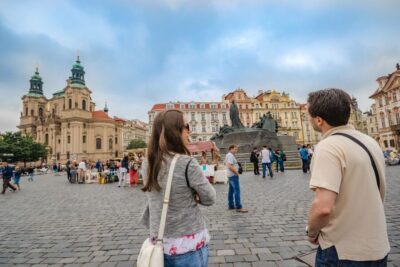
3-Hour Walking Tour of Old Town & Prague Castle
Read our review →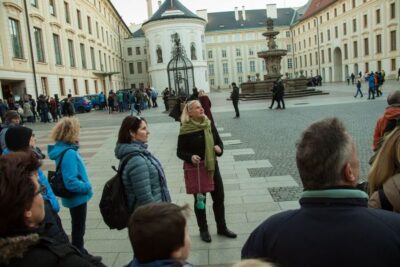
3-Hour Old Town and Prague Castle Tour in German
Read our review →
Prague 3-hour Afternoon Walking Tour including Prague Castle
Read our review →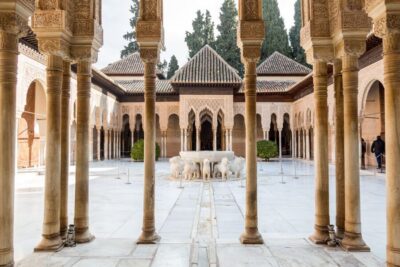
3-Hour Alhambra and Generalife Gardens Guided Tour
Read our review →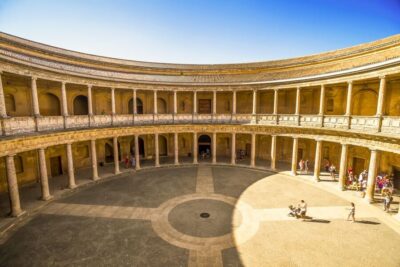
Alhambra, Nasrid Palaces, and Generalife 3-Hour Guided Tour
Read our review →
3-hour: Palace of King Jan Sobieski in Wilanow/inc. Pick-up/
Read our review →Browse the lists this tour appears in