
REVIEW · SCHONBRUNN AND HOFBURG PALACE TOURS
Marseille Belvedere: The city through architecture
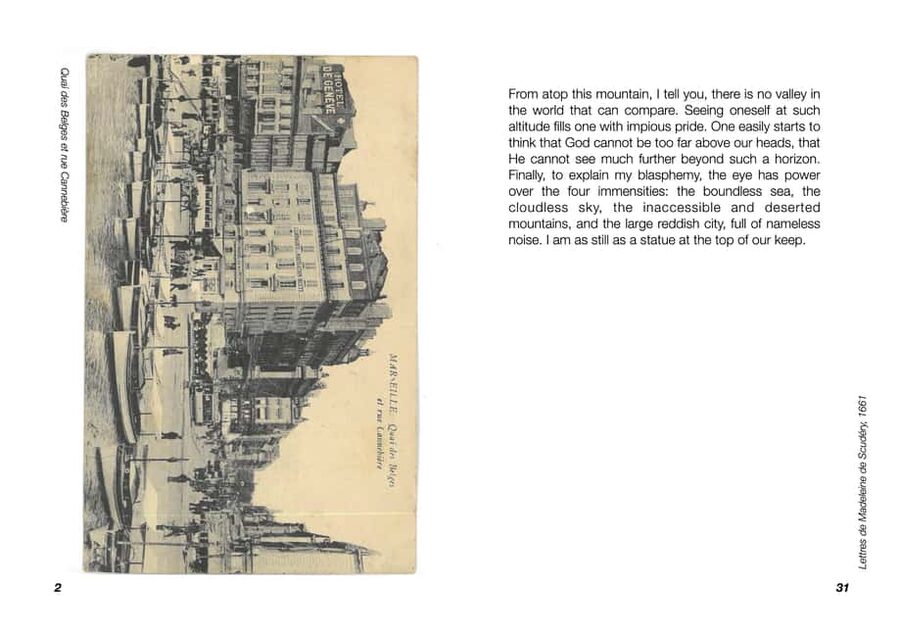
Marseille is easiest to understand when you stop treating it as a collection of famous sights. On this three-hour walk, architect Louis Leroy asks you to read the city through its buildings, streets, topography, old postcards, and written accounts. Each stop links a place to a text or image, giving you a sharper sense of how Marseille has changed.
I like the small group of no more than eight, which should make it easier to ask questions and follow the discussion. I also like the illustrated booklet and the use of archive images, since they turn familiar streets into visual comparisons rather than simple photo stops.
The main consideration is pace. This is a walking and observation tour, not a fast checklist of monuments. You will cover several central districts in three hours, so wear practical shoes and expect much of the value to come from looking closely rather than entering every building.
Key points to know before booking
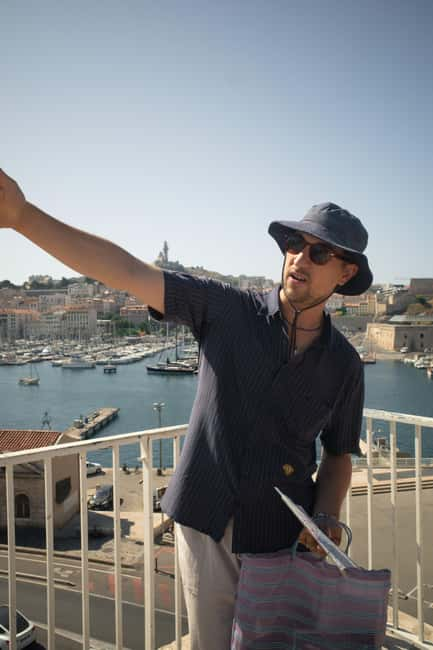
- An architect leads the walk: Louis Leroy brings professional training and several years of living in Marseille to the route.
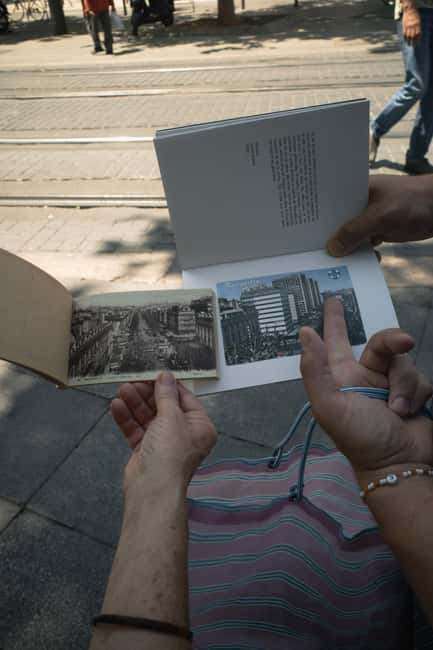
- Old images shape the tour: Selected postcards and photographs let you compare past and present Marseille at each stop.
- Texts are part of the experience: Readings from researchers, sociologists, historians, and novelists add social and cultural context.
- The route links major central sights: You walk from the Old Port and City Hall toward the Cathedral, Le Panier, Rue de la République, and Cours Belsunce.
- The group stays small: With a maximum of eight people, the format suits questions and conversation.
- Languages and access are flexible: The tour is offered in French, English, or Italian and is wheelchair accessible.
Why an architect’s view changes Marseille
The title, Marseille Belvedere, points to the Italian phrase bello da vedere, meaning something beautiful to see. Here, a belvedere is not limited to one grand lookout. It becomes a way of reading the city from different points, noticing how streets, buildings, slopes, water, and open views fit together.
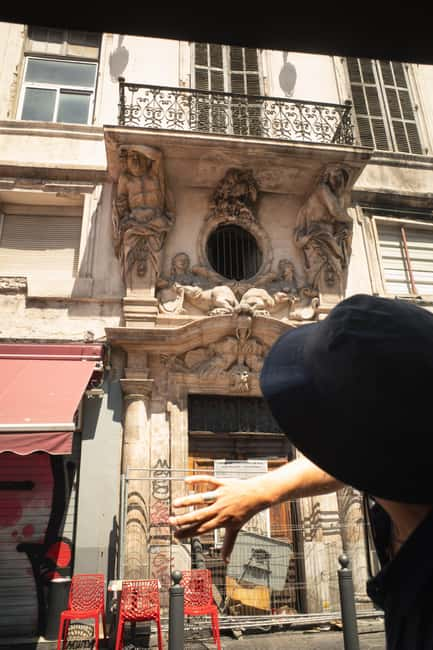
That approach gives the walk a clear purpose. Louis is not simply showing you the Old Port, the Cathedral, or Le Panier. He is asking you to look for clues. A change in street level, a façade detail, a view toward the harbor, or the way one district meets another can reveal how Marseille developed.
I find this especially useful if you have already seen the city’s main sights and want more than their names and construction dates. The tour encourages you to ask why a street looks the way it does and what earlier versions of Marseille might have looked like.
Louis uses short readings and images at each stop. The texts come from a broad group of writers and researchers, including sociologists, historians, and novelists. That mix should keep the walk from feeling like a technical architecture lecture. You get buildings and urban form, but also the human stories and ideas attached to them.
More Schonbrunn and Hofburg palace tours in France:
- Vienna: Skip-the-Line Sisi Museum, Hofburg and Gardens Tour
★ 4.8 · 5,918 reviews - Vienna: Imperial Treasury in the Hofburg Palace
★ 4.4 · 1,791 reviews - Vienna: Hofburg and Empress Sisi Museum Guided Tour
★ 4.7 · 1,460 reviews
Starting at the Fish Market and the Old Port
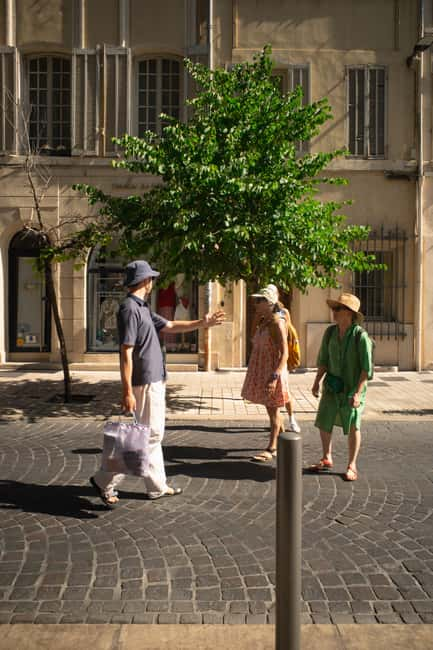
The meeting point is at the Vieux-Port metro exit by the platform. Louis wears a navy blue hat, which makes him easier to spot in this busy central area. The walk begins near the Marché aux Poissons, placing you immediately in one of Marseille’s most recognizable public spaces.
The Old Port is a strong place to begin because it gives you several things to read at once: water, movement, streets, building fronts, and the shape of the city around the harbor. Rather than rushing toward a single monument, you start by considering how this central space organizes Marseille.
The route includes the Old Port and La Canebière, then returns to the port area before moving toward City Hall. That sequence gives you time to see the harbor from more than one position. A photograph or postcard shown at this stage can help you compare the current view with an earlier version of the same setting.
The value here is not simply the view. It is the habit of looking twice. You may notice a line of buildings, a broad opening, or a connection between the port and the streets that you would otherwise pass without thought.
City Hall and the route toward Saint-Laurent
From the Old Port, the walk continues toward City Hall and the Saint-Laurent Church and Fort Saint-Jean area. This part of the route shifts your attention from the open harbor to the relationship between civic, religious, and defensive structures.
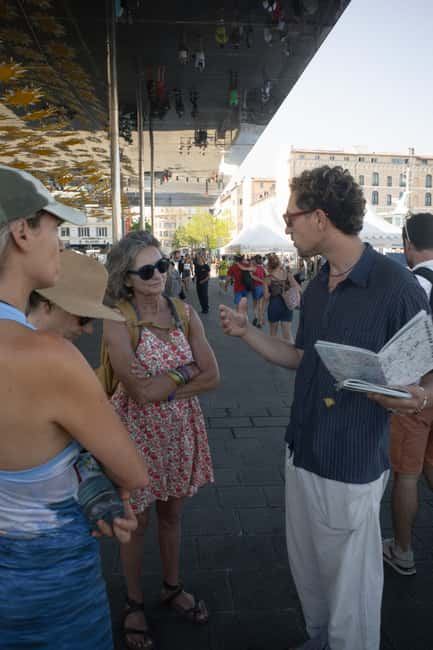
You can expect the guide to use the surroundings as evidence of Marseille’s changes. The tour’s method is to pair a selected text with a photograph or illustration, then discuss what the stop reveals. That means you are not only looking at a building. You are also considering how people described the area and how its appearance changed across time.
Saint-Laurent Church and Fort Saint-Jean bring different kinds of architecture into the same conversation. The church offers a religious landmark, while the fort points to defense and the city’s position beside the sea. The route does not present these places as isolated attractions. It asks you to see how they sit within the wider setting.
If you like traditional guided tours that take you inside major monuments, note that this experience is more focused on the city outdoors. Its strength is the connection between places, not a long visit to one interior.
Marseille Cathedral and the Vieille Major area
The walk then reaches Marseille Cathedral, also known as La Vieille Major in the route description. This is one of the clearest points where scale and setting matter. The cathedral is not viewed alone. Its position near the waterfront and the older parts of the city helps you think about how Marseille presents different periods side by side.
An architect’s approach is useful here because details can carry more weight than a basic sightseeing stop suggests. You might be asked to consider materials, proportions, the way the building meets the surrounding streets, or what the open space around it allows you to see.
The Cathedral section also offers a natural pause in the route’s visual comparisons. You can look at the building as it is now, then use an older postcard or photograph to consider what has stayed in place and what has shifted.
The itinerary includes a 20-minute walk between several points, so expect a steady outdoor route rather than long stretches of standing at one monument. A three-hour tour covering this much central Marseille will suit you best if you enjoy walking while listening and looking.
Same city, a very different set of state rooms:
- Paris: Versailles Palace and Gardens Full Access Ticket
★ 4.6 · 41,579 reviews - Versailles: Skip-the-Line Tour of Palace and Gardens Access
★ 4.7 · 10,429 reviews - From Paris: Versailles Palace & Gardens with Transportation
★ 4.6 · 6,222 reviews - Versailles: Skip-the-Line Guided Palace Tour and Full Access
★ 4.6 · 5,214 reviews
La Vieille Charité and the Panier neighborhood
La Vieille Charité and Le Panier form one of the most interesting portions of the walk. La Vieille Charité is a major architectural reference point, while Le Panier adds the texture of a lived-in neighborhood with streets that reward close observation.
This is where the booklet should be especially helpful. You receive an illustrated guide to follow during the urban walk, and the stops are built around selected texts and images. Instead of hearing a long speech and forgetting most of it, you have something visual to consult as you move.
The route includes a break of about 20 minutes in Le Panier. That matters because the tour asks you to absorb a fair amount of material. The pause gives you time to reset before continuing toward Rue de la République and Cours Belsunce.
Le Panier can be easy to reduce to a pretty old quarter, but this tour takes a more active approach. You are encouraged to look for signs of change in the buildings and streets. The point is not to freeze the neighborhood in one romantic image. It is to see how it has moved through different periods.
I particularly like that the tour treats old postcards as working tools rather than decoration. An image from another period can make you notice a street line, façade, or open space that is still present but less obvious today.
Rue de la République and Cours Belsunce
After Le Panier, the walk continues through Rue de la République and ends at Cours Belsunce. This closing section gives the route a broader urban frame.
Rue de la République helps connect the older port districts with later changes in the city. Cours Belsunce then brings you toward a large central urban space where movement, buildings, and public life come together. The ending is useful because it does not simply return you to the starting point. You finish with a different view of central Marseille and a better sense of how its districts relate.
The route is listed with a series of roughly 20-minute walking sections. That suggests a continuous progression through the city rather than a tour built around long stops. You should be ready for regular walking, urban crossings, and changing surroundings.
The final section may be less immediately picturesque than the Old Port or Cathedral. That is part of its value. Marseille cannot be understood through postcard views alone, and the route’s choice of Cours Belsunce keeps the focus on the city as a changing urban system.
The booklet, readings, and archive images
The illustrated booklet is included in the price and gives you a physical guide to the route. It should help you follow the sequence of stops and connect what you hear with what you see.
The readings are a major reason to choose this activity. They draw on researchers, sociologists, historians, and novelists, so the city is presented through several voices. This makes the walk feel more like an investigation than a standard monument tour.
The old postcards and photographs are also carefully chosen for comparison. You may look at a current street, then study an earlier image and discuss the differences. That simple act can reveal changes in building fronts, street use, sightlines, and the relationship between the port and the city.
Louis’s style, as described through the structure of the experience, is interactive. He adapts the discussion to questions and curiosity, rather than delivering a fixed speech with no room for conversation. In a group capped at eight, that flexibility should be easier to manage.
Some material may be presented in its original language. If you choose a language other than the language of a particular source, ask Louis how he handles the reading and explanation when you meet.
Who will get the most from this walk
I would choose this tour if you are interested in architecture, city planning, photography, old documents, or the way cities change. It also suits repeat visitors who want a fresh look at central Marseille.
You do not need formal architectural training. The key skill is curiosity. If you enjoy asking why a building sits where it does, how a street developed, or what an old image can reveal, you should find plenty to think about.
This may be less suitable if you want a relaxed bus tour, a food-focused outing, or a tour devoted mainly to entering historic buildings. The experience is built around walking, reading, discussion, and visual analysis.
The three-hour length is a good middle ground. It is long enough to cover the Old Port, City Hall, Saint-Laurent, the Cathedral, La Vieille Charité, Le Panier, Rue de la République, and Cours Belsunce. It is also short enough to fit into a day of exploring Marseille.
Is $76 a fair price?
At $76 per person, this costs more than a basic large-group city walk. The value depends on what you want from a guide.
You are paying for a small group, an architect’s point of view, a prepared booklet, selected archive material, and a route designed around interpretation rather than simple sightseeing. With no more than eight people, you are also more likely to ask questions and hear answers tailored to your interests.
The price makes the most sense if you want a focused way to understand Marseille. If you only need directions to the main sights or a quick introduction to the Old Port, a cheaper general tour may be enough. If you want to examine the city’s changes through images, writing, and architectural details, this has a clear reason for costing more.
Free cancellation up to 24 hours before the start and the option to reserve now and pay later add useful flexibility. The tour is also wheelchair accessible, although you should still consider that the experience takes place across city streets and involves regular walking.
Practical details for a smoother experience
Meet Louis at the Vieux-Port metro exit by the platform. Look for the navy blue hat. The tour is offered in French, English, and Italian.
Wear shoes you can walk in for three hours. You will move through several central districts, with walking sections listed at about 20 minutes each and a 20-minute break in Le Panier.
Bring your attention as much as your camera. The point is to compare views, read short passages, and notice details. If you spend the whole tour trying to photograph every stop, you may miss the connections Louis is building between the images and the streets.
The small-group format is one of the practical advantages. Eight people is enough for conversation but small enough that questions should not disappear into a crowd. The tour is also wheelchair accessible, which makes it a more flexible choice for many visitors.
Should you book Marseille Belvedere?
Book it if you want to understand Marseille by looking closely. Louis Leroy’s route gives you an architect’s eye, a booklet to follow, old postcards to compare, and readings that connect buildings with the people and ideas attached to them.
I would be cautious only if you prefer fast sightseeing or a tour centered on interiors. This is a thoughtful outdoor walk with a steady pace and a clear interest in urban change.
For architecture fans, repeat visitors, photographers, and anyone who enjoys seeing a familiar city from a new angle, the $76 price is justified by the small group and the unusual format. Meet at the Old Port ready to walk, read, and pay attention.
FAQ
How long does the Marseille Belvedere tour last?
The tour lasts three hours.
What is the price per person?
The price is $76 per person.
Where does the tour begin?
It begins at the Marché aux Poissons area, with the meeting point at the Vieux-Port metro exit by the platform.
Where does the tour finish?
The tour finishes at Cours Belsunce.
Which places are included on the route?
The route includes the Old Port, La Canebière, City Hall, Saint-Laurent Church, Fort Saint-Jean, Marseille Cathedral, La Vieille Charité, Le Panier, Rue de la République, and Cours Belsunce.
Who leads the tour?
The tour is led by Louis Leroy, a trained architect who has lived in Marseille for several years.
Which languages are available?
The tour is available in French, English, and Italian. Some content may be shown in its original language.
Is the tour wheelchair accessible?
Yes, the activity is listed as wheelchair accessible.
Just added around France
- Palace of Versailles Guided Afternoon Tour from Paris★ 4.1 · 85 reviews
- From Paris: Versailles Full-Day Guided Tour with Lunch★ 4.9 · 48 reviews
- Private Trip Giverny Versailles Trianon from Paris★ 4.9 · 6 reviews
- Private Versailles Bike Tour★ 4.4 · 7 reviews
- Private Versailles, Gardens, Trianon from Paris by Mercedes★ 4.4 · 20 reviews
- Private Fontainebleau, Versailles, Trianon from Paris★ 5.0 · 5 reviews
- From Paris: Private Versailles Half-Day Private Tour★ 4.6 · 4 reviews
- Petit Palais Paris Museum of Fine Arts Tour with Tickets★ 4.2 · 3 reviews
Schonbrunn and Hofburg Palace Tours, compared.

Skip-the-Line Sisi Museum, Hofburg and Gardens Tour
Read our review →
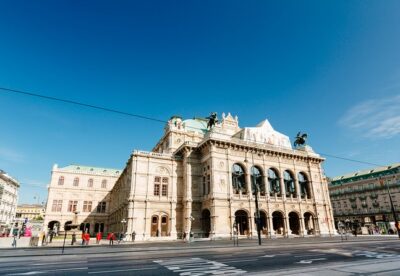
Skip-the-Line Schonbrunn Palace Guided Tour and Vienna Historical City Tour
Read our review →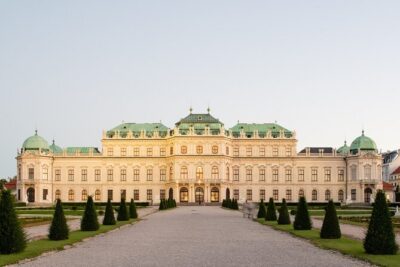
Entry Ticket Upper Belvedere, Klimt’s Kiss & Permanent Collection
Read our review →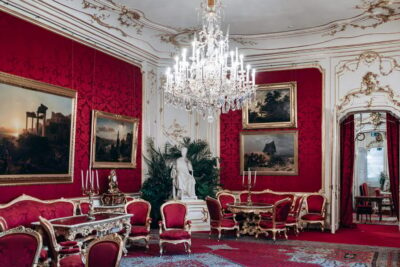
Skip-the-Line Hofburg and Empress Sisi Museum Tour
Read our review →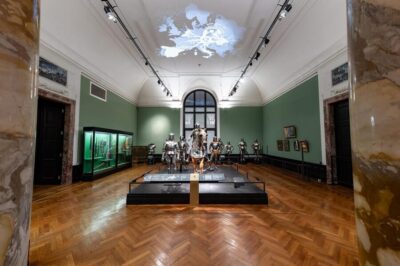
Imperial Treasury & New Hofburg Palace Combo Ticket
Read our review →
New Hofburg Palace Audio-Guided Tour & Entry Ticket
Read our review →Browse the lists this tour appears in