
REVIEW · FRANCE PALACE TOURS
Narbonne: visit the Archbishops’ Palace and Cathedral
Narbonne’s Archbishop’s Palace gives this walking tour a strong sense of place. You are not simply ticking off a cathedral and a market. You are following the town’s story from the Roman via Domitia, through church power and medieval architecture, to the everyday life of Les Halles.
I like the way the route links major sights without wasting time, and I like the close look at details such as the cloister gargoyles, the palace’s Grand Staircase, and the cathedral’s old altarpieces. Guide Marion Quart is especially good at making history clear, lively, and easy to follow.
The main limitation is scope. Two hours allows for a well-shaped introduction, not a full museum visit. The Donjon, town art collection, and Treasure Room cost an extra €12, so art lovers may want more time and a separate ticket.
Key points at a glance
- Roman beginnings: See the via Domitia, the ancient road that helps explain Narbonne’s importance.
- Palace interiors: Enter the Archbishop’s Palace courtyards and Passage de l’Ancre, with the Grand Staircase as a central feature.
- Gothic height: Visit Saint-Just and Saint-Pasteur Cathedral, including its soaring vaults, organ, and sculpted altarpieces.
- Medieval details: Cross the cloister beneath its watchful gargoyles and visit the archbishop’s garden.
- Local life at the finish: Walk along the Promenade des Barques to Pont des Marchands and Les Halles.
- Easy format: This is a two-hour private group tour for $23 per person, with wheelchair access and free cancellation up to 24 hours before the start.
Starting at Les Halles and the Roman via Domitia
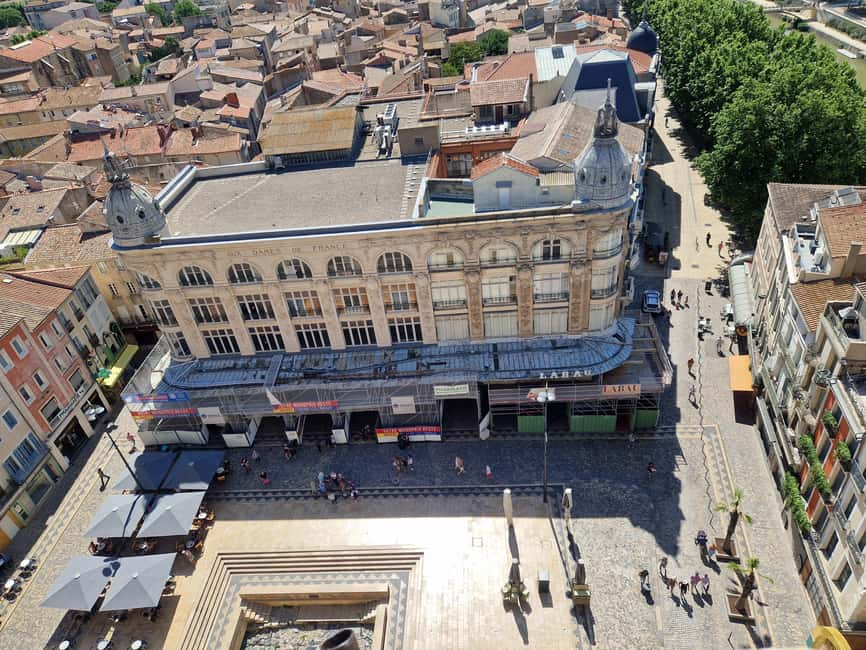
You meet in front of the main entrance to Les Halles de Narbonne, near the war memorial. Look for a guide wearing a green neckerchief and carrying a professional card. This is a useful meeting point because the market is easy to identify, and you finish nearby after the walk.
The tour begins by setting Narbonne in its earliest urban context. The via Domitia is the key opening scene. This Roman road was part of the network that connected the Mediterranean world, and seeing it in the middle of modern Narbonne helps you understand why the town developed here.
I like starting with the road rather than launching straight into church architecture. It gives the rest of the visit a timeline. Narbonne was not created solely by medieval bishops. Its importance reaches back much further, and the tour uses the surviving street fabric to make that point.
You will hear about the people who have lived around today’s Place de l’Hôtel de Ville. The square now feels like the civic center of town, but it also marks the location of the former palace complex. The past is close under your feet here, even when the surroundings look thoroughly modern.
A few more palace visits around France worth a look
- Paris: Versailles Palace and Gardens Full Access Ticket
★ 4.6 · 41,579 reviews - Versailles: Skip-the-Line Tour of Palace and Gardens Access
★ 4.7 · 10,429 reviews - From Paris: Versailles Palace & Gardens with Transportation
★ 4.6 · 6,222 reviews
Reading the Archbishop’s Palace façade
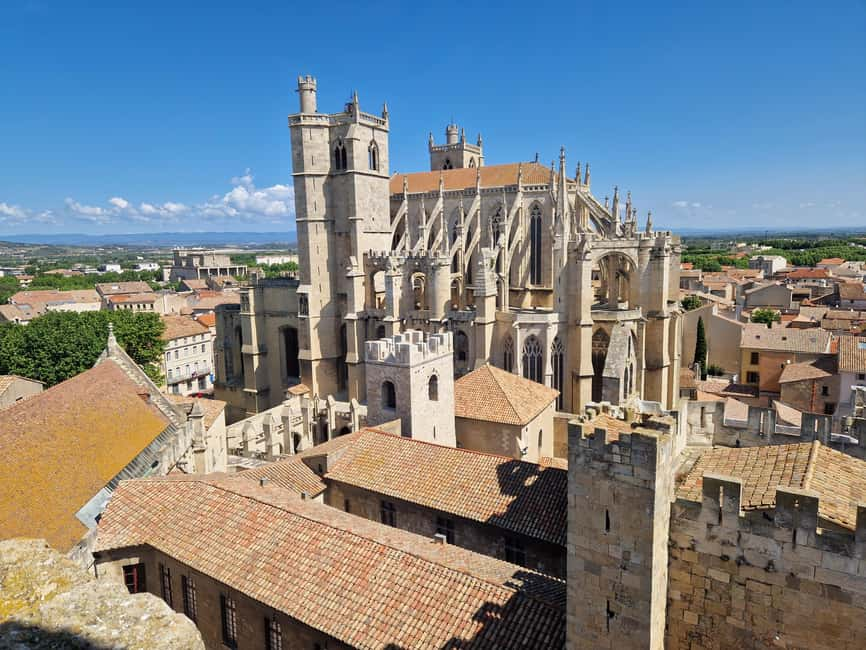
The former Palais des Archevêques is the tour’s main architectural stop. Its façade has plenty to explain, from the power of the archbishops to the way the palace helped shape the town around it.
The emphasis is not only on looking at the building from outside. You enter the palace’s main courtyard and see the Grand Staircase, an important interior feature that gives the complex a more personal scale. From the street, a palace can look like one solid block. Inside, courtyards, passages, stairways, and working spaces make its purpose easier to imagine.
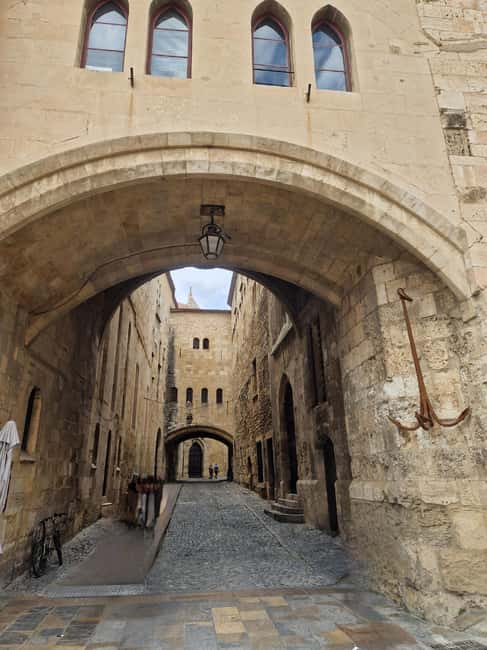
The visit also includes the Passage de l’Ancre. This is one of the details that makes the experience feel more specific than a basic old-town walk. Instead of hearing a broad account of Narbonne, you are taken through particular spaces and shown how they connect.
The palace was tied to religious authority, civic life, and the daily movement of people through the center. Marion’s style, judging from the consistently warm comments about her explanations, is to present those ideas with humor and plain language rather than burying you under dates.
That matters in a place with several layers of history. You can enjoy the stonework without remembering every archbishop’s name, but the guide helps you understand why the building mattered.
Crossing the cloister to Saint-Just and Saint-Pasteur
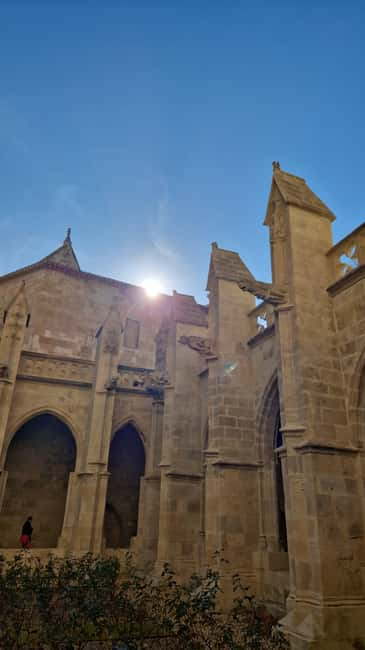
From the palace, the route follows the archbishops toward Saint-Just and Saint-Pasteur Cathedral. The cloister provides a fine transition. Gargoyles rise above the walkways, adding a touch of medieval drama without needing any theatrical treatment from the guide.
The cloister is also a quieter architectural space than the broad town square. Take a moment to look upward. The gargoyles are practical drainage features, but they also give the cloister a distinct personality. Their position above you makes the space feel more enclosed and more alive than a simple courtyard.
The visit includes both the exterior and interior of the cathedral. That is important because the building’s scale is easier to grasp from outside, while the interior reveals what makes it special. Once inside, the height of the vaulted ceiling is the main event.
You do not need to be a specialist in Gothic architecture to appreciate the effect. The ceiling pulls your attention upward, and the proportions make the cathedral feel much larger than its streetside approaches suggest. The guide’s role here is useful: Marion can point out what you are looking at before you wander off toward the most obvious decoration.
The cathedral’s organ and three layers of art
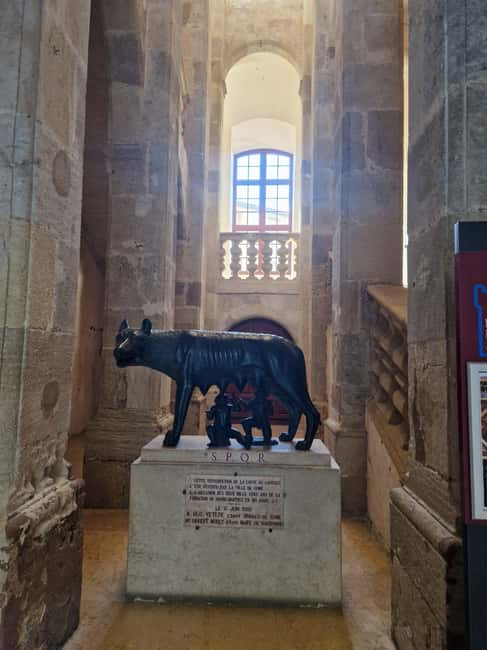
The cathedral stop includes several pieces that reward a slower look. The monumental organ immediately draws attention through its size and position. Even if you are not an organ enthusiast, it gives the interior a strong visual anchor.
The tour also pauses at the 17th-century altarpiece. This shifts the focus from Gothic structure to later religious art. You can see how the cathedral changed over time rather than treating it as a building frozen in the Middle Ages.
Another highlight is the 14th-century sculpted altarpiece. It is described as a picture book, and that is a useful way to approach it. Look at the figures and scenes as a sequence, not just as decoration. The value of having Marion with you is that she can explain how to read the sculpture and draw attention to details you might pass without noticing.
This combination of architecture, organ, painting, and sculpture gives the cathedral stop good balance. You are not spending the whole time staring at one type of object. You move from soaring stonework to music, then to religious images and medieval carving.
The drawback is that the tour cannot linger everywhere. The cathedral alone could absorb much more than the time available, especially for anyone who likes to study art closely. If you want a slow, specialist examination of every feature, plan to return on your own if possible.
Same city, a very different set of state rooms:
- Versailles: Skip-the-Line Guided Palace Tour and Full Access
★ 4.6 · 5,214 reviews - From Paris: Versailles Palace Guided Tour & Gardens Access
★ 4.7 · 3,574 reviews - Versailles Palace and Gardens Tour from Paris
★ 4.5 · 3,390 reviews - Versailles Palace Bike Tour with Market & Marie-Antoinette hamlet
★ 5.0 · 2,680 reviews
The archbishop’s garden and the power behind the walls
The archbishop’s garden is included, adding an outdoor pause to the palace and cathedral interiors. Gardens connected to major religious buildings can reveal a different side of institutional life. They suggest that the palace was not only a ceremonial façade, but also a place where people worked, moved, and spent time.
You should think of this part as a change of pace. After looking up at vaults and gargoyles, the garden gives you room to reset before the final walk. The visit does not present every part of the palace complex as a grand monument. Instead, it shows how several spaces worked together.
This is also where the tour’s private-group format can help. A small private group makes it easier to ask Marion about a detail, pause briefly for a photograph, or hear an explanation without competing with a large crowd. The supplied information does not state the maximum group size, so you should not assume that every booking is tiny, but the activity is sold as a private group experience.
From the Promenade des Barques to Pont des Marchands
The final section leaves the religious center and follows the Promenade des Barques. This gives the tour a pleasant change in mood. You have spent much of the walk with palaces, bishops, vaulted stone, and medieval sculpture. Now the route turns toward the water and the town’s public life.
The walk leads to Pont des Marchands, one of Narbonne’s best-known urban features. The bridge is part of the town’s identity and helps connect the historic center with the riverfront setting. It is a fitting closing view because it brings together movement, trade, and everyday life.
You end at Les Halles, the emblematic meeting place of the Narbonnais. Beginning and ending near the market gives the route a useful frame. You start with a practical meeting point, spend the middle of the tour in the oldest monumental core, then return to a place where local life is more immediate.
Les Halles is included, but this is not described as a market tasting tour. Do not book it expecting a meal, cooking lesson, or food sampling. The value is in seeing the market as part of Narbonne’s social center and understanding how the town’s historic core remains connected to ordinary daily routines.
What the $23 price gives you
At $23 per person, this is a strong-value introduction if you want a guide rather than a self-guided circuit. The tour covers the palace, cathedral, cloister, garden, via Domitia, Passage de l’Ancre, Pont des Marchands, Promenade des Barques, and Les Halles in two hours.
That works out to a compact route with plenty of major sights. You are paying mainly for interpretation and access to the included spaces, not for a long day of entertainment. Marion Quart has been praised repeatedly for her enthusiasm, clear explanations, humor, and ability to make two hours pass quickly. One English-language comment also highlights the amount of historical detail and her considerate manner.
The price does not include entry to the Donjon, the town’s art collection, or the Treasure Room. Those attractions are available with a separate €12 admission ticket. This creates a sensible choice:
- If your goal is a guided overview of Narbonne’s historic center, the $23 tour is enough.
- If you want the full palace and museum experience, budget for the extra ticket.
- If you already plan to visit the Donjon and collections independently, the tour can introduce them without requiring you to pay for areas you may not have time to see.
The private-group format also adds value for people who prefer a flexible conversation over a large scheduled group. The exact group size is not given, so check the booking details if that point matters to you.
Timing, language, and access
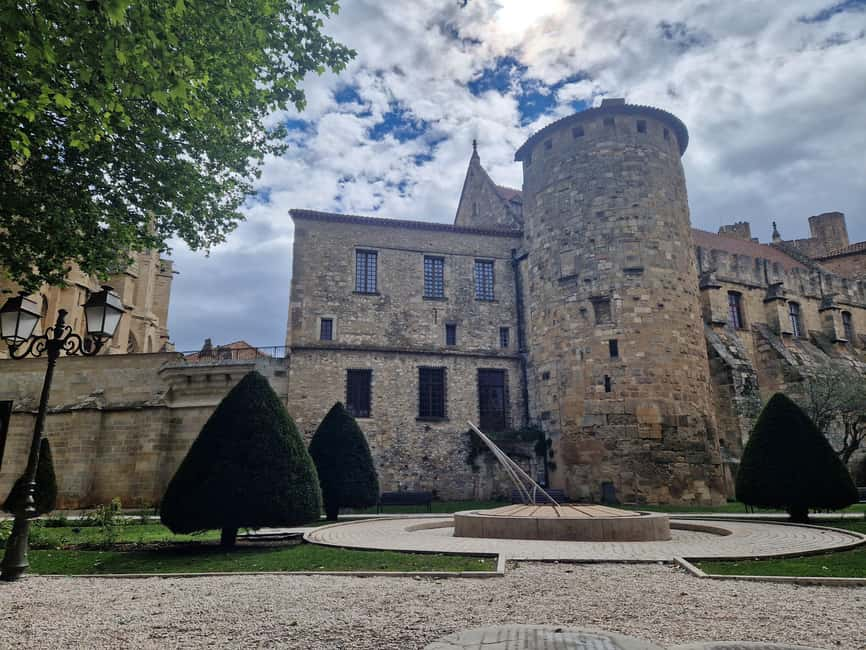
The experience lasts two hours, with start times available according to the day’s schedule. That makes it easy to fit into a morning or afternoon in Narbonne. Since the route includes several historic sites close together, you spend the time walking and looking rather than dealing with transfers.
The tour is offered in French and Sangro as listed in the activity details. Some content may be presented in its original language. If you need a particular language, confirm it before reserving.
The activity is wheelchair accessible. Still, historic palace and cathedral spaces can contain architectural features that are best clarified directly with the provider if you have specific mobility needs. The supplied information confirms access, but it does not describe every surface, doorway, or restroom.
You can cancel up to 24 hours in advance for a full refund. You can also reserve now and pay later, which is useful if your itinerary is still shifting.
Who will enjoy this Narbonne walk
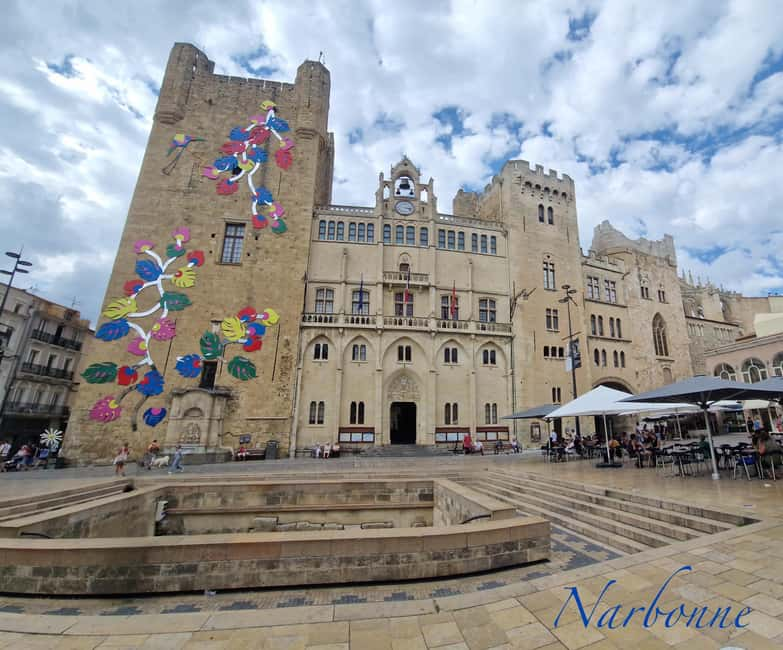
I would choose this for a first substantial look at Narbonne, especially if you enjoy history but do not want a lecture. The route has enough architecture to satisfy serious culture fans, but it also includes streets, a bridge, a market, and a garden.
It suits you best if:
- You want the main historic sights arranged into a clear story.
- You appreciate a guide who explains details without making the tour feel academic.
- You have about two hours and want to stay in the central area.
- You are interested in Gothic architecture, church art, and medieval urban life.
- You prefer a private-group setting.
- You want an accessible introduction before deciding which paid museum areas deserve more time.
It may not suit you if you want a food-focused market visit, a full museum tour, or an unhurried photography walk. The itinerary is broad, and that means each stop receives a focused visit rather than unlimited time.
Should you book this Narbonne experience?
Book it if you want Narbonne to make sense as more than a collection of pretty buildings. The via Domitia gives you the Roman beginning, the Archbishop’s Palace explains religious and civic power, the cathedral supplies the grand Gothic centerpiece, and Les Halles brings you back to modern town life.
The strongest reason to book is Marion Quart. Her approach combines detail, humor, and enthusiasm, and that is exactly what a two-hour history walk needs. Add the reasonable $23 price, wheelchair access, flexible cancellation, and the chance to visit several important sites in one compact route.
Skip it only if you already know the palace and cathedral well, or if you want to spend your whole day inside the Donjon, museum, and Treasure Room. For most first visits, this is a practical way to get your bearings and understand why Narbonne’s center has such varied character.
FAQ
How long does the Narbonne tour last?
The tour lasts two hours.
How much does the experience cost?
The listed price is $23 per person.
Where is the meeting point?
Meet in front of the main entrance to Les Halles de Narbonne, near the war memorial.
How will I recognize the guide?
The guide will wear a green neckerchief and carry a professional card.
Who leads the tour?
The experience provider and guide is Marion Quart.
What language is the tour offered in?
The listed languages are French and Sangro. Some content is presented in its original language.
Is the tour wheelchair accessible?
Yes, the activity is listed as wheelchair accessible.
What admissions are not included?
Admission to the Donjon, the town’s art collection, and the Treasure Room is not included. These areas are available with a separate €12 admission ticket.
Can I cancel the booking?
Yes. You can cancel up to 24 hours in advance for a full refund. You can also reserve now and pay later.
Just added around France
- Palace of Versailles Guided Afternoon Tour from Paris★ 4.1 · 85 reviews
- From Paris: Versailles Full-Day Guided Tour with Lunch★ 4.9 · 48 reviews
- Private Trip Giverny Versailles Trianon from Paris★ 4.9 · 6 reviews
- Private Versailles Bike Tour★ 4.4 · 7 reviews
- Private Versailles, Gardens, Trianon from Paris by Mercedes★ 4.4 · 20 reviews
- Private Fontainebleau, Versailles, Trianon from Paris★ 5.0 · 5 reviews
- From Paris: Private Versailles Half-Day Private Tour★ 4.6 · 4 reviews
- Petit Palais Paris Museum of Fine Arts Tour with Tickets★ 4.2 · 3 reviews
France Palace Tours, compared.
Versailles Palace and Gardens Full Access Ticket
Read our review →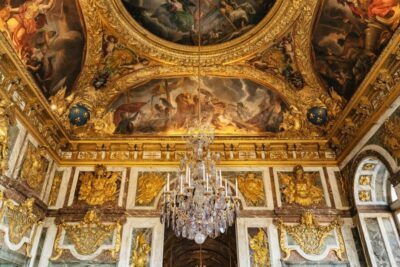
Skip-the-Line Tour of Palace and Gardens Access
Read our review →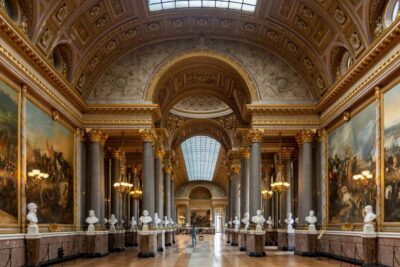
Versailles Palace & Gardens with Transportation
Read our review →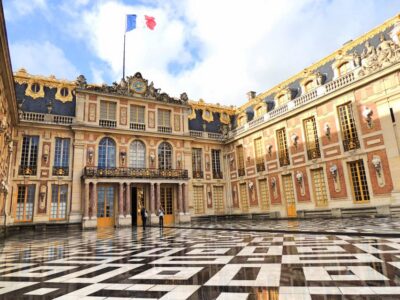
Skip-the-Line Guided Palace Tour and Full Access
Read our review →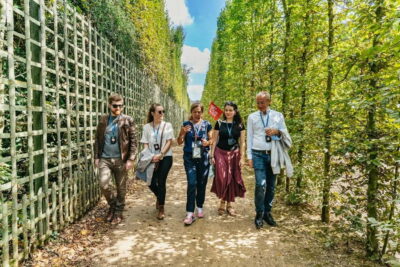
Versailles Palace Guided Tour & Gardens Access
Read our review →
Versailles Palace and Gardens Tour from Paris
Read our review →
Versailles Palace Bike Tour with Market & Marie-Antoinette hamlet
Read our review →
Versailles Guided Tour with Skip-the-Line Entry
Read our review →Browse the lists this tour appears in