
REVIEW · PENA PALACE AND SINTRA TOURS
Sintra: National Palace and Gardens Skip-the-Line Ticket
The National Palace of Sintra is the kind of place that rewards looking up, slowing down, and noticing the details. Its Moorish beginnings, royal kitchens, painted ceilings, geometric tiles, and famous twin chimneys tell more than a thousand years of Portuguese history from inside the town itself. I especially like the beautiful glazed tiles and the chance to explore without being tied to a group schedule.
I also like the low $15 price and the free audio guide, which make this one of Sintra’s easier major sights to fit into a busy day. The catch is that skip-the-line entry does not guarantee a short wait at the entrance, especially at busy times, and the palace involves stairs and uneven walking.
Key points at a glance

- Moorish beginnings: The site began as a Moorish fortress after the Umayyad conquest of Hispania.
- Royal rooms and tiles: Look for Manueline details, Mudejar courtyards, painted ceilings, water features, and patterned glazed tiles.
- Twin chimneys: The enormous kitchen chimneys are among the palace’s most memorable features.
- Self-guided visit: You set the pace, with a free audio guide app in four languages.
- New historical portraits: Short audiovisual pieces introduce 14 figures connected with palace life, from queens to cooks.
- Allow about an hour or more: You can see the main interiors fairly quickly, but extra time helps if you want the gardens and audio material.
Why the National Palace deserves your time
Sintra has several famous sights, and the colorful Pena Palace often gets the first look. The National Palace offers a different experience. It is less about grand hilltop views and more about rooms, decoration, daily royal life, and the many layers of Portuguese history preserved in one building.
The palace began as a Moorish stronghold in the eighth century. After Portugal’s first king extended the fortress in 1147, later rulers altered and enlarged it. The result is not a single, neat architectural style. It is a collection of additions shaped by changing royal tastes and the site’s natural setting.
That mixture is the main attraction. You can move from Moorish-influenced courtyards to Manueline decoration, then into rooms with Mudejar details and tiled walls. It is a useful reminder that Portuguese architecture was shaped by several cultures, not just by one national style.
I find the palace especially rewarding if you enjoy interiors. From the outside, it may not look as dazzling as Pena Palace. Inside, though, the courtyards, stairways, ceilings, fountains, and tilework create a steady series of small discoveries.
More Pena Palace and Sintra tours in Portugal:
- Sintra: Pena Palace and Park Entrance Ticket
★ 4.2 · 17,410 reviews - Lisbon: Pena Palace, Sintra, Cabo da Roca, & Cascais Daytrip
★ 4.7 · 9,981 reviews - Small Group Tour to Sintra, Pena Palace, Cabo Roca and Cascais
★ 5.0 · 3,559 reviews
Entering with a $15 skip-the-line ticket
At $15 per person, this is a reasonably priced way to visit one of Sintra’s major monuments. The value is strongest if you want to tour independently. You are not paying for a full guided excursion, transport, lunch, or a long organized route. You get admission and an audio guide, then decide how much time to spend in each room.
The ticket is valid for one day, but you should still plan around the palace schedule. Opening hours are listed as 9:30 a.m. to 6 p.m., with last admission at 5:30 p.m. Check the current hours before setting out, since seasonal changes or special closures can affect your plans.
Skip-the-line wording needs a little context. The ticket lets you avoid the regular ticket-purchase queue, but you may still encounter an entrance check or a line at busy periods. Several visits found little or no queue, especially outside the busiest times, so the benefit depends on the day. In quieter periods, the ticket mainly gives you convenience and peace of mind.
Make sure you are heading to the National Palace, not Pena Palace. Both are in Sintra, and it is easy to follow the wrong signs or assume that a booking for one covers the other. The meeting point can vary according to the option booked, so read the voucher carefully before leaving Lisbon.
The first rooms: Moorish foundations and royal power
The earliest story here is military. The site began as a Moorish castle, and the first Portuguese king expanded it after taking Sintra in 1147. Much of what you see today reflects later royal building campaigns, but the fortress origins help explain the palace’s unusual arrangement.
As you enter, notice how the building fits around courtyards rather than following a simple symmetrical plan. This is one of the palace’s pleasures. You are not walking through a single grand corridor. You are moving through connected spaces that reveal how the complex grew over time.
The interior courtyards are especially important. Manueline and Mudejar elements appear in arches, tile patterns, decorative details, and water features. The fountains and pools are not mere decoration. They show how water was used to bring coolness, movement, and visual interest into the palace.
Take the audio guide slowly here. The free app is available in Portuguese, English, Spanish, and French. It adds useful context without forcing you to stay with a group. You can listen to the parts that interest you and move on when a room feels complete.
The tiled rooms and the famous Heraldic Room
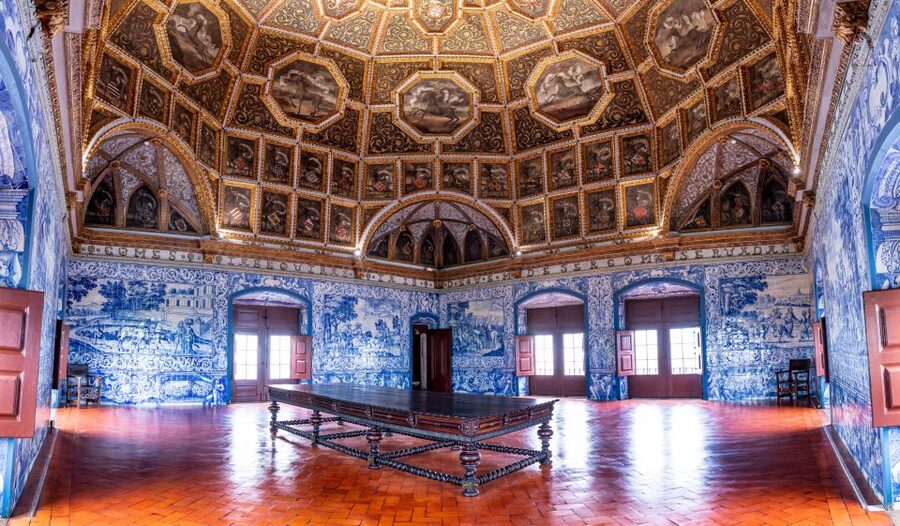
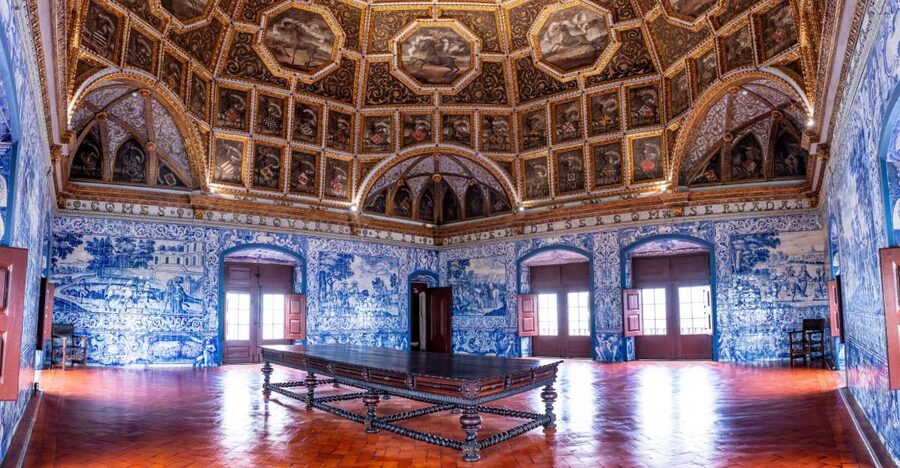
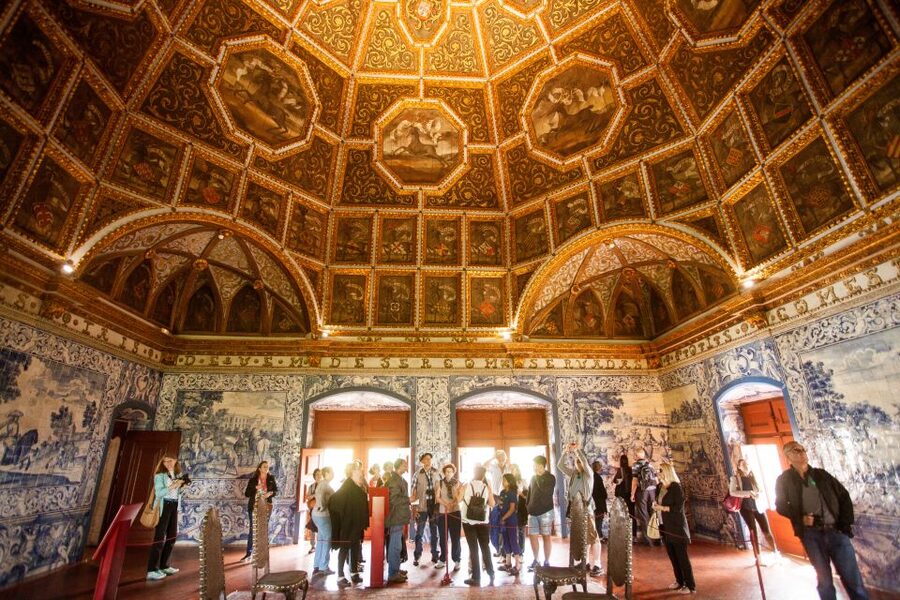
The palace’s glazed tiles are one of its strongest features. Geometric patterns cover walls and create a cool, ordered feel that contrasts with the more elaborate painted ceilings and furniture. If you have already visited other Portuguese monuments, you will recognize the importance of tile as both decoration and a practical wall covering.
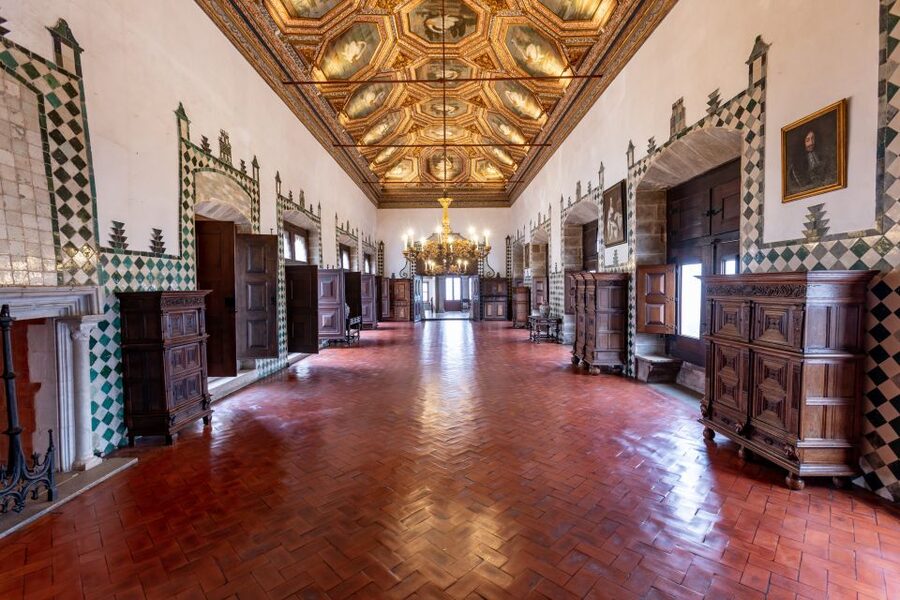
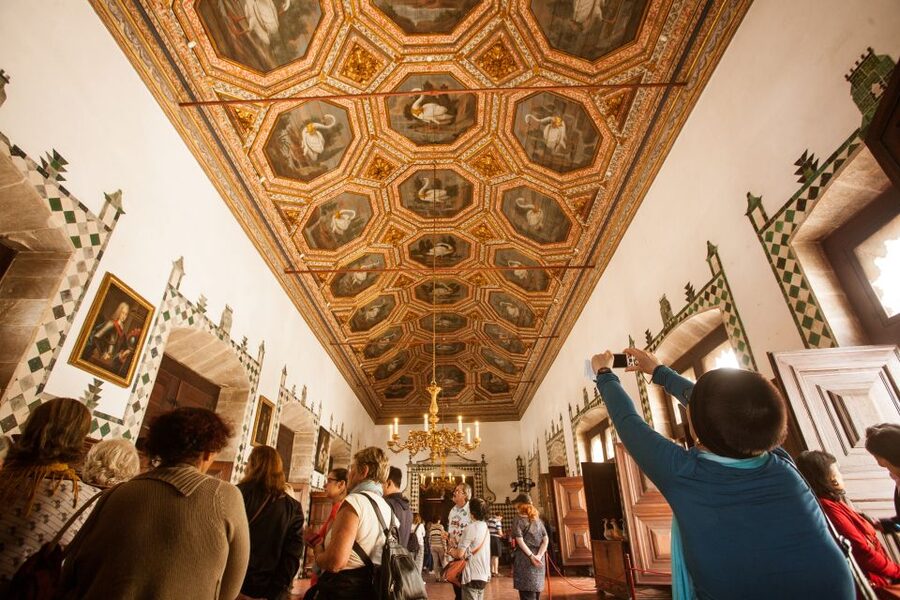
The Heraldic Room is a highlight for many visitors. Its ceiling and decoration make it one of the palace’s most memorable interiors, and it is easy to pass through too quickly if you are concentrating only on the major rooms. Look upward and give yourself time to take in the details.
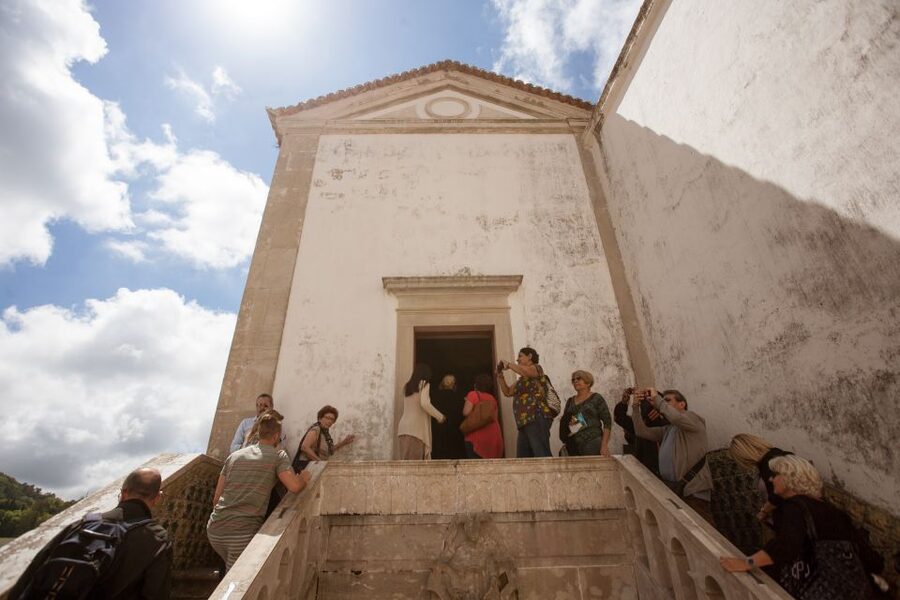
The Chapel is another worthwhile stop. It is smaller and more intimate than the grand ceremonial rooms, but it helps show how religion fitted into royal daily life. The changing scale of the rooms is part of the visit. Large state spaces are followed by more personal or practical areas, giving you a fuller sense of how the palace functioned.
The stairways and corridors are attractive, but they also make the visit physically demanding. You will walk up and down stairs, and some areas may feel tight when the palace is crowded. If you have mobility limitations, this is not an easy monument. A lack of handrails in some places has made movement harder for some visitors.
More palace gardens and grounds in Portugal:
- Queluz: National Palace and Gardens E-Ticket & Audio Guide
★ 4.5 · 46 reviews - Paris: Versailles Palace and Gardens Full Access Ticket
★ 4.6 · 41,579 reviews - Versailles: Skip-the-Line Tour of Palace and Gardens Access
★ 4.7 · 10,429 reviews - Versailles Palace and Gardens Tour from Paris
★ 4.5 · 3,390 reviews
The kitchens show the practical side of palace life
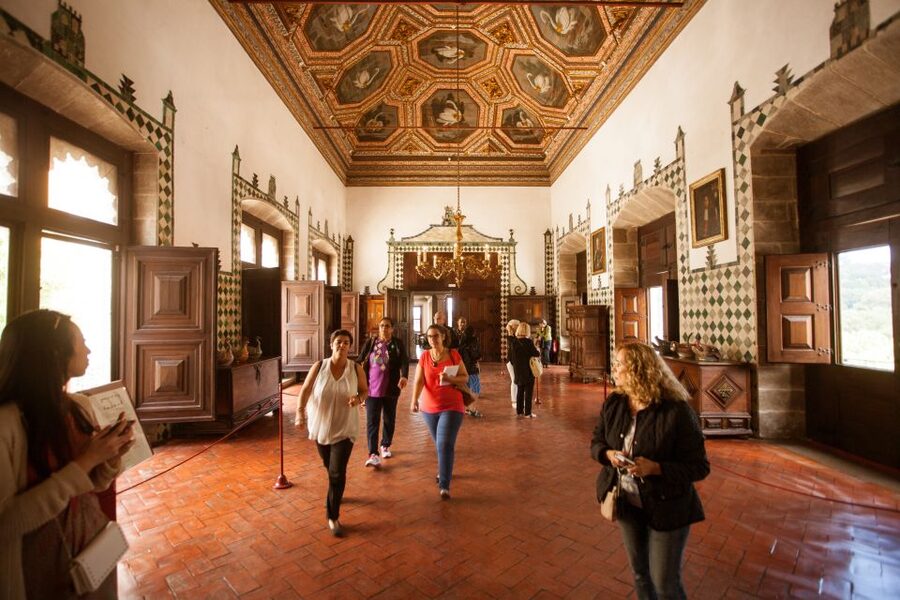
Do not rush past the kitchen. It is one of the best places to connect the palace with ordinary work behind royal ceremony. The enormous chimneys are a dramatic reminder of the food, labor, and heat needed to feed a court.
The kitchen also breaks up the formal procession of decorated rooms. Instead of looking at another ceiling or ceremonial chamber, you see a more functional part of the building. That contrast makes the palace feel less like a museum of grand rooms and more like a working residence.
I would put the kitchen near the top of your list if you are visiting with children or anyone who prefers practical details to formal art. It is easy to understand, visually distinctive, and tied to everyday life.
Fourteen voices from the palace’s past
A new audiovisual feature adds short films about 14 historical figures connected with the palace. The subjects range from queens to cooks, giving attention to people from different levels of palace society.
These pieces are useful because buildings can otherwise feel anonymous. A throne room tells you about ceremony, but a portrait of a cook or a queen helps you think about the people who used the rooms. The films are available in Portuguese and English and are built into the visitor route.
They do not replace the audio guide. Instead, they add a more personal layer to the visit. If you prefer a quiet, completely self-guided experience, you can keep your focus on the architecture. If you want more human detail, stop for the videos as you go.
The palace also offers other tools, including a virtual tour and a treasure hunt. The exact availability of each feature can vary, so treat them as useful additions rather than the main reason to book.
Gardens, courtyards, and how much time to allow
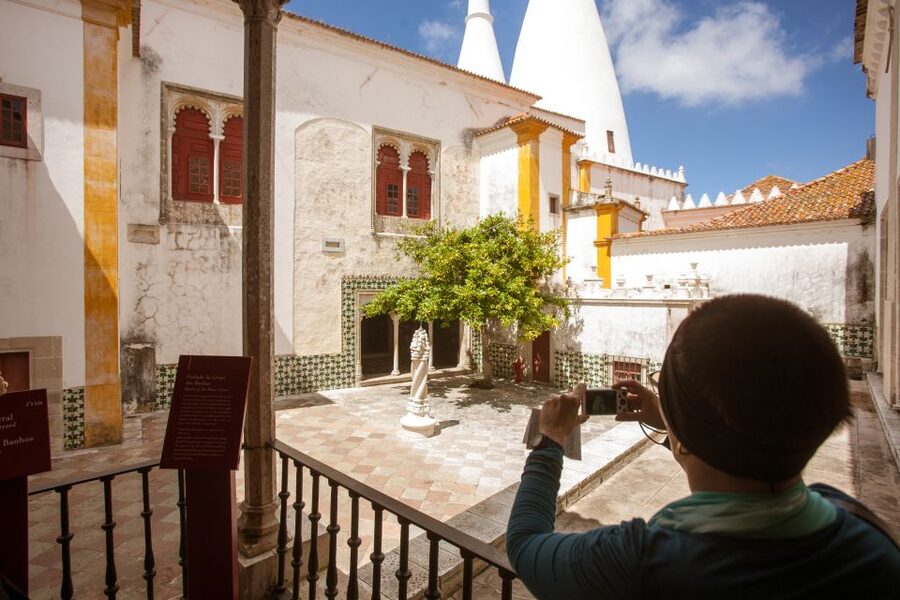
The ticket is presented as covering the National Palace and gardens, but the indoor palace is the main focus of the visit. The courtyards are especially rewarding because they combine tile, water, arches, and open air in a compact setting.
You can see the principal interiors in about an hour and a bit if you keep moving. That is enough for a short Sintra stop, particularly if you have limited time and want to add another sight. I would allow more time if you plan to listen to the full audio guide, watch the historical films, and spend time in the gardens.
Sintra’s attractions can consume a day faster than expected. A visit to Pena Palace may take longer than planned, and it is easy to reach the National Palace late in the afternoon. If the palace is important to you, visit it first or reserve a clear block of time rather than treating it as a spare-hour attraction.
Closing times matter. Gardens and other outdoor areas may close at a different time from what you expect, and visitors have missed them by arriving late. Check the day’s last admission and allow time to finish the route before closing.
Crowds, timing, and the self-guided pace
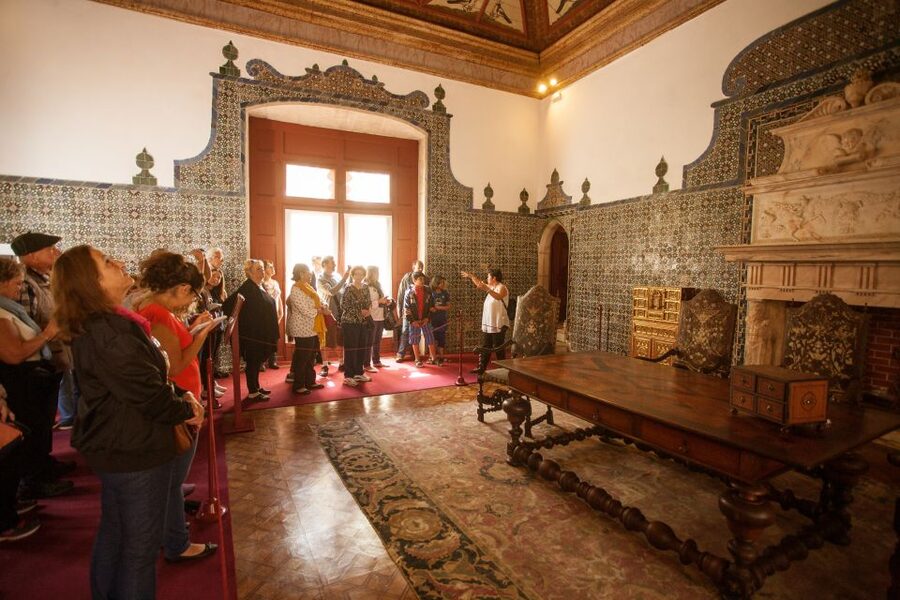
The National Palace can be crowded, particularly during peak periods. Narrow passages and stairways feel much tighter when several groups arrive together. A quieter morning or later afternoon can make the rooms easier to appreciate, although late visits carry the risk of reduced garden time.
One advantage of this ticket is control. You are not waiting for a guide to finish a speech or moving at the pace of a large group. You can pause in the Heraldic Room, move quickly through a less interesting section, or spend extra time with the tiles.
The trade-off is that you must provide your own structure. There is no guided tour included. The app helps, but you need a charged phone and enough time to use it. If you prefer a guide who explains the palace as you go, select a separate guided option rather than assuming this admission ticket includes one.
Some bookings connected with Sintra excursions have used guides such as Mr. Padovan or Rui, but those are separate arrangements. This ticket itself is designed for independent entry and exploration.
What the ticket does not solve
Transportation is not included, and the ticket does not take you from Lisbon to Sintra. You need to arrange your own way to town and your own route between Sintra’s sights.
Food and drinks are also not included. That is not a serious drawback for a ticket-only visit, but you should plan your day around meals, particularly if you are combining the palace with Pena Palace or another site.
The activity is non-refundable. Buy it only once your day in Sintra is reasonably settled, especially if your schedule depends on weather, fire-risk restrictions, or changes to other attractions. High fire-risk conditions have caused visitors to lose access to parts of their planned Sintra itinerary.
The palace is not a good choice for anyone who needs an easy, level route. Expect stairs and repeated changes in elevation. The ticket does not include special mobility assistance, and some sections may be difficult to reach.
Who will get the most from this visit
I would choose this ticket if you enjoy architecture, royal history, tilework, and exploring at your own pace. It is also a good fit for a short visit because the core route can be completed in a little over an hour.
Families may appreciate the kitchens, courtyards, water features, and treasure hunt option. The audiovisual portraits can also give younger visitors a clearer connection to the people who lived and worked here.
This is less ideal if your main goal is dramatic scenery. Pena Palace offers the more colorful exterior and hilltop setting. The National Palace is about rooms and details, not sweeping views.
It may also disappoint if you expect a fully guided tour. The audio app is useful and available in four languages, but it does not offer the same personal exchange as a live guide.
Should you book the National Palace ticket?
Yes, if you want a fairly inexpensive, flexible way to see Sintra’s most important historic residence. The price is sensible, the palace is easy to explore independently, and the tiles, kitchen, chapel, Heraldic Room, courtyards, and new historical portraits give you plenty to see.
Book it with realistic expectations. Skip-the-line access mainly saves you from buying a ticket on site, crowds can still appear, and the gardens may require better time planning than the interiors. Visit early enough to enjoy the full route, confirm that you are going to the National Palace rather than Pena Palace, and wear shoes suited to stairs.
If you have only one short stop in Sintra, this is a strong choice for history and interiors. If you have a full day, pair it with another attraction only after allowing enough time here.
FAQ
How much does the ticket cost?
The listed price is $15 per person.
How long is the ticket valid?
The ticket is valid for one day.
What are the National Palace of Sintra opening hours?
The listed opening hours are 9:30 a.m. to 6 p.m., with last admission at 5:30 p.m. Check the current hours before visiting.
Is a guided tour included?
No. A guided tour is not included. The ticket includes independent entry and a free audio guide app.
Which languages are available for the audio guide?
The audio guide is available in Portuguese, English, Spanish, and French.
Does the ticket include transportation?
No. Transportation is not included.
Are food and drinks included?
No. Food and drinks are not included.
Does skip-the-line mean there will be no wait?
No. The ticket lets you skip the regular ticket-purchase line, but entrance checks and busy periods can still create a wait.
Is the palace suitable for visitors with mobility difficulties?
The palace includes stairs and repeated changes in level, and some areas can be difficult for people with mobility limitations. Consider your ability to manage stairs before booking.
More Skip-the-Line Palace Tickets in Portugal
- Seville: Alcázar, Cathedral & Giralda Skip-the-Line Tour
★ 4.8 · 11,525 reviews - Madrid: Royal Palace Expert Guided Tour with Skip-the-Line
★ 4.7 · 8,407 reviews - Vienna: Schönbrunn Palace & Gardens Skip-the-Line Tour
★ 4.7 · 7,739 reviews - Vienna: Skip-the-Line Sisi Museum, Hofburg and Gardens Tour
★ 4.8 · 5,918 reviews
Just added around Portugal
- Seville, Cathedral, Giralda and Real Alcazar From Algarve★ 5.0 · 20 reviews
- An adventure through the Forest and Palace of Bussaco – Coimbra★ 5.0 · 44 reviews
- Bussaco Palace, Gardens & Forest | Private Tour★ 5.0 · 5 reviews
- Lisbon: Visit Pena Palace, Regaleira, Cabo da Roca & Cascais★ 5.0 · 15 reviews
- From Lisbon: Sintra Pena Palace Cascais 8-People Group Tour★ 4.9 · 93 reviews
- Sintra: Private Tour with Guided Pena Palace Experience★ 4.9 · 99 reviews
- Sintra: Vintage electric Tuk Tuk tour, Pena Palace 4/5 hours★ 5.0 · 7 reviews
- Sintra:1 hour tuk tuk experience to Pena Palace(3 monuments)★ 5.0 · 10 reviews
Pena Palace and Sintra Tours, compared.

Pena Palace, Sintra, Cabo da Roca, & Cascais Daytrip
Read our review →
Small Group Tour to Sintra, Pena Palace, Cabo Roca and Cascais
Read our review →
Sintra, Pena Palace, Cabo da Roca, & Cascais Tour
Read our review →
Sintra Cascais & Pena Palace Small Group Tour
Read our review →
Sintra to Cascais: 2 Palaces, 4 Sites, Small Group 10 Hour Tour
Read our review →
Browse the lists this tour appears in