
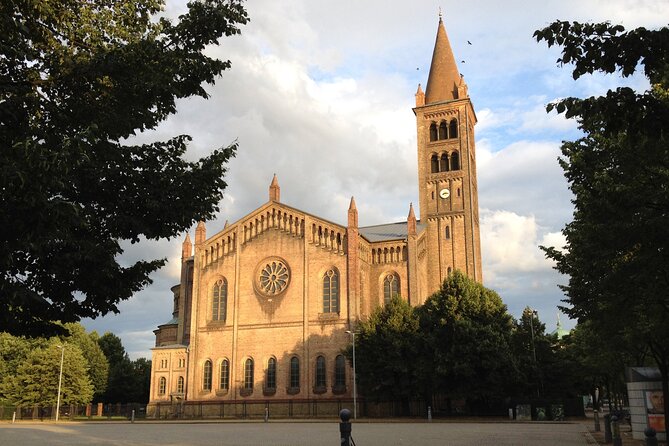
REVIEW · BERLIN PALACE TOURS
Private taxi tour to Potsdam and Sanssouci 6-8h
Potsdam is where Prussian kings built a pleasure ground of palaces, vineyards, fountains, Roman baths, Chinese pavilions, and even a fake ruin to hide a waterworks pond. This private tour with Gunter Bauer gives you a personal ride from Berlin and a full day to make sense of that grand royal playground.
I like the door-to-door pickup and the way the tour can bend around your interests. Gunter is also known for taking photos during the day and sending them afterward, a small touch that is especially useful if you are traveling alone. The main consideration is walking: park paths are often unpaved, and six to eight hours is a long outing.
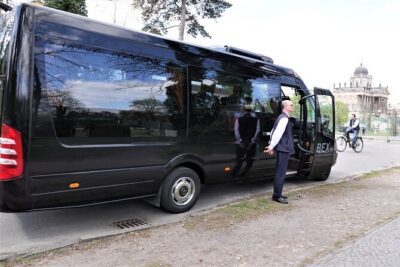
- Private Berlin pickup: Begin at your hotel or apartment in an air-conditioned vehicle.
- Sanssouci’s vineyard setting: See Frederick the Great’s intimate rococo palace, terraces, fountain, and park.
- More than one palace: The day can include the New Palace, Orangery, Chinese House, Roman Baths, and Cecilienhof.
- Potsdam’s city center: Visit the Dutch Quarter, Nauen Gate, Brandenburg Gate, City Palace, and Garrison Church area.
- Cold War history: Glienicke Bridge adds a sharp modern chapter to the royal story.
- Flexible pacing: The private format works well for families, solo visitors, and anyone who wants to add places such as Alexandrowka or a museum stop.
Why Potsdam Works Best as a Private Day Trip
Potsdam sits close to Berlin, but it feels like a separate world. The Prussian court used the city as a country retreat, filling it with summer palaces and carefully designed gardens. Later came war damage, socialist-era rebuilding, German reunification, and renewed restoration.
I like this tour because it joins those periods instead of treating Sanssouci as an isolated palace. You see royal vanity, practical engineering, Dutch immigration, Russian settlement, Nazi and Soviet-era history, and Cold War espionage in one day.
The private taxi matters. Potsdam’s sights are spread across a large area, and getting between Sanssouci Park, the city center, Cecilienhof, Glienicke Bridge, and the surrounding palaces takes time. With Gunter driving, you avoid arranging several local connections and can spend more of the day looking rather than navigating.
The tour is offered in English and normally begins at 10:30 a.m. Pickup is from your accommodation, but you should wait inside until Gunter sends an SMS or WhatsApp message telling you to come out. Include a working mobile number when booking.
Sanssouci Palace and the Vineyard Terraces
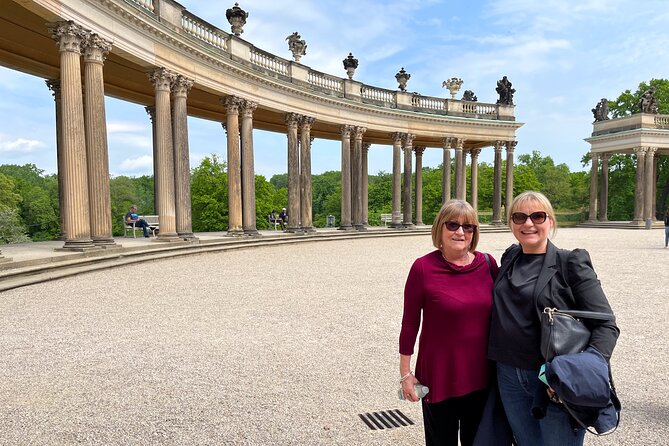
Sanssouci Palace is the emotional center of the day. Frederick the Great built this small rococo retreat on a vineyard, not as a huge ceremonial residence but as a private place for music, conversation, and escape from court life.
The palace has only eight rooms, each opening toward the garden. That scale tells you something about Frederick. He wanted a refined personal refuge for himself, his dogs, and selected male visitors such as the French philosopher Voltaire. French was the language of conversation, and Frederick played the flute and composed music.
The vineyard terraces provide the classic view. Vines grow behind glass panels, a practical trick that helped protect them from the colder climate. Frederick’s gardeners were trying to coax wine from land far north of the best wine regions, with imports from France and Italy available when local production fell short.
Below the terraces, the great fountain anchors the park. The water came from a higher pond concealed by the artificial Ruinenberg, or ruin mountain. The ruined structure was designed as decoration, but it also hid the machinery that fed the fountain. Prussian royalty had a talent for turning utility into theater.
The listed palace visit lasts about 30 minutes, and admission is not automatically included unless you select the Sanssouci+ option. The park admission is included, but individual palace access deserves careful attention when you book. If entering Sanssouci Palace is your priority, choose the option that covers all castle tours.
Other palaces people book in Berlin:
- Berlin: Charlottenburg Palace Entry Ticket
★ 4.4 · 2,076 reviews - From Berlin: Potsdam and Sanssouci Palace Tour with Entry
★ 4.7 · 1,219 reviews - Potsdam Tour from Berlin With Guided Sanssouci Palace Visit
★ 4.5 · 364 reviews
The Windmill, Orangery, and Chinese House
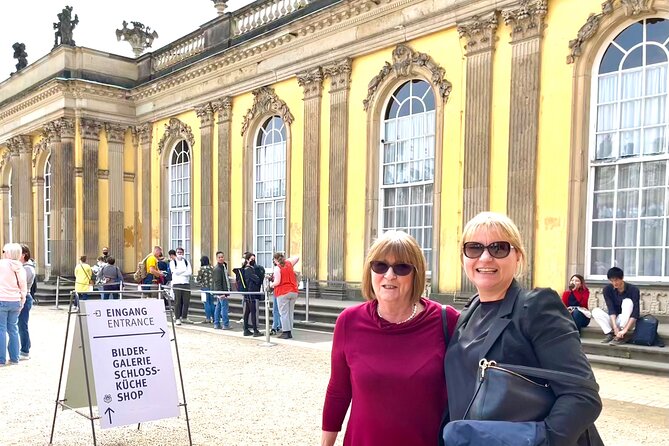
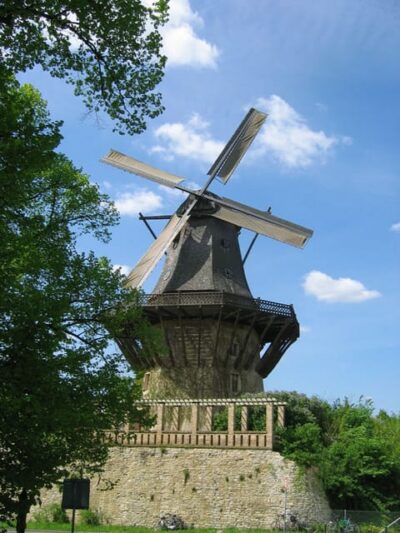
Near the palace, the Historic Windmill offers one of Potsdam’s best stories about royal power meeting private rights. The mill survived because its owner challenged the king in court and won at the first stage of the case. The legal dispute did not end there, but the episode hints at the constitutional limits that existed even under the Prussian monarchy.
The mill still has a working connection to grain milling, and its position gives you a fine view over the park. The listed stop is brief, about 10 minutes, so ask Gunter if you want more time there.
The Orangery Palace sits high on the ridge and was built in a Roman style. Its winter rooms protected exotic plants from the cold, while its position offered a broad view over Sanssouci Park. Potsdam’s royal gardens were not simply plant collections. They were carefully staged scenes, designed to surprise you as you walked from one feature to the next.
The Chinese House is smaller but perhaps more memorable. It was built as a garden pavilion in the fashion for all things Chinese that swept European courts in the 18th century. Gold decoration, delicate porcelain, and gilded figures create an interior that is far more elaborate than the building’s modest size suggests.
A café now occupies the former setting for vineyard workers, but the royal designers still wanted it to look attractive. The Chinese styling was meant to please the eye first, though today you can also stop for a drink or snack nearby. Snacks are not included in the tour, so carry some or plan a café break.
Roman Baths, Picture Gallery, and Guest Palaces
Potsdam’s royal buildings often mix practical use with fantasy. The Roman Baths were built to satisfy a longing for antiquity. Bathing was not the main point. The rooms and gardens were designed to suggest an idealized Italian or classical world.
The Picture Gallery reflects Frederick the Great’s love of art. Rather than simply hanging paintings inside a working palace, he created a separate building for his collection. If you care about art and architecture, this is one of the places where Gunter’s running explanation can add real value.
The New Palace is the great contrast to the modest Sanssouci. Frederick called it fanfanery, a word aimed at empty display. That judgment says more about his personal taste than the building itself. The palace was designed to impress relatives and foreign visitors, with hundreds of rooms arranged as apartments for royal guests.
The New Palace included reception rooms, music rooms, bedrooms, and writing rooms. Kitchens were placed in separate service buildings, partly to keep cooking smells away from the royal rooms. Later rulers, including Kaiser Wilhelm II, used the palace as well.
The long avenue from the New Palace toward Sanssouci measures about two kilometers. That distance was useful to Frederick, who preferred his private retreat to remain separate from visiting relatives. You can understand the court system better by seeing these buildings as a connected arrangement rather than as unrelated monuments.
The university now uses parts of the former service buildings, called the Communs. Arcades connect the buildings around a large courtyard. It is a striking example of how old royal service spaces have found modern use.
A Walk Through Sanssouci Park
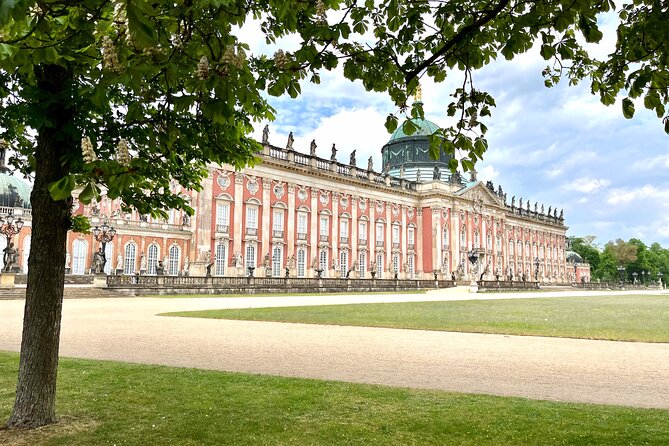
The park is the real reward of the day. It connects Sanssouci Palace, the vineyard, the great fountain, the New Palace, and a series of smaller structures over roughly two kilometers.
The 45-minute park visit is included, but the full area can easily occupy much longer if you stop at every pavilion. This is where good walking shoes matter. The paths around the palaces and gardens are often rough or unpaved, so sandals are a poor choice.
You may see:
- The Chinese House, with its gold decoration and porcelain
- The Roman Baths, built for visual pleasure rather than regular bathing
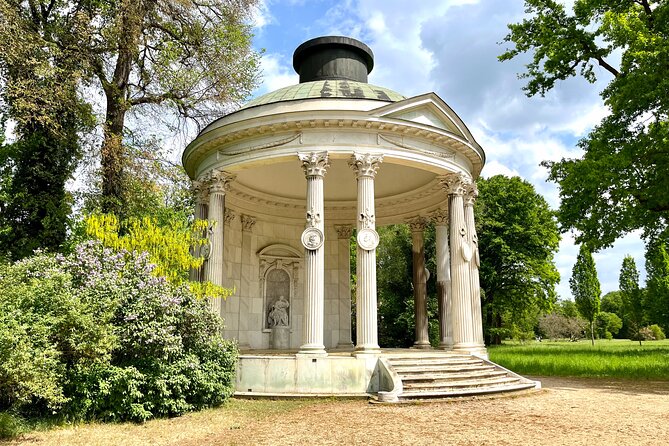
- The Friendship Temple, a small and intimate garden monument
- The Orangery Palace and its ridge-top view
- The Picture Gallery
- The New Palace and its service buildings
- The artificial grotto, a typical romantic garden feature
- Various viewpoints, fountains, terraces, and ornamental structures
The Friendship Temple was designed as a quiet destination for a short walk or private meeting. Garden buildings like this also offered a place for a picnic, with food brought from the palace kitchens.
A private tour helps here because you can choose between a brisk overview and a slower visit to the buildings that interest you most. It is not realistic to explore every palace interior and every garden corner in one day without feeling rushed.
Same city, a very different set of state rooms:
- Small group Potsdam: A Journey Through History and Palaces
★ 4.7 · 317 reviews - Small group Potsdam: A Journey Through History and Palaces
★ 4.5 · 151 reviews - From Berlin: Potsdam & Sanssouci half day Walking Tour
★ 4.9 · 85 reviews - From Berlin: Gardens & Palaces of Potsdam Bike Tour
★ 5.0 · 61 reviews
Potsdam’s Gates and Dutch Quarter
The city portion gives the day a different rhythm. Potsdam’s Nauen Gate is perhaps the most imposing of the city’s surviving gates. Its medieval Romanesque appearance rises above the lower buildings around it, and cafés and restaurants make the surrounding square a useful place for a break.
Potsdam also has a Brandenburg Gate, built in the classical style. It served as the route from the city toward Brandenburg, while other gates pointed toward hunting grounds or roads to nearby towns. The gates were not just decorative entrances. They helped organize movement through the carefully planned royal city.
The Dutch Quarter was created for skilled Dutch workers, including canal builders brought to Brandenburg. Their red brick homes give the district a clear Dutch character, and small shops, cafés, bars, crafts stores, and antique businesses make it more lived-in than a palace complex.
I especially like this part of the tour because it shows how royal ambition depended on ordinary specialists. Potsdam was not built only by kings and architects. It also needed builders, artisans, servants, soldiers, gardeners, and immigrant workers.
The pedestrian center includes attractive town houses, Baroque buildings, individual shops, and an Art Nouveau glass roof over a small department store. You can wander through the geometric city blocks, known as quarrées, while Gunter points out how the historic center was planned.
City Palace, Garrison Church, and Modern Potsdam
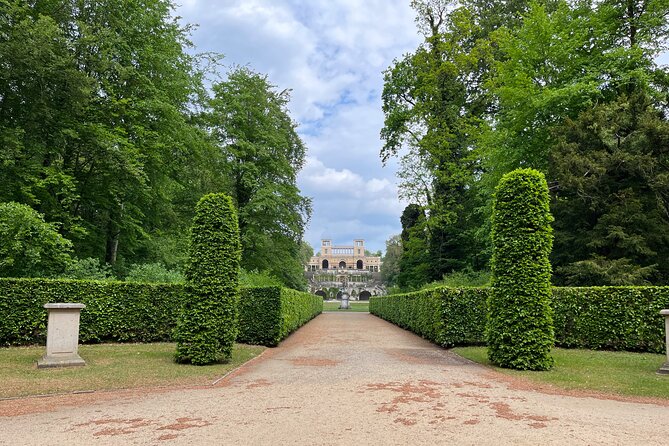
The rebuilt City Palace now houses the Brandenburg state parliament. Its return to the city center is part of Potsdam’s long and difficult recovery. The war-damaged building was demolished during the early socialist period, and later roads and trams cut through the former historic center.
Today, the exterior and inner courtyard restore much of the old royal presence. The building also has a modern civic role, which makes it more than a reconstructed façade.
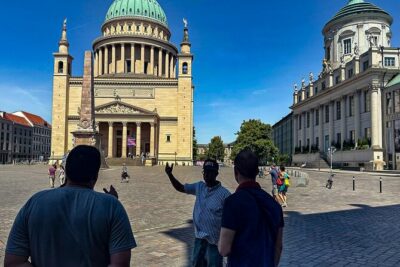
The Garrison Church area tells a similar story. The church once dominated the old city with its tall dome and surrounding colonnades. It disappeared from the postwar cityscape, but reconstruction efforts are bringing parts of the historic setting back.
The Barberini Museum, rebuilt in a former noble palace, adds another modern chapter. Its collection came together through private support and focuses on art rather than royal rooms. A longer private day may allow an additional museum visit, as one customized outing included a stop at an exhibition there.
Cecilienhof and the 1945 Potsdam Conference
Cecilienhof Palace is away from the main Sanssouci group, so it is easy to miss if you visit Potsdam only by public transport or on foot. Built for Crown Prince Wilhelm and Crown Princess Cecilie, it looks like an English country house rather than a grand Baroque palace.
The building had modern comforts for its time, including central heating and bathrooms. Inside, a room with a ship’s-cabin design reflects Cecilie’s love of sea travel.
Most people come for the 1945 Potsdam Conference. Harry Truman, Winston Churchill, and Joseph Stalin met here after the Second World War to discuss the future of Europe. The conference room and outdoor setting remain arranged to show how the meeting took place.
This stop gives the day a needed shift in tone. Sanssouci is about royal taste and personal escape. Cecilienhof brings you into the political decisions that shaped the postwar world.
Glienicke Bridge and the Road Back to Berlin
Glienicke Bridge connects Berlin and Potsdam and carries a powerful Cold War story. For decades it marked the border between West Berlin and East Germany. Spy agents and prisoners were exchanged here in secret operations, and the bridge later became a film location.
On the Berlin side, Glienicke Palace sits beside the road between the two cities. The palace was built for Prince Carl, who could look across the water toward Potsdam. Its Italian style, round terrace, and nearby park make it a pleasant final stop, especially when paired with views of the New Garden and Marble Palace across the water.
Other optional sights can include Alexandrowka, a Russian colony created for immigrants and musicians, and Babelsberg Palace, an English-style castle built for the future Kaiser Wilhelm I and Augusta. Babelsberg has battlements, turrets, and a tower with a study that Wilhelm II reportedly climbed daily in later life.
These additions are one reason to allow the full eight hours. The shorter version can cover the main Sanssouci sights and city center. A longer day gives you room for Cecilienhof, Glienicke Bridge, Alexandrowka, Babelsberg, or a museum stop.
Price, Comfort, and Who Should Book
At $179.01 per person, this is not the cheapest way to reach Potsdam. The value improves when two or more people share the private vehicle, especially because pickup, parking fees, the taxi ride, and guiding are included.
The price also buys time. You do not have to manage transport between scattered palace sites, and you can ask for a route that fits your interests. Solo visitors may find the cost harder to justify, but the personal attention and photo help can make the format worthwhile.
Admission needs close checking. Sanssouci Park is included, while palace tickets are not included unless you select the Sanssouci+ option. Snacks are also your responsibility.
I would choose this for families, small groups, solo visitors who dislike rigid group tours, and anyone interested in architecture and political history. It is less suitable if you want a slow, unstructured garden day or if long walks on uneven paths are difficult.
Pickup is offered from your accommodation, and a baby car seat can be requested. Service animals are allowed. Strollers need a removable cradle and foldable frame, and large dogs may take up the rear luggage space, so mention these needs before the day begins.
Free cancellation is available up to 24 hours before the start time. Changes or cancellations inside that window are not refunded.
Should You Book This Potsdam Tour?
Book it if you want Potsdam explained as a connected story rather than a string of palaces. Gunter Bauer’s strength is the amount of context he brings to architecture, royal life, wartime damage, rebuilding, and Cold War borders. His conversational style, personal photos, and willingness to add places such as Alexandrowka or the Barberini Museum suit curious visitors who want more than a quick palace stop.
Skip it if you prefer to travel slowly by train, choose every stop yourself, or spend the whole day inside one palace. Also plan carefully around admissions and walking. For most people with one free day in Berlin, though, the private taxi format is a comfortable and efficient way to see Sanssouci and the wider Potsdam story.
FAQ
How long does the private Potsdam tour last?
The experience lasts approximately six to eight hours. The longer version allows more time for sites such as Cecilienhof, Glienicke Bridge, Alexandrowka, Babelsberg, or a museum stop.
Where does pickup take place?
Pickup is available from your hotel, apartment, or other accommodation in the city. You should wait inside until Gunter sends an SMS or WhatsApp message asking you to come out.
What time does the tour begin?
The stated start time is 10:30 a.m.
Is transportation included?
Yes. The tour includes an air-conditioned private vehicle, the taxi ride according to the tariff, parking fees, and city guiding.
Are palace admission tickets included?
Sanssouci Park admission is included. Palace admissions are not included unless you select the Sanssouci+ option, which covers all castle tours.
Is the tour suitable for children and animals?
Most people can participate, and a baby car seat is available on request. Service animals are allowed. Medium-sized dogs may lie on the rear floor, while large dogs may use the back area, leaving no room for luggage there.
What should I wear for the tour?
Wear good walking shoes rather than sandals. Many paths in Sanssouci Park and around the palaces are unpaved.
Just added around Berlin
- Skip-the-line Charlottenburg Palace Private Tour & Transfers★ 5.0 · 6 reviews
- From Berlin: Potsdam Highlights & Sanssouci half day Walking Tour★ 4.5 · 60 reviews
- Potsdam Palaces Private Tour -Sanssouci Palace entrance included!★ 5.0 · 3 reviews
- Potsdam: Private Walking Tour – Time for Palace Entries Included!★ 5.0 · 2 reviews
- Sanssouci & Postdam Private Tour from Berlin – English or Español★ 5.0 · 3 reviews
- Berlin: Potsdam & Sanssouci Gardens Private Tour With Jacob★ 4.8 · 8 reviews
- From Berlin: Potsdam & Sanssouci half day Walking Tour★ 4.9 · 85 reviews
- From Berlin: Gardens & Palaces of Potsdam Bike Tour★ 5.0 · 61 reviews
Berlin Palace Tours, compared.
Potsdam Tour from Berlin With Guided Sanssouci Palace Visit
Read our review →
Small group Potsdam: A Journey Through History and Palaces
Read our review →Small group Potsdam: A Journey Through History and Palaces
Read our review →
Potsdam Highlights & Sanssouci half day Walking Tour
Read our review →Browse the lists this tour appears in