
REVIEW · SCHONBRUNN AND HOFBURG PALACE TOURS
Vienna: Imperial Treasury in the Hofburg Palace
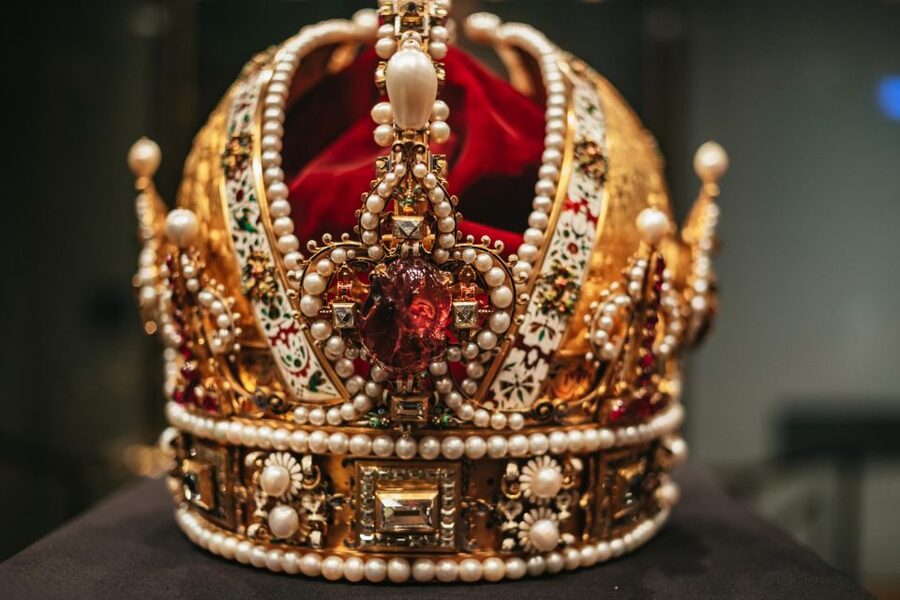
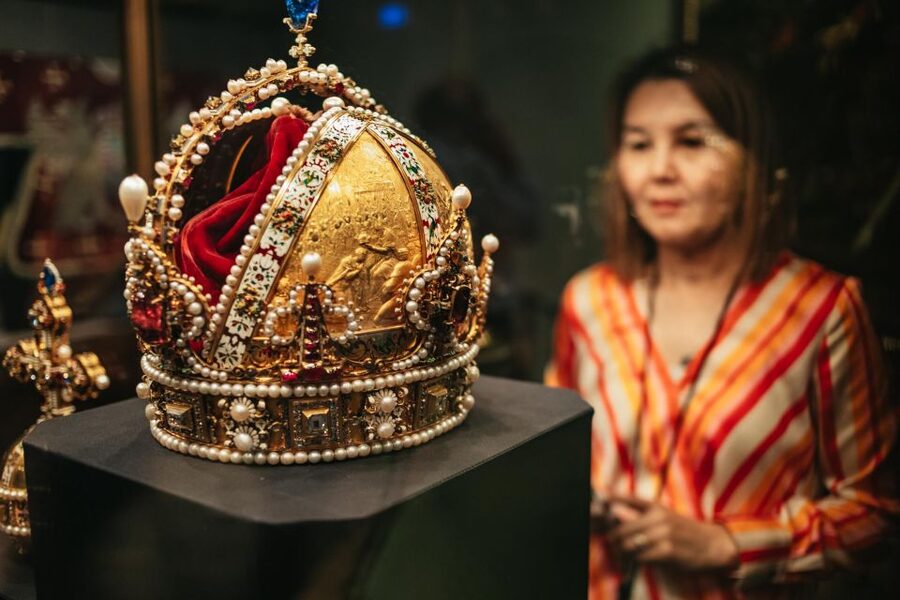
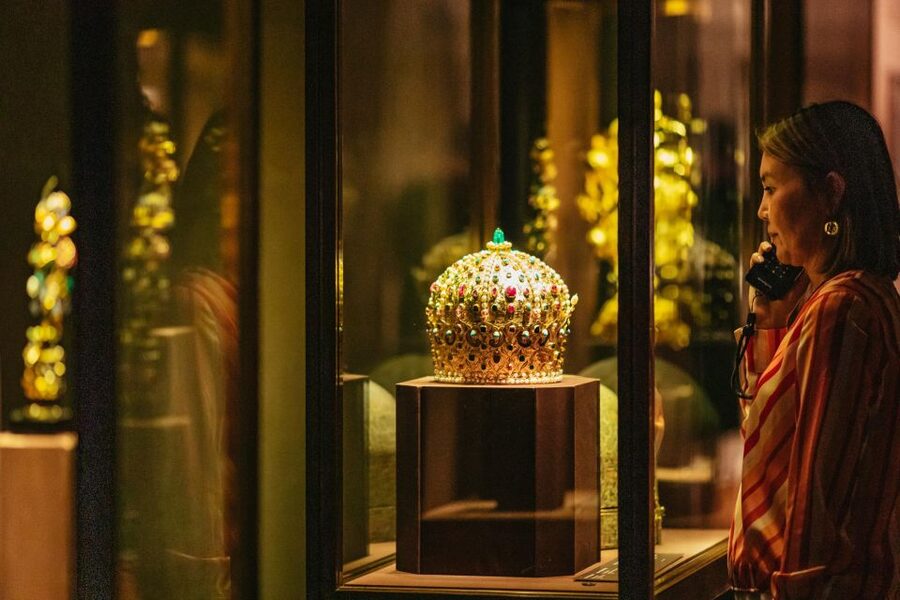
The most striking part of Vienna’s Imperial Treasury is its sheer range. In one set of rooms, you see the crowns of emperors, dazzling Habsburg jewelry, religious relics, ceremonial robes, Burgundian treasures, and objects linked to legends such as the Holy Grail and the unicorn horn. The Austrian Imperial Crown and the regalia of the Holy Roman Empire are the main draws, but the smaller objects often reward the closest look.
I like the museum for two good reasons: it is compact enough to see in about an hour, yet full enough to keep you busy for longer, and it gives you a sharp picture of how royal power worked through ceremony, faith, family, and display. You can also spot parts of Empress Elisabeth’s original jewelry, along with an emerald of extraordinary size. The main consideration is that the $18 ticket covers entrance only. A guide or audio guide may add useful context, and the ticket exchange can involve a line even when you have booked ahead.
Key points to know before you go
- The Austrian Imperial Crown is the star object, joined by the Holy Roman Empire’s crown jewels and regalia.
- The Swiss Wing is the oldest part of the Hofburg Palace, giving the visit a direct link to the Habsburg court.
- Allow one hour for a brisk visit, or up to two hours if you read labels or use audio commentary.
- The collection mixes royal, religious, ceremonial, and legendary objects, including the Holy Lance, the famed agate bowl, and a unicorn horn.
- Your $18 ticket is for admission only, so check the current audio and guided-tour options before booking.
- The ticket process may require a printed voucher and an exchange at the counter, which can reduce the benefit of booking ahead.
Why the Imperial Treasury belongs on your Hofburg day
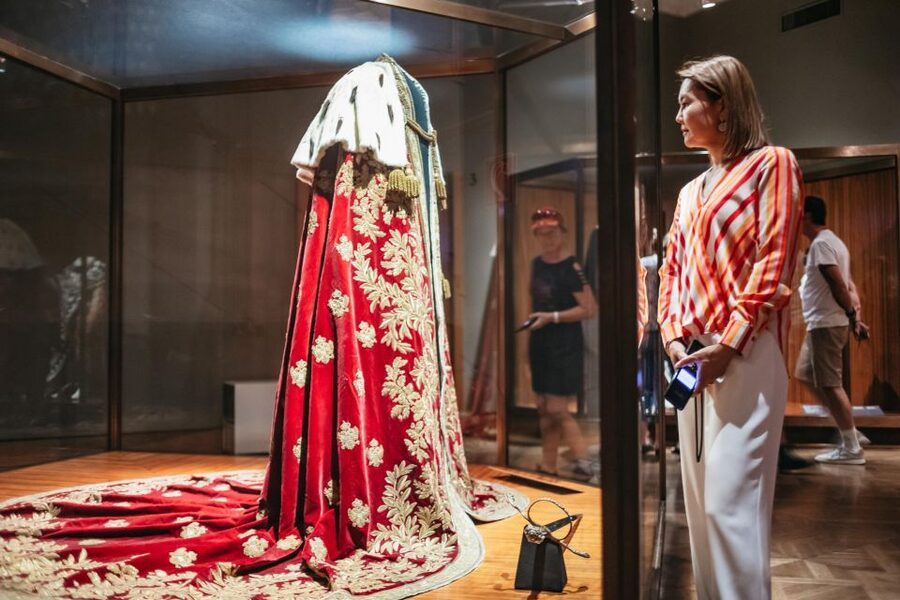
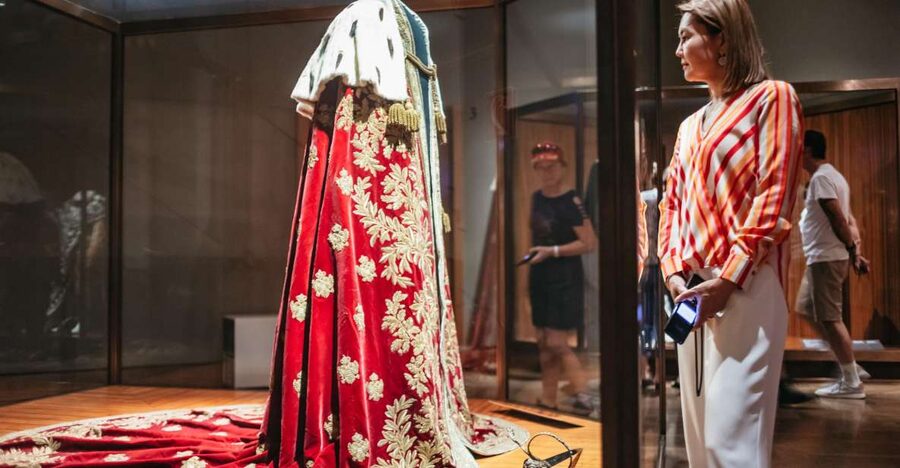
The Imperial Treasury is not simply a room full of expensive jewelry. It is a visual record of how the Habsburgs presented authority. Crowns showed rank. Robes showed ceremony. Religious objects suggested divine approval. Family jewels carried private stories into public life.
That mix gives the museum more purpose than a quick parade of shiny objects. I find it useful to think of each display as part of a larger royal system. The Habsburgs ruled across centuries and territories, and their possessions needed to signal that reach. Here, you see the symbols they used to make power visible.
The setting helps. The collection is housed in the Swiss Wing, the oldest part of the Hofburg Palace. You are not viewing these objects in a modern shopping-center setting. The rooms belong to the palace complex that served as the Habsburg center in Vienna, so the location adds weight to the displays.
You should not expect a full-day guided tour with a packed schedule. This is a museum visit using one entrance ticket, and the pace is yours. Many people can cover the main rooms in around an hour. If you read every label, stop for the religious works, and listen to audio material, plan closer to an hour and a half or two hours.
More Schonbrunn and Hofburg palace tours in Vienna:
- Vienna: Skip-the-Line Sisi Museum, Hofburg and Gardens Tour
★ 4.8 · 5,918 reviews - Vienna: Hofburg and Empress Sisi Museum Guided Tour
★ 4.7 · 1,460 reviews - Skip-the-Line Schonbrunn Palace Guided Tour and Vienna Historical City Tour
★ 3.5 · 940 reviews
Entering through the Swiss Wing
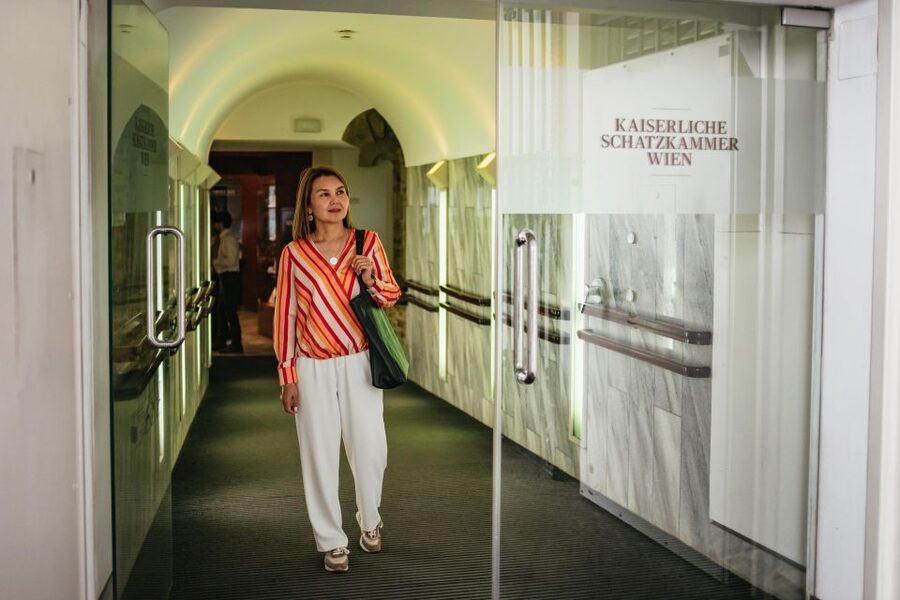
The meeting point is the Swiss Wing in the Vienna Hofburg Palace. This sounds simple, but the Hofburg is a large complex, and signs around the palace can be less clear than you might expect. Give yourself time to find the correct entrance rather than arriving at the last minute.
The booking information calls for a printed voucher. This matters. A digital QR code may not be enough for the ticket exchange, and you may need to trade the voucher for an actual admission ticket at the counter. The process has caused confusion for some visitors, so print the voucher before you leave your hotel.
The ticket is valid for one day, with the available starting time determined when you check the schedule. The activity is listed as a small group of up to 10 people, but remember that the basic product is admission, not a guaranteed guided tour. You can come with your own guide, and state-certified tourist guides generally enter free.
The collection is wheelchair accessible. Children and young people under 19 generally receive free admission. School groups under 19 must be registered directly through the museum’s booking department, so a school visit needs different planning.
The imperial crowns and the language of power
Start with the major regalia. The Austrian Imperial Crown is one of the museum’s essential sights, and its importance goes beyond craftsmanship. A crown like this was not merely worn as decoration. It represented continuity, authority, and the right to rule.
The collection also includes the crown jewels of the Holy Roman Empire, including the Imperial Crown. These objects connect Vienna to a political world much larger than Austria alone. The Holy Roman Empire lasted for centuries and included many territories, so its regalia carry a strong sense of ceremony and inherited power.
I suggest that you spend a few minutes looking at the objects before reaching for an audio guide. Notice the materials, the scale, and the way each piece is displayed. Then use the commentary to fill in the names and background. That two-step approach helps you see the objects as works of art before turning them into historical facts.
The crown jewels are the part most likely to satisfy visitors who want the classic royal experience. If your main goal is to see famous regalia and royal jewelry, this collection gives you plenty in a relatively short visit.
Habsburg jewelry and Empress Elisabeth’s personal connection
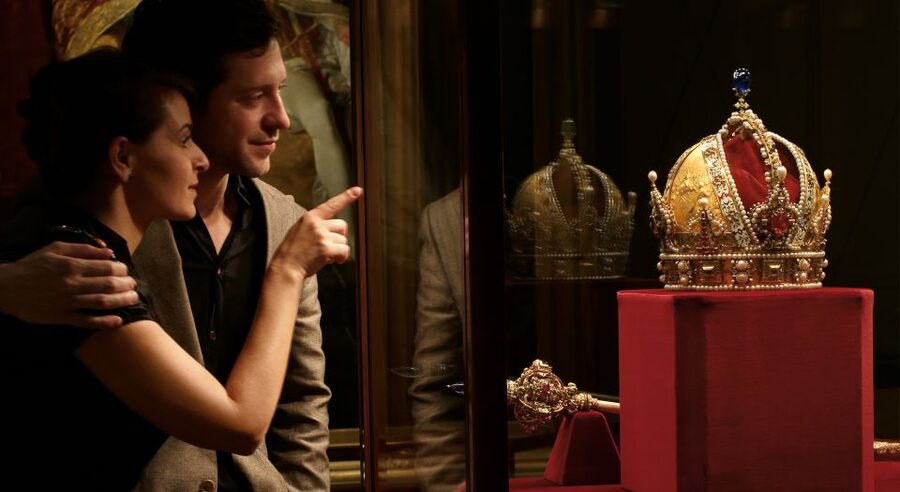
The jewelry rooms bring the imperial family closer to human scale. Crowns can feel official and distant. A necklace, brooch, or other personal ornament suggests the people who wore it, and the collection includes parts of the original jewelry of Empress Elisabeth, better known as Sisi.
You should not expect a full museum devoted to Elisabeth. Instead, her jewelry appears within the wider Treasury collection. That is still valuable, especially if you have already visited other Hofburg sights connected with the Habsburg family. The objects help link the public image of an empress with the private world of court dress and ceremony.
The collection also includes jewelry belonging to Habsburg empresses and princesses. Look beyond the largest stones. Smaller pieces can tell you more about changing fashion, family status, and the difference between objects worn in public and those made for personal use.
Lighting has been a concern for some visitors, particularly around darker displays. If an object seems hard to see, change your position and give your eyes a moment to adjust. You may find that the detail becomes clearer once you stop moving through the room.
A few more palace visits around Vienna worth a look
- Vienna: Schönbrunn Palace & Gardens Skip-the-Line Tour
★ 4.7 · 7,739 reviews - Vienna: Skip-the-Line Schönbrunn Palace & Gardens Tour
★ 4.8 · 5,411 reviews - Vienna: Skip the Line Schönbrunn Palace and Gardens Guided Tour
★ 4.5 · 1,540 reviews - Vienna: Schönbrunn Palace & Garden Skip-the-Line Guided Tour
★ 4.1 · 1,240 reviews
Emeralds, robes, keys, and the less obvious treasures
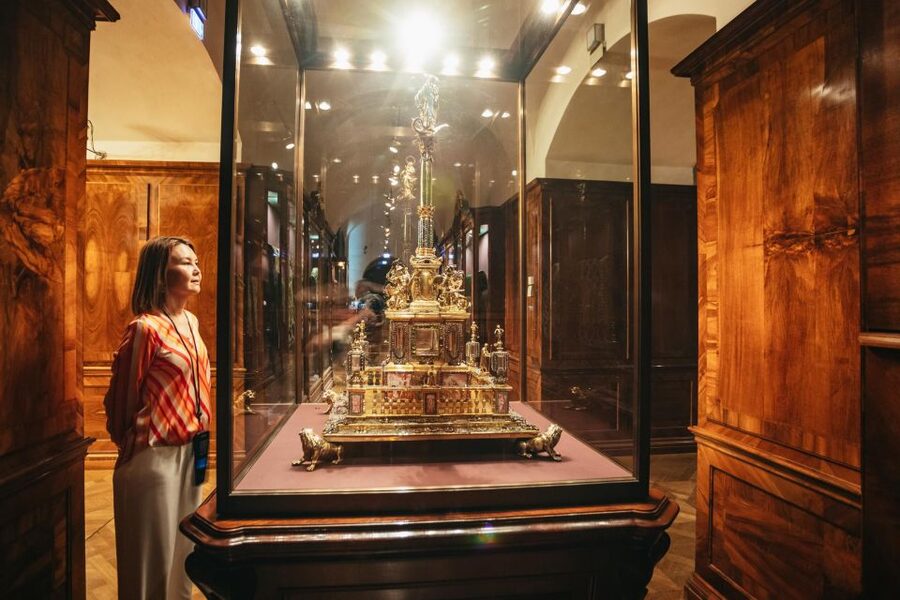
The great jewels attract attention, but the Treasury works best when you slow down for the objects that do not appear on every Vienna postcard. The collection includes one of the largest emeralds in the world, and it is an easy highlight for anyone interested in gemstones.
You will also find ceremonial clothing and objects tied to court offices. Chamberlains’ keys and various tabards are especially interesting because they show how palace life operated. A crown tells you who ruled. A key or uniform can suggest who had access, rank, and duties inside that system.
The Order of the Golden Fleece adds another layer. This was not just a decorative badge. Orders such as this helped organize elite loyalty around the ruler. The related treasure lets you see how status was displayed and passed through court culture.
The collections of 15th-century Burgundy broaden the story beyond the Austrian court. They show that the Treasury contains inherited and dynastic possessions, not only objects made for the Habsburgs in Vienna. This is one reason the museum feels larger in historical scope than its compact route might suggest.
Religious relics and the stories behind them
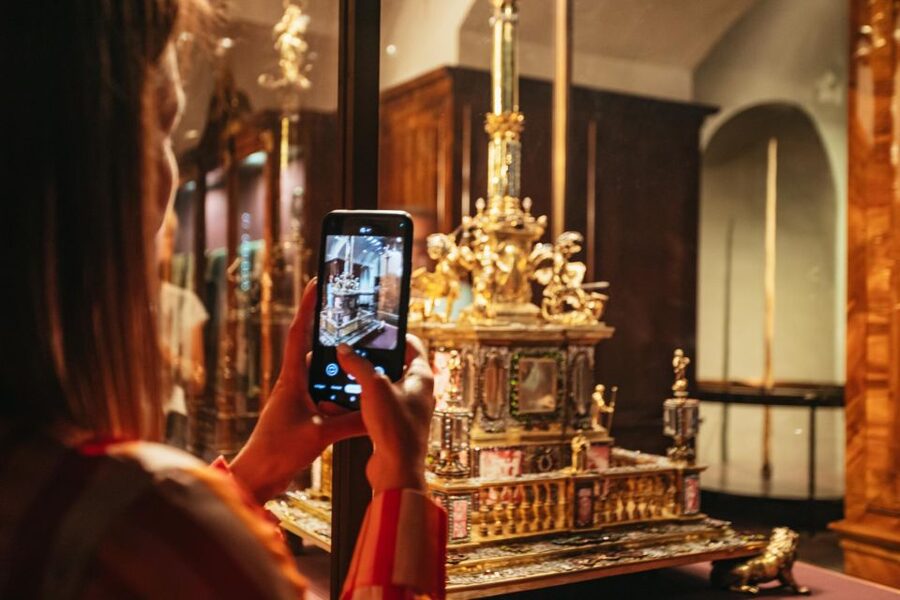
The Treasury includes important religious objects, and these displays may surprise you if you arrive expecting only crowns. The Holy Lance, described as dating from the eighth century, is one of the most famous examples. Its value lies in both the object and the beliefs attached to it.
The museum also presents legendary treasures such as the agate bowl known as the Holy Grail and the horn of a unicorn. You should treat these labels as part of the object’s long cultural story, not as modern scientific proof of the legends themselves. The point is to understand why rulers and collectors preserved such things and how belief shaped royal collections.
These rooms reward patience. Religious relics can be visually quieter than a crown, and the labels carry much of the meaning. If you rush, you may notice only cases of old metalwork. If you read, you begin to see how faith, politics, and imperial collecting overlapped.
The religious objects also make the visit useful for people who are less interested in royal fashion. You get sculpture, reliquaries, ceremonial pieces, and stories that reach far beyond the Habsburg family.
The Burgundian collection and Napoleon II’s cradle
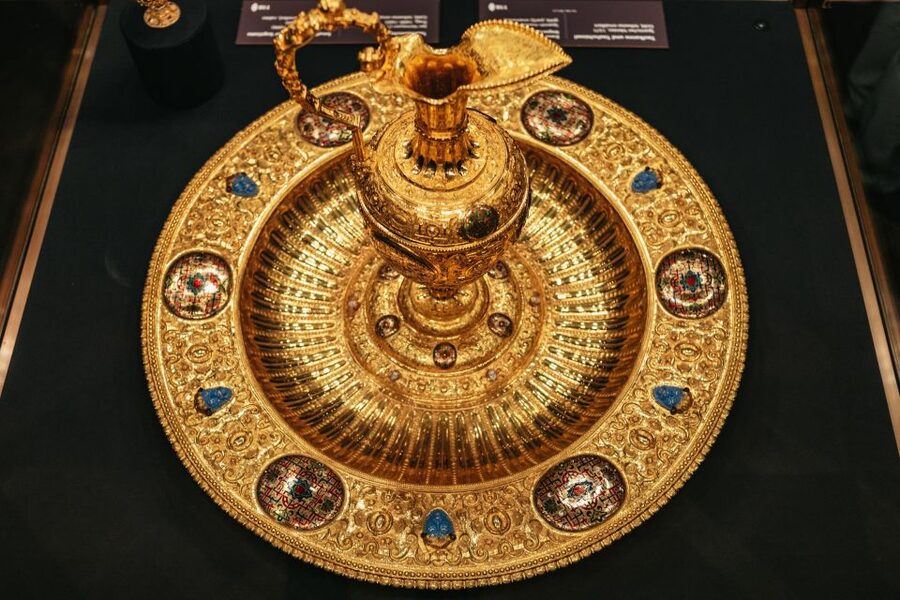
Two smaller areas help show the family network behind the Treasury. The 15th-century Burgundian pieces reflect the way dynastic collections grew through inheritance, marriage, and political connection. They are a reminder that the Habsburgs did not build their holdings in isolation.
The cradle of the King of Rome, Napoleon II, offers a different kind of object. A cradle can seem modest beside an imperial crown, but it brings dynastic politics into a more personal setting. Royal children were part of succession plans, diplomatic hopes, and public ceremony from birth.
This is also a good point to pace yourself. The museum is not huge, but the displays are dense. One hour may be enough to see everything. It is not enough to absorb every label, examine every textile, and listen to all available commentary.
Audio guide or independent visit?
The ticket details specify entrance only, with an audio guide and guided tour listed separately. That distinction matters because several comments about the visit refer to audio equipment or guides, while the basic admission does not promise either one.
If an audio guide is available at the museum when you arrive, it can add real value. The objects are not always self-explanatory, especially the relics, court offices, and dynastic pieces. Audio commentary can turn an impressive collection into a clear story.
A personal guide may be even better if you want the Habsburg family explained in plain language. Guides named Petee and Alex received especially strong praise for giving useful background on the Habsburgs, Franz Joseph, and Sisi, while answering questions. Those names relate to individual guided experiences, not to the standard entrance ticket, so confirm what you are booking.
If you prefer to move quickly, independent viewing works well. The exhibits are generally well marked, and the museum can be navigated without a guide. The layout may feel confusing at first, but it is small enough to sort out with a little patience.
How much time and money should you plan?
At $18 per person, the ticket is fair if you care about royal collections, European dynasties, religious art, or gemstones. You may finish the main route in an hour, so the value depends on how much context and attention you want rather than on the number of hours spent inside.
I would allow 90 minutes for a comfortable visit. That gives you time for the crowns, jewelry, religious objects, Burgundian material, and smaller court items without turning the stop into a race. Add more time if you plan to listen to audio commentary.
The price is less compelling if you want only a quick glimpse of one famous crown. In that case, the museum’s many smaller displays may feel like extra material. It is a better purchase for someone who wants to understand the range of Habsburg possessions.
Free admission for children and young people under 19 improves the value for families. Remember that school groups have a separate registration rule. For adult groups of more than 10, one accompanying guide may receive free entry under the stated group rules. Groups of fewer than 10 do not receive that guide allowance.
The booking has free cancellation up to 24 hours in advance and allows you to reserve while paying later. Those policies are useful if your Vienna schedule is still shifting, but they do not remove the need to handle the printed voucher requirement.
Who should book the Imperial Treasury?
I would choose this visit if you want a compact museum with major crowns, unusual relics, and a strong sense of imperial ceremony. It also works well early in a Vienna stay. Once you know the objects and family names here, later palace rooms and city sights make more sense.
It suits adults, older children, history fans, jewelry enthusiasts, and anyone curious about how rulers displayed wealth. It is also a good rainy-day stop because you can see a great deal without committing to a long museum day.
You may want a guided option if court history feels confusing or if you want the religious objects explained. An independent visit is fine if you like reading labels and setting your own pace.
Final verdict: book it if you want more than crown jewels
Book the Imperial Treasury if you want to see the Habsburgs through their possessions, not only through palace rooms and portraits. The crowns are spectacular, but the Holy Lance, oversized emerald, court keys, tabards, Burgundian pieces, Sisi’s jewelry, and legendary relics give the visit its real range.
Skip it only if your Vienna schedule is so tight that you can spare no more than a quick photo stop. Otherwise, the $18 ticket buys a focused, accessible museum visit with enough variety for one to two hours. Print your voucher, allow time to find the Swiss Wing, and consider adding audio commentary or a guide if you want the collection’s stories to come alive.
FAQ
Where is the Imperial Treasury located?
It is in the Swiss Wing of the Vienna Hofburg Palace, the oldest part of the Hofburg complex.
What does the $18 ticket include?
The ticket includes entrance to the Imperial Treasury. An audio guide and guided tour are not included in the listed admission.
How long should I allow for the visit?
You can see the main collection in about one hour. Allow around 90 minutes to two hours if you want to read the displays or use audio commentary.
Do children enter free?
Children and young people under 19 generally receive free admission. School groups under 19 must be registered through the museum’s booking department.
Do I need a printed voucher?
Yes. The booking information says a printed voucher is required. You may need to exchange it for an admission ticket at the counter.
Is the Imperial Treasury wheelchair accessible?
Yes, the museum is wheelchair accessible.
Just added around Vienna
- Sound of Music: Salzburg, Mirabell, Hallstatt & Alpine Views★ 4.2 · 9 reviews
- Belvedere Palace: Tour with Skip-the-Line/Transfer Options★ 4.7 · 27 reviews
- Vienna: Schönbrunn Palace Gardens Private Guided Tour★ 4.9 · 28 reviews
- Schönbrunn Palace Private Photoshooting tour★ 5.0 · 4 reviews
- Schönbrunn Grand Tour : Private Skip-the-Line Walking Tour★ 5.0 · 11 reviews
- Vienna: Schönbrunn Palace & Christmas Market Walking Tour★ 3.9 · 6 reviews
- Wien: Tours with locals by public transport & walking★ 4.4 · 18 reviews
- Private Schönbrunn Palace Tour: Entrance included★ 4.8 · 5 reviews
Schonbrunn and Hofburg Palace Tours, compared.

Skip-the-Line Sisi Museum, Hofburg and Gardens Tour
Read our review →
Skip-the-Line Schonbrunn Palace Guided Tour and Vienna Historical City Tour
Read our review →
Entry Ticket Upper Belvedere, Klimt’s Kiss & Permanent Collection
Read our review →
Skip-the-Line Hofburg and Empress Sisi Museum Tour
Read our review →
Imperial Treasury & New Hofburg Palace Combo Ticket
Read our review →
New Hofburg Palace Audio-Guided Tour & Entry Ticket
Read our review →
Skip-the-Line Sisi Museum, Hofburg and Gardens Tour Vienna
Read our review →Browse the lists this tour appears in