
REVIEW · FRANCE PALACE TOURS
Fontainebleau: Palace Private Guided Tour with Ticket
Château de Fontainebleau rewards close attention. Its grand rooms show how a hunting lodge became a royal residence, then an imperial home. In two hours, you move from Italian Renaissance decoration in the Francis I Gallery to the vast ballroom and Napoleon I’s private apartments.
I especially like the private format, which gives your guide room to explain details at your pace, and the tour’s clear route through the palace’s best interiors. Guides Antoine and a former Fontainebleau staff member have been praised for making the story lively and easy to follow. The main drawback is the $323 price per person, which is high for a two-hour palace visit, especially since transportation is not included.
Key points to know before booking
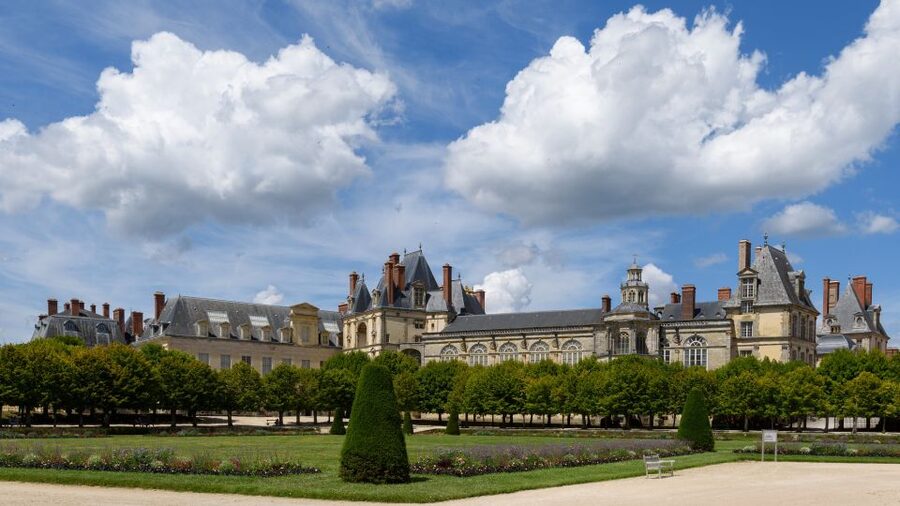
- See the Francis I Gallery: Frescoes and stucco by Italian artists Il Rosso and Primaticcio make this one of Fontainebleau’s most striking rooms.
- Enter Napoleon I’s apartments: The imperial bedroom gives the tour a personal ending after the grand public rooms.
- Get a private guide: Your guide can focus on the questions and details that matter most to your group.
- Plan your arrival carefully: The meeting instructions direct you to the golden gate at the palace’s main entrance, while the booking details also list 43 Bd Magenta.
- Allow two focused hours: The route covers major rooms without pretending to show every corner of this large palace.
- Check mobility and luggage needs: Strollers, baby carriages, large bags, and luggage are not allowed, and the tour is not suitable for people with mobility impairments.
Why Fontainebleau feels different from Versailles
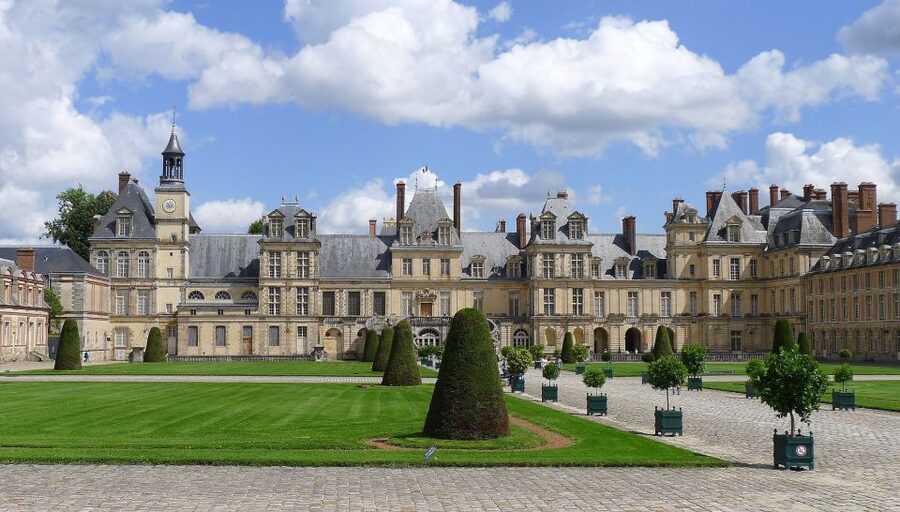
Fontainebleau offers a more layered look at French power. Versailles is often associated with Louis XIV and the grand theater of the monarchy. Fontainebleau lets you follow several eras through one residence, from Renaissance kings to the Bonaparte family.
I like that the palace was not presented as a single-period monument. Its rooms changed with the people who used them. You see Renaissance design, royal apartments furnished in later styles, and rooms connected with Napoleon I. That variety gives the tour a useful sense of time.
The palace also began as a hunting lodge before becoming a family home for French kings. That change matters because it explains why Fontainebleau feels both grand and lived-in. It was not built only for ceremonies. It grew as rulers returned, remodeled rooms, and shaped the building around court life.
Your private guide is the key to making sense of those changes. Without explanation, the decoration can blur into a long parade of gilded walls and painted ceilings. With a good guide, you can connect the art, room design, and occupants to the larger story of the palace.
The tour has a rating of 4.9 from 11 bookings, and the strongest praise centers on the guides. Antoine is singled out for his engaging explanations and strong command of the château’s past. One guide had previously worked at Fontainebleau, which can add useful familiarity with the building. Guide quality can vary by language and assignment, but the private setup gives you a better chance to ask questions than a large group tour.
More palace entry tickets in France:
- Paris: Versailles Palace and Gardens Full Access Ticket
★ 4.6 · 41,579 reviews - From Paris: Versailles Palace Self Guided & Gardens tickets
★ 4.4 · 1,100 reviews - Versailles: Palace Guided Tour with Skip-the-Line Ticket
★ 4.6 · 695 reviews
Meeting at the golden gate
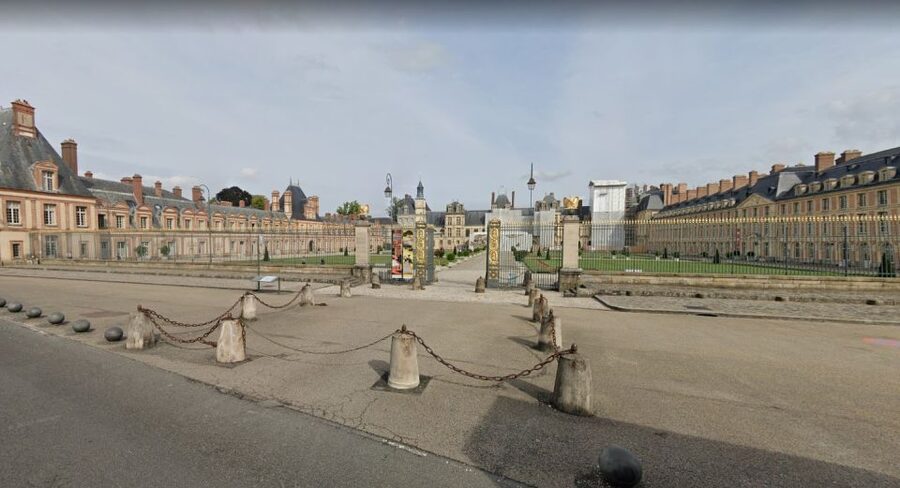
The stated meeting place is in front of the palace’s main entrance, at the golden gate. Your guide carries a sign with your name. That is a simple system, but it is worth taking seriously at a large palace where several gates and entrances may look alike.
The booking information also lists 43 Bd Magenta as the starting and return point, while the meeting instructions specifically direct you to the palace entrance. I would confirm the exact meeting details before setting out, especially because transportation is not included. The practical instruction is clear: look for your guide at the golden gate rather than assuming a vehicle transfer is part of the experience.
You should arrive ready to enter the palace without large luggage, oversized bags, a stroller, or a baby carriage. Those items are not allowed. The tour is also not suitable for people with mobility impairments, so consider that limitation before paying for a private visit.
The ticket is included, and the activity provides skip-the-ticket-line access. That saves some uncertainty at the entrance, though it does not eliminate the need to find the correct gate or arrive at the agreed time.
The first steps inside the royal palace
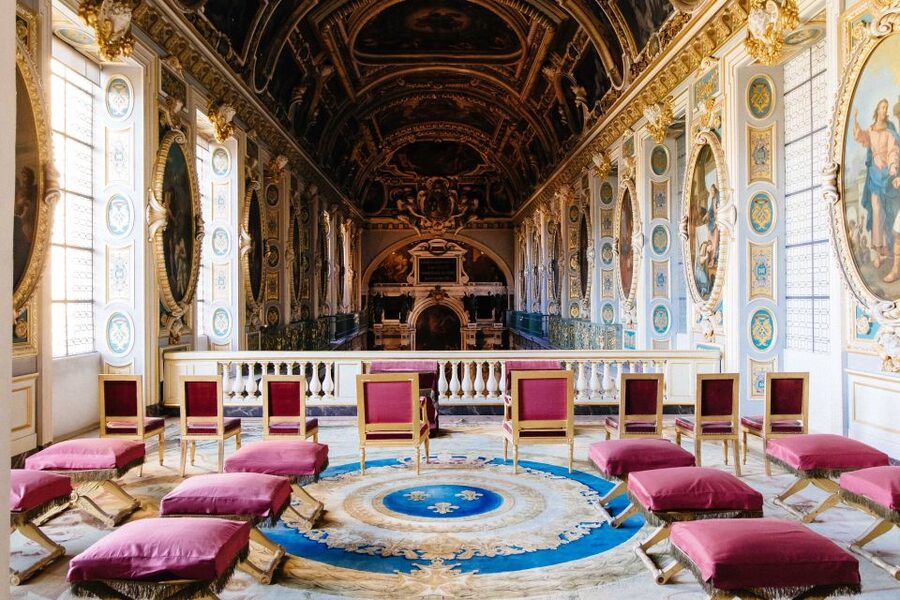
Once inside, the guide sets the palace in context. You learn how Fontainebleau changed from a royal hunting lodge into a residence used by French monarchs. This opening is important because it gives the rooms a human purpose.
Instead of seeing each apartment as a separate display, you begin to understand the palace as a working home for rulers and their families. Different generations furnished rooms in different styles, from the Renaissance through the nineteenth century. The decoration records those changes.
This is where a private tour can earn its higher cost. If you are curious about why a particular room looks Italian, royal, or imperial, you can ask directly. You are not tied to the questions of a large group, and your guide can spend more time on the pieces that catch your eye.
The two-hour limit also shapes the experience. Fontainebleau is immense, and no short tour can cover every room. That is not necessarily a flaw. A focused route can be easier to remember than an exhausting march through every available chamber.
Still, you should book this experience with realistic expectations. You are getting a guided introduction to the palace’s major highlights, not a full-day architectural study. If you want to examine every decoration at length, you may need more time beyond the tour.
The Francis I Gallery and the School of Fontainebleau
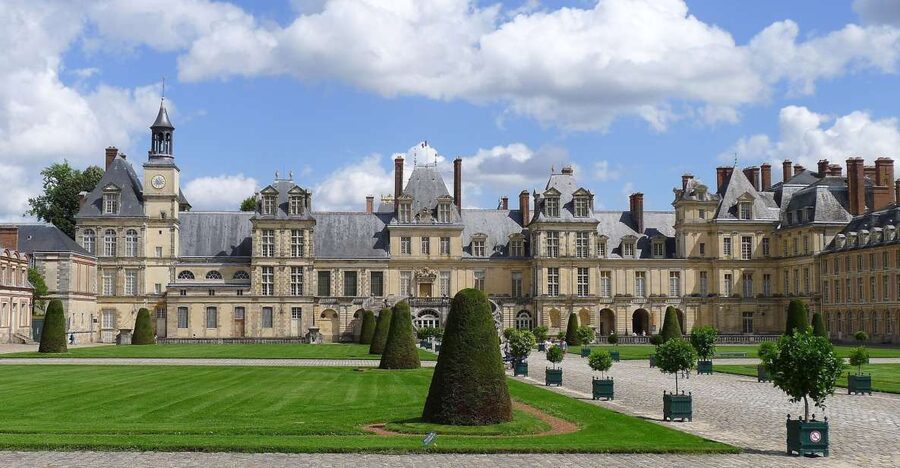
The Francis I Gallery is the artistic center of the visit. It is decorated with frescoes and stucco in the Renaissance style, with work linked to Italian artists Il Rosso and Primaticcio. These artists helped establish the School of Fontainebleau, an important style associated with the palace.
You can expect a room that feels more theatrical than plain court architecture. Fresco and stucco work across the walls and ceiling, creating a decorative setting designed to impress. The gallery is not simply a passage from one room to another. It was made to display taste, learning, and royal ambition.
I would listen closely here rather than rushing to take photographs. The value comes from understanding why Italian artists were brought to France and how their work shaped the palace. A guide can point out how the decoration differs from the later rooms and help you notice the relationship between painting, sculpture, and architecture.
This is also one of the strongest reasons to choose a private visit. The gallery can be visually overwhelming at first. You might find yourself looking at the ceiling while missing the wall decoration, or focusing on one painted scene while overlooking the stucco framing it. A guide helps organize what you are seeing.
For anyone interested in art, this section may be the highlight of the tour. For visitors more interested in royal personalities, it provides the artistic foundation before the route moves into the apartments and Napoleon’s rooms.
More guided palace visits in France:
- Versailles: Skip-the-Line Guided Palace Tour and Full Access
★ 4.6 · 5,214 reviews - From Paris: Versailles Palace Guided Tour & Gardens Access
★ 4.7 · 3,574 reviews - From Paris: Versailles Guided Tour with Skip-the-Line Entry
★ 4.2 · 2,422 reviews - Versailles Palace Guided Tour with Reserved Entry
★ 4.5 · 2,364 reviews
Royal apartments from the Renaissance to the nineteenth century
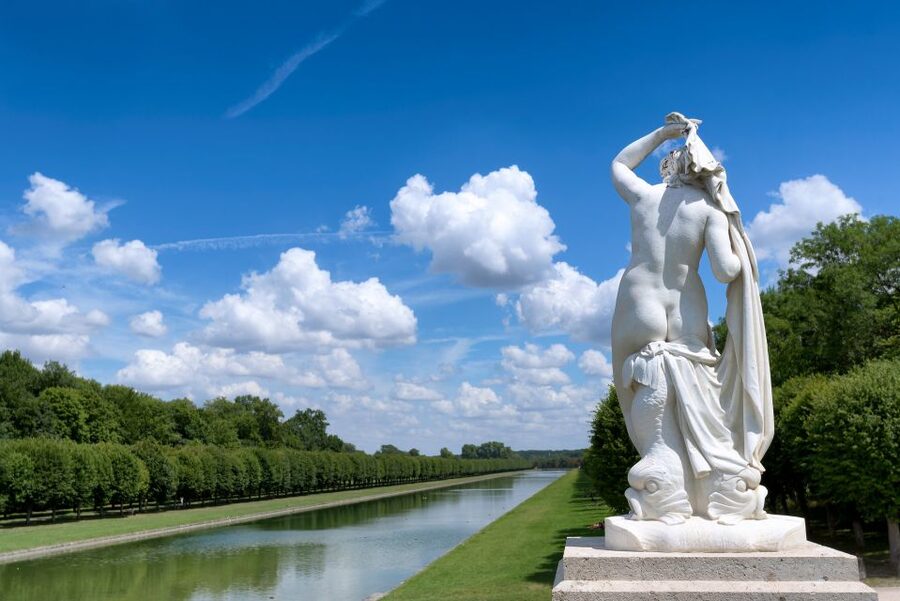
After the gallery, the tour continues through the monarchs’ apartments. These rooms are furnished in styles that range from the Renaissance to the nineteenth century, so the palace does not have one uniform appearance.
That variety is useful. You can see how royal taste shifted over time and how later residents adapted existing spaces. The apartments also bring the palace down to a more personal scale. The gallery and ballroom were made for display, while apartments suggest daily routines, status, and private life.
Your guide explains the rooms as part of the monarchy rather than treating them as isolated interiors. That context can help you understand why one chamber feels formal and another more intimate. It also shows how the palace served both ceremony and residence.
The downside is that a visitor hoping for a single, perfectly preserved period style may find the mix less tidy. Fontainebleau’s appeal comes partly from its layers, but those layers can make the palace harder to read on your own. The guide’s explanations are not an optional extra here. They help turn a sequence of decorated rooms into a coherent visit.
The private group format should suit families, couples, and small groups with different interests. You can ask for more art history, more royal biography, or more information about Napoleon instead of accepting a fixed lecture. The activity does not state a maximum group size, so confirm the group arrangement if that detail matters to you.
The ballroom and the theater of royal life
The ballroom gives the tour a change of scale. After the more enclosed apartments, you enter a huge ceremonial room built for royal parties and formal events.
Standing in the middle of the ballroom helps you picture how court life worked. This was not merely a beautiful room. It was a place where rank, ceremony, and social display were acted out. Your guide can explain what these gatherings meant and how the space was used.
I like this stop because it connects decoration with behavior. Painted surfaces and grand proportions were designed to shape how people moved, watched, and were watched. You can ask your guide to explain the difference between a room meant for private use and one built for public ceremony.
The ballroom may also be the point where the tour feels most theatrical. Its size gives you a physical sense of royal power that a written description cannot match. At the same time, it is worth remembering that a two-hour tour moves at a steady pace. You may have enough time to appreciate the room and hear its story, but not enough to linger indefinitely.
If you are visiting with children or anyone who loses interest in art quickly, this space can provide a welcome visual break. The scale is easy to grasp, and the guide can connect it to parties, court customs, and royal life.
Napoleon I’s apartments and imperial bedroom
The final section focuses on Emperor Napoleon I. His apartments offer a different mood from the earlier monarchy rooms. You see the palace through the lens of an emperor who used it as a home and seat of power.
The imperial bedroom is a particularly useful final stop because it brings Napoleon closer to ordinary human scale. After the gallery, apartments, and ballroom, a bedroom reminds you that even the most powerful ruler needed private rooms for sleep and daily life.
The route through Napoleon’s apartments also gives the visit a strong chronological ending. You have moved from the French kings to the imperial period, seeing how the palace continued to serve new rulers rather than becoming frozen in its earliest era.
If Napoleon is your main interest, tell your guide at the beginning. The supplied information confirms that the apartments and bedroom are included, but it does not promise a separate extended Napoleon lecture. A private guide can usually shape the emphasis within the scheduled route, but two hours still imposes limits.
This final section may be especially useful for people who have already seen Paris sites connected with Napoleon and want another setting in which to understand his domestic and imperial life. It also helps balance the tour, since the earlier rooms focus heavily on Renaissance art and royal interiors.
Is $323 per person a fair price?
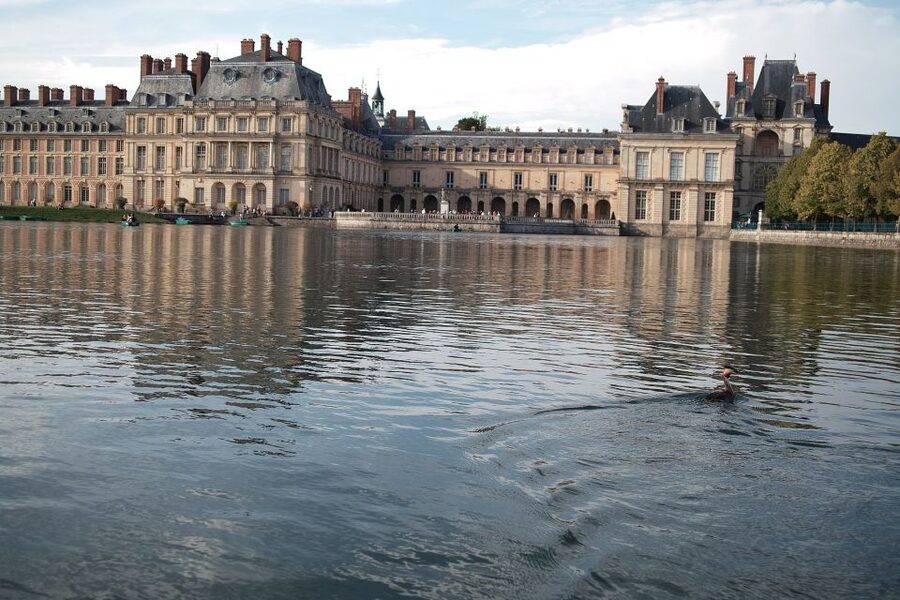
At $323 per person, this is an expensive palace tour. The ticket is included, but transportation is not, and the total visit lasts two hours. One booking described the experience as very good but too expensive, a fair warning for anyone watching a tight budget.
The price makes more sense if you place a high value on a private guide. You are paying for personal attention, a focused route, language choice, and the chance to ask questions throughout the visit. Guides are available in English, French, Italian, Spanish, German, Russian, Chinese, Portuguese, and Japanese.
For a couple or family that wants a private explanation of Fontainebleau, the price may feel worthwhile. It is less convincing if you mainly want admission and freedom to wander. In that case, compare the cost with a regular palace ticket and consider visiting independently.
The strongest case for booking comes from the guide quality. Antoine is praised for being engaging and well informed, and a former Fontainebleau staff member has also guided the experience. Since a private tour depends heavily on the person leading it, I would request your preferred language and confirm the guide arrangement if possible.
The included skip-the-ticket-line access adds convenience, but it should not be confused with a faster route through the palace itself. You still have a set two-hour schedule, and the tour is designed around selected rooms.
Who should book this Fontainebleau tour?
I would choose this tour if you want the palace explained rather than simply entered. It suits first-time visitors who want the main artistic and royal highlights without planning their own route.
It is also a good match for:
- Small private groups that prefer their own pace and questions.
- Art lovers drawn to the Francis I Gallery and the School of Fontainebleau.
- History-focused visitors who want to connect Renaissance kings, later monarchs, and Napoleon I.
- Families with older children, since the ballroom and imperial apartments add variety.
- Visitors who need a specific language, with nine guide languages listed.
I would hesitate if you have limited funds, require step-free access, need to bring a stroller or large bag, or want a long, unhurried look at every room. The activity is not suitable for people with mobility impairments, and the restrictions on luggage are strict enough to affect your planning.
Free cancellation is available up to 24 hours before the tour, and you can reserve now while paying later. Those terms help if your Paris plans are still shifting, but they do not change the basic value question.
My verdict on the private Fontainebleau visit
I recommend this tour for readers who want a clear, guided introduction to Fontainebleau’s most important interiors and are willing to pay for privacy. The Francis I Gallery, ballroom, and Napoleon I’s apartments create a well-balanced route through art, ceremony, and personal royal space.
The price is the central concern. At $323 per person, the tour needs a strong guide to feel worthwhile. Antoine’s engaging style and the experience of a guide who previously worked at Fontainebleau make the offering more persuasive, but you should still compare it with self-guided admission.
Book it when the palace is a priority and you want someone to make sense of its many eras. Skip it when you mainly need inexpensive entry, extra time, or a fully accessible visit.
FAQ
How long does the Fontainebleau private tour last?
The guided tour lasts two hours.
What is included in the price?
The price includes a private tour, a local guide, and entry tickets to Château de Fontainebleau.
Is transportation included?
No. Transportation is not included.
Where do I meet the guide?
Meet your guide in front of the palace’s main entrance at the golden gate. The guide will hold a sign with your name. The booking details also list 43 Bd Magenta, so confirm the exact meeting instructions before arrival.
Which languages are available?
Guides are available in Italian, Spanish, German, Russian, Chinese, Portuguese, Japanese, English, and French.
Can I bring a stroller or large bag?
No. Baby strollers, baby carriages, luggage, and large bags are not allowed. The tour is also not suitable for people with mobility impairments.
Just added around France
- Palace of Versailles Guided Afternoon Tour from Paris★ 4.1 · 85 reviews
- From Paris: Versailles Full-Day Guided Tour with Lunch★ 4.9 · 48 reviews
- Private Trip Giverny Versailles Trianon from Paris★ 4.9 · 6 reviews
- Private Versailles Bike Tour★ 4.4 · 7 reviews
- Private Versailles, Gardens, Trianon from Paris by Mercedes★ 4.4 · 20 reviews
- Private Fontainebleau, Versailles, Trianon from Paris★ 5.0 · 5 reviews
- From Paris: Private Versailles Half-Day Private Tour★ 4.6 · 4 reviews
- Petit Palais Paris Museum of Fine Arts Tour with Tickets★ 4.2 · 3 reviews
France Palace Tours, compared.
Versailles Palace and Gardens Full Access Ticket
Read our review →
Skip-the-Line Tour of Palace and Gardens Access
Read our review →
Versailles Palace & Gardens with Transportation
Read our review →
Skip-the-Line Guided Palace Tour and Full Access
Read our review →
Versailles Palace Guided Tour & Gardens Access
Read our review →
Versailles Palace and Gardens Tour from Paris
Read our review →
Versailles Palace Bike Tour with Market & Marie-Antoinette hamlet
Read our review →
Versailles Guided Tour with Skip-the-Line Entry
Read our review →Browse the lists this tour appears in