REVIEW · SPAIN PALACE TOURS
Aranjuez: Royal Palace Guided Tour
The most memorable part of this Aranjuez palace tour is the contrast between public ceremony and private royal life. You move from the Throne Room and grand Reception Hall into a queen’s bedroom and office, then into the startling Porcelain Room, where white porcelain covers the walls.
I like the 75-minute format, which gives you a focused look without turning the palace into an all-day project. I also like the access to rooms such as the Moorish Room and the Queen’s private quarters. The main drawback is clear: the tour is in Spanish, and your palace admission ticket is not included in the $14 tour price.
Key points at a glance

- The Porcelain Room is the visual showstopper: White porcelain panels and Rococo decoration make this one of the palace’s most unusual interiors.
- You see both ceremony and daily royal life: The route includes the Throne Room, Ball Room, Queen’s office, bedroom, and guard room.
- The Moorish Room adds a surprise: Its bronze and crystal chandelier and neo-Nasrid decoration feel very different from the palace’s grand European rooms.
- A Spanish-speaking guide leads the visit: Gloria has been praised for detailed explanations, professional delivery, and light humor.
- The tour fee does not include entry: Add the palace admission charge, normally €7, or €4 for visitors over 65 and students under 25.
- The meeting point is simple: Find the guide outside Cafe de Damas, at the corner where Avenida de Palacio begins.
Entering Aranjuez Royal Palace
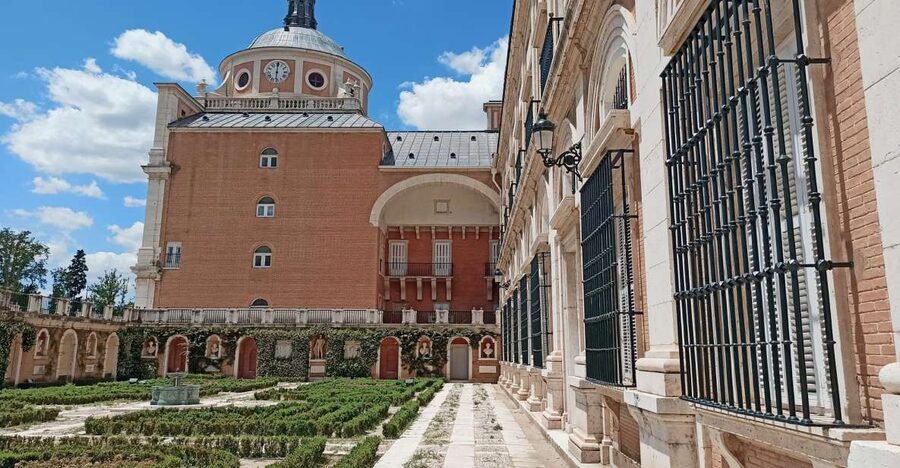
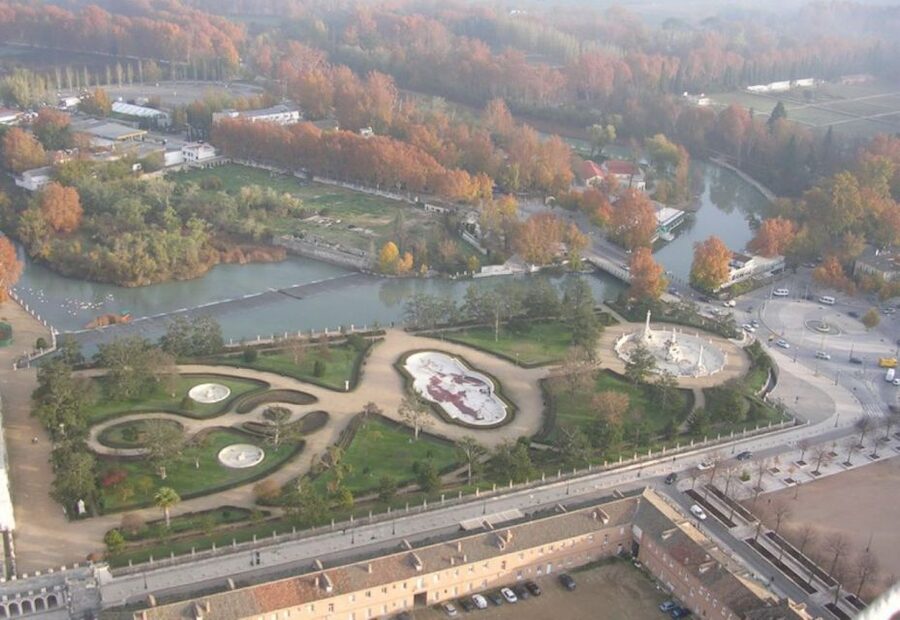
Aranjuez Royal Palace sits in the Community of Madrid and dates in part to the 16th century. This is not a bare shell with a few paintings hung on the walls. The palace is presented as a working royal residence, with formal halls, private chambers, decorative rooms, and spaces built to impress.
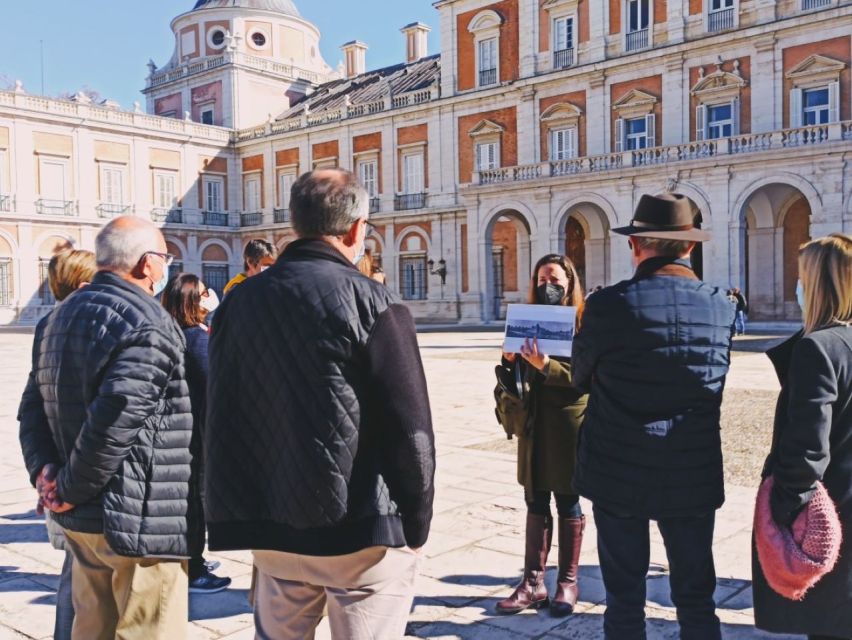
You meet outside Cafe de Damas, on the corner of the square where Avenida de Palacio begins. That detail matters because a palace square can have several entrances and meeting spots. Arrive with enough time to find the cafe and identify your guide before the 75-minute visit starts.
The guide leads you inside the palace and explains how its rooms were used by royal residents and their court. I like this approach because a room becomes more useful when you know its purpose. A Throne Room is not simply a large decorated chamber. It is where royals received private audiences. A queen’s bedroom tells you something different about routine, status, and privacy.
The tour is conducted in Spanish. If you follow spoken Spanish comfortably, you should get much more from the stories, local mythology, and historical detail. If you do not, the rooms will still provide plenty to see, but the visit’s main value is the guide’s spoken explanation.
More guided palace visits in Spain:
- Seville: Cathedral, Giralda & Alcazar Entry With Guided Tour
★ 4.6 · 8,560 reviews - Madrid: Royal Palace Expert Guided Tour with Skip-the-Line
★ 4.7 · 8,407 reviews - Granada: Alhambra & Generalife Fast-Track Guided Tour
★ 4.7 · 8,313 reviews
From the Queen’s Guard Room to the Music Room
The route includes the Queen’s Guard Room and Music Room, two stops that help you understand how a royal residence operated. A guard room points to the security and ceremony surrounding the royal household. A music room shifts the mood toward entertainment and court life.
These rooms are useful early stops because they prepare you for the palace’s mix of function and display. Royal buildings were not just homes. They were places where access was controlled, visitors were received, performances took place, and every room helped express rank.
Your guide also brings in stories about the palace’s mysteries and local mythologies. The supplied details do not specify each legend, so you should expect the guide to add local color rather than treat the visit as a room-by-room architectural lecture. Gloria, one of the named guides associated with the experience, has been singled out for clear explanations and a sense of humor.
That touch of humor can matter during a palace tour. Decorative details and royal names can blur together after a while. A lively explanation helps you keep the rooms distinct, especially if you are visiting several historic sites around Madrid.
The Throne Room and the public face of royalty
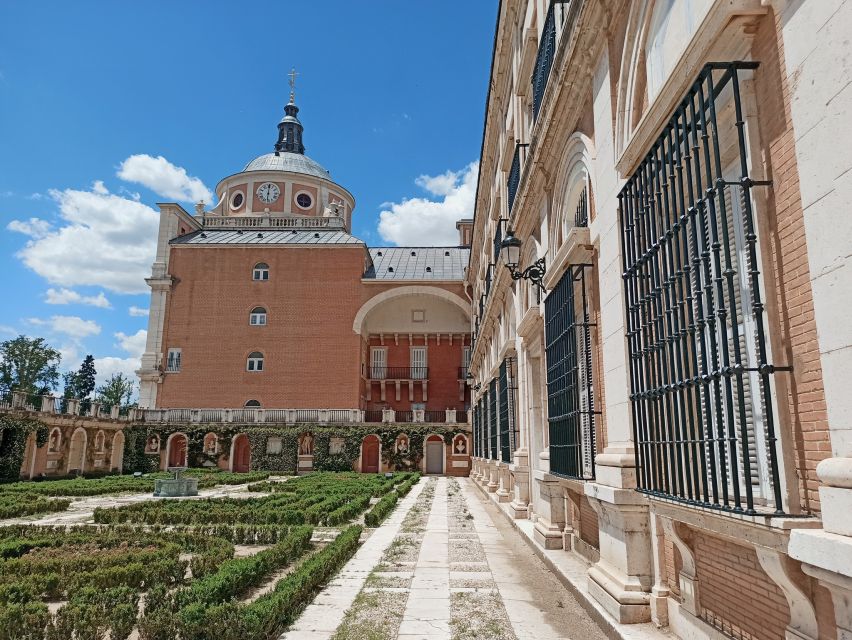
The Throne Room is one of the main ceremonial stops. Here, royals received private audiences, so the room gives you a direct look at how power was presented through architecture and ritual.
Pay attention to the change in scale and mood as you move through the palace. Formal rooms were designed for appearances. Their size, decoration, and arrangement helped place the monarch at the center of attention. The guide’s explanation is especially useful here because the room’s purpose is not always obvious from decoration alone.
The Ball Room adds another public setting. It was part of the palace’s social and ceremonial life, giving you a sense of how the royal household hosted events. You are not simply looking at a beautiful hall. You are seeing part of a system built around invitations, rank, performance, and display.
I would not expect a full account of every monarch connected with Aranjuez in only 75 minutes. The short format works best if you want the important rooms and a clear outline of royal life. If you prefer long discussions of architecture, succession, and political events, you may find the pace brisk.
A look inside the Queen’s office and bedroom
The tour becomes more personal when you enter the Queen’s office and bedroom. These rooms offer a glimpse of noble life that grand halls cannot provide.
A throne room tells you how a monarch wanted to be seen. An office and bedroom suggest how that person worked, rested, and moved through private hours. The contrast is one of the strongest reasons to choose a guided visit rather than simply walking through the palace without context.
The palace gives you access to private rooms as well as ceremonial halls. That is important for the price, since the experience is not limited to a quick look at the most famous public spaces. You get a better sense of the residence as a home for a royal household, even though the palace’s scale and decoration are far removed from ordinary domestic life.
I would keep your camera ready, but remember that the guide’s explanation is the part you cannot recreate later from photographs. Take a few pictures when allowed, then look closely at the furnishings, wall treatments, and layout while the guide explains their customary use.
A few more palace visits around Spain worth a look
- Seville: Royal Alcázar Entry Ticket
★ 4.6 · 28,378 reviews - Granada: Alhambra & Nasrid Palaces Tour with Tickets
★ 4.7 · 19,801 reviews - Granada: Alhambra and Nasrid Palaces Entry Ticket
★ 4.6 · 15,130 reviews - Madrid: Royal Palace Fast-Access Admission Ticket
★ 4.6 · 13,856 reviews
The Porcelain Room’s white Rococo walls
The Porcelain Room is likely to be the room you remember most clearly. It is lined completely with white porcelain and decorated in the Rococo style, making it unlike the darker, more conventional royal interiors you may see elsewhere.
This room is valuable because it shows how decoration could become the main event. The walls are not simply painted or covered with fabric. Porcelain turns the entire space into a display of craft, taste, and expense.
The white surface also changes the feeling of the room. Rather than relying only on size, the design catches your eye through its repeated decorative detail. Your guide can help you notice how the room was meant to impress and why such an interior belonged in a royal palace.
Give yourself time to look up, across the walls, and around the room instead of focusing only on the center. On a guided tour, the group may keep moving, so listen closely when the guide introduces the room and use the next moments to study the decoration.
For many people, this is the clearest example of why the palace is worth visiting. The Throne Room shows ceremony. The Porcelain Room shows extravagance in a more unexpected form.
The Moorish Room and its neo-Nasrid design
The Moorish Room brings a sharp change in style. It features neo-Nasrid decoration, along with a bronze and crystal chandelier. The room does not blend quietly into the rest of the palace. Its design creates a deliberate visual shift.
The term neo-Nasrid points toward an architectural style inspired by the Nasrid tradition associated with Granada’s Alhambra. The tour information does not provide a full explanation of the room’s date or commission, so your guide’s account will be the best way to understand its place in the palace.
This stop rewards close attention to materials and motifs. The chandelier gives the room a strong central feature, while the decoration creates a different mood from the formal European rooms elsewhere in the route.
I like the Moorish Room because it breaks up the expected sequence of palace interiors. You might anticipate one grand hall after another. Instead, this room offers a more surprising visual pause and shows how royal interiors could borrow from different artistic traditions.
As with the Porcelain Room, the room’s details can pass quickly if you focus only on the guide. Listen first, then look around before the group moves on. Comfortable shoes and comfortable clothes are sensible choices for the entire visit.
The Reception Hall and Royal Chapel
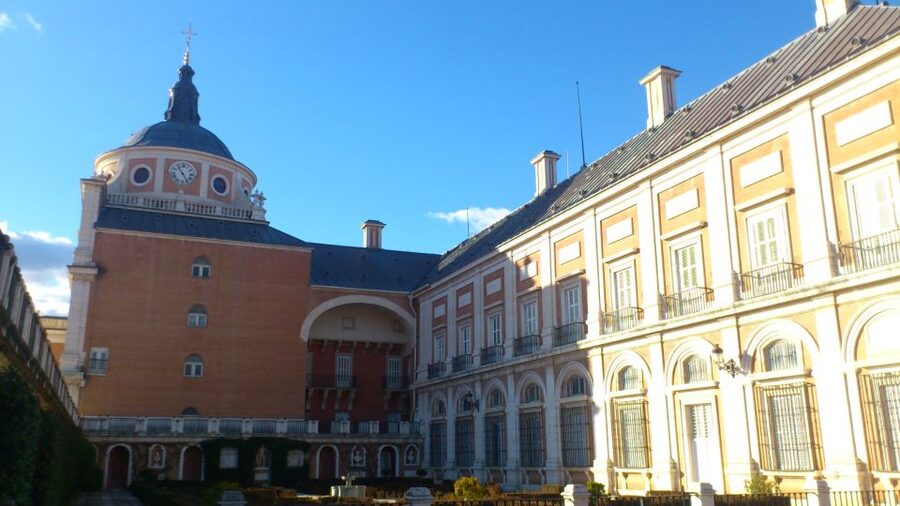
Near the end of the route, you enter the grand Reception Hall and the Royal Chapel. These spaces bring together the palace’s public, ceremonial, and religious roles.
The Reception Hall gives you one more large-scale interior designed for formal arrivals and important occasions. Its size and decoration help close the loop on what you saw earlier in the guard room, music room, and audience spaces. This was a residence built around hierarchy and presentation.
The Royal Chapel offers a quieter type of grandeur. It shows how religion fitted into palace life and how a royal residence could contain its own important worship space. The chapel is not just another decorated room. Its purpose was different, and that change in function helps you understand the palace as a complete royal world.
The route also includes the Ball Room, Throne Room, Queen’s rooms, Porcelain Room, Moorish Room, and other palace areas. Since the tour lasts 75 minutes, you should expect a planned route rather than free time in every room. Stay with the guide and save detailed photography for moments when the group pauses.
What the €14 tour price really covers
The advertised tour price is $14 per person, but the entry fee is separate. Palace admission is listed as €7 for a basic ticket and €4 for visitors over 65 or students under 25. Teachers, unemployed visitors, large families, and disabled visitors can enter free when they provide the required proof.
That means an adult paying the standard admission should budget for both the tour and the palace ticket. The exact total depends on the booking currency and the admission category, but the key point is simple: the guide’s fee is not the full cost of entering the palace.
I consider the guided portion a fair value if you care about meaning, not just access. The palace admission gets you through the door. The guide connects the rooms, explains their customary use, and adds stories about the royal residents, local myths, and historical events.
The value is weaker if you only want to wander at your own speed or if you do not understand Spanish. You are paying for a live Spanish explanation, so language fit should be part of your decision.
Who will get the most from this 75-minute visit
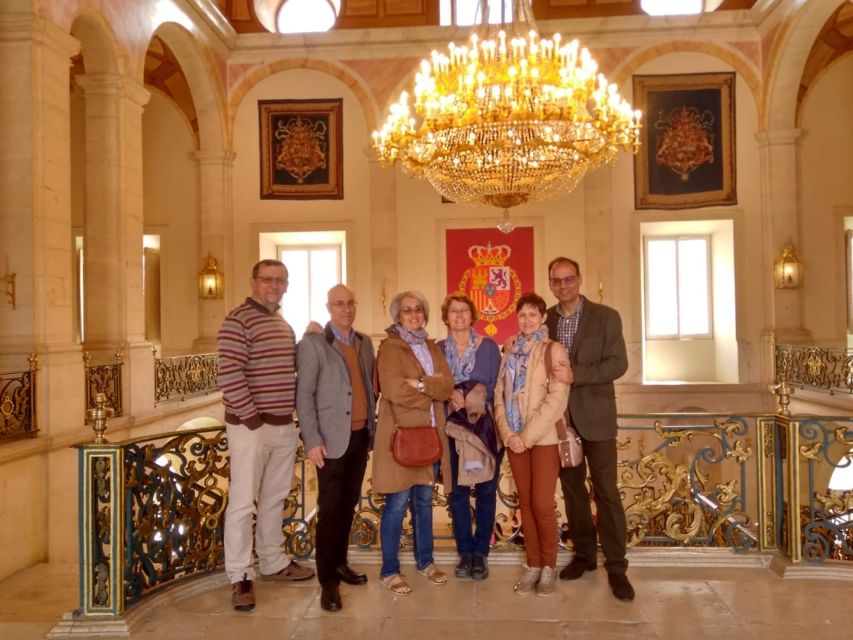
I would choose this tour if you want a compact introduction to Aranjuez Palace and prefer someone else to explain the rooms as you go. It suits visitors who enjoy royal residences, decorative arts, court life, and stories about the people who used the building.
It is also a good option for anyone who might otherwise overlook private rooms. The Queen’s office and bedroom add a more human side to the palace, while the Porcelain Room and Moorish Room provide strong visual highlights.
Families may appreciate the shorter format, especially if younger visitors will not manage several hours of palace history. The guide’s humor can help keep the visit lively, though the Spanish language may limit the experience for children who do not understand it.
I would think twice if you need step-free access. The activity is listed as not suitable for wheelchair users. You should also avoid assuming that English or French guiding is available. The stated tour language is Spanish, and a French-speaking visitor specifically indicated that a French visit would have been preferable.
Practical advice before you go
Wear comfortable shoes and comfortable clothing. The visit is only 75 minutes, but you will be moving through a large palace with several rooms and halls.
Bring a camera if you want to record the interiors, but do not let photography replace the guide’s explanation. The room sequence is one of the strengths of the tour, and the meaning of each space helps turn decoration into a story.
Keep your admission money and any proof of a reduced or free ticket ready. The palace entry charge is not included in the guide fee, and visitors seeking a concession need to show the relevant documentation.
The meeting point is outside Cafe de Damas, at the corner of the square where Avenida de Palacio begins. This is specific enough to find, but I would still arrive early rather than rush across the square at the last minute.
The tour allows cancellation up to 24 hours before the start for a full refund, and you can reserve without paying immediately. Those policies are helpful if your Madrid plans are still changing.
Should you book the Aranjuez Palace tour?
Book it if you want a Spanish-language guided visit with access to both grand ceremonial rooms and private royal spaces. The Porcelain Room, Moorish Room, Queen’s bedroom, Throne Room, and Royal Chapel give the 75-minute route plenty of variety.
The tour is especially good value for visitors who want context without committing to a long lecture. Gloria’s clear, detailed style and light humor are useful qualities to look for when you meet the guide, and the experience has earned a 4.5 rating from 93 bookings.
Skip it if you need French, English, or another language, or if wheelchair access is essential. Also remember to add the separate palace admission charge to the $14 tour price. For Spanish speakers who want a focused look at Aranjuez’s royal interiors, this is a sensible and well-priced way to see the palace.
FAQ
Where does the tour meet?
Meet your guide outside Cafe de Damas, on the corner of the square where Avenida de Palacio begins.
How long does the guided tour last?
The guided visit inside the Royal Palace of Aranjuez lasts 75 minutes.
Is the palace entrance ticket included?
No. The guide is included, but palace admission is separate. The listed prices are €7 for basic admission and €4 for visitors over 65 or students under 25.
What language is the tour in?
The live tour guide speaks Spanish.
Which rooms are included?
The route includes the Queen’s Guard Room, Music Room, Throne Room, Queen’s office and bedroom, Porcelain Room, Moorish Room, Ball Room, Reception Hall, and Royal Chapel.
Is the tour suitable for wheelchair users?
No. The activity is listed as not suitable for wheelchair users.
Just added around Spain
- Private guided tour of the Alcazar de los Reyes Cristianos★ 5.0 · 6 reviews
- Private official tour guide for visit to Alhambra in Granada from Cordoba Hotel★ 4.0 · 5 reviews
- Mosque-Cathedral, Alcazar & Synagogue with Skip the Line Tickets★ 5.0 · 46 reviews
- Visita guiada a la Mezquita Catedral y el Alcázar de los Reyes Cristianos★ 4.0 · 4 reviews
- Mosque, Alcazar and Juderia Ticket Included Skip the Line★ 5.0 · 3 reviews
- Guided tour of the Alcazar de los Reyes Cristianos in Spanish★ 5.0 · 36 reviews
- Guided Tour of Monumental Cordoba: Jewish Quarter, Alcazar and Mosque★ 4.5 · 99 reviews
- Mosque, Alcazar of the Christian Monarchs and Juderia★ 3.5 · 3 reviews
Spain Palace Tours, compared.



Alcázar, Cathedral & Giralda Skip-the-Line Tour
Read our review →
Cathedral, Giralda & Alcazar Entry With Guided Tour
Read our review →
Royal Palace Expert Guided Tour with Skip-the-Line
Read our review →