
REVIEW · KNOSSOS PALACE TOURS
Chania: Knossos Palace – Archaeological museum!
Knossos is the star here: a guided walk through Crete’s most famous ancient site, followed by time in Heraklion and its excellent Archaeological Museum. You’ll connect Minoan myths with real rooms, courtyards, and restored remains rather than simply snapping a few palace photos.
I like the hotel-area pickup and the new, air-conditioned coach, which remove the stress of finding your way across Crete. I also like the well-planned contrast between Knossos, the museum, and Heraklion’s old town, with time for lunch, coffee, shopping, or a visit to Agios Minas Cathedral.
The catch is the clock. The advertised day runs about 10 hours, from roughly 7:00 to 18:00, but pickup delays and many stops around Chania have caused some outings to stretch to 11 or 12 hours. Confirm your pickup time carefully and leave your evening open.
Key points to know before booking
- Knossos gets the main guided visit: Plan on about two hours at the palace, including explanations and time for photos.
- The trip crosses Crete: The coach ride from Chania to Heraklion takes about two hours each way, before pickup and drop-off delays.
- Heraklion gives you choices: Use the free time for lunch at Lions Square, old-town sightseeing, shopping, Agios Minas Cathedral, or the Archaeological Museum.
- Tickets cost extra: Knossos is €20 per person and the Archaeological Museum is €8 per person.
- Pickup is convenient but slow: Five Chania-area pickup points are offered, though collecting passengers can add substantial time.
- You need practical footwear: Knossos includes a dirt path and steps, so comfortable clothes and shoes matter.
Why Knossos is worth the long ride from Chania
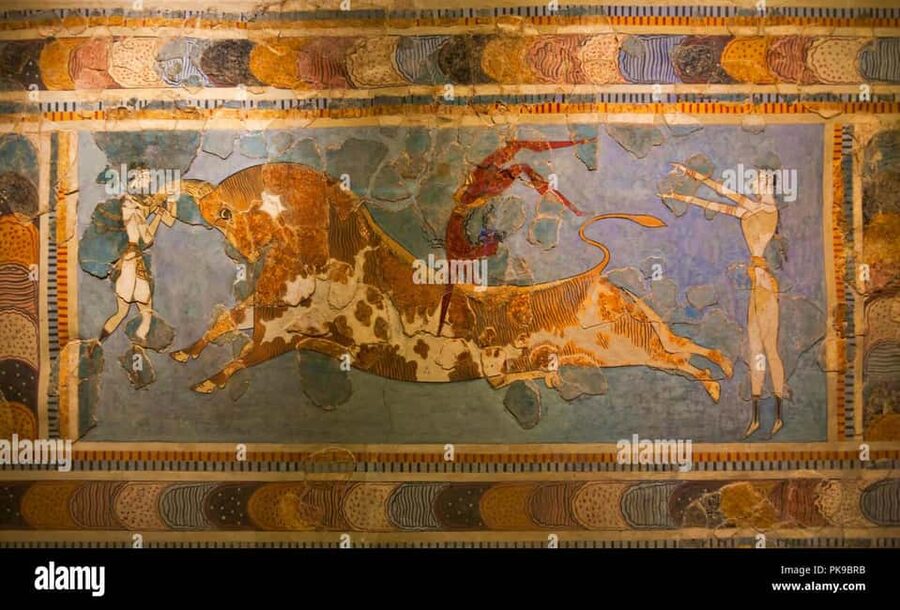
Knossos was the most important palace of the Minoan civilization and is linked to the stories of King Minos, the Labyrinth, the Minotaur, and Daedalus and Icarus. The myths are famous, but the site becomes more meaningful when you see the scale and layout of the palace area with a guide beside you.
The settlement was used from the Neolithic period through Roman times, with renewed importance during the Hellenistic period. Roman control came in 67 B.C., when Quintus Caecilius Metelus Creticus took Crete. The site was identified in modern times by Minos Kalokairinos in 1878, then excavated by Arthur Evans between 1900 and 1931.
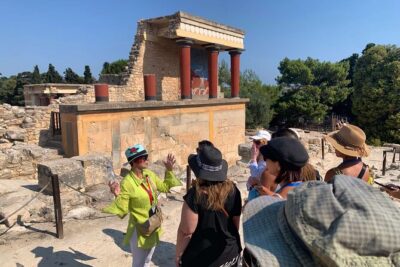
That long story is exactly why a guided visit helps. Without context, Knossos can look like a spread of walls, stairways, and restored sections. An English-speaking guide gives you a way to understand what you are seeing, how the palace functioned, and why the site matters.
The visit lasts about two hours. You should have time for the guided portion and photographs, though the exact pace depends on the group and the guide. Bring a camera, but do not let the photo stops take over. The value of Knossos is in seeing the site as a place of administration, ceremony, craft, and daily life, not just as the setting for a famous myth.
More Knossos Palace tours in Greece:
- Crete: Knossos Palace Entry Ticket with Optional Audio Guide
★ 3.9 · 2,251 reviews - Crete: Palace of Knossos E-Ticket and Audio Guide
★ 3.8 · 1,540 reviews - Knossos: Knossos Palace Skip-the-Line Guided Walking Tour
★ 4.8 · 1,380 reviews
The coach ride from Chania to Heraklion
The day begins around 7:00 in the morning from a hotel or a nearby meeting point. The listed pickup options include Kriti Hotel, Civitel Akali Hotel, Halepa Hotel, SanSal Boutique Hotel, and the Agora bus stop.
A luxury air-conditioned bus is used for the transfer. That matters in Crete, where this is a full cross-island outing rather than a quick local excursion. You can sit back instead of navigating roads, parking, and the approach to Knossos yourself.
The ride to the Heraklion area takes about two hours, with a planned 20-minute coffee stop. The main issue is not the driving itself. It is the series of pickups and drop-offs at the beginning and end of the day. If you are collected early, you may spend quite a while gathering the rest of the group around Chania.
I would treat the schedule as flexible. The stated plan brings you back around 18:00, but two recent experiences recorded much longer days, one lasting about 11 hours and another more than 12. That does not make the tour unusable, but it does make evening planning risky.
Your ticket may show a meeting time around 7:50, while the actual pickup instructions can require you to be ready earlier. One person was contacted before the printed time and found the communication unclear. My advice is simple: be ready at least 15 to 20 minutes before the stated pickup, and confirm the exact time and meeting place with the operator.
Entering the Palace of Knossos
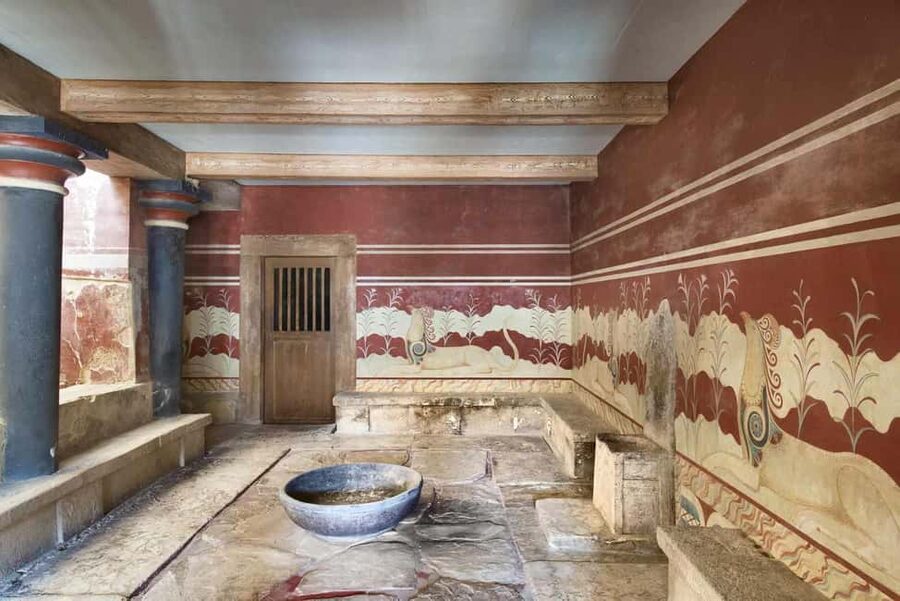
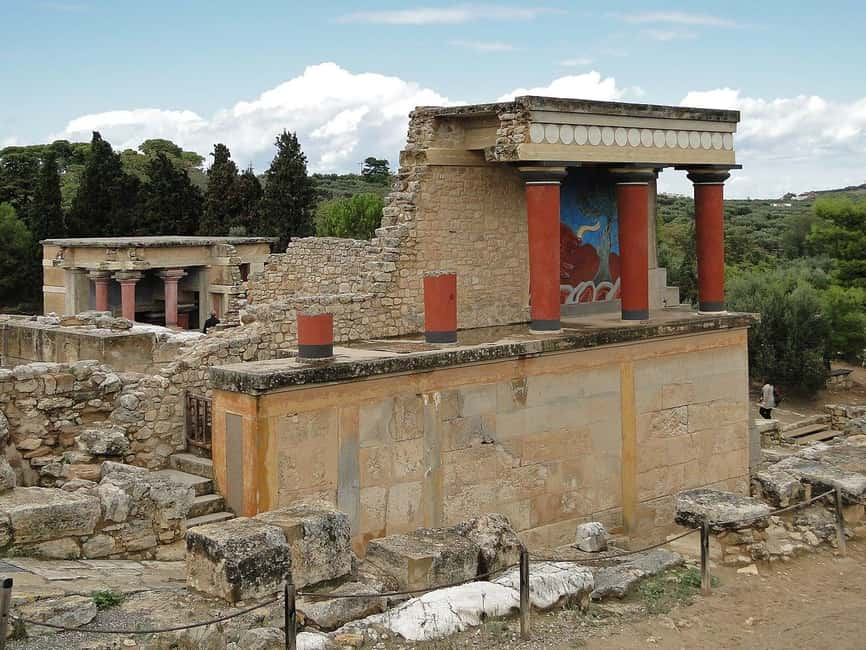
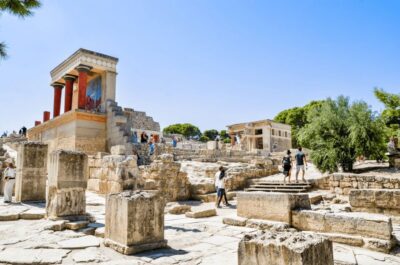
Knossos is not a single intact building. It is a large archaeological area with remains spread around paths, courtyards, stairs, and reconstructed sections. That makes the guide’s role important, especially if you want more than a quick look at stones and columns.
The guided tour focuses on the palace and its place in Minoan civilization. You will hear the traditional connection to King Minos and the Labyrinth, while also seeing evidence of the ingenuity and artistry associated with the site.
Arthur Evans restored parts of Knossos to protect and present the monuments. Those restorations are part of the experience, but they can also make the site look different from other ancient ruins. A guide can help you separate ancient remains from modern reconstruction and explain why the site looks the way it does today.
The ground is uneven in places, and the route includes a dirt path and some steps. This is not a good day for flimsy sandals or uncomfortable clothing. Comfortable shoes, sun protection, and a camera are the sensible choices. Babies under one year are not considered suitable for this excursion.
After the guided portion, you get free time for photographs. Use it to revisit a detail you missed or take in the overall arrangement of the site. The free time is useful, but it is not a promise of unlimited independent wandering, so listen for the guide’s return instructions.
Three hours in Heraklion, with several good choices
After Knossos, the coach takes you into Heraklion for a stop of about three hours. This is the most flexible part of the day. You can eat, walk, shop, or spend much of the time inside the Archaeological Museum.
Lions Square is a natural meeting point. Its centerpiece, the Morosini Lions Fountain, was built in 1628 under the Venetian governor Morozini. Cafes, restaurants, and shops surround the square, making it practical for lunch or a coffee break.
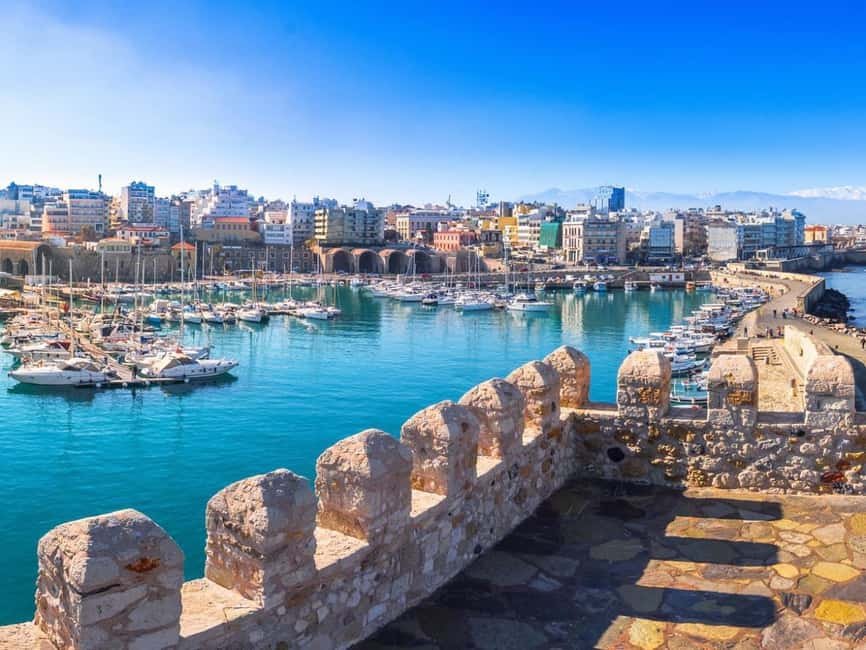
From there, you can walk along August 25th Street toward the old Venetian Harbour. Heraklion’s old town includes the Venetian Loggia, now used as the Town Hall, and the Byzantine-era Church of Agios Titos. Agios Minas Cathedral is another important stop, especially if you want to see a major church rather than spend the entire break shopping.
The city is compact enough for a purposeful walk, but three hours disappears quickly. I would choose one main plan before leaving the coach. A rushed museum visit followed by a hurried lunch is less satisfying than deciding in advance which part of Heraklion matters most to you.
The old port and Koules fortress are also worth noting. Venetian walls run through the city toward the harbour, and Koules dominates the waterfront. The tour provides free time rather than a dedicated walking tour, so you are responsible for your own route and for returning to the meeting point promptly.
More palace museums and galleries in Greece:
- Crete: Knossos Palace and Museum E-Tickets with Audio Guides
★ 4.0 · 828 reviews - Crete: Knossos Palace and Museum E-Tickets with Audio Guides
★ 4.0 · 126 reviews - Knossos Palace, Museum & Rethymno city Private Tour from Chania
★ 5.0 · 69 reviews - Knossos Palace, Museum & Heraklion City Tour From Chania
★ 4.2 · 61 reviews
The Archaeological Museum deserves your attention
The Archaeological Museum of Crete is one of the strongest reasons to choose this day trip. It gives you a chance to see objects connected to Minoan Crete in a museum setting, after hearing about the civilization at Knossos.
The museum is near Eleftherias Square, a short walk from the central old-town area. The route from the square passes through streets, fountains, churches, and Venetian-era buildings, so the museum can fit naturally into a city walk.
You get about 1.5 hours for the museum according to the planned schedule. That is enough for a focused visit, but not enough to examine every room slowly. If archaeology is your main interest, go directly to the museum and use the remaining time for a short meal or coffee.
The entrance fee is €8 per person and is not part of the tour price. Knossos also has a separate €20 entrance fee. Together, those tickets add €28 per person, so remember to include them when judging the real cost of the outing.
The museum and palace work well together. Knossos gives you place and scale. The museum gives you objects and detail. Seeing both on the same day is more useful than visiting either one without context.
The return journey and the Rethymno break
The return trip includes a short break in Rethymno or a nearby village, lasting less than an hour. This is a small pause, not a full sightseeing visit, but it can break up the long ride back to Chania.
Do not count on enough time for a full meal or major attraction during this stop. Think of it as a chance to stretch your legs, use facilities, and perhaps get a quick refreshment if permitted by the operator.
The final drop-off locations match the main pickup points: Kriti Hotel, Halepa Hotel, SanSal Boutique Hotel, Civitel Akali Hotel, and the Agora bus stop. Your return may depend on the route the bus takes through Chania, so the final arrival can vary.
This is where the day’s main weakness appears again. The tour covers a lot of ground and serves people from several parts of Chania. That is convenient if one of the points is near you, but inefficient if you are collected early and dropped off late.
What the $80 price really covers
At $80 per person, the tour includes hotel-area pickup and drop-off, the air-conditioned coach, an English-speaking guide, the guided visit at Knossos, whisperers, full liability insurance, and organization by a licensed Crete travel agency.
The whisperer system is useful at an archaeological site. It lets you hear the guide without needing to crowd close to the group, though the supplied information does not specify the exact device or whether every part of the day uses it.
The biggest extra costs are the admission tickets. Add €20 for Knossos and €8 for the Archaeological Museum. Food and drinks are also on your own, so the practical total is higher than $80.
I see fair value here if you are staying in Chania and want both major Heraklion sights without renting a car. A private taxi or self-drive trip would give you more control over timing, but this tour removes the work of navigation and puts a guide at Knossos.
I see weaker value if you dislike long coach days or already have a good plan for reaching Heraklion. The price pays for convenience, not speed. The more you value having transport and a guided palace visit arranged for you, the better the deal looks.
Free cancellation up to 24 hours before departure and the option to reserve now and pay later add useful flexibility. They do not solve the timing issue, so I would still protect the evening after the tour.
Who should book this Chania day trip
I would recommend it to you if you want a practical introduction to Minoan Crete and prefer a guide at Knossos. It works especially well for first-time visitors who want transportation, site interpretation, and a taste of Heraklion in one day.
It also suits you if you do not want to drive across Crete or arrange separate tickets and transfers. The bus, insurance, guide, and pickup service take care of the main mechanics.
I would be cautious if you have a fixed evening reservation, a ferry, or a flight after the tour. The official plan is about 10 hours, but actual days can run longer because of pickup routes and traffic.
I would also think twice if you need a slow, accessible visit. Knossos includes dirt paths and steps, and the excursion moves through several locations in one day. The information says everyone is welcome, but it does not promise step-free access or a special mobility arrangement.
Should you book it?
Book this tour if your priority is seeing Knossos with an English-speaking guide and pairing it with the Archaeological Museum without handling the long journey yourself. The guided palace visit and the museum make a strong history day, and the hotel-area pickup is genuinely convenient.
Skip it if your schedule cannot absorb a possible 11 to 12-hour outing, or if you want to explore Heraklion at an unhurried pace. Confirm the pickup time, arrive early, budget €28 for entrance fees, wear comfortable shoes, and keep your evening free. With those conditions understood, the tour offers a useful and efficient way to connect Chania with Crete’s most important archaeological sights.
FAQ
How long does the excursion last?
The planned duration is 10 hours, with pickup around 7:00 and return around 18:00. Actual outings can take 11 or 12 hours because of multiple pickups and drop-offs.
Where can I be picked up in Chania?
Pickup options include Kriti Hotel, Civitel Akali Hotel, Halepa Hotel, SanSal Boutique Hotel, and the Agora bus stop. The exact point depends on your booking.
How long is the coach ride to Knossos?
The coach journey from Chania toward Heraklion takes about two hours, with a planned 20-minute coffee stop.
Is the Knossos visit guided?
Yes. An English-speaking guide leads the Knossos Palace visit, which lasts about two hours and includes time for photographs.
Are entrance fees included?
No. Knossos costs €20 per person, and the Archaeological Museum costs €8 per person. Both fees are paid separately.
How much free time do I get in Heraklion?
The planned stop in Heraklion lasts about three hours. You can use it for lunch, coffee, shopping, old-town sightseeing, Agios Minas Cathedral, or the Archaeological Museum.
Is the Archaeological Museum included in the guided tour?
The museum is included as a visit during the Heraklion stop, but its €8 entrance fee is not included in the tour price.
What should I bring?
Bring a camera and wear comfortable clothes and shoes. Knossos includes a dirt path and steps. Food, drinks, alcohol, and drugs are not allowed according to the activity information.
Just added around Greece
- PRIVATE-Knossos Palace-Zeus Cave-Olive Oil Tasting-Old Villages★ 5.0 · 81 reviews
- WeGuide Knossos palace★ 5.0 · 3 reviews
- Crete in a Day: Knossos, Soap Workshops, Olive Oil & Wine Tasting★ 5.0 · 5 reviews
- Visit Knossos palace (Tour & Skip-the-Line Ticket)★ 5.0 · 16 reviews
- The Palace of Knossos with Skip-the-Line Ticket★ 5.0 · 40 reviews
- Small Group Sailing Cruise from Agios Nikolaos in Mirabello Bay★ 5.0 · 21 reviews
- Travel Crete – Visit Knossos palace (Semi Private – Shared Tour)★ 4.5 · 7 reviews
- Guided Tour in Knossos Palace★ 5.0 · 54 reviews
Knossos Palace Tours, compared.
Crete: Knossos Palace Entry Ticket with Optional Audio Guide
Read our review →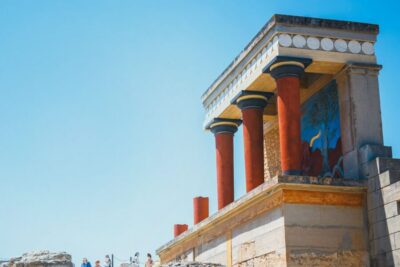
Crete: Palace of Knossos E-Ticket and Audio Guide
Read our review →
Knossos: Knossos Palace Skip-the-Line Guided Walking Tour
Read our review →
Crete: Knossos Palace & Heraklion Guided Tour
Read our review →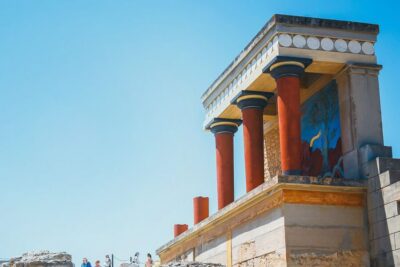
Crete: Knossos Palace and Museum E-Tickets with Audio Guides
Read our review →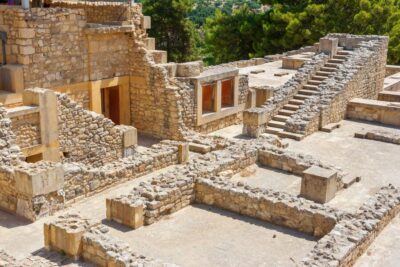
Knossos Palace Skip-the-Line Ticket & Private Guided Tour
Read our review →
Knossos Palace Skip-the-Line Ticket (Shared Tour Group)
Read our review →Browse the lists this tour appears in