
REVIEW · ALCAZAR OF SEVILLE TOURS
Córdoba: Mosque and Alcazar Private Tour with tickets
Córdoba’s great monuments sit close together, but they tell very different stories. This three-hour private tour links the Mosque-Cathedral and the Christian Alcazar, while also placing them beside the Jewish quarter, San Basilio, Roman remains, and old city streets.
I like the private format, which lets the guide adjust the pace and explain the uneasy overlap of Muslim and Christian Córdoba without rushing you along. I also like that monument tickets are included, so you can focus on the buildings instead of sorting out admissions. The main consideration is the price, $187 per person, and the Alcazar restoration period, when only the gardens are open.
Key points to know
- Two major monuments in one morning or afternoon: Visit the Mosque-Cathedral and the Christian Alcazar during a focused three-hour route.
- Private English or Spanish guide: The experience is designed for your group rather than a large shared crowd. Guides named in the feedback include Paco and Cristina.
- A useful city-center route: Begin at Puerta del Puente and finish at the Puerta del Perdón beside the Mosque-Cathedral.
- Tickets are included: You do not need to arrange separate admission for the two monuments.
- Watch the restoration dates: From July 3 through September 16, the Alcazar interior is closed and the gardens are the only part available.
- Low physical difficulty: The tour is wheelchair and pushchair accessible, though comfortable shoes, water, and sun protection matter in summer.
Why this Córdoba pairing works
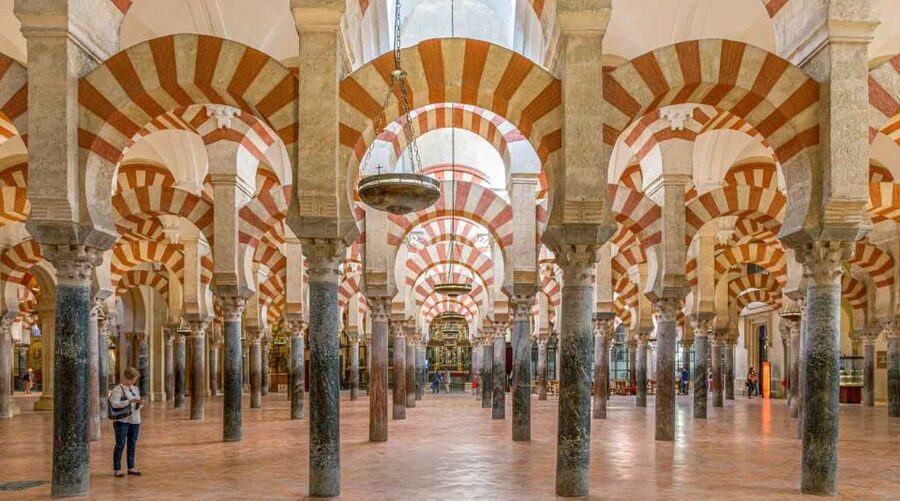
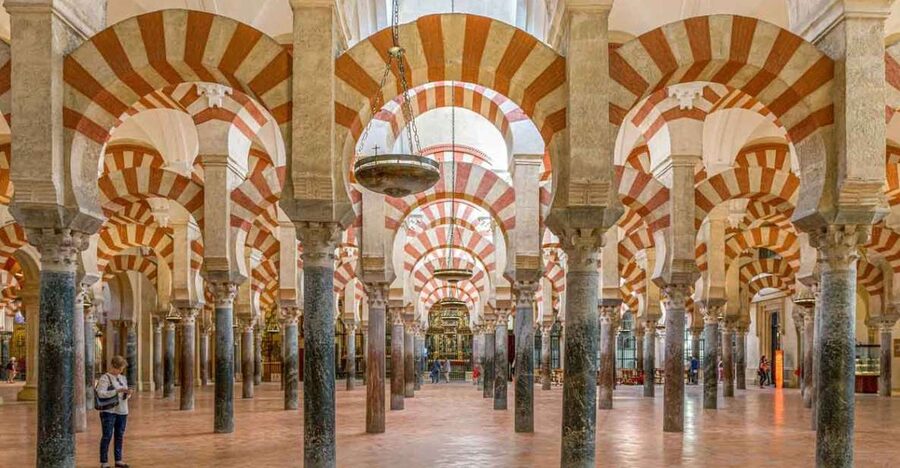
Córdoba is easiest to understand when you see its monuments as part of one compact city center. The Mosque-Cathedral is tied to the Islamic period and later Christian worship, while the Alcazar reflects the power of the Christian kings. Together, they give you a useful look at how the city changed hands and beliefs during the medieval period.
The tour begins at Puerta del Puente, the Bridge Gate beside the old Roman bridge. That is a sensible place to start because it gives you a clear sense of Córdoba’s strategic position beside the river. From there, your guide leads you toward the Alcazar, the Jewish quarter, and the Mosque-Cathedral.
I like this order because you get more than two interior visits. You also see how the buildings relate to one another. The Alcazar sits between the great Mosque, the Jewish quarter, and San Basilio, so the walking route helps explain why this corner of Córdoba mattered so much.
More Alcazar of Seville tours in Cordoba:
- Cordoba: Alcazar Guided Tour and Skip-the-Line Ticket
★ 4.2 · 1,792 reviews - Mosque-Cathedral, Alcazar & Jewish Quarter with Tickets
★ 4.5 · 793 reviews - Córdoba: Mosque-Cathedral and Alcazar Tour
★ 4.5 · 637 reviews
Starting at Puerta del Puente
Meet your official guide at Puerta del Puente and look for the guide before setting off. The meeting instructions do not name one fixed guide for every departure, but Paco and Cristina are among the guides associated with praised tours. Paco was singled out for clear and entertaining explanations, while Cristina was noted for a friendly manner and for extending a visit by more than half an hour to complete the agreed route.
That does not guarantee which guide you will receive, so think of those names as useful points of reference rather than a promise. The key benefit is the private setup. You can ask for more detail about a particular period, slow down for photographs, or ask your guide to clarify the Muslim and Christian layers of the city.
The route is described as low difficulty and suitable for wheelchairs and pushchairs. Still, Córdoba’s old center has narrow streets and hard walking surfaces, so comfortable shoes are a good idea. In summer, take water and sunscreen. The three-hour length is long enough to cover the main sights but short enough to fit around other plans.
The Christian Alcazar and its changing role
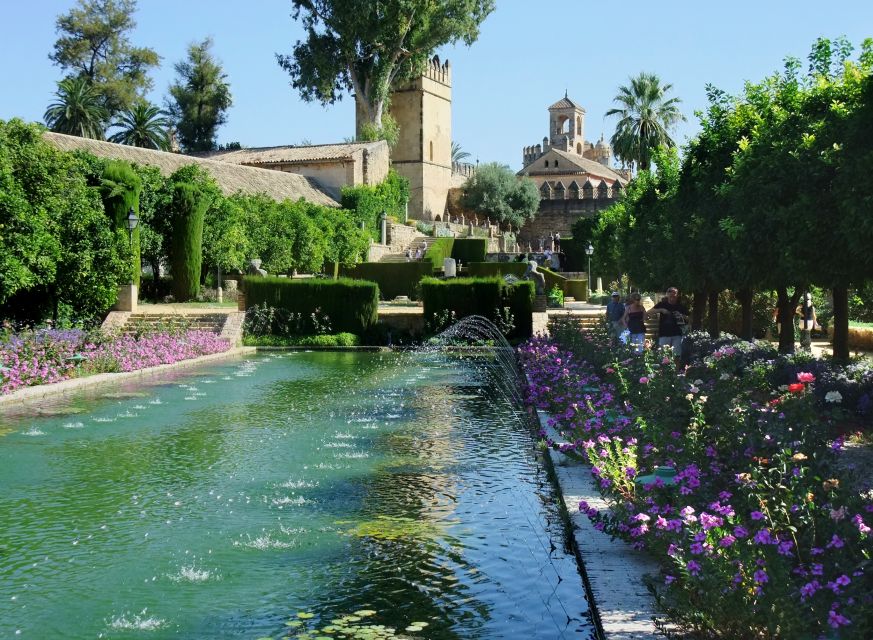
The Alcazar of the Christian Kings is one of the tour’s two main stops. Its location is part of its appeal. From here, you are close to the Mosque-Cathedral, the Jewish quarter, and San Basilio, making it easier to picture Córdoba as a center of government, religion, and daily life.
Inside the monument, your guide can explain the Christian role of the fortress and palace complex, as well as the way Muslim and Christian power shaped the city during the medieval period. The supplied tour details do not specify every room or display included on the day, so you should think of the stop as a guided visit to the monument rather than a promise of a fixed room-by-room program.
The biggest catch is the restoration schedule. From July 3 through September 16, only the gardens can be visited. The interior is closed during that period. If the Alcazar is a major reason for booking, check your date carefully before paying. The gardens still form part of the visit, but they are not a substitute for the full building.
When open, the Alcazar gives the tour a useful contrast with the Mosque-Cathedral. The Mosque-Cathedral shows how a major place of worship changed over time. The Alcazar lets you consider royal and political power from a different angle. Seeing both in one outing makes the medieval story easier to follow.
Streets around the Jewish quarter and San Basilio
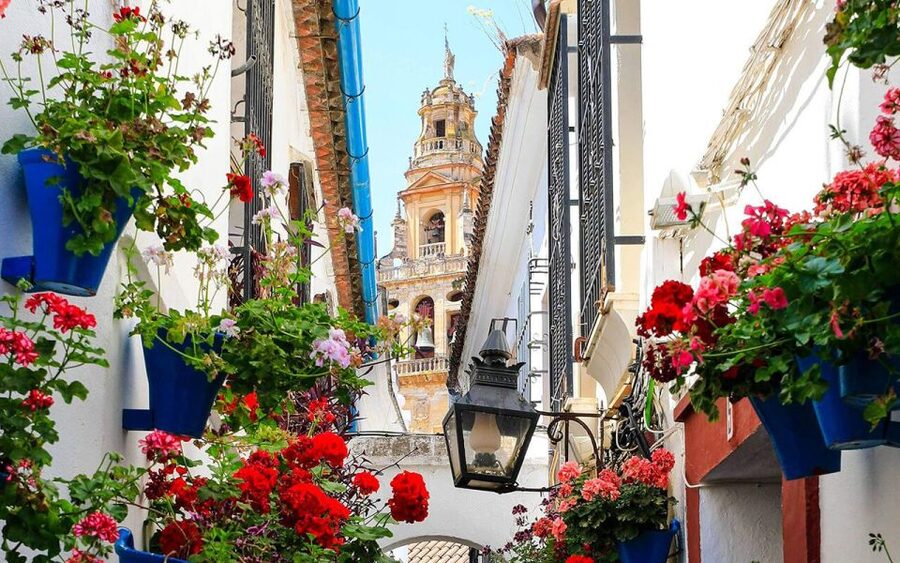
The walking between monuments is not filler. The route passes through the urban setting that makes Córdoba feel distinctive, including narrow streets in the Jewish quarter and corners near San Basilio. You might catch sight of the Cathedral tower appearing above the roofs, a simple view that shows how closely the historic buildings are packed together.
This is where a private guide can add real value. A sign or a doorway tells you very little on its own. A guide can point out how the Mosque-Cathedral, Alcazar, Jewish quarter, and old residential areas fit together, then connect those places to the larger story of Muslim and Christian life in medieval Córdoba.
The route also brings in the Plaza de la Corredera, described as having a Castilian style that is unusual in Andalusia. It is a useful reminder that Córdoba is not defined by one architectural period. The city contains Islamic, Christian, Roman, and later Spanish influences, sometimes within a short walk.
The tour also passes ruins connected with a temple dedicated to mythological gods during the time of Emperor Claudius. The details provided do not promise a full archaeological stop or an extended explanation there, but the remains add a Roman layer to the route. You are not simply moving from one ticketed monument to another. You are crossing a city built and rebuilt over many centuries.
More palace entry tickets in Cordoba:
- Córdoba: Viana Palace Gardens and Patios Entry Ticket
★ 4.5 · 880 reviews - Alcazar of Cordoba Entry Ticket and Guided Tour
★ 4.3 · 372 reviews - Cordoba: Alcazar of The Christian Monarchs Tickets and Tour
★ 3.9 · 94 reviews - Alcazar of Cordoba Small Group Tour with Skip the Line Ticket
★ 4.0 · 77 reviews
Entering the Mosque-Cathedral
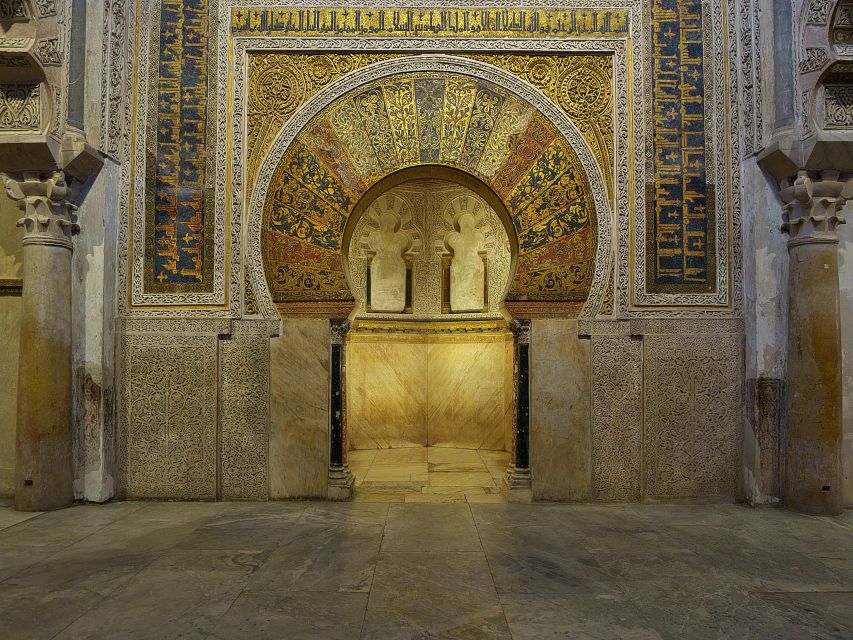
The Mosque-Cathedral is the emotional center of the experience. Its fame is justified, but the building is best understood with time and context. The tour gives you a guided visit rather than leaving you to work out the changes on your own.
Your guide can explain the Muslim and Christian phases of the building and show how those traditions occupy the same place. That is the central lesson of the tour: Córdoba’s religious identity changed, but the older structure remained part of the city’s physical and spiritual life.
The tour finishes at Puerta del Perdón de la Mezquita de Córdoba, giving the Mosque-Cathedral a strong closing position in the route. Ending there is practical if you plan to continue exploring the historic center on your own. It also means the route does not require a return transfer to the starting point.
Tickets to the monuments are included. That matters here because admission arrangements can add friction to a short visit. You are paying for the guide service and entry together, rather than reaching the monument only to discover that you need another ticket or line.
Flash photography is not allowed, and hats are listed among the prohibited items. Bring an original, valid passport or identity card, since one is required for the visit. Keep it with you rather than relying on a digital image.
What the $187 price means
At $187 per person, this is not a budget walk. The value depends heavily on the size of your private group and how much you want from the guide. You are paying for a private three-hour service, monument admission, and a route that combines Córdoba’s two essential sights with surrounding streets and historical context.
For a couple or small group, the cost may make sense if you prefer direct explanations and a flexible pace. A private guide can spend time on the topics you care about instead of following a standard speech for a large crowd. It can also be useful if members of your group have different mobility needs, since the tour is described as accessible and low difficulty.
The value is weaker if you only want to enter the monuments quickly and explore alone. You could find a private tour more than you need, especially if you already know the history or prefer wandering without a schedule. The price also deserves extra scrutiny during the Alcazar restoration period, when the interior is unavailable.
Wireless headphones are included for groups of 10 people or more. That is a practical touch for a larger private group, since you can hear the guide without crowding around in busy streets or large rooms. For smaller groups, the details do not say that headphones are provided.
Timing, comfort, and the summer problem
The activity lasts three hours, with departure times available according to the date you select. Since the experience involves outdoor walking as well as monument visits, choose a time that suits the heat if you are visiting in summer.
Water, comfortable shoes, and sunscreen are specifically recommended. Córdoba can be hot, and even an easy route becomes tiring if you are walking between stops without protection. The tour is low difficulty, but low difficulty does not mean no walking.
The experience is wheelchair accessible and suitable for pushchairs. That makes it a practical option for families and many visitors with mobility needs. You should still tell the provider about any specific requirements before the tour, since the route includes historic streets and the supplied details do not describe every surface or access point.
Food and drinks are not included. Plan those separately, especially if your start time crosses a meal. Hotel pickup and drop-off are also not included, so you need to reach Puerta del Puente yourself and arrange your own way onward from the Puerta del Perdón.
Who should book this private tour
I would consider this tour a good fit for a first visit to Córdoba when you want the main monuments explained in one compact outing. It suits couples, families, and small private groups that prefer a guide who can respond to questions rather than a fixed large-group presentation.
It is also a good choice if the history matters as much as the photographs. The tour specifically focuses on how Muslims and Christians lived in the medieval period, and the route adds Roman and later Spanish layers. You get a clearer sense of the city as a place shaped by several powers, not just a collection of attractive buildings.
The tour may be less suitable if you want a slow, highly detailed study of every room. Three hours covers a lot, and the route includes two major monuments plus outdoor streets. You will get an organized overview, not an entire day of specialist archaeology.
I would also hesitate to book it during the Alcazar restoration period if the palace interior is essential to you. From July 3 to September 16, you will see the gardens but not the inside of the Alcazar. The Mosque-Cathedral remains a major reason to go, but the two-monument promise is reduced during those dates.
Small practical details that matter
Cancellation allows up to a 50 percent refund when you cancel at least 24 hours in advance. That is not a full refund, so check your plans before booking. The tour is offered in English or Spanish, and you should select the language that lets you follow historical explanations comfortably.
Bring your original passport or identity card. A valid document is required, and this is one item you should not leave at your accommodation. Also remember the photography and clothing restrictions: flash photography is not allowed, and hats are listed as prohibited.
The private group format is one of the strongest reasons to choose this experience. It gives you a more personal setting for questions about religious change, daily life, and the city’s buildings. The praise for Paco’s engaging explanations and Cristina’s friendly, adaptable approach suggests the guide can make a real difference, although your assigned guide may be different.
Should you book it?
Book this tour if you want Córdoba’s two headline monuments tied together by a human guide, with admission already handled and a route that also includes the old streets between them. The private format, accessible design, and strong praise for Paco and Cristina make it especially appealing to families, couples, and small groups that value personal attention.
Think twice if $187 per person feels high for a three-hour visit, or if you plan to visit during the Alcazar restoration and mainly want its interior. For the right date and group, this is a practical way to understand Córdoba quickly without reducing the city to two isolated ticket stops.
FAQ
How long does the Córdoba tour last?
The tour lasts three hours. Starting times vary, so check availability for your chosen date.
Where does the tour begin?
The meeting point is Puerta del Puente in Córdoba. Look for your official guide there.
Where does the tour finish?
The tour finishes at the Puerta del Perdón de la Mezquita de Córdoba.
Which monuments are included?
The tour includes entrance to the Mosque-Cathedral of Córdoba and the Christian Alcazar of the city.
Is the Alcazar open during the whole year?
From July 3 through September 16, the Alcazar is under restoration. During those dates, only the gardens can be visited, not the interior.
What languages are available?
The live tour guide service is available in English and Spanish.
Is the tour wheelchair accessible?
Yes. The tour is described as suitable for wheelchairs and pushchairs, with low difficulty.
What should I bring?
Bring an original, valid passport or identity card, water, comfortable shoes, and sunscreen. Flash photography and hats are not allowed.
Just added around Cordoba
- Private guided tour of the Alcazar de los Reyes Cristianos★ 5.0 · 6 reviews
- Private official tour guide for visit to Alhambra in Granada from Cordoba Hotel★ 4.0 · 5 reviews
- Mosque-Cathedral, Alcazar & Synagogue with Skip the Line Tickets★ 5.0 · 46 reviews
- Visita guiada a la Mezquita Catedral y el Alcázar de los Reyes Cristianos★ 4.0 · 4 reviews
- Mosque, Alcazar and Juderia Ticket Included Skip the Line★ 5.0 · 3 reviews
- Guided Tour of Monumental Cordoba: Jewish Quarter, Alcazar and Mosque★ 4.5 · 99 reviews
- Mosque, Alcazar of the Christian Monarchs and Juderia★ 3.5 · 3 reviews
- Guided tour of the Alcazar de los Reyes Cristianos in Spanish★ 5.0 · 36 reviews
Alcazar of Seville Tours, compared.
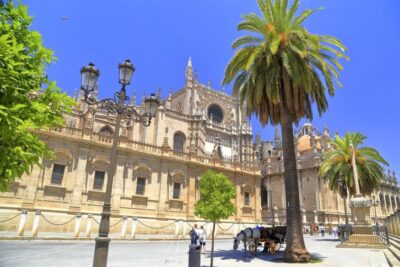
Cathedral, Giralda & Alcazar Entry With Guided Tour
Read our review →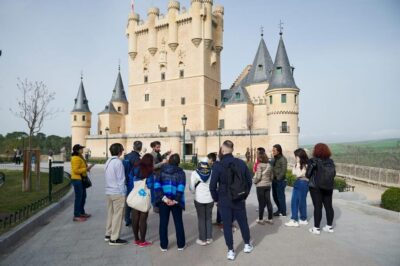
Segovia and Toledo Tour, Alcazar, and Cathedral
Read our review →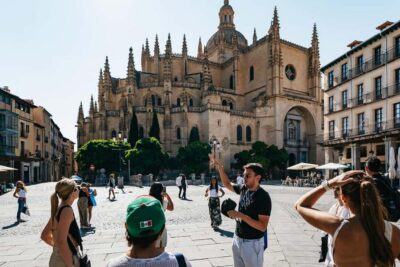
Toledo & Segovia Tour w/ Cathedral, Alcazar & Lunch
Read our review →
Alcazar and Cathedral of Seville Tour with Skip the Line Tickets
Read our review →
Toledo & Segovia Tour with Cathedral and Alcazar Tickets & Lunch
Read our review →
Avila with Walls and Segovia with Alcazar from Madrid
Read our review →
Alcazar Skip-the-Line Guided Tour with Tickets
Read our review →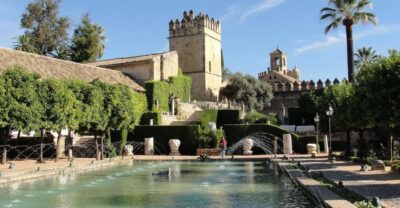
Browse the lists this tour appears in