REVIEW · SPAIN PALACE TOURS
Córdoba: Viana Palace Courtyards Guided Tour
Córdoba’s Viana Palace is a lesson in how one house can hold many worlds. In two hours, you move from a Muslim-style patio to 19th-century courtyards and a formal French garden, with plants, fountains, windows, and domestic details changing from one space to the next. I like the way this tour turns the famous patios of Córdoba into a connected story rather than a quick photo stop.
I also like the human scale of the visit and the included drink and tapa at the end. The main limitation is language: the live tour is in Spanish, so you need enough Spanish to follow the history and art commentary. The garden variety is not enormous, either, though the patios themselves are full of contrasts.
Key points
- Five centuries in one residence: Follow the palace’s changing styles from the 16th through the 20th century.
- A sequence of distinct patios: See a Muslim patio, a 19th-century courtyard, and a French-style garden rather than one repeated garden design.
- Small domestic touches: The Cats Patio near the kitchen has an everyday feel that balances the grander rooms.
- A memorable white oak: One of the palace’s most striking trees is a major reason to slow down outdoors.
- Spanish-language guiding: Past guides named Saray and Anna were praised for clear, cheerful visits, but the advertised tour language is Spanish.
- Refreshment included: Finish with one drink and one tapa after the walk.
Why Viana Palace is different from Córdoba’s usual patio visit
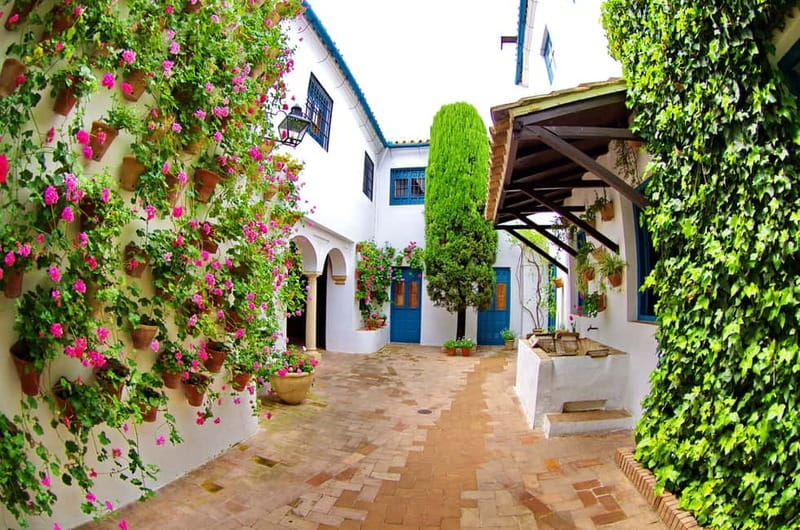
Córdoba is famous for its flower-filled patios, but Viana Palace gives you a broader view of the tradition. This is not simply a courtyard with pots and colorful walls. The palace brings together a series of patios shaped by different periods, uses, and tastes.
That variety is the real reason to book. You can compare the cool, inward-looking Muslim patio with later courtyards designed for display and comfort. One space may feel intimate and domestic, while another opens into a more formal garden. The changes help you understand that Córdoba’s patios are not all built from one pattern.
The palace was declared a National Monument in 1981 for its artistic value. That matters because the visit is about more than plants. You are looking at architecture, household life, decorative details, and the way aristocratic residents used outdoor rooms over several centuries.
I find that this makes Viana Palace especially useful early in a Córdoba visit. Afterward, you will notice patios elsewhere with a sharper eye. You will understand why a fountain, a shaded passage, a line of windows, or a certain planting arrangement can matter.
More guided palace visits in Spain:
- Seville: Cathedral, Giralda & Alcazar Entry With Guided Tour
★ 4.6 · 8,560 reviews - Madrid: Royal Palace Expert Guided Tour with Skip-the-Line
★ 4.7 · 8,407 reviews - Granada: Alhambra & Generalife Fast-Track Guided Tour
★ 4.7 · 8,313 reviews
Meeting your guide at the main gate
The tour begins outside the main door of Palacio de Viana. You should arrive at the palace entrance rather than expecting pickup from your hotel or another Córdoba landmark. The provided meeting point is the main door, outside the building.
The activity lasts two hours. That is enough time for a guided look at the courtyards, with some room for explanation and questions, but it is not an all-day palace study. You should plan to stay with the group and keep your attention on the guide, since much of the value comes from learning how each patio fits into the palace’s larger story.
The live tour is in Spanish. This is the most important practical point before you pay. If you understand conversational Spanish, you can follow the guide’s explanations about the palace’s art, uses, and historical periods. If you do not, you may still enjoy the architecture and plants, but you will lose much of the context that separates this visit from walking through the courtyards alone.
Past bookings identified guides named Saray and Anna. Saray was praised for the quality of her guiding, while Anna was described as cheerful and informative. Those names do not guarantee who will lead your visit, but they suggest the tour has used personable guides who add useful commentary rather than simply escorting you from door to door.
The Muslim patio and the first change of mood
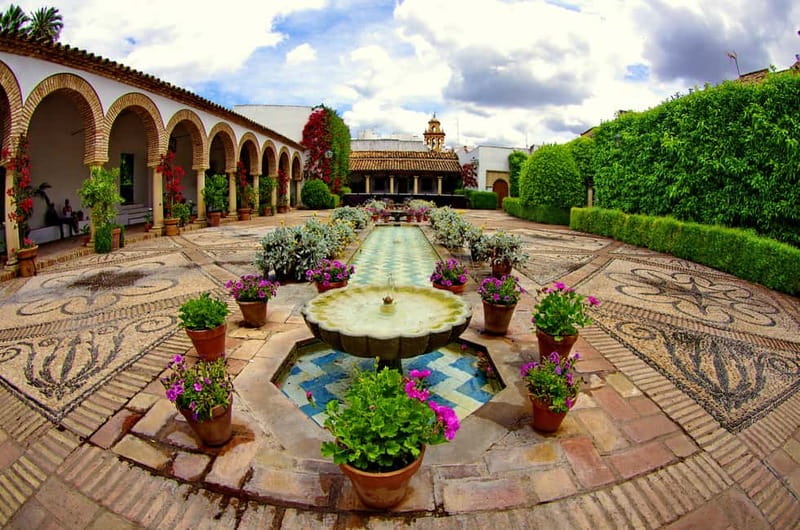
One of the early highlights is the Muslim patio. Its importance is not only visual. It introduces the inward-facing design that is central to Córdoba’s courtyard tradition, where an open-air space can provide light, air, shade, and a private place within a larger home.
Here, I would pay attention to the relationship between walls, plants, and water rather than rushing toward the next photo. The patio gives you a point of comparison for the later spaces. As the tour continues, you can see how new owners and new periods adapted the idea of the courtyard without abandoning it.
The guide’s historical and artistic explanation is particularly useful here. Without context, a patio can look like a pleasant garden. With context, you begin to see it as part of a long building tradition shaped by climate, privacy, household life, and social display.
Nineteenth-century courtyards and everyday domestic life
The tour also includes a courtyard from the 19th century. This helps show that Viana Palace was not frozen in one period. The residence changed as its owners, fashions, and household needs changed.
A particularly appealing stop is the Cats Patio, located near the kitchen. Its charm comes from its ordinary feel. It suggests the working side of the house, where daily tasks took place, rather than presenting only the polished image of aristocratic life.
That contrast is valuable. Grand courtyards can tell you how a family wanted to be seen, while a service area can hint at how the house actually functioned. You get a more rounded sense of the palace by seeing both.
One detail worth watching for is the patio of the windows. Its windows were visible to people passing toward the church, giving the space a connection to public life outside the palace walls. This is a small but memorable reminder that the courtyards were not always completely hidden worlds. Some were designed to be seen.
A few more palace visits around Spain worth a look
- Seville: Royal Alcázar Entry Ticket
★ 4.6 · 28,378 reviews - Granada: Alhambra & Nasrid Palaces Tour with Tickets
★ 4.7 · 19,801 reviews - Granada: Alhambra and Nasrid Palaces Entry Ticket
★ 4.6 · 15,130 reviews - Madrid: Royal Palace Fast-Access Admission Ticket
★ 4.6 · 13,856 reviews
The French-style garden and the palace’s formal side
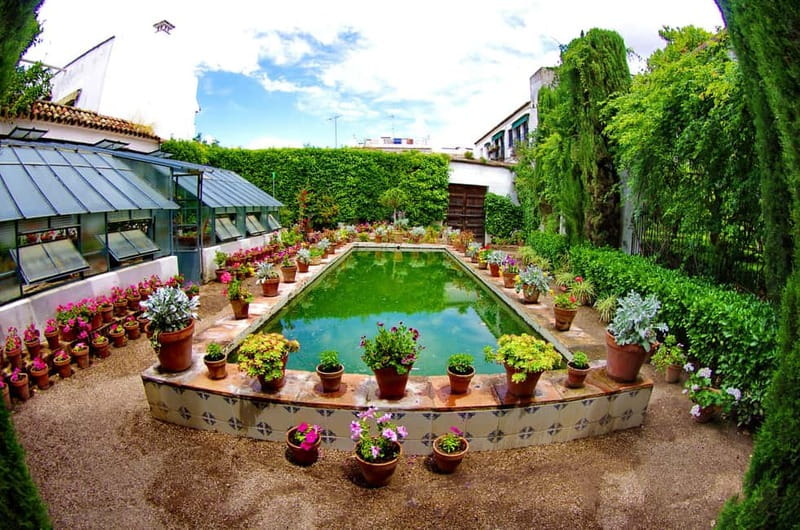
The French-style garden brings a different mood. Compared with the more enclosed patios, it offers a more formal garden design and shows how outside tastes entered the palace over time.
You should not expect every stop to be packed with unusual plant species. One past assessment found limited horticultural variety, and that is a fair caution if you are choosing this tour mainly for botany. The interest comes less from a rare-plant collection than from the overall design, the age of the trees, and the way each courtyard has its own identity.
The white oak is the botanical detail most worth remembering. It was singled out as an especially magnificent tree, and it gives the outdoor visit a strong focal point. Take a moment beneath it rather than treating the garden as a series of quick stops.
The oldest botanical species are also part of the appeal. The available information does not identify every species or give planting dates, so I would not book this as a specialist horticultural tour. Instead, think of the plants as part of a larger story about the palace’s changing appearance and the care given to its courtyards.
Five centuries of aristocratic Córdoba inside the palace
After the patios, you may have the chance to enter the palace itself. The indoor portion shifts attention from open courtyards to the aristocratic household that occupied the residence from the 16th through the 20th centuries.
This is where the visit gains depth. The patios show how the house meets the sky, while the palace interiors show how its residents lived, collected, displayed, and organized their world. Art and antiquities add another layer, giving you objects and rooms to connect with the family story.
The wording allows for a chance to enter the palace, so you should confirm the exact indoor access when booking or at the meeting point. The entrance ticket is included, but the central promise of the experience is the guided tour of the courtyards. If the interiors are your main reason for going, ask about that part before the visit begins.
Even a short look inside can help explain the courtyards. A palace is not just a series of beautiful outdoor rooms. These spaces were connected to rooms, kitchens, windows, work areas, and formal parts of the home. Seeing both sides gives you a better idea of how the residence worked.
A drink and tapa to close the visit
The tour ends with one complimentary drink and one tapa. This is a modest inclusion, but it suits the experience well. After two hours of walking and listening, you get a small taste of local social custom rather than being sent straight back onto the street.
Do not think of it as a full meal. It is a refreshment, and you may still want lunch or dinner afterward. Its value is in the pause and the setting, especially if you use it to ask the guide a final question about Córdoba’s patios or the palace.
The included food also makes the $31 price easier to assess. You are paying for entry, a live guided visit in Spanish, access to a major Córdoba monument, and a drink and tapa. For someone who wants interpretation rather than a self-guided walk, that is a reasonable package.
If you only want to wander through gardens at your own pace, the guided format may feel less flexible. If you want to understand the differences between the patios and connect them to the palace’s long use, the price is more convincing.
Who will get the most from this two-hour tour
I would choose this experience if you have a working knowledge of Spanish and want a focused cultural visit in Córdoba. It suits people who enjoy architecture, domestic history, formal gardens, and small details such as a kitchen courtyard or a window-facing patio.
It also works well for a first visit to Córdoba’s patio tradition. The different designs give you a useful overview in one place, and the guide can point out features you might otherwise walk past.
You may want to skip it if your main interest is a large botanical collection, since the plant variety may feel limited. You should also think twice if you need an English-language explanation. The available tour language is Spanish, and the history and art commentary are a major part of what you are paying for.
The two-hour length is another strength. It is substantial enough to feel worthwhile but short enough to fit beside other Córdoba sights. You can place it in a morning or afternoon without giving up an entire day.
Booking details worth knowing before you go
The listed cost is $31 per person. The ticket includes entrance, the guided tour, one drink, and one tapa. Since the tour is provided by ARTENCORDOBA, you are booking a focused local visit rather than a large sightseeing circuit across the city.
You can cancel up to 24 hours before the activity for a full refund. You can also reserve now and pay later, which helps if your Córdoba plans are still shifting. Starting times vary, so check availability for the date you want.
The tour has a 4.6 rating from four recorded bookings. That is a positive signal, but it is a small sample, so I would treat it as encouragement rather than proof that every visit will be identical. The strongest pattern is clear: the guiding and the variety of the patios are the main reasons to go.
Should you book Viana Palace?
Book this tour if you want a well-contained look at Córdoba’s courtyard tradition, especially if you understand Spanish. The Muslim patio, Cats Patio, patio of the windows, French-style garden, old botanical specimens, and large white oak give the visit enough variety to keep it from feeling repetitive.
The included palace entry, drink, and tapa make $31 fair for a two-hour cultural visit. I would not choose it solely for rare plants or for an English-language tour, since neither is promised. But for architecture, aristocratic household history, and a clear comparison of patio styles, Viana Palace is a smart addition to a Córdoba itinerary.
FAQ
Where does the Viana Palace tour meet?
You meet your guide outside the main door of Palacio de Viana, at the palace’s principal entrance.
How long does the tour last?
The guided experience lasts two hours.
What language is the live tour in?
The live tour is in Spanish.
What does the price include?
The price includes the entrance ticket, guided tour, one drink, and one tapa.
Can I enter the palace as well as see the courtyards?
After exploring the courtyards, you have the chance to enter the palace and see its art and antiquities. Confirm the exact indoor access when booking or at the meeting point.
Can I cancel the booking?
You can cancel up to 24 hours in advance for a full refund. You can also reserve now and pay later.
Just added around Spain
- Private guided tour of the Alcazar de los Reyes Cristianos★ 5.0 · 6 reviews
- Private official tour guide for visit to Alhambra in Granada from Cordoba Hotel★ 4.0 · 5 reviews
- Mosque-Cathedral, Alcazar & Synagogue with Skip the Line Tickets★ 5.0 · 46 reviews
- Visita guiada a la Mezquita Catedral y el Alcázar de los Reyes Cristianos★ 4.0 · 4 reviews
- Mosque, Alcazar and Juderia Ticket Included Skip the Line★ 5.0 · 3 reviews
- Guided Tour of Monumental Cordoba: Jewish Quarter, Alcazar and Mosque★ 4.5 · 99 reviews
- Mosque, Alcazar of the Christian Monarchs and Juderia★ 3.5 · 3 reviews
- Guided tour of the Alcazar de los Reyes Cristianos in Spanish★ 5.0 · 36 reviews
Spain Palace Tours, compared.

Alcázar, Cathedral & Giralda Skip-the-Line Tour
Read our review →
Cathedral, Giralda & Alcazar Entry With Guided Tour
Read our review →
Royal Palace Expert Guided Tour with Skip-the-Line
Read our review →