
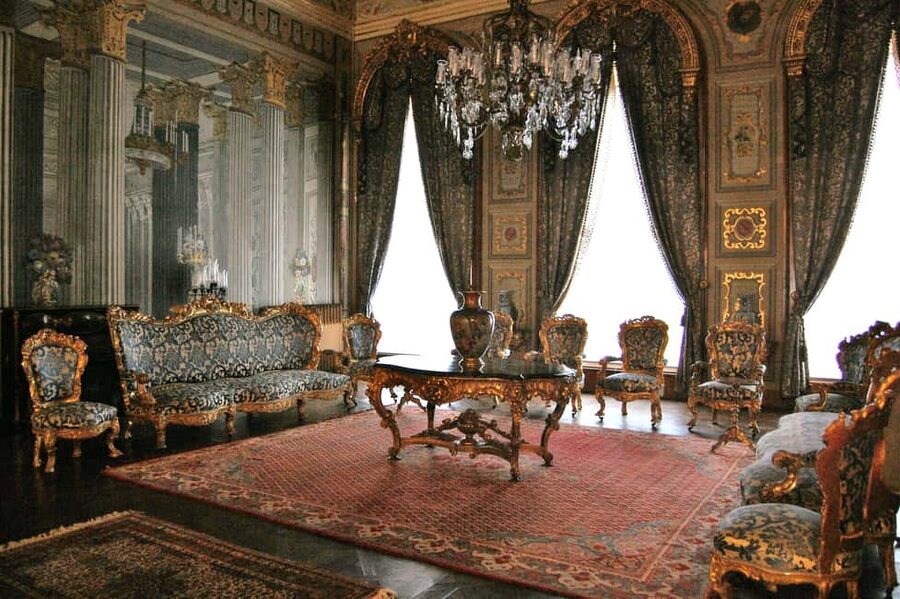
REVIEW · TOPKAPI AND DOLMABAHCE PALACE TOURS
Dolmabahce Palace & Harem Skip-the-Line Entry & Audio Guide
Dolmabahce Palace is Ottoman grandeur turned up to full volume: 258 rooms, 46 halls, crystal, marble, gold, and a huge ceremonial hall facing the Bosphorus. This self-guided visit gives you access to the palace, gardens, Selamlik, and Harem without tying you to a tour group.
I like the fast-track entry and the freedom to move at your own pace. I also like that the Harem is included, since it adds the private side of palace life rather than leaving you with only the formal state rooms. The main catch is price: at $54 per person, this is expensive for a self-guided attraction, and skip-the-line access does not remove the security check.
Key points
- The main hall is the visual knockout: Expect enormous scale, glittering decoration, and one of the most lavish interiors in Istanbul.
- The Harem is included: You can see both the public Selamlik and the private quarters on one ticket.
- The audio guide is practical: It leads you through the palace, Harem, courtyards, and rooms in several languages.
- You still pass through security: The ticket saves time at the ticket queue, but every visitor must undergo the security check.
- Indoor photography is not allowed: Bring your eyes rather than your camera for the palace interiors.
- Plan several hours: The palace, gardens, Harem, and courtyards cover a lot of ground.
Why Dolmabahce Palace feels different from Topkapi

Dolmabahce Palace tells the story of the Ottoman Empire in its final decades, when the court adopted a far more European style. Topkapi feels older, more layered, and more connected to the early Ottoman court. Dolmabahce feels like a nineteenth-century royal residence designed to impress European visitors.
That contrast is one of the best reasons to visit both if your Istanbul schedule allows. Dolmabahce gives you polished ceremonial rooms, grand European decoration, and a palace pressed against the Bosphorus. The building is less about fortress walls and secluded courtyards, and more about display.
The scale is striking from the start. The palace contains 258 rooms and 46 halls, along with bathrooms and hammams. You will not inspect every corner in equal detail, but you will see enough to understand that this was not a modest royal home. It was a statement of wealth and power during a difficult period for the empire.
More Topkapi and Dolmabahce palace tours in Istanbul:
- Topkapi Palace and Harem Skip-the-Line-Tickets & Audio Guide
★ 4.3 · 4,745 reviews - Basilica Cistern & Hagia Sophia with Optional Topkapi Palace
★ 4.6 · 3,547 reviews - Istanbul: Topkapi Palace and Harem Ticket with Audio Guide
★ 4.4 · 2,401 reviews
Getting there and using the fast-track ticket
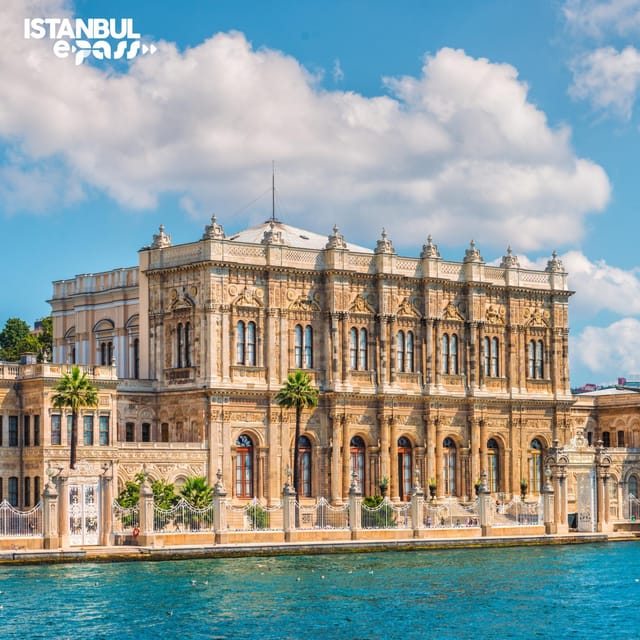
Dolmabahce Palace is in the Besiktas area on the European side of Istanbul. The main T1 tram line brings you within about a five-minute walk of the entrance, making public transport a sensible choice. No hotel pickup or drop-off is included, so you arrange your own transport.
This is not a guided walking tour. You go to the palace yourself, present the supplied ticket, pass security, and begin the visit. Depending on the option booked, the meeting instructions may differ, so read the voucher carefully rather than looking for a guide holding a sign.
The fast-track benefit applies to the ticket queue. It does not mean you can walk past security. That distinction matters at busy times, especially in the afternoon when the sun and queues can make waiting unpleasant. Some people find the skip-the-line feature essential; on quieter days, the value is less obvious.
Your ticket is generally sent by email, and the digital entry process is straightforward. Keep the ticket easy to reach on your phone. At the entrance, staff direct you toward the audio-guide collection point after security.
The audio guide and the one detail you must remember
The audio guide is a strong part of this experience because the ticket does not include a live guide. It gives you structure as you move through the palace instead of leaving you to admire a room without knowing why it matters.
You receive an audio device and headphones from a dedicated office near the entrance. You must leave proof of identification, such as a passport or driver’s licence, as a deposit. Bring a physical document. A photo of your passport on your phone may not be accepted, and arriving without suitable identification could mean missing the guide.
The guide is designed to lead you through the palace, Harem, and four courtyards. It explains the rooms, decoration, and royal setting at a useful pace. You can pause, look around, and continue when ready, which works better than a fixed group schedule for visitors who like to linger.
The listed language options include English, Russian, Spanish, Arabic, German, French, Italian, Dutch, Chinese, Korean, and Turkish. The promotional information is not perfectly consistent about the total number of languages, so check the current selection when booking if your preferred language is important. Romanian is not listed, despite the number of Romanian-speaking visitors who come to Istanbul.
The audio guide is informative, but it cannot answer questions or add the little side stories that a live guide might know. If you want a personal explanation of Ottoman court life, a private or group guide could offer more. For an independent visit, though, the device does its job well.
The Selamlik: rooms built for ceremony and display
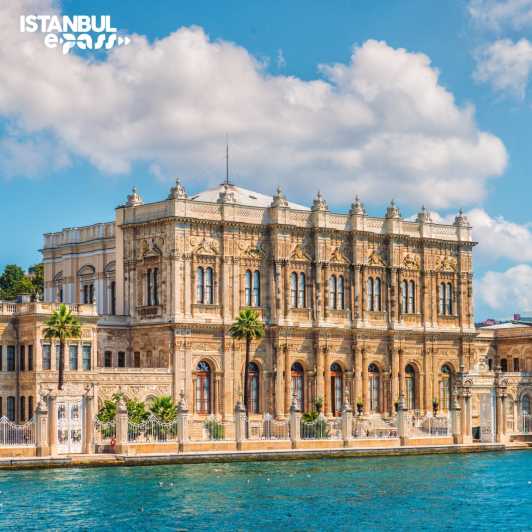
The Selamlik is the formal section of the palace, where the sultan conducted official business and received important visitors. This is where the building’s grandest rooms make their strongest impression.
The ceremonial spaces are broad, ornate, and deliberately overwhelming. Marble, chandeliers, polished surfaces, and lavish furnishings show how the late Ottoman court wanted to present itself. The main hall is the great visual moment. Its scale and decoration are difficult to take in quickly, so give yourself time to stand still and look upward.
The palace is often compared with famous European royal residences because of its opulence. You will find a distinctly European influence in the design, but the building remains tied to Ottoman court life and the final six sultans who lived there.
The display works best when you balance admiration with a little historical perspective. This was extraordinary wealth at a time when the empire faced serious political and financial strain. The rooms are beautiful, but they also reveal the court’s desire to project strength and modernity.
Indoor photography is not allowed. That is disappointing if you enjoy recording architectural details, and staff enforce the rule. Still, the restriction can make you pay closer attention. Look at the ceilings, doors, carpets, chandeliers, and furniture while you are there, because your phone will not provide a visual record later.
More skip-the-line palace tickets in Istanbul:
- Istanbul: Dolmabahce Palace and Harem Skip-the-Line Ticket
★ 4.7 · 751 reviews - Topkapi Palace & Harem, Skip-the-Line SMALL GROUP
★ 4.7 · 565 reviews - Istanbul: Dolmabahce Palace & Harem Skip-the-Line Entry
★ 4.5 · 401 reviews - Istanbul: Topkapi Palace Skip-the-Line Ticket & Guided Tour
★ 4.2 · 178 reviews
The Harem: the private side of palace life
The Harem is included in this ticket, and that is important. Some palace admissions cover only the formal state areas, leaving visitors to pay again for the private quarters. Here, you can see both sides of the complex in one visit.
The Harem offers a different mood from the Selamlik. Instead of official receptions and grand public ceremony, the focus shifts toward the household of the sultan and family life within the palace. It helps you picture the building as a working residence, not simply a collection of impressive rooms.
The rooms remain lavish, but the purpose feels more personal. The audio guide helps explain who used these spaces and how they fit into the wider palace. Without it, you could easily move through the Harem admiring decoration without understanding its role.
If you have visited the Harem at Topkapi, you will notice a different character here. Dolmabahce’s Harem is more polished and European in style, matching the rest of the palace. For some visitors, it is the most satisfying part of the visit because it adds human detail to all the official grandeur.
Four courtyards, gardens, and Bosphorus views
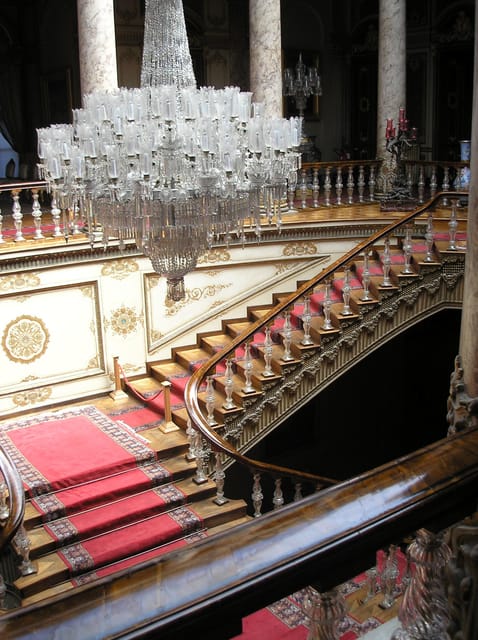
Do not treat the exterior as a quick walk between buildings. The ticket includes the gardens and courtyards, and they provide a welcome change after the heavily decorated interiors.
The grounds are attractive and offer views toward the water. The Bosphorus setting is one of Dolmabahce’s great advantages. From outside, you can appreciate how the palace was positioned not only as a residence but also as a grand waterfront statement.
The gardens are pleasant, though practical comforts are limited. Some areas have little shade, and there are not many benches. On a hot day, you may want to break your visit into shorter sections rather than rushing through the palace and grounds all at once.
A cafe is available on the grounds. It can be a useful place to pause, and food and service have been described as pleasant and reasonably priced. Do not count on the garden as a fully shaded rest area, especially in summer.
The grounds also make the visit easier to enjoy with a little extra time. After the ornate rooms, the open air gives you space to absorb what you have seen. If you are trying to fit the palace into a tight schedule, you may be tempted to skip the gardens. I would not, unless weather or energy makes it necessary.
How long to allow and when to go
The experience is sold as a one-day activity, but that means flexible use within the available opening schedule, not a one-day guided tour. You choose an available starting time and visit independently.
Allow several hours for the palace, Harem, courtyards, and gardens. Two hours may cover the main route at a brisk pace, but you will have less time to listen carefully, pause in the major rooms, or enjoy the grounds. If you like architecture and history, plan on longer.
Dolmabahce Palace is closed on Mondays. During the winter season, from November 1 through March 31, it opens at about 9:00 AM and closes at approximately 4:00 PM. Opening times can vary, and one visit began later than the advertised hour, so check the current schedule before setting out.
Morning is the safer choice if you want cooler conditions and more time before closing. Afternoon entry can make the skip-the-line ticket more useful, but the palace may feel less comfortable if ventilation is poor or the outdoor areas are hot.
What you cannot bring inside
Large bags, luggage, oversize items, baby strollers, baby carriages, and selfie sticks are not allowed. This is worth knowing before you arrive, particularly if Dolmabahce is one stop during a transfer day.
Pack light and leave large belongings at your hotel when possible. The restrictions are not a minor detail, because arriving with prohibited items can slow you down or create a storage problem.
The ban on interior photography is another part of the visit to accept in advance. You can enjoy and photograph the exterior and grounds, but the palace rooms are for looking rather than snapping.
Is $54 a fair price?

At $54 per person, this is not a budget attraction. The price reflects the major palace admission, Harem access, audio guide, and the convenience of avoiding the ticket line. It does not include transport, a live guide, food, or hotel service.
I think the value depends on your itinerary. If you have six or more days in Istanbul, Dolmabahce fits comfortably alongside the city’s other major sights. You can take your time, compare it with Topkapi, and enjoy the gardens without sacrificing another essential experience.
If you have only three or four days, the calculation is tougher. Istanbul offers more sights than any short visit can absorb. If Topkapi Palace is already on your list, you may decide that one imperial palace is enough. Dolmabahce is worth choosing when you especially like grand nineteenth-century interiors, European-influenced Ottoman design, and palace architecture.
The skip-the-line feature adds value when queues are long. It adds less on a quiet day. Since you still pass through security, do not read fast-track as instant entry from the street.
Who should book this experience?
I would recommend it to you if you enjoy historic buildings more than formal group tours. You get the freedom to stop, replay an explanation, and move at your own pace. Families with older children may also appreciate the flexibility, though strollers and baby carriages are not allowed.
It suits first-time Istanbul visitors who want an easy introduction to the late Ottoman court. The audio guide supplies enough background for a meaningful visit without requiring a separate guide.
You may want another option if you need step-by-step assistance, have limited mobility, are carrying luggage, or strongly prefer taking interior photographs. You should also think twice if your schedule is short and the $54 price would force you to skip a more important sight.
Children from 0 to 6 receive free admission, and no ticket is required for them. The activity itself is not guided, so young children may find the long interiors less engaging unless you keep the visit flexible.
Final verdict: book it when the palace matches your plans
Dolmabahce Palace is one of Istanbul’s grandest sights, and the combination of Selamlik, Harem, gardens, and audio guide makes this a well-rounded visit. The palace is beautiful, historically important, and easy to reach by tram.
The drawbacks are real: the price is high, indoor photos are forbidden, comfort in the palace can vary, and the ticket does not remove the security queue. Still, I would book this experience if you have several days in Istanbul and want to see the late Ottoman court at its most extravagant.
If you have just a short stay, compare it carefully with Topkapi Palace. If you choose Dolmabahce, bring physical ID for the audio guide, arrive with a light bag, avoid Monday, and allow several hours. That preparation turns a costly ticket into a worthwhile palace visit.
FAQ
Is Dolmabahce Palace entry included?
Yes. The ticket includes entry to Dolmabahce Palace, the gardens, the Selamlik section, and the Harem section.
Is the Harem included in the ticket?
Yes. Access to the Harem is included rather than requiring a separate admission.
Is this a guided tour?
No. You visit the palace independently. The ticket includes an audio guide, but there is no live guide or scheduled group tour.
Which languages are available for the audio guide?
The listed languages are English, Russian, Spanish, Arabic, German, French, Italian, Dutch, Chinese, Korean, and Turkish. The booking information gives slightly different totals in different places, so confirm the current language selection when booking.
Do I need identification for the audio guide?
Yes. You must leave proof of identification, such as a passport or driver’s licence, as a deposit for the audio-guide device. Bring a physical ID document.
Can I take photographs inside the palace?
No. Interior photography is not allowed. You can enjoy the gardens and exterior areas, but do not plan to photograph the palace rooms.
Is security included in skip-the-line entry?
No. The fast-track ticket helps you bypass the ticket queue, but all visitors must still pass through security.
Is Dolmabahce Palace open on Mondays?
No. The palace is closed on Mondays.
What are the winter opening hours?
From November 1 through March 31, the palace opens at around 9:00 AM and closes at approximately 4:00 PM. Check availability and current times before visiting.
Are children admitted free?
Children aged 0 to 6 are eligible for free admission, and tickets are not required for them.
More Audio-Guided Palace Visits in Istanbul
- Hagia Sophia & Topkapi Palace Combo Tickets with Audio Guide
★ 4.1 · 33 reviews - Topkapi Palace + Basilica Cistern Tickets & Audio Guide
★ 4.5 · 30 reviews - Topkapi Palace & Hagia Sophia Tickets + Audio Guide
★ 3.8 · 8 reviews - Istanbul : Topkapi Palace and Harem Entrance w/Audio Guide
★ 4.9 · 5 reviews
More Self-Guided Palace Routes in Istanbul
- Istanbul: Dolmabahce Palace and Harem Fast-Track & Audio
★ 4.7 · 1,772 reviews - Istanbul: Topkapi Palace and Harem Ticket with Audio Guide
★ 4.2 · 786 reviews - Istanbul: Beylerbeyi Palace Skip-the-Line Ticket & Audio …
★ 4.5 · 89 reviews - Beylerbeyi Palace Skip-the-Line Ticket with Audio Guide
★ 4.6 · 72 reviews
Just added around Istanbul
- Topkapi Palace&Harem-Guided Tour-Skip lines- All tickets inc★ 4.8 · 66 reviews
- Topkapi Palace Complete Tour: Harem & Hagia Irene Included★ 3.5 · 4 reviews
- Topkapi Palace Tour: Scenes of the Ottoman Empire★ 5.0 · 3 reviews
- Topkapi Palace & Hagia Sophia Tickets + Audio Guide★ 3.8 · 8 reviews
- Topkapi Palace Express Tour with Harem Tickets★ 3.8 · 11 reviews
- Topkapi Palace + Basilica Cistern Tickets & Audio Guide★ 4.5 · 30 reviews
- Istanbul: Yildiz Palace & Museum Skip the Ticket Line Entry★ 4.7 · 21 reviews
- Istanbul: Topkapi Palace & Dolmabahce Palace Combo Ticket★ 5.0 · 7 reviews
Topkapi and Dolmabahce Palace Tours, compared.
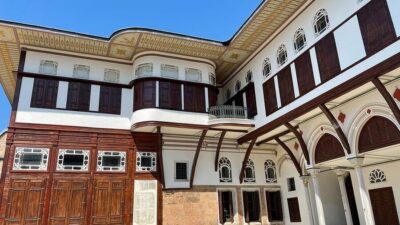
Topkapi Palace and Harem Skip-the-Line-Tickets & Audio Guide
Read our review →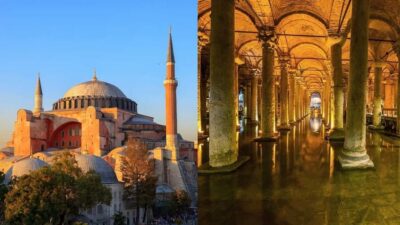
Basilica Cistern & Hagia Sophia with Optional Topkapi Palace
Read our review →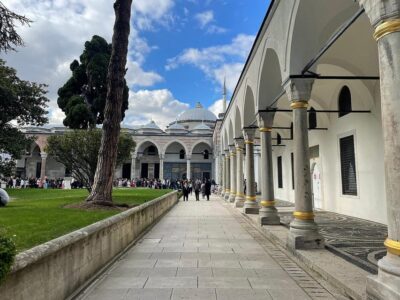
Topkapi Palace and Harem Ticket with Audio Guide
Read our review →
Dolmabahce Palace and Harem Fast-Track & Audio
Read our review →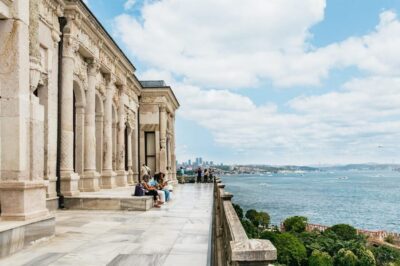
Topkapi Palace and Harem Guided Tour with Ticket
Read our review →
Topkapi, Hagia Sophia and Basilica Cistern Tour
Read our review →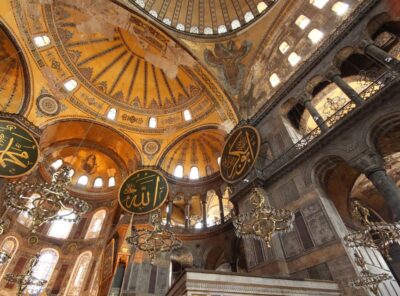
Basilica Cistern &Topkapi Palace &Hagia Sophia Combo Tickets
Read our review →Topkapi Palace and Harem Ticket with Audio Guide
Read our review →Browse the lists this tour appears in