
REVIEW · MADRID PALACE TOURS
From Madrid: El Escorial and Valley’s Basilica Half Day Tour
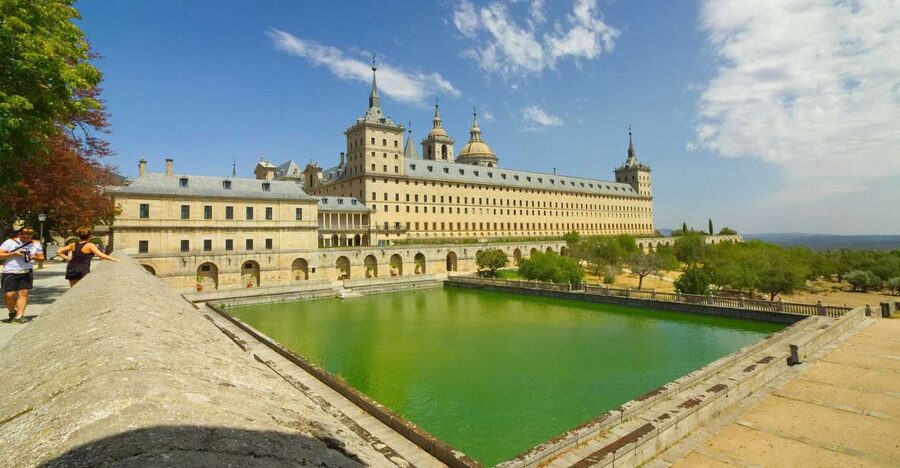
El Escorial is more than a royal palace. It is a monastery, a church, a library, a royal burial place, and a grand statement of Philip II’s power, all gathered into one severe stone complex. A short drive away, the Valley of the Fallen offers a very different experience: a vast basilica and crypt cut into rock beneath a cross more than 150 meters high.
I like the way this tour combines royal Spain and the Spanish Civil War in one morning or afternoon. I also like the efficient transport, which saves you from arranging two separate visits outside Madrid. Guides such as Pilar, Carlos, Ana, and Sylvia have been praised for clear explanations and a comfortable pace.
The main drawback is time. El Escorial receives about two hours, while the Valley of the Fallen gets roughly 45 minutes, so you will see the key areas but not explore either site at leisure. Bilingual tours can also mean less English explanation, and audio headsets have not always worked perfectly.
Key points to know before booking
- Two major monuments in five hours: Visit El Escorial and the Valley of the Fallen without giving up a full day in Madrid.
- Philip II’s royal world: See the palace rooms, royal pantheon, monastery spaces, and the Cloister of the Four Evangelists.
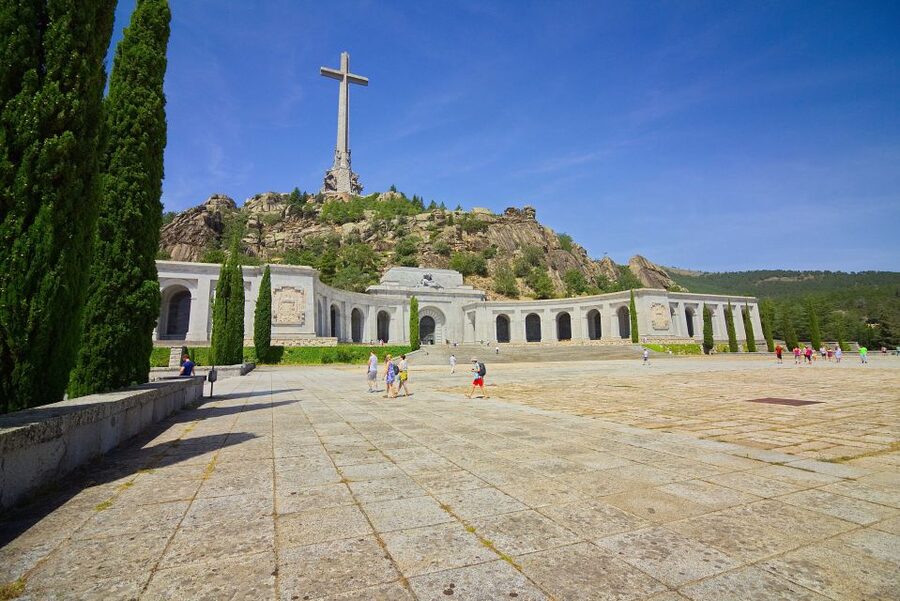
- A striking mountain setting: The Valley of the Fallen sits in the Guadarrama Mountains, with a giant cross above its basilica and crypt.
- Guided context matters: Guides including Pilar, Carlos, Ana, and Sylvia have been praised for strong historical explanations and sensible pacing.
- Comfortable but active outing: You need comfortable shoes, and the tour is not suitable for wheelchair users.
- Good value at $78: Transport, guide service, admissions, and an audio headset are included, though meals are not.
Why this half-day trip works from Madrid
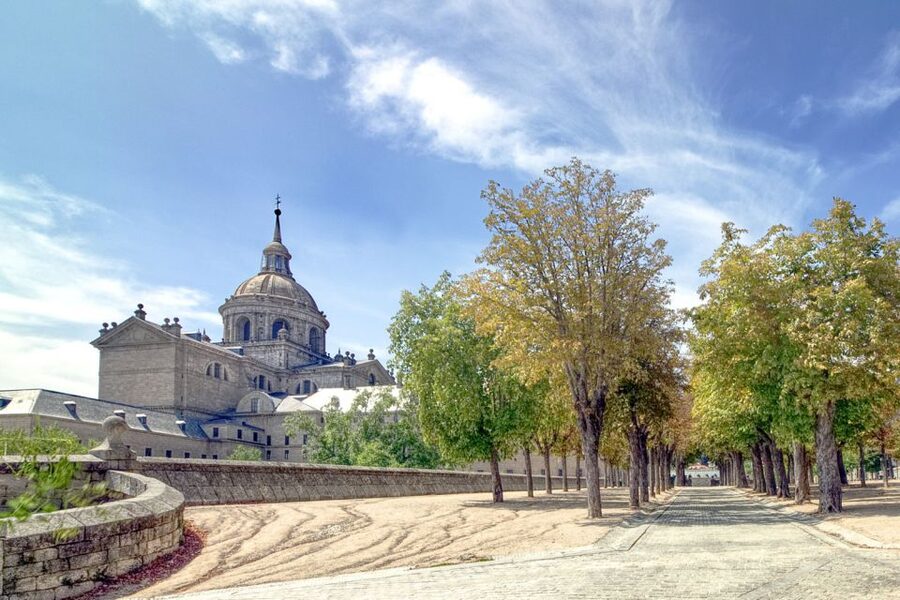
Madrid has enough museums and plazas to keep you busy for days, but the capital’s most imposing royal monument lies outside the city. El Escorial is about an hour away by coach, and reaching the Valley of the Fallen afterward requires another short transfer. For many visitors, the practical problem is not deciding if these places are worth seeing. It is fitting them into a Madrid schedule without losing a whole day.
This tour solves that problem neatly. You meet at VPT Tours, board a coach, and let someone else handle the route, entrance tickets, and site introductions. The total length is five hours, which leaves time for lunch, museums, or an evening in central Madrid.
The value comes from the combination. A $78 price covers transportation, a live guide in English or Spanish, admission to El Escorial, admission to the Valley of the Fallen and its basilica, and an audio headset. You still pay for your own food and drinks, but there is no need to budget for the principal entrance fees separately.
I would choose this outing early in a Madrid visit if you want historical orientation. It gives you a look at royal power under Philip II, then places that power beside one of Spain’s most difficult twentieth-century sites.
Other palaces people book in Madrid:
- Madrid: Royal Palace Expert Guided Tour with Skip-the-Line
★ 4.7 · 8,407 reviews - Madrid: Segovia and Toledo Tour, Alcazar, and Cathedral
★ 4.7 · 7,797 reviews - Madrid Essential: Historic Center, Plaza Mayor & Royal Palace
★ 5.0 · 6,416 reviews
The long stone story of El Escorial
The Monastery of San Lorenzo de El Escorial was built during the reign of Philip II as a residence for Spanish monarchs, a monastery, and a royal pantheon. Its size and purpose make the place feel less like a country retreat and more like a carefully planned declaration of authority.
The complex was recognized for its artistic and historic importance and later given UNESCO World Heritage status. That label matters here because El Escorial is not simply an attractive old building. It brings together court life, religion, royal burial customs, art, and Spanish state power in one visit.
Your guided visit lasts about two hours. That is enough time to see the principal rooms and hear the main story, but you should not expect to inspect every corner. The site is large, and a guide helps you understand why each area matters instead of wandering through a series of grand rooms without a clear thread.
The pace has generally been comfortable for older visitors as well as younger adults. Still, this is a walking visit inside a monumental complex, so comfortable shoes are a sensible choice. The tour is not suitable for wheelchair users, an important point to check before booking.
Philip II’s palace and the royal pantheon
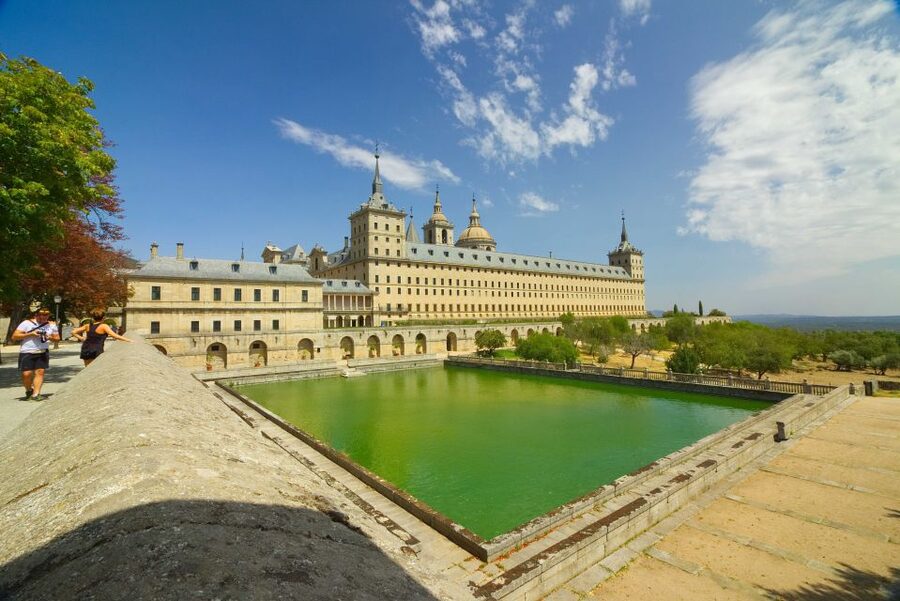
The Palace of Philip II is one of the most useful stops for understanding the monastery’s purpose. You get a direct look at the world of the king who ordered the complex, rather than only seeing the building from outside.
The Royal Pantheon adds a more solemn note. This is where the royal burial tradition becomes tangible, with monuments connected to kings, queens, and royal children. The tour gives you a compact lesson in monarchy and succession, while the guide supplies the names and political setting that can otherwise blur together.
I would pay close attention here even if royal interiors are not your usual priority. The pantheon makes the scale of Spanish monarchy personal. Behind the grand architecture are dynasties, family lines, early deaths, and the need for a permanent royal resting place.
The Four Evangelists Cloister and the interiors
The Cloister of the Four Evangelists is one of the complex’s most memorable architectural spaces. Its orderly design gives you a quieter counterpoint to the palace and burial rooms. Look for the balance between the cloister’s open central area and the surrounding arcades, then listen for the guide’s explanation of its religious role.
The interior visit is where a live guide earns the fee. El Escorial contains so much art, architecture, and political meaning that a short label rarely explains the whole picture. Guides such as Pilar have been praised for making the information interesting and for answering questions without rushing the group.
There can be limits to what you see. The library is a frequent point of interest, but access is not guaranteed, and one visitor specifically wished it had been open. If the library is a priority for you, treat it as a possible extra rather than a promised part of the visit.
A headset is supplied so you can hear the guide while moving through the rooms. This is useful in a large group, especially when the guide cannot gather everyone into a tight circle. Equipment has not always worked perfectly, so tell the guide promptly if you cannot hear.
Same city, a very different set of state rooms:
- Madrid: Toledo & Segovia Tour w/ Cathedral, Alcazar & Lunch
★ 4.6 · 5,846 reviews - Toledo & Segovia Tour with Cathedral and Alcazar Tickets & Lunch
★ 4.5 · 4,046 reviews - Avila with Walls and Segovia with Alcazar from Madrid
★ 4.5 · 3,293 reviews - Madrid: Royal Palace Skip-the-line Guided Tour
★ 4.9 · 3,146 reviews
The short ride to the Valley of the Fallen
After El Escorial, the coach ride to the Valley of the Fallen takes about 15 minutes. This is a helpful transition because the two sites feel markedly different. El Escorial is tied to monarchy and Catholic royal tradition. The Valley of the Fallen is a memorial linked to those who died in the Spanish Civil War.
The memorial was built in the twentieth century in a valley of the Guadarrama Mountains. Its most visible feature is a cross rising more than 150 meters above the site. Even before entering the basilica, the scale of the monument is difficult to ignore.
The setting contributes much of the impact. You get mountain views around a structure built on an enormous scale, but the place is not simply a scenic stop. Its political and human meaning is serious, and your guide can help place it within Spain’s Civil War and later history.
This is also where you should expect a more somber mood. The site has a complicated past, including the use of prisoners in its construction under Franco. The tour does not turn the visit into a simple monument to national pride. Instead, it gives you a chance to consider how memory, power, and mourning can be built into the same place.
Inside the basilica and crypt
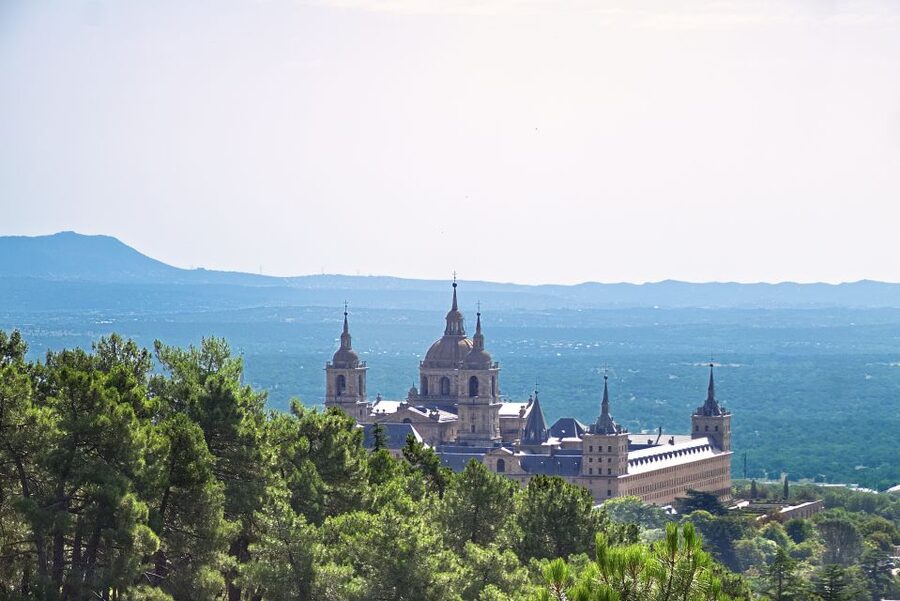
The tour includes admission to the Valley of the Fallen and a visit inside the basilica. The basilica and crypt are built into hard rock under the mountain, which gives the interior a very different character from El Escorial’s courtyards and palace rooms.
You have about 45 minutes at the Valley of the Fallen. That is enough to see the main interior and understand the scale of the monument, but it is a tight visit if you want time for extended reflection, photographs, or a slow look at the surroundings. One useful advantage is that the entrance is already arranged, so you do not spend your short stop sorting out tickets.
Photography has restrictions. Flash photography and video recording are not allowed, and food or drinks are not permitted in the coach. Large bags, oversize luggage, and pets are also not allowed, so arrive with only what you need for the outing.
The Valley may appeal most to visitors interested in modern Spanish history, memorials, architecture, or unusual sacred spaces. If you want only cheerful sightseeing, this stop may feel heavy. That is not a flaw, but it is worth knowing before you book.
Guides, language, and the pace of the day
The tour operates in English and Spanish. If everyone in your group speaks English, the guide may conduct the visit entirely in English, which can make the explanations more consistent. On bilingual departures, the time must be shared between languages, and the balance may not always feel even.
Some past participants found the English accent difficult to follow, while another felt that only a quarter of the explanation was delivered in English. That makes the audio headset especially important. If you are sensitive to spoken English or have hearing difficulties, ask at the start how the language presentation will work.
The strongest guide feedback has centered on clear information, friendly manner, and group control. Pilar was praised for answering questions and allowing enough time to see the sites. Carlos has been described as informative and well paced. Ana kept the group together while covering the main areas, and Sylvia received praise for making the history easy to follow.
There have also been less polished moments. One guide was considered abrupt with some people, and another had little presence while speaking into the microphone. These comments are not a reason to reject the tour, but they are a reminder that the guide can shape the experience as much as the monuments do.
The transport has generally been described as clean, comfortable, and air-conditioned. The driving time is not excessive, though you spend about two hours total on the road between Madrid, El Escorial, the Valley, and the return point. For a five-hour outing, that is a fair trade for seeing both sites.
Who will get the most from this tour
I would recommend this tour to a first-time Madrid visitor who wants to see more than the city center. It is especially useful if you have only half a day available and do not want to manage regional transport, entrance tickets, or site explanations on your own.
It also suits anyone interested in:
- Spanish monarchy and royal burial traditions
- Philip II and the Spanish Empire
- Religious architecture and monumental interiors
- The Spanish Civil War and public memory
- Mountain views paired with major historic sites
Older visitors may appreciate the air-conditioned coach and measured pace. Families with children should consider the subject matter and the amount of architectural and historical explanation. Young children may find the royal rooms and basilica less engaging than Madrid’s parks and interactive attractions.
Independent visitors who want long, unhurried time inside the monuments may prefer a full-day private arrangement or separate visits. This is a guided overview, not an open-ended day for wandering. The advantage is that you see the essential parts efficiently. The compromise is that you follow the group’s schedule.
Practical details that affect your choice
The meeting point is VPT Tours. Check the exact departure time when booking because the tour lasts five hours but the available start times can vary.
Wear comfortable shoes. You will walk through a large monastery and royal complex, then visit a basilica and crypt built into the mountain. Do not bring large bags or oversize luggage, and plan to eat before or after the tour because meals and drinks are not included and food and drinks are not allowed in the vehicle.
Free cancellation is available up to 24 hours before departure for a full refund. You can also reserve now and pay later, which helps if your Madrid plans are still shifting.
Should you book the El Escorial and Valley of the Fallen tour?
Book it if you want two important sites outside Madrid in a single, well-organized half day. The strongest reasons are the included admissions, comfortable coach, useful historical setting, and the chance to compare Philip II’s royal monument with the far more somber Valley of the Fallen.
Skip it if you need wheelchair access, dislike guided schedules, or want extended time at each site. Also think twice if bilingual commentary would frustrate you or if the Valley’s political and memorial subject matter is not what you want from a day out.
For most visitors with a free five-hour window, the $78 price is fair. You get a great deal of transport and historical context for the money, with only limited time at the second site as the main compromise.
FAQ
How long does the tour last?
The tour lasts five hours, including transportation from Madrid to El Escorial, the Valley of the Fallen, and back to the meeting point.
What sites are included?
You visit the Monastery of San Lorenzo de El Escorial, including the Cloister of the Four Evangelists, the Palace of Philip II, and the Royal Pantheon. You also visit the Valley of the Fallen and the interior of its basilica.
Is transportation included?
Yes. Transportation by bus or coach is included, along with a live tour guide and an audio headset.
Is the tour offered in English?
Yes. Live guides are available in English and Spanish. On bilingual departures, the information is presented in both languages.
Are entrance fees included?
Yes. Admission to the Monastery of El Escorial, the Valley of the Fallen, and the basilica is included.
Are meals and drinks included?
No. Meals and drinks are not included, and food and drinks are not allowed in the vehicle.
Is the tour suitable for wheelchair users?
No. The activity is not suitable for wheelchair users. Comfortable shoes are recommended for all participants.
Just added around Madrid
- Madrid: Royal Palace Guided Tour with Entry Ticket★ 5.0 · 58 reviews
- The Royal Palace of Madrid: Small Group Guided Tour★ 3.2 · 6 reviews
- The Most Complete Tour of Madrid: Austrias, Cathedral, Palace – Local Guides★ 4.2 · 41 reviews
- Segovia Private Guided Visit & Alcazar with High Speed Train★ 4.2 · 11 reviews
- Private Visit to the Royal Palace and Walking Tour of Madrid★ 5.0 · 4 reviews
- Private guided tour Royal Palace & Royal Collections Gallery★ 5.0 · 4 reviews
- Madrid: Toledo Excursion with a Visit to the Alcázar and the Army Museum★ 5.0 · 3 reviews
- Royal Palace of Madrid Skip-the-Line and Retiro Park Tour★ 4.5 · 78 reviews
Madrid Palace Tours, compared.
Royal Palace Expert Guided Tour with Skip-the-Line
Read our review →
Segovia and Toledo Tour, Alcazar, and Cathedral
Read our review →
Madrid Essential: Historic Center, Plaza Mayor & Royal Palace
Read our review →
Toledo & Segovia Tour w/ Cathedral, Alcazar & Lunch
Read our review →
Toledo & Segovia Tour with Cathedral and Alcazar Tickets & Lunch
Read our review →
Avila with Walls and Segovia with Alcazar from Madrid
Read our review →
Browse the lists this tour appears in