
REVIEW · ALHAMBRA AND NASRID PALACE TOURS
Granada: Alhambra and Nasrid Palaces Small Guided Tour
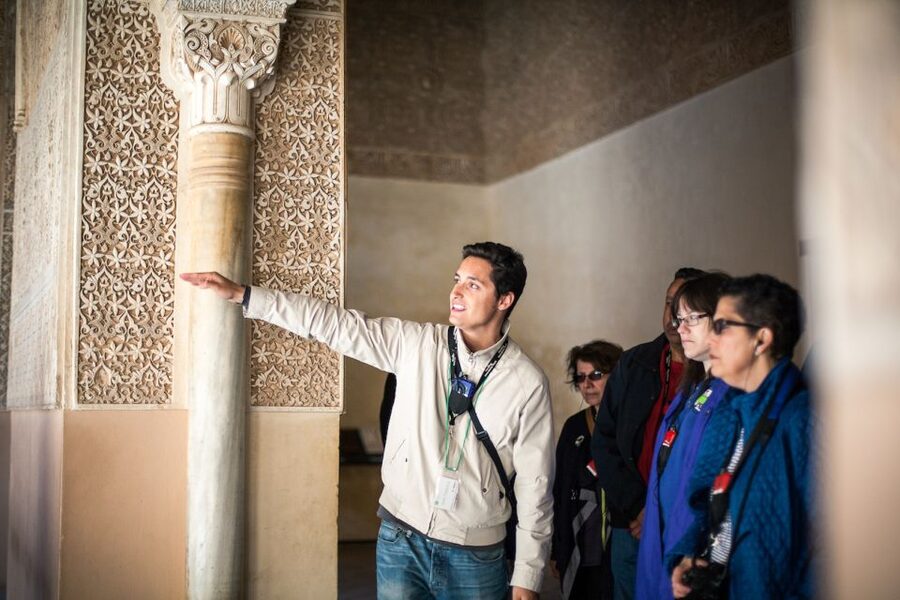
The Alhambra is not just a palace. It is a hilltop town of royal rooms, military walls, gardens, courtyards, and water channels, with Granada spread below. A guide helps you connect those pieces, especially in the finely decorated Nasrid Palaces where a quick walk alone can leave you admiring patterns without understanding their purpose.
I like the three-hour route through every major section, and I like the choice between a private tour and a small shared group. Guides such as Carlos, Antonio, Asier, and Juan have been praised for making the site clear and engaging, even for children and families translating for relatives. The main drawback is time: the Alhambra is huge, and three hours gives you a strong first visit rather than a slow, unhurried study of every corner.
Key points to know before booking

- The Nasrid Palaces are the main event: See the Mexuar, Comares Palace, Palace of the Lions, and Court of the Lions with an official local guide.
- You cover the whole Alhambra complex: The route includes the Alcazaba fortress and Generalife Gardens, not just the famous palace rooms.
- Your guide adds the missing story: Expect explanations of Granada’s past, Islamic design, water systems, and the buildings’ place in Spanish history.
- Choose your group style: Book a private experience or join a small shared tour, depending on how much personal attention you want.
- Plan for walking and sun: Comfortable shoes, sunscreen, and your passport or ID are essential.
- The meeting point is near the entrance: Start at the Granavision Welcome Visitor Center, in front of the Alhambra ticket office and near the Guadalupe Hotel.
Why a guided Alhambra visit makes sense
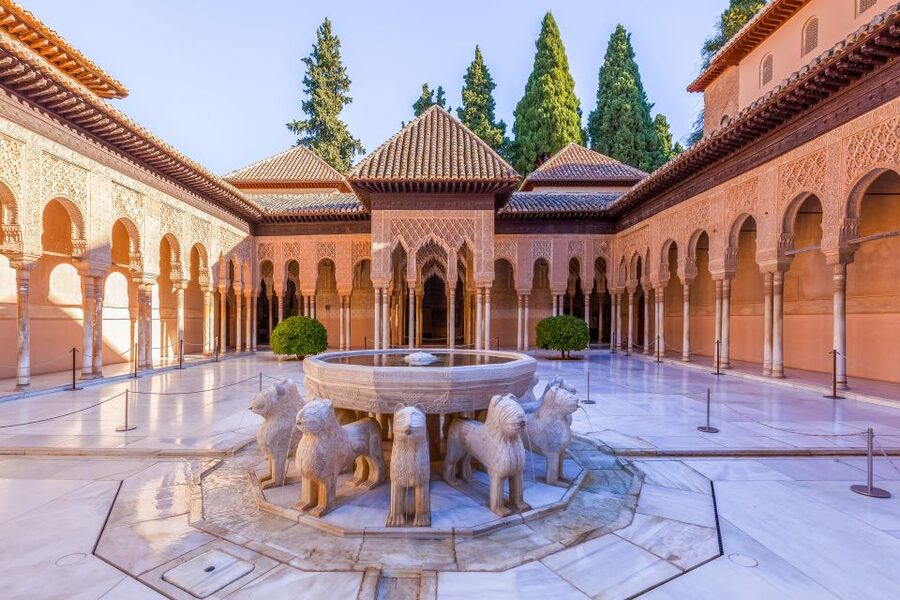
The Alhambra can look easy at first glance. You enter a decorated room, take in the carved plaster and tilework, move through a courtyard, and continue uphill. But the site is full of details that are hard to read without help: inscriptions, changing light, water channels, royal functions, military defenses, and the relationship between palace and garden.
That is where this tour earns its price. A good guide turns a group of beautiful rooms into a story. You learn why the complex needed both a fortress and elegant royal quarters, how water shaped the design, and how the Alhambra fits into the long history of Granada and Spain.
The tour costs $105 per person. That is not a bargain admission ticket, but it includes entry to the Nasrid Palaces, Alcazaba, and Generalife, along with a private or small-group guide. Since Alhambra tickets are limited and highly sought after, the value comes from combining admission with a clear route and live interpretation.
I would choose this tour if the Alhambra is a major reason for your stay in Granada, especially on a first visit. If you already know the site well or want to photograph each room at your own pace, a self-guided ticket may suit you better.
More Alhambra and Nasrid palace tours in Spain:
- Granada: Alhambra & Nasrid Palaces Tour with Tickets
★ 4.7 · 19,801 reviews - Granada: Alhambra and Nasrid Palaces Entry Ticket
★ 4.6 · 15,130 reviews - Granada: Alhambra & Generalife Fast-Track Guided Tour
★ 4.7 · 8,313 reviews
Meeting the guide at the Alhambra entrance
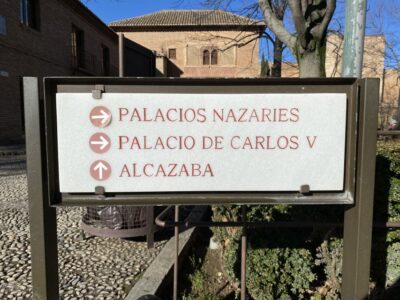
You meet at the Granavision Welcome Visitor Center, in front of the Alhambra ticket office and close to the Guadalupe Hotel. There is no hotel pickup or drop-off, so you need to make your own way to the hilltop meeting point.
Bring the passport or identity document used when booking. The Alhambra requires the full name, date of birth, and passport details for every participant. If those details are missing, entry can be refused. This is one of those small travel rules that matters a great deal, so check your booking information before setting out.
The tour is offered in Spanish, English, French, German, Italian, Arabic, and Japanese. A private group is also available. Headphones are not included, so ask about the group format and guide setup when you book, particularly if hearing every explanation matters to you.
The site is wheelchair accessible, but the Alhambra is a large complex with walking between areas. You should still consider your own comfort with distances, inclines, and time on your feet.
The Nasrid Palaces: Granada’s finest rooms
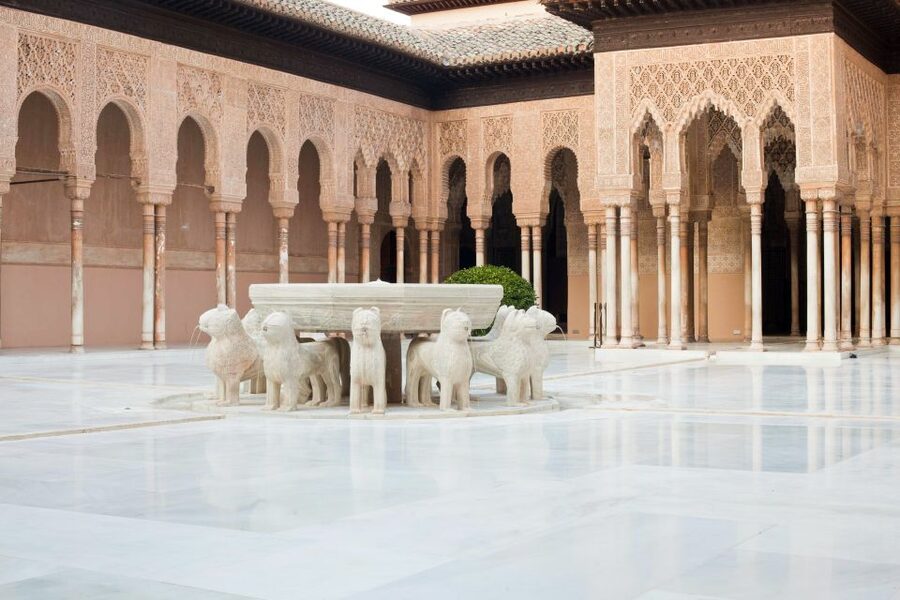
The visit includes the Palace of Mexuar, the Palace of Comares, and the Palace of the Lions. This is the section most people picture when they think of the Alhambra: delicate stucco, patterned tiles, carved wooden ceilings, narrow passages, courtyards, and water used as both decoration and cooling.
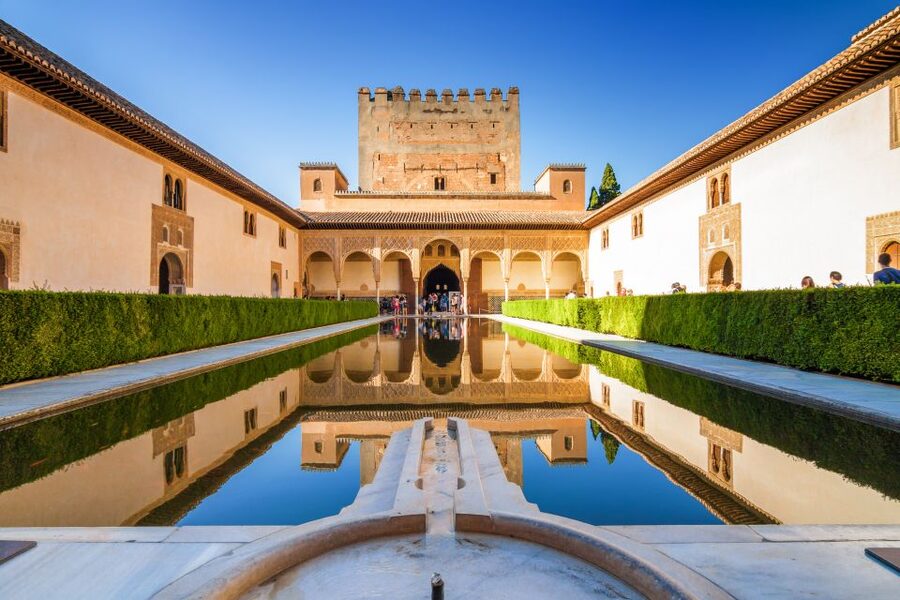
The Mexuar served formal and administrative purposes. It helps you see that the Alhambra was not simply a private residence. The palace complex was a place of government, ceremony, diplomacy, and royal life.
The Palace of Comares brings a different mood. Its courtyards and rooms are tied to courtly power and formal display. Here, a guide can point out how architecture shaped movement and sightlines, and how decoration carried meaning beyond simple ornament.
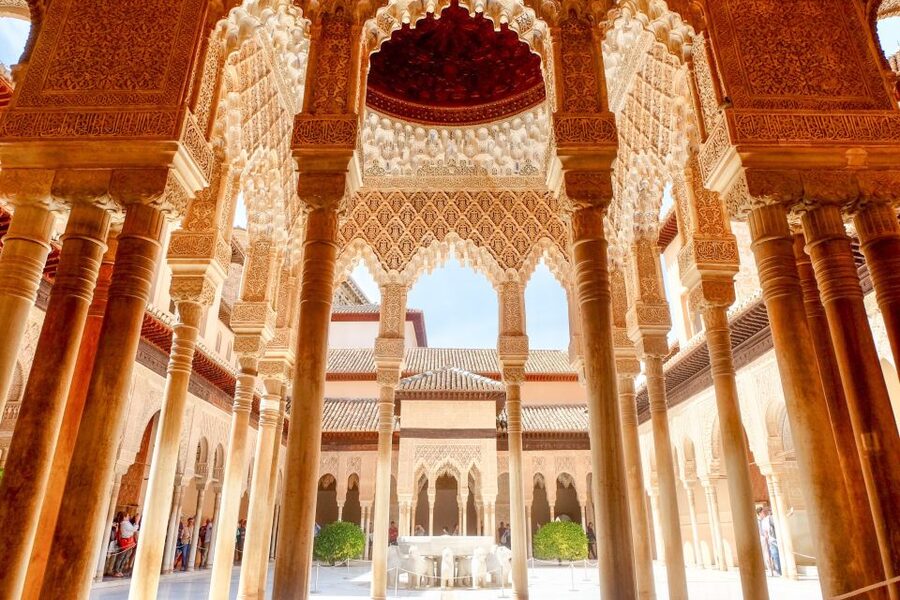
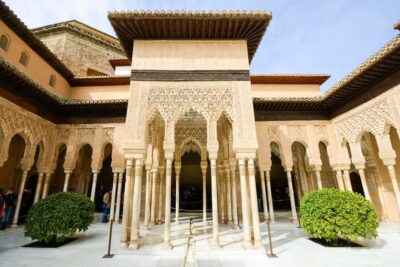
Then comes the Palace of the Lions, the most instantly recognizable part of the visit. The Court of the Lions is compact, detailed, and easy to admire quickly. Your guide can slow the moment down by explaining the water, the columns, the surrounding rooms, and the way the court connects private spaces with open air.
The palace rooms are not large museum halls. Access is controlled, and your time inside can feel structured by the entry schedule. That protects the monument, but it also means you should listen closely and avoid expecting long stretches for quiet photography.
This is where several hours of background become useful. The patterns may seem repetitive at first, yet each room has a different role and design. A guide such as Asier or Borgia can give you a framework for noticing the differences instead of treating the palaces as one continuous series of pretty surfaces.
The Court of the Lions in half an hour
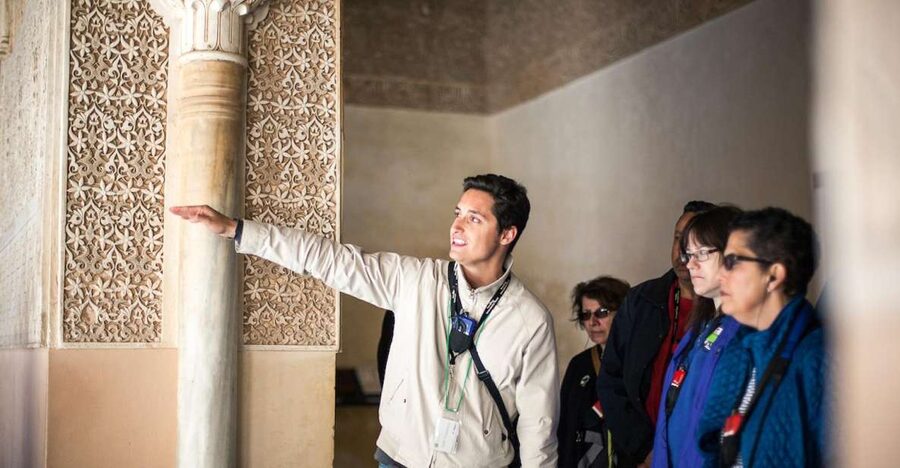
The Court of the Lions receives its own part of the route, listed at about 30 minutes. That may sound short, but the courtyard itself is a focused stop rather than a separate building.
Look for the famous fountain, the slender columns, the surrounding galleries, and the way water moves through the palace design. The court is one of the clearest places to understand that water at the Alhambra was practical as well as beautiful. It cooled spaces, marked routes, and created a sense of calm within a royal complex.
This is also a good place to ask questions. Several guides have been praised for handling questions patiently, including family groups with children and relatives who needed translation. That personal exchange can matter more here than a long lecture. If you are curious about a detail, ask while you are standing in front of it.
More guided palace visits in Spain:
- Seville: Cathedral, Giralda & Alcazar Entry With Guided Tour
★ 4.6 · 8,560 reviews - Madrid: Royal Palace Expert Guided Tour with Skip-the-Line
★ 4.7 · 8,407 reviews - Granada: Alhambra Entry Ticket with Audio Guide
★ 4.1 · 5,950 reviews - Seville: Alcázar and Cathedral Entry Ticket and Guided Tour
★ 4.6 · 5,056 reviews
The Alcazaba: the Alhambra’s military side
The Alcazaba is the oldest area of the complex and was once its military precinct. After the ornate Nasrid rooms, it changes the rhythm of the tour. Instead of delicate plasterwork and royal courtyards, you find fortress walls, defensive structures, and broad views over Granada.
The Alcazaba explains why the Alhambra was built on this hill. The palace needed protection, and the military quarter was not an optional extra. From the fortifications, you can better understand the site’s position above the city and the connection between defense and royal power.
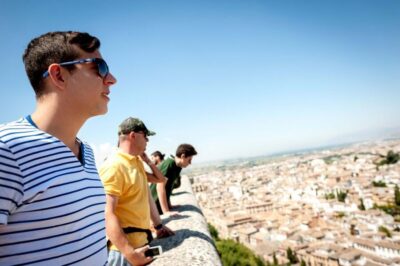
The city views are one of the lasting rewards of the visit. You can look across Granada from the high parts of the complex, with the setting helping you understand the Alhambra as a commanding place rather than an isolated collection of buildings.
Do not expect the fortress to survive as a complete medieval town. Parts are fragmentary, and you often have to reconstruct the earlier layout through the remains and the guide’s explanation. That can be a drawback if you prefer fully restored interiors, but it is also part of what makes the Alcazaba different from the palaces.
Generalife Gardens and the sultan’s summer retreat
The final major stop is the Generalife, the sultan’s summer palace east of the Alhambra. Its gardens offer a change from the enclosed palace rooms, with planted areas, water, paths, and open views.
The Generalife is not simply a pleasant garden added to the ticket. It shows another side of royal life. The setting was designed for rest, shade, water, and controlled views across the surrounding area. The contrast with the military Alcazaba and formal Nasrid Palaces gives the whole visit a more complete shape.
Allow yourself to notice the sound and movement of water. At the Alhambra, water is one of the main design tools, not just a decorative feature. The gardens make that especially clear, though the appearance of the plants can vary by season.
The Generalife section is listed at about one hour. After the palace interiors, this is a welcome chance to breathe and take in the views. It is still part of a guided route, so you may not have unlimited time to wander wherever you like.
What the guides add to the visit

The strongest part of this experience is the guide. Names that have received especially warm praise include Carlos, Antonio, Asier, Juan, Borgia, William, Alberto, Beatriz Arenas, Eduardo, Viktor, and Maria. That does not guarantee a particular guide unless your booking confirms one, but it gives you an idea of the local expertise available through the operator.
Carlos was praised for patience with a family translating for parents who did not speak English. Antonio connected well with children. Asier was described as engaging and clear, while Borgia brought energy and strong knowledge of Granada and the Alhambra. William’s connection as a Granada native was especially useful for placing the palace within the city’s wider story.
The practical lesson is simple: guide quality matters more here than a checklist of rooms. The Alhambra’s decoration is impressive on its own, but the visit becomes more useful when someone explains the water systems, the political setting, the design choices, and the changes the site has seen over time.
Guides have also allowed rest and water breaks during longer visits. Still, the official duration is three hours, so you should arrive ready to keep moving. The route covers a lot.
Timing, group size, and the three-hour pace

The advertised duration is three hours, with the route covering the Nasrid Palaces, Court of the Lions, Alcazaba, and Generalife. The individual sections can feel longer or shorter depending on entry timing, group pace, and the amount of time spent on questions.
A small shared group gives you the benefit of a live guide without the full cost of a private tour. A private group is better if you want to ask many questions, need a slower pace, or are traveling with family members who require translation.
The tour is not designed for a relaxed all-day visit. You are moving through a major monument with controlled access, and the Nasrid Palaces operate around assigned entry times. If you want to sit in each courtyard, make careful architectural sketches, or photograph every angle, book extra time elsewhere for independent exploration if your admission arrangements allow it.
Demand is high. If your chosen time is unavailable, the supplier may place you in a new time slot. Check the confirmed time carefully, and do not build a tight schedule around the original request until the booking is confirmed.
How to prepare for the visit

Wear comfortable shoes. The Alhambra is spread across a large hilltop complex, and you will be walking between very different areas.
Bring sunscreen, particularly if you visit during a bright part of the day. The open sections and gardens can feel very different from the shaded palace interiors. Carry your passport or ID card, since the entry rules require participant details and identification.
Pets are not allowed. Pickup and drop-off are not included, so plan your route to the meeting point at the Granavision Welcome Visitor Center.
The cancellation policy allows cancellation up to 24 hours in advance for a 50 percent refund. Since entry demand is high and time slots can change, read the final confirmation carefully before your visit.
Who should book this Alhambra tour?
I would recommend it for a first-time visitor who wants the main Alhambra experience without spending hours researching the site beforehand. It suits families particularly well, since a lively guide can hold a child’s attention better than a printed description and can answer questions as they come up.
It also works well for visitors who want context. If you have already visited the Alcazar in Seville or Córdoba’s monuments, you may compare the sites, but the Alhambra has its own scale, hilltop position, water design, and combination of palace, fortress, and gardens.
You may want another option if you prefer total independence, need long photography stops, or dislike fixed entry times. The tour gives you structure and interpretation in exchange for some freedom.
Should you book it?
Book this tour if you want to see the Nasrid Palaces, Alcazaba, and Generalife in one organized visit, with the history explained as you go. The $105 price is reasonable for travelers who value a strong guide, included entry to all major areas, and the convenience of avoiding the ticket line.
Choose the private option if your group has specific needs or enjoys asking plenty of questions. Choose the shared small-group option if you want expert help at a lower cost. Either way, arrive with your identification, comfortable shoes, and realistic expectations: three hours will give you a memorable first look, not every secret of the Alhambra.
FAQ
How long does the Alhambra tour last?
The tour lasts three hours. It includes the Nasrid Palaces, Court of the Lions, Alcazaba, and Generalife Gardens.
What areas of the Alhambra are included?
Your ticket includes the Nasrid Palaces, Alcazaba fortress, and Generalife Gardens. The guided route also includes the Court of the Lions.
Where does the tour meet?
Meet at the Granavision Welcome Visitor Center, in front of the Alhambra ticket office and near the Guadalupe Hotel.
Which languages are available?
Guides are available in Spanish, English, French, German, Italian, Arabic, and Japanese.
Do I need to bring identification?
Yes. Bring the passport or identity card used for the booking. The Alhambra requires each participant’s full name, date of birth, and passport details.
Is a private tour available?
Yes. You can choose a private group or join a shared small-group tour.
Just added around Spain
- Private guided tour of the Alcazar de los Reyes Cristianos★ 5.0 · 6 reviews
- Private official tour guide for visit to Alhambra in Granada from Cordoba Hotel★ 4.0 · 5 reviews
- Mosque-Cathedral, Alcazar & Synagogue with Skip the Line Tickets★ 5.0 · 46 reviews
- Visita guiada a la Mezquita Catedral y el Alcázar de los Reyes Cristianos★ 4.0 · 4 reviews
- Mosque, Alcazar and Juderia Ticket Included Skip the Line★ 5.0 · 3 reviews
- Guided Tour of Monumental Cordoba: Jewish Quarter, Alcazar and Mosque★ 4.5 · 99 reviews
- Mosque, Alcazar of the Christian Monarchs and Juderia★ 3.5 · 3 reviews
- Guided tour of the Alcazar de los Reyes Cristianos in Spanish★ 5.0 · 36 reviews
Alhambra and Nasrid Palace Tours, compared.
Alhambra & Gardens Tour w/Nasrid Palaces Option
Read our review →
Fast-Track Alhambra & Nasrid Palaces Guided Tour
Read our review →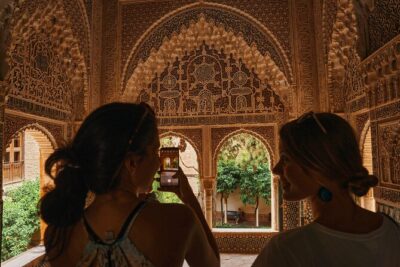
Skip The Line Alhambra and Generalife Guided Tour
Read our review →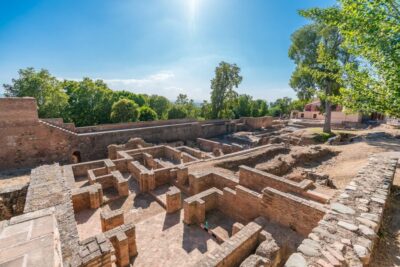
Alhambra Ticket and Guided Tour with Nasrid Palaces
Read our review →Browse the lists this tour appears in