
REVIEW · UBUD PALACE TOURS
Legong Dance Show at Ubud Palace Bali
The most memorable part of this evening is the setting: Ubud Palace courtyard, where a classical royal dance unfolds to the sharp, shimmering sound of gamelan instruments. The Legong Kraton uses three dancers, elaborate costumes, and highly controlled movements to tell a tale of royal duty, war, and a bird’s warning of death.
I like the low price of $7.25 and the chance to see a serious Balinese art form without committing an entire evening to a large cultural package. I also like the compact format: 90 minutes is enough time to appreciate the dance, costumes, and musicians without turning the night into a full-day cultural program. The main drawback is seating. Arrive late and you may stand, see around other people, or struggle to follow the action.
Key points to know before you go
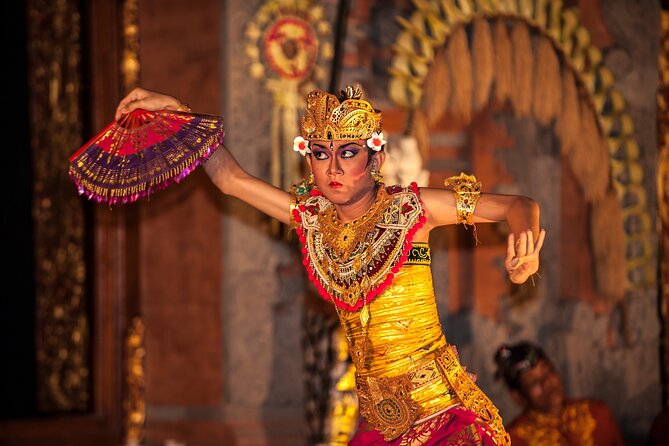
- The palace setting adds real atmosphere: The performance takes place at Ubud Palace, a historic royal compound in central Ubud.
- The story follows Rangkesari and the Prince of Daha: A royal dispute leads toward war, with a prophetic bird adding a dramatic turn.
- The dance needs close attention: Fast eye movements, hand gestures, footwork, and changes in posture carry much of the meaning.
- Arrive 45 to 60 minutes early: Seating is limited, and the best places go well before the 7:30 pm start.
- The show lasts about 90 minutes: The seats are basic, so comfort can become an issue toward the end.
- Your mobile booking confirmation is not the final ticket: The official ticket is sent within 24 hours, so check your messages before heading out.
What the Legong Kraton tells you
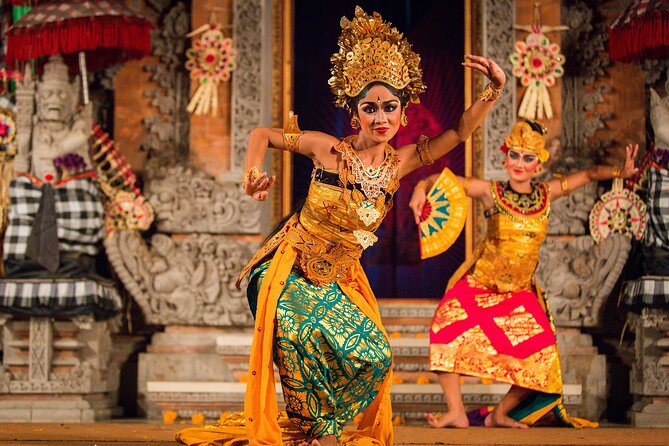
Legong is one of Bali’s best-known classical court dances. It is not simply a series of pretty poses set to music. The movements are precise enough to look almost measured with a ruler, while the pace can change quickly from controlled stillness to rapid hand, eye, and foot movements.
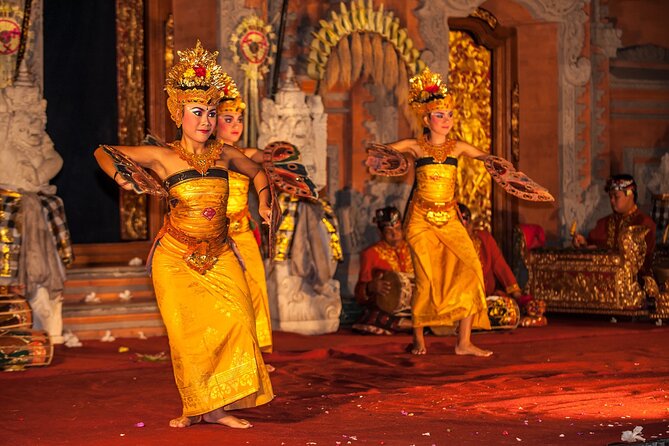
The version at Ubud Palace is called Legong Kraton. Three dancers take the main roles: one court attendant and two legong dancers who portray royal figures. Their gestures are highly stylized, so you will not understand every part of the story from movement alone. A short dance guide available at the entrance can help you follow the action.
The plot comes from a 12th or 13th century story associated with East Java. King Lasem has locked Rangkesari in a stone house. Her brother, the Prince of Daha, threatens war unless she is released. Rangkesari pleads with the king to let her go, hoping to prevent bloodshed, but he chooses conflict.
As the king travels toward battle, he encounters a bird that predicts his death. That moment gives the performance a darker edge. The graceful costumes and delicate movements may suggest a light court entertainment, but the story is about power, fear, family loyalty, and the cost of stubborn decisions.
You do not need to memorize the plot to enjoy the performance. Still, knowing the basic outline makes the repeated gestures easier to read. The dance is best approached as a visual language, not as a Western-style play with spoken dialogue and obvious scene changes.
A few more palace visits around Indonesia worth a look
- Bali: Ubud Palace Legong Dance Show Ticket
★ 4.4 · 3,979 reviews - Benidorm: Show at Benidorm Palace
★ 4.7 · 848 reviews - Flamenco Show at Dalmases Palace in Barcelona
★ 4.5 · 313 reviews
Arriving at Ubud Palace for the 7:30 pm show
The performance begins at 7:30 pm and lasts approximately 90 minutes. The practical advice is simple: arrive 45 minutes early at a minimum, and an hour early if you care strongly about your view.
This matters because admission does not guarantee a comfortable seat with a clear sightline. The palace performance area has limited seating, and late arrivals may find people standing at the edges or blocking parts of the stage. Some audience members have had to remain standing for the entire show.
Early arrival also gives you time to find the entrance, sort out your ticket, and settle before the musicians begin. If you are meeting friends or trying to fit dinner around the performance, allow more time than the one-hour show length suggests. The full evening includes getting there early, waiting for the performance, and leaving through a crowded area afterward.
Bring comfortable clothing, a camera, and cash. Soft drinks and beer may be available at the venue, but the show itself includes only the admission ticket. Hotel pickup and drop-off are not included, so you need to arrange your own way to Ubud Palace.
The venue is near public transportation, which helps if you are staying in central Ubud. The supplied information does not promise a private transfer or reserved seating, so plan this as a self-guided evening rather than a hosted tour.
The palace courtyard is part of the performance
Ubud Palace gives the show a sense of place that a modern theater could not match. The dance takes place within a royal compound, with Balinese architectural details around the performance area. You are not simply watching a cultural presentation in an anonymous hall. The setting connects the dance to the court tradition it came from.
That does not mean every seat gives the same experience. Some positions provide a better view of the dancers, while others may place you behind part of the audience or near the gamelan orchestra. Sitting behind or beside the musicians can still be rewarding because you get a close look at the sound that drives the dance, but you may not see every gesture clearly.
The palace setting is especially valuable if this is your first evening performance in Bali. The architecture, music, costumes, and movement work together. I like that the experience feels rooted in Ubud rather than packaged as a generic stage show.
At the same time, the setting has practical limits. The courtyard is not designed like a theater with numbered seats and carefully managed sightlines. Seating can be informal, and staff may not always keep standing people from blocking the view. You need to trade some comfort and order for the atmosphere.
The dancers and the language of movement
The dancers’ skill is the central reason to attend. Legong demands flexibility, balance, timing, and an unusual degree of control. The performers use their eyes, fingers, wrists, shoulders, and feet in ways that can look small from a distance but carry great meaning within the dance tradition.
Watch the eyes as much as the arms. Quick shifts in gaze and changes in facial expression help show mood and intention. The dancers do not rely on spoken explanation, so the body has to do the work of dialogue.
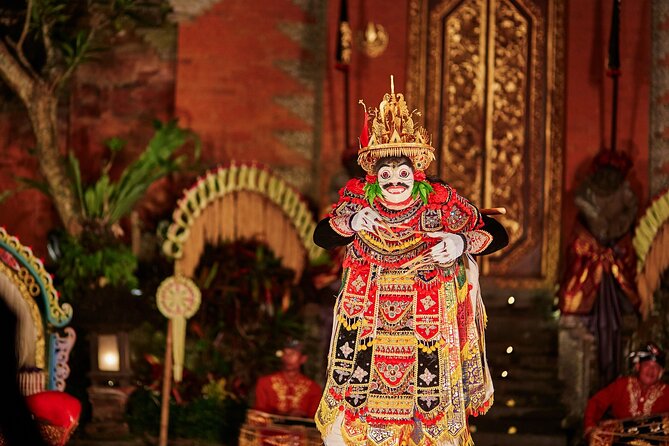
The costumes are another strong point. Traditional dress, careful makeup, and ornate details make the royal characters easy to distinguish from the court attendant. Under stage lighting, the colors and accessories give the dance a formal, ceremonial quality.
The performance can also test your patience if you expect a constantly changing plot. Legong repeats certain movement patterns, musical phrases, and dramatic gestures. That repetition is part of the form, allowing the dancers to show control and precision. But if you prefer a fast-moving story with frequent scene changes, the 90 minutes may feel long.
I suggest giving the dance time to settle. The first section may seem more immediately dramatic because you are taking in the costumes, music, and movement all at once. Later sections reward closer attention to small changes in rhythm, posture, and expression.
Same city, a very different set of state rooms:
- East Bali Tour: Gate of Heaven, Water Palace, Sleeping Gajah
★ 5.0 · 1,726 reviews - Bali: Lempuyang Quick Access, Waterfall, Water Palace & More
★ 4.7 · 1,072 reviews - East Bali: Lempuyang Gates, Tenganan, & Water Palaces Tour
★ 4.8 · 175 reviews - Bali: Ujung Water Palace, Candidasa and Sidemen Village Tour
★ 4.8 · 80 reviews
The gamelan orchestra supplies the pulse
The gamelan musicians are not background decoration. Their instruments set the rhythm, signal changes, and create the emotional pressure beneath the dance. The sound can be bright and metallic one moment, then tense and forceful the next.
If you arrive early enough to choose your position, consider whether you want the clearest view of the dancers or a closer relationship with the orchestra. A seat behind or beside the gamelan may limit the stage view, but it gives you a stronger sense of how the performance is built.
The orchestra also helps explain why the dance feels so exact. The dancers and musicians work within a tightly coordinated structure. A gesture, pause, or change of direction is connected to the music rather than improvised at random.
For many people, the sound is as memorable as the movement. If you have already seen a Balinese dance, this performance still offers a chance to focus on how the orchestra shapes the action. If this is your first, listen for the shifts in tempo and intensity as the royal story moves toward conflict.
How much value do you get for $7.25?
At around $7.25 per person, this is an inexpensive way to spend an evening in Ubud. The ticket covers admission to the Legong Dance Show, and the 90-minute length gives you a substantial performance for the price.
The value depends on what you expect. If you want a polished theater production with assigned seats, a stage unobstructed from every angle, and a formal introduction, this may disappoint. The low cost does not remove the practical problems of an open palace performance, especially when the audience is large.
If you want access to a traditional performance in a meaningful setting, the price is strong. You get live gamelan, trained dancers, elaborate costumes, and a classical story connected to Bali’s court traditions. Even if you are unsure how much you will enjoy dance, the ticket is a relatively small financial gamble.
Children are charged the same rate as adults. Most people can participate, but the basic seating and 90-minute duration matter for anyone who needs extra comfort. If sitting on a simple chair or bench for that long sounds difficult, plan accordingly.
The experience is also a better value if you combine it with an evening in central Ubud. You can arrange your own dinner before or after the performance, rather than paying for a separate cultural dinner package. Keep in mind that the ticket does not include transportation, meals, or drinks.
Seating is the main risk
I would make seating the deciding factor before booking. The most consistent practical advice is to arrive early. Thirty minutes may help, but 45 minutes is safer, and an hour gives you the best chance of choosing a useful position.
The problem is not only the number of seats. People may stand along the sides or in spaces that interfere with the view. If those in front remain standing, even an early arrival cannot guarantee a perfect sightline. The dance depends on hand gestures and facial movements, so a partially blocked view can reduce the experience.
Here is how I would approach it:
- Arrive at least 45 minutes before 7:30 pm.
- Keep your official ticket ready on your phone.
- Choose a position with a clear view of the performance area, not just an empty-looking seat.
- If you value the music as much as the dance, consider a place near the gamelan.
- Wear clothing that remains comfortable while sitting for 90 minutes.
- Bring cash for drinks or small purchases at the venue.
Do not assume that arriving at the start time will work. This is one of those inexpensive cultural events where the ticket price is easy, but the best viewing position requires time.
Ticket details and planning notes
You receive booking confirmation at the time of purchase, but the confirmation from Viator or TripAdvisor is not the official admission ticket. The official ticket is sent within 24 hours. Check your email or phone before leaving for the palace, and contact GlobalTix customer support through WhatsApp at +65 9765 3804 if you have a redemption problem.
The ticket is valid for all passport holders and applies only to the selected date. Children pay the adult rate. This experience is non-refundable and cannot be changed after booking, so choose your date carefully.
The mobile ticket is useful because you do not need to collect a paper voucher in advance. Still, a mobile ticket does not solve the seating issue. It gets you through admission, but it does not reserve a particular chair or guarantee a front-row view.
The show starts at 7:30 pm. There is no hotel pickup or drop-off, so you are responsible for reaching Ubud Palace and returning afterward. The location is near public transportation, but no specific transport service is included.
Who will enjoy this evening most?
I would recommend this show to anyone interested in Balinese dance, traditional music, royal stories, or historic settings. It is also a good choice if you have only one evening in Ubud and want a focused cultural activity rather than a long excursion.
It suits couples, solo visitors, families, and first-time Bali visitors who can arrive early and accept simple seating. Most people can participate, and the performance does not require special dance knowledge.
I would be more cautious if you dislike repetition or need a guaranteed comfortable chair. Some people find the later portions less engaging because similar movement patterns return. That is not a flaw in the tradition, but it can feel slow if you are expecting a conventional stage drama.
You should also think about your view. If you are short, traveling with young children, or easily frustrated by people standing in front of you, the informal seating may be more trouble than it is worth. Arriving early improves your odds, but it cannot remove every uncertainty.
Should you book the Legong Dance Show?
Book it if you want an affordable, authentic-feeling evening of Balinese performance in a royal palace setting. The strongest reasons are the beautiful costumes, highly trained dancers, live gamelan, and the chance to see a classical court dance for about $7.25.
Skip it if you need reserved seating, dislike formal dance with repeated patterns, or cannot arrive well before the 7:30 pm start. The show can be difficult to see when the audience is crowded, and the basic seating may feel uncomfortable by the end.
My practical verdict is positive, with one clear condition: treat early arrival as part of the ticket. Get there 45 to 60 minutes ahead, read the dance guide, choose your viewing position carefully, and you will give the performance its best chance to work for you.
FAQ
What time does the Legong Dance Show begin?
The show begins at 7:30 pm and lasts approximately 90 minutes.
How early should I arrive?
Arrive at least 45 minutes before the performance. Arriving about an hour early gives you a better chance of finding a good seat because seating is limited.
Where does the performance take place?
The performance takes place at Ubud Palace in Ubud, Bali.
Is hotel transportation included?
No. Hotel pickup and drop-off are not included. The palace is near public transportation, so you must arrange your own transportation.
What does the ticket include?
The ticket includes admission to the Legong Dance Show. Meals, drinks, and hotel transportation are not included.
Can I cancel or change my booking?
No. This experience is non-refundable and cannot be changed for any reason.
Just added around Indonesia
- Sultan Palace, Water Castle & Prambanan Temple Guided Tour★ 4.6 · 4 reviews
- Sultan Palace, Prambanan Temple and Water Castle Guide Tour★ 5.0 · 2 reviews
- Yogyakarta: Prambanan Temple Morning Tour and Palace Tour★ 5.0 · 4 reviews
- Javanese Dance Workshop with Kraton Palace Dancer★ 5.0 · 2 reviews
- Jakarta : Taman Safari, Panda Palace, and Waterfall★ 4.7 · 11 reviews
- Bali:Heaven Gate, TirtaGangga Palace, and Beach Escape Tour★ 5.0 · 3 reviews
- Bali: Safari Zoo and Ubud Palace and Market Day Tour★ 4.7 · 6 reviews
- Bali: Ujung Water Palace, Candidasa and Sidemen Village Tour★ 4.8 · 80 reviews
Ubud Palace Tours, compared.


East Bali Tour: Gate of Heaven, Water Palace, Sleeping Gajah
Read our review →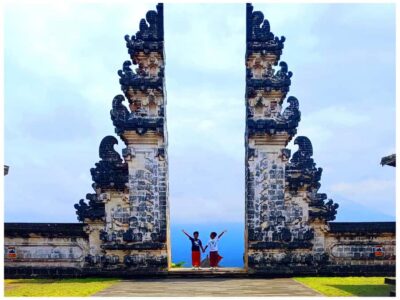
Heaven Gate Lempuyang, Water Palace & Waterfall Tour
Read our review →
Trip to Tirta Gangga Palace and Tukad Cepung Waterfall
Read our review →
Browse the lists this tour appears in