
REVIEW · MOROCCAN PALACE AND KASBAH TOURS
Marrakech: Bahia Palace, Saadian Tombs & Medina Guided Tour
Marrakech reveals itself best on foot, one tiled courtyard, carved gate and narrow souk lane at a time. This four-hour tour links the city’s major sights with daily life in the Medina, giving you a useful first look at places that can be confusing to find alone. I especially like the Bahia Palace’s quiet courtyards and the chance to see artisans at work rather than simply passing shop windows. The Saadian Tombs add a smaller, more focused history stop, while the guide helps explain what you are seeing.
I also like the practical shape of the experience. You meet at Café de France in Jemaa el Fna, receive help with the route, and get time inside the monuments for photographs and independent looking. Guides including Youness, Mustapha, Brahim, Hassan, Najem and Mouhssine have been praised for friendly explanations and flexible pacing. The main consideration is simple: this is a four-hour walking tour, not an easy sightseeing ride, and the two main monument tickets cost extra.
At a glance
- A strong first-day introduction: The route helps you understand how Jemaa el Fna, the Kasbah, the Mellah area, the monuments and the souks fit together.
- The Bahia Palace is the visual star: Expect cedar ceilings, mosaic floors, carved stucco, gardens and sunlit courtyards.
- The Saadian Tombs are atmospheric but can be slow: Your guide can help with the first ticket line, but an interior queue may remain.
- The souk visit has a practical side: You see pottery, woodcraft and metalwork, and your guide can explain how local goods are made.
- Budget for extra costs: The Bahia Palace and Saadian Tombs each cost 100 MAD per adult, payable in cash.
- Bring water and sturdy shoes: The route uses narrow lanes, uneven surfaces and long periods on foot.
Starting at Jemaa el Fna
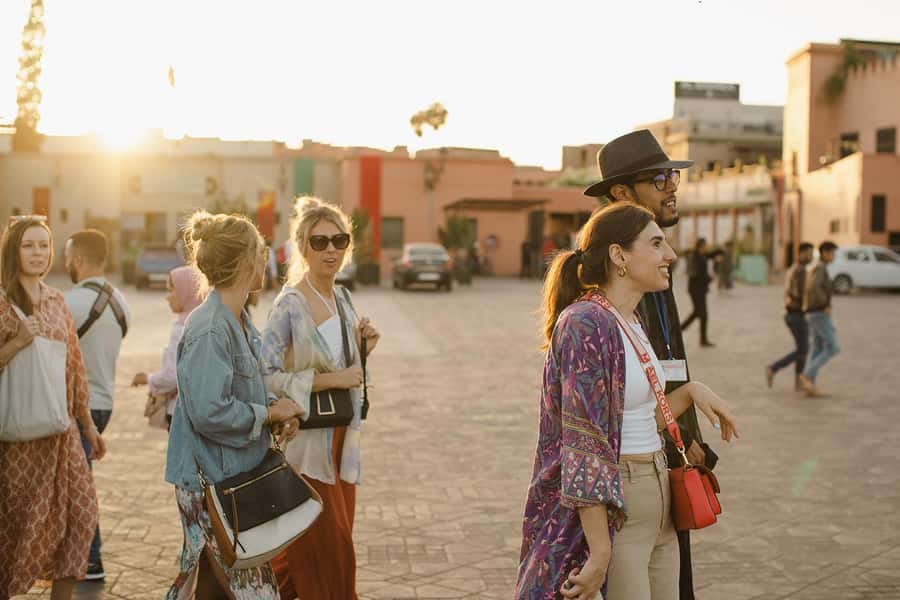
The meeting point is in front of Café de France, on Jemaa el Fna, Marrakech’s famous central square. This is a sensible place to begin, but it can be a lively meeting spot, with several guides and groups gathering at once. The provider sends the guide’s name, meeting details and useful reminders by WhatsApp a day or two beforehand, so check your messages before setting out.
Jemaa el Fna is worth a few minutes of attention before the tour moves on. By day, you may see juice stalls, performers and people moving across the open square. At night, the mood changes as food stalls, lights and music fill the space. The scheduled visit here is brief, around 15 minutes at the start and another 10 minutes near the end, so do not treat this tour as a full evening food experience.
This opening stop helps you get your bearings. Several people have found the tour especially useful on their first day in Marrakech because it explains the layout of the old city before you begin exploring independently.
More Moroccan palace and kasbah tours in Marrakesh:
- Marrakech: Bahia Palace, Saadian Tombs, Souk and Medina Tour
★ 4.7 · 4,974 reviews - Marrakech: Bahia Palace, Saadian Tombs, & Koutoubia Mosque
★ 4.5 · 2,529 reviews - Marrakech: Bahia Palace, Madrasa Ben Youssef and Medina Tour
★ 4.7 · 1,347 reviews
Walking through the Kasbah and past Bab Agnaou
From the square, the route heads toward the Kasbah, the fortified royal quarter. This part of the walk gives you a feel for the older defensive side of Marrakech, with walls, gates and lanes replacing the open space of Jemaa el Fna.
Bab Agnaou is the architectural highlight here. The 12th-century gate has carved decoration and once served as an important entrance toward the royal area. You stop for photographs and an explanation, then continue through the Kasbah for roughly 15 minutes.
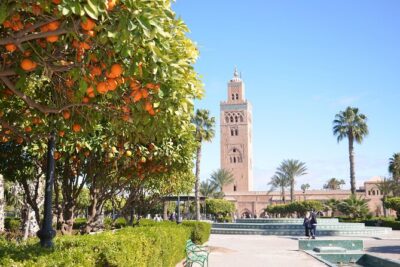
The Koutoubia Mosque is also part of the wider route, but you view it from outside. Entry is restricted to Muslims during prayer times, so the tour does not promise an interior visit. That is useful to know in advance, especially if you are comparing this walk with tours that advertise mosque access.
The Kasbah section is not long. I see it as a bridge between the major monuments rather than a full guided study of the quarter. Your guide may point out features of the walls and surrounding streets, but the main time is reserved for the Bahia Palace, tombs and souks.
The Saadian Tombs and their patient details
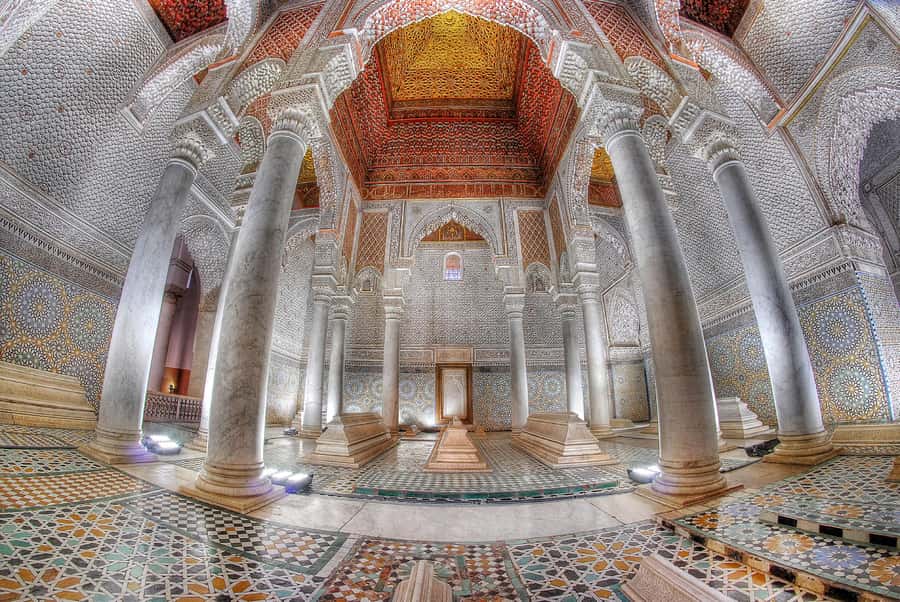
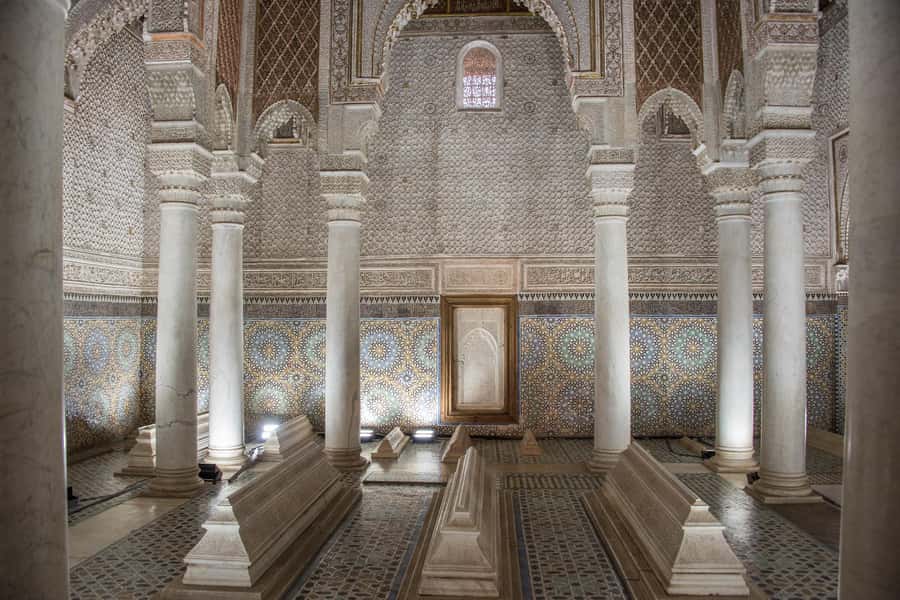
The Saadian Tombs are a compact but memorable stop. They hold members of the Saadian dynasty and are known for marble epitaphs, carved stucco and hand-cut zellij tilework. The setting feels more enclosed and quiet than the souks, which makes the fine decoration easier to appreciate.
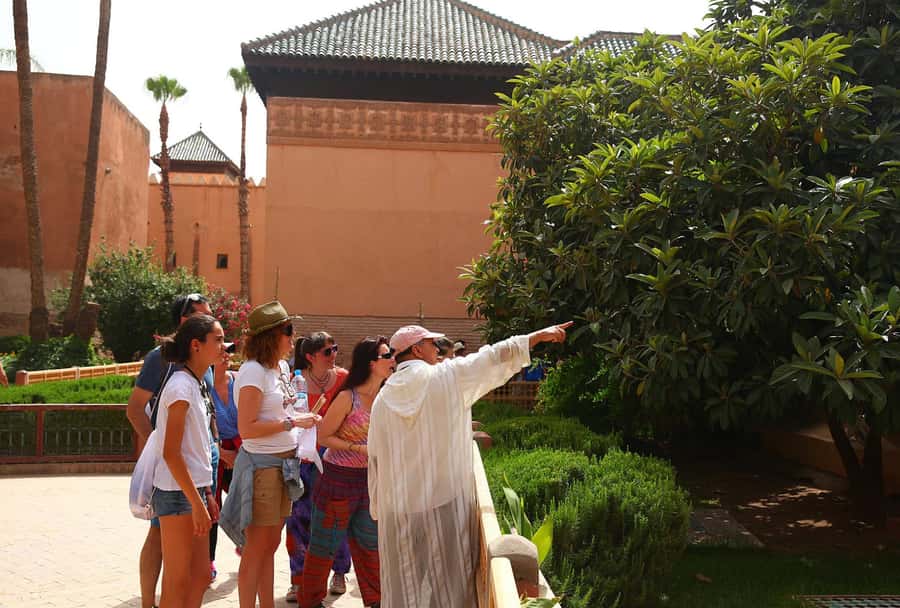
Allow about 30 minutes here. Your guide goes inside with you, explains the site and leaves time for photographs and your own look around. That arrangement matters because the tombs reward close attention. You will want a moment to study the patterns rather than hear a quick explanation and move on.
The main drawback is the queue. The guide can help you get past the initial ticket line, but a queue inside may still form, particularly at busy times. This is one reason the total outing can run beyond the advertised four hours. One visit lasted about four and a half hours, while some private outings ran much longer when the guide adjusted the pace.
Tickets are not included. The current charge listed for adults is 100 MAD, payable in cash on site. Bring enough Moroccan dirhams for both paid monuments, since the Bahia Palace costs another 100 MAD.
Inside the Bahia Palace
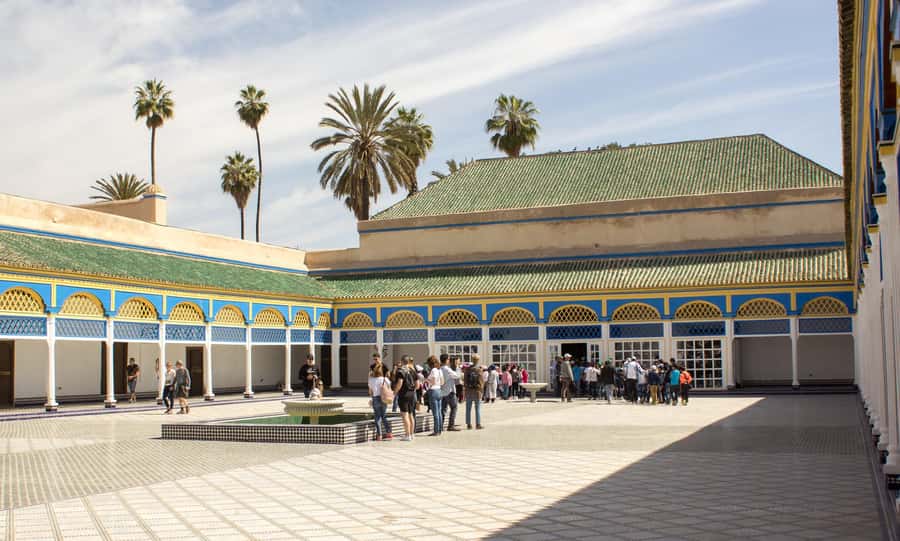
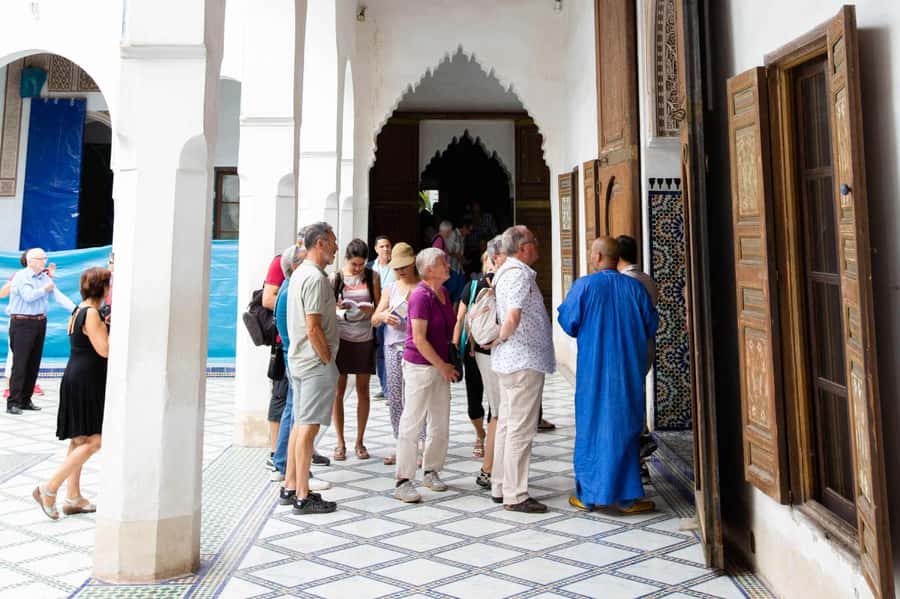
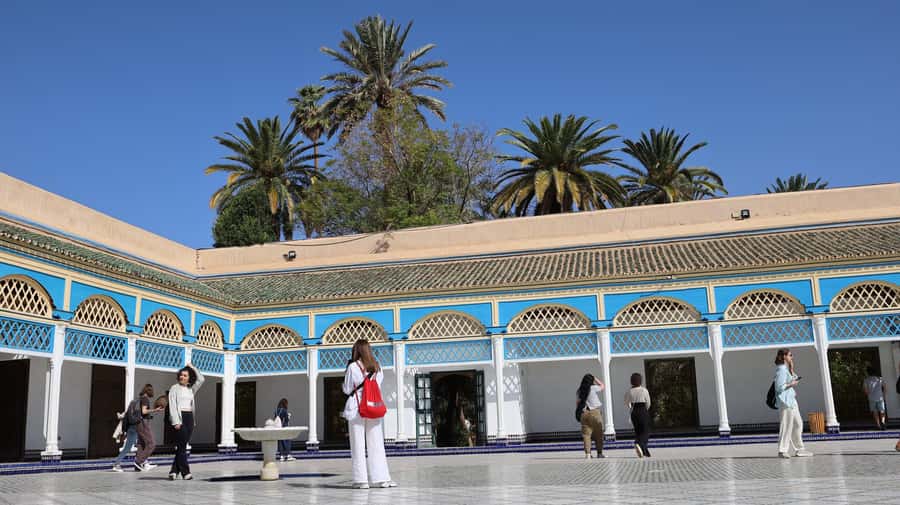
The Bahia Palace receives about 45 minutes and is likely to be the tour’s most impressive architectural stop. It was built in the 19th century by Grand Vizier Si Moussa and contains more than 150 rooms, though visitors see only the areas open at the time of the visit.
The appeal is not one grand throne room. It is the repeated combination of proportion, shade and surface detail: cedarwood ceilings above carved plaster, patterned mosaic floors, tiled courtyards and planted gardens. Sunlight moves across the courtyards, while the rooms provide a welcome break from the heat and noise outside.
Your guide accompanies you through the palace rather than leaving you to wander without context. You still have free time for photos and closer inspection. That balance works well here. A guide can explain why the decoration matters, while you can pause for the details that catch your eye.
Some sections may be under renovation. If a room is closed, the palace can feel less complete than the description suggests, but the open courtyards and decorated interiors still make this a worthwhile stop. The 100 MAD entry charge is separate from the tour price.
More guided palace visits in Marrakesh:
- Marrakech: Bahia Palace Guided Tour with Skip-the-Line Entry
★ 4.7 · 811 reviews - Marrakech: Bahia Palace Guided Tour – Skip-the-Line Access
★ 4.8 · 146 reviews - Marrakech: Bahia Palace, Madrassa & Souks Guided Tour
★ 4.8 · 47 reviews - Marrakech: Medina, Souks, Artisans Guided Tour with Mint Tea
★ 4.8 · 19 reviews
The Medina, souks and working crafts
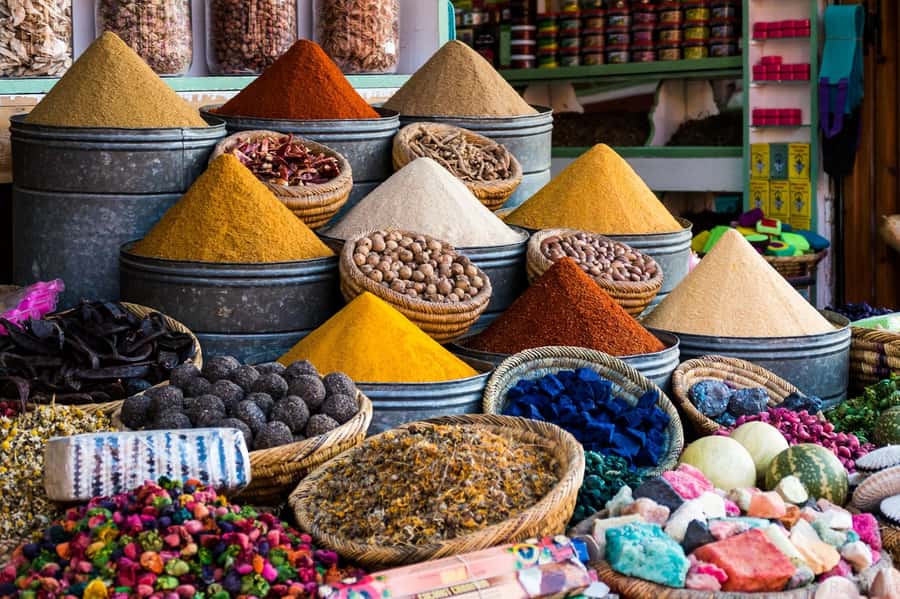
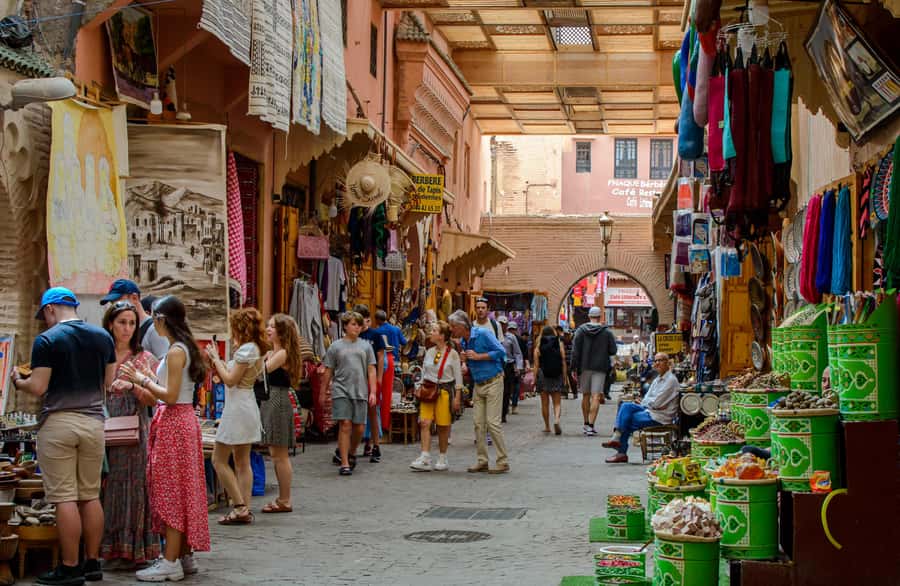
The Medina portion is where the tour becomes less about isolated monuments and more about how Marrakech functions day to day. You walk through narrow lanes and souks such as Souk Semmarine and Souk El Attarine, with stalls selling spices, textiles and leather goods.
The itinerary allows about 30 minutes in the Medina and another 30 minutes around Rahba Kedima. In practice, the length and depth of this section can depend on the group’s pace, the time spent at the monuments and how much shopping or craft viewing you want to do.
A good guide does more here than lead you through a maze. You might stop at workshops where artisans work with pottery, wood or metal using long-used methods. That makes the souks easier to understand. Instead of seeing only finished products, you get some idea of the labor and materials behind them.
You should keep your buying decisions separate from the sightseeing. The tour includes shopping time, but purchases are not required. A few people have found the craft explanations useful, while one practical warning is worth keeping in mind: sales claims about products being unique or made locally are not always reliable. Ask questions, compare prices and return later if you want time to think.
The Medina walk also explains why a local guide earns the fee. The lanes can be confusing, and it is easy to lose the intended route while looking at shops. Guides such as Mustapha and Najem have been praised for helping people find their way, explaining local crafts and giving practical suggestions without rushing them.
What the guide adds
The quality of this experience depends heavily on the individual guide. The provider assigns the guide, so you cannot assume a particular name when booking, but several names have appeared repeatedly in successful outings: Youness, Mustapha, Hassan, Brahim, Yassine, Najem, Mouhssine and Chafik.
The strongest guide style here is conversational rather than lecture-heavy. You can expect explanations of Moroccan dynasties, Marrakech’s architecture, religious customs, local craft traditions and everyday life. Guides have also helped with photographs, suggested places to eat and offered advice about moving around the souks.
English and French are the available tour languages. Clear communication matters in Marrakech because the most useful questions often come outside the formal monument stops. You might want to ask about a tile pattern, a building’s former use, or how to avoid buying something you do not really want. A guide who welcomes questions makes the four hours far more useful.
The tour can be private or small-group, depending on the option you select. A private option is the better choice if you want to stop often, ask many questions or set an easy pace. In a group, the pace may need to suit everyone. One account noted that the Medina portion was shorter because some people had trouble keeping up, which is a fair reminder that this is a physical walking tour.
Timing, cost and what you actually receive
The advertised price is $18 per person, which is good value for a licensed local guide and four hours of organized sightseeing. The low headline price needs one adjustment: add 200 MAD per adult for the Bahia Palace and Saadian Tombs. Food, drinks and transportation are also separate.
For that total, you receive a guided route through the old city, explanations inside the two main monuments, time for photos, and help navigating the souks. You are not paying for a vehicle or a meal, so the value comes from orientation and interpretation rather than comfort.
The tour is most useful if you have limited time in Marrakech or feel unsure about beginning in the Medina on your own. It covers the city’s major visual themes in one outing: royal architecture, dynastic burials, fortified streets, religious landmarks, craft shops and public squares.
The four-hour schedule is a guide, not a hard finish. Waiting at the tombs, hot weather, group pace and extra questions can extend the outing. If you have another booking immediately afterward, leave a buffer. A private tour may also run longer if you and the guide agree to spend more time at a stop.
During Ramadan, monument hours change. Morning departures begin at 9:30 instead of 10:00, and afternoon tours begin at 13:00 instead of 14:00, because the monuments close earlier. Check the available start time for your date.
Walking comfort and practical preparation
Wear comfortable shoes with good support. You will walk for about four hours through the Medina, and the route includes narrow lanes and surfaces that are not suited to delicate footwear.
Carry water, sunglasses and cash. Water matters in the warmer months, while cash covers the two monument tickets and any small purchases. Food and drinks are not included, and there is no scheduled meal stop, so eat beforehand or plan food afterward.
This tour is not suitable for people with mobility impairments. Even if you normally walk comfortably, consider the heat, standing time, crowds and uneven streets. A private option may offer a gentler pace, but it does not remove the walking involved.
The Koutoubia Mosque is viewed from outside only. Also keep in mind that some Bahia Palace rooms may be closed for renovation, and queues can remain inside the Saadian Tombs even when the guide helps with the first ticket line.
Cancellation is free up to 24 hours before the tour, and you can reserve now and pay later. Those terms help if your Marrakech plans are still moving around, but the key booking decision is really about walking ability and how much structure you want.
Who should book this Marrakech walk?
I would choose this tour for a first visit, especially if you want the main old-city sights explained in one morning or afternoon. It suits people who enjoy architecture, local crafts and history but do not want to spend their first day trying to decode the Medina map.
It is also a good fit for solo visitors and couples who want a local escort through the souks, or for families with older children who can manage a long walk. The private option makes more sense for anyone who wants to set the pace or ask detailed questions.
I would look elsewhere if you want a relaxed vehicle tour, a food-focused outing, or a visit centered on the Majorelle Garden. Those are different experiences. I would also avoid booking this as your only activity if you dislike shopping areas or have difficulty standing and walking for several hours.
Should you book it?
Book it if you want a practical introduction to Marrakech with the Bahia Palace, Saadian Tombs, Kasbah and souks in one route. At $18, the guiding fee is modest, even after adding the two 100 MAD entry charges, and the best guides turn a potentially confusing walk into a clear lesson in the city’s buildings, crafts and customs.
Choose a private booking if flexibility matters most. Otherwise, a small group should give you the same core sights at a lower cost, provided you are happy to match the group’s pace. Start with water, cash and sensible shoes, and leave spare time after the tour. That preparation makes this a useful first-day orientation rather than a tiring race between monuments.
FAQ
Where does the tour meet?
The standard meeting point is in front of Café de France in Jemaa el Fna square. If you choose the private option and stay in the Medina, the guide may meet you at your riad reception after arrangements are confirmed.
How long does the tour last?
The advertised duration is four hours. The actual finish can be later if there are queues, extra questions, or a slower group pace.
Are Bahia Palace and Saadian Tombs tickets included?
No. Each monument costs 100 MAD per adult, and the tickets are paid in cash on site.
Is transportation included?
No. This is a walking tour. Hotel pickup is available within the Medina only when the private option is selected.
Can I enter the Koutoubia Mosque?
No. The mosque is viewed from outside, and entry is restricted to Muslims during prayer times.
What languages are available?
The tour is offered in English or French with a live local guide.
Just added around Marrakesh
- Marrakech Private Medina Tour: Bahia Palace & Ben Youssef★ 4.8 · 48 reviews
- Marrakesh: Bahia Palace, Ben Youssef Medersa & Secret Garden★ 4.8 · 55 reviews
- Marrakech: Bahia Palace, Madrassa & Souks Guided Tour★ 4.8 · 47 reviews
- Marrakech Palaces and Monuments Half-Day Tour★ 4.1 · 13 reviews
- Marrakech: Bahia Palace, Saadian Tombs & Medina Walking Tour★ 4.6 · 63 reviews
- Marrakech Palaces and Monuments Half-Day Tour★ 5.0 · 11 reviews
- Marrakech City Tour: Souks, Palaces & Hidden Gems★ 4.7 · 35 reviews
- Marrakech: Medina, Souks, Artisans Guided Tour with Mint Tea★ 4.8 · 19 reviews
Moroccan Palace and Kasbah Tours, compared.
Bahia Palace, Saadian Tombs, Souk and Medina Tour
Read our review →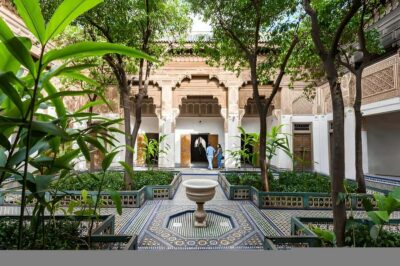
Bahia Palace, Saadian Tombs, & Koutoubia Mosque
Read our review →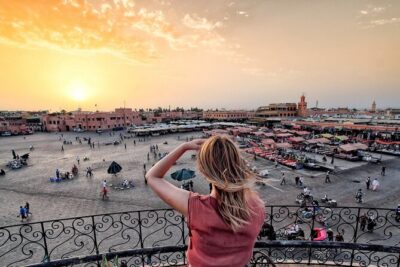
Bahia Palace, Madrasa Ben Youssef and Medina Tour
Read our review →
Bahia Palace Guided Tour with Skip-the-Line Entry
Read our review →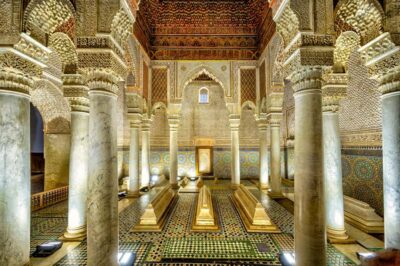
Saadian Tombs, Bahia Palace, Medina and Souk Tour
Read our review →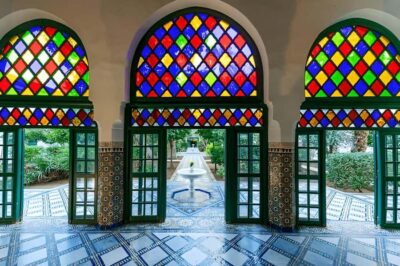
Bahia Palace, Ben Youssef Medersa, & Souks Tour
Read our review →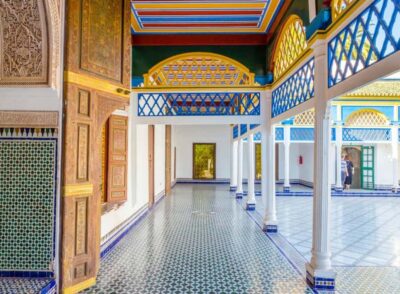
Bahia Palace, Madrasa Ben Youssef & Secret Garden
Read our review →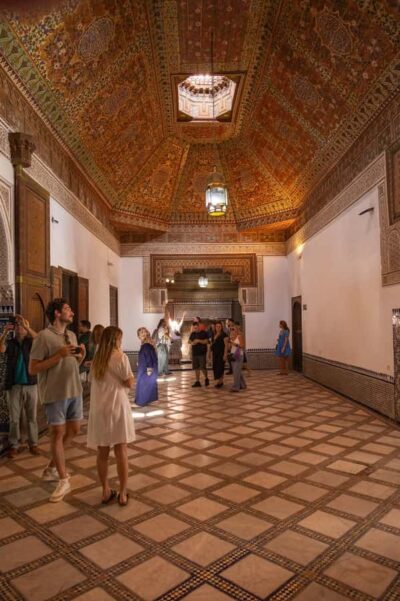
Bahia Palace Guided Tour – Skip-the-Line Access
Read our review →Browse the lists this tour appears in