REVIEW · SPAIN PALACE TOURS
Royal Site of San Lorenzo de El Escorial Entrance Ticket
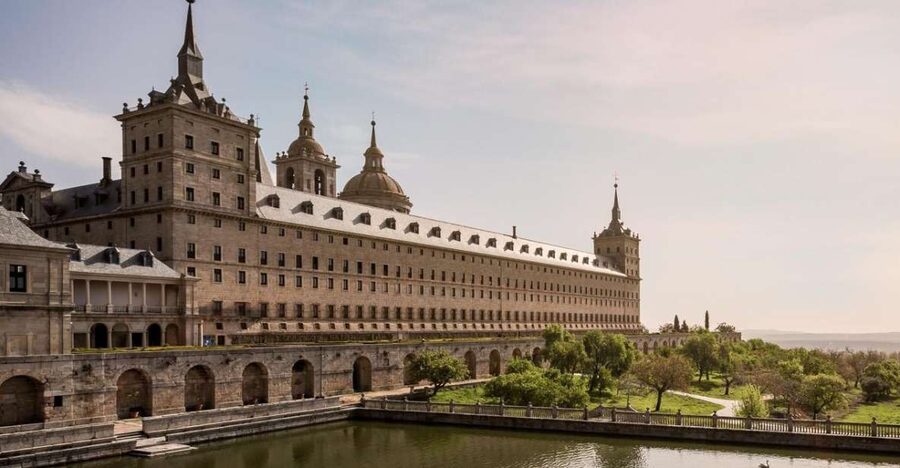
El Escorial is one of Spain’s grandest history lessons under one roof. Built during the reign of Philip II, this vast complex joins a monastery, royal residence, basilica, library, burial place, and gardens in a single Renaissance plan. The plain stone exterior can look almost fortress-like, but inside you find frescoes, royal decoration, chapels, and works linked to Spain’s Golden Age.
I like the freedom of a self-guided visit, and I like that the ticket includes an express security check. The gardens and views toward the Sierra de Guadarrama add breathing room after the formal rooms, while the royal crypt gives the visit a solemn edge.
The main catch is that no guide is included. You need to supply the historical context yourself, and the entrance instructions require care: some people have arrived at the wrong place or waited in a regular queue after expecting a smoother entry.
Key points to know before you go
- One building with many lives: See the monastery, royal palace, basilica, library, crypt, chapels, and gardens in one visit.
- Philip II’s Spain in stone: The complex reflects the religious, royal, and artistic goals of the Spanish Renaissance.
- A striking inside-outside contrast: The severe exterior gives way to colorful decoration and grand interior spaces.
- A self-guided experience: You receive admission, not a tour, so bring patience and curiosity.
- Views beyond the walls: On a clear day, the gardens look toward the Valley of the Fallen basilica and the Sierra de Guadarrama.
- A practical trip from Madrid: The train journey can take less than an hour, followed by a pleasant but uphill walk of about 25 to 30 minutes from the station.
Why El Escorial is more than a monastery
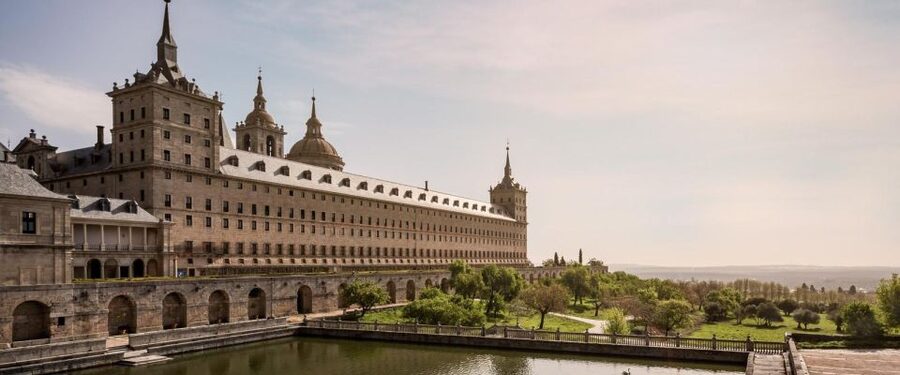
San Lorenzo de El Escorial was created for the monks of the Order of St. Jerome, but calling it only a monastery misses the point. Philip II wanted a place that could serve religious, political, royal, and cultural purposes at once.
That explains the complex’s unusual scale. You are not simply walking into a church with a few adjoining rooms. You are moving through a carefully planned world where worship, government, royal life, learning, and burial all meet.
The building also carries the ambitions of Spain’s Golden Age. Italian and Flemish artistic forms appear together, reflecting the international taste of the court and the wide reach of the Spanish monarchy. Even without a guide, you can sense that this was meant to be more than a comfortable royal residence. It was a statement about faith, authority, and Spain’s place in Europe.
I find that context useful before entering because the building’s plain exterior can seem underwhelming. One visitor compared it to a prison from the outside. That is not a bad way to prepare yourself. The outside is severe and restrained, while the inside brings color, ornament, and royal ceremony.
More palace entry tickets in Spain:
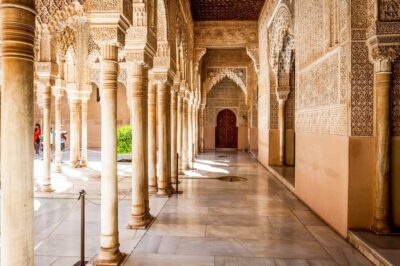
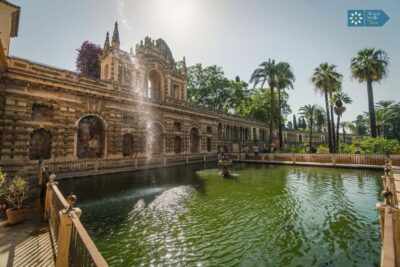
- Seville: Royal Alcázar Entry Ticket
★ 4.6 · 28,378 reviews - Granada: Alhambra & Nasrid Palaces Tour with Tickets
★ 4.7 · 19,801 reviews - Granada: Alhambra and Nasrid Palaces Entry Ticket
★ 4.6 · 15,130 reviews
Getting from Madrid to the monastery
The journey from Madrid can be done in under an hour by train, according to the practical experience shared for this visit. From the station, allow about 25 to 30 minutes for a pleasant walk uphill to the monastery.
That walk matters when planning your day. It is not a quick step from platform to entrance, and the uphill route may be tiring for anyone with limited mobility. The attraction is specifically not suitable for people with mobility impairments, so consider that carefully before buying.
You are buying an admission ticket rather than a full day tour. Transport is not included, and you need to arrange your own way to San Lorenzo de El Escorial. The reward for making the trip is a quieter change of pace from central Madrid, with the town, mountain setting, and monumental complex giving the day a different feel.
Take care with the exact entrance information supplied after booking. Confusion about the meeting point and the location of the entrance has led some visitors to lose time in a regular queue or even try to pay again. Since this is a ticket-only activity, there is no guide waiting to gather you up and correct a mistake.
The austere exterior and the surprise inside
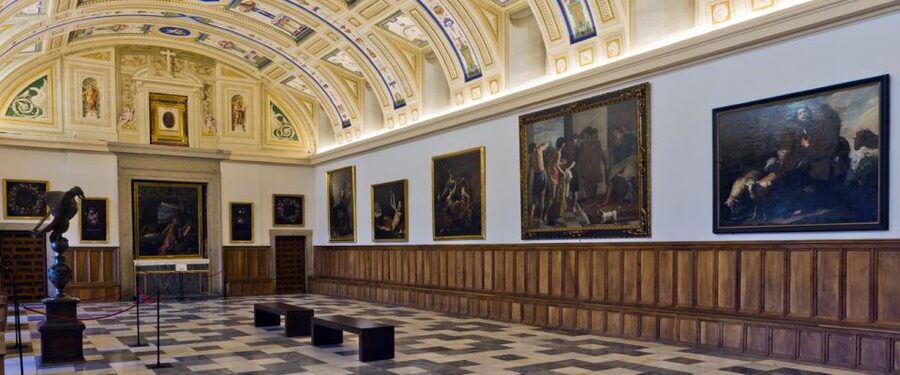
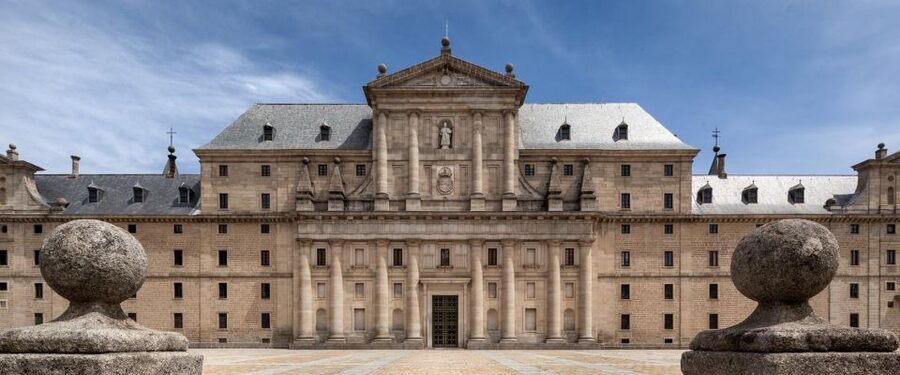
Approach El Escorial expecting a building that favors order over charm. Its large stone walls and geometric design can appear cold, even forbidding, at first glance.
Then enter, and the mood changes. Frescoes, royal decorations, chapels, and carefully finished interiors reveal the artistic purpose behind the stern outer shell. I like this contrast because it makes the visit more interesting than a uniformly ornate palace. The restraint outside seems deliberate, while the interior spaces carry the visual weight.
The complex has remained largely unaltered in layout. That gives you a stronger sense of the original plan than you might get in a building that has been repeatedly remodeled for modern use. You can follow the way the separate functions fit together rather than seeing a collection of disconnected rooms.
As you walk, notice the change between spaces meant for prayer, study, residence, and ceremony. Even without a guide, the building’s organization tells you that each area had a job.
The monastery, chapels, and basilica
The monastery was established for the monks of St. Jerome, and its religious role remains central to the visit. Chapels and devotional spaces help explain why Philip II tied the building so closely to Catholic worship.
The basilica, erected in 1574, is one of the major stops inside. Give it time rather than treating it as a passage between other rooms. Its scale and artwork show the level of effort invested in making the religious center worthy of a royal foundation.
The basilica also helps you understand the relationship between Philip II and the Catholic faith. This was not simply a royal home with a chapel attached. Religious purpose shaped the entire project.
The supplied information points to artwork that took years to complete, so look beyond the first impression of size. Study the decoration, the arrangement of the space, and the way art supports the architecture. A self-guided visit gives you the freedom to pause, but it also means you must make the decision to slow down.
A few more palace visits around Spain worth a look
- Madrid: Royal Palace Fast-Access Admission Ticket
★ 4.6 · 13,856 reviews - Seville: Cathedral, Giralda & Alcazar Entry With Guided Tour
★ 4.6 · 8,560 reviews - Madrid: Royal Palace Expert Guided Tour with Skip-the-Line
★ 4.7 · 8,407 reviews - Granada: Alhambra & Generalife Fast-Track Guided Tour
★ 4.7 · 8,313 reviews
The palace, royal connections, and crypt
The palace section brings the monastery into direct contact with royal life. Emperor Charles V and his wife once lived here, adding an earlier imperial connection to the story of Philip II’s reign.
You also reach the royal crypt, where monarchs who once lived in or used the complex are buried. It is a quieter and more serious part of the visit. After the broad courtyards and formal rooms, the crypt narrows the focus to mortality and succession.
I recommend treating the palace and crypt as two sides of the same idea. The palace presents power while it is active. The crypt shows what remains after generations of rulers have passed. Together, they make the building feel less like a museum of decoration and more like a record of Spanish monarchy.
Do not expect a guide to explain every connection as you go. The ticket gives you access, not interpretation. If you already enjoy history, that independence can be a benefit. If you want a clear narrative about every room, a guided visit would likely suit you better than this admission-only option.
The library and Spain’s cultural ambitions
The library is one of the most valuable stops for understanding El Escorial as a center of learning, not just prayer and royal ceremony. Its inclusion in the complex shows that knowledge and scholarship were part of the project from the beginning.
The library also helps connect the building to the cultural aspirations of the Spanish Golden Age. Here, the complex’s purpose expands again. It is a monastery, palace, church, burial site, and place for books and study.
Because the visit is self-guided, you may need to make your own connections between the library and the political world outside. Think of it as part of Philip II’s attempt to gather major parts of Spanish power and culture into one carefully ordered setting.
The original layout remains largely intact, which makes this section more meaningful. You are not only seeing a room that once held books. You are seeing one part of a larger plan that joined religious life, government, art, and learning.
Gardens, mountain views, and the Valley of the Fallen
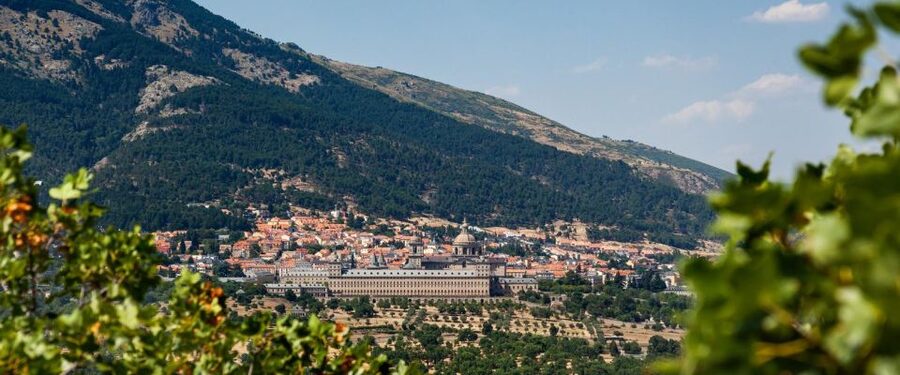
The gardens provide a welcome change after the heavy stone interiors. They are maintained in a formal style and give you space to look back at the complex rather than viewing it only from within.
On a clear day, you may see toward the Valley of the Fallen basilica and the Sierra de Guadarrama. The views depend on weather, of course. One visit took place on a cold, foggy day, when the surrounding scenery was hidden, but the monastery still held enough interest to make the trip worthwhile.
That is a useful point when planning your visit. Do not make the outdoor views your only reason for going, especially in winter or on a cloudy day. The interior is the main event. Still, the gardens add value and help you understand the monastery’s setting.
I would allow time outdoors even if the forecast is uncertain. Fog can soften the mountain views, while clear weather gives you a broader sense of why this location appealed to the Spanish court. The gardens also give you a chance to rest before continuing through the interior.
Art by Juan de Villanueva and the building’s design
The experience includes works connected with architect and artist Juan de Villanueva. His name gives you another way to read the site, through the relationship between art, structure, and Spanish architectural taste.
The complex is especially useful for anyone interested in Renaissance buildings. Italian and Flemish influences meet here, and the result is not a single simple style. You will find a building shaped by religion, monarchy, international art, and the practical needs of a working monastery.
Do not expect every artistic detail to be identified for you. Without a guide, you will be looking at the building as an independent visitor. That can be satisfying if you enjoy noticing proportions, decoration, courtyards, and the way rooms connect.
At the same time, the lack of explanation is the clearest weakness of this ticket. A guided tour would give more meaning to the works, the royal figures, and the long construction history. If you have limited time or little background in Spanish history, bring a guidebook or read about Philip II before arriving.
Is the $21 ticket good value?
At $21 per person, the ticket is reasonably priced for access to a complex that combines so many major parts of Spanish history. You are not paying for a short look at one room. You can spend the day exploring the monastery, palace, basilica, library, crypt, chapels, gardens, and town setting.
The value is strongest if you want to set your own pace. You can linger in the rooms that interest you and move quickly through those that do not. The express security check may also save time, though you should still verify the entrance details carefully and follow the provider’s instructions.
The value is weaker if you expect a complete guided experience. No guide, transport, or added commentary is included. One visitor felt the ticket cost more than buying admission directly at the site, so compare the price before booking if you are already nearby.
There is another financial point to consider: the activity is non-refundable. That makes weather, mobility, and travel plans important. Since the gardens and mountain views depend on clear conditions, a flexible booking would be useful, but this ticket does not provide that flexibility.
Who should book this experience?
I would recommend it to independent visitors who enjoy historic buildings and do not need a guide to keep the story moving. It suits anyone interested in Philip II, Spanish royal history, Renaissance architecture, religious art, or the way a single complex can serve several purposes.
It also works well for a full day outside Madrid. The train trip is short enough to be practical, and the uphill walk adds a little exercise before you enter the site. Just remember that the attraction itself is not suitable for people with mobility impairments.
Families with older children may appreciate the variety. The royal rooms, crypt, basilica, library, gardens, and mountain views offer more variety than a standard church visit. Younger children may find the scale impressive but the self-guided format less engaging.
I would choose a guided alternative if you want the history explained room by room or if the building’s religious and political context is new to you. This ticket is access first, interpretation second.
Should you book the El Escorial ticket?
Book it if you want a flexible, self-guided look at one of Spain’s most ambitious royal and religious buildings. The interior, basilica, crypt, library, and gardens justify the journey, even when fog hides the mountains.
Before paying, check the price against direct admission, confirm the entrance location, and accept that the ticket cannot be refunded. If you do those three things and enjoy exploring at your own pace, the $21 admission offers a worthwhile day trip from Madrid. If you need transport, a guide, or extra help with navigation, choose a different format.
FAQ
What does the El Escorial entrance ticket include?
The ticket includes admission to the Royal Site of San Lorenzo de El Escorial. An express security check is also included.
Is a guide included?
No. This is a self-guided admission ticket, and no guide is included.
How long is the ticket valid?
The activity has a duration of one day. You should check availability for the available starting times.
How much does the ticket cost?
The listed price is $21 per person.
Can I cancel the booking?
No. The activity is non-refundable.
Does the ticket include transport from Madrid?
No. Transport is not included. The journey from Madrid can take under an hour by train, followed by an uphill walk of about 25 to 30 minutes from the station.
What can I see inside El Escorial?
You can explore the monastery, palace, library, basilica, chapels, royal crypt, Renaissance interiors, and gardens.
Can I see the Valley of the Fallen and the Sierra de Guadarrama?
The site offers views toward the Valley of the Fallen basilica and the Sierra de Guadarrama. Clear weather will give you the best chance of seeing them.
Is the attraction suitable for people with mobility impairments?
No. The activity is listed as not suitable for people with mobility impairments.
Just added around Spain
- Private guided tour of the Alcazar de los Reyes Cristianos★ 5.0 · 6 reviews
- Private official tour guide for visit to Alhambra in Granada from Cordoba Hotel★ 4.0 · 5 reviews
- Mosque-Cathedral, Alcazar & Synagogue with Skip the Line Tickets★ 5.0 · 46 reviews
- Visita guiada a la Mezquita Catedral y el Alcázar de los Reyes Cristianos★ 4.0 · 4 reviews
- Mosque, Alcazar and Juderia Ticket Included Skip the Line★ 5.0 · 3 reviews
- Guided Tour of Monumental Cordoba: Jewish Quarter, Alcazar and Mosque★ 4.5 · 99 reviews
- Mosque, Alcazar of the Christian Monarchs and Juderia★ 3.5 · 3 reviews
- Guided tour of the Alcazar de los Reyes Cristianos in Spanish★ 5.0 · 36 reviews
Spain Palace Tours, compared.

Alcázar, Cathedral & Giralda Skip-the-Line Tour
Read our review →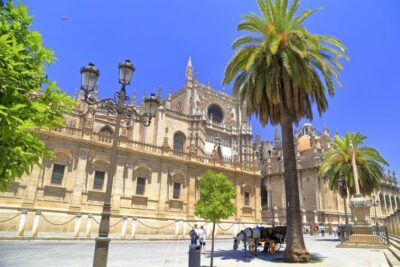
Cathedral, Giralda & Alcazar Entry With Guided Tour
Read our review →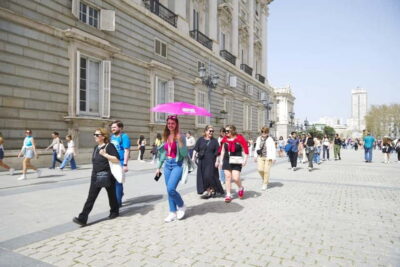
Royal Palace Expert Guided Tour with Skip-the-Line
Read our review →