
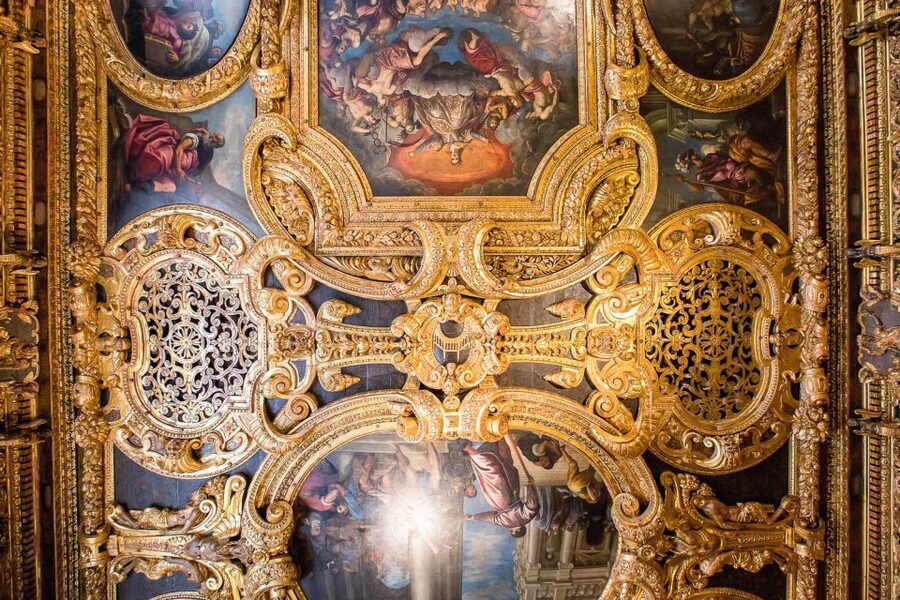
REVIEW · DOGE'S PALACE TOURS
Venice: Doge’s Palace Reserved Entry Ticket
Venice’s Doge’s Palace is where the republic displayed its power in stone, marble, paintings, and gold. You’ll pass from the ornate Golden Staircase into enormous council rooms, then follow the route toward the old prisons and across the Bridge of Sighs. The building is less a single museum than a whole political world under one roof.
I like the freedom to explore at your own pace, and I like that the ticket includes three Piazza San Marco museums. The main drawback is simple: this is an entry ticket, not a guided tour, and the palace is so large that you may need to choose your priorities.
Key points
- Reserved entry saves time: Digital tickets are scanned at the entrance, often avoiding the longest ticket queue.
- The palace is the main event: Expect grand halls, Gothic details, frescoes, armories, prison passages, and spectacular ceilings.
- The Bridge of Sighs is part of the route: You cross it while moving between the palace and former prison area.
- Self-guided means self-directed: Written panels provide useful context, but no personal guide is included.
- Three extra museums are included: Your ticket also covers Museo Correr, the National Archaeological Museum, and the Marciana Library rooms.
- Plan several hours: The palace alone can fill much of an afternoon, especially if you stop to read.
What the $41 ticket actually gives you
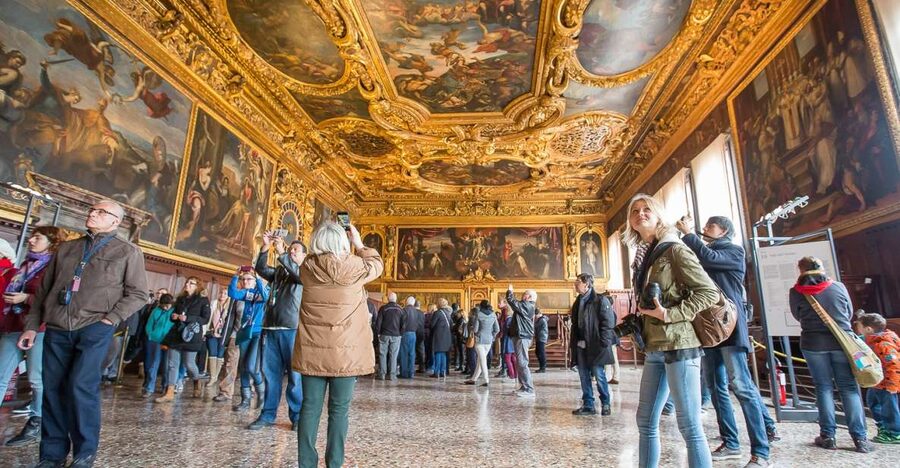
At $41 per person, this is not the cheapest way into Doge’s Palace. You are paying for convenience, a reserved entry arrangement, and a package that includes several museums around St. Mark’s Square.
The value depends on how you use the ticket. If you only have time for Doge’s Palace, the price is mainly about getting a more convenient entry and avoiding the uncertainty of buying at the door. If you also visit Museo Correr, the National Archaeological Museum, and the Marciana Library, the package becomes more useful.
I would not book this expecting a full-day tour with a guide. The activity is valid for one day, and you are free to remain inside as long as the opening hours allow, but the experience is self-guided. You receive entry, not a scheduled talk from a named guide.
That distinction matters. Some people prefer to move independently, take photographs, and linger in the rooms that catch their eye. If you want a clear explanation of Venetian government, art, and prison life as you go, you will need to rely on the written information or arrange a separate audio or guided option.
More Doge's Palace tours in Venice:
- Doge’s Palace & St. Mark’s Basilica with Terrace Access Tour
★ 4.7 · 10,697 reviews - Venice: Doge’s Palace and St Mark’s Basilica Walking Tour
★ 4.4 · 6,291 reviews - Legendary Venice: Doge’s Palace, St Mark’s & VIP Terrace Access
★ 4.5 · 5,033 reviews
Getting inside Doge’s Palace
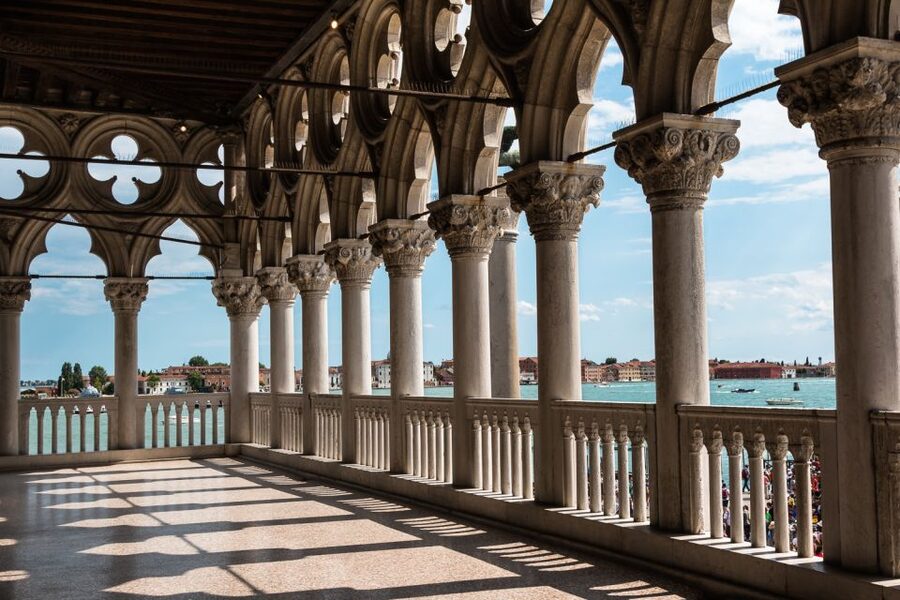
The palace sits on St. Mark’s Square, one of Venice’s busiest and most tightly packed areas. Your digital ticket is shown at the entrance and scanned, with security checks still applying. A reserved ticket does not mean you skip every possible wait, but it can keep you out of the main ticket-buying line.
Entry experiences can vary by time of day. Some ticket holders walk straight in, while others encounter a short line or a separate queue for reserved admissions. In the afternoon, especially later in the day, the entrance may be quieter. One useful option allows a broad midday to early evening entry window, which helps if you do not want to build your whole day around a narrow time slot.
Keep your phone charged. The ticket is digital, and any extra digital tour material depends on your device. Written room information is available inside, but the digital audio option has been described as less polished than the palace itself.
Security staff control the flow at the door. You may find the instructions brisk rather than warm, so have your ticket open before you reach the scanner and keep your group together.
The Gothic exterior and Golden Staircase
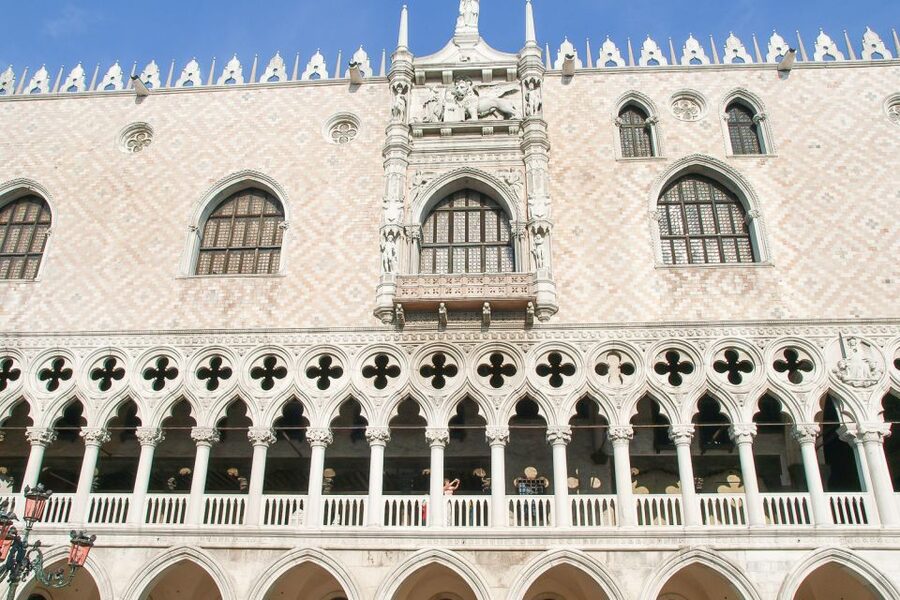
Before you even reach the grand rooms, take a moment to look at the palace exterior. Its Venetian Gothic design is unusual: heavy stone arcades support an upper section that appears lighter and more decorated. The building combines practical government offices with a public display of power.
Inside, the Golden Staircase provides the first great visual punch. Its decoration was designed to make an arrival feel ceremonial, not ordinary. This was the doorway into the ruling center of a republic that lasted roughly a thousand years, and the route still communicates rank and authority.
The staircase also makes clear that this is not a quiet collection of paintings in neutral galleries. The rooms were made for officials, ambassadors, judges, and public business. Architecture is part of the history here, so pay attention to ceilings, doorways, carved details, and the way each room leads into the next.
There are steps throughout the visit. If you have mobility concerns, plan carefully, since the route includes a good deal of stair use and not every area offers plentiful seating. The palace is rewarding, but it is not a relaxed, level stroll.
The Chamber of the Great Council
The Chamber of the Great Council is the palace’s grandest interior. It was built for the governing body of Venice, and its size gives you a better sense of how public ceremony worked in the republic.
Look upward. The ceilings and walls are covered with elaborate decoration and monumental works of art. The room was meant to impress political representatives and visiting dignitaries, but it also had a practical role in the machinery of government.
You may feel slightly overwhelmed at first. There is a great deal to see, and it is easy to spend too long looking at one ceiling while missing details elsewhere. If your time is limited, make this room a priority, along with the Golden Staircase and Bridge of Sighs.
The written information helps explain the purpose of the spaces, though signs are not always easy to find from one room to the next. I suggest pausing at each doorway before moving on. The palace route is generally clear, but the information is easier to use when you are not rushing with the crowd.
More palace entry tickets in Venice:
- Venice: St. Mark’s Basilica & Doge’s Palace Tour with Ticket
★ 4.7 · 3,375 reviews - Venice: Palazzo Contarini del Bovolo Entrance Ticket
★ 4.3 · 1,991 reviews - Doge’s Palace & St. Mark’s Basilica Tickets + Tour Options
★ 4.5 · 1,841 reviews - Venice: Doge’s Palace Skip-the-Line Ticket with Guidebook
★ 4.0 · 1,196 reviews
Paintings, armory, and the former prison
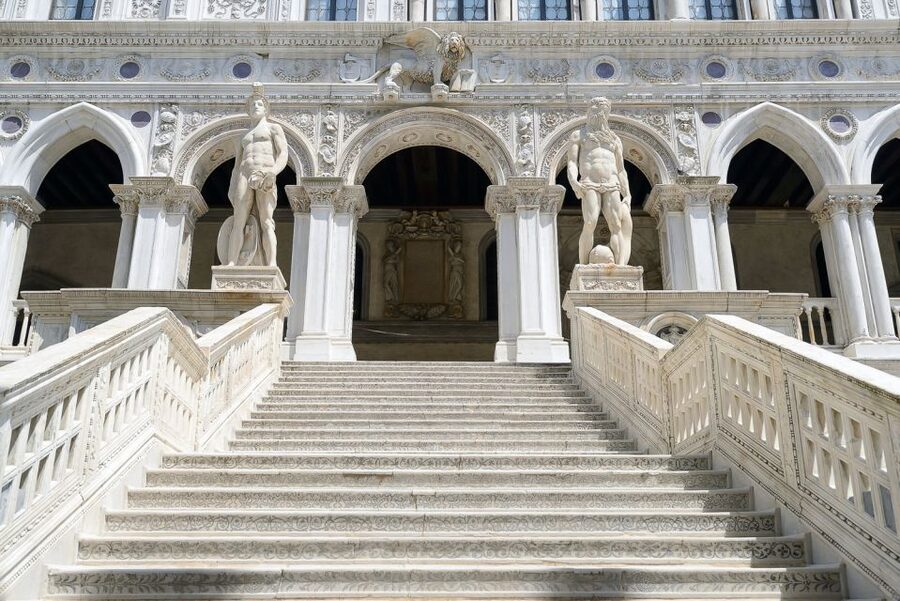
The palace’s art is not confined to one gallery. Paintings, ceiling decoration, carved stone, and ceremonial rooms appear throughout the route. The art works best when you see it in its original setting. Here, a painting is often part of a larger statement about law, religion, military power, or the authority of Venice.
The armory section adds a different mood. Weapons and defensive equipment give the visit a practical edge after the polished halls. If you enjoy military history, allow extra time here. It is also a useful reminder that the palace was not only a ceremonial residence. It was tied to courts, administration, and the security of the state.
The prison route is less ornate and more atmospheric. The contrast is the point. After the huge rooms and bright decoration, the narrow passages make the political system feel more immediate. This is where the visit shifts from grand government to confinement and punishment.
The palace can feel crowded as you approach the Bridge of Sighs, particularly during busier periods. The flow may slow, and you may not have much time to stop in the middle of the route. Even so, the prison section is worth seeing rather than treating the bridge as a quick photo stop.
Crossing the Bridge of Sighs
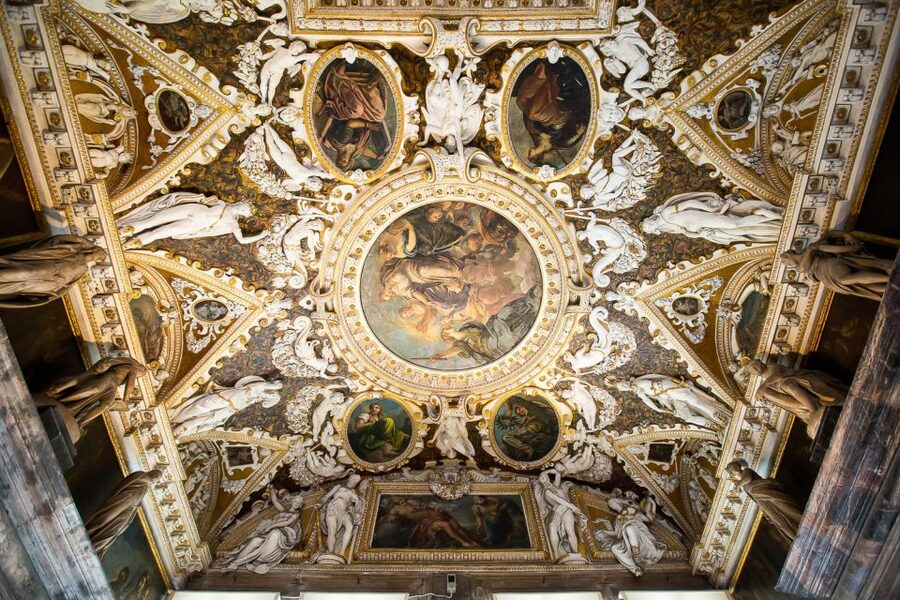
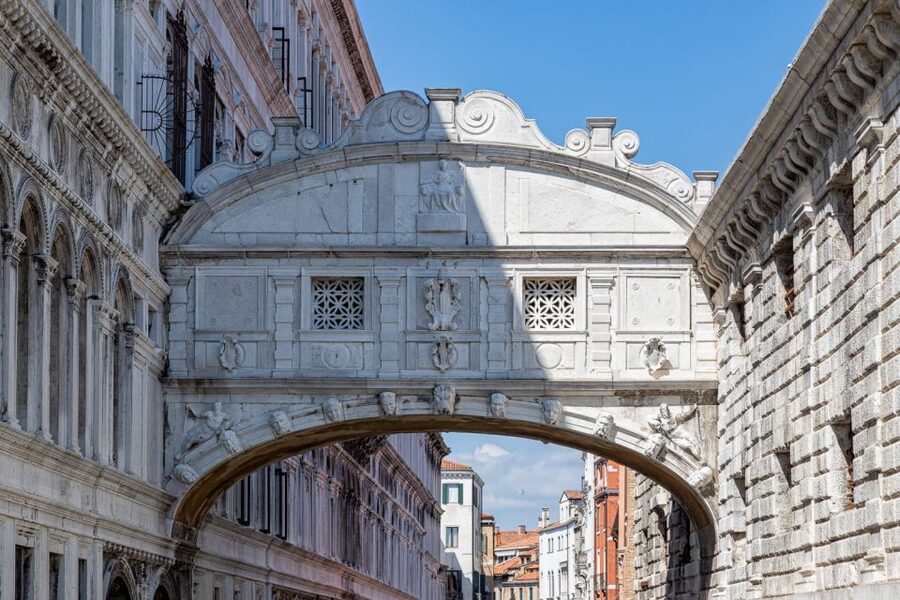
The Bridge of Sighs connects Doge’s Palace with the former prison buildings. Its name comes from the traditional image of prisoners looking through the small stone windows and sighing as they caught a final glimpse of Venice before entering confinement.
The bridge itself is enclosed and more modest than the palace halls. That change in scale gives it emotional force. You move from public rooms filled with paintings into a passage associated with fear, judgment, and separation.
Do not expect a long stop or a wide viewing platform. The route is part of the palace circulation system, and other people may be moving through at the same time. Still, it is one of the essential moments of the visit because it links the republic’s impressive public face with its prison system.
For the best experience, slow down where the route allows, but do not block the passage. If you want exterior photographs of the bridge, you will need to view it from outside the palace as well. The ticket lets you cross through it, not turn the bridge into a private viewing area.
Museo Correr and the other Piazza San Marco museums
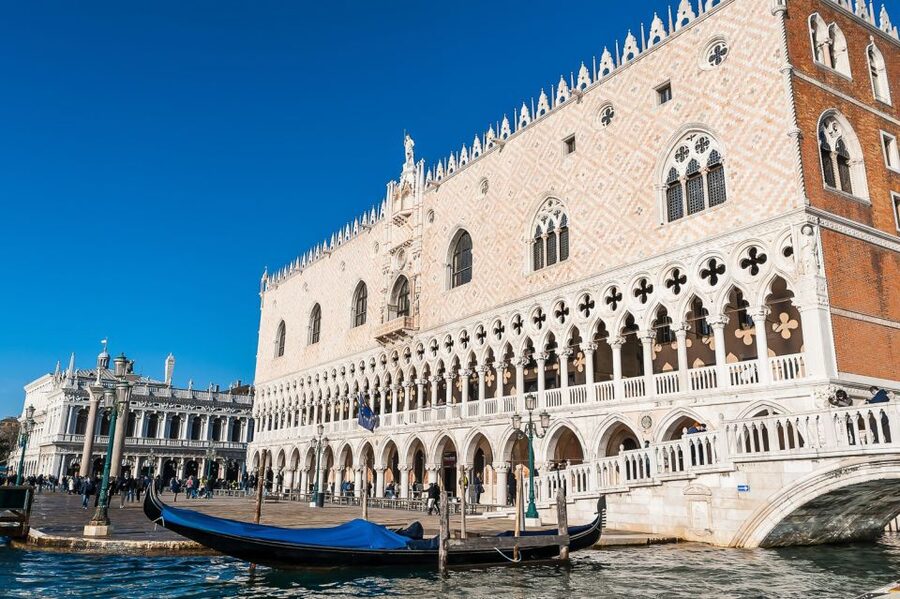
Your ticket includes Museo Correr, the National Archaeological Museum, and the rooms of the Marciana Library. These are all around St. Mark’s Square, so they are convenient to combine with Doge’s Palace.
Museo Correr occupies a building originally designed as a residence for Napoleon and later used as the Venetian residence of the King of Italy. That background gives the museum a different character from the medieval and Renaissance government rooms across the square.
The National Archaeological Museum adds ancient objects and works of art to the day. The Marciana Library rooms provide another look at Venice’s intellectual and civic life. These spaces are smaller in feel than Doge’s Palace, but they help broaden the picture beyond political ceremony.
The practical catch is time. Many people spend an afternoon inside Doge’s Palace and then discover that the extra museums are closing. The Piazza San Marco Museums are open from 10:00 a.m. to 5:00 p.m., with last entry at 4:00 p.m. If you want to use the entire package, start early or check the museums first and visit the palace afterward.
The ticket is valid for one day, not several separate days. Treat the inclusions as a same-day plan.
How long should you allow?
Doge’s Palace can be a quick two-hour visit if you move steadily, but that approach leaves little room for reading or revisiting the major rooms. For a more satisfying visit, I would allow several hours.
Add more time if you want to see all the armory displays, read the room panels, pause for photographs, and follow the prison route without hurrying. Add still more if you intend to use the included museums.
You can take a short break at the palace café, where one visitor ended the visit with a glass of prosecco. That is a pleasant way to reset, especially after the crowded bridge and long sequences of rooms. Seating can be limited, so do not count on frequent places to rest along the main route.
A late afternoon entry can work well for the palace itself. Some afternoon visitors find the building less crowded, and the rooms may be easier to appreciate at a slower pace. It is a poor choice if you also want all three Piazza San Marco museums, since their final entry is at 4:00 p.m.
What kind of visitor will enjoy this?
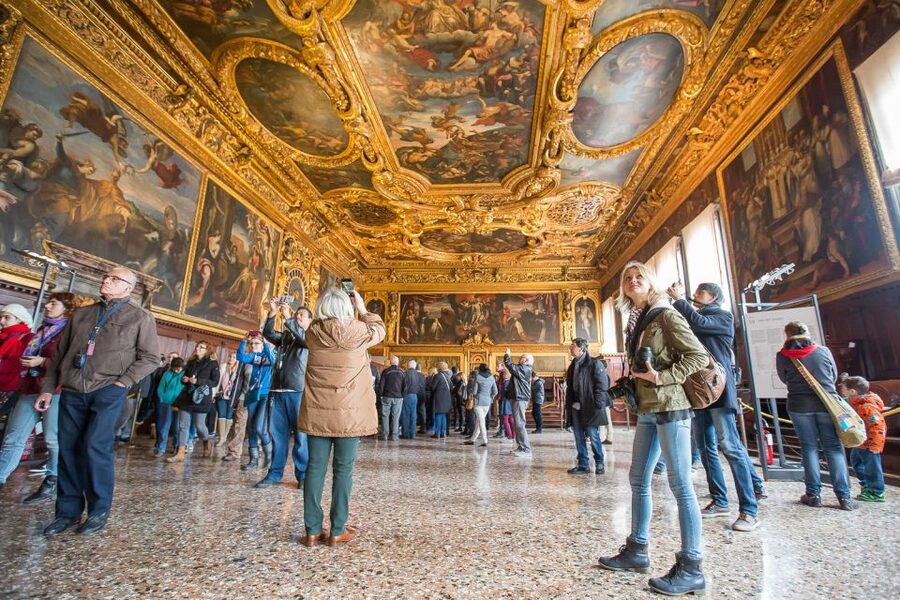
I would recommend this ticket to you if you like architecture, art, political history, or historic buildings that still feel connected to their original purpose. The palace offers enough variety for different interests: grand rooms for art lovers, armories for military history fans, prisons for a darker human story, and architectural details for anyone who enjoys old buildings.
It also suits independent visitors. You can move at your own speed, skip material that does not interest you, and spend extra time in the Chamber of the Great Council or the prison section.
Families can manage the visit, but younger children may lose patience during the long sequence of rooms and written panels. The size of the palace can also be tiring. Plan shorter bursts of sightseeing and be realistic about how much your group wants to see.
This is less suitable if you need a fully narrated experience. The included material is written, and an audio guide is not part of the standard ticket. Also think carefully if stairs are difficult for you, since the route includes many steps and limited seating.
Booking advice and final verdict
At $41, this is a fair but not bargain-priced way to see Doge’s Palace. The palace itself is the reason to book. The included museums improve the value, but only if you have enough time to visit them before closing.
I like the reserved digital entry because it removes some uncertainty from a busy part of Venice. I also like the self-guided format, since the building rewards quiet pauses and personal choices. The tradeoff is that you pay more than a direct ticket may cost, and you receive no personal guide.
Book it if you want a straightforward way into one of Venice’s essential sights, particularly if direct admission is unavailable or you prefer to secure your plans ahead of time. Skip this option if you want a guided history lesson, need a flexible cancellation policy, or only have a short window when the palace and museums are open.
FAQ
Is this a guided tour of Doge’s Palace?
No. The ticket provides reserved entry and self-guided access. A personal guide is not included, and an audio guide is not part of the standard ticket.
What attractions are included?
The ticket includes Doge’s Palace, Museo Correr, the National Archaeological Museum, and the Marciana Library rooms.
Can I cross the Bridge of Sighs?
Yes. The route through Doge’s Palace includes access to the Bridge of Sighs and the former prison area.
How long is the ticket valid?
The ticket is valid for one day.
What are the opening hours for the included Piazza San Marco museums?
Museo Correr, the National Archaeological Museum, and the Marciana Library rooms are open from 10:00 a.m. to 5:00 p.m. Last entry is at 4:00 p.m.
Does the reserved ticket guarantee no waiting?
No. It is designed to avoid the regular ticket line, but security checks and a separate reserved-entry queue may still cause a short wait.
Is the ticket refundable or reschedulable?
No. The ticket is non-refundable and cannot be rescheduled.
Are children under six admitted free?
Yes. Children under six can enter free, but you need to collect a free ticket from the ticket office upon arrival.
Can disabled visitors and carers enter free?
Yes. Disabled visitors and their carers can enter free, with the free tickets collected from the ticket office on arrival.
Just added around Venice
- Full Venice Walking Tour: Doge’s Palace and St. Mark’s★ 4.6 · 32 reviews
- Venice: St Mark’s Basilica and Doge’s Palace Private Tour★ 4.8 · 56 reviews
- Saint Mark’s and Doge’s Palace: VIP After Hours Tour★ 4.9 · 35 reviews
- Venice: Gondola Ride and a Gala Dinner in a Venetian Palace★ 4.8 · 17 reviews
- Doge’s Palace, St. Mark’s & Gondola Ride with Options★ 4.8 · 14 reviews
- Doge’s Palace & St Mark’s Basilica Entry + Campanile Options★ 4.4 · 41 reviews
- Doge’s Palace small group or private tour with a local guide★ 5.0 · 18 reviews
- Venice: Doge’s Palace, Bridge of Sights, St.Mark’s Basilica★ 3.0 · 12 reviews
Doge's Palace Tours, compared.
Doge’s Palace & St. Mark’s Basilica with Terrace Access Tour
Read our review →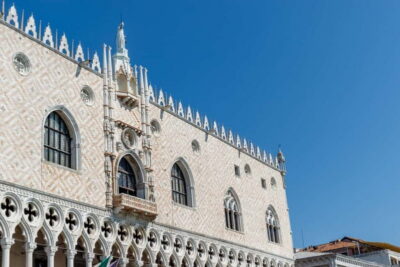
Doge’s Palace and St Mark’s Basilica Walking Tour
Read our review →
Legendary Venice: Doge’s Palace, St Mark’s & VIP Terrace Access
Read our review →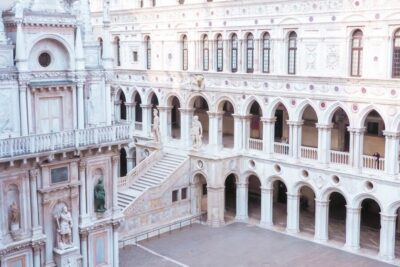
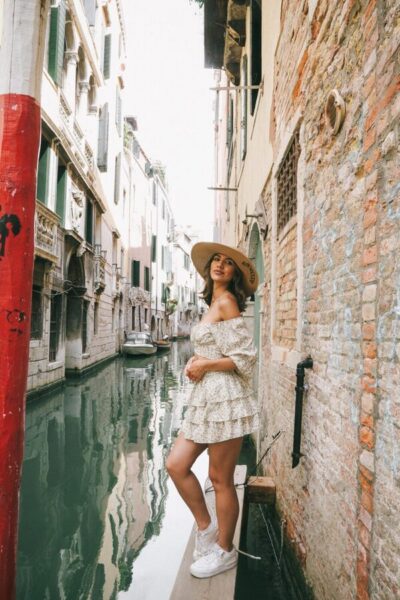
St. Mark’s Basilica & Doge’s Palace Tour with Ticket
Read our review →
St Mark’s Basilica, Doge Palace, & Bell Tower Option
Read our review →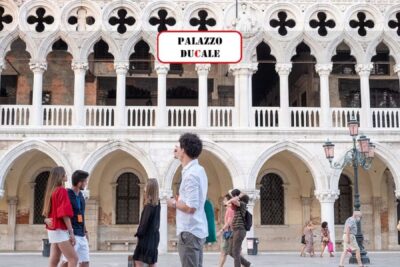
Doge’s Palace, Bridge of Sighs & Prisons Guided Tour
Read our review →
Venice’s Best: Basilica, Doge’s Palace, Gondola & History Gallery
Read our review →Browse the lists this tour appears in