
REVIEW · ITALIAN PALAZZO TOURS
Palazzo Vecchio: Magnificent Private Tour
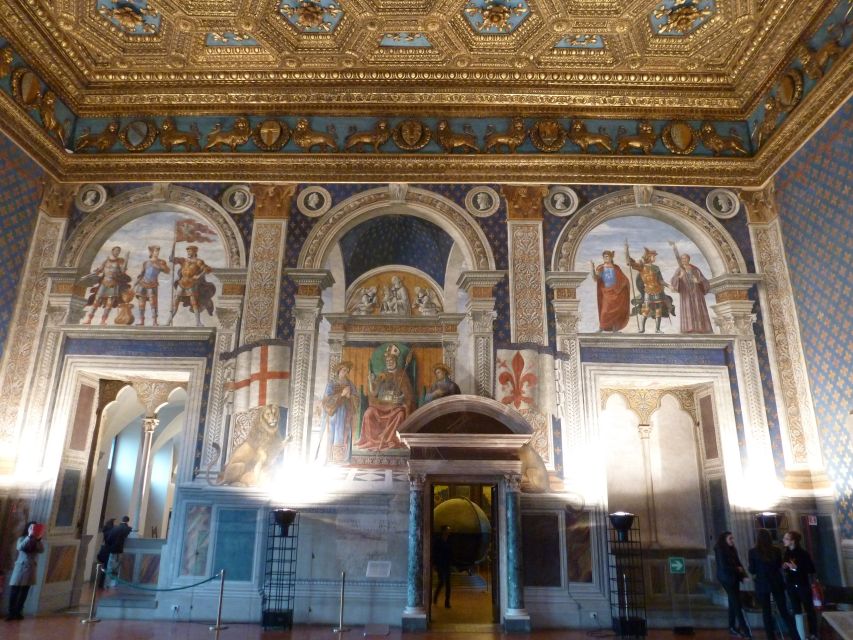
Palazzo Vecchio is Florence’s power center in stone, paint, and gold. This private tour takes you from the vast Hall of the Five Hundred to the Medici family’s private rooms, where grand art was also a very public display of control. You’ll hear the stories behind the palace, not just receive a list of dates.
I like the private format, since your guide can adjust the pace and answer questions. I also like the mix of famous art and odd, memorable details: Donatello’s Judith, Dante’s funeral mask, Machiavelli’s office, and the clues surrounding Leonardo da Vinci’s secret fresco. The main drawback is price. One recent booking cost €200 per person, so this makes the best sense for a small group that wants close guidance rather than a low-cost palace visit.
Key points to know before booking
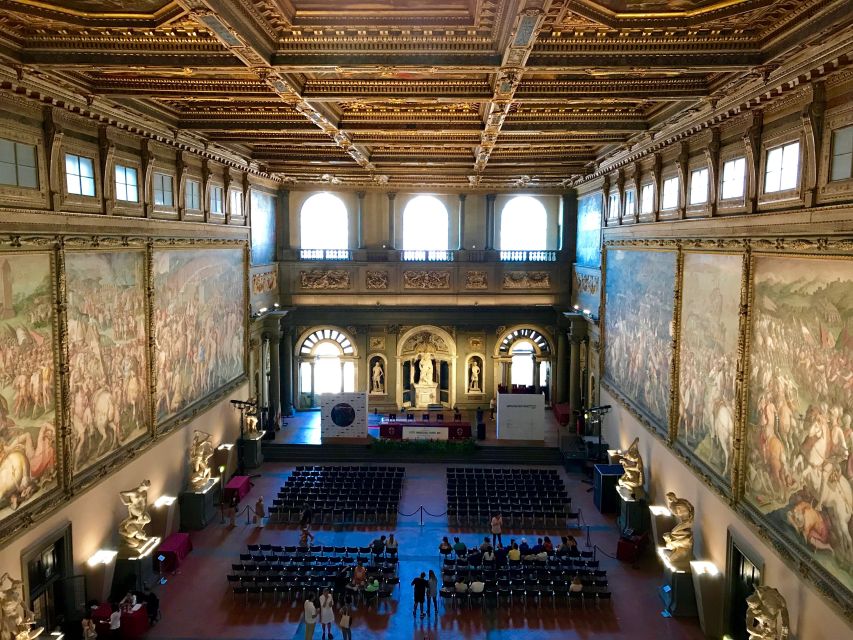
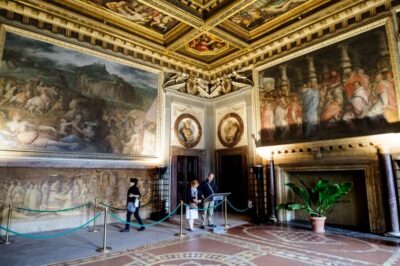
- The Hall of the Five Hundred is the visual centerpiece: Expect huge frescoes, lofty decorated ceilings, and a room built to project Florentine power.
- You see more than the main public halls: The route includes Medici apartments, a private chapel and bedroom, the Renaissance Map Room, and historic offices.
- The guide matters here: Alexandra has led a tour praised for clear explanations across art, geography, history, and politics.
- It is a true private group: Your party receives a live guide rather than joining a large shared walk.
- The price needs thought: The tour is valuable for personal questions and context, but a ticket with an audio guide costs less if you prefer to explore alone.
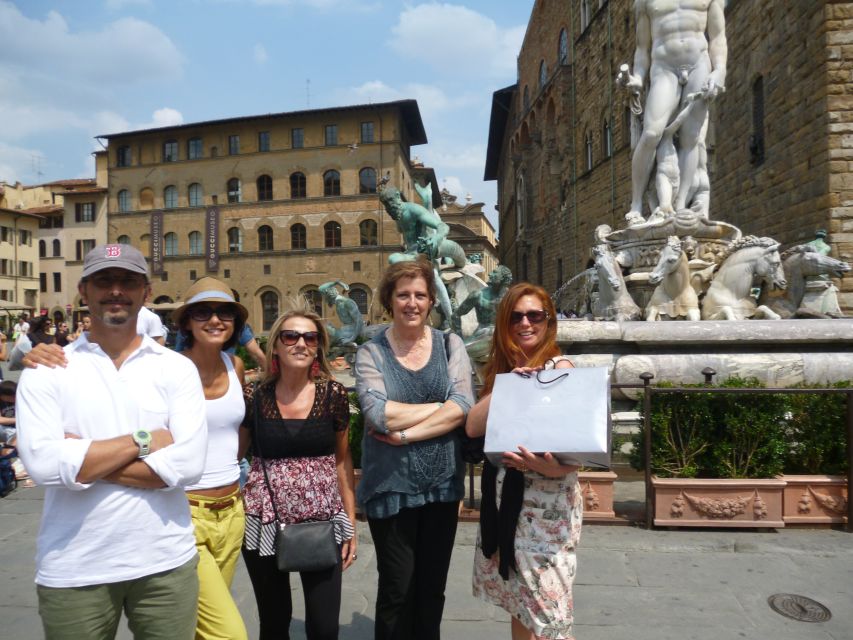
- The meeting point is easy to identify: Meet at the Fountain of Neptune in Piazza della Signoria, in front of the town hall.
Why Palazzo Vecchio rewards a guided visit
Florence has no shortage of famous buildings, but Palazzo Vecchio feels different from a gallery. It was built as a seat of government and later reshaped by the Medici, so its rooms connect art with ambition, politics, family life, and ceremony.
That connection is the reason I favor a guide here. A painted ceiling can look splendid on its own, but the details mean more when you know who commissioned it and why. A guide can also help you keep track of the building’s changing roles, from medieval civic fortress to Medici residence and symbol of ducal authority.
The two-hour length is well judged for a first look. You get enough time to see the major rooms without turning the visit into an all-day study of Florentine decoration. You should still expect a steady amount of standing and walking through halls and apartments.
Because the group is private, you can ask direct questions. That matters in a palace filled with names, symbols, and competing stories. One recent guest described Alexandra’s explanations as covering history, geography, art, and geopolitics, with time for questions. That gives you a useful idea of the tour’s best quality: it can connect individual objects to the wider story of Florence.
More Palazzo Tours in Florence
- Florence: Palazzo Vecchio Entrance Ticket & Audioguide
★ 4.4 · 4,822 reviews - Florence: Uffizi, Pitti Palace & Boboli Combined 5-Day Pass
★ 4.5 · 1,726 reviews - Florence: Palazzo Vecchio Guided Tour
★ 4.8 · 1,260 reviews
Starting at the Fountain of Neptune
The tour begins at the Fountain of Neptune in Piazza della Signoria, directly in front of the town hall. This is a practical meeting spot in one of Florence’s most recognizable squares, but it can still feel crowded and noisy, so arrive with enough time to locate the fountain and your guide.
The opening portion includes about 15 minutes in Piazza della Signoria. That short introduction helps place Palazzo Vecchio in its urban setting before you enter. The square is not just a waiting area. It is the outdoor threshold to the palace, lined with sculptures and shaped by the political life of Florence.
I like beginning here because you first see the building as a civic monument. Once inside, the decorated rooms can feel almost theatrical. The square reminds you that Palazzo Vecchio was built to face the public and project authority.
Your guide can also set up the main themes of the visit here: Florence as a republic, the later influence of the Medici, and the way art served political purposes. The supplied schedule allows roughly 15 minutes for the square and the Hall of the Five Hundred before the longer palace visit begins.
The Hall of the Five Hundred and Florence’s public power
The Hall of the Five Hundred is the first major interior stop and one of the tour’s strongest moments. Its scale is immediate. You look up at immense frescoes and decorated ceilings, then realize the room was designed to make government feel larger than ordinary life.
This is where a guide adds real value. The walls and ceiling are crowded with scenes, symbols, and artistic ambition. Without context, you may notice only size and color. With explanations, the room becomes a lesson in who wanted to control Florence’s public image and how that message was presented.
The tour allows about 15 minutes for this hall, followed by more time in Palazzo Vecchio. That is enough for an introduction, though art lovers may wish they had longer to study every painted detail. The private format helps because you can ask the guide to pause at the parts that interest you most.
One of the most intriguing subjects connected with the hall is the story of Leonardo da Vinci’s secret fresco. The tour explains the history of the lost or concealed work and the questions surrounding it. This is not simply a famous-name reference. It shows how Palazzo Vecchio still carries unresolved artistic stories beneath its finished surfaces.
You should expect the Hall of the Five Hundred to be a shared highlight of the visit, but do not assume it is the whole experience. The private apartments and smaller rooms provide a different scale and reveal how power worked behind closed doors.
Donatello’s Judith and the palace collection
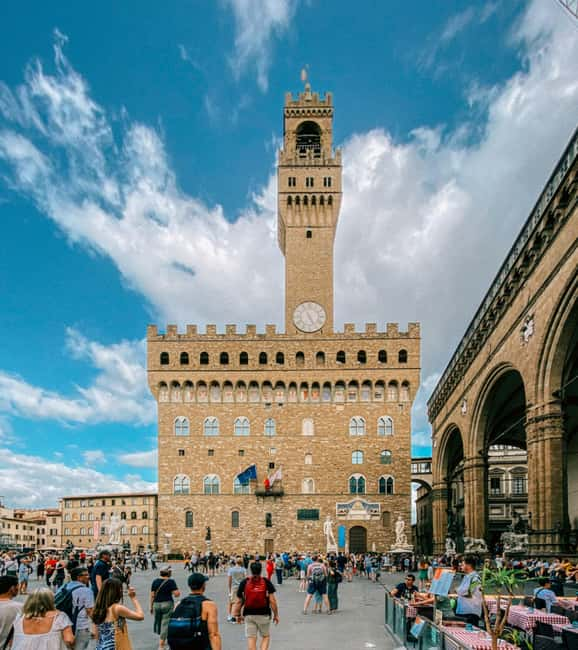
The tour also brings you to Donatello’s Judith, one of the major Renaissance sculptures associated with Palazzo Vecchio. Its subject is dramatic, and its placement in a seat of government gives it political weight beyond its artistic quality.
Your guide can help you look at the work as both sculpture and message. In a Florentine civic setting, biblical stories of courage, violence, and the defeat of tyranny carried strong public meaning. You do not need a specialist background to appreciate the piece, but the explanation can make the symbolism easier to follow.
The palace also includes Renaissance works by Donatello and Michelangelo. The attraction here is not the size of a modern art museum. It is the setting. Paintings and sculpture remain tied to rooms that served political, domestic, or ceremonial purposes.
That makes the experience especially useful if you have already visited Florence’s large galleries and want to see how art functioned in daily civic life. You are not simply moving from one framed work to the next. You are seeing objects in a building where officials governed, families lived, guests were received, and public reputation was shaped.
Same city, a very different set of state rooms:
- Florence: Palazzo Vecchio Entry Ticket with Audio Guide
★ 4.4 · 837 reviews - Florence: Pitti Palace and Boboli Gardens Ticket & eBook
★ 4.5 · 835 reviews - Florence: Uffizi, Pitti, Boboli and 7 Attractions 5-Day Pass
★ 4.5 · 652 reviews - Florence: Palazzo Vecchio Skip-the-Line Entry Ticket
★ 4.2 · 349 reviews
Medici apartments, private chapel, and bedroom

The palace becomes more personal when the route reaches the Medici apartments. These rooms show how the ruling family separated private life from public ceremony, even while using decoration to reinforce status.
The Duchess’s private chapel and bedroom are among the most distinctive stops. A chapel gives you a quieter, more intimate setting than the great public hall, while the bedroom points to the practical side of palace life. The contrast matters. You move from a room built to impress hundreds of people to spaces designed for a small circle.
I like this part of the tour because it gives the Medici story human scale. Political power is easier to understand when you see the rooms connected with family routines, private devotion, and household life. The guide also explains how the family’s authority appeared in the decoration and arrangement of these interiors.
You should not expect every room to feel equally grand. That is part of the appeal. The smaller spaces break up the vast ceremonial rooms and give the visit a better rhythm. They also help you understand that Palazzo Vecchio was not only a government building or art display. It was a working residence with private corners.
The tour description refers to extensive apartments and halls, but the exact time spent in each room can vary with the guide and the pace of your group. If the duchess’s rooms are a priority, say so early in the visit.
Maps, offices, and personal stories
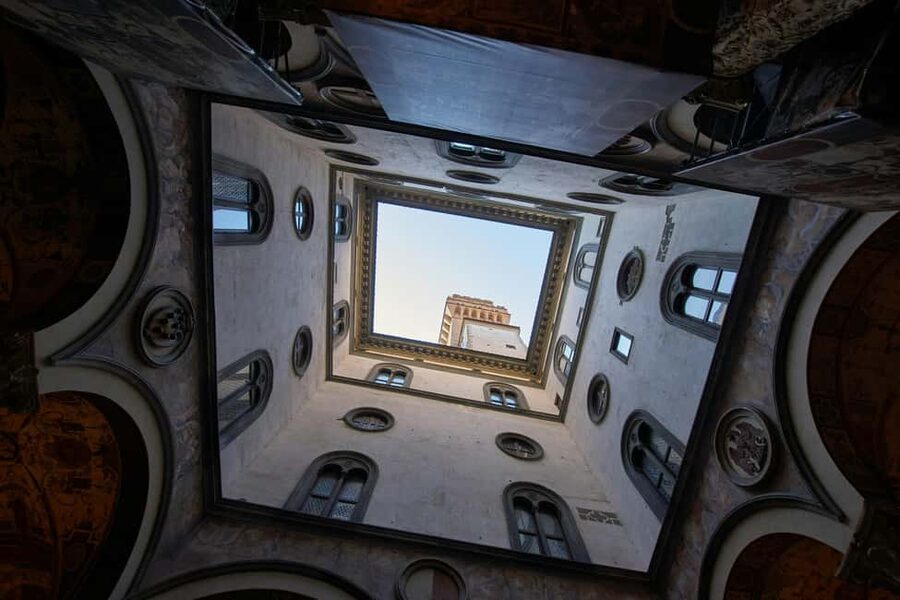
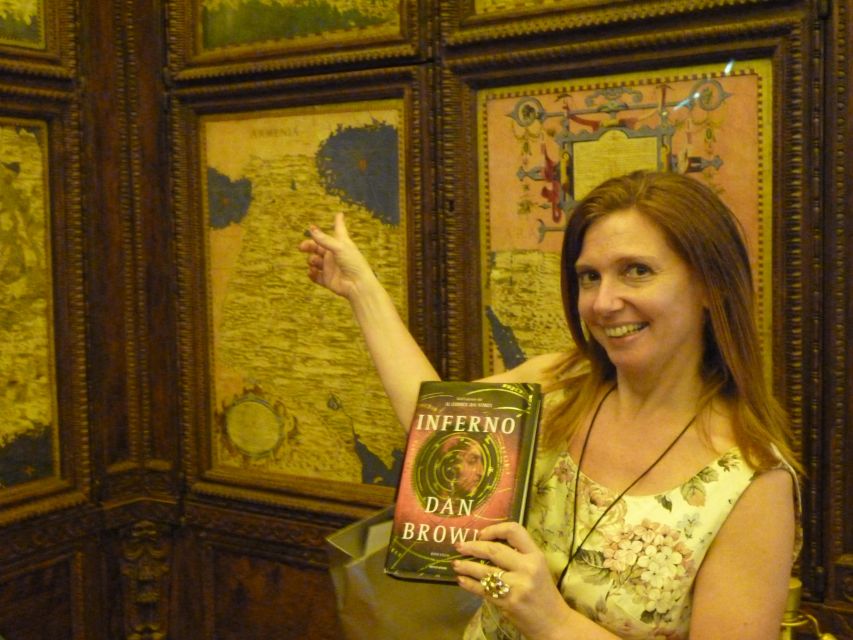
The Renaissance Map Room provides another change of mood. Instead of focusing only on painted scenes or sculpture, you see a room filled with historic maps. These maps reveal how Renaissance officials organized and pictured the known world.
A map room can be easy to pass through quickly, but I would not rush it. It offers a useful counterpoint to the palace’s self-focused decoration. The great halls tell you how Florence wanted to present its power. The maps show how Renaissance people tried to understand places beyond the city.
The tour also includes Dante’s funeral mask and Machiavelli’s office. These details give the building a strong connection to Florence’s literary and political identity. They are smaller objects and rooms, but they are memorable because they attach famous names to specific places.
Dante’s mask links the palace experience to the city’s medieval and literary past. Machiavelli’s office points toward the practical world of diplomacy and government. Together, these stops keep the tour from becoming only a parade of decorative rooms.
I find these personal details useful for orientation. Large frescoes impress you, but a mask, office, or map can give you a sharper sense of the people who shaped Florence. Ask your guide to explain how these figures connect to the palace and to the city’s changing political life.
What the private guide adds

The strongest reason to choose this experience is not simply priority entry. It is the chance to shape the conversation inside a complicated building.
The guide service is offered in English, French, Italian, Portuguese, Russian, German, and Spanish. You receive a live guide, and the group remains private. That combination works well for families, couples, or friends with different levels of interest in art and history.
A good guide can shorten an explanation when you have had enough and expand it when a detail catches your attention. Alexandra, one guide associated with a recent visit, was praised for clear explanations and for handling questions across several subjects. You should not assume she will lead every departure, but her example shows the kind of broad context this tour aims to provide.
I would choose the private tour if you want to ask why a room was built, how the Medici used it, or what a particular symbol means. I would choose a self-guided ticket if you prefer silence, photography at your own pace, or a lower price.
The tour is wheelchair accessible, which makes it a practical option for many visitors who need an accessible route. Since access needs can be personal, confirm the current arrangements when booking.
Is two hours enough?
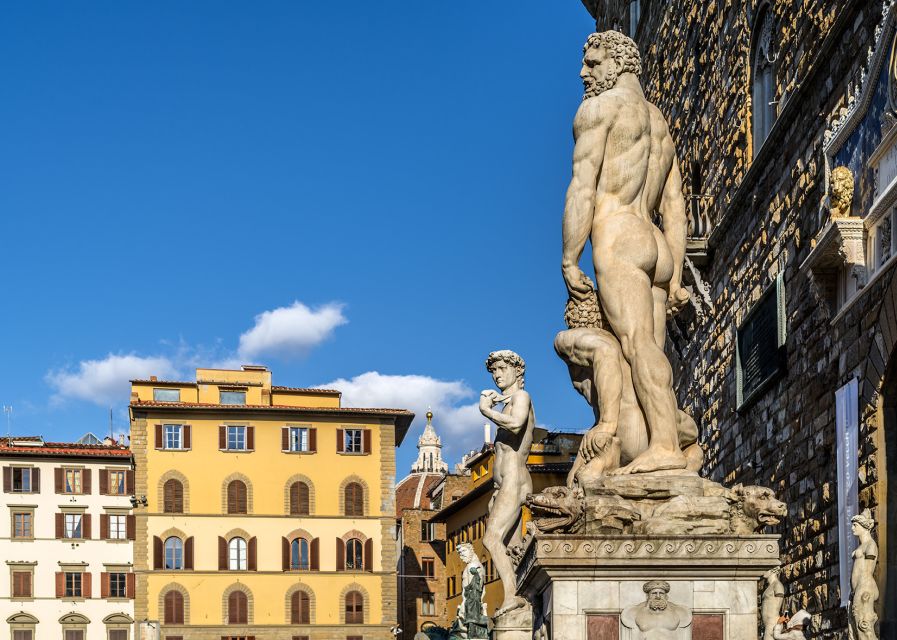
Two hours is enough for the main story, but not enough to study every work in detail. The schedule gives about 15 minutes to Piazza della Signoria, about 15 minutes to the Hall of the Five Hundred, and about 90 minutes to Palazzo Vecchio itself.
That division is sensible for a first visit. The square provides context, the main hall supplies the visual impact, and the longer palace portion covers the rooms that make a private tour worthwhile.
If you are an art historian or a repeat visitor, you may find the time limit restrictive. If this is your first Palazzo Vecchio visit, two hours should give you a clear map of the building and its main themes.
Plan for an indoor cultural visit rather than a relaxed walking tour. One recent comment described the experience as very hot, so warm weather may affect your comfort. Wear practical shoes and keep water in mind before you enter, especially if you have already spent the day walking through Florence.
Price, ticket access, and overall value
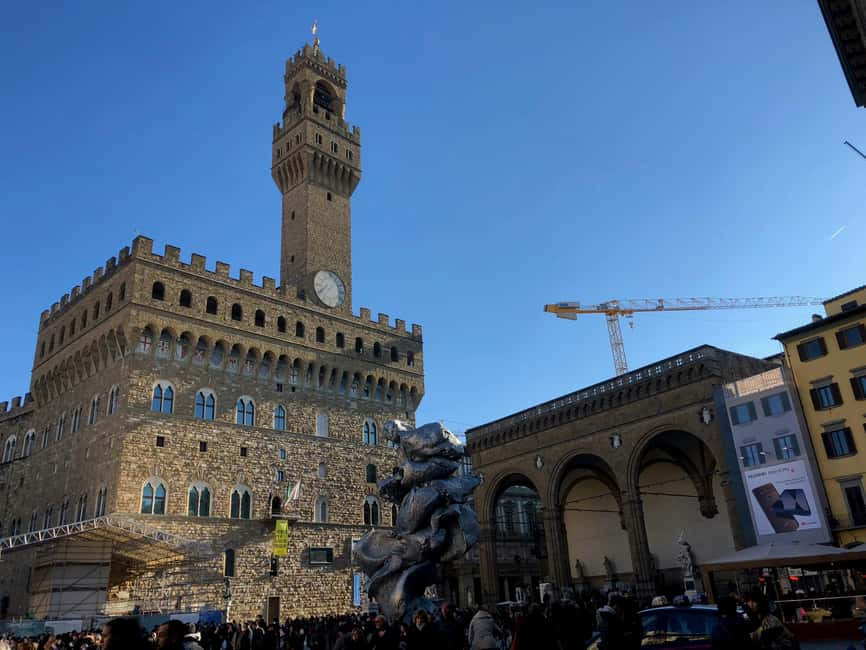
The tour includes skip-the-line entry, a private group, and a live guide. Those features save time and provide a more personal visit, but they also make the tour much more expensive than entering with an audio guide.
One booking from France cost €200 per person and rated the guide highly while questioning the value at that price. That is the key warning to take seriously. A private tour can be excellent and still feel too costly if your main goal is simply to see the palace.
I would consider the price more reasonable for a small group that can share the cost, especially if several people want to ask questions. It is also a stronger choice for anyone who finds Renaissance politics and art difficult to follow alone.
The value is weaker for a solo visitor or budget-minded couple. Compare the current private-tour price with Palazzo Vecchio’s priority-entry audio-guide option before paying. You are paying for interpretation, flexibility, and time saved, not for a different building.
The booking terms are friendly to uncertain plans. You can cancel up to 24 hours in advance for a full refund, and you can reserve now while paying later. Starting times depend on availability, so check the schedule before building the rest of your Florence day around it.
Who should book this Palazzo Vecchio tour?
I recommend it most for:
- First-time Florence visitors who want the palace explained clearly.
- Small groups who prefer a private guide to a large shared tour.
- Families or mixed-interest groups who need to ask questions and adjust the pace.
- Art and history fans interested in the Medici, Leonardo, Donatello, Michelangelo, Dante, and Machiavelli.
- People who want skip-the-line entry and do not mind paying more for convenience.
I would be more cautious if you are on a tight budget, dislike guided visits, or want to spend a long time studying individual works. In those cases, a priority-entry ticket with an audio guide may suit you better.
Should you book it?
Book this tour if you want Palazzo Vecchio to make sense as a place of government, residence, art, and Medici power. The Hall of the Five Hundred, Donatello’s Judith, the private chapel, the Map Room, and the Leonardo story give you plenty to see, while a private guide helps connect the pieces.
Skip it if the quoted price feels uncomfortable or if you are happy exploring with an audio guide. The tour’s main advantage is personal explanation, not a longer visit.
For a small group that values questions and context, this is a strong two-hour introduction to one of Florence’s most important buildings. For budget-minded visitors, it is worth comparing the cost carefully before booking.
FAQ
How long does the Palazzo Vecchio private tour last?
The tour lasts two hours. The planned route includes about 15 minutes in Piazza della Signoria, about 15 minutes in the Hall of the Five Hundred, and about 90 minutes inside Palazzo Vecchio.
Where does the tour meet?
Meet at the Fountain of Neptune in Piazza della Signoria, in front of the town hall. The meeting point coordinates are 43.76959991455078, 11.25596809387207.
Which languages are available?
A live guide can lead the tour in English, French, Italian, Portuguese, Russian, German, or Spanish.
Is this a private group tour?
Yes. The activity is offered as a private group experience rather than a shared group tour.
Is the tour wheelchair accessible?
Yes, the activity is listed as wheelchair accessible.
Can I cancel the booking?
You can cancel up to 24 hours in advance for a full refund. You can also reserve now and pay later, which keeps your plans flexible.
Just added around Florence
- Pitti Palace and Palatina Gallery★ 4.0 · 41 reviews
- Pitti Palace Small Group Tour★ 5.0 · 6 reviews
- Private Guided Tour of Palazzo Vecchio in Florence★ 3.5 · 4 reviews
- Florence: Palazzo Vecchio Skip the line Entry ticket★ 4.0 · 49 reviews
- Pitti Palace: The Royal Palace of Florence★ 4.5 · 12 reviews
- PALAZZO VECCHIO Private tour in Florence★ 5.0 · 35 reviews
- Private Tour of Pitti Palace with Boboli Garden★ 5.0 · 28 reviews
- Pitti Palace and Palatine Gallery: A Royal Art and History Tour★ 4.5 · 42 reviews
Italian Palazzo Tours, compared.
Uffizi, Pitti Palace & Boboli Combined 5-Day Pass
Read our review →
Palazzo Vecchio: Skip-the-Line Entry and Secret Passage Tour
Read our review →
Opera Concert at Palazzo Poli – Fontana di Trevi
Read our review →
Browse the lists this tour appears in