
REVIEW · ITALIAN PALAZZO TOURS
Florence: Entrance Ticket to Pitti Palace
Pitti Palace hides its best side indoors. The plain, heavy exterior gives little warning of the sumptuous rooms, chandeliers, and painted ceilings waiting inside. Your ticket covers the Palatine Gallery, royal apartments, Gallery of Modern Art, Treasury of the Grand Dukes, temporary exhibitions, and Costume Gallery.
I especially like the chance to see the Medici family’s former residence alongside paintings by Raphael, Caravaggio, Titian, Rubens, and Pietro da Cortona. I also like the variety: after rooms full of grand Italian art, you can switch gears with fashion, sculpture, and Italian painting from the late 18th century to World War I.
The main consideration is size. Pitti Palace is not a quick stop, and the signage may not always tell you exactly where to go next. Give yourself two to three hours, and more if you want to study the art rather than simply admire the rooms.
Key points to know before you go
- The ticket costs about $18: That is strong value if you visit several galleries rather than rushing through one collection.
- The Palatine Gallery fills the first floor: Expect 16th- and 17th-century paintings in lavish former residential rooms.
- The Gallery of Modern Art changes the mood: Its Italian paintings and sculptures run from the late 18th century to World War I.
- The Costume Gallery is a welcome change: Clothing and fashion displays break up the long run of religious and court paintings.
- Pick up the ticket at window 3: If you purchased an audio guide, collect it at the same time.
- Arrive early for the easiest entry: The reserved line can save real time when the regular queue grows.
Why Pitti Palace feels different from Florence’s other museums
Florence is famous for concentrated collections of Renaissance art, but Pitti Palace gives you something broader. It is both a museum and a former court residence, so the building itself carries much of the experience.
The original palace was built for the Pitti family in 1457 and designed by Filippo Brunelleschi. The Medici later took it over and made it their residence. That change in ownership helps explain the palace’s unusual mix of private rooms, ceremonial spaces, paintings, furnishings, fashion, and decorative objects.
I like this combination because you do not spend the whole visit staring at framed paintings on white walls. You move through rooms that were designed for court life. The art remains important, but the setting gives it scale and context.
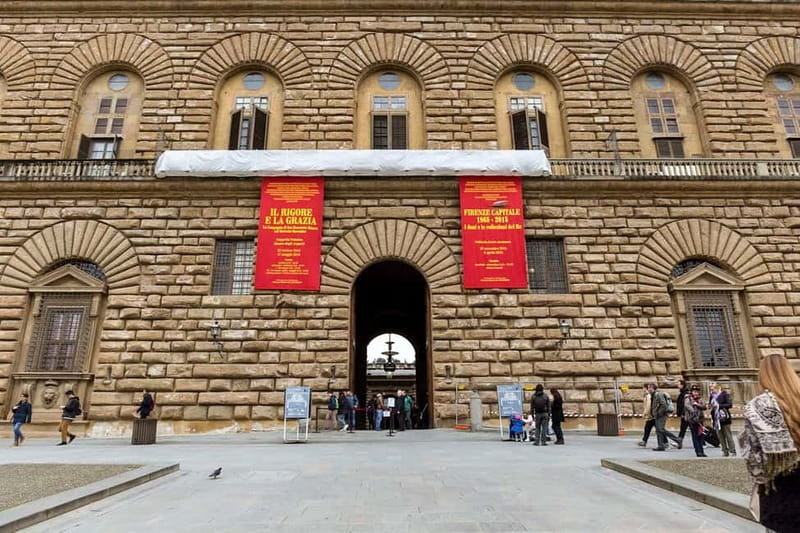
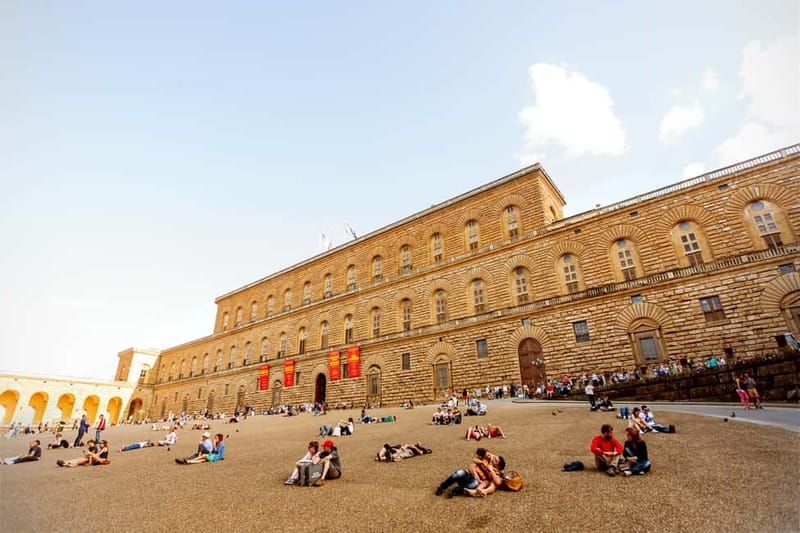
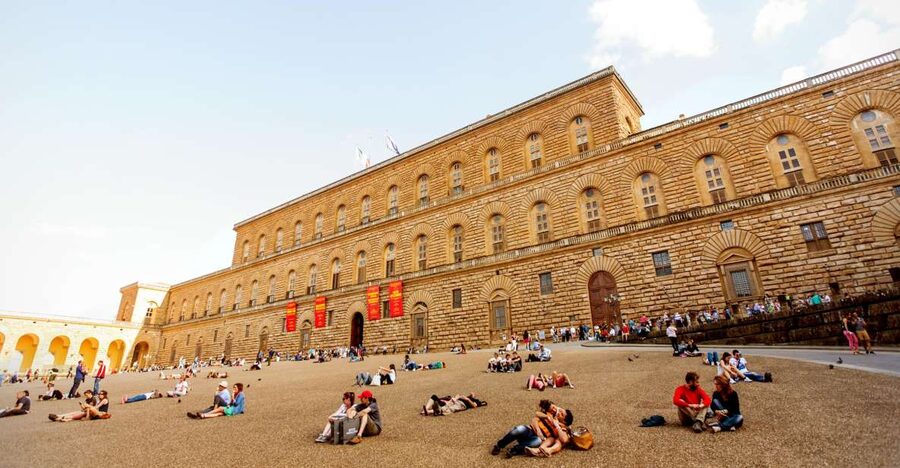
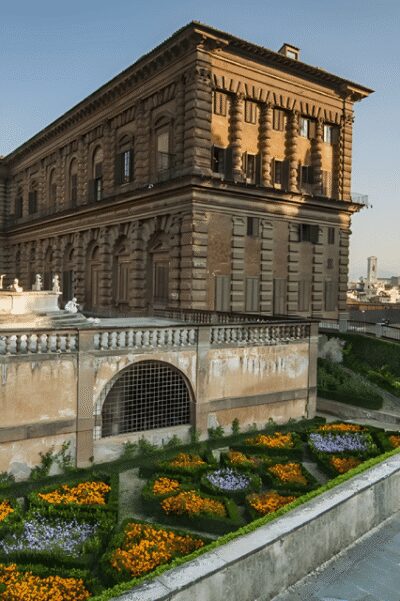
Pitti’s exterior can seem austere and plain. Do not judge the place from the square. Inside, the mood changes quickly, with ornate rooms, chandeliers, decorated ceilings, and grand furnishings. The contrast is one of the palace’s small pleasures.
More palazzo tours in Italy:
- Florence: Palazzo Vecchio Entrance Ticket & Audioguide
★ 4.4 · 4,822 reviews - Venice: Palazzo Contarini del Bovolo Entrance Ticket
★ 4.3 · 1,991 reviews - Florence: Uffizi, Pitti Palace & Boboli Combined 5-Day Pass
★ 4.5 · 1,726 reviews
Starting at window number 3
Your first practical task is exchanging the voucher for a paper ticket. Go to window number 3 at the ticket office. A queue may form on the right for people buying tickets, but the reserved-ticket exchange is on the left, so check carefully before joining the wrong line.
This detail matters most at busy times. The reserved entry does not mean you walk straight into the building without any procedure. You still need to collect the actual ticket, but the process can be much quicker than buying at the door.
The benefit is clearest in the morning, when a regular line can grow substantially. One particularly useful pattern is to arrive early, when the palace is calmer and the reserved line is more likely to save time. Late afternoon can also be quiet, though conditions vary. A 4 p.m. arrival has been easy for some visitors, with no meaningful line at all.
Your ticket is valid for one day, with the entry time selected when you book. Check the available starting times before committing your schedule. If you arrive around ten minutes late, entry may still be accepted, but do not treat that as a guarantee.
Bring your passport or identity card. If you add the physical audio guide, pick it up with your ticket rather than trying to arrange it later.
First floor: the Palatine Gallery and Medici taste
The Palatine Gallery is the heart of the palace visit. It occupies the first floor and presents a broad group of 16th- and 17th-century paintings in rooms that once served as a royal residence.
This is not a sparse museum display. Paintings cover the walls in the traditional palace style, and the setting can feel almost as important as any one canvas. If you prefer a quiet, carefully spaced modern gallery, the arrangement may feel crowded. If you want to understand how a ruling family lived with art, it is far more revealing.
Look for works connected with Raphael, Caravaggio, Titian, Pietro da Cortona, and Rubens. The collection reflects the Medici habit of collecting major European art, and you will see the family’s reach in the range of artists represented.
The royal apartments add another layer. Their furnishings come largely from a 19th-century remodeling, so the rooms do not present one pure Medici-era time capsule. Instead, they show how the palace continued to function as a court residence under later rulers.
I suggest taking a slow look at the rooms before trying to identify every painting. The painted ceilings, furniture, chandeliers, and wall decoration can blur together if you hurry. Pitti rewards a steady pace, with short pauses rather than one long march through every doorway.
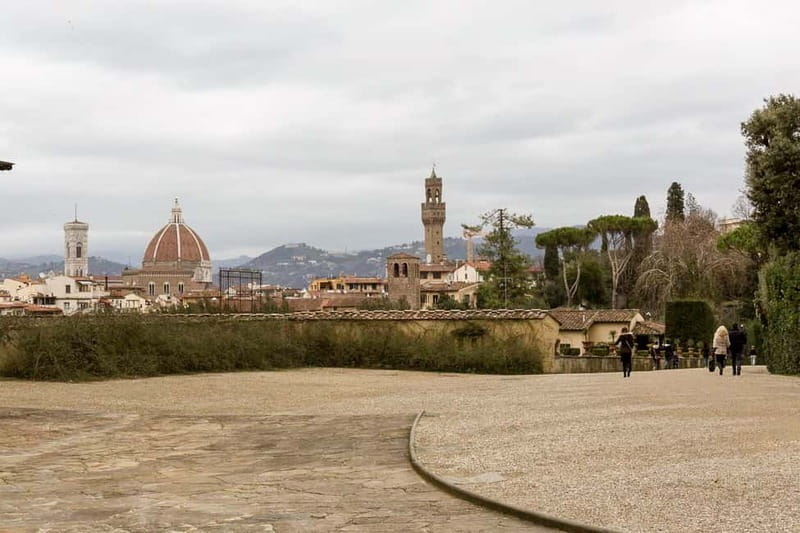
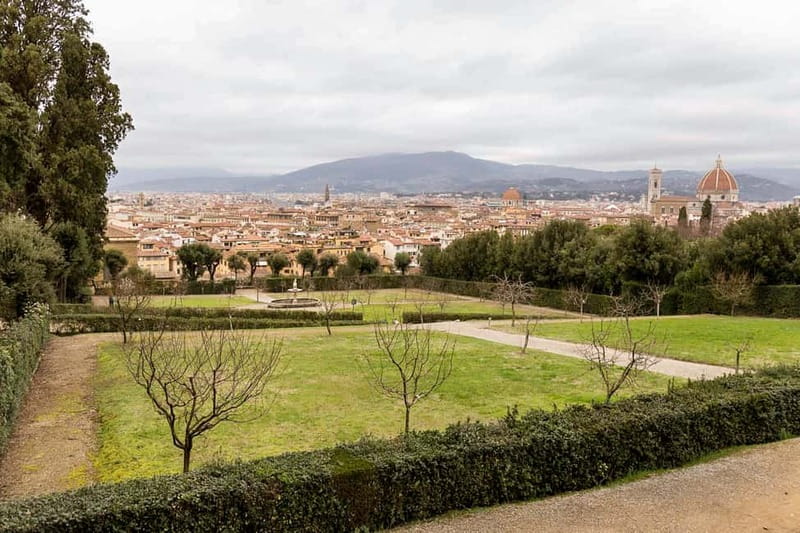
From the windows, you can catch views toward Brunelleschi’s Santo Spirito Basilica and the Boboli Gardens. These glimpses provide a useful break from the indoor collections and remind you that the palace sits within a larger Medici complex.
The royal apartments: art in a lived-in setting
The royal apartments are valuable because they make the palace feel inhabited rather than merely displayed. You see furnishings tied to the 19th-century remodeling, along with the formal decoration expected in rooms used by royalty.
The atmosphere is grand, but it is not always easy to follow a clear route. Pitti is a large building with several collections, and you may need to pay attention to signs or ask for directions. A little patience here saves time later.
This section is a good choice for anyone who enjoys architecture and interior design as much as paintings. It also helps younger visitors or anyone suffering from museum fatigue, since the rooms offer a change in scale and subject.
The palace’s interior is especially surprising if you arrive expecting a plain Renaissance building. The outside is restrained. The inside can feel almost theatrical. Beautiful paintings and chandeliers compete for your attention, and the result is more visual than academic.
More palace entry tickets in Italy:
- Venice: Doge’s Palace Reserved Entry Ticket
★ 4.6 · 42,716 reviews - Venice: St. Mark’s Basilica & Doge’s Palace Tour with Ticket
★ 4.7 · 3,375 reviews - Doge’s Palace & St. Mark’s Basilica Tickets + Tour Options
★ 4.5 · 1,841 reviews - Venice: Doge’s Palace Skip-the-Line Ticket with Guidebook
★ 4.0 · 1,196 reviews
Treasury of the Grand Dukes: small objects, courtly wealth
The Treasury of the Grand Dukes is included with the ticket. It broadens the visit beyond paintings and rooms, showing the kinds of valuable objects associated with Medici court life.
The supplied information does not specify the exact objects on display at every visit, so check the current arrangement when you enter. The important point is that your ticket covers this collection, making Pitti more than a single-gallery art stop.
If you have already spent a morning with large paintings, the Treasury can offer a useful change of pace. It also helps explain the palace as a working center of power, not simply a container for famous art.
Temporary exhibitions are included as well. Their content will change, so do not plan your entire visit around a specific display unless you verify the current program before booking.
Second floor: Gallery of Modern Art
The Gallery of Modern Art occupies the second floor and moves the story forward into the late 18th century, the 19th century, and the years leading to World War I.
The collection is mostly Italian, with paintings and sculptures connected to neoclassical and Romantic periods. This section feels different from the Palatine Gallery, not only because of the date of the art but also because the rooms were inhabited by the Lorraine grand dukes.
I find this change useful. Florence’s major museums can make a day feel dominated by Madonnas, saints, and scenes of the Crucifixion. The modern collection offers another visual language, with later Italian subjects, styles, and sculpture.
Do not assume modern here means contemporary. The dates stop around World War I, so this is a historical collection of modern Italian art rather than a survey of recent movements. That distinction matters if you are expecting 20th-century experimentation.
The rooms themselves remain part of the attraction. Neoclassical and Romantic decoration gives the collection a formal setting, but the art still has enough variety to keep the second floor from feeling like an afterthought.
Costume Gallery: the best change of pace
The Costume Gallery is one of the most useful stops for breaking up the palace’s steady flow of paintings. Clothing makes the past more physical. You can think about fabric, shape, taste, and social display instead of looking only at faces and religious scenes.
The collection is included among the palace attractions, and its appeal reaches beyond visitors who already follow fashion history. It gives you a different way to understand court life and changing styles.
I would save enough energy for this section rather than treating it as a quick add-on. Many people plan around the famous paintings and then discover that the clothing display is one of the most memorable parts of the visit.
The exact presentation can vary, but the main advantage is consistent: it changes the rhythm. If your group includes someone who is tiring of formal art galleries, the Costume Gallery can restore interest.
How long should you allow?
Two to two and a half hours is a sensible minimum if you want to see the main galleries without racing. That allows time for the Palatine Gallery, royal apartments, Gallery of Modern Art, Costume Gallery, and Treasury.
Plan on three hours if you want to read labels, pause in the grand rooms, and look closely at major paintings. The palace is large enough that a short morning visit can leave you wishing for another hour.
A one-day ticket gives you flexibility, but it does not mean the palace works like a quick hop-on attraction. Use the full validity as a planning benefit, not as a reason to squeeze in too many other sights. Check the entry conditions for your selected time and organize the rest of your day around a calm visit.
You may find the palace less crowded than Florence’s most famous central museums, but that is not guaranteed. Early entry is the safest choice if you want the most peaceful experience. Late afternoon can also work, especially if the available schedule suits you.
Is the optional audio guide worth it?
The physical audio guide is available as an add-on in Italian, English, French, Spanish, and German. A digital audio app is also included with the experience information provided for this ticket.
The audio support may help if you want background while moving through rooms, but it is not essential for everyone. Room labels contain much of the basic information, and some people find the commentary less analytical than they would like, especially for individual paintings.
I would choose the audio guide if you enjoy a structured explanation and prefer not to read wall text. I would skip the paid add-on if you like setting your own pace or already know the main artists. The palace is visually strong enough to explore without constant narration.
Keep your expectations practical. This is an entrance ticket, not a guided tour with a named art historian leading you from room to room. You control the pace, route, and level of detail.
What does the $18 price include?
At about $18 per person, the ticket offers good value if you visit several parts of the palace. You get reserved entry, the Palatine Gallery, Gallery of Modern Art, royal apartments, Treasury of the Grand Dukes, temporary exhibitions, and Costume Gallery access.
The value drops if you enter only to glance at the grand rooms and leave quickly. Pitti works best when you treat it as a substantial museum visit, not a short photo stop.
The ticket also includes a 10 percent discount at the Hard Rock Shop and a 10 percent discount on the a la carte menu at the Hard Rock Cafe on Via dei Brunelleschi near Piazza della Repubblica. Those discounts are extras rather than reasons to book. The museum access is what should decide the purchase.
Free cancellation up to 24 hours before the visit and the reserve-now, pay-later option give you some planning flexibility. Wheelchair access is available. For any particular route or facility question, confirm current conditions before you go.
Who will enjoy Pitti Palace most?
I would recommend this ticket to you if you like grand interiors, Renaissance and Baroque painting, court collections, and museums with several different sections. It is also a good choice if you want a change from Florence’s strictly religious art.
Families and mixed-interest groups may appreciate the variety. One person can focus on Raphael or Caravaggio, another can study the rooms, and someone else can spend time with costumes or later Italian art.
You should think twice if you want a short, sharply focused museum visit. Pitti can feel sprawling, and the large number of paintings may become tiring. Without a plan, you may wander past important rooms without knowing what deserves your attention.
Should you book this Pitti Palace ticket?
Book it if you want more than a single famous painting and have at least two hours for the palace. The combination of Medici art, royal rooms, modern Italian painting, costumes, and the Treasury gives you a fuller picture of Florence’s court culture than a quick gallery visit can provide.
The strongest reason to reserve is the entry convenience, especially for a morning visit when the regular line may be long. Go to window 3, use the reserved side of the queue, and arrive with your passport or identity card ready.
Skip the audio add-on unless you know you want structured commentary. Most important, do not hurry. Pitti Palace rewards the visitor who looks up at the ceilings, studies the rooms, and allows the Costume Gallery and later art collection time to make their case.
FAQ
How much does the Pitti Palace entrance ticket cost?
The listed price is $18 per person. It includes entry to Pitti Palace, the Palatine Gallery, Gallery of Modern Art, Treasury of the Grand Dukes, temporary exhibitions, and Costume Gallery access.
How long is the ticket valid?
The ticket is valid for one day. Available starting times depend on the date you choose, so check availability when booking.
Where do I exchange the voucher for the ticket?
Go to window number 3 at the ticket office. The reserved-ticket queue is on the left, while people buying tickets may line up on the right.
Is an audio guide included?
A digital audio app is included. A physical audio guide can be selected as an add-on and is available in Italian, English, French, Spanish, and German.
What identification should I bring?
Bring your passport or identity card.
Can I cancel the booking?
You can cancel up to 24 hours in advance for a full refund. A reserve-now, pay-later option is also available.
Just added around Italy
- Pitti Palace and Palatina Gallery★ 4.0 · 41 reviews
- Pitti Palace Small Group Tour★ 5.0 · 6 reviews
- Private Guided Tour of Palazzo Vecchio in Florence★ 3.5 · 4 reviews
- Florence: Palazzo Vecchio Skip the line Entry ticket★ 4.0 · 49 reviews
- Pitti Palace: The Royal Palace of Florence★ 4.5 · 12 reviews
- PALAZZO VECCHIO Private tour in Florence★ 5.0 · 35 reviews
- Private Tour of Pitti Palace with Boboli Garden★ 5.0 · 28 reviews
- Palazzo Vecchio, Palazzo Pitti and Boboli gardens private tour★ 5.0 · 18 reviews
Italian Palazzo Tours, compared.
Uffizi, Pitti Palace & Boboli Combined 5-Day Pass
Read our review →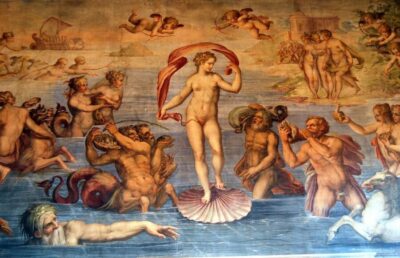
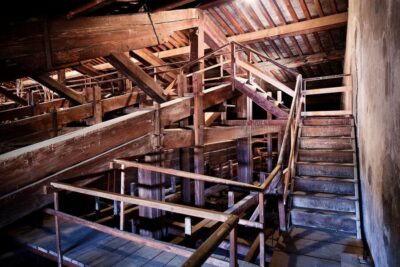
Palazzo Vecchio: Skip-the-Line Entry and Secret Passage Tour
Read our review →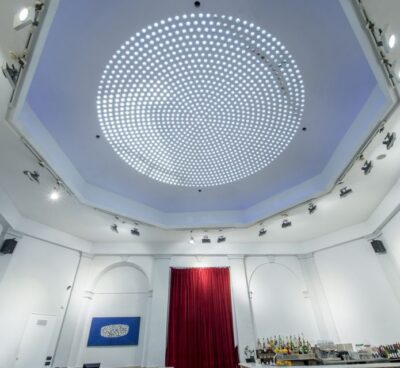
Opera Concert at Palazzo Poli – Fontana di Trevi
Read our review →
Browse the lists this tour appears in