
REVIEW · ROME PALACE TOURS
Rome: Monuments and Belvederes Guided E-Bike Tour
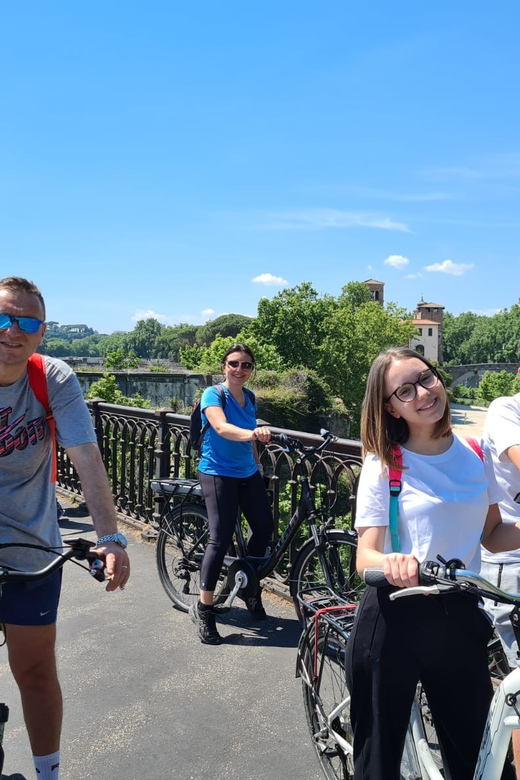
Rome makes sense from a bicycle. In three hours, this guided e-bike tour links ancient ruins, grand squares, hilltop viewpoints, and the city’s narrow medieval lanes. You’ll see the Colosseum, Trevi Fountain, Pantheon, and Saint Peter’s Basilica without spending the whole day on foot.
I like the route’s variety, especially the views from Aventine Hill, Capitoline Hill, and the Pincio balcony. I also like the guide-led stops, which add stories and small details that you might miss when moving between sights on your own.
The main drawback is traffic. Rome can be difficult on two wheels, with pedestrians, cars, scooters, and crowded squares sharing tight streets. The tour may feel less relaxed during busy periods, including the Jubilee year noted in one review.
Key points to know before booking
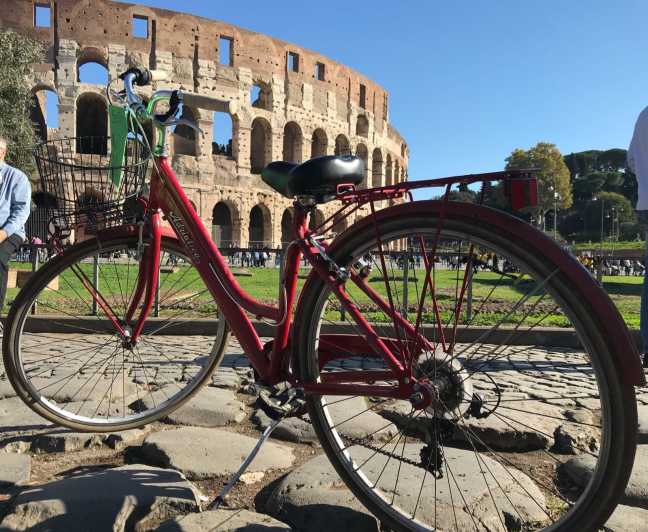
- You cover a lot of Rome in three hours: The route includes Trastevere, the Jewish Ghetto, the Colosseum, Trevi Fountain, the Pantheon, Piazza Navona, and Saint Peter’s Basilica.
- The best views come from Rome’s hills: Aventine Hill, Capitoline Hill, and the Pincio balcony give you different angles across the city.
- Guides add real value: Marco, Alexander, and David were praised for useful stories, local details, and adapting the ride to the group.
- The e-bikes reduce the strain: A helmet and child seat are included, but riders must be at least 150 centimeters tall.
- Crowds are the key concern: Traffic and packed pedestrian areas can make riding tricky around the main monuments.
- The price is reasonable for a city orientation: At $88 per person, you are paying for a guide, equipment, and a compact route through many major sights.
Why an e-bike is a smart way to see Rome
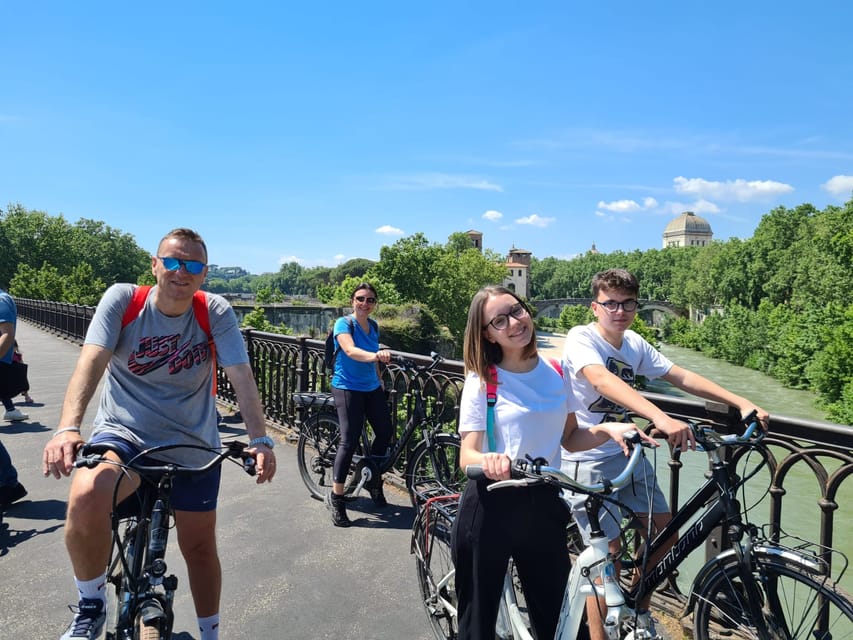
Rome’s major sights are spread across several districts. Walking between Trastevere, the Colosseum, the Trevi Fountain, Piazza Navona, and the Vatican area can take much of a day, especially when you stop for photos and get caught in pedestrian traffic.
An e-bike helps connect these areas without turning the outing into a long-distance cycling workout. You still pedal, but the electric assistance makes Rome’s hills more manageable. That matters on the climbs to Aventine Hill, Capitoline Hill, and the Pincio balcony.
I see this as a sightseeing ride rather than a serious cycling tour. You stop often for views, stories, and major monuments. The bike is a practical way to cover ground, while the guide gives the route a clear shape.
The tour begins at Via di S. Calisto, 9, in the Trastevere area, and returns there at the end. Hotel pickup is not included, so you need to make your own way to the starting point.
More palace rides by bike in Rome:
- Versailles Palace Bike Tour with Market & Marie-Antoinette hamlet
★ 5.0 · 2,680 reviews - Versailles Full Day Bike Tour with Palace, Gardens, & Picnic
★ 5.0 · 2,217 reviews - Versailles Bike Tour with Market, Gardens & Guided Palace Tour
★ 5.0 · 1,121 reviews
Trastevere and the Jewish Ghetto set the tone
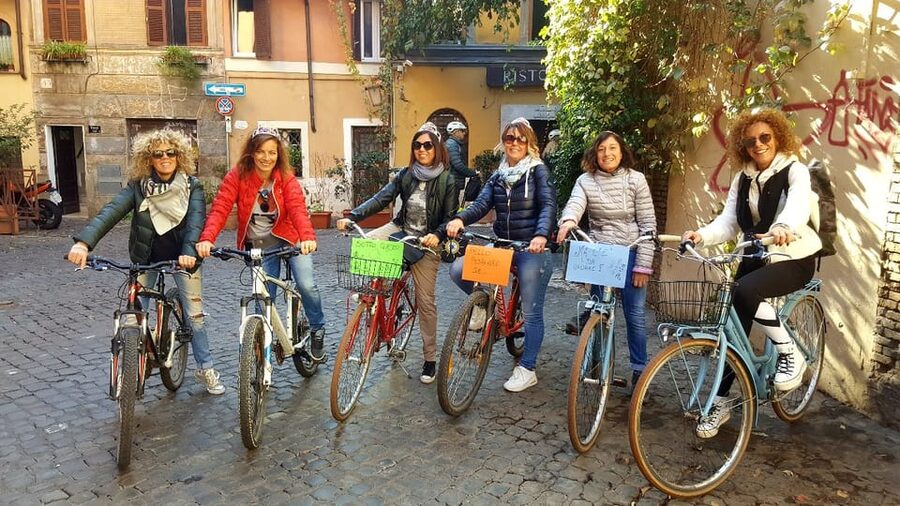
Starting in Trastevere puts you in one of Rome’s most atmospheric areas right away. The route moves through narrow streets before heading toward the Jewish Ghetto and central Rome.
This is a good opening because you see more than the postcard version of the city. Trastevere’s lanes are compact and irregular, and they show how different Rome can feel from the broad avenues around the famous monuments. The Jewish Ghetto adds another layer to the route, with the guide providing context as you ride through one of the city’s historic districts.
The narrow streets also introduce the tour’s biggest practical issue. You need to stay alert and follow your guide closely. Pedestrians may step into the road, and scooters and cars can appear quickly. If you are nervous in traffic, tell the guide early so you can ride at a comfortable pace.
Aventine Hill brings one of the tour’s best views
The climb to Aventine Hill is one of the reasons to choose an e-bike instead of a walking tour. You get a break from the flat central streets and reach a viewpoint over Rome.
This is mainly a photo stop, but it gives you a useful sense of the city’s layout. Rome is not simply a collection of isolated monuments. From above, you can begin to connect the historic center, the river area, and the domes and rooftops spreading across the city.
The view is also a welcome pause before the ancient monuments. You can catch your breath, take photographs, and listen without trying to watch traffic at the same time.
Circus Maximus and the Colosseum
From Aventine Hill, the route continues toward the Circus Maximus and the Colosseum. These are two of the clearest reminders of ancient Rome’s appetite for massive public spectacles.
Circus Maximus is a wide open site today, but its scale is still easy to understand. Your guide can help you picture the chariot races and the huge crowds that once gathered here. The open space also contrasts nicely with the tight streets of Trastevere.
The Colosseum needs little introduction, but seeing it by bike gives you a different arrival than approaching on foot through the busiest pedestrian routes. You will stop for a guided visit and background information, though this experience does not include entry inside the amphitheater. The focus is on seeing the monument as part of a wider route.
That distinction matters. If your main goal is to explore the Colosseum’s interior, you need a separate ticket or another tour. If you want a broad introduction to Rome’s major sights, the stop works well.
A few more palace visits around Rome worth a look
- Versailles Half Day eBike
★ 4.5 · 435 reviews - Granada: E-Bike Tour and Fast-Track Alhambra Ticket
★ 4.6 · 271 reviews - Versailles Full-Day Electric Bike Tour : Market, Picnic & Palace
★ 5.0 · 239 reviews - Paris: Versailles Palace and Queen Hamlet E-Bike Tour
★ 5.0 · 126 reviews
Capitoline Hill and the Roman Forum views
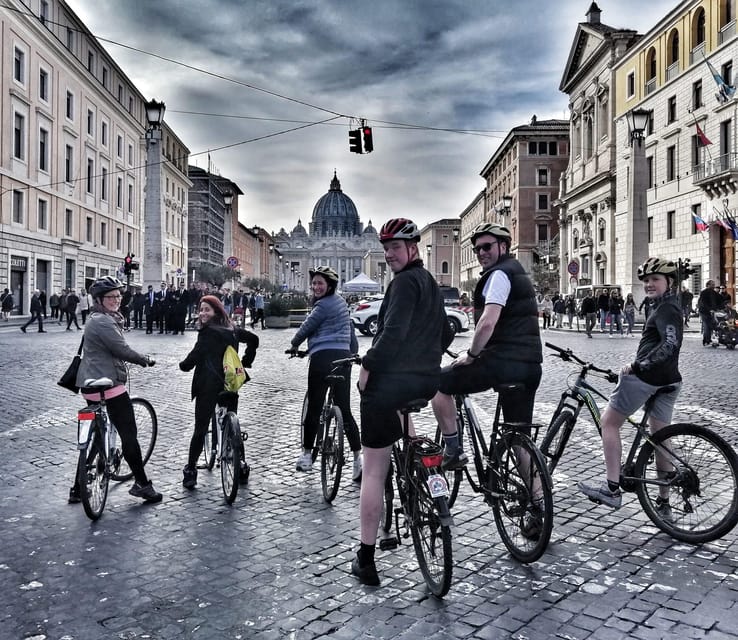
Capitoline Hill provides one of the strongest viewpoints on the route. From here, you can look toward the Roman Forum and see how the ancient center fits into modern Rome.
This stop is valuable because ruins can be hard to read from ground level. From above, the Forum’s columns, walls, and foundations form a clearer picture. Your guide’s explanation helps turn scattered stones into a city center with roads, temples, political buildings, and public spaces.
Capitoline Hill is also one of the route’s more demanding sections. The e-bike makes the climb easier, but you still need to handle the bike carefully around the hill and nearby pedestrian areas.
Trevi Fountain, the Spanish Steps, and Campo Marzio
The ancient focus gives way to Rome’s grander Baroque and Renaissance center as you reach Rione IV Campo Marzio. The route includes the Trevi Fountain, the Spanish Steps, and the church of Trinità dei Monti.
The Trevi Fountain is one of Rome’s most crowded stops. You should expect a dense pedestrian area and limited space for bicycles. The guide will direct you through the stop, but this is not a place for a long, quiet visit. Take your photograph, listen to the explanation, and stay aware of people moving around you.
The Spanish Steps offer another famous city scene, with Trinità dei Monti above the staircase. The nearby streets can be busy, so the value here is the combination of quick sightseeing and efficient transport between landmarks.
One guide, Marco, was especially good at adjusting the route for people who already knew Rome’s classic sights. That is useful if you have visited before and want extra churches, viewpoints, or stories rather than a basic checklist of monuments. Guides such as Alexander and David were also praised for clear explanations and for showing sights beyond the most obvious stops.
The Pincio balcony and Piazza del Popolo
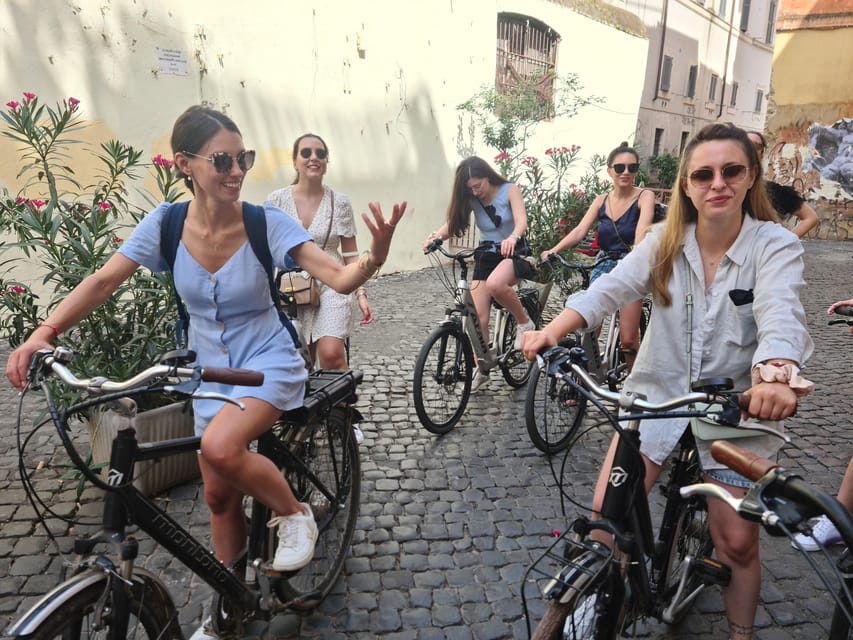
The ride continues to the Pincio balcony, another strong viewpoint. It offers a different perspective from Aventine Hill and Capitoline Hill, so the repeated hill stops do not feel like the same view three times.
From the Pincio, you can take in Piazza del Popolo and a broad sweep over the city. This part of the ride gives the itinerary a welcome pause from fountains, ruins, and dense streets.
I like the way the viewpoints break up the route. Three hours of constant monument stops could feel rushed, but the hilltop pauses add breathing room. They also give you a better mental map of Rome, which helps when you explore independently later.
The Pantheon and Piazza Navona
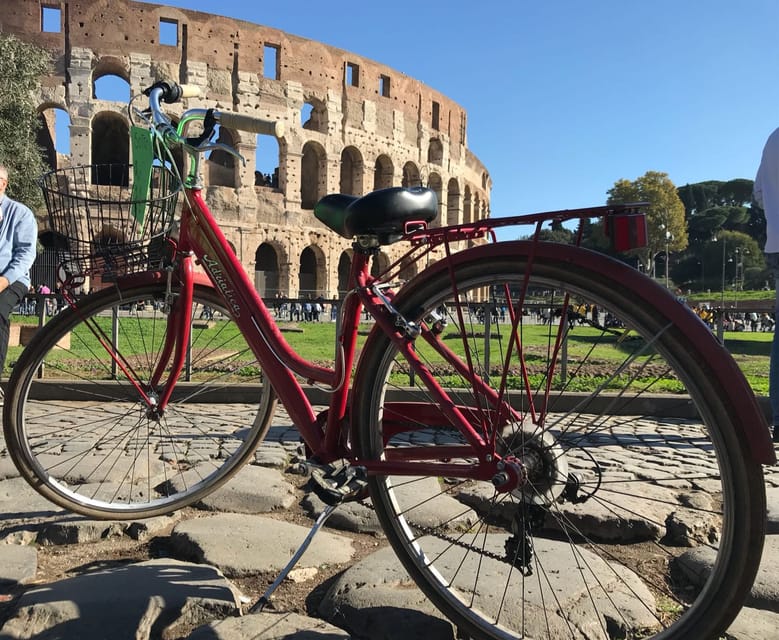
The route returns to the medieval and Baroque center for the Pantheon and Piazza Navona. The Pantheon is one of Rome’s most impressive surviving ancient buildings, especially because its great dome and central opening remain so memorable.
The tour includes a guided stop at the Pantheon, but no inside admission is listed. As with the Colosseum, you should treat this as an exterior and city-orientation experience unless your booking information says otherwise.
Piazza Navona is one of the most enjoyable final sections. Its long oval shape follows the footprint of an ancient stadium, while the surrounding buildings and fountains create the theatrical setting Rome is famous for. The centerpiece is Bernini’s Fountain of the Four Rivers, which gives the guide plenty to explain about art, symbolism, and the city’s powerful families.
Because the route reaches Piazza Navona late, the square acts as a satisfying gathering point for several eras of Rome. You have already seen imperial ruins, Renaissance streets, and grand viewpoints. Here, they come together in one lively urban space.
Castel Sant’Angelo and Saint Peter’s Basilica
The final stretch brings you toward Castel Sant’Angelo and Saint Peter’s Basilica. Castel Sant’Angelo began as a Roman mausoleum and later served other roles, giving it an unusual shape and a long connection to the city’s rulers.
Saint Peter’s Basilica appears as the grand closing view. The route does not include entry into the basilica, so plan a separate visit if you want to see the interior, dome, or Vatican Museums.
Ending near these landmarks gives you a strong final impression of Rome. You move from Trastevere back through the historic center and finish with two of the city’s most recognizable monuments.
Guides, languages, and the human side of the ride
The guide can make or break a city bike tour, and the strongest part of this experience appears to be the personal guiding. Marco was praised for changing the route to suit people who had already seen Rome’s usual sights. Alexander was noted for speaking German well and adding stops not found in every guidebook. David received high praise for taking a family with children aged 10 and 14 around the city and filling in anything they had missed on foot.
Those details matter more than a memorized list of dates. A good guide keeps the pace moving, explains why a place matters, and notices when the group needs a pause.
Tours are offered in Italian, English, French, and Spanish. The supplied information does not specify group size, so do not book assuming a private ride or a small group.
Is $88 a fair price?
At $88 per person, this is not the cheapest way to see Rome, but it covers a useful package: a live guide, electric bike, helmet, and child seat. You also get three hours of transport between districts that are widely spread across the city.
I think the price works best for a first visit or for a short stay. You can use the tour to get your bearings and then return later to the Colosseum, Pantheon, or Vatican area for longer visits.
The value is weaker if you already know Rome well and only want admission to major attractions. Entry tickets are not included, food and drinks are not included, and hotel pickup is not included. You are paying for the route, guiding, and equipment rather than for access inside the monuments.
The tour has a 4.2 rating from six reviews, so I would read that as positive but not conclusive. The praise centers on the guides, the quality of the e-bikes, and the amount covered in three hours. The repeated concern is crowded streets and difficult cycling around major sights.
Who should book this e-bike tour?
I would recommend it to first-time visitors who want a fast, guided overview of Rome. It also suits families with older children, provided everyone meets the minimum height requirement of 150 centimeters.
It is a good choice if you enjoy hearing stories while moving between sights instead of spending a full day inside museums. The e-bike also helps if you want to cover Rome’s hills without committing to a long walking route.
I would think twice if you dislike city traffic, feel uneasy riding around pedestrians, or want long, quiet visits at each monument. Rome is crowded, and this route cannot remove that problem. It simply helps you move through the city more efficiently.
Bring a passport or ID card. Helmets are included, and a child seat is available. Free cancellation is offered up to 24 hours before the activity, and you can reserve now and pay later, which helps if your schedule is still shifting.
My call: a useful first look at Rome
Book this tour if you want a lively introduction to Rome’s main districts, viewpoints, and monuments in one compact ride. The guide’s stories and the hilltop views are the strongest reasons to choose it, while the e-bike makes a demanding route more manageable.
Skip it if your priority is entering the Colosseum, Pantheon, or Saint Peter’s Basilica, since those admissions are not part of the experience. For everyone else, the tour gives you a practical overview, a few excellent viewpoints, and a clear list of places to revisit at your own pace.
FAQ
How long does the Rome e-bike tour last?
The tour lasts three hours.
Where does the tour start and finish?
It starts and finishes at Via di S. Calisto, 9.
Which Rome sights are included?
The route includes the Jewish Ghetto, Capitoline Hill, the Colosseum, Aventine Hill, Trastevere, Campo Marzio, Piazza Navona, the Spanish Steps, Trevi Fountain, the Pantheon, Castel Sant’Angelo, and views of Saint Peter’s Basilica.
Is the Colosseum entrance included?
No entrance ticket is listed. The tour includes a guided stop at the Colosseum.
Is admission to the Pantheon included?
No entrance ticket is listed. The Pantheon is included as a guided stop on the route.
What languages are available?
The live guide is available in Italian, English, French, and Spanish.
What equipment is included?
An electric bike, helmet, and child seat are included.
Can children join the tour?
Children can join if they meet the minimum height requirement of 150 centimeters. A child seat is included.
What should I bring?
Bring a passport or ID card. Food, drinks, hotel pickup, and hotel drop-off are not included.
Just added around Rome
- Day trip Rome by car : Tivoli Unesco Villa D’este & Hadrian★ 5.0 · 56 reviews
- From Rome: Villa d’Este & Hadrian’s Villa Tickets & Transfer★ 4.5 · 32 reviews
- Tivoli: Hadrian’s Villa and Villa d’Este Guided Tour★ 4.5 · 73 reviews
- Rome: Villa D’Este & Tivoli Tour with Skip-the-Line Entry★ 5.0 · 4 reviews
- Rome: Palazzo Altemps Reserved Entrance Ticket★ 4.5 · 49 reviews
- Rome: Palazzo Venezia Reserved Entrance with Museum★ 4.2 · 52 reviews
- Rome: Colonna Palace Guided Tour★ 4.9 · 70 reviews
- Rome: Opera Concert in Palazzo Doria Pamphilj★ 4.1 · 28 reviews
Rome Palace Tours, compared.
Tivoli Full Day Trip from Rome: Hadrian’s Villa and Villa D’Este
Read our review →
Opera Concert at Palazzo Poli – Fontana di Trevi
Read our review →
Hadrian’s Villa and Villa d’Este Half-Day Trip from Rome
Read our review →

The Great Opera Arias Concert at Palazzo Poli – Trevi Fountain
Read our review →
Colosseum Underground, Roman Forum & Cesar Palace Special Access
Read our review →
Villa d’Este and Hadrian’s Villa Tour with Lunch
Read our review →
Palazzo Barberini Galleria Corsini Ticket & Audioguide
Read our review →Browse the lists this tour appears in