
REVIEW · ROME PALACE TOURS
Tivoli: Hadrian’s Villa and Villa d’Este Guided Tour
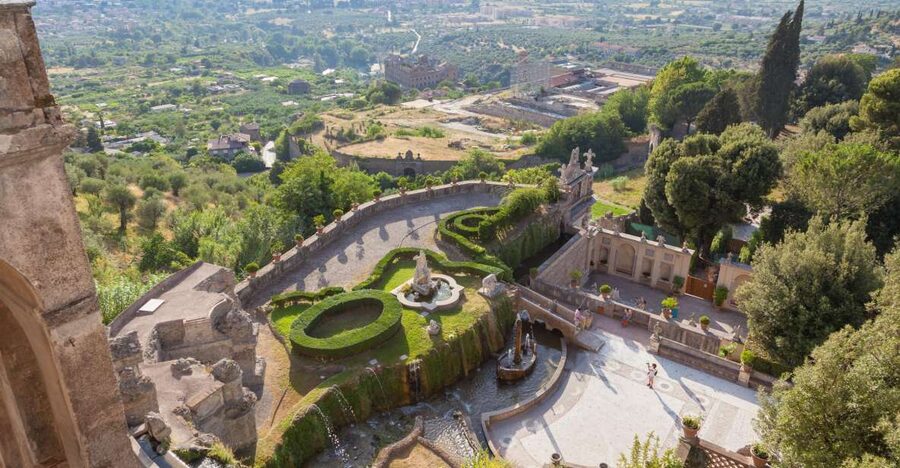
Hadrian’s Villa and Villa d’Este give you two very different sides of Tivoli in one half-day. First come the huge Roman ruins, pools, gardens, and imperial spaces built for Emperor Hadrian. Then you move into the Renaissance world of Villa d’Este, where fountains and waterfalls turn the garden into a living work of art. The contrast is the real draw.
I like the hotel pickup and the small-group format, which spare you the hassle of reaching Tivoli on your own. I also like the guides’ range, from ancient Roman architecture to Renaissance art. Fabio is praised for clear explanations, while Catherine and Donald are singled out for warm, personal guiding. The main consideration is physical: you will walk through large historic grounds, and this tour is not suited to wheelchair users or people with significant mobility limits.
Key points to know before booking
- Two UNESCO-listed villas in one outing: Compare an imperial Roman retreat with a Renaissance villa full of fountains.
- A practical escape from Rome: Hotel pickup and drop-off make the trip simple, especially when you do not want to manage regional transport.
- Strong guiding matters here: Fabio, Catherine, Donald, and Donato are among the guides associated with especially engaging explanations and personal service.
- Expect outdoor walking: Hadrian’s Villa is a large archaeological site, while Villa d’Este involves garden paths, steps, and slopes.
- Five hours keeps the day focused: You get a useful introduction to both villas without giving up a full day in Rome.
- Price reflects convenience: At $303.60 per person, this is not a budget excursion, but it includes transport, entry tickets, and a live guide.
Why Tivoli makes a smart break from Rome
Tivoli sits east of Rome in the Tiburtini hills, close enough for a half-day trip but far enough to feel calmer. Its cooler climate and abundant water helped make it a favored retreat for wealthy Romans, and the town’s long connection with elite country residences is still easy to see.
I like this setting because it gives you a pause from Rome’s crowded center without requiring a complicated day of planning. You get history, gardens, water, and hill-country air in one compact excursion. The ride also gives your guide time to explain how Tivoli became such a desirable place for Roman emperors and powerful families.
The tour begins with pickup at your hotel or apartment. You need to be ready 15 minutes before departure, and pickup is outside the lobby or apartment entrance. From there, you travel in an air-conditioned minivan toward Tivoli.
The vehicle is a useful part of the experience, not just a way to get from one sight to another. Public transport can make a short visit to Tivoli feel more tiring, especially when you are trying to fit two villas into one morning or afternoon. Here, the driver handles the road while your guide sets up the story.
The group is described as small, with a stated limit of 12 participants. The minivan is also described as accommodating a maximum of six people, so the exact vehicle and group arrangement may depend on the departure. If a very small party is booked, you may receive something close to a private tour. One couple had the guide and car to themselves, which made it easy to ask questions and adjust the pace.
More guided palace visits in Rome:
- Rome: Colonna Palace Guided Tour
★ 4.9 · 70 reviews - Rome: Palazzo Barberini Guided Tour
★ 4.6 · 31 reviews - Lateran Palace Entry Ticket with Audio Guide
★ 3.1 · 16 reviews
Hadrian’s Villa: an imperial retreat spread across the hills
Hadrian’s Villa, also called Villa Adriana, is the first major stop. You have about an hour and a half for the guided visit, sightseeing, photographs, and walking.
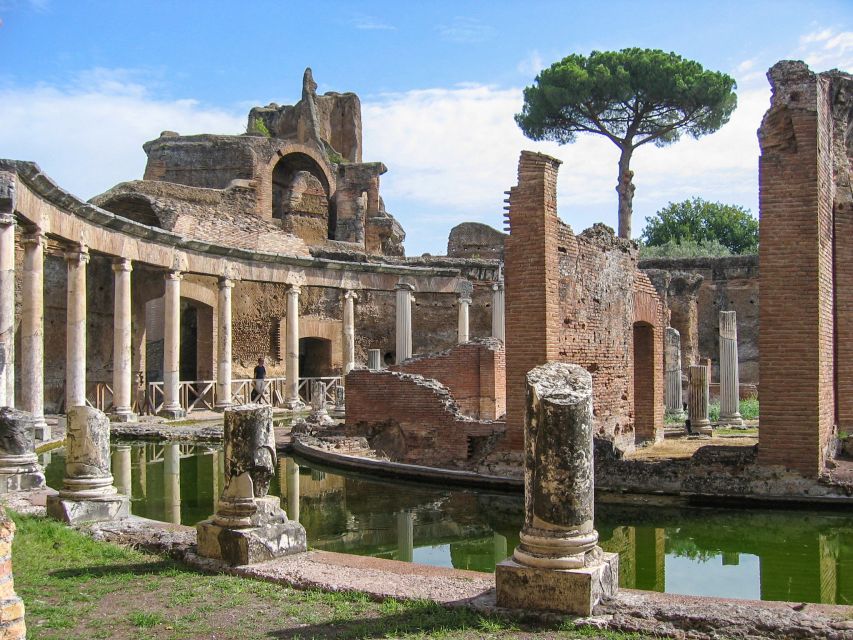
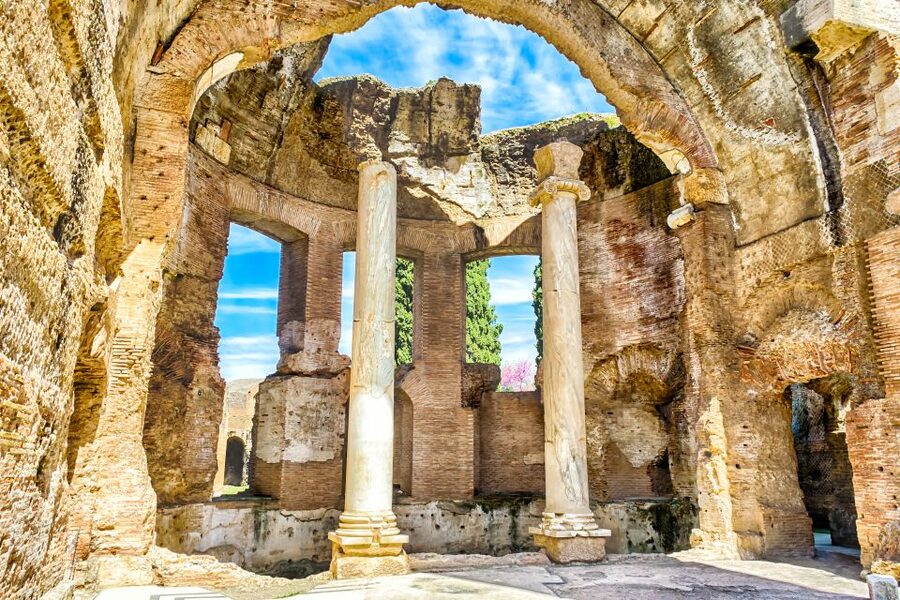
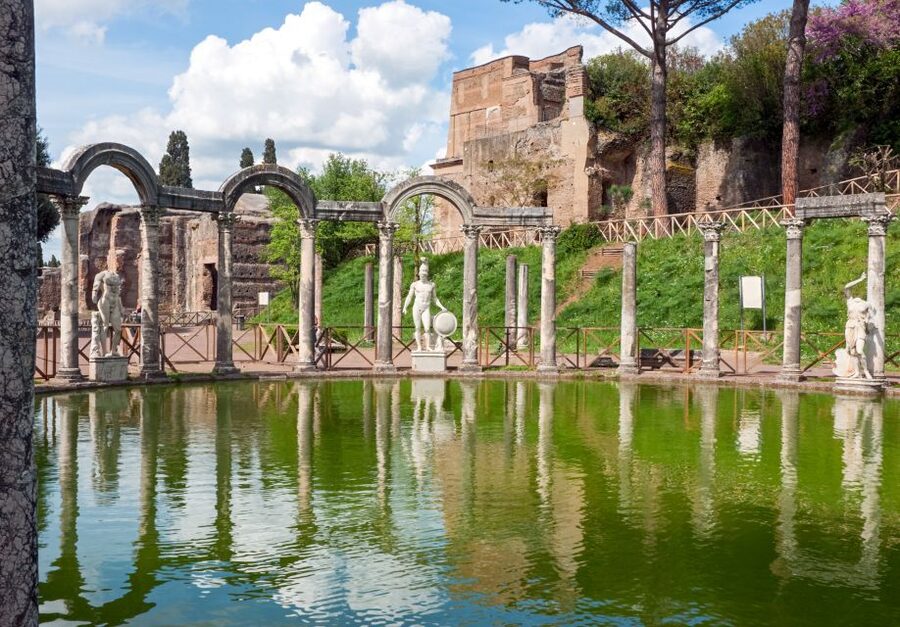
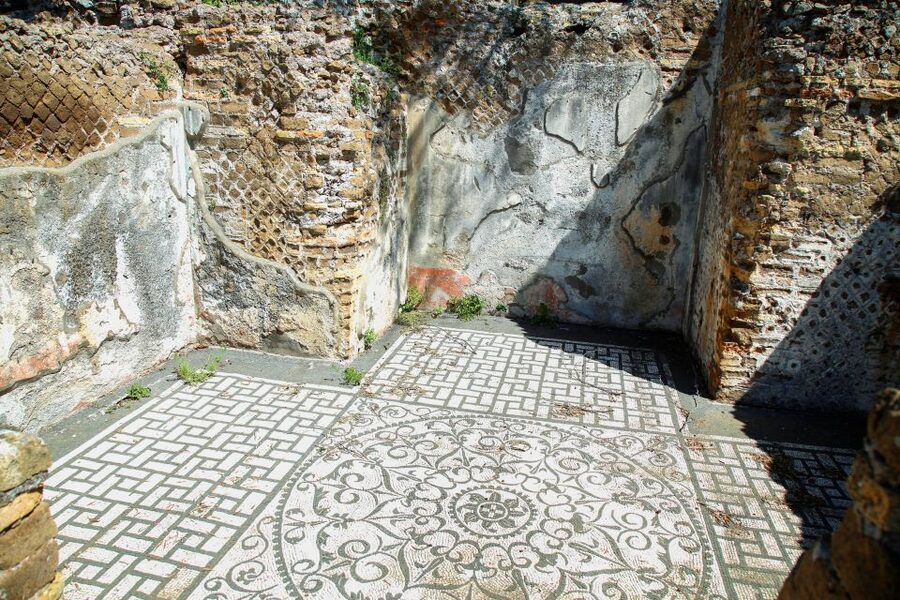
Do not picture a single palace building. Hadrian’s Villa is a broad archaeological site created in the early second century AD for Emperor Hadrian. It included grand residences, gardens, pools, and spaces for official life and relaxation. The scale is part of the point. You are seeing the remains of an entire imperial retreat rather than one isolated monument.
Your guide helps you connect scattered ruins to the life they once supported. Columns, walls, water features, and open courtyards can seem disconnected if you walk through without context. A good guide explains how the spaces worked together and why Hadrian chose this location outside Rome.
This is where Fabio’s style can be especially useful. He is praised for linking Roman history, archaeology, and architecture in a way that is easy to follow. Other guides, including Donald and Donato, are noted for mixing historical explanation with humor and stories about the people behind the buildings.
The villa’s pools and water systems are among its most memorable features. Water was not just decoration here. It helped cool the property, shape the gardens, and signal wealth. Your guide can also point out how Hadrian used architectural ideas drawn from different parts of the Roman world.
The main drawback is size. Ninety minutes gives you a guided introduction, but it does not allow time to inspect every corner. You will walk outdoors and may spend much of the visit on uneven or exposed paths. Comfortable shoes are essential, and sunglasses and water are sensible additions even though the formal packing advice specifically calls for comfortable shoes, sunglasses, and a camera.
I would not choose this tour if your main goal is a slow archaeological study. You will get a strong overview, but the schedule is designed to show you the important areas before moving on to Villa d’Este.
Villa d’Este: Renaissance design powered by water
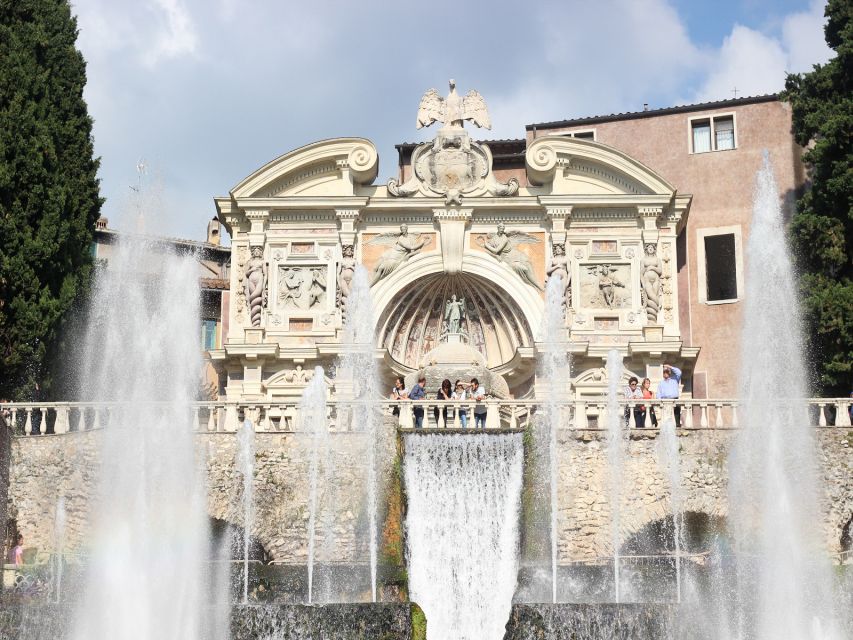
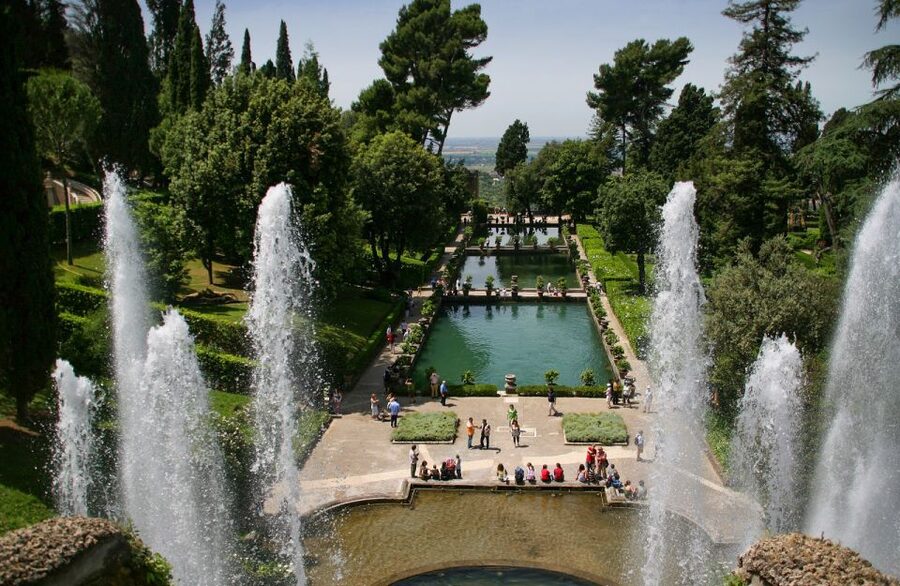
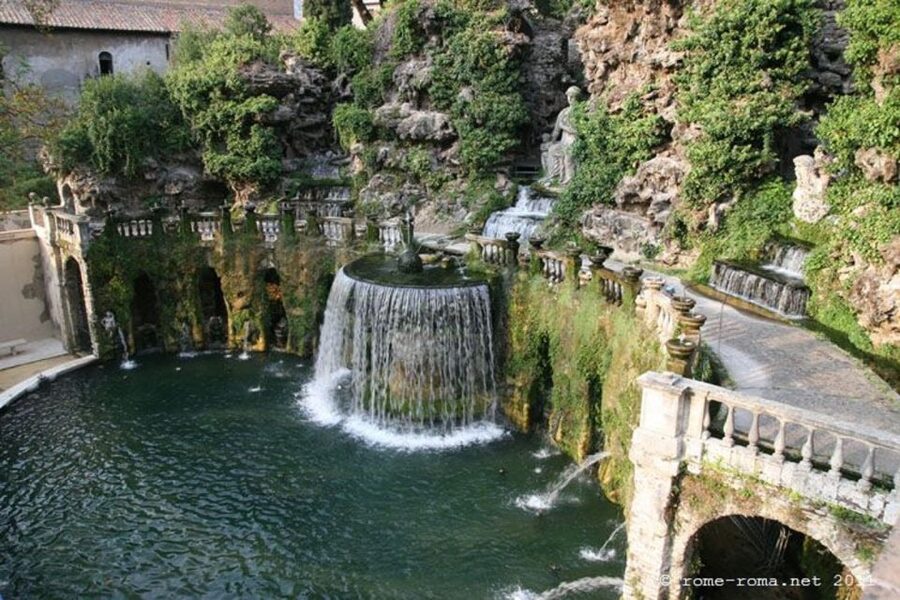
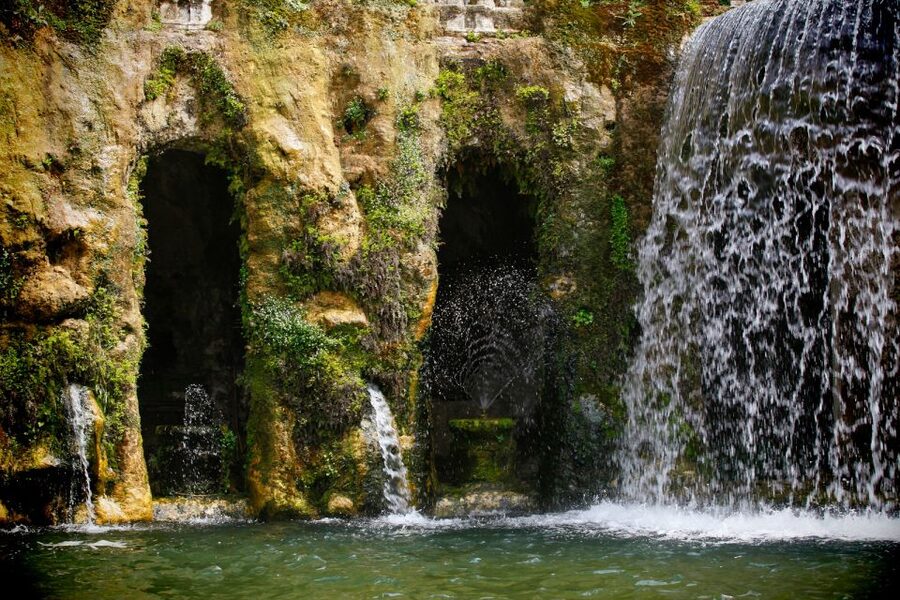
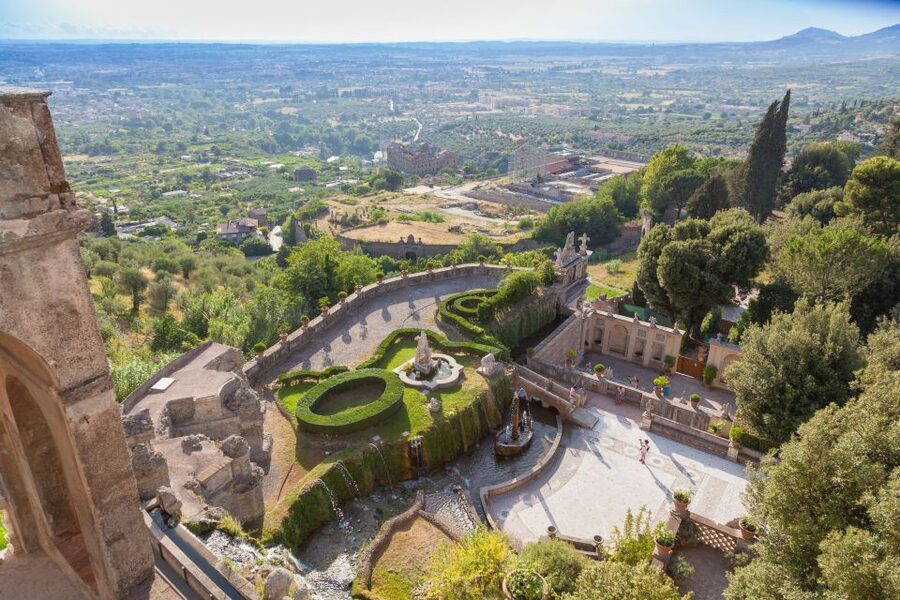
After Hadrian’s Villa, the tour continues to Villa d’Este, with about one hour for the guided visit and garden walk. The shift in mood is immediate. Instead of Roman imperial ruins, you enter a Renaissance villa known for its fountains, waterfalls, water channels, and formal Italian garden.
Villa d’Este is valuable because the garden is not simply something to look at. Water drives the experience. Fountains and cascades shape the paths and provide movement and sound throughout the grounds. One review specifically recommends bringing water or a refillable bottle, and that is good practical advice for a walking visit.
The villa also gives your guide a chance to explain Renaissance architecture and the ambitions of the powerful family connected with the property. The tour includes stories about construction, Roman families, and the scandals that surrounded prominent households of the period. Those details help keep the visit from becoming a simple procession past attractive fountains.
Catherine is the kind of guide who can make this stop especially rewarding. She is praised for explaining the sites in a way that helps you picture how the spaces once looked and functioned. That matters at Villa d’Este, where the effect depends on understanding the relationship between the building, the terraces, and the water.
One hour is enough to appreciate the main features, but it is still a brisk visit. You may want to linger at a favorite fountain or pause for photographs, yet the group needs to keep moving. The tour works best if you accept that you are getting a carefully chosen introduction rather than unlimited free time.
Villa d’Este can also be demanding underfoot. The grounds include changes in level and garden paths, so anyone with limited mobility should ask specific questions before booking. The activity is officially not suitable for wheelchair users or people with mobility impairments. One person with limited mobility had a guide who adjusted the pace, but that should not be treated as a guarantee. The formal accessibility warning is the safer guide.
What the guides add to the day
The sites are impressive on their own, but the quality of explanation can change the whole experience. Ruins need interpretation, and ornate gardens need context. Without a guide, you might notice the size of Hadrian’s Villa or the beauty of Villa d’Este without understanding the political and personal reasons behind them.
Several guides are associated with different strengths. Fabio is described as particularly strong on Roman history, archaeology, and Renaissance art. Catherine is noted for taking time to explain the sites and answer questions. Donald and Donato bring humor and stories, with Donald also offering practical local suggestions such as a good place for pizza.
The guide also helps connect the two villas. Hadrian’s retreat reflects imperial Rome in the second century AD. Villa d’Este belongs to a much later Renaissance world, yet both places use architecture, gardens, and water to display power. That comparison is one of the best reasons to visit them together.
Ask questions as you go. A small group gives you a better chance to ask about construction methods, family history, or the purpose of a particular pool or fountain. If the tour operates with only a few people, the day can feel close to a private visit. If the group reaches the stated limit of 12, the experience will naturally be less personal.
Same city, a very different set of state rooms:
- Tivoli Full Day Trip from Rome: Hadrian’s Villa and Villa D’Este
★ 4.5 · 1,730 reviews - Rome: Opera Concert at Palazzo Poli – Fontana di Trevi
★ 4.7 · 1,026 reviews - Hadrian’s Villa and Villa d’Este Half-Day Trip from Rome
★ 3.5 · 808 reviews - Rome: Colonna Palace Entry Ticket
★ 4.8 · 609 reviews
Is the $303.60 price good value?
At $303.60 per person, this is a premium half-day excursion. You are paying much more than the cost of entering the villas and reaching Tivoli independently. The value comes from combining several services: hotel pickup and return, air-conditioned transportation, entrance fees, skip-the-ticket-line access, and a live guide in English, Spanish, or French.
For two people or a family, the price can add up quickly. I would compare it with the cost of arranging transport, buying two sets of tickets, and hiring a guide separately. You also need to place a value on saving time and avoiding the uncertainty of local connections.
The tour makes the most financial sense if you want a straightforward trip from Rome and prefer not to organize the details yourself. It is also a good choice if you want historical interpretation rather than a simple transfer and self-guided visit.
The value is weaker for independent visitors who enjoy researching sites, traveling by local transport, and setting their own pace. At Villa d’Este especially, you may wish you had more time if fountains and gardens are your main interest.
The 4.5 rating from 73 reviews suggests a consistently strong experience, but the price still deserves careful thought. This is not a bargain outing. It is a convenience-focused, guide-led visit that covers two major sites efficiently.
Timing, walking, and what to bring
The full experience lasts five hours, though the exact start time depends on availability. The guided portion includes about 1.5 hours at Hadrian’s Villa and one hour at Villa d’Este, with the remaining time used for pickup, driving, transitions, and return to Rome.
That schedule is well suited to you if you want to preserve most of the day for Rome. It is less suitable if you want a leisurely visit with long breaks. There is no listed lunch stop in the formal itinerary, although Donald has directed people toward a pizza place. Do not assume lunch is included, and plan accordingly.
Wear comfortable shoes. You will walk through archaeological grounds and formal gardens, with uneven surfaces and changes in level. Sunglasses are useful in open areas, and a camera will serve you well at both villas.
Large bags and luggage are not allowed. Bring only what you need for several hours outdoors. A refillable bottle is sensible, particularly for the garden portion, where fountains and sunny paths can make you thirsty.
The tour includes free cancellation up to 24 hours before departure and a reserve-now, pay-later option. Those policies are useful if your Rome schedule is still shifting, though you should always confirm the final conditions when booking.
Who should book this Tivoli tour?
I would recommend it to first-time Rome visitors who want to see something beyond the city center without spending a full day away. It also suits anyone who prefers a guide to explain archaeology, architecture, and local history rather than reading signs at each site.
It is a strong match for couples and small groups who value hotel pickup and a quieter outing. The combination of ancient ruins and water-filled Renaissance gardens gives you a varied day, and the return trip leaves room for dinner or another Rome activity.
Families with older children may also enjoy the contrast between imperial pools, open ruins, fountains, and dramatic garden paths. Younger children may find the historical explanations long, especially during the 90-minute visit to Hadrian’s Villa.
I would think twice if you dislike walking, need a fully accessible route, or want complete control over how long you spend at each fountain or ruin. I would also skip it if $303.60 feels too high for a half-day, since the strongest benefit is convenience rather than low cost.
Should you book it?
Book this tour if you want an easy, polished way to visit Tivoli from Rome and appreciate having a guide make sense of two complicated historic sites. The best parts are the contrast between Hadrian’s enormous Roman retreat and Villa d’Este’s theatrical fountains, plus the chance for personal guidance from people such as Fabio, Catherine, or Donald.
Skip it if you prefer independent travel, need generous free time, or have serious mobility concerns. For everyone else, this is a well-focused way to trade Rome’s crowds for hills, water, ruins, and a useful lesson in how power was displayed across two very different eras.
FAQ
How long does the Tivoli tour last?
The tour lasts five hours, including hotel pickup, transportation, visits to both villas, and the return to Rome.
Does the tour include hotel pickup and drop-off?
Yes. Pickup and drop-off are included from your hotel or apartment. You should be ready outside the lobby or apartment entrance 15 minutes before departure.
Which sites are included?
The tour includes Hadrian’s Villa, also known as Villa Adriana, and Villa d’Este. Both are UNESCO World Heritage sites.
How much time do you spend at Hadrian’s Villa?
The itinerary allows about 1.5 hours for the guided visit, sightseeing, photographs, and walking at Hadrian’s Villa.
How much time do you spend at Villa d’Este?
You spend about one hour at Villa d’Este for the guided visit, sightseeing, photographs, and garden walk.
Are entrance fees included?
Yes. Admission to both Villa d’Este and Villa Adriana is included.
What languages are available?
Live guiding is available in English, Spanish, and French.
Is the tour suitable for wheelchair users?
No. The activity is listed as unsuitable for wheelchair users and people with mobility impairments. Comfortable shoes are recommended because both visits involve walking.
Just added around Rome
- Day trip Rome by car : Tivoli Unesco Villa D’este & Hadrian★ 5.0 · 56 reviews
- From Rome: Villa d’Este & Hadrian’s Villa Tickets & Transfer★ 4.5 · 32 reviews
- Rome: Villa D’Este & Tivoli Tour with Skip-the-Line Entry★ 5.0 · 4 reviews
- Rome: Palazzo Altemps Reserved Entrance Ticket★ 4.5 · 49 reviews
- Rome: Palazzo Venezia Reserved Entrance with Museum★ 4.2 · 52 reviews
- Rome: Colonna Palace Guided Tour★ 4.9 · 70 reviews
- Rome: Monuments and Belvederes Guided E-Bike Tour★ 4.2 · 6 reviews
- Rome: Opera Concert in Palazzo Doria Pamphilj★ 4.1 · 28 reviews
Rome Palace Tours, compared.
Tivoli Full Day Trip from Rome: Hadrian’s Villa and Villa D’Este
Read our review →
Opera Concert at Palazzo Poli – Fontana di Trevi
Read our review →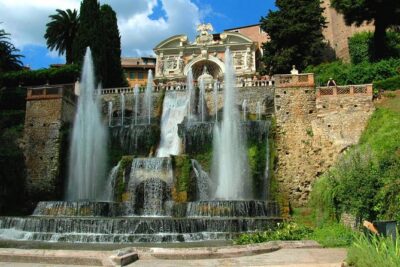
Hadrian’s Villa and Villa d’Este Half-Day Trip from Rome
Read our review →

The Great Opera Arias Concert at Palazzo Poli – Trevi Fountain
Read our review →
Colosseum Underground, Roman Forum & Cesar Palace Special Access
Read our review →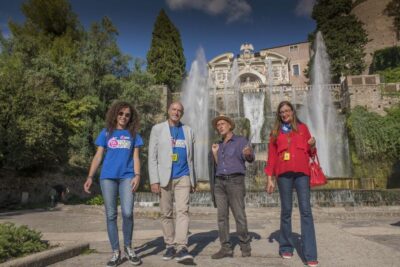
Villa d’Este and Hadrian’s Villa Tour with Lunch
Read our review →
Palazzo Barberini Galleria Corsini Ticket & Audioguide
Read our review →Browse the lists this tour appears in