
REVIEW · FORBIDDEN CITY TOURS
Beijing Wangfujing Calligraphy Class Nearby Forbidden City
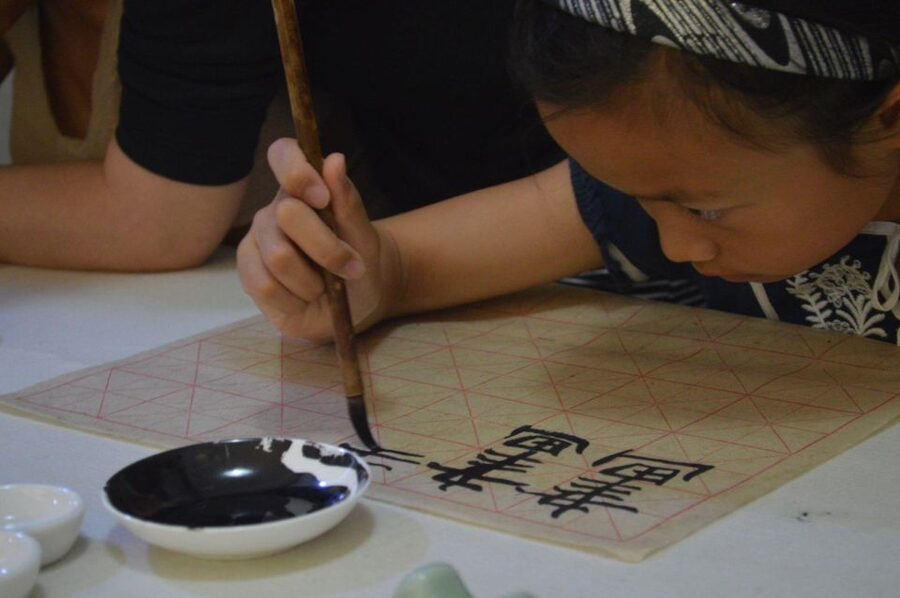
Chinese calligraphy turns a crowded Beijing sightseeing day into a quiet hour with a brush, ink, tea, and a patient teacher. You practice basic strokes, learn how posture and brush control shape each character, then create a finished piece to take home near Wangfujing and the Forbidden City.
I like the calm pace and the fact that you leave with your own artwork, rather than just a few photos. I also like the convenient location, English instruction, and the gentle teaching style associated with Richard, David, and Master Li. The main drawback is time: 45 minutes is only an introduction, and the $35 starting price may feel high by mainland China standards.
Key points to know before booking
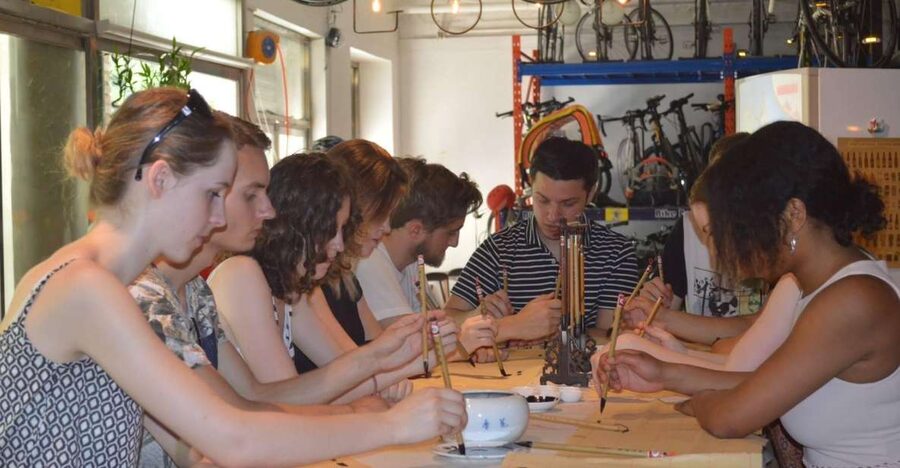
- A quiet break from sightseeing: The class gives you time away from Beijing’s crowded streets, long temple lines, and constant walking.
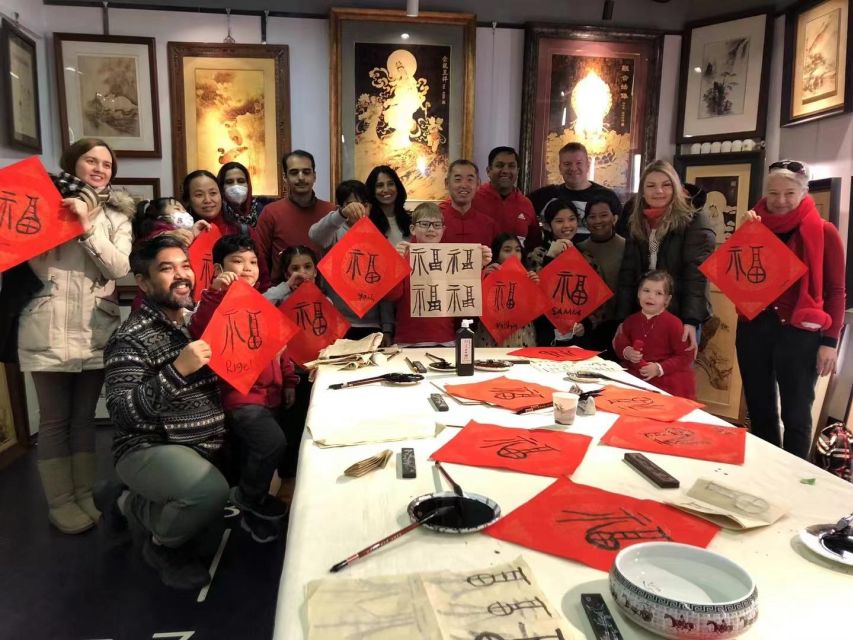
- Your finished artwork goes home with you: The lesson builds toward writing Chinese characters on a red cardboard canvas or another finished piece.
- Patient English-speaking instruction: Richard is frequently named as a calm and encouraging teacher, while David and Master Li have also led sessions.
- Four time choices: Pick 45 minutes, 1 hour, 1.5 hours, or 2 hours, depending on whether you want a quick taste or more practice.
- Easy Wangfujing meeting point: Meet in the Sunworld Dynasty Hotel lobby, close to Dengshikou Station and within easy reach of the Forbidden City.
- Tea and small touches: Tea is served during the visit, and some sessions include a brush as a gift.
Why calligraphy makes a smart Beijing break
Beijing can wear you out. The Forbidden City is vast, Wangfujing keeps you moving, and a day of city sightseeing often becomes a long march between gates, galleries, and subway stations. This class offers a different kind of cultural experience. You sit down, slow your breathing, and focus on one stroke at a time.
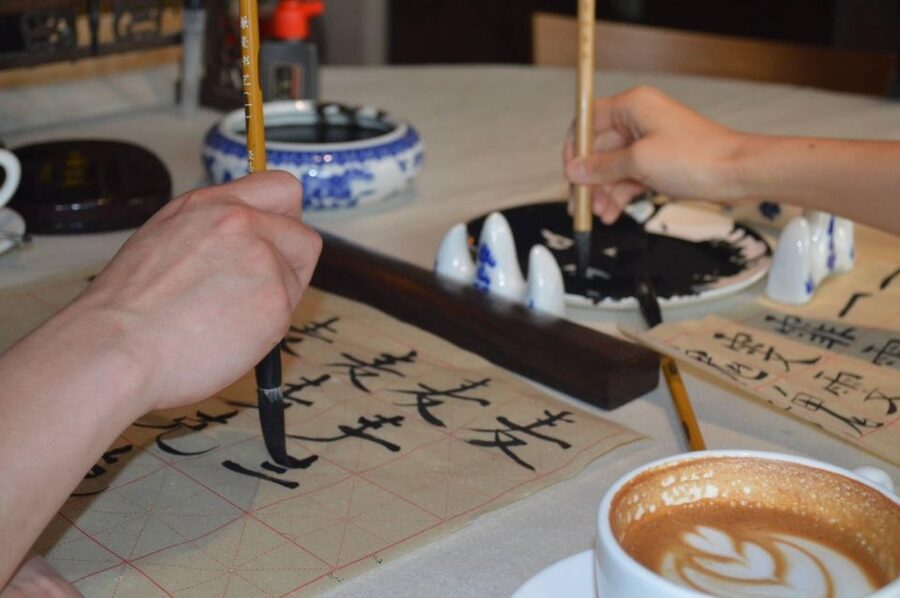
Chinese calligraphy is not simply handwriting with a nicer brush. The way you hold the brush, sit at the table, begin a stroke, and finish it all affect the character. A short lesson will not turn you into a calligrapher, but it can show you why the art demands patience and control.
I like the balance between instruction and doing. You hear about the history and cultural meaning of calligraphy, then put the ideas to work with brush and ink. That makes the experience more useful than a demonstration where you only watch an expert move the brush.
It also works well for families and mixed-age groups. Children under two are not suitable, but older children can take part with adults. The basic movements are simple enough to try, while the finished character gives the session a clear goal.
More Forbidden City tours in Beijing:
- Beijing: Forbidden City Tour(Group/Private)-Tickets Included
★ 4.8 · 7,974 reviews - Beijing: T-Square & Forbidden City Group or Private Tour
★ 4.8 · 4,446 reviews - All-Inclusive Tour: Tiananmen Square, Forbidden City, Great Wall
★ 5.0 · 2,873 reviews
Meeting at Wangfujing’s Sunworld Dynasty Hotel
Your meeting point is the Sunworld Dynasty Hotel lobby at No. 50 Wangfujing Avenue in Dongcheng District. The Chinese address is 北京天伦王朝酒店大厅地址: 北京市东城区王府井大街50号. Your calligraphy teacher meets you there and takes you to the studio.
From Wangfujing, this is especially convenient. If you stay in the area, you can walk to the hotel lobby. From elsewhere, take Beijing Subway Line 5 to Dengshikou Station and use Exit A. Turn left, walk about 180 meters to the first traffic light, then turn left again and walk west for about 480 meters. The walk takes roughly eight minutes.
Allow a little extra time to find the correct lobby. The meeting point is a large hotel rather than the studio itself, so arriving early is sensible. Taxi and subway fares are not included, and neither are personal purchases.
The studio is near Wangfujing’s pedestrian shopping area and close to the eastern side of the Forbidden City. That location makes the class easy to pair with sightseeing. You could schedule it before exploring the palace grounds, or use it as a peaceful pause after a busy morning.
What happens during the 45-minute introduction
The shortest option is best if you want to sample the art without giving up much sightseeing time. A 45-minute class introduces the basic strokes, brush handling, and proper posture, then gives you a chance to practice.
Do not expect a full traditional course in this time. You will have enough time to understand the basic idea and make a simple finished piece, but not enough for much repetition or complex characters. One participant found 45 minutes sufficient for a first lesson, while another felt that an hour was too short. Both points are fair: the shorter session works as a first taste, but it leaves little room for a relaxed pace.
This option suits a tight Beijing schedule, families with young attention spans, and anyone who wants a cultural activity between major sights. If you already enjoy drawing, painting, or brushwork, you may want longer.
Choosing one, 1.5, or two hours
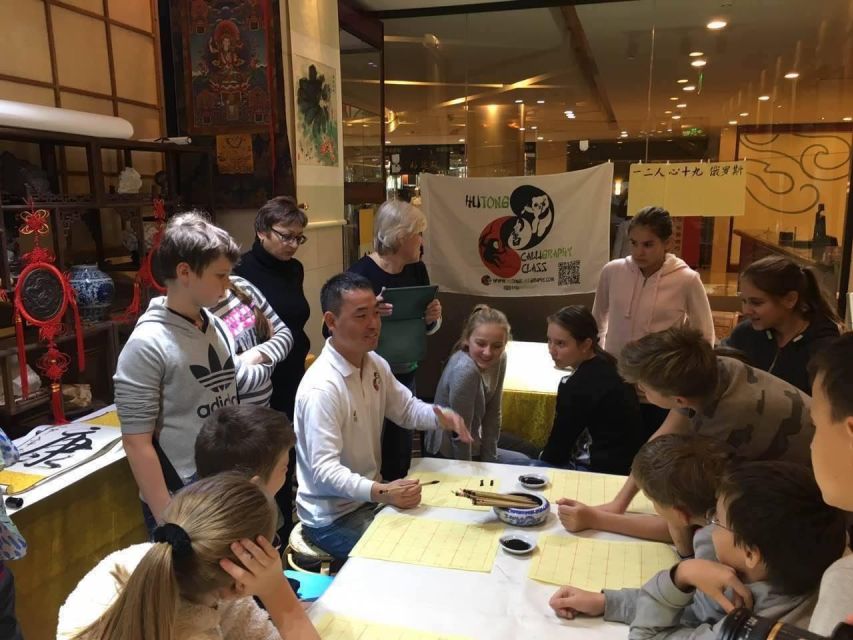
The one-hour class gives you more time to repeat the basic movements and ask questions. It is still compact, so I would choose it when you want more than a quick introduction but have a full day planned around Wangfujing and the Forbidden City.
The 1.5-hour class is a better middle ground for most people. You can practice several times, receive corrections, and work toward a more confident final piece without making the class the main event of your day. It also leaves room for the slower, conversational side of the experience, including tea and cultural discussion.
The two-hour option makes the most sense if calligraphy is a real interest or if you want the class to feel like a proper workshop. You can spend more time refining strokes before moving to the final canvas. Several participants chose to extend their lesson after enjoying the calm setting and patient teaching.
Your teacher may be Richard, David, or Master Li, depending on the session. Richard is described as calm, patient, funny, and unhurried. David is praised for being attentive and flexible, while Master Li has been associated with painting a fan and discussing Taoist culture. An assistant named Fiona has also helped with translation when a more complicated explanation needed support.
More palace workshops and classes in Beijing:
- Beijing Wangfujing Calligraphy Class by Forbidden City
★ 5.0 · 58 reviews - Fez Cooking Class at Palais bab sahra
★ 5.0 · 56 reviews - Luang Prabang: Cooking Class at the Former Royal Palace
★ 4.9 · 51 reviews - Seoul: Vegan Temple Food Class, Jogyesa & Changdeokgung Tour
★ 4.6 · 34 reviews
From posture and brush control to your first character
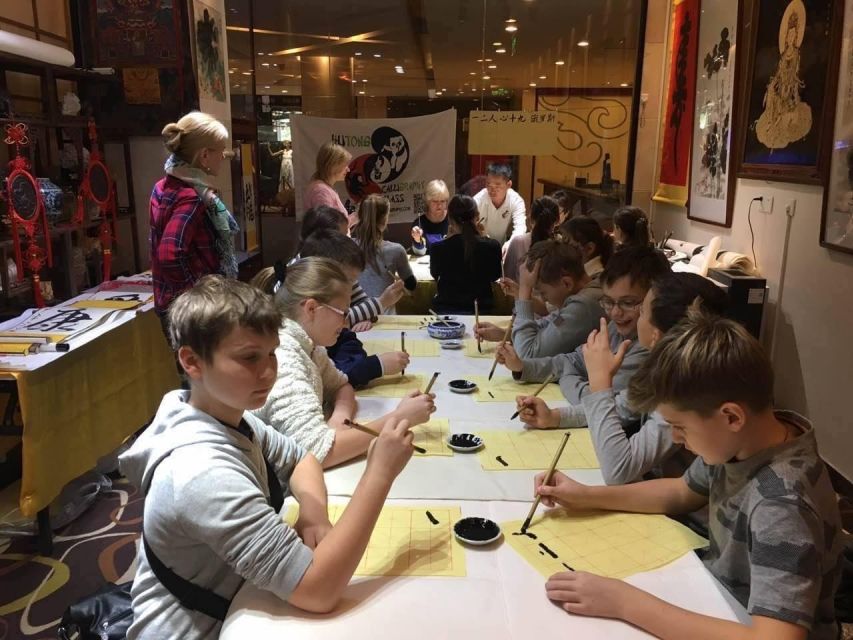
The class begins with the foundations. Your teacher shows you how to sit, how to hold the brush, and how to guide its pressure across the paper. These details matter. A character can look completely different when your hand is tense or the brush angle changes.
Next comes practice with basic shapes and strokes. This is where the class earns its value. You are not simply handed a brush and told to copy a finished symbol. You build toward it through small steps, with the teacher showing each movement and correcting your technique.
Expect the practice to feel harder than it looks. Calligraphy uses controlled motion rather than ordinary writing, and the brush responds quickly to pressure. The lesson is designed for beginners, though anyone with prior experience can use the time to develop a personal style.
The teachers’ patience is important here. A rushed instructor could make the first attempts frustrating. Richard, in particular, is repeatedly described as giving students time and not pushing them out when the scheduled hour ends. That generosity is welcome, though you should not count on extra time as a guaranteed feature.
Tea forms part of the relaxed atmosphere. It gives you a natural pause between practice and conversation, and it helps the class feel like a cultural exchange rather than a formal art exam.
The final canvas and your Beijing souvenir
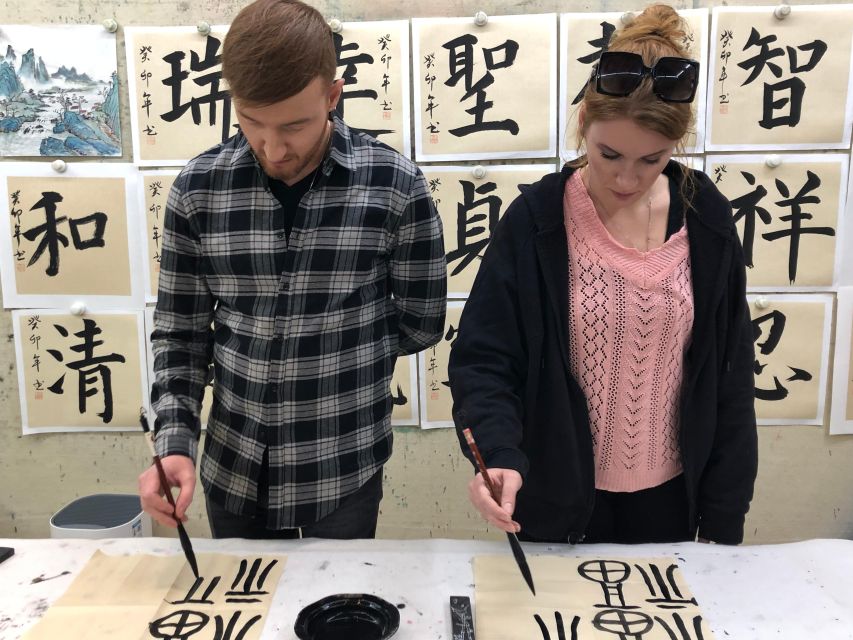
The session builds toward a finished work. After practicing on paper, you write Chinese characters on a red cardboard canvas or another prepared surface. This final step is the part most likely to make the class memorable because you can see the difference between your first hesitant stroke and the piece you take home.
Some sessions also include writing on a fan. Several teachers give students the brush they used as a small gift, though this should be treated as a pleasant possibility rather than a guaranteed inclusion. Calligraphy supplies for the class are included, and you do not need to bring your own brush.
The souvenir has more meaning than a standard shop purchase. You made it during a lesson, and its uneven lines show the learning process. Do not expect museum-quality work. The point is to take home a personal reminder of Beijing and a glimpse of the discipline behind a traditional art form.
If you are buying gifts, the finished piece is also easier to pack than many bulky souvenirs. Keep it flat and protect it from moisture.
How much value do you get for $35?
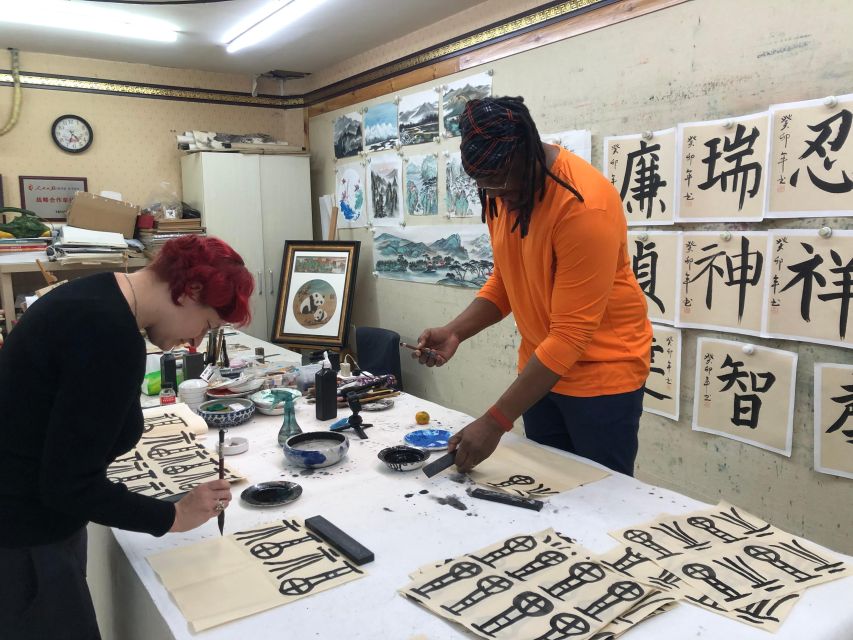
The listed price is $35 per person. In mainland China, that can feel expensive for an activity lasting less than an hour, and one participant specifically found the cost high for the local market.
The value improves when you choose the longer options. At 45 minutes, you are paying for a short introduction, instruction in English, materials, a finished souvenir, and the convenience of a central location. That may be worthwhile if your schedule is tight, but it is not the cheapest way to spend an hour in Beijing.
At 1.5 or two hours, the cost makes more sense for anyone who values personal instruction. You receive more time with the teacher, more practice, and a better chance of producing a piece you feel proud to carry home. The calm environment and tea also make it a useful rest stop during a demanding sightseeing day.
The activity includes an art teacher and calligraphy supplies. It does not include subway or taxi fares, personal shopping, or other expenses not listed. Reserve now and pay later is available, and cancellation is free up to 24 hours before the class for a full refund.
Who should book this class?
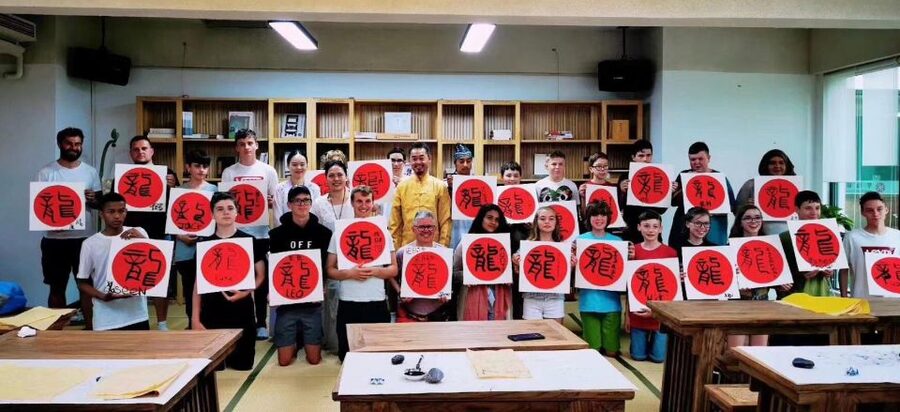
I would choose this for a first visit to Beijing when you want something more personal than another major monument. It is especially good for:
- Couples wanting a quiet shared activity
- Families with children over two
- Solo visitors who enjoy hands-on cultural lessons
- Anyone interested in Chinese art, Taoist culture, or traditional crafts
- People staying near Wangfujing
- Sightseers who need a restful break from long walks
It is less suitable if you want a fast-paced activity, a formal qualification, or advanced professional training. The session is built for beginners and casual learners. Even with two hours, you will be taking your first steps rather than completing a serious course.
The class also suits people who like talking with a local teacher. The cultural explanation is part of the experience, and the conversation may vary depending on whether you meet Richard, David, Master Li, or another instructor. English is the listed teaching language.
Pairing the class with the Forbidden City
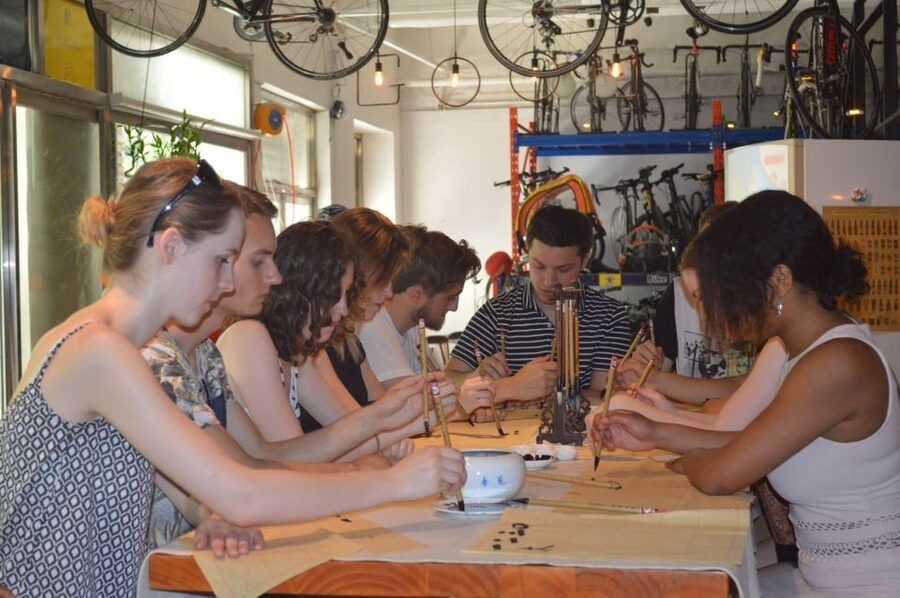
The studio’s location is one of its strongest practical features. After class, you can walk conveniently toward the Forbidden City. This makes it possible to combine a creative lesson with one of Beijing’s essential sights without crossing the city.
Plan carefully around your palace entry time. The class itself can last anywhere from 45 minutes to two hours, and the Forbidden City requires its own time and arrangements. A morning calligraphy lesson followed by the palace could make a satisfying day, while a late class may work better after sightseeing.
Wangfujing also gives you plenty of nearby options for food and shopping, though those expenses are separate. The hotel lobby is an easy place to regroup before continuing your day.
Final verdict: choose the longer class if you can
Book this class if you want a calm, hands-on look at Chinese culture and like the idea of carrying home something you made yourself. The central meeting point, English instruction, tea, patient teachers, and final canvas make it more personal than a quick souvenir stop.
For a tight schedule, 45 minutes is enough to understand the basics. If you can spare the time, I would choose 1.5 or two hours. You will have room to practice without rushing, and the class will feel like a genuine workshop rather than a brief introduction.
At $35, the shortest option is not a bargain by local standards. Its value comes from the teacher’s attention, the easy Wangfujing location, and the quiet change of pace. For anyone who wants a thoughtful break from Beijing’s major sights, that combination can be worth paying for.
FAQ
Where does the calligraphy class meet?
Meet your English-speaking teacher in the Sunworld Dynasty Hotel lobby at No. 50 Wangfujing Avenue, Dongcheng District, Beijing.
How do I reach the meeting point by subway?
Take Beijing Subway Line 5 to Dengshikou Station and exit at Exit A. Walk left for about 180 meters to the first traffic light, turn left, and walk west for about 480 meters. The walk takes about eight minutes.
How long does the class last?
You can choose a 45-minute, one-hour, 1.5-hour, or two-hour class.
What is the price?
The listed price is $35 per person.
Is the class taught in English?
Yes. English is the listed teaching language.
Are calligraphy materials included?
Yes. Calligraphy supplies used during the class are included.
Do I take home something I make?
Yes. The class works toward a finished calligraphy piece on a red cardboard canvas or another prepared surface that you can take with you.
Is tea included?
Tea is served during the experience according to the available activity information and participant descriptions.
Are children allowed to join?
Children under two are not suitable for the activity. The class is described as suitable for both adults and children.
Can I visit the Forbidden City after class?
Yes. The studio is close to the Forbidden City, and you can walk there conveniently after the lesson. Any separate entry arrangements and travel costs are not included.
Can I cancel for a refund?
You can cancel up to 24 hours in advance for a full refund. Reserve now and pay later is also available.
Just added around Beijing
- Half Day Tour of Beijing’s Summer Palace with Guide and Driver★ 5.0 · 8 reviews
- Beijing’s Forbidden City with Special Viewing of Treasure Gallery and the Great Wall Ruins at Badaling★ 4.5 · 24 reviews
- Ultimate Forbidden City and Mutianyu Great Wall Discovery with Airport Transfer★ 5.0 · 25 reviews
- All Inclusive Great wall and Summer palace VIP Pivate Tour★ 5.0 · 11 reviews
- Summer Palace Walking Tour – Beijing★ 5.0 · 3 reviews
- Mutianyu Wall Morning Tour & Forbidden City SelfGuided Afternoon★ 5.0 · 5 reviews
- Ming Tombs Sacred Way & Underground Palace & Water Wall P Tour★ 5.0 · 3 reviews
- Summer Palace Admission Ticket – Main Entry or Combined Ticket★ 4.5 · 47 reviews
Forbidden City Tours, compared.
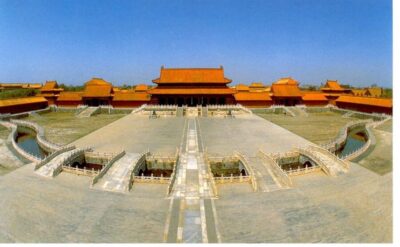
Forbidden City Tour(Group/Private)-Tickets Included
Read our review →
T-Square & Forbidden City Group or Private Tour
Read our review →
All-Inclusive Tour: Tiananmen Square, Forbidden City, Great Wall
Read our review →
4-Hour Small Group Tour to Forbidden City with Entry Tickets
Read our review →
Beijing Full Day Tours: Tiananmen Sq, Forbidden City, Great Wall
Read our review →
Tianmen Square, Forbidden City & Royal Museum Tours
Read our review →
Beijing Forbidden City Ticket Booking (Optional: guide service)
Read our review →
Forbidden City and Tian’anmen Square Waking Tour
Read our review →Browse the lists this tour appears in