
REVIEW · KOREAN PALACE TOURS
Seoul: Vegan Temple Food Class, Jogyesa & Changdeokgung Tour
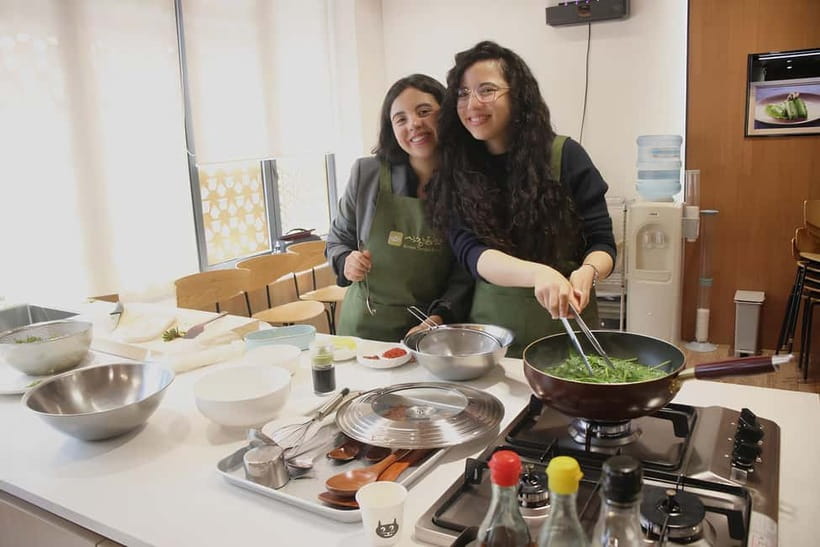
The best part of this Seoul day is the temple-food class. You cook beside a practicing Buddhist monk, eat what you make, and learn why Korean monastic food avoids meat and focuses on seasonality, restraint, and mindful use of ingredients. It is a far more personal introduction to Korean culture than simply photographing a temple gate.
I like the mix of hands-on cooking and walking through central Seoul. I also like the unusual stop at the medicinal herb and ginseng market, where food, health, and traditional Korean medicine meet. The main consideration is stamina: cooking is done standing, and the rest of the experience is on foot, with a taxi used for the market on some arrangements.
Key points
- Cook with a Buddhist monk: Learn the ideas behind Korean temple cuisine while preparing a fully plant-based meal.
- Eat your own work: The meal is served on-site, and you are asked to finish it there unless you bring a reusable container.
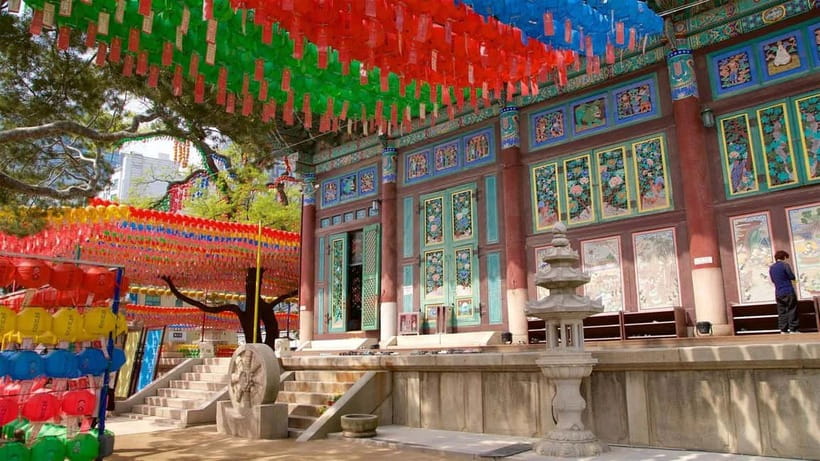
- See Seoul’s spiritual center: Jogyesa Temple offers a calm look at Korean Zen Buddhist life, with old trees and colorful lanterns.
- Visit a working medicinal market: Explore one of Korea’s largest markets for herbs and ginseng, plus a traditional medicine museum.
- Walk through Insadong: Browse teahouses, craft shops, calligraphy studios, and an art market district.
- Finish at royal Changdeokgung: Tour a UNESCO World Heritage palace with graceful buildings and quiet gardens.
A mindful start with Korean temple food
The cooking class gives this experience its purpose. Instead of treating vegan food as a modern trend, the class presents it as part of a long Buddhist tradition. A practicing monk explains how temple cuisine reflects monastic life, with attention to simple preparation, seasonal produce, and avoiding waste.
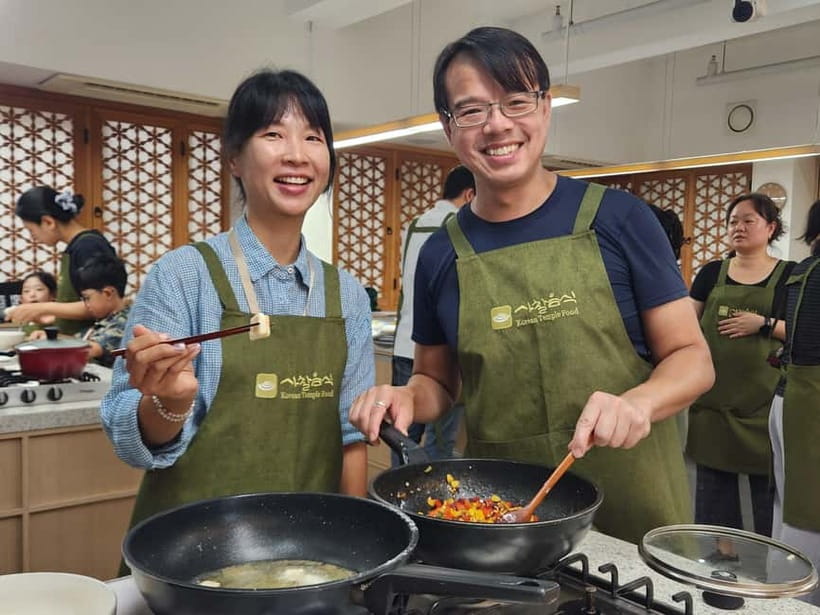
You should expect to stand while cooking and to take part rather than watch a demonstration from the sidelines. The menu changes because the ingredients follow the season, so you will not necessarily cook the same dishes on every visit. That is a plus if you want a genuine food lesson, though it means you cannot choose a fixed menu in advance.
The meal is fully plant-based and contains no meat. It is suitable for vegetarians, but you do not need to follow a vegetarian diet to enjoy it. The point is not to imitate meat-based Korean dishes. It is to understand how a small number of ingredients can be prepared with care.
The meal is eaten at the class location. Since Buddhist temples and temple-food programs aim to avoid food waste, you are asked to finish what you make. If you want to take leftovers, bring your own reusable container. That small rule is worth noting before you arrive.
The class also touches on the connection between food and traditional Korean medicine. One guide explained how Korean medicine considers body types and recommends particular foods for different constitutions. You should treat this as cultural learning rather than personal medical advice, but it adds another useful layer to the cooking lesson.
More Korean palace tours in Seoul:
- Seoul: Gyeongbok Palace, Bukchon Village, and Gwangjang Tour
★ 4.9 · 2,321 reviews - Best Seoul City Tour (Gyeongbokgung Palace,Insadong,Namsan Tower)
★ 5.0 · 1,647 reviews - Seoul City Sightseeing Tour Including Gyeongbokgung Palace, N Seoul Tower, and Namsangol Hanok Village
★ 5.0 · 1,423 reviews
Meeting the monk and learning the meaning behind the menu
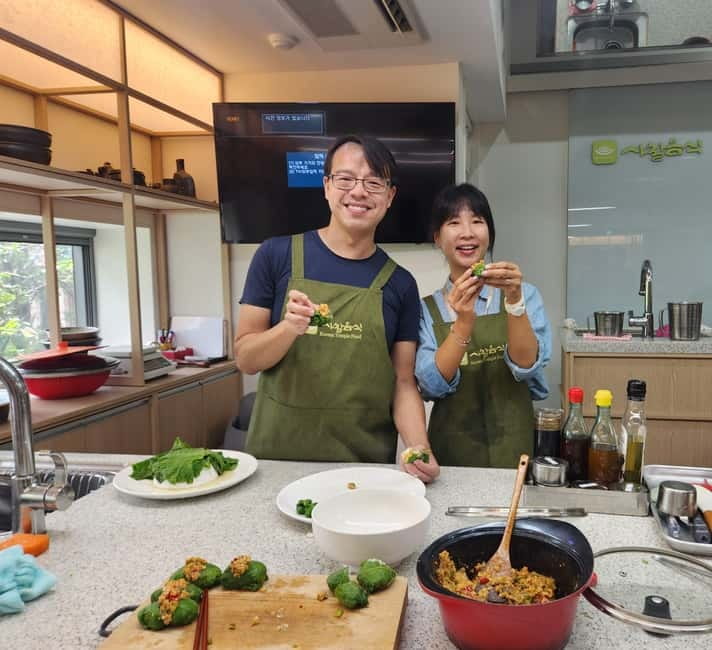
The monk is not there simply to show you a recipe. The teaching centers on why certain foods and methods matter in Buddhist practice. You learn about moderation, harmony, and the role of food in a calm daily routine.
That makes the class more interesting than a standard cooking workshop. You are not just collecting a recipe to repeat at home, although the dishes are described as practical enough to make again. You are also seeing how Korean culture links eating, health, religion, and respect for ingredients.
The English support comes mainly from the professional guide, who helps explain the monk’s teaching and translate where needed. Guides have included Bruce, Gina, Ron, and BJ on different departures. The exact guide is not guaranteed, but the guide’s role is important because the class involves ideas that can be easy to miss without clear translation.
One useful tip concerns the class language. The experience is offered in English, and one detailed account specifically recommended Saturday classes for English instruction. If language clarity matters to you, confirm the date and teaching arrangement when booking rather than assuming every class follows precisely the same format.
Jogyesa Temple, Seoul’s Buddhist heart
After the meal, you visit Jogyesa Temple, the spiritual center of Korean Zen Buddhism. The grounds give you a quiet break from the city, with ancient trees, bright lanterns, and the steady rhythm of temple life.
Jogyesa works well after the cooking class because you have already learned something about Buddhist food and monastic values. The temple visit then puts those ideas in a physical setting. You can look at the buildings and decorations with more context instead of treating them as a quick photo stop.
The visit is also a useful reminder that Buddhism in Korea is not only a historical subject. Jogyesa remains connected to daily religious life, and your guide can explain how Buddhist influence continues in present-day Korea.
Do not expect a long retreat or a private spiritual session. This is a city tour with several stops, and the temple is one part of a larger route. Still, it offers a pause from Seoul’s traffic and commercial streets.
Insadong’s teahouses, crafts, and art market
The walk through Insadong adds a different side of traditional Seoul. This district is known for teahouses, craft shops, calligraphy studios, and galleries. It is a good place to see how older Korean arts are presented within a modern city.
The area can feel more commercial than Jogyesa or the palace, but that is part of its appeal. You can browse without needing to commit to a museum visit, and the guide helps point out details that you might miss while walking alone.
Some routes also spend time in a lively art market area, with opportunities to taste tea or small local foods. The exact stops can vary, so consider this portion a guided introduction to Insadong rather than a dedicated shopping tour.
If you want souvenirs, this is likely the best section for browsing. Just remember that the experience is not designed around long shopping breaks. You will continue on foot, and the palace visit remains a major part of the day.
Same city, a very different set of state rooms:
- Small-Group Royal Palace and Seoul City Tour (hotel pick-up)
★ 5.0 · 1,474 reviews - Seoul: Gyeongbok Palace, Bukchon Village, and Gwangjang Tour
★ 5.0 · 1,044 reviews - Seoul Half-Day City Highlight, Palace Tour with Hanbok
★ 4.9 · 764 reviews - Seoul: Palace, Temple and Market Guided Foodie Tour at Night
★ 4.9 · 750 reviews
Herbs, ginseng, and Korean traditional medicine
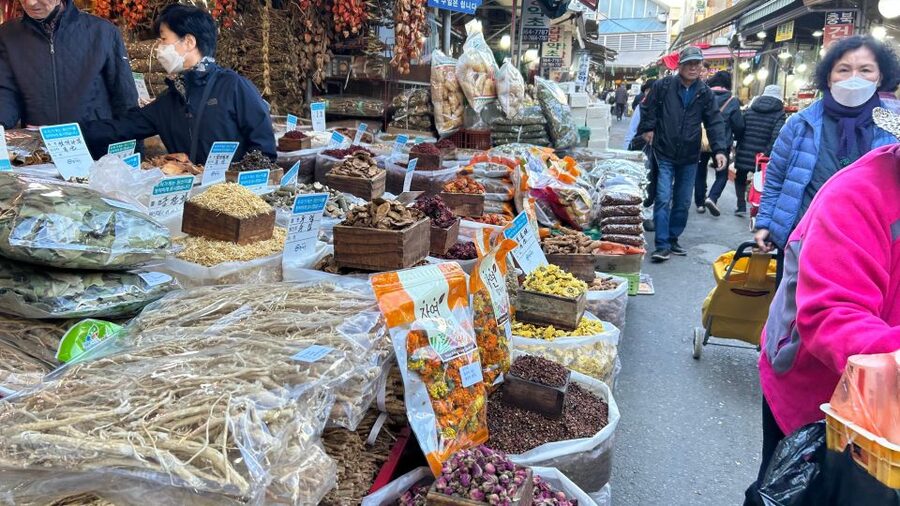
The medicinal herb and ginseng market is one of the more unusual features. Korea’s food culture and traditional medicine often overlap, and this market gives you a direct look at that connection through dried herbs, roots, and health-related ingredients.
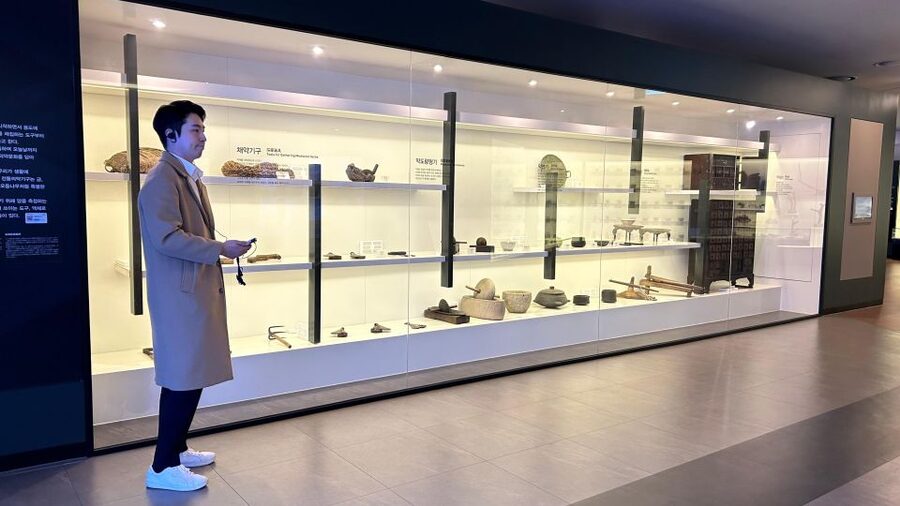
A detailed account of the route included a taxi ride to the market, a visit to a traditional medicine museum, and time in a local market. At the museum, you may see displays explaining Korean medical practices, with some opportunities to wear traditional clothing for photos. These details make the stop feel more substantial than a simple walk past herb stalls.
This is a good part of the experience if you are curious about how Korean people have historically connected diet, body types, and wellness. Your guide can explain what various ingredients are used for culturally, though you should not treat the tour as a diagnosis or a substitute for medical care.
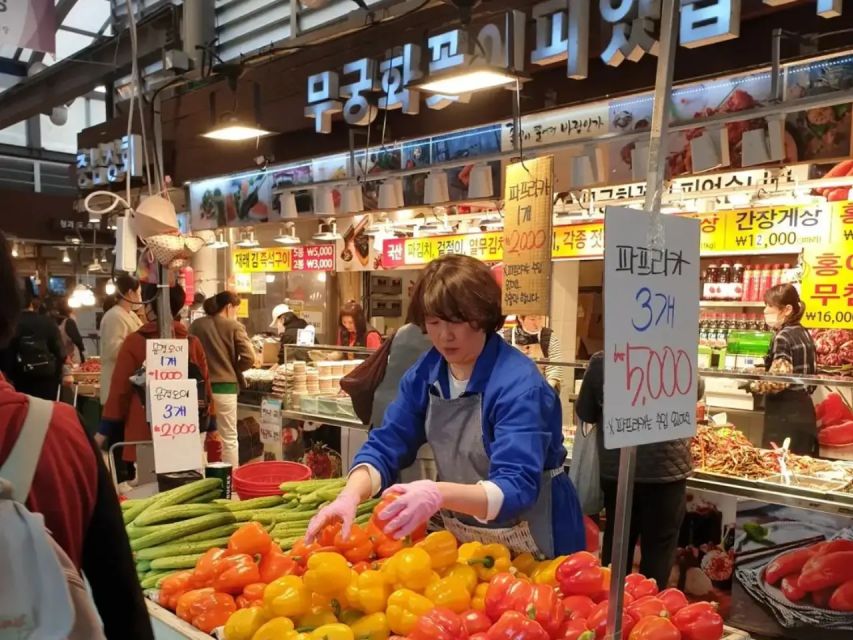
The market also breaks up the palace and temple theme. You see a working part of Seoul rather than only preserved monuments. That balance is valuable, especially if this is your first visit and you want more than famous sights.
Changdeokgung Palace and the Joseon court
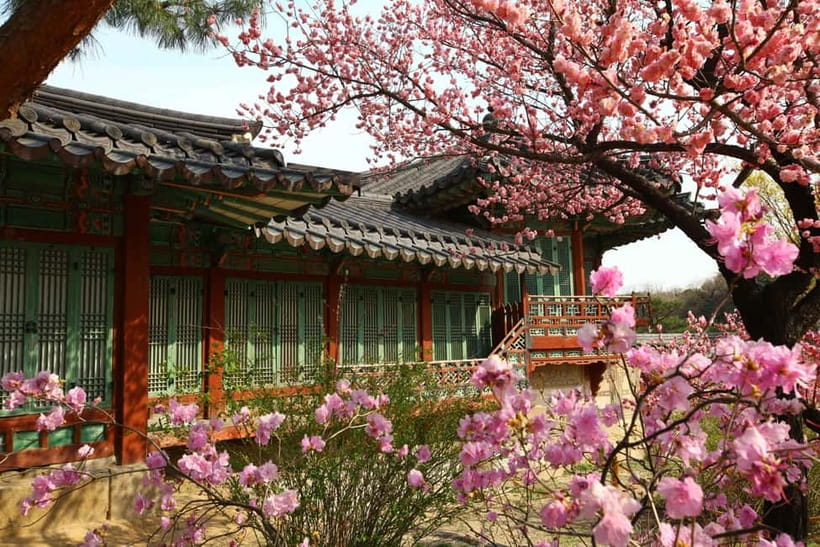
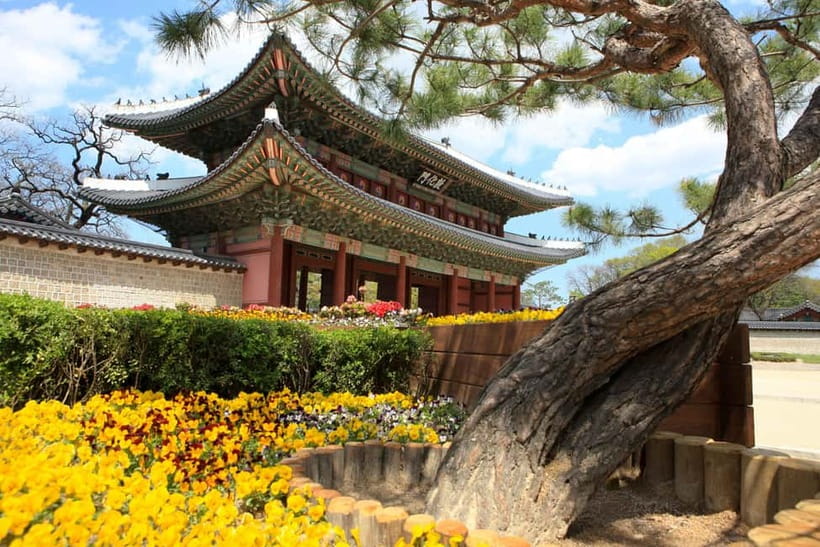
Changdeokgung is the grand historical finish. The palace was once home to Korean royalty and is recognized as a UNESCO World Heritage site. Its architecture is graceful rather than overwhelming, with courtyards, painted details, and a quieter feel than some major palace complexes.
Your guide explains stories from the Joseon dynasty as you move through the grounds. This is where the tour’s cultural pieces come together: Buddhist tradition, Korean food, medicinal practice, and royal history all become part of one day in central Seoul.
The palace is especially appealing if you prefer atmosphere to a packed schedule of indoor exhibits. You can take in the proportions of the buildings and the calm of the gardens while hearing how the court functioned. The gardens are a key reason to allow time here rather than treating Changdeokgung as a quick photo stop.
The admission fee is included, which makes the $73 price easier to assess. You are paying not only for entry, but also for the cooking class, a licensed English-speaking guide, interpretation, and a full route linking several parts of Seoul. The value is strongest if you would otherwise book a cooking class and palace tour separately.
One caution: the entire tour is conducted on foot apart from any local transfer used during the route. Cooking is standing work, and the walking continues through temple grounds, market streets, and palace paths. It is not recommended if you have difficulty walking long distances or standing for extended periods.
What the $73 price gets you
At $73 per person, this sits above a basic sightseeing walk but below the cost of booking several private activities separately. The included cooking class is the main value. You also receive Changdeokgung admission and a licensed English-speaking guide.
The experience may be particularly good value if you care about explanation, not just transport between sights. The guide helps connect the monk’s lesson with Korean medicine, market ingredients, temple customs, and palace history. Guides such as Bruce, Gina, Ron, and BJ have been praised for helping with translation, cultural context, and practical support.
The exact feel may depend on the group. One booking was described as a private experience with VIP-style attention, but you should not assume every departure is private unless your reservation clearly says so. A small or private group can make the cooking class and questions easier, while a larger group may feel less personal.
Pickup and drop-off are not included. You meet at Anguk Station Exit 1, where the guide holds a Tripper sign, and the activity ends back at the meeting point. Plan your route to the station in advance and wear comfortable shoes.
The tour runs in rain or snow. It is canceled only if conditions make the route impossible. Because much of the day is outdoors, bring suitable clothing and accept that weather can affect comfort even when the activity continues.
Who will enjoy this Seoul experience
I would recommend this tour to you if food is your way into a culture. The cooking class gives you something to do with your hands, while the guide explains the beliefs behind the meal. It suits vegetarians especially well, but the plant-based menu is open to anyone interested in Korean cuisine.
It is also a good fit if you want several Seoul themes in one outing: Buddhist culture, traditional medicine, local markets, art, and royal history. You get a broad introduction without spending the whole day inside one museum.
The tour may not suit you if you want a relaxed pace with lots of free time. The schedule links several locations, and the walking adds up. It is also not ideal if you dislike fixed menus, standing while cooking, or eating a meal on-site without taking leftovers.
I would ask about the class language if you are booking outside Saturday, especially if the monk’s explanations are central to your decision. English is listed for the tour, but the detailed Saturday tip suggests it is sensible to confirm how translation works on your chosen date.
Should you book this tour?
Book it if you want an active, culture-focused day that goes beyond Seoul’s standard palace circuit. The Buddhist monk-led class is the strongest reason to choose it, and the medicinal market gives the itinerary an uncommon angle.
Skip it if you need hotel pickup, have limited walking ability, or want a slow food tour centered only on eating. At $73, the tour offers good value for someone who will use the guide, cooking class, palace admission, and cultural explanations. It is less useful if you plan to visit Changdeokgung independently and prefer to explore at your own pace.
For the right person, this is a thoughtful way to meet Seoul through food first, then follow the ideas behind that food into temples, markets, and royal grounds.
FAQ
Where does the tour start?
Meet at Anguk Station Exit 1. The guide will be holding a Tripper sign.
Where does the tour end?
The activity ends back at the meeting point.
Is hotel pickup included?
No. Pickup and drop-off are not included.
Is the food completely vegan?
Yes. Korean temple food on this experience contains no meat and is fully plant-based.
Will the menu be the same every time?
No. The menu changes according to seasonal ingredients.
Can I take my food home?
You are asked to finish the meal on-site to avoid food waste. If you want to take food with you, bring your own reusable container.
Is Changdeokgung Palace admission included?
Yes. Admission to Changdeokgung Palace is included.
Is the tour available in English?
Yes. The tour includes a licensed English-speaking guide. If the class language is important to you, confirm the arrangement for your chosen date.
Is the tour suitable for people with mobility issues?
It is not recommended for people who have difficulty standing or walking long distances. Cooking is done standing, and the tour is conducted on foot.
More Food in Seoul
- Taman sari water castle, sultan palace & local food tasting
★ 4.7 · 11 reviews - Alhambra and Nasrid Palaces and Local Food Experience
★ 4.9 · 4 reviews - Versailles: Local & small-group Farmers’ Market Food Tour
★ 5.0 · 3 reviews
More Food & Drink in Seoul
- Seoul Night Palace & Market Food Tour with Vehicle
★ 5.0 · 275 reviews - Seoul: Colonial History Tour with Prison&Palace, Market Food
★ 5.0 · 5 reviews - The Only Locally Owned Non-Touristy Food Tour by Spade & Palacio
★ 5.0 · 701 reviews - Edinburgh: Holyrood Distillery Whisky and Gin Tour & Tasting
★ 5.0 · 533 reviews
Just added around Seoul
- Time Travel in Seoul: Gyeongbokgung, Folk Museum & Bukchon★ 5.0 · 10 reviews
- Seoul: Royal Palace Morning Tour including Cheongwadae★ 4.5 · 12 reviews
- Seoul: UNESCO Palace and Street Foods Guided Tour★ 5.0 · 6 reviews
- Seoul: UNESCO Sites tour: Palace, Shrine & Bukchon Village★ 4.8 · 26 reviews
- Seoul: Gyeongbokgung, Lotte Tower & Gangnam Trendy Day Tour★ 4.4 · 3 reviews
- Seoul: Hanbok Photo Tour at Gyeongbokgung Palace★ 5.0 · 9 reviews
- Seoul: Gyeongbokgung Palace Tour & Lunch at Authentic Market★ 4.5 · 2 reviews
- Seoul: Deoksugung Palace Night Tour★ 4.9 · 22 reviews
Korean Palace Tours, compared.
Gyeongbok Palace, Bukchon Village, and Gwangjang Tour
Read our review →
Best Seoul City Tour (Gyeongbokgung Palace,Insadong,Namsan Tower)
Read our review →
Seoul City Sightseeing Tour Including Gyeongbokgung Palace, N Seoul Tower, and Namsangol Hanok Village
Read our review →Gyeongbok Palace, Bukchon Village, and Gwangjang Tour
Read our review →
Seoul Half-Day City Highlight, Palace Tour with Hanbok
Read our review →
Hanbok Photoshoot and History Tour at Gyeongbokgung Palace
Read our review →Browse the lists this tour appears in