
REVIEW · SEOUL PALACE TOURS
Seoul City Half Day Tour-Gyeongbok Palace Guard Changing Ceremony
The Changing of the Guard at Gyeongbokgung Palace is the star of this three-hour Seoul tour. You also visit Jogyesa Temple, pass the Blue House, and see palace and Korean culture exhibits without wrestling with the city’s wide streets and busy transport system. Guides such as Kelly, Emily, Sunny, and Ray have been praised for clear explanations and helpful local tips.
I like the efficient coach transport and the way this tour gives first-time visitors a quick sense of Seoul’s old royal center. I also like the flexible ending at City Hall or Myeongdong, which leaves your afternoon open. The main drawback is the final ginseng shopping stop, which some people find useful and others find like a hard sales pitch.
Key points at a glance
- The palace ceremony is the main event: Watch guards in traditional uniforms perform a carefully timed ceremony at Gwanghwamun Gate.
- Three major sights fit into one morning: Visit Jogyesa Temple, Gyeongbokgung Palace, and a Korean history and culture exhibition.
- Coach transport saves effort: Hotel pickup and air-conditioned transportation make this easier than linking several central Seoul sights yourself.
- Guides add the context: English or Chinese guides explain palace traditions, Buddhism, presidents, and Korean culture.
- The last stop is shopping, not pure sightseeing: The ginseng center can be skipped as a buying opportunity, but you should expect sales pressure.
- Tuesday needs special planning: Gyeongbokgung Palace and its museum are closed, so the route changes to other Seoul sights.
Why this tour works for a first morning in Seoul
Seoul can feel enormous at first. The palace district, temple quarter, government center, and modern shopping streets are close on a map, but they are not always easy to connect in a short visit. This tour handles the driving while your guide explains what you are seeing.
The pace is brisk but sensible for a three-hour outing. You are not spending the whole morning at one palace, and you are not simply looking through a coach window. The schedule includes walking at Jogyesa Temple and Gyeongbokgung, with indoor exhibits to break up the time outside.
At $38 per person, the value comes from the combination of transport, admission to the palace and museum, guide service, and hotel pickup. If you already know Seoul well, or prefer to linger at one site, you may find the group format restrictive. If you have just arrived and want the main sights explained without planning every subway connection, the price is reasonable.
The tour can have up to 40 people, though some departures have operated with much smaller groups. Group size matters here. A small group can move quickly and may make the drop-off more flexible. With a full coach, you should expect more time gathering people at each stop.
A few more palace visits around Seoul worth a look
- Seoul: Gyeongbok Palace, Bukchon Village, and Gwangjang Tour
★ 4.9 · 2,321 reviews - Best Seoul City Tour (Gyeongbokgung Palace,Insadong,Namsan Tower)
★ 5.0 · 1,647 reviews - Small-Group Royal Palace and Seoul City Tour (hotel pick-up)
★ 5.0 · 1,474 reviews
Jogyesa Temple, a quiet start downtown
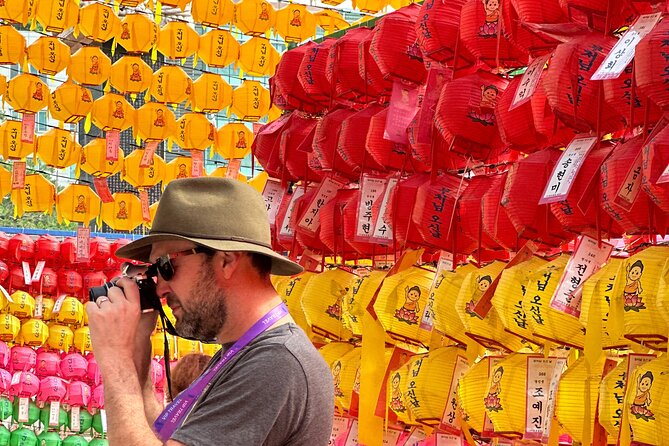
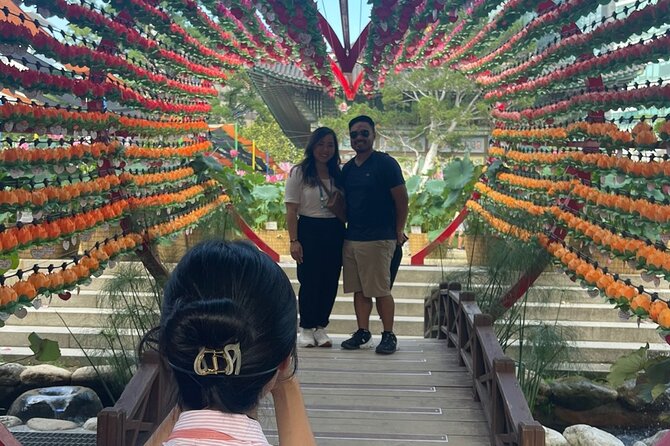
The first stop is Jogyesa Temple, one of Korea’s key Buddhist temples. It sits in central Seoul, where traffic and office buildings quickly give way to a calmer temple compound.
You walk through a tree-lined entrance and see a seven-story pagoda before entering the main temple building. Your guide points out an important Buddha statue and explains the temple’s place in Korean Buddhism. The visit lasts about 40 minutes, enough to look around and hear the basic story without making the temple feel like a rushed photo stop.
I like this opening because it gives you a cultural reference point before the royal palace. Seoul is not only skyscrapers, cafes, and shopping streets. Jogyesa shows a living religious tradition in the middle of the capital.
The stop is less rewarding if temples are not part of your interests. It also involves walking and standing, so wear shoes that can handle palace courtyards and temple paths. In summer, the heat can be tiring, especially since much of the morning takes place outdoors.
Cheongwadae Sarangchae and the Blue House
After Jogyesa, the coach continues to Cheongwadae Sarangchae, an exhibition hall covering Korean presidents, cultural traditions, and UNESCO World Heritage Sites in Korea. The displays give you useful background for the rest of the morning, especially if you know little about modern Korean government or national traditions.
The visit is valuable because it broadens the tour beyond old buildings. You get a look at how Korea presents its political story and cultural identity, rather than seeing the palace as an isolated monument.
The coach also passes the Blue House, or Cheongwadae, the former presidential residence often compared with the White House in Washington, DC. The wording matters here: this is a pass-by during the route, not a full interior tour. You should treat it as a chance to understand the setting and see the compound from the vehicle.
The stop at the exhibition hall is generally easier in poor weather than the palace grounds, but the full experience still depends on conditions. The tour requires good weather, and a cancellation caused by poor conditions may result in a different date or a full refund.
Gyeongbokgung Palace and the guard ceremony
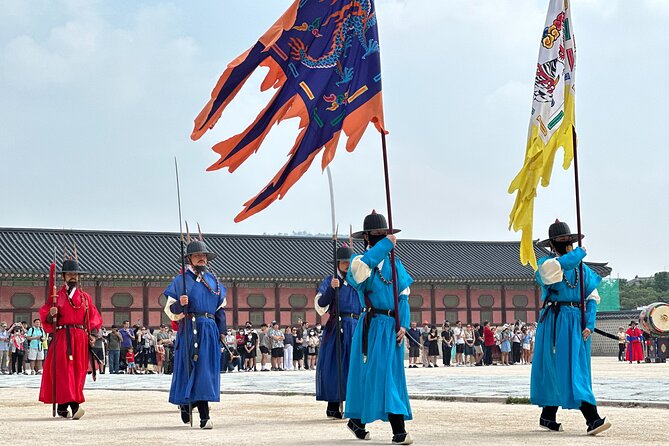
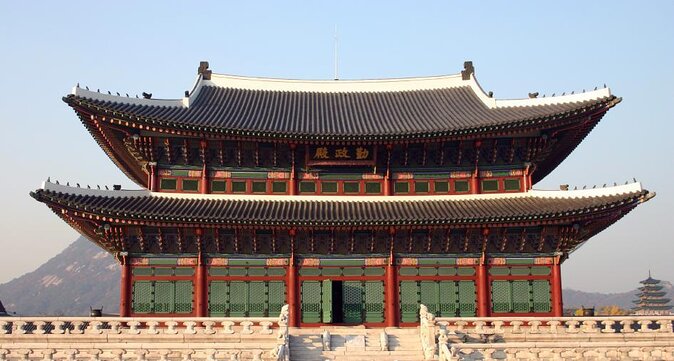
Gyeongbokgung was the main royal residence during the Joseon Dynasty and was built in 1394. It is the largest of Seoul’s Five Grand Palaces, with broad courtyards, ornate gates, and enough scale to show how the Joseon court organized royal life.
Your guide leads you through the palace compound and brings you to Gwanghwamun Gate for the Changing of the Guard ceremony. The guards wear traditional clothing and follow a tightly arranged sequence of movements. Bright colors, drums, banners, and formal gestures make this the most visually memorable part of the morning.
Arrive ready to watch, not just take one photograph and leave. Guides have sometimes positioned small groups near the front for a better view, but the exact sightline depends on the crowd and the timing of the ceremony. The palace portion lasts about an hour, so you have time for the ceremony and a look at the grounds.
I especially like the contrast between Seoul’s modern streets and this formal royal setting. Within minutes, you can move from traffic and office towers into courtyards shaped by centuries of Korean court life.
The palace is exposed to sun, wind, rain, and winter cold. Bring a hat in warm weather, and plan for outdoor walking in every season. One person described the cold and heavy snow as a challenge, though still found the visit worthwhile. In high summer, the heat can make the palace feel much harder than the three-hour duration suggests.
Same city, a very different set of state rooms:
- Seoul City Sightseeing Tour Including Gyeongbokgung Palace, N Seoul Tower, and Namsangol Hanok Village
★ 5.0 · 1,423 reviews - Seoul: Gyeongbok Palace, Bukchon Village, and Gwangjang Tour
★ 5.0 · 1,044 reviews - Seoul Half-Day City Highlight, Palace Tour with Hanbok
★ 4.9 · 764 reviews - Seoul: Palace, Temple and Market Guided Foodie Tour at Night
★ 4.9 · 750 reviews
The National Folk Museum and palace exhibits
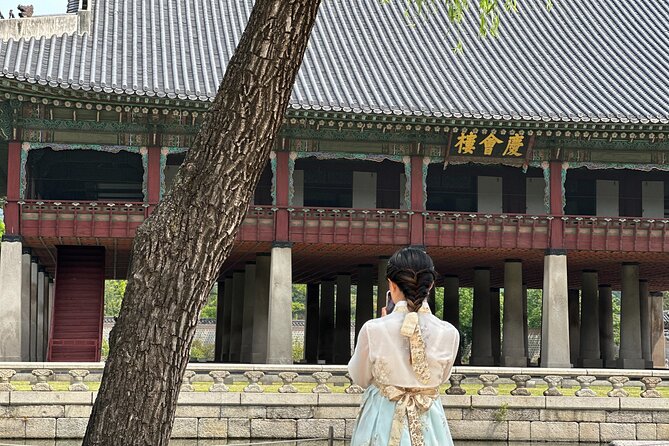
The route includes about 30 minutes at the National Folk Museum of Korea, described in the schedule alongside palace and Korean cultural exhibits. The museum portion adds useful detail to what you see outdoors, showing how Korean traditions and daily life fit around the royal court.
The provided tour information also refers to the National Palace Museum of Korea, so the exact museum stop may depend on the departure’s operating schedule. Either way, you should expect a short cultural exhibition rather than hours of independent museum time.
Thirty minutes is enough for an introduction, not a full museum visit. That is a fair trade on a half-day tour, but museum fans may want to return later on their own. The guide can help you understand what deserves attention when the clock is moving.
The ginseng stop: useful or unnecessary?
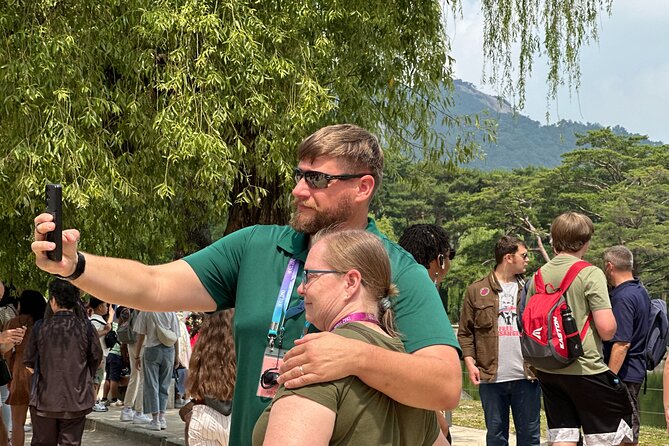
The final stop is a ginseng museum and shopping center. It is listed as a 30-minute visit and is included without an extra admission charge.
Here is the practical truth: this is primarily a retail stop. You may receive a short explanation of Korean ginseng and then be invited to consider products. Some people enjoy learning about the ingredient and buying something to take home. Others find the sales approach intrusive, particularly after a pleasant palace visit.
You should not feel obliged to purchase anything. If your main goal is sightseeing, this stop may feel like time taken from Seoul’s historic center. It is the clearest reason I would hesitate to recommend this tour to someone who dislikes organized shopping stops.
The stop also explains why two people can have very different impressions of the same morning. The temple and palace are fixed attractions with clear cultural value. The ginseng visit depends much more on your attitude toward shopping and sales presentations.
Guides can shape the whole morning
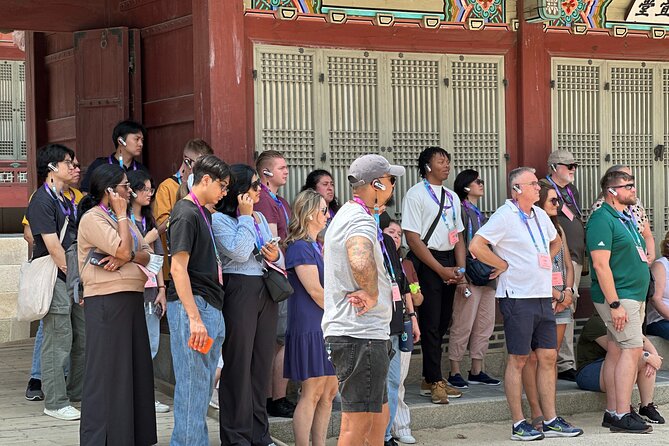
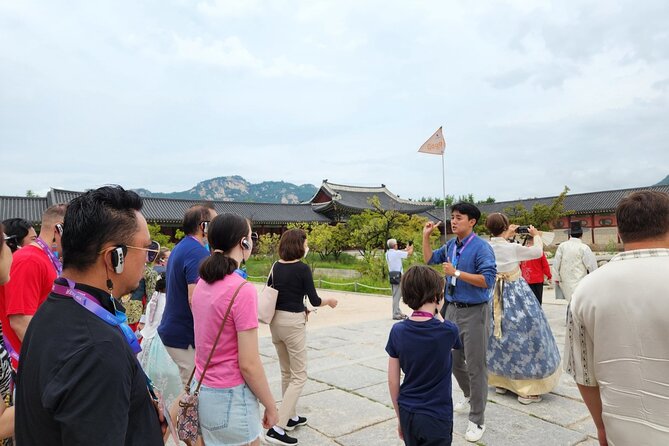
The guide is important on a tour that moves quickly. You need someone who can explain history in plain language, keep the group together, answer questions, and help you find the best view of the ceremony.
Several guides have drawn especially warm praise, including Kelly, Emily, Sunny, Ray, Crystal, Gabby, Yuna, Hana, Henry, Lynn, and Judy. Kelly and Emily were repeatedly noted for clear historical explanations and pleasant communication. Sunny was praised for her cheerful approach and for recommending places to eat around Insadong. Ray was valued for answering questions and helping people find good ceremony viewpoints.
Those names do not guarantee who will lead your departure, but they show the range of guide styles associated with the operator. One guide also helped a guest with a mobility limitation, and another arranged extra assistance when a participant became lost on the way to the meeting point. You should still mention any needs when booking, since the route includes walking over palace and temple grounds.
English and Chinese guiding are offered. Confirm your language and pickup details before departure, especially if you are staying outside the usual hotel zone.
Pickup, drop-off, and the shape of the morning
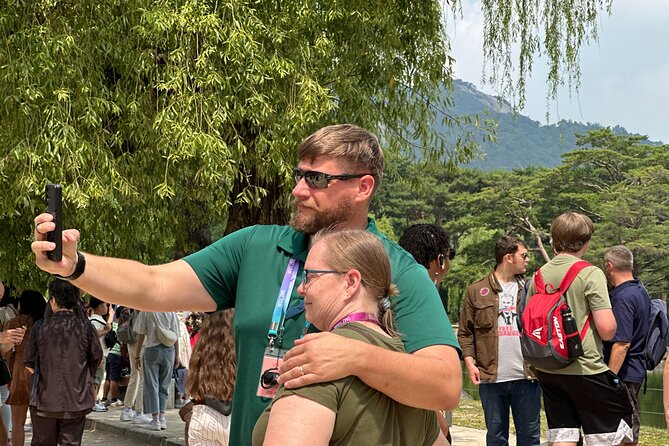
Hotel pickup is offered, but the published meeting information also identifies City Hall Station as a starting point. End points are listed as Seoul City Hall or Myeongdong, with some tour details also mentioning Itaewon. This means you should confirm the exact pickup and drop-off point rather than assume the coach will stop at your hotel at the end.
The central ending is useful. City Hall places you near major subway connections, while Myeongdong is handy for food and shopping. You can continue to Insadong, explore more palace neighborhoods, or simply find lunch without losing the afternoon.
The coach is air-conditioned, a real advantage in Seoul’s summer heat and winter cold. It also saves you from repeatedly navigating public transportation with a group. The tradeoff is less freedom. You follow the group’s clock, and a full departure may take longer to load and unload.
The tour lasts about three hours, usually in the morning. That makes it a good first-day activity for people who want structure but still want the afternoon free. It also works well for a short Seoul visit, since you can see several major landmarks before lunch.
Tuesdays and seasonal planning
Gyeongbokgung Palace and the National Folk Museum are closed every Tuesday. The tour therefore uses a different route on that day, with Changdeok Palace and Bukchon Hanok Village listed as alternatives. Another description names Deoksugung Palace as the Tuesday replacement, so confirm the exact route before booking a Tuesday departure.
This matters if the guard ceremony is your main reason for booking. A substitute palace may still be worthwhile, but it does not give you the same Gwanghwamun Gate ceremony at Gyeongbokgung.
Weather deserves equal attention. The tour includes significant outdoor time, and the operator may cancel for poor conditions. You can then choose another date or receive a full refund. For your own comfort, spring and autumn are likely easier than the hottest part of summer, though the exact weather on your date remains the deciding factor.
Who should book this Seoul half-day tour?
I would choose this tour if you are in Seoul for the first time, have only a few days, or want an organized introduction before exploring alone. It is particularly useful if palace architecture, Korean Buddhism, royal ceremonies, and modern government all interest you.
Families and older people may appreciate the coach and guide support, though the walking and outdoor exposure still require reasonable mobility. Most people can participate, but palace courtyards are not a place to expect a fully seated experience.
I would skip it if you strongly dislike group schedules or organized shopping. Independent visitors can reach Jogyesa and Gyeongbokgung on their own and spend much longer at each. You may also prefer a palace-only visit if the guard ceremony is your sole priority.
Cancellation is free up to 24 hours before the start time. Within 24 hours, the payment is not refunded, and late changes are not accepted.
Should you book it?
Book this tour if you want a practical first look at Seoul with transport, a guide, Jogyesa Temple, Gyeongbokgung Palace, and the guard ceremony in one morning. The $38 price is fair for the admissions and coach service, especially when you value local explanation and an easy central drop-off.
Think carefully about the ginseng stop. If you can politely browse without buying, it is a manageable 30-minute detour. If hard selling ruins your day, choose an itinerary without a shopping component. For most first-time visitors who want an efficient introduction and do not mind that compromise, this is a useful start to Seoul.
FAQ
How long does the Seoul half-day tour last?
The tour lasts approximately three hours and generally takes place in the morning.
What sights are included?
The route includes Jogyesa Temple, Cheongwadae Sarangchae, a pass by the Blue House, Gyeongbokgung Palace, the Changing of the Guard ceremony, and a museum or cultural exhibition stop. A ginseng shopping visit is also included.
Is hotel pickup available?
Hotel pickup is offered. City Hall Station is also listed as a meeting point, so confirm the exact pickup arrangements for your hotel when booking.
Where does the tour end?
Drop-off is offered at Seoul City Hall or Myeongdong. Some tour information also mentions Itaewon, so confirm the end point for your departure.
What happens if I book on a Tuesday?
Gyeongbokgung Palace and the National Folk Museum are closed on Tuesdays. The alternative route includes other sights such as Changdeok Palace and Bukchon Hanok Village, while another schedule lists Deoksugung Palace as the replacement. Confirm the exact Tuesday itinerary before booking.
Is the Changing of the Guard ceremony included?
Yes. The ceremony takes place at Gwanghwamun Gate at Gyeongbokgung Palace when that palace is open and the regular route is operating.
Can I cancel for a full refund?
You can cancel at least 24 hours before the start time for a full refund. Cancellations or changes made within 24 hours are not refunded or accepted. If poor weather or an insufficient number of participants cancels the tour, you are offered another date or a full refund.
Just added around Seoul
- Time Travel in Seoul: Gyeongbokgung, Folk Museum & Bukchon★ 5.0 · 10 reviews
- Seoul: Vegan Temple Food Class, Jogyesa & Changdeokgung Tour★ 4.6 · 34 reviews
- Seoul: Royal Palace Morning Tour including Cheongwadae★ 4.5 · 12 reviews
- Seoul: UNESCO Palace and Street Foods Guided Tour★ 5.0 · 6 reviews
- Seoul: UNESCO Sites tour: Palace, Shrine & Bukchon Village★ 4.8 · 26 reviews
- Seoul: Gyeongbokgung, Lotte Tower & Gangnam Trendy Day Tour★ 4.4 · 3 reviews
- Seoul: Hanbok Photo Tour at Gyeongbokgung Palace★ 5.0 · 9 reviews
- Seoul: Gyeongbokgung Palace Tour & Lunch at Authentic Market★ 4.5 · 2 reviews
Seoul Palace Tours, compared.
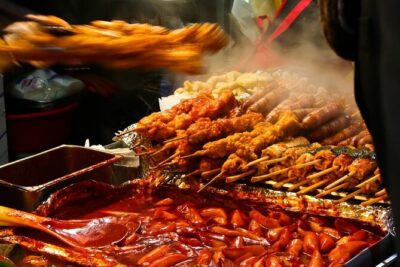
Gyeongbok Palace, Bukchon Village, and Gwangjang Tour
Read our review →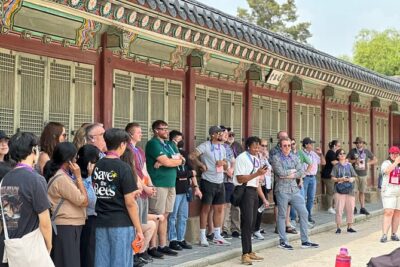
Best Seoul City Tour (Gyeongbokgung Palace,Insadong,Namsan Tower)
Read our review →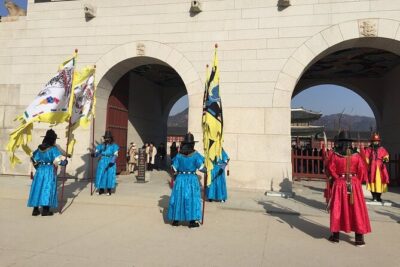
Small-Group Royal Palace and Seoul City Tour (hotel pick-up)
Read our review →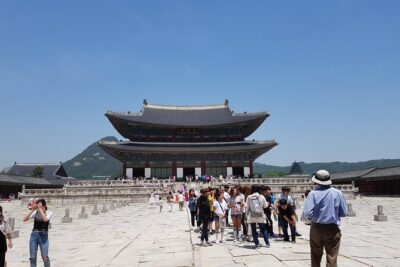
Seoul City Sightseeing Tour Including Gyeongbokgung Palace, N Seoul Tower, and Namsangol Hanok Village
Read our review →Gyeongbok Palace, Bukchon Village, and Gwangjang Tour
Read our review →
Seoul Half-Day City Highlight, Palace Tour with Hanbok
Read our review →
Palace, Temple and Market Guided Foodie Tour at Night
Read our review →
Seoul Highlights: Gyeongbok Palace, Insadong & N Seoul Tower
Read our review →Browse the lists this tour appears in