
REVIEW · AUDIO TOURS
Amsterdam: Royal Palace Entry Ticket + Audio guide
Amsterdam’s Royal Palace is less about velvet ropes and royal spectacle than about seeing a working state building from the inside. You’ll pass through grand rooms still used for banquets and official receptions, then look up at Atlas carrying the heavens in the vast marble Citizens’ Hall. The Dutch Golden Age art gives the palace real substance beyond its polished interiors.
I like the excellent audio guide, which lets you choose a shorter or longer route and pause whenever you wish. I also like the practical value: a $15 ticket, cloakroom, priority entry, and free admission for children under 18 make this an easy addition to a day around Dam Square. The main drawback is that the palace can feel crowded, and there are limited places to sit, so allow extra time if stairs or long periods of standing are difficult.
Key points at a glance
- A working royal setting: See rooms used for state visits, awards, banquets, and official receptions.
- Atlas in the Citizens’ Hall: The huge marble chamber is the palace’s visual centerpiece.
- Audio guide in eight languages: Choose Dutch, English, German, French, Italian, Spanish, Chinese, or Russian.
- Flexible visit length: Follow the full route in about 1.5 to 2 hours, or select a shorter version if your schedule is tight.
- Good family value: Children under 18 enter free, although the palace may be less comfortable for very young children.
- Central Amsterdam location: Reach the palace at Dam Square by several trams or Metro 52 via Rokin.
What the Royal Palace reveals about Amsterdam
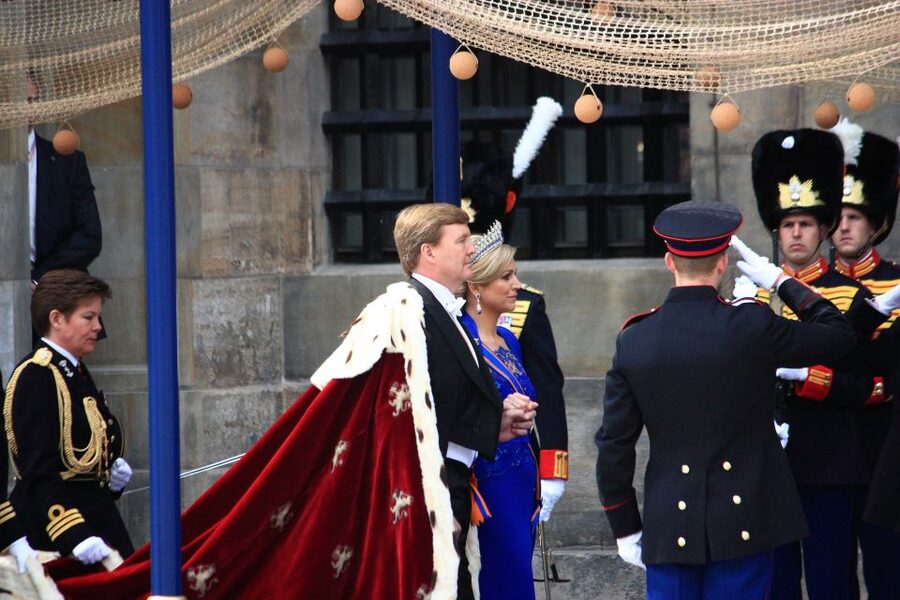
The building you enter today began as a 17th-century monument and later took on a royal role. That shift is part of what makes the visit interesting. You are not entering a decorative residence preserved only for display. The palace is still used for state visits, award ceremonies, and royal receptions, so the rooms retain a clear public purpose.
The audio guide helps explain that change without requiring you to read a plaque at every stop. It leads you from room to room and connects the paintings, sculptures, furniture, and symbols to the building’s past. I especially appreciate that the commentary is not simply ceremonial. One visitor praised its respectful but self-critical treatment of the history represented by the palace, a useful quality when you are looking at national pride alongside royal power.
The exterior may not prepare you for the interior. From Dam Square, the palace can look formal and somewhat stern. Inside, the scale changes quickly. Marble, chandeliers, clocks, painted ceilings, and carefully preserved furnishings create the grand setting expected of a royal building, but the rooms also show how much planning went into presenting Amsterdam as a powerful and orderly city.
More self-guided palace routes in the world:
- Granada: Alhambra Entry Ticket with Audio Guide
★ 4.1 · 5,950 reviews - Topkapi Palace and Harem Skip-the-Line-Tickets & Audio Guide
★ 4.3 · 4,745 reviews - Istanbul: Topkapi Palace and Harem Ticket with Audio Guide
★ 4.4 · 2,401 reviews
Entering from Dam Square
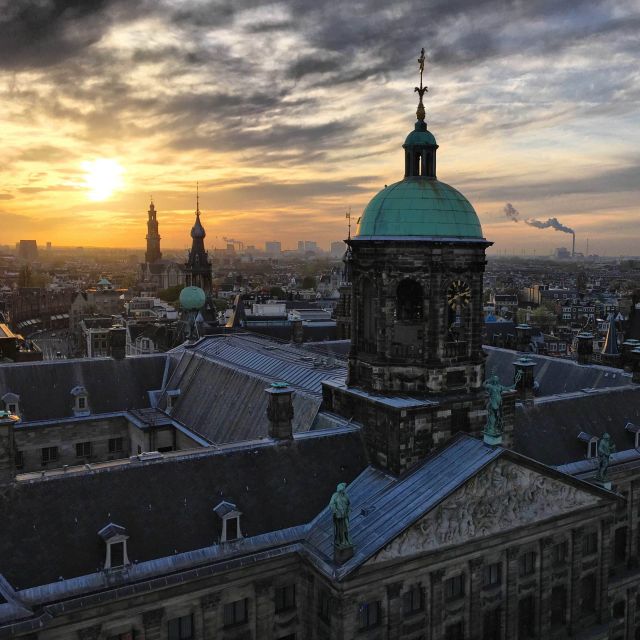
The palace is directly at Dam Square, one of the easiest central locations in Amsterdam to reach. Tram numbers 2, 4, 12, 13, 14, 17, and 24 stop near the square. You can also take Metro 52 to Rokin and walk from there.
If you have booked ahead, you can show your smartphone ticket at the scan desk and use the priority lane. This matters on a busy day, since several people found prepaid entry quicker than waiting to buy a ticket on site. It does not turn the palace into a timed guided tour. You still explore independently and can enter during the available opening period.
There is a cloakroom, which is useful if you are carrying coats or a small bag. Food, drinks, smoking, flash photography, and video recording are not allowed. The last entry is 45 minutes before closing, so do not arrive at the very end of the day expecting a full visit.
The audio guide sets your pace
The multimedia tour is included in the admission price and comes in eight languages: Chinese, Dutch, English, French, German, Italian, Russian, and Spanish. A special version is available for children in Dutch and English.
This is a self-guided visit, not a live group tour. That is a real advantage if you dislike being pulled along at someone else’s speed. You can stop the commentary, look more closely at a room, skip a section, or continue when ready. The guide also offers shorter and longer options, which helps if you have only an hour before another Amsterdam plan.
The most useful feature is its room-by-room structure. Instead of receiving a general introduction and then wandering without direction, you get enough background to understand what you are seeing. Several people completed the visit in about an hour, while others spent 1.5 to 2 hours taking in more of the commentary and details.
Bring the audio guide or use the available device rather than assuming wall text will cover everything. One visitor who skipped the headphones found that a great deal of information was missed. The guide is not a minor extra here. It supplies much of the historical and visual context.
The only small weakness is navigation. The numbered sections can occasionally be difficult to locate, especially when the palace is busy. Pay attention to the next number before leaving a room, and do not be shy about asking staff for help. Staff members are repeatedly praised for being friendly and useful, particularly when handing out the audio devices.
The Citizens’ Hall and Atlas
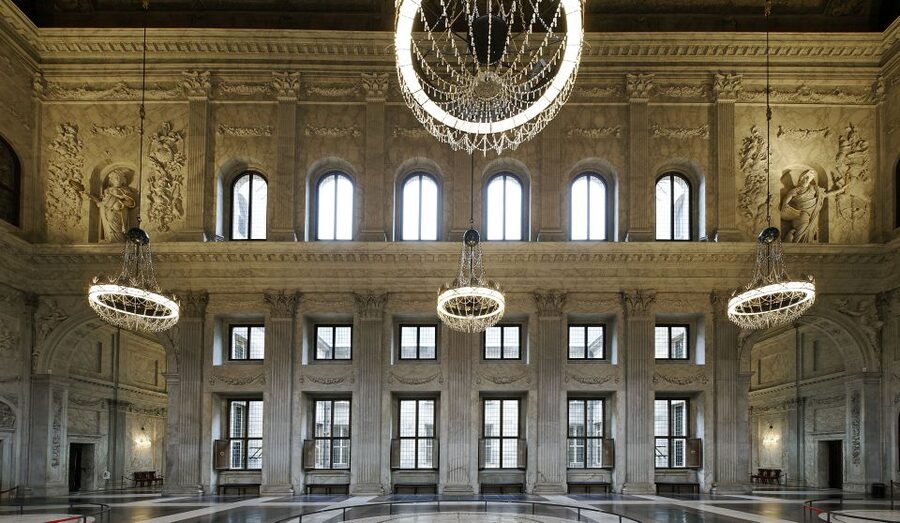
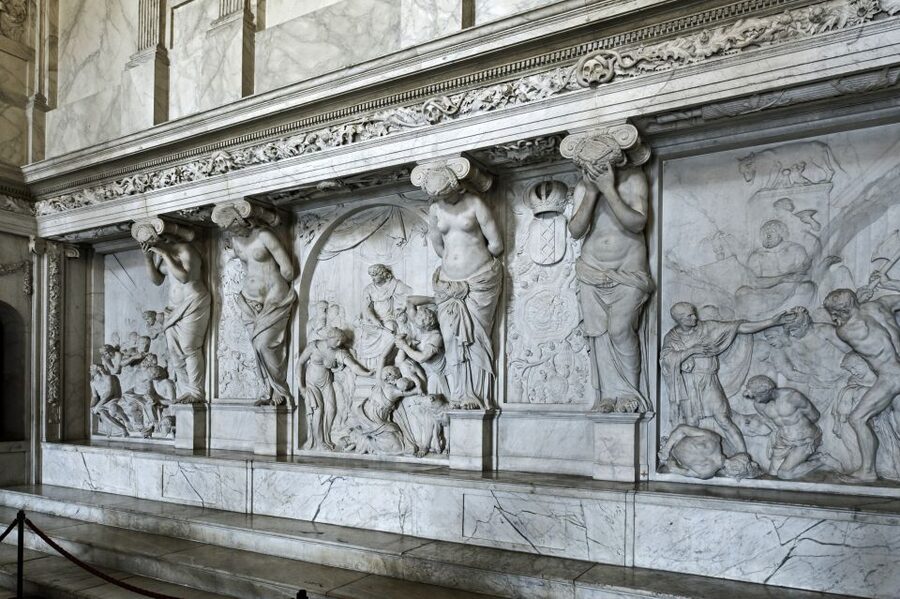
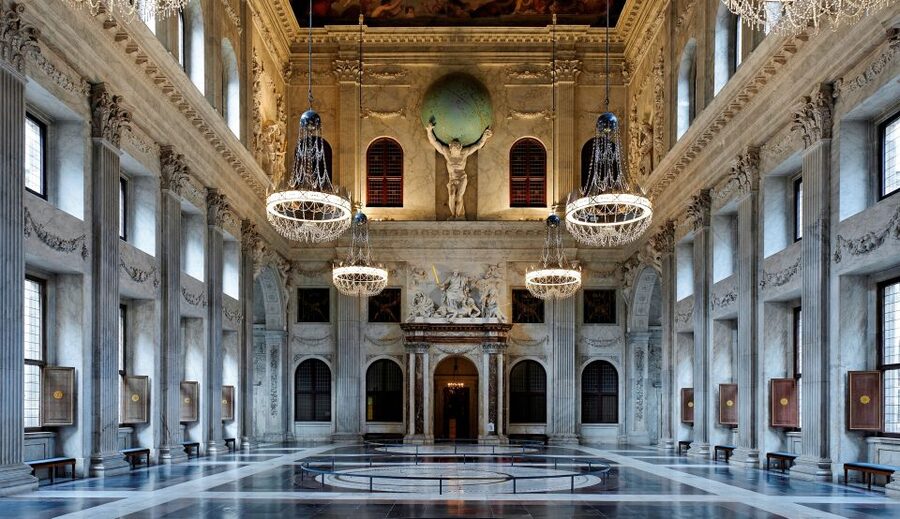
The vast Citizens’ Hall is the stop you should not rush. Its marble surfaces and civic scale show that this was built to represent more than private comfort. The room is designed to make you feel the importance of the city and its government.
Look upward for the statue of Atlas carrying the sky on his shoulders. It is one of the palace’s clearest visual symbols, and the audio commentary helps explain why such imagery mattered. The palace uses art and architecture to present an ideal version of Amsterdam: prosperous, organized, confident, and connected to the wider world.
This is also where the palace can feel most crowded. The hall is a natural gathering point, and people may pause in the same places to look up or take photographs. Since flash photography is prohibited and video recording is not allowed, the best way to appreciate the room is simply to give yourself time to stand back and take in its scale.
More audio-guided palace visits in the world:
- Crete: Knossos Palace Entry Ticket with Optional Audio Guide
★ 3.9 · 2,251 reviews - Istanbul: Dolmabahce Palace and Harem Fast-Track & Audio
★ 4.7 · 1,772 reviews - Crete: Palace of Knossos E-Ticket and Audio Guide
★ 3.8 · 1,540 reviews - Venice: Doge’s Palace, Bridge of Sighs, Prisons, Correr & Audio Guide
★ 4.1 · 980 reviews
Dutch Golden Age paintings and sculpture
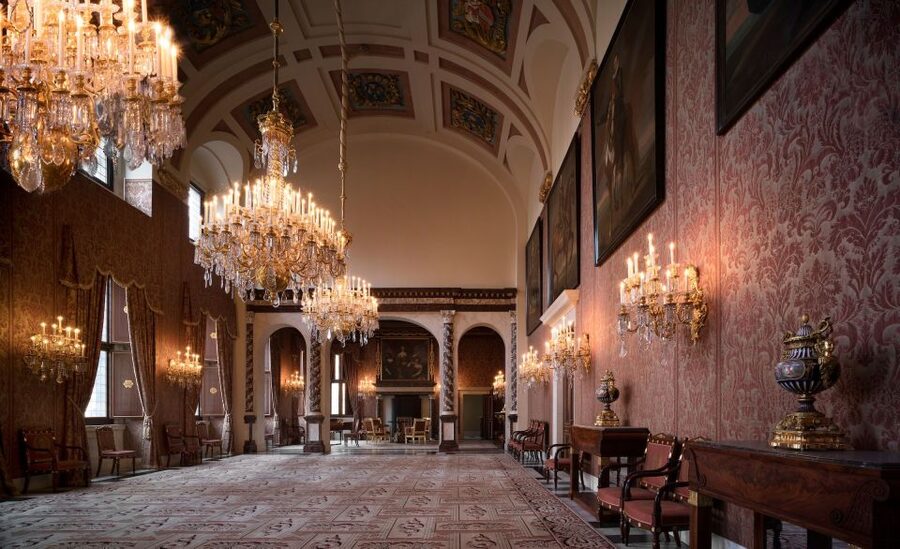
The art is a major reason to use the guide rather than simply walk through. The palace contains paintings connected with some of the best-known artists of the Dutch Golden Age, along with sculpture by Ferdinand Bol and Govert Flinck.
You will find that the visual program is not random decoration. Paintings, statues, and architectural details work together to tell you how the building wanted Amsterdam to be seen. The guide points out that relationship, making the art easier to read even if you are not familiar with Dutch painting.
There is plenty to admire, but the concentration of decorated rooms can become visually repetitive. One visitor felt that the ornate halls began to resemble one another after a while. I suggest giving your closest attention to the Citizens’ Hall, the major artworks, and any room whose story catches you, rather than trying to treat every stop as equally important.
The palace is particularly rewarding if you enjoy noticing detail. You might find yourself looking less at individual paintings and more at the way art, marble, furniture, and symbols combine to create a public image of power.
Louis Napoleon’s furnishings and royal rooms
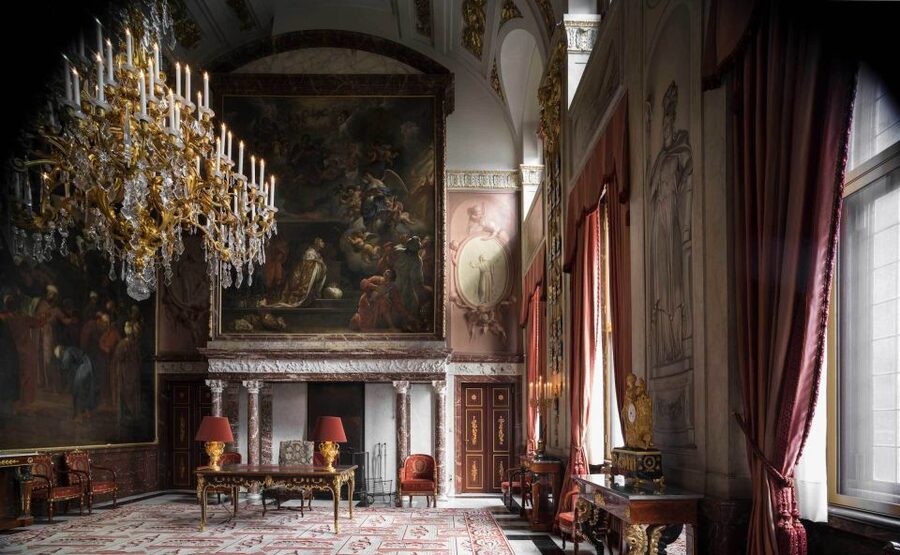
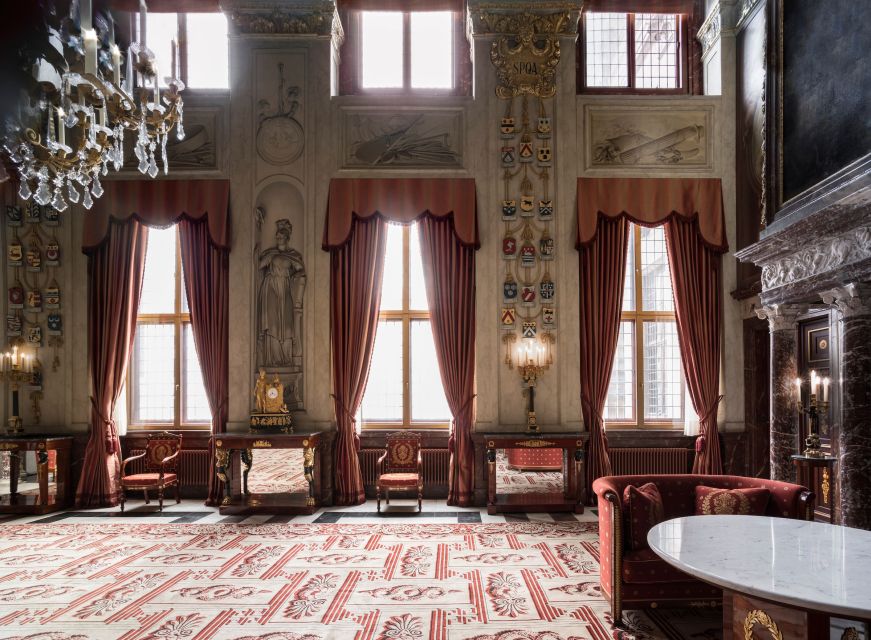
The palace also preserves furniture, chandeliers, and clocks dating from the period of Louis Napoleon. These objects shift the mood from civic monument to royal residence. You begin to see how the rooms were furnished for ceremony, comfort, and display.
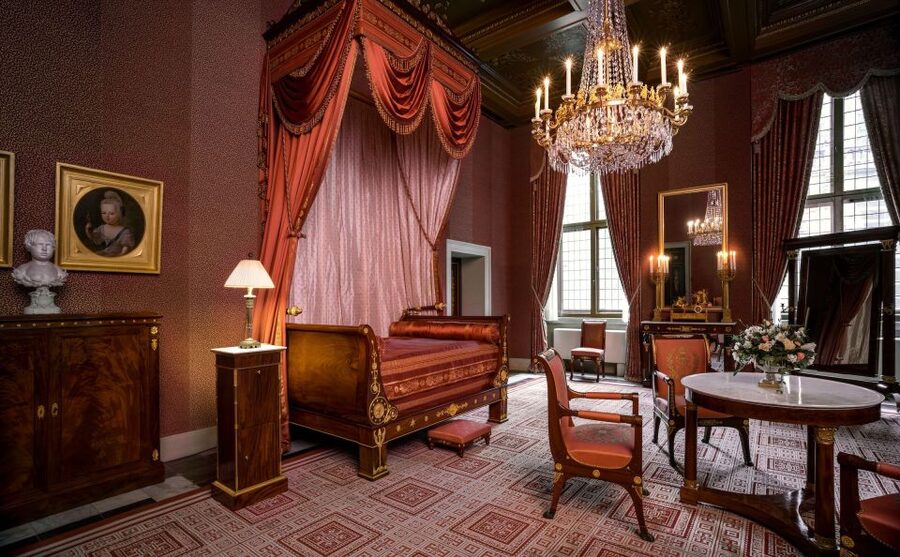
The chance to see where heads of state sleep and where official banquets take place gives the visit a practical edge. You are not only looking at beautiful objects. You are seeing the rooms that support the formal business of the Dutch monarchy and visiting dignitaries.
The furnishings are carefully maintained, and the interior feels orderly rather than overfilled. That restraint can make the palace more approachable than a residence packed with objects in every corner. At the same time, the rooms may seem similar if you move too quickly. Pause for the guide’s explanation of how a space was used, then look at the clock, chandelier, furniture, and painted decoration as parts of one setting.
How long should you plan?
For a quick but worthwhile visit, allow about an hour. That is enough to see the principal rooms and listen to a shorter audio route, though you will need to keep moving.
I recommend 1.5 hours for most people. This gives you time to stop in the Citizens’ Hall, hear the key stories, and look carefully at the art and furnishings. If you are interested in architecture, royal ceremony, or Dutch history, two hours is more comfortable.
The official validity is one day, but that does not mean you can come and go all day. It means your admission is valid on the selected date and available entry period. Check the closing time and remember the 45-minute last-entry rule.
An early visit can help reduce crowds. A late afternoon visit may also be calm on some days, but you should not rely on that, since opening patterns and demand vary. If you have a fixed schedule, booking ahead is sensible.
Is the $15 ticket good value?
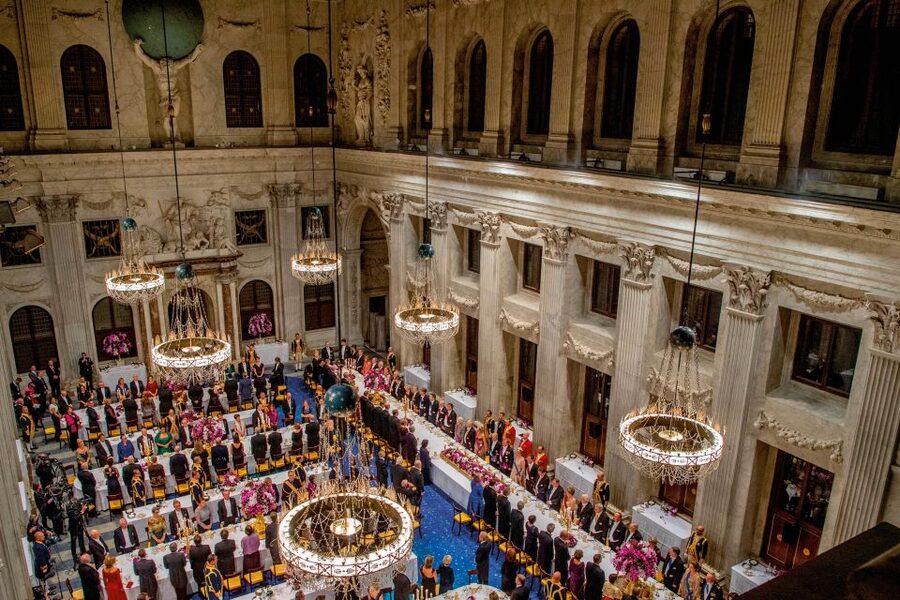
At $15 per person, this is a reasonably priced central Amsterdam attraction, especially because the multimedia tour is included. You are paying for access to a working palace, the art collection, the historic rooms, and a structured explanation in your own language.
The value is strongest when you listen to the full guide. If you only want to glance through a grand building, you can finish quickly and may feel the visit is short. If you enjoy understanding why the rooms look as they do, the commentary turns the admission into a fuller experience.
Children under 18 can enter free, but they still need a ticket collected at the counter. That makes the palace attractive for families watching costs. The child-specific multimedia tour is available in Dutch and English, which can help younger visitors follow the visit more easily.
One practical point: one past price comparison found that buying a ticket at the palace could cost slightly less than a prepaid option. The supplied price for this experience is $15, and booking ahead offers the benefit of priority entry and a place secured before arrival. I would pay the small difference if saving time matters, particularly during a busy day in central Amsterdam.
Access, stairs, and family comfort
The building is wheelchair accessible, with a lift, an accessible toilet, and wheelchairs available for visitor use. That makes the palace workable for many people with mobility needs, although it is still wise to allow extra time and ask staff for directions between sections.
The palace has limited seating, and the stairs can become crowded. If you have trouble walking or standing for long periods, plan a slower visit and use the lift and available assistance. The audio guide can be paused, so you do not need to hurry through the commentary.
For families, the free admission for children under 18 is a strong point. The palace can also offer a useful change of pace from Amsterdam’s canals and outdoor sights. Very young children may find the formal rooms and listening-based tour less engaging, and adults should keep an eye on noise and movement because the setting is quiet and carefully maintained.
Older children who enjoy stories, art, or grand buildings may get much more from the dedicated audio route. A family visit works best when you choose a few highlights rather than expecting everyone to listen to every stop.
Who should book this palace visit?
I would choose this experience if you want a central Amsterdam attraction that combines art, architecture, and royal ceremony without committing to a live group tour. It suits first-time visitors who want context, museum fans who enjoy visual detail, and anyone with an hour or two between other plans.
It is also a good choice if you prefer to control the pace. You can listen to every section, select a shorter route, or pause the guide while you study a painting or room.
I would think twice if you dislike ornate interiors, have very little time, or need frequent places to sit. The palace is beautiful, but it is not a light, playful attraction, and some rooms can feel alike. The audio guide is central to the experience, so anyone unwilling to listen may get less from the ticket.
Should you book the Royal Palace Amsterdam?
Yes, if you are interested in how Amsterdam presents its civic and royal past, and especially if you like self-guided museums. The Citizens’ Hall, Atlas statue, Golden Age art, and Louis Napoleon-era furnishings give the visit enough variety to justify the time.
Book ahead when you value the priority lane or have a tight schedule. Plan 1.5 hours, use the audio guide, and arrive with enough time before closing. If you are traveling with children under 18, the free admission makes the decision easier. Skip it only if you want a very informal attraction or need lots of seating.
FAQ
Where is the Royal Palace Amsterdam?
The palace is at Dam Square in central Amsterdam. The nearest GVB tram stop is Dam Square.
How can I reach the palace by public transport?
You can use tram numbers 2, 4, 12, 13, 14, 17, and 24. Metro 52 stops at Rokin, exit at Rokin.
Is an audio guide included?
Yes. A multimedia tour is included in Dutch, English, German, French, Italian, Spanish, Chinese, or Russian.
Is there an audio guide for children?
Yes. A special multimedia tour for children is available in Dutch and English.
How long does the visit take?
The ticket is valid for one day, and the visit can take about one hour for a shorter route or around 1.5 to 2 hours if you follow more of the audio guide and spend time with the rooms.
Are children under 18 free?
Yes. Children under 18 enter free, but they must collect a ticket from the counter.
Is the Royal Palace wheelchair accessible?
Yes. The building has a lift, an accessible toilet, and wheelchairs available for visitor use.
Can I take photos or bring food inside?
Food and drinks are not allowed. Flash photography and video recording are also prohibited. Pets and smoking are not allowed inside.
Just added around the world
- Pitti Palace and Palatina Gallery★ 4.0 · 41 reviews
- Pitti Palace Small Group Tour★ 5.0 · 6 reviews
- Private Guided Tour of Palazzo Vecchio in Florence★ 3.5 · 4 reviews
- Florence: Palazzo Vecchio Skip the line Entry ticket★ 4.0 · 49 reviews
- Pitti Palace: The Royal Palace of Florence★ 4.5 · 12 reviews
- PALAZZO VECCHIO Private tour in Florence★ 5.0 · 35 reviews
- Private Tour of Pitti Palace with Boboli Garden★ 5.0 · 28 reviews
- Pitti Palace and Palatine Gallery: A Royal Art and History Tour★ 4.5 · 42 reviews
Audio Tours, compared.
Topkapi Palace and Harem Skip-the-Line-Tickets & Audio Guide
Read our review →
Topkapi Palace and Harem Ticket with Audio Guide
Read our review →
Crete: Knossos Palace Entry Ticket with Optional Audio Guide
Read our review →
Dolmabahce Palace and Harem Fast-Track & Audio
Read our review →
Crete: Palace of Knossos E-Ticket and Audio Guide
Read our review →
Doge’s Palace, Bridge of Sighs, Prisons, Correr & Audio Guide
Read our review →
Dolmabahce Palace & Harem Skip-the-Line Entry & Audio Guide
Read our review →Browse the lists this tour appears in