
REVIEW · BANGALORE PALACE TOURS
Bangalore: Palace, Temples, Fort & Markets Walking Tour
Bangalore’s old center gives you a quick, noisy lesson in how the city grew from royal capital to India’s technology hub. In three hours, you move from Tipu Sultan’s teak palace to a Hindu temple, an old fort, a Jain shrine, and the flower-filled lanes of KR Market. The market is the star: it puts you close to daily life, not behind a museum rope.
I like the mix of sights, especially the way palace, mosque-influenced royal architecture, Hindu worship, Jain art, and trade all fit into one compact walk. I also like the small-group setup, capped at 10 people, since guides such as Vijay, Vasuki, Raghu, and Vanaja have room to answer questions and help you through crowded lanes. The main drawback is the setting itself: KR Market can be loud, tight, dirty, and hard to navigate, and the walk requires modest clothing, comfortable shoes, and a willingness to cope with disorder.
Key points at a glance
- Tipu Sultan’s 230-year-old teak palace: Start with one of Bangalore’s most unusual royal buildings and a clear link to the city’s 18th-century past.
- A working Vishnu temple: Watch Hindu worship in progress, provided seasonal hours and temple access allow it.
- Bangalore Fort in 30 minutes: See the remains of a 16th-century defensive site later altered and renovated.
- KR Market’s flower trade: Follow the scent, color, sellers, buyers, porters, vehicles, and cows through one of central Bangalore’s most intense scenes.
- A quieter Jain temple finish: End with carvings and inlay work after the noise of the market.
- Helpful local guidance: Guides have helped solo visitors use the Metro, arrange a ride, choose photo spots, and speak with sellers.
Why this old Bangalore walk works so well
This tour succeeds because it does not treat Bangalore as only a modern technology city. You get the older city first, where royal power, worship, trade, and street life still overlap.
The route also gives you a useful time frame. Kempegowda’s early city, Tipu Sultan’s rule, British influence, and the later growth of Bangalore all come into the story. A good guide connects those pieces instead of handing you a list of dates.
The guides vary by departure. Vijay is a frequent name, along with Vasuki, Raghu, Vanaja, Varun, Ramesh, Kamakshi, Govinda, and others. Their styles differ, but the strongest pattern is clear: you need a guide who can explain religion and architecture in plain English while also keeping a small group together in crowded streets.
This is not a polished sightseeing circuit. You will cross uneven roads and narrow lanes. You may need to pause for vehicles, pedestrians, cows, workers, or market carts. That is precisely why the walk is useful. You see how old Bangalore functions rather than simply looking at its monuments.
More walking tours past the palaces in Bangalore:
- Tipu Palace + Koté Vishnu + Fort + KR Market + Jain Temple = Bengaluru Pété Walk
★ 5.0 · 150 reviews - Old Bangalore Historical Walk thro Palace, Temples, Fort & Market
★ 5.0 · 60 reviews - Bangalore: Walking Tour of Fort, Palaces, and Market
★ 5.0 · 58 reviews
Tipu Sultan’s Summer Palace begins the story
The meeting point is at the gates of Tipu Sultan’s Summer Palace. Your guide waits there, so confirm the exact gate and start time before setting out.
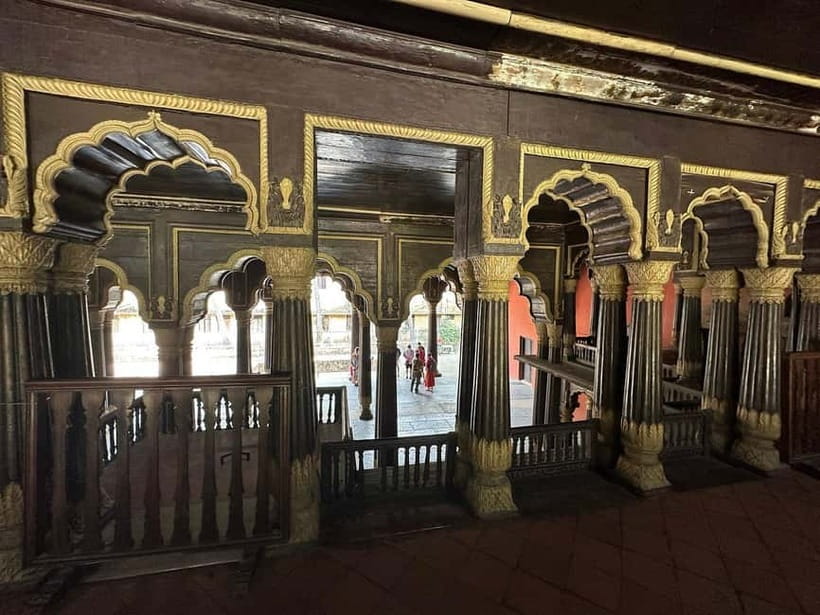
The palace is about 230 years old and built from teak wood. That material alone makes it different from the stone-heavy monuments many visitors expect in India. The building gives you a direct way into the period of Tipu Sultan and the Mysore kingdom, while the guide explains how Bangalore fit into the politics of the 16th through 18th centuries.
I would pay close attention here, because the opening stop sets up the rest of the walk. You are not just seeing an old royal residence. You are starting with the people who shaped the city before British rule and before Bangalore became known for software and corporate offices.
Time inside the palace is not specified, so the exact length can vary. Entry is included, but opening hours and access can change with the season. If this building is a priority for you, check the day’s arrangements with the operator.
Bangalore Fort in a compact half hour
The next major stop is Bangalore Fort, with about 30 minutes set aside for the visit. The fort began in the 16th century and was later renovated, giving you another chance to see how Bangalore changed under different rulers.
Do not expect a huge fort complex that takes half a day. This is a focused stop. Its value comes from the explanation: you can connect the fort to the city’s military role and then compare that older defensive structure with the dense commercial streets outside.
A guide is especially useful here because parts of an old fort can be difficult to read on your own. Vijay, Raghu, and other guides have been praised for combining dates with stories and folklore, which helps the site feel less like a pile of walls and more like part of a living city.
The short visit also keeps the tour moving. You still have a temple, the market, and the Jain shrine ahead. If you prefer slow photography at every stop, three hours may feel tight.
The Vishnu temple brings you into living worship
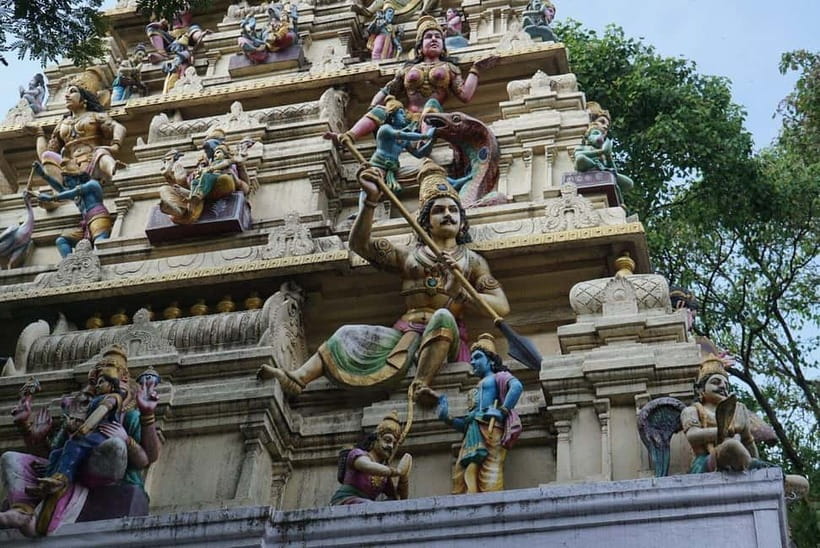
The tour includes a 320-year-old Vishnu temple, where you can watch Hindu devotees offer prayers. This is different from visiting a monument after everyone has gone home. You are seeing a place that remains part of ordinary religious life.
Your guide should explain what you are seeing without interrupting worship. This is a good moment to ask questions about Hindu practice, temple customs, and the role of the shrine in the neighborhood.
Access can depend on temple hours and seasonal conditions. One important practical point comes from the experience itself: not every guest chooses to enter every temple. If you stay outside, the tour can finish earlier and you may miss some of the details inside. If you want the full visit, tell your guide clearly and follow the rules at the entrance.
Keep your clothing modest. Legs and shoulders should be covered. A headscarf is listed among the items to bring, and spare socks are a smart idea for temple visits where you may need to remove shoes or walk over floors that are not suited to bare feet.
A few more palace visits around Bangalore worth a look
- Story of Mysore Silk tour from Bangalore to experience Silk Weaving & Palace
★ 5.0 · 28 reviews - Private Tour: Palaces of Bangalore
★ 4.0 · 15 reviews - Private Tour: Mysore Palace and Srirangapatna Day Trip from Bangalore
★ 4.5 · 13 reviews - Lalbagh+Bull Temple+Tipu Palace+Market+Lunch=Bangalore City Tour
★ 5.0 · 9 reviews
KR Market is the tour’s most vivid half hour
KR Market is where this walk earns its price. Allow about 30 minutes, though the experience can feel much longer because there is so much to take in.
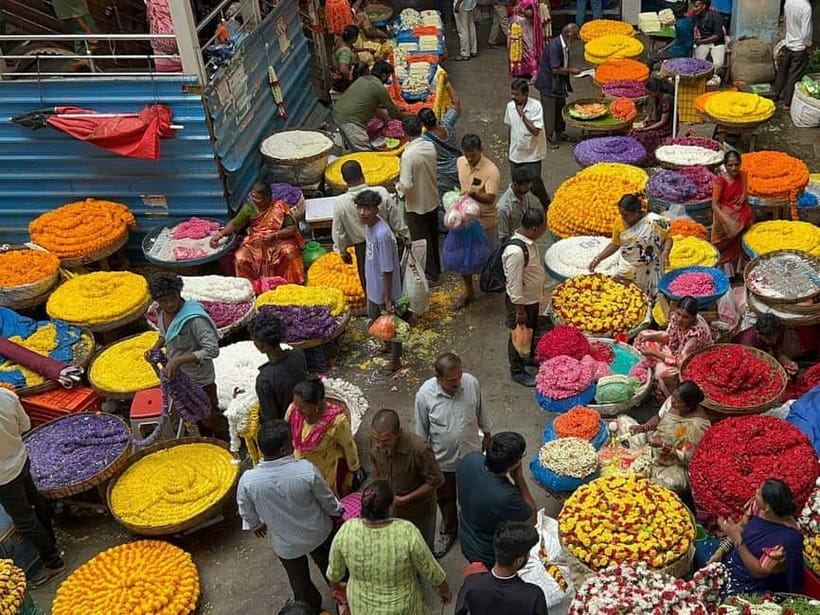
You move through a working market filled with fruit, flowers, and vegetables. Sellers call out, buyers bargain or inspect goods, porters carry loads, and traffic squeezes through spaces that seem too narrow for it. Cows, walkers, workers, and curious onlookers share the same lanes.
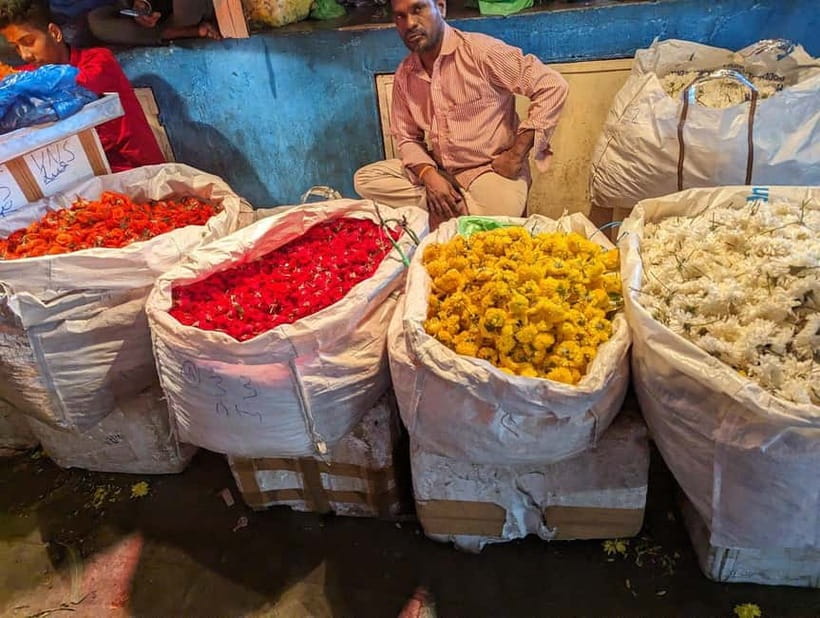
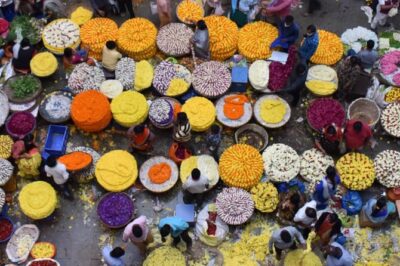
The flower section is especially memorable. Small blossoms are gathered into long strings and large decorations, often in colors that change from stall to stall. The smell shifts as you walk, from flowers to produce to the less pleasant signs of a busy market. You should expect noise, close quarters, and uneven ground.
This is where your guide matters most. A good leader keeps the group together, helps you cross the lanes, and gives you time to look instead of rushing you past every stall. Guides have also helped visitors speak with traders and understand what they were seeing. If you want to buy spices or other goods, ask for help with communication and prices, but remember that shopping is not the main purpose of the tour.
The market may be especially crowded on a Sunday. That can make it more exciting, but also more tiring. Hold onto your phone and wallet, stay close to the guide, and wear shoes that can handle dirt and uneven pavement.
The Jain temple offers a calm finish
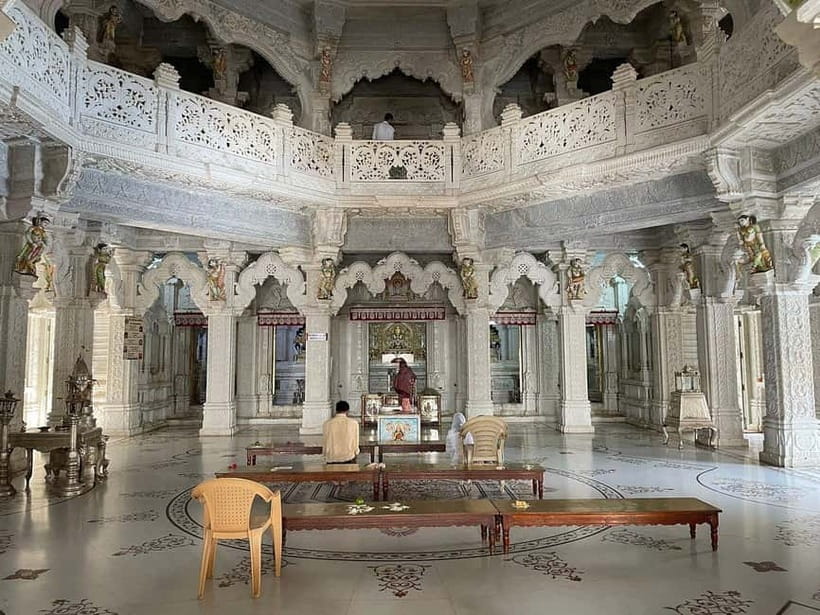
The final stop is Shri Adinath Jain Shwetamber Mandir. After the noise and movement of KR Market, the Jain temple gives you a quieter setting.
The focus here is on carvings and inlay work. Jain religious architecture often rewards a slower look, so use this stop to notice the details that might disappear in the market’s rush. Your guide can also explain the basic religious context and the difference between the Jain temple and the Hindu shrine earlier in the walk.
Clothing rules are strict enough to plan around. Cover your shoulders and legs, and do not wear short skirts, sleeveless shirts, or see-through clothing. Since temple visits may involve removing shoes, carry spare socks. The headscarf is also listed as something to bring.
Temple access and working hours can change seasonally. The route may include the exterior if the interior is closed or if you choose not to enter. Ask at the start what is open that day so your expectations match the actual visit.
What the guide adds to the walk
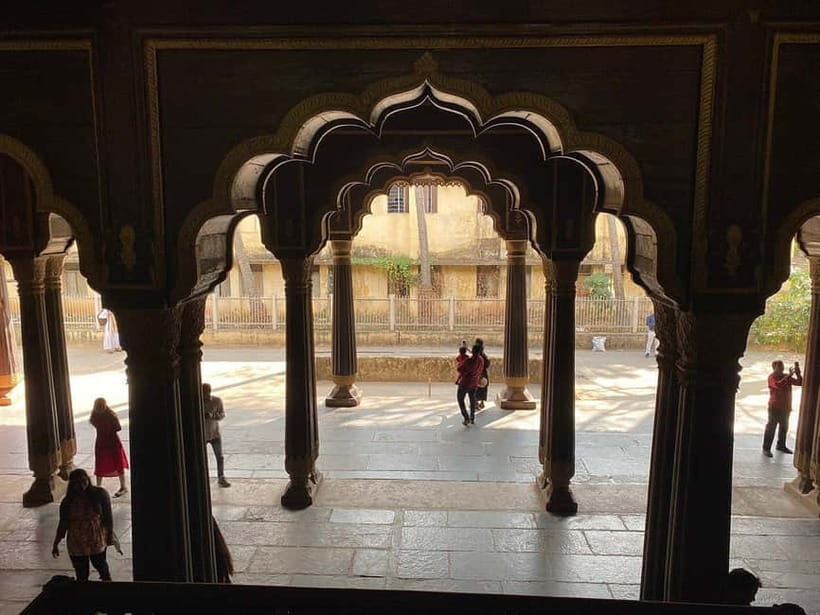
The monuments are worth seeing, but the guide is what turns separate stops into a city lesson. The strongest guides on this route explain the past while helping you manage the present.
Vijay has been praised for keeping groups safe in crowded streets, explaining history and religion clearly, and finding good photo spots. He has also helped solo visitors use the Metro or arrange transport after the walk. Vasuki is noted for warmth, humor, and a strong grasp of the city. Raghu has a style that mixes facts, folklore, and storytelling, and he has helped visitors shop without rushing them.
Vanaja and her colleagues have led tours with particular attention to the group’s comfort. Ramesh has been described as calm and careful in the Sunday market. Kamakshi has a more personal storytelling style and can adjust the walk to individual interests.
The guide assigned to you may not be one of these specific people, so do not book based on a promise of a particular guide unless the operator confirms it. Still, the range of positive guide names suggests that the company has several experienced local leaders rather than relying on one person.
Three hours, $32, and what you get
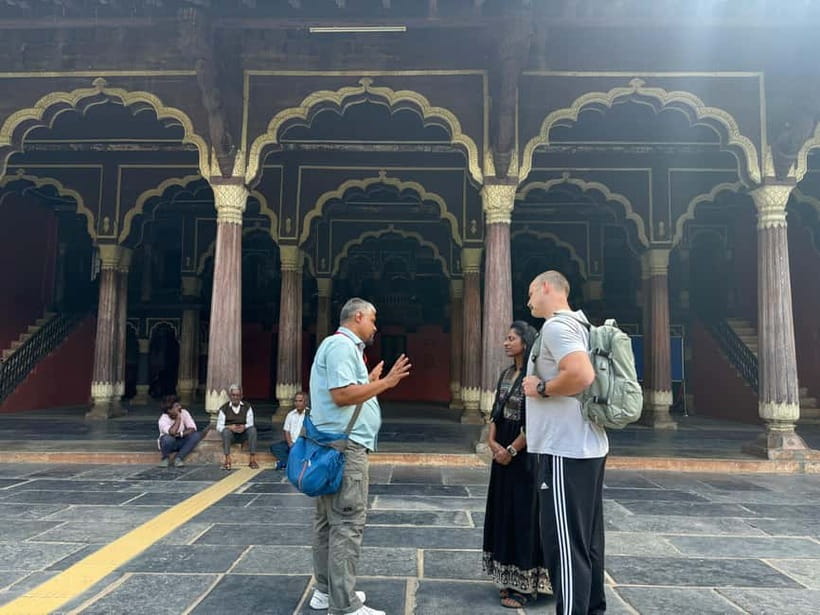
At $32 per person, the tour is reasonably priced for a three-hour guided walk that includes entry to the palace, Vishnu temple, Bangalore Fort, and Jain temple. You are paying for local interpretation, not just admission tickets.
The value is strongest if you have only a short time in Bangalore. You can see several major old-city sights without spending hours working out directions, temple customs, or market routes. A solo visitor can also gain confidence quickly, especially if the city feels intimidating at first.
The price does not include food, drinks, or transport. Hotel pickup and return transport can be arranged for an additional fee. This matters because the meeting point is at the palace, not automatically at your hotel. If you are new to Bangalore or arriving from another part of the city, paid transport may be worth considering.
The group limit is 10 people, though you might find yourself in a smaller group. One guest had a private tour because no one else joined that departure. That can make the walk more flexible, but availability and group size will vary.
Practical advice for a smoother walk
Wear light, modest clothing that covers your shoulders and legs. Comfortable walking shoes are essential, and spare socks can make temple visits easier.
Carry water, though food and drinks are not included. You may also want some Indian rupees if you plan to buy something at the market, but purchases are optional.
Expect a lot of walking, even though one guide described the route as light rather than strenuous. The challenge is less about distance than about uneven roads, traffic, heat, crowds, and narrow lanes.
Keep your camera ready, but ask before photographing people at close range or inside religious spaces. The market offers strong photo opportunities, and several guides are happy to suggest good angles or take pictures for you.
The walk is in English. If you have difficulty understanding a strong accent, ask your guide to repeat or slow down. Most of the useful information comes through conversation, so do not hesitate to stop the group for clarification.
Free cancellation is available up to 24 hours before the start time, and you can reserve now and pay later. Starting times depend on availability.
Who should book this Bangalore walk
I would choose this tour for a first visit, a short stopover, or a day when you want to understand central Bangalore quickly. It suits solo visitors particularly well because the guide can help with navigation, market etiquette, transport, and basic cultural questions.
It also suits people who prefer daily life to polished attractions. The market is not comfortable in the usual sightseeing sense, but it is the part most likely to stay with you.
I would think twice if you dislike crowds, religious customs, uneven streets, or strong market smells. This is not a quiet heritage walk. It is a close look at an active city, with all the noise and confusion that involves.
Should you book it?
Book it if you want a compact introduction to old Bangalore and value a guide who can explain what you are seeing while leading you through crowded streets. The mix of Tipu’s palace, Bangalore Fort, temple worship, Jain art, and KR Market gives you more range than a single monument visit.
Skip it if you want a slow, highly polished tour with long stops and little street activity. For most first-time visitors, though, $32 is a fair price for three hours of history, religion, architecture, and ordinary city life. Wear proper clothes, bring patience, and let the market set the pace.
FAQ
How long does the Bangalore Palace, Temples, Fort and Markets Walk last?
The tour lasts three hours.
Where does the tour begin?
It begins at Tipu Sultan’s Summer Palace. The guide waits at the palace gates.
Where does the tour finish?
The tour finishes at Shri Adinath Jain Shwetamber Mandir.
Which places are included?
The walk includes Tipu Sultan’s Summer Palace, a Vishnu temple, Bangalore Fort, KR Market, and the Jain temple.
Is entry to the sights included?
Entry to Tipu Palace, the Vishnu Temple, Bangalore Fort, and the Jain Temple is included.
Is transport included?
No. Transport is not included, but hotel transport to the meeting point and back can be arranged for an additional fee.
What language does the guide speak?
The live tour is conducted in English.
How large is the group?
The group is limited to 10 participants, although a departure may sometimes have fewer people.
What should I wear?
Cover your legs and shoulders. Short skirts, skirts, sleeveless shirts, and see-through clothing are not allowed. A headscarf and spare socks are useful.
Is the tour suitable for someone who does not want to enter the temples?
You can choose not to enter, but the walk may be shorter and you may miss some of the interior details. Temple access also depends on seasonal opening hours.
Just added around Bangalore
- 2 Day Bandipur Safari and Mysore Palace Tour★ 4.5 · 4 reviews
- Story of Mysore Silk tour from Bangalore to experience Silk Weaving & Palace★ 5.0 · 28 reviews
- Lalbagh+Bull Temple+Tipu Palace+Market+Lunch=Bangalore City Tour★ 5.0 · 9 reviews
- Private Tour: Mysore Palace and Srirangapatna Day Trip from Bangalore★ 4.5 · 13 reviews
- Private Tour: Bangalore City Tour Including LalBagh & Tipu Palace★ 4.0 · 4 reviews
- Private Tour: Palaces of Bangalore★ 4.0 · 15 reviews
- Bangalore Walking Tour KR Flower Market,Fort,Tippu palace★ 5.0 · 8 reviews
- Bangalore City Tour: Lalbagh, Tipu Palace & Bull Temple★ 4.4 · 3 reviews
Bangalore Palace Tours, compared.
Tipu Palace + Koté Vishnu + Fort + KR Market + Jain Temple = Bengaluru Pété Walk
Read our review →
Old Bangalore Historical Walk thro Palace, Temples, Fort & Market
Read our review →

Story of Mysore Silk tour from Bangalore to experience Silk Weaving & Palace
Read our review →
Private Tour: Mysore Palace and Srirangapatna Day Trip from Bangalore
Read our review →
Lalbagh+Bull Temple+Tipu Palace+Market+Lunch=Bangalore City Tour
Read our review →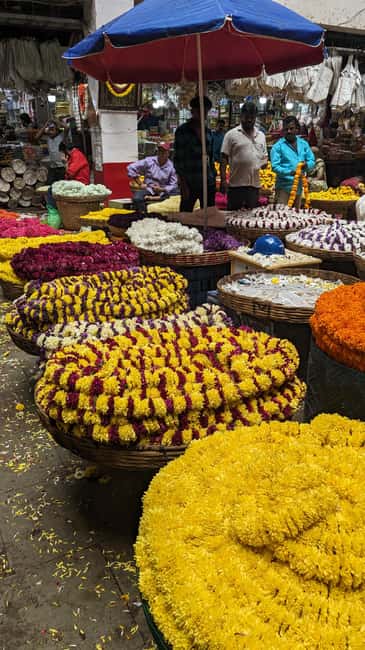
Bangalore Walking Tour KR Flower Market,Fort,Tippu palace
Read our review →Browse the lists this tour appears in