
REVIEW · BANGALORE PALACE TOURS
Tipu Palace + Koté Vishnu + Fort + KR Market + Jain Temple = Bengaluru Pété Walk
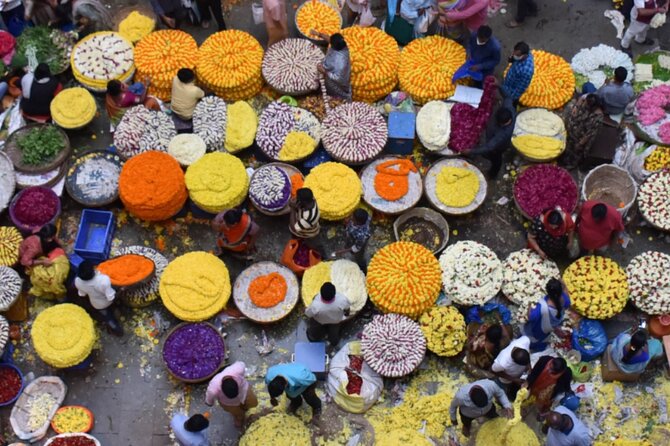
Central Bengaluru comes at you in layers: a teak palace, carved Hindu temples, a battered old fort, and KR Market’s flower sellers all packed into one walk. The market is the emotional center of the experience, where flowers, workers, bicycles, cows, and customers create a scene far removed from a polished sightseeing route.
I like the variety and the guide support. In about three hours, you see several faiths, royal architecture, street commerce, and working city life. Guides such as Vijay, Raghu, Vasuki, and Phaneesh have helped visitors understand the sites, find coffee, answer questions, and reach the metro afterward.
The main drawback is the pace and setting. This is a real city walk through noise, traffic, clutter, and crowds, not a gentle stroll. The Hindu temple may be closed on an afternoon departure, and the market can be tiring, hot, or overwhelming if you prefer quiet museums.
Key points at a glance
- Five very different stops: Tipu Sultan’s Summer Palace, Kote Venkataramana Temple, Bengaluru Fort, KR Market, and a Jain temple.
- The flower market is the sensory highlight: Expect strong aromas, bright colors, workers carrying loads, and plenty of movement.
- A useful short introduction to Bengaluru: The route works well if you have only half a day or want help finding the historic center.
- Small group format: The activity allows a maximum of 10 people, which makes it easier to hear the guide and ask questions.
- Dress rules matter: Cover your legs and shoulders, bring a scarf if needed, and consider carrying an extra pair of socks for temple visits.
- Ends near Chickpet Metro Station: The finish is practical if you plan to continue exploring central Bengaluru by metro.
Why this Bengaluru walk works so well
This is not a tour built around one grand monument. Its strength comes from the sharp changes between stops. You move from royal architecture to religious art, then into a market where the city’s daily business is happening in front of you.
I like this kind of route because it gives you context quickly. Tipu Sultan’s palace explains one part of Bengaluru’s past. The temples show how religious spaces fit into the old city. The fort connects the area to the city’s founder and later rulers. KR Market then brings everything into the present.
The walk lasts roughly two and a half to three hours. That is long enough to see the main places without taking up an entire day, but you should still expect steady walking and time on uneven or crowded streets. A moderate level of fitness is recommended.
The group limit of 10 is another practical plus. It does not guarantee a private experience, but it should make it easier to stay with the guide in the market and hear explanations at the temples. Several guides, including Vijay, Raghu, Vasuki, Varun, and Phaneesh, have been praised for clear explanations, patience, help with photographs, and assistance after the tour.
More market and palace walks in Bangalore:
- Old Bangalore Historical Walk thro Palace, Temples, Fort & Market
★ 5.0 · 60 reviews - Bangalore: Walking Tour of Fort, Palaces, and Market
★ 5.0 · 58 reviews - Lalbagh+Bull Temple+Tipu Palace+Market+Lunch=Bangalore City Tour
★ 5.0 · 9 reviews
Tipu Sultan’s Summer Palace and the old royal quarter
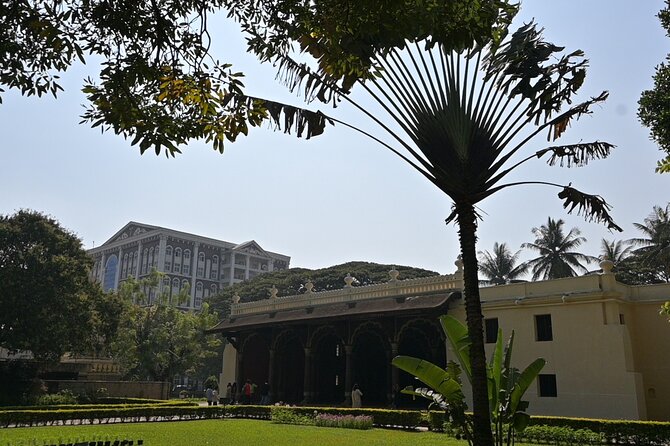
The walk begins at Tipu Sultan’s Summer Palace on Tippu Sultan Palace Road. The palace is about 230 years old and built mainly from teak wood in an Islamic architectural style. Its scale is not overwhelming, but the material and design make it an important first stop.
I would pay close attention to the wooden columns, balconies, and decorative details rather than expecting a huge palace complex. The building gives you a more personal sense of royal life than a giant ceremonial monument might. It also sets up the political story of the old quarter before you reach the temples and fort.
The scheduled visit takes about 30 minutes, and admission is included. Your guide can explain what you are seeing instead of leaving you to puzzle over the structure on your own.
This is also the point where the practical side of the outing matters. The starting address is 42 Tippu Sultan Palace Road in Kamalanagar, Chamrajpet. Ask for clear meeting instructions when you book, especially if you are unfamiliar with Bengaluru’s central neighborhoods.
Kote Venkataramana Temple and its carved stone walls
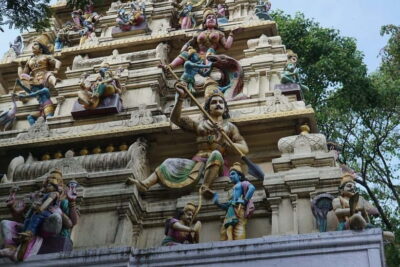
Next door is Kote Venkataramana Temple, built in 1690 by Chikkadevaraja Wodeyar. The temple is dedicated to Vishnu, and its walls contain carved figures from Indian mythology.
This stop gives the walk a useful change of mood. The palace is associated with royal power and residence. The temple is a working religious place, where design, worship, and daily practice are closely linked. You are not just looking at old stone. You are also entering a space that still has meaning for local worshippers.
The visit is planned for about 30 minutes, with no separate admission charge. Temple access depends on opening hours and seasonal changes, so do not treat entry as guaranteed at every departure time. In particular, an afternoon departure may find the Hindu temple closed.
Dress respectfully from the beginning. Your legs and shoulders should be covered. Women should carry a scarf, since one may be required at the Jain temple later. An extra pair of socks can be useful for temple visits if footwear must be removed.
Bengaluru Fort and the small surviving fragment
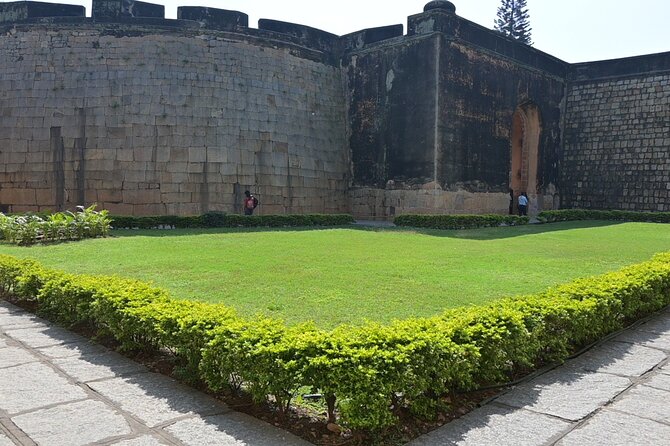
Bengaluru began with a mud fort built by Kempegowda, the founder of the city, in the 16th century. Hyder Ali rebuilt it in stone during the 1760s. Only about 5 percent of the original fort remains today.
That fact shapes the visit. Do not arrive expecting an intact fortress with long walls and grand towers. The value is in understanding the site’s place in Bengaluru’s development and seeing one of the few surviving pieces of the city’s fortified past.
The fort section lasts about 30 minutes and is included in the tour. It is neatly maintained, which helps you focus on the structure and the story. Your guide can also connect the fort to the nearby palace and market, making the old city feel like one connected district rather than a string of unrelated sights.
I find this kind of stop useful because it prevents a common mistake: judging a historic place only by how much remains. A small fragment can still explain why the area grew where it did and how Bengaluru changed from a fortified settlement into a major city.
Same city, a very different set of state rooms:
- Bangalore: Palace, Temples, Fort & Markets Walking Tour
★ 4.9 · 97 reviews - Story of Mysore Silk tour from Bangalore to experience Silk Weaving & Palace
★ 5.0 · 28 reviews - Private Tour: Palaces of Bangalore
★ 4.0 · 15 reviews - Private Tour: Mysore Palace and Srirangapatna Day Trip from Bangalore
★ 4.5 · 13 reviews
KR Market, where Bengaluru turns up the volume
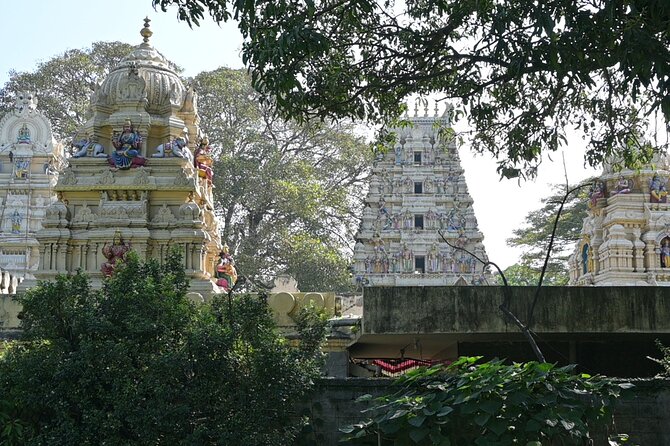
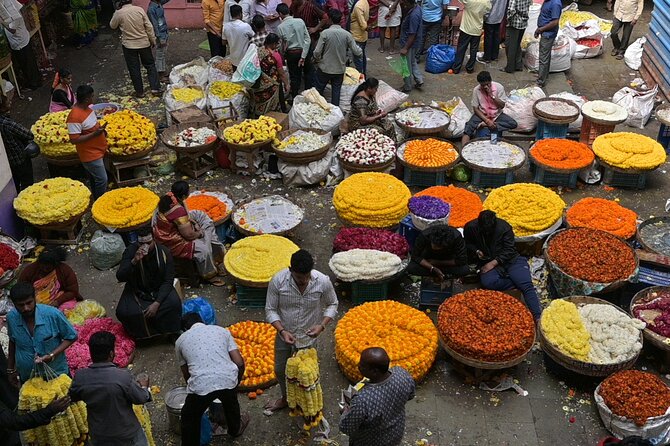
KR Market, also called Sri Krishnarajendra Market, is the walk’s most memorable stop for many people. This is not a market arranged for sightseeing. It is a working wholesale and retail area, with vendors, buyers, porters, hawkers, bicycles, cows, dogs, and a great deal of movement.
The flower section is especially striking. You might see piles of flowers being sorted, carried, and arranged for sale. The colors and smells can be wonderful, but the setting is crowded and active. One useful tip is to carry a mask if strong market odors or dust bother you.
This is where having a local guide makes the biggest practical difference. The streets can feel confusing, and it is easy to focus so hard on photographs that you lose track of the group. Guides such as Vijay have helped people navigate the market, explain what is happening, and point out details you might otherwise pass without noticing.
I would not rush this section. Listen for explanations about how the market works, watch the people doing the physical work, and keep your belongings secure. The market is a place to observe respectfully, not a stage arranged for visitors.
The energy can also make this the most tiring part of the outing. If you are sensitive to noise, crowds, heat, or strong smells, a morning departure may suit you better. One guide also recommends morning timing because it generally brings smaller crowds and cooler conditions.
The Jain temple and a quieter final stop
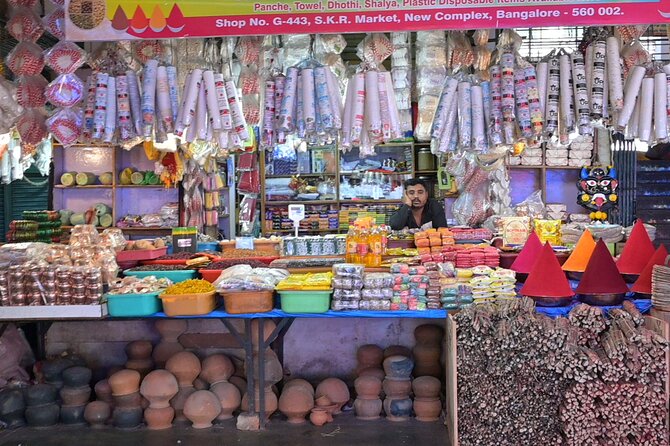
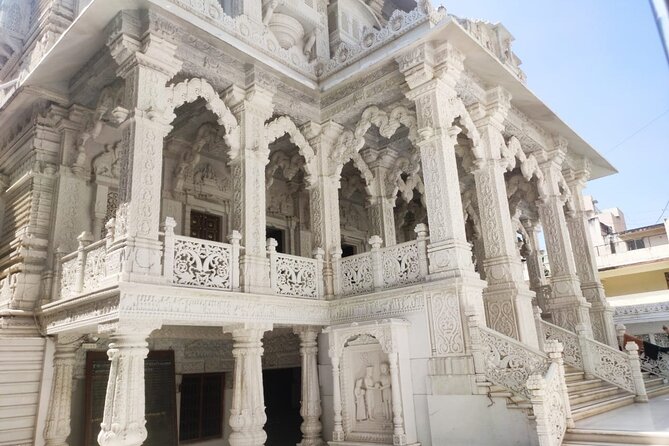
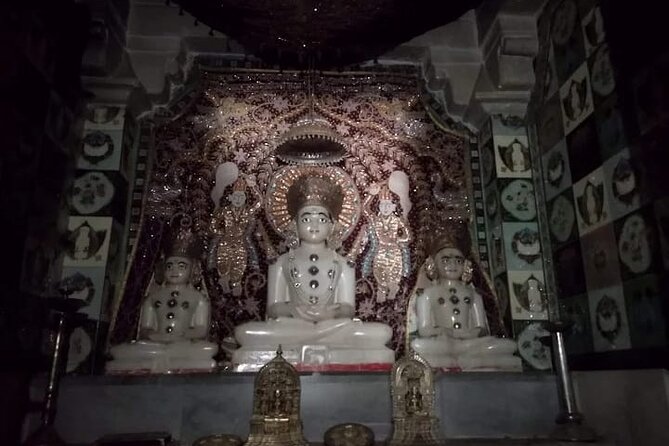
The final stop is Shri Adinath Jain Shwetamber Mandir on Chickpet Road. Jainism is one of India’s oldest religions, with a history of at least 2,500 years, and its central teachings include non-violence and vegetarianism.
After the market, the Jain temple can feel like a change of speed. The visit lets you compare Jain religious practice with the Hindu temple earlier in the walk. It also adds another important part of India’s religious history without requiring a separate trip across the city.
The temple is open to visitors only according to its operating hours and seasonal rules. Follow the clothing guidance carefully: cover your shoulders and legs, and bring a scarf if you need one. You may also need to remove footwear, which is why an extra pair of socks can be handy.
The tour ends close to Chickpet Metro Station. That is a real advantage. You can continue to another part of Bengaluru without arranging a separate ride, and guides have sometimes walked people to the metro or helped them work out the next leg of their journey.
What the $33.55 price really buys you
At $33.55 per person, the cost is reasonable if you value interpretation and local navigation rather than simply entering monuments. Admission to the monuments is included, and the route covers five distinct places in one outing.
The price is less attractive if you only want to see the palace or fort. You could spend less by visiting individual places independently, though you would lose the connected explanation and the help of a local guide in KR Market.
Transport and lunch are not included. The operator may offer hotel transport to and from the meeting point for a small extra fee, so ask about that if you are staying far from the center or want to avoid arranging local transport. Tips for the guide are also separate.
For me, the strongest value is the combination of access and orientation. The flower market, smaller temple streets, and old city lanes are exactly the places that can be difficult to handle alone on a first visit. If you have only a short stay, this route gives you a fast, practical introduction.
Morning or afternoon, and what to wear
The departure time can change the character of the walk. Morning is the safer choice if you want cooler conditions and fewer people at some sites. It also gives you a better chance of entering the Hindu temple, since the temple may be closed during an afternoon tour.
An afternoon walk can still be worthwhile, especially if the market is your main interest. The city may feel more active, but you should be prepared for heat, noise, and tired legs by the final stop.
Wear comfortable shoes suitable for a city walk. Choose clothing that covers your shoulders and legs from the start so you do not need to adjust your outfit at the temples. Carry a scarf, water, and an extra pair of socks if you prefer to be prepared.
The walk is near public transportation, but hotel pickup is not part of the standard price. The group can include up to 10 people, and guides speaking French, Italian, or German are available only when requested and subject to availability.
Who should book this walk
I would recommend it to a first-time visitor who wants more than a palace checklist. It suits you if you like street life, religious architecture, local explanations, and the chance to see how a historic district functions today.
It is also a smart choice for solo visitors. A guide can make the market easier to navigate, and several guides have helped people reach the metro or find onward transport after the walk. The route is short enough to fit into a busy schedule but full enough to feel like a proper half-day outing.
You may want to skip it if you dislike crowds, strong smells, uneven streets, or religious dress rules. It is not a relaxed garden walk, and the market can be intense. You should also avoid booking on the assumption that every temple will be open at every time.
Should you book the Bengaluru Pété Walk?
Book it if you want to feel central Bengaluru rather than simply look at it. The palace, fort, temples, and market create a strong mix, while guides such as Vijay, Raghu, Vasuki, and Phaneesh add history, local context, and practical help.
Choose a morning departure if entering the Hindu temple matters to you, and dress for temple requirements from the start. If you can accept noise and crowds, this is a useful, well-priced way to see Bengaluru’s old quarter in a single outing.
FAQ
How long does the Bengaluru Pété Walk last?
The walk takes approximately 2 hours 30 minutes to 3 hours.
How much does the tour cost?
The listed price is $33.55 per person.
Where does the tour begin?
It begins at Tipu Sultan’s Summer Palace, 42 Tippu Sultan Palace Road, Kamalanagar, Chamrajpet, Bengaluru, Karnataka 560018, India.
Where does the tour end?
It ends at Shri Adinath Jain Shwetamber Mandir on Chickpet Road, Bengaluru. The temple is close to Chickpet Metro Station.
What places are included?
The route includes Tipu Sultan’s Summer Palace, Kote Venkataramana Temple, Bengaluru Fort, Sri Krishnarajendra Market, and Shri Adinath Jain Shwetamber Mandir.
Are admission fees included?
Entry fees to all monuments are included. Temple entry remains subject to opening hours and seasonal variations.
Is transport or lunch included?
No. Lunch and standard transport are not included. Hotel transport to and from the walk venue may be available for a small additional fee.
What should I wear for the temples?
Your clothing should cover your legs and shoulders. Women should carry a scarf, and an extra pair of socks may be useful for temple visits.
How large is the group, and which languages are available?
The group has a maximum of 10 people. French, Italian, and German-speaking guides are subject to availability. English-speaking guides such as Vijay, Raghu, Vasuki, Varun, and Phaneesh have led this walk.
Can I cancel the booking?
You can cancel up to 24 hours before the experience start time for a full refund. Cancellations or changes made less than 24 hours before the start time are not accepted for a refund.
More Walking Tours Past the Palaces in Bangalore
- Bangalore Walking Tour KR Flower Market,Fort,Tippu palace
★ 5.0 · 8 reviews - Bangalore City Tour: Walking, Palace & Temples
★ 3.6 · 7 reviews - Venice: Doge’s Palace and St Mark’s Basilica Walking Tour
★ 4.4 · 6,291 reviews - Prague: 3-Hour Walking Tour of Old Town & Prague Castle
★ 4.7 · 5,696 reviews
Just added around Bangalore
- 2 Day Bandipur Safari and Mysore Palace Tour★ 4.5 · 4 reviews
- Story of Mysore Silk tour from Bangalore to experience Silk Weaving & Palace★ 5.0 · 28 reviews
- Lalbagh+Bull Temple+Tipu Palace+Market+Lunch=Bangalore City Tour★ 5.0 · 9 reviews
- Private Tour: Mysore Palace and Srirangapatna Day Trip from Bangalore★ 4.5 · 13 reviews
- Private Tour: Bangalore City Tour Including LalBagh & Tipu Palace★ 4.0 · 4 reviews
- Private Tour: Palaces of Bangalore★ 4.0 · 15 reviews
- Bangalore Walking Tour KR Flower Market,Fort,Tippu palace★ 5.0 · 8 reviews
- Bangalore City Tour: Lalbagh, Tipu Palace & Bull Temple★ 4.4 · 3 reviews
Bangalore Palace Tours, compared.

Old Bangalore Historical Walk thro Palace, Temples, Fort & Market
Read our review →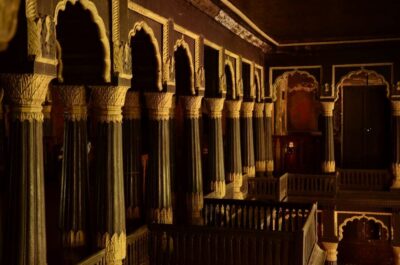

Story of Mysore Silk tour from Bangalore to experience Silk Weaving & Palace
Read our review →
Private Tour: Mysore Palace and Srirangapatna Day Trip from Bangalore
Read our review →
Lalbagh+Bull Temple+Tipu Palace+Market+Lunch=Bangalore City Tour
Read our review →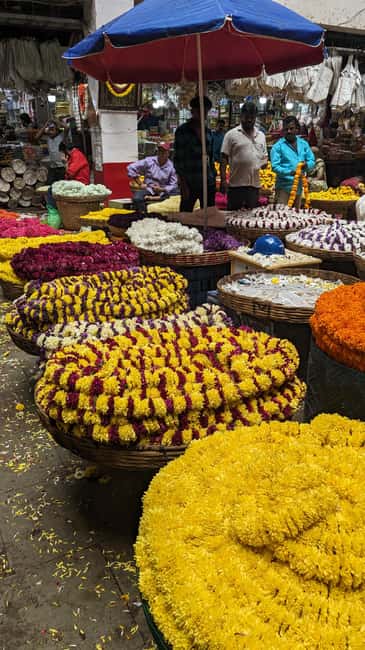
Bangalore Walking Tour KR Flower Market,Fort,Tippu palace
Read our review →Browse the lists this tour appears in