
REVIEW · ROYAL CASTLE TOURS
Budapest: Buda Castle Walking Tour & Folk Music Performance
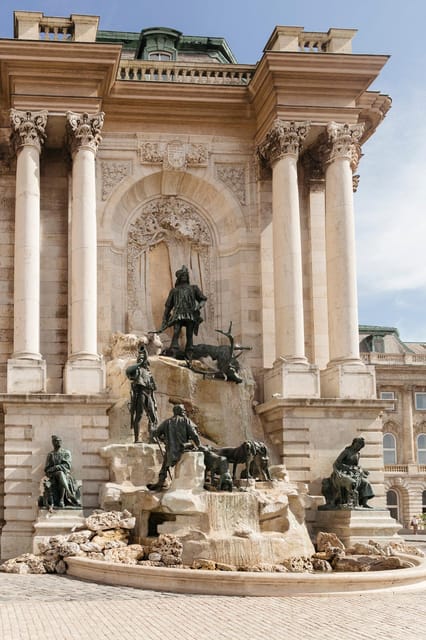
The best part of this Buda Castle walk comes at the end: guide Kristóf Kovács sings Hungarian folk songs and demonstrates traditional dance steps. It is an unusual finish to a history tour, and it gives you a direct taste of local culture rather than another view from a fortress wall.
I like the route’s strong story line, from Matthias Church and Fisherman’s Bastion to the Royal Palace. I also like the personal touch: Kristóf brings visual aids, family stories, and enthusiasm for Hungarian traditions. The main consideration is that this is an exterior walking tour, so monument entry fees are not included, and the route may feel brisk if you want long indoor visits.
Key points to know before booking
- Kristóf’s folk performance is the tour’s signature feature: Expect Hungarian singing and simple traditional dance demonstrations at the close of the walk.
- The route covers the main Buda Castle sights: You’ll see Matthias Church, Fisherman’s Bastion, Tárnok Street, Buda Castle, and Tóth Árpád Promenade.
- The views face Pest: Several stops offer broad views across the Danube side of Budapest, including a look toward the city’s historic funicular.
- The tour is built around stories: Expect explanations of King Matthias, royal life, architecture, wartime change, and the people who lived on Castle Hill.
- It works best for small groups: Private and small-group options are available, giving you more room to ask questions.
- Prepare for outdoor walking: Wear comfortable shoes, carry water, and dress for changing weather because the tour runs in all conditions.
Why this Buda Castle walk feels different
Buda Castle District can easily become a checklist of pretty buildings. Matthias Church, Fisherman’s Bastion, the palace, and the views are all worth seeing, but the area makes more sense when someone explains how the hill changed over time.
That is the job Kristóf takes on. He connects the buildings to Hungarian kings, government, war, architecture, food, music, and daily life. The result is less a march from one photo stop to the next and more a guided introduction to the historic heart of Buda.
The folk performance gives the tour a clear identity. At the end, Kristóf sings traditional songs from different regions of Hungary and shows a few folk dance steps. This is not a formal concert, and you should not book it expecting a full evening performance. Think of it as a short, personal cultural presentation from a guide who enjoys sharing his country.
That personal element has earned the tour a 4.9 rating from 13 reviews. The strongest praise focuses on Kristóf’s warmth, patience, storytelling, and willingness to answer questions. Several people describe the performance as the moment that made the walk memorable.
More Royal Castle Tours in Budapest
- Budapest: Buda Castle Cave Tour
★ 4.7 · 5,677 reviews - Budapest: Buda Castle Walk with Saint Stephen’s Hall
★ 4.5 · 3,012 reviews - Walking tour in the Buda Castle incl. Fisherman’s Bastion
★ 5.0 · 467 reviews
Starting at Holy Trinity Square
The meeting point is in front of the Holy Trinity Statue, called Szentháromság-szobor, in Holy Trinity Square. Look for the guide holding a board with the MAGGINO logo, a dark blue stork carrying an orange musical note.
This is a practical place to begin because the square puts you close to several of the district’s main sights. You are already on Castle Hill, so the tour can get to the monuments without spending much time on transport.
You should arrive ready to walk. The stated duration is two to two and a half hours, although a private tour can run longer if you ask many questions or add an interior visit on your own. One private experience described by a participant lasted about three and a half hours and included the Church of Our Lady of Buda Castle, with the admission ticket purchased separately.
Matthias Church and the story of King Matthias
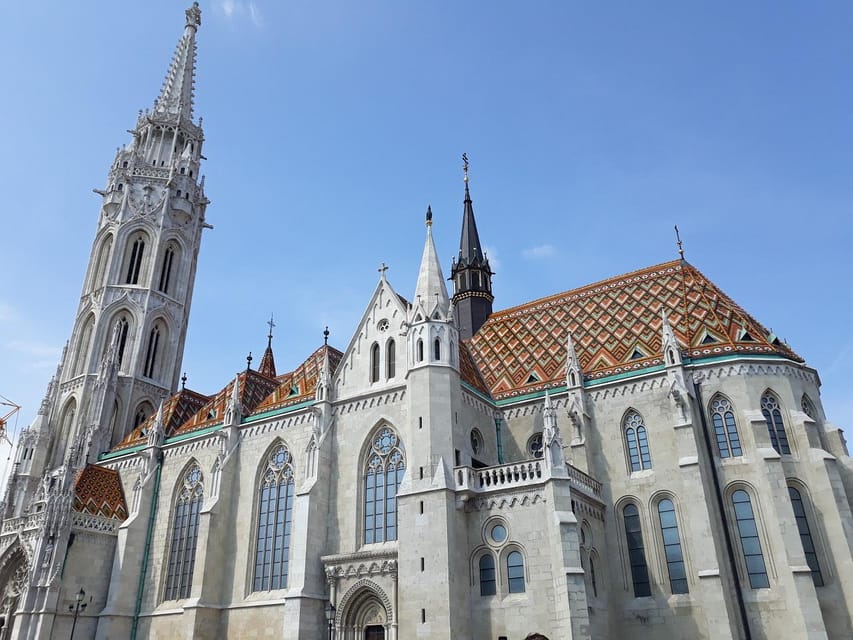
The first major stop is Matthias Church, one of the most striking buildings in the Castle District. The tour focuses on the exterior, so the church admission fee is not included. If you want to go inside, treat that as a separate decision and budget for your own ticket.
Kristóf uses the church and surrounding square to introduce the political and cultural importance of Castle Hill. One major theme is King Matthias, one of Hungary’s most beloved rulers. He is remembered not only as a powerful king but also as a patron of Renaissance culture.
The palace under Matthias became a center for Renaissance learning and art in Europe. The stories about his fountains bubbling with wine add a lively human detail to the grand royal setting. You get a sense of a court that wanted to display wealth, culture, and sophistication, not simply military power.
This is where a strong guide matters. A building like Matthias Church can look beautiful without telling you much. Kristóf’s approach, based on the available descriptions of his tours, adds context about rulers, architecture, and the people connected to the site. He also uses before-and-after visual aids, which can help you picture how Budapest and the Castle District changed across the centuries.
Fisherman’s Bastion and the Pest panorama
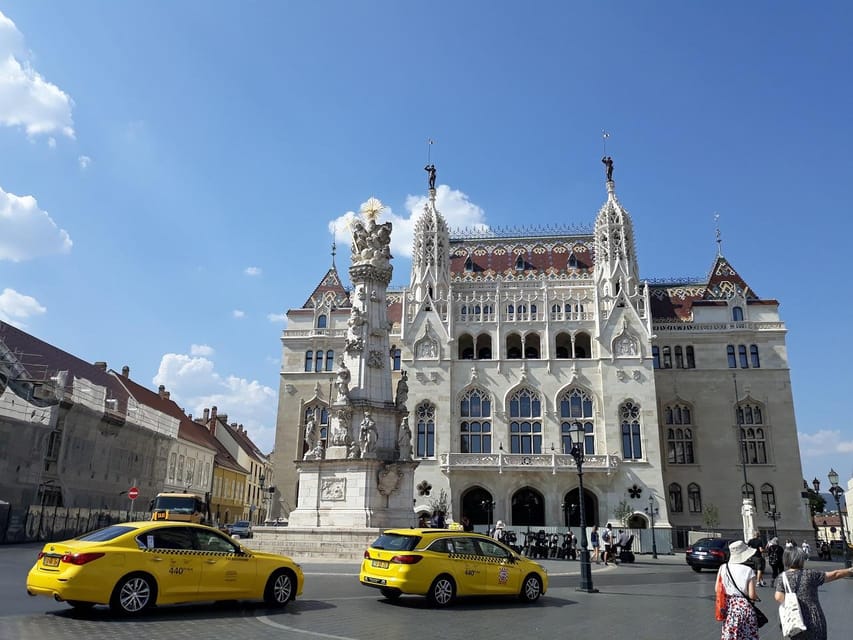
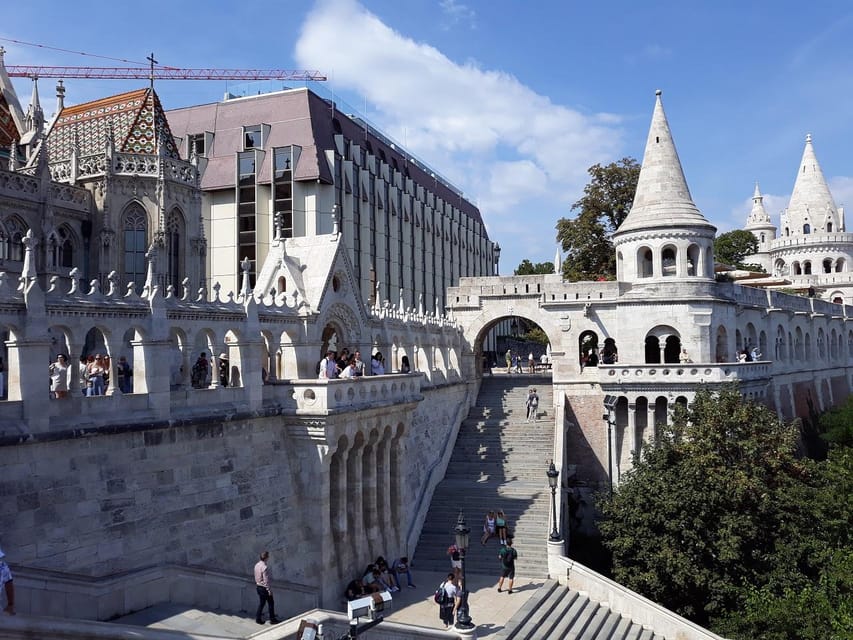
From Matthias Church, the walk continues to Fisherman’s Bastion. Its terraces are among Budapest’s most popular viewing points, and the reason is simple: you get an open view across the Danube toward Pest.
Bring your camera, but do not let the photo stop crowd out the explanation. The view gives you a useful map of Budapest. You can see how Buda’s hilltop position differs from the flatter Pest side, and you can better understand why this district mattered to Hungarian rulers and governments.
The route also points out the second funicular built in Europe. This detail adds a transport story to the view. The funicular is a reminder that Castle Hill was not always as easy to reach as it is today, and that moving people up the steep hill has long been part of the city’s practical problem.
The drawback here is that the most famous viewpoints can be busy. Since this walk operates in all weather, the quality of the stop depends partly on conditions. Rain, wind, or heavy cloud can reduce the appeal of a panoramic view, so bring weather-appropriate clothing rather than relying on a sunny forecast from the morning.
More Royal Castle Tours in Hungary
- Buda Castle Tour: Fisherman’s bastion and hidden gems
★ 5.0 · 251 reviews - Buda Castle District Walk with Entry to Matthias Church
★ 5.0 · 170 reviews - Budapest: The WWII Siege of Buda Castle & Bomb Shelter Tour
★ 4.8 · 130 reviews - Buda Castle Walking Tour: Fishermans Bastion – Royal Palace
★ 4.9 · 128 reviews
Tárnok Street and Hungary’s changing architecture
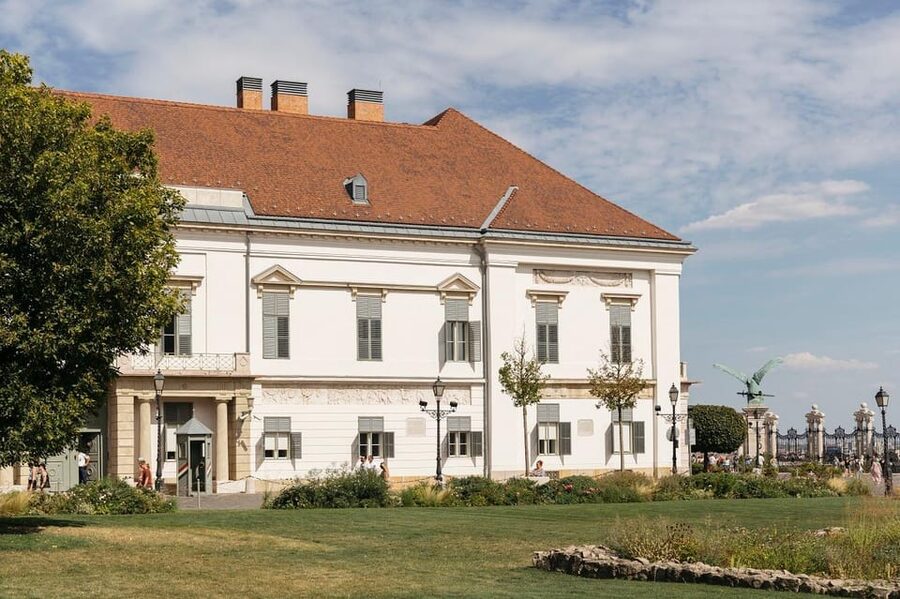
Next comes Tárnok Street, one of the more useful stops for anyone interested in buildings rather than only big monuments. The street brings together many architectural styles associated with historic Hungary up to the end of the 19th century.
You will also see building parts nearly 500 years old. That mixture is important because the Castle District is not a single-period museum set. It has been repaired, altered, damaged, and rebuilt across many generations.
Kristóf explains how the buildings and street reflect different periods. That can help you read the district with more care. Look for changes in façades, rooflines, windows, and masonry rather than treating every old-looking surface as part of the same original design.
Two major Hungarian government buildings also appear along the route. The walk does not turn into a formal government tour, and the buildings are viewed from outside, but their presence helps show that Castle Hill has remained a place of power as well as a historic neighborhood.
Walking toward Buda Castle and the Royal Palace
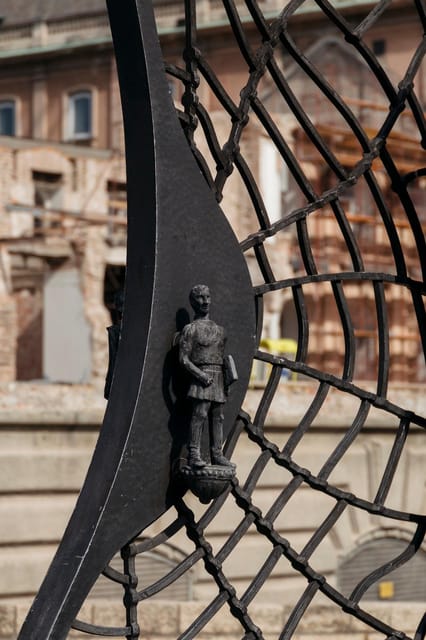
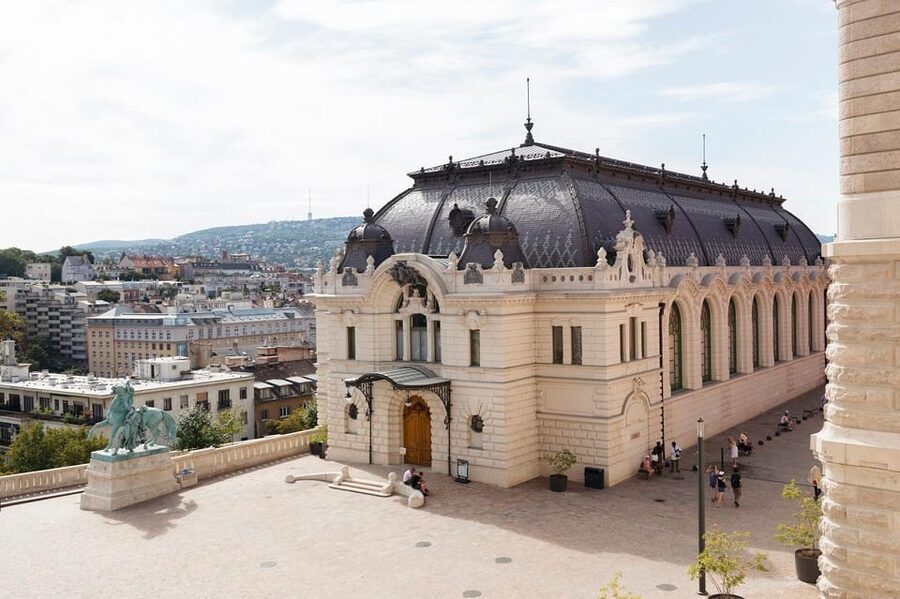
The longest section leads toward Buda Castle, also known as the Royal Buda Palace. The route allows about 50 minutes for this part, including scenic views along the way. That makes it the central section of the walk, not a quick photo stop.
The palace served as the royal seat of Hungarian rulers for centuries. Its importance is political, architectural, and symbolic. By this point, you have already heard about King Matthias and Renaissance culture, so the palace becomes more than a large building at the end of the route. It becomes the setting where royal ambition, public power, and national memory came together.
The tour includes an exterior visit only. You will not automatically enter palace museums or other paid attractions. That is a benefit if you want a guided overview before deciding what to visit later, but it may disappoint you if you expect a full palace interior tour.
I see this as a good design for a first visit. You get the layout and major stories without spending the entire afternoon inside one institution. You can then return to the sights that interest you most, using the guide’s explanations to choose where your time and admission money should go.
Tóth Árpád Promenade and a quieter view
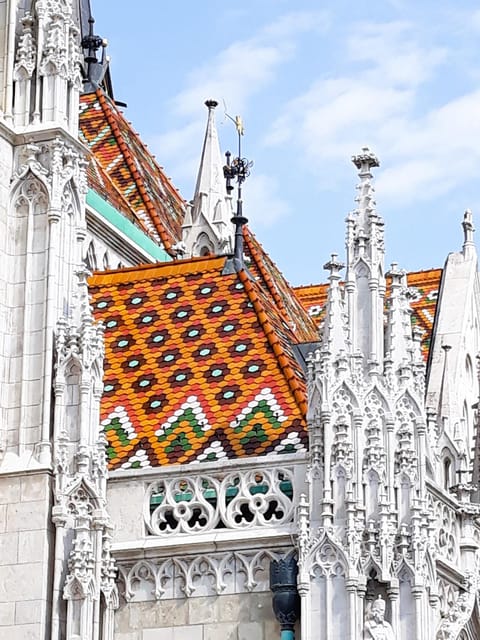
The final walking section reaches Tóth Árpád Promenade. This part adds a change of pace after the main monuments and palace area.
The promenade is used for scenic views and conversation. It gives you another angle on Buda and the city beyond, while keeping the tour outdoors. It is also a useful point for asking follow-up questions because the main stops are behind you and the guide can tie the stories together.
The route returns to Holy Trinity Square. In total, expect around two hours of walking and explanation, with the exact length depending on the group and the guide’s pace. The route includes several walking segments, including approximately 20 minutes to Matthias Church, 15 minutes to Fisherman’s Bastion, and another 20 minutes through Tárnok Street before the longer approach to Buda Castle.
The folk songs and dance at the end
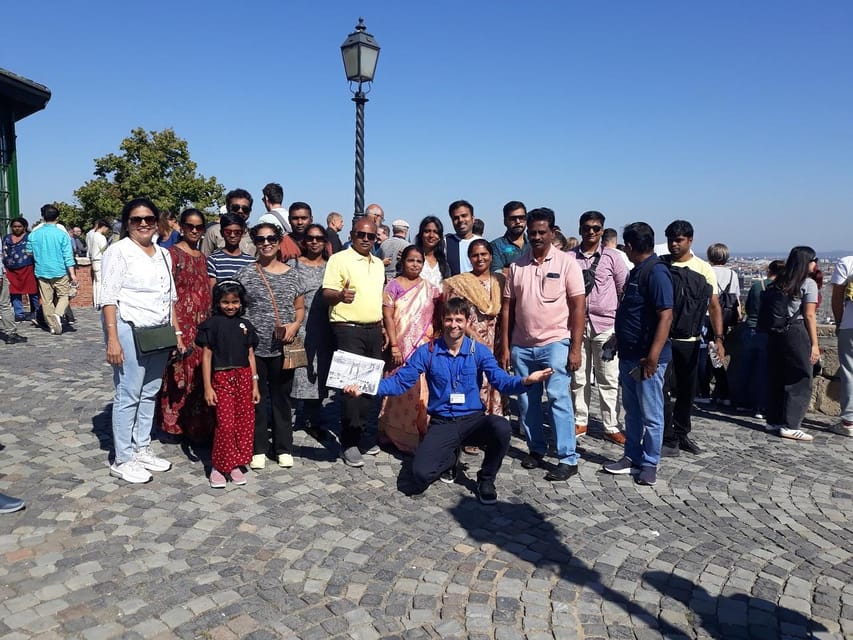
The closing performance is what separates this tour from a standard Castle District walk. Kristóf sings some of the most beautiful Hungarian folk songs and demonstrates traditional dance steps. He also explains the cultural background rather than treating the performance as a surprise with no context.
The reviews give this part unusual praise. One person specifically valued songs from different regions of Hungary. Another described the singing and dance as moving, while another appreciated the way Kristóf explained the traditions. These details suggest that the performance is not an afterthought added simply to fill the final minutes.
You should keep your expectations in the right place. This is a short guide-led presentation, not a professional stage show or an evening of folk music. Its appeal is the direct contact. You are hearing a local guide sing and talk about traditions that matter to him.
That same personal quality appears in the stories Kristóf tells about his grandmother. Such family details can make a broad subject, Hungarian culture, feel more grounded. You are not only hearing about a custom in the abstract. You are hearing how cultural memory can pass through a family.
How much value do you get for $58?
At $58 per person, the tour is priced above a basic group walk, so you should judge it on more than the number of sights covered.
You are paying for a licensed Hungarian guide, a focused route through the Castle District, historical interpretation, time for questions, and a live folk performance. If you want a guide who simply points out buildings and gives short facts, you may find cheaper options that meet your needs.
The value improves if you care about context and personal contact. Kristóf’s patient answers, visual aids, local stories, and performance add material that is difficult to get from a self-guided walk. The private or small-group format can also make the price more reasonable if you want to ask detailed questions or move at a more personal pace.
The cost does not include entry tickets. That is important. The tour is mainly an outdoor orientation and storytelling experience, so set aside extra money if you want to enter Matthias Church or another paid monument. You may also choose to return to the palace area afterward for an indoor visit.
Who should book this walk?
I would recommend it to first-time visitors who want a clear introduction to Buda Castle District. It is especially suitable if you like history explained through people and stories rather than dates alone.
It also suits anyone curious about Hungarian culture beyond architecture. The songs and dance give you something you are unlikely to get from a normal sightseeing route.
Families and small groups may appreciate the interactive style, provided everyone is comfortable walking outdoors for two hours. The guide’s willingness to answer questions is useful for children or adults who want more than a prepared speech.
You should think twice if your main aim is to spend a long time inside the church, palace, or museums. This experience visits monuments from the outside and moves between several sites. It is best viewed as a guided overview, not a museum tour.
Wear comfortable shoes. Bring water. Dress for the forecast, but remember that the tour operates in all weather. The hill, paved streets, and outdoor viewing points make practical clothing more important than polished sightseeing outfits.
FAQ
How long does the Buda Castle walking tour last?
The tour lasts approximately two to two and a half hours. A private visit may take longer if the group asks many questions or adds an interior visit independently.
Where does the tour meet?
The meeting point is in front of the Holy Trinity Statue, Szentháromság-szobor, at Holy Trinity Square, Szentháromság tér.
How do I find the guide?
The guide holds a board with the MAGGINO logo. It shows a dark blue stork with an orange musical note in its beak and the word MAGGINO underneath.
Which language is the tour offered in?
The live guided tour is offered in English.
Which sights are included in the walking route?
The route includes Matthias Church, Fisherman’s Bastion, Tárnok Street, Buda Castle, and Tóth Árpád Promenade. The walk begins and ends at Holy Trinity Square.
Are monument entry tickets included?
No. The experience includes exterior visits, but entry tickets to the monuments are not included.
Is the folk performance part of the tour?
Yes. At the end, the guide sings Hungarian folk songs and demonstrates traditional Hungarian folk dance steps.
Is the tour private or shared?
Private and small-group options are available.
What should I bring?
Wear comfortable shoes and weather-appropriate clothing. Water is recommended, and the tour operates in all weather conditions.
Should you book the Buda Castle walk?
Book it if you want the main Buda Castle sights explained by a warm, engaging local guide, with a personal folk performance at the end. Kristóf’s storytelling, visual aids, family connections, and enthusiasm for Hungarian culture give the walk more character than a basic monument tour.
Skip it if you want extensive indoor sightseeing or a full concert. For most first visits, though, the combination of Matthias Church, Fisherman’s Bastion, royal history, Pest views, and live Hungarian song makes $58 a fair price, especially in a private or small-group setting.
More Walking Tours Past the Palaces in Budapest
- Palace District Evening Culinary, Wine, and History Walk
★ 5.0 · 55 reviews - Budapest: Buda Castle Walking Tour in German
★ 4.8 · 51 reviews - Budapest: Buda Castle Private Walking Tour
★ 4.9 · 46 reviews - Private Buda Castle Walking Tour with Cake and Matthias Church
★ 5.0 · 40 reviews
Just added around Budapest
- Sisi’s Royal Palace Tour with Hotel pickup & Cake in Palace Café★ 5.0 · 5 reviews
- Buda Castle Walking Tour with Audioguide on Your Smartphone★ 4.0 · 24 reviews
- Legacy of Sissi Royal Palace of Godollo Tour with Cake and Coffee★ 4.5 · 7 reviews
- Sisi’s Godollo Palace Tour from Budapest★ 4.0 · 56 reviews
- Gödöllő – Half-Day Private Tour to the Royal Palace★ 5.0 · 5 reviews
- Private Buda Castle Walk with Entry to Matthias Church★ 4.5 · 8 reviews
- Private Buda Castle Walking Tour with Cake and Matthias Church★ 5.0 · 40 reviews
- Palace District Evening Culinary, Wine, and History Walk★ 5.0 · 55 reviews
Royal Castle Tours, compared.
Stonehenge, Windsor Castle, and Bath from London
Read our review →
Dracula’s Castle, Peles Castle, & Brasov Old Town
Read our review →
Neuschwanstein & Linderhof Castle Full-Day Trip
Read our review →
Dracula Castle, Peles Castle & Brasov Old Town
Read our review →
Prague Castle 2.5-Hour Tour Including Admission Ticket
Read our review →
Stonehenge, Windsor Castle and Bath with Pub Lunch in Lacock
Read our review →
Neuschwanstein & Linderhof Castle-Fairytale Day Tour from Munich
Read our review →
Browse the lists this tour appears in