
REVIEW · EDINBURGH PALACE TOURS
Edinburgh: Palace of Holyroodhouse Entry Ticket
The most gripping part of Holyroodhouse is the link between royal ceremony and personal drama. You move from rooms still used by the King to the chambers where Mary Queen of Scots witnessed the murder of her secretary, Rizzio. That contrast gives the palace its edge.
I like the excellent multimedia guide, which lets you pause or skip ahead, and the chance to continue outdoors to Holyrood Abbey and the gardens. At $29, the ticket is fair for a major Edinburgh sight, though the advertised 1.5 hours can feel short if you want to study every painting, walk the grounds slowly, and stop at the café.
Key points to know
- Mary Queen of Scots’ chambers: See the setting for one of Scotland’s most notorious royal crimes.
- An active royal residence: The palace is not just a museum. The King still uses rooms here for official and private business.
- Multimedia guide included: Choose from several languages, including English, Spanish, French, German, Italian, Portuguese, Russian, Chinese, Japanese, and Scots Gaelic.
- Holyrood Abbey ruins: The visit continues beyond the palace with atmospheric remains of the 12th-century abbey.
- Self-paced route: You can pause at important rooms, replay sections, or move along when the palace is busy.
- Useful timing tip: Set aside more than 90 minutes if you want the gardens, café, and Great Gallery to receive proper attention.
Starting at the foot of Edinburgh’s Royal Mile
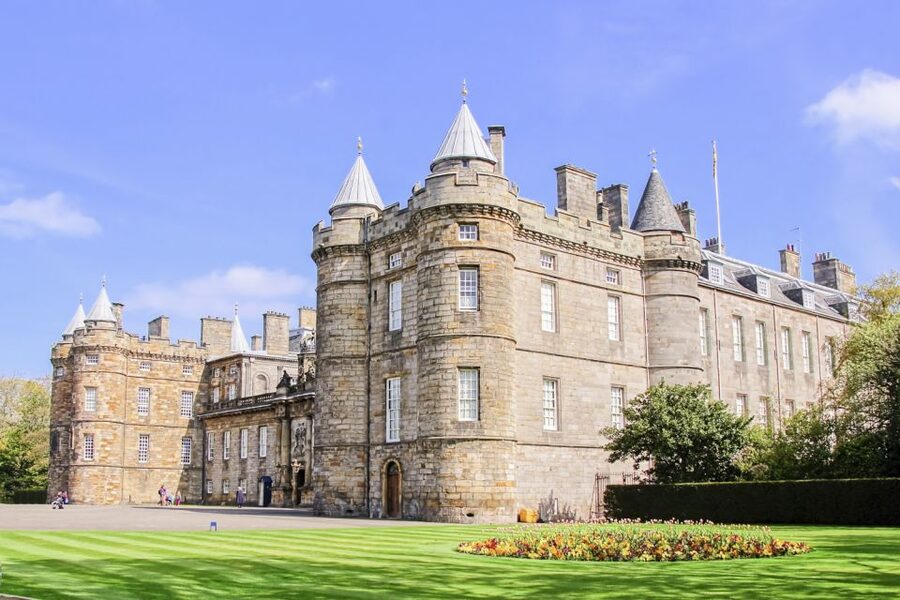
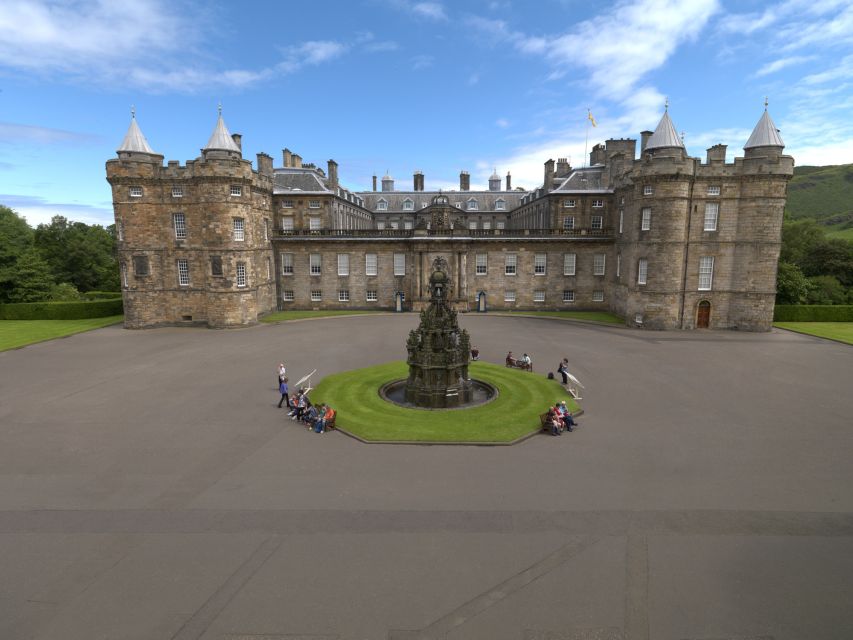
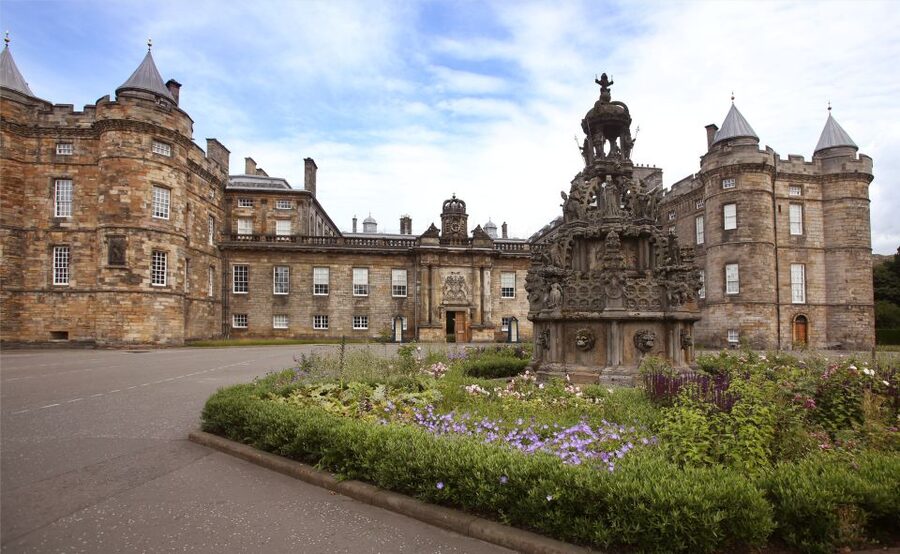
Holyroodhouse sits at the eastern end of the Royal Mile, giving you an easy way to pair it with a walk through Edinburgh’s Old Town. The palace feels different from Edinburgh Castle. The castle rises above the city in a defensive position, while Holyroodhouse opens onto Holyrood Park and presents a more domestic, ceremonial side of monarchy.
You exchange your voucher for an entrance ticket at the palace ticket office. Security checks may apply, and some belongings might need to be checked before you enter. Smoking and electronic cigarettes are not allowed inside, and mobile phones must be switched off in the palace.
The visit follows a one-way route for safety. That matters because you cannot always turn back to revisit a room. If you see a detail that catches your eye, use the multimedia guide at once or make a mental note before moving on.
More palace entry tickets in Edinburgh:
- Palace of Holyroodhouse Admission Ticket
★ 4.5 · 450 reviews - Edinburgh Castle Guided Walking Tour & Holyrood Palace Ticket
★ 5.0 · 50 reviews - Venice: Doge’s Palace Reserved Entry Ticket
★ 4.6 · 42,716 reviews
The State Apartments show royal taste over time
The State Apartments form the heart of the indoor visit. These rooms were shaped by different monarchs and periods, so you are not looking at one single decorating scheme. Fine plasterwork ceilings, Brussels tapestries, furnishings, and paintings show how royal interiors changed as tastes shifted.
I like this part best when you look beyond the grand objects. Notice how the rooms are arranged for ceremony, reception, and display. A palace such as this was designed to make power visible. Even an apparently quiet drawing room had a clear purpose, from receiving important people to preparing for formal events.
The multimedia guide helps put each room in context. It is not simply a recorded list of objects. The hand-held device combines audio with visual material, and short videos make the explanations easier to follow. You can listen at your own speed, repeat a section, or continue without waiting for a group.
That freedom is useful on a busy day. Some rooms may have more people gathered around the guide’s explanation, while others give you space to look closely. The self-guided format also works well for families because the palace offers a children’s version, with a badge available at the end of the tour.
The Throne Room explains royal ceremony
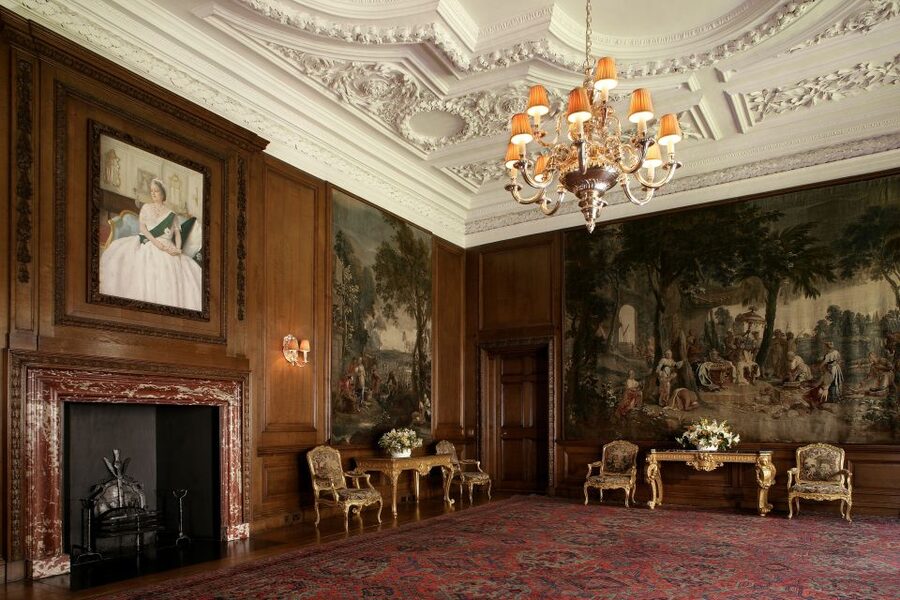
The Throne Room offers a look at the formal side of palace life. It was used when lunch was served to the Knights and Ladies of the Order of the Thistle during the installation of a new knight.
That detail helps you picture the room as a working ceremonial space rather than a static display. The grandeur is not only in the throne or furnishings. It is in the ritual, the seating, the guests of honor, and the careful order of events.
Your guide explains the room’s purpose and its place within the palace. You will likely spend only a short time here, but it provides a useful bridge between the palace’s historic role and its continued royal use.
The Morning Drawing Room remains part of royal life
The Morning Drawing Room is where the King holds private audiences. This is one of the most valuable ideas conveyed during the visit: Holyroodhouse is still an official residence, not only a preserved historic building.
Some royal rooms remain in use for official ceremonies, private engagements, and receptions. That gives the palace a slightly more restrained feel than a fully furnished historic house. Certain areas are presented with care because they still belong to an active institution.
For you, the important point is to look at the rooms in two ways. They preserve memories of past monarchs, but they also support present-day duties. The palace’s royal identity is not confined to portraits and old furniture.
A few more palace visits around Edinburgh worth a look
- From Edinburgh: Outlander, Palaces, and Jacobites Day Trip
★ 4.7 · 937 reviews - Edinburgh: The Outlander, Palaces & Jacobites Tour
★ 5.0 · 444 reviews - Wallace monument, Stirling Castle, Linlithgow Palace Private Tour
★ 5.0 · 46 reviews - St Andrews and Falkland Palace Tour from Edinburgh
★ 4.8 · 27 reviews
The Great Gallery is the palace’s grandest room
The Great Gallery is the largest room in Holyroodhouse and one of the visual highlights of the route. It is used for Investiture ceremonies, when people named in the New Year’s Honours List or the King’s Birthday Honours List receive their awards.
The room also displays Jacob de Wet’s portraits of real and legendary kings of Scotland. These paintings give the gallery a strong sense of national storytelling. Some figures belong to recorded history, while others come from Scotland’s older traditions and legends.
Take time here to look up and across the full length of the room. The scale is easier to appreciate from a little distance. The guide also helps explain why the portraits were commissioned and how the gallery functions during modern ceremonies.
Photography is not allowed inside the palace. If you like recording every room, this restriction may disappoint you. On the other hand, it encourages you to pay attention to the actual objects rather than viewing the palace through a camera screen.
Mary Queen of Scots brings the past close
Mary Queen of Scots’ chambers are the emotional center of the visit. The rooms are associated with the dramatic events of her reign, including the brutal murder of her secretary, David Rizzio, by her jealous husband, Lord Darnley.
The story is powerful because it took place in a private royal setting. You are not hearing about a battle far away or a treaty signed by strangers. You are standing near rooms connected with fear, jealousy, ambition, and betrayal inside the royal household.
The guide gives this section the background it needs without asking you to know Scottish history in advance. I recommend slowing down here, even if you normally move quickly through historic interiors. Mary’s chambers help explain why Holyroodhouse feels more intimate than a fortress.
The palace also shows how Scotland’s political story was tied to personalities. Mary’s life, her marriages, and the conflicts around her court remain central to the way this building is understood.
Holyrood Abbey adds stone, silence, and atmosphere
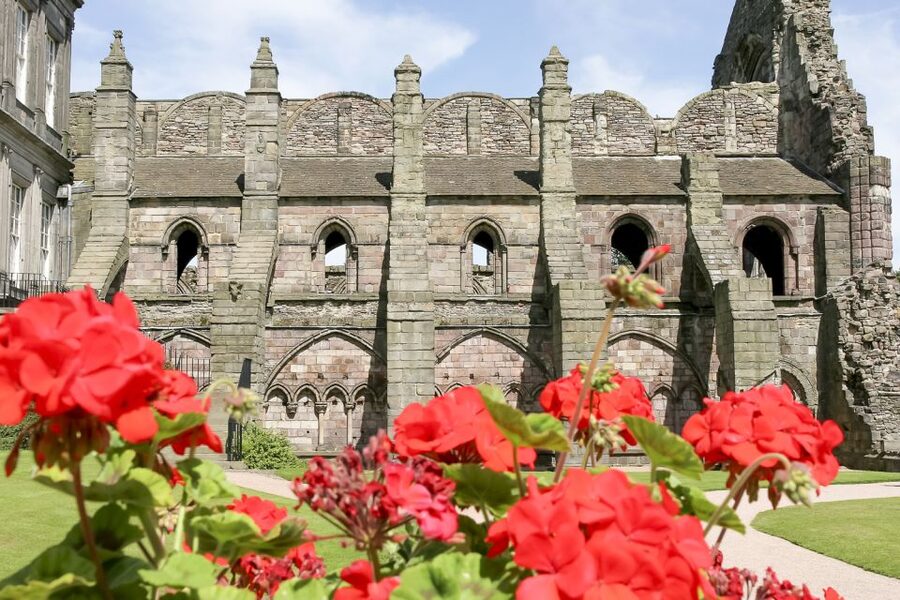
After the palace interiors, the route continues to the ruins of Holyrood Abbey. The abbey dates from the 12th century, and its remaining walls and arches provide a strong contrast with the polished State Apartments.
The ruins are easy to appreciate without a long explanation. Open sky replaces the old roof, and the worn stone makes the age of the site clear. The audio guide adds context about events connected with the abbey and helps you picture how the chapel once worked.
This part is especially worthwhile if you have spent most of your Edinburgh time inside museums and crowded historic rooms. The abbey gives you room to breathe and a chance to notice the details of the masonry.
Weather will affect the experience. Holyroodhouse can be attractive even in rain, but the abbey and gardens are outdoor stops, so sensible footwear and a waterproof layer will help. The route is generally manageable, though one narrow stairway may require extra care.
The gardens frame the palace and Holyrood Park
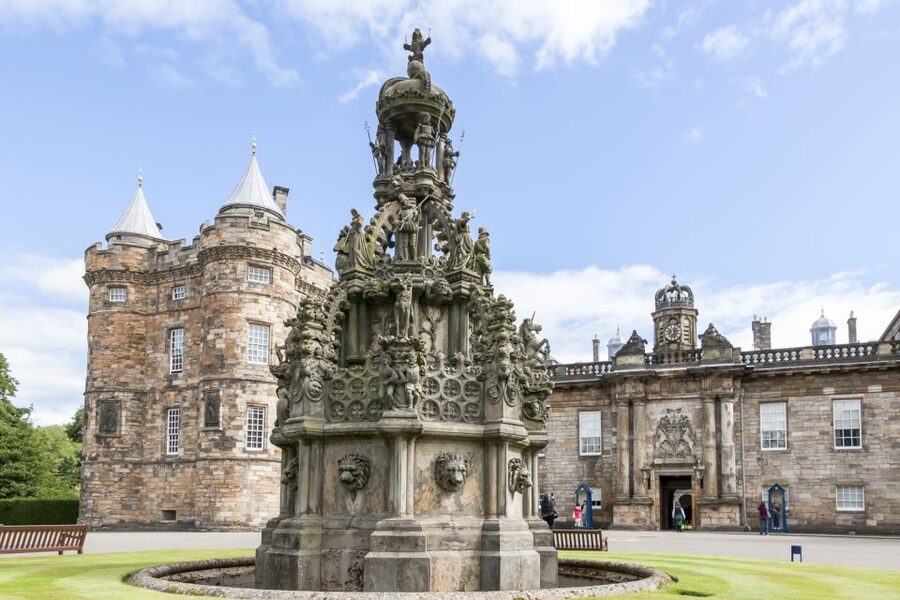
The palace gardens provide a softer ending to the visit. Paths lead your attention away from royal interiors and toward the open setting around Holyroodhouse, with views toward Holyrood Park.
The setting is one of the strongest reasons to avoid rushing. The gardens show the palace as part of a larger royal site rather than a collection of rooms. After the dark story of Mary Queen of Scots and the formal State Apartments, the outdoor space changes the mood.
You can move at your own pace, pause at points of interest, and take in the relationship between the palace, gardens, and nearby hills. The grounds are not simply an extra tacked onto the ticket. They help explain why this location was chosen and why Holyroodhouse remains such an important Edinburgh residence.
How the multimedia guide affects your visit
The included guide is a major advantage of this ticket. It covers the palace, abbey, and gardens, and it is available in a wide range of languages. The English version is clear, while the visual screen and short video sections make the presentation more engaging than a standard audio handset.
You do not need to follow every track. If a room interests you, listen fully. If a section feels less important, continue to the next stop. This is particularly useful for families and for anyone who prefers not to spend the same amount of time in every room.
The guide also gives you a balance of old and new. You hear about Mary Queen of Scots and Jacob de Wet, then learn how the King uses the palace today. That combination prevents the visit from becoming a simple parade of old paintings.
The main limitation is that a self-guided device cannot respond to your questions. If you want a live guide who can adjust the explanation to your interests, this is not that kind of tour. For most people, though, the ability to control the pace is more useful than a fixed group presentation.
Allow time for the café and gift shop
The Café at the Palace is a practical place to stop after the main route. You can buy a drink, snack, light lunch, or afternoon tea at your own expense. It gives you a chance to sit down after the palace and grounds, especially if you have spent the morning walking the Royal Mile.
The café is not included in the $29 ticket, so treat it as an optional extra rather than part of the admission value. The gift shop is also available if you want a book or souvenir connected with the royal collections.
If you are planning the visit around meals, do not assume the 1.5-hour duration includes a leisurely café stop. The stated time is enough for a straightforward visit, but the full experience takes longer when you add food, gardens, and pauses in the Great Gallery.
Is $29 good value for Holyroodhouse?
At $29 per person, the ticket offers more than access to a single room or a short exhibit. You receive the palace interiors, the multimedia guide, Holyrood Abbey, and the gardens. The price is easier to justify if you value context and want to explore without paying separately for an audio presentation.
The strongest value comes from the guide and the range of the site. You get royal rooms, a major Scottish story, medieval ruins, and outdoor space in one visit. It is also a good choice if you want a self-paced experience rather than a large guided group.
The value drops slightly if you only have time for a quick walk through the palace. You might finish the core indoor route in under two hours, but rushing means missing the atmosphere of the abbey and gardens. Tickets purchased through GetYourGuide cannot be changed into a one-year pass, so choose this option for a single visit rather than repeat access.
Free cancellation up to 24 hours before the visit and reserve-now, pay-later booking add flexibility. For visitors who need concessionary rates because of disability, direct booking with Royal Collection Trust is required, and a companion ticket is complimentary through that route.
Who should book this Edinburgh palace visit?
I would choose Holyroodhouse if you want royal history presented in a clear, manageable way. It suits first-time visitors who want a major Edinburgh sight, families who appreciate a children’s audio option, and anyone interested in Mary Queen of Scots.
It is also a good pick for cruise passengers with limited time in Edinburgh because the self-guided route lets you control the pace. You can focus on the main rooms, then decide how much time remains for the abbey, gardens, and café.
You may prefer a different attraction if your main interest is military history, dramatic city views, or a large fortress. Holyroodhouse is more intimate and ceremonial. Its best moments come from rooms, stories, and royal life rather than sweeping defensive architecture.
Should you book Holyroodhouse?
Yes, if you want to see the King’s official Scottish residence and connect Scotland’s royal past with its present. The multimedia guide is easy to follow, the route is well marked, and the combination of palace rooms, Mary Queen of Scots’ chambers, abbey ruins, and gardens gives you a full visit for the price.
Plan on at least 90 minutes, and add extra time if you want to stop for food or explore outdoors. Book this experience when you want history at your own pace, not a fast photo stop. The only real caution is the one-way route, limited indoor photography, and the fact that a short schedule may force you to choose between lingering in the palace and enjoying the grounds.
FAQ
Where is the Palace of Holyroodhouse?
The palace is at the end of Edinburgh’s Royal Mile in Scotland.
How long does the visit take?
The stated duration is 1.5 hours. You should allow extra time if you want to explore the gardens, visit Holyrood Abbey, or stop at the café.
What does the ticket include?
The ticket includes entry to the Palace of Holyroodhouse and a multimedia guide for the standard admission route.
Is an audio or multimedia guide available?
Yes. The guide includes audio and visual material and is available in English, Spanish, Chinese, French, German, Italian, Japanese, Portuguese, Russian, and Scots Gaelic.
Can I take photographs inside the palace?
Photography is not permitted inside the Palace of Holyroodhouse.
Is food included with admission?
No. Drinks, snacks, lunch, and afternoon tea at the Café at the Palace cost extra.
Can I convert this ticket into a one-year pass?
No. Tickets purchased through GetYourGuide cannot be converted into a one-year pass.
Just added around Edinburgh
- Holyrood Distillery Gin Tasting Experience★ 5.0 · 11 reviews
- Wallace monument, Stirling Castle, Linlithgow Palace Private Tour★ 5.0 · 46 reviews
- The King’s Gallery, Palace of Holyroodhouse★ 4.5 · 23 reviews
- Edinburgh: Private Outlander, Palaces & Jacobite Experience★ 5.0 · 8 reviews
- Crowning Jewels: Scone Palace, Glamis Castle, & St Andrews★ 5.0 · 3 reviews
- Scone Palace, Nature, Pitlochry, Whisky Experience from Edinburgh★ 4.5 · 5 reviews
- Edinburgh Castle Guided Walking Tour & Holyrood Palace Ticket★ 5.0 · 50 reviews
- Harry Potter Edinburgh Top Sights Tour with Holyrood Palace★ 5.0 · 6 reviews
Edinburgh Palace Tours, compared.

Holyrood Distillery Whisky and Gin Tour & Tasting
Read our review →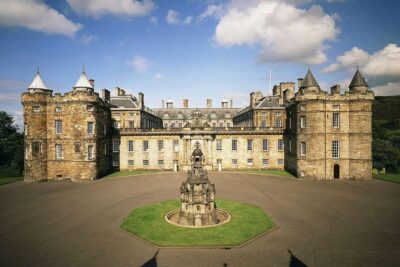

Holyrood Distillery ‘Journey to Whisky’ Tour & Tasting
Read our review →
Edinburgh Castle Guided Walking Tour & Holyrood Palace Ticket
Read our review →Browse the lists this tour appears in