
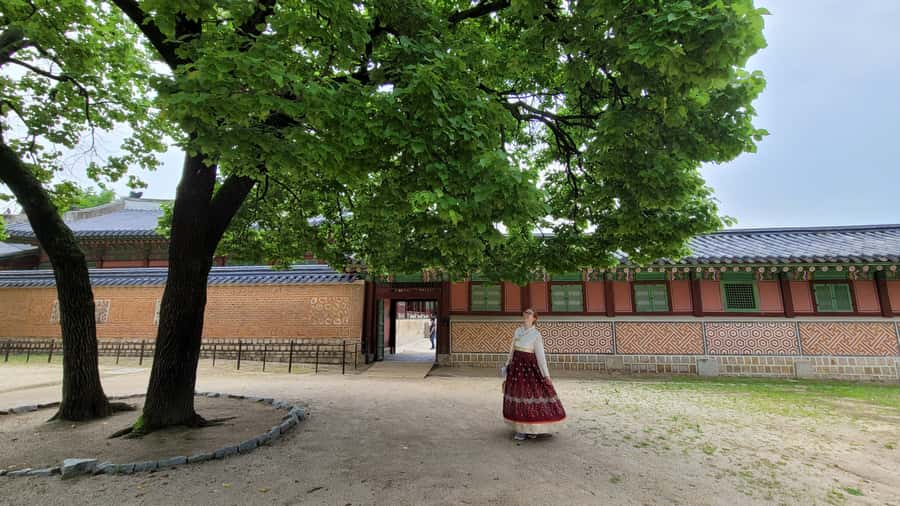
REVIEW · KOREAN PALACE TOURS
Gyeongbokgung Palace, Jogyesa Temple and Bukchon village
Gyeongbokgung Palace, Jogyesa Temple and Bukchon village give you Seoul in a tidy three-hour walk: Buddhist calm, royal ceremony, modern civic space and old residential lanes all fit into one route. I especially like the chance to see Gyeongbokgung Palace from the inside and to pause for a traditional drink rather than rush from photo stop to photo stop.
I also like that guide Lee brings more than dates and dynasty names to the walk. Her patient explanations, cultural stories and occasional Korean board game make the tour feel personal. The main consideration is pace: Bukchon is hilly and the route is on foot, so comfortable shoes matter. If you want a long, detailed visit inside every palace building, this three-hour overview may feel brief.
Key points at a glance
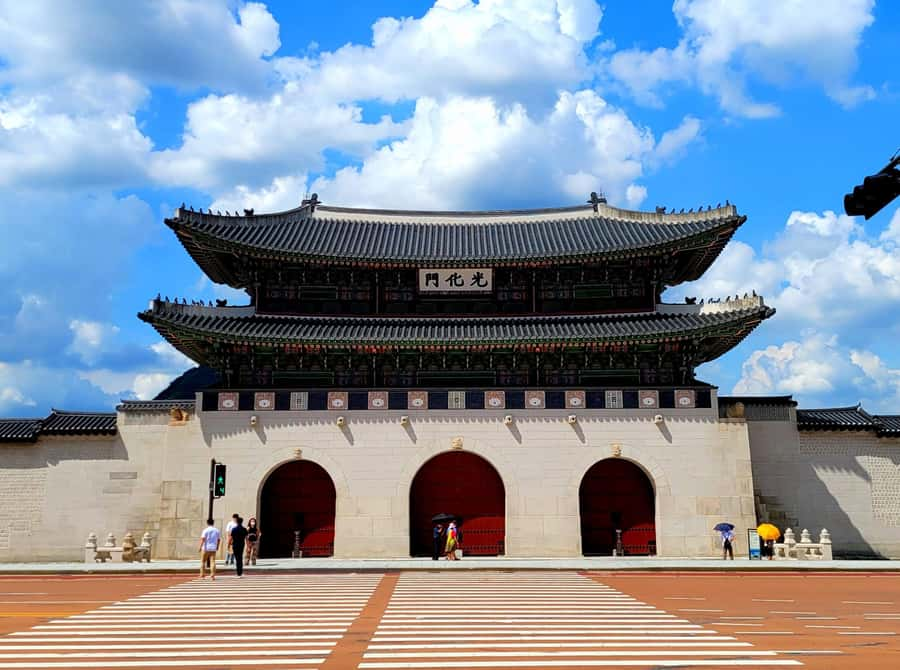
- Three major Seoul sights in one walk: Visit Jogyesa Temple, Gwanghwamun Square, Gyeongbokgung Palace and Bukchon village without arranging separate tickets or routes.
- A royal palace with a drink break: Your Gyeongbokgung entrance and traditional herbal tea are included.
- Guide Lee is a strong fit for curious visitors: She explains history clearly, answers questions patiently and can add cultural touches such as a Korean board game.
- A useful first-day orientation: The route links major sights with background on Korean language, traditions and the Joseon Dynasty.
- A moderate but active outing: Plan for about three hours on foot, with uneven and uphill sections in Bukchon.
- Simple booking terms: The price is $82 per person, with English guiding, pay-later booking and cancellation up to 24 hours before departure for a full refund.
Why this route works for a first look at Seoul
Seoul can feel enormous when you first arrive. Its modern towers, broad avenues, temple courtyards and traditional houses do not naturally line up in your head. This walk helps you place several important sights on one mental map.
You begin at Anguk Station Exit 6, then visit the Jogye Order’s head temple, continue toward Gwanghwamun Square and enter Gyeongbokgung Palace. The walk finishes in Bukchon village before returning to the meeting point. The route connects places that show different sides of Korean life, rather than repeating the same type of sight.
I would choose this tour early in a Seoul stay. You get a useful introduction to royal history, Buddhism, Korean architecture and the city’s central neighborhoods. Afterward, you can decide which area deserves a slower return visit.
The experience is listed as an English-language tour and takes about three hours. That length suits you if you want a focused cultural outing without giving up an entire day. It is also a good choice after a long flight, provided you are ready to walk.
More Korean palace tours in Seoul:
- Seoul: Gyeongbok Palace, Bukchon Village, and Gwangjang Tour
★ 4.9 · 2,321 reviews - Best Seoul City Tour (Gyeongbokgung Palace,Insadong,Namsan Tower)
★ 5.0 · 1,647 reviews - Seoul City Sightseeing Tour Including Gyeongbokgung Palace, N Seoul Tower, and Namsangol Hanok Village
★ 5.0 · 1,423 reviews
Jogyesa Temple: a quiet beginning in central Seoul
Jogyesa Temple is the first major stop. It is the head temple of the Jogye Order of Korean Buddhism, so it gives the tour a strong cultural starting point rather than opening with a palace gate and a standard photo stop.
The temple offers a chance to slow down before the busier parts of the route. Your guide can explain the place within Korean Buddhist life and point out details that are easy to miss when you walk through alone. The supplied tour information does not promise a ceremony or special event, so you should think of this as a guided visit to an important temple, not a scheduled religious performance.
The location also makes practical sense. Jogyesa sits in the Insadong area, which is known for traditional tea houses and restaurants. You may want to return here after the tour for food or tea, but those purchases are not included in the $82 price.
Starting at Anguk Station Exit 6 is useful for independent visitors. You are given a clear public transport meeting point instead of relying on hotel pickup. There is no hotel pickup or drop-off, so allow time to reach the station before the start.
Gwanghwamun Square and King Sejong
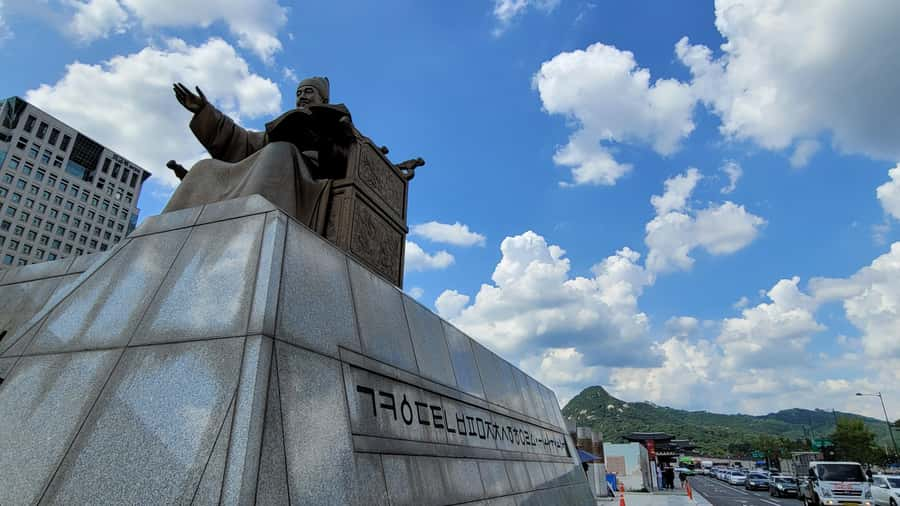
From Jogyesa, the route continues toward Gwanghwamun Square. This broad public space introduces a more civic side of Seoul, with the statue of King Sejong as a key point along the way.
King Sejong is closely linked with the development of Hangul, the Korean alphabet. The tour specifically includes learning about Korean language and culture, so this stop gives your guide a natural place to explain why Korean writing matters. You will get more from the square if you listen for the connection between the statue, the language and the wider story of Korea.
Gwanghwamun also helps you understand the city’s layout. It leads toward the main entrance area of Gyeongbokgung Palace, making the transition from modern Seoul to the Joseon court easy to follow. This is one reason I like the route: the sights are not presented as isolated attractions.
The square itself is open and exposed, with little of the sheltered feeling you get at Jogyesa. On a sunny day, bring water and protect yourself from the sun. The tour information only asks you to bring comfortable shoes, but sensible walking gear will make the outing easier.
Gyeongbokgung Palace and the Joseon court
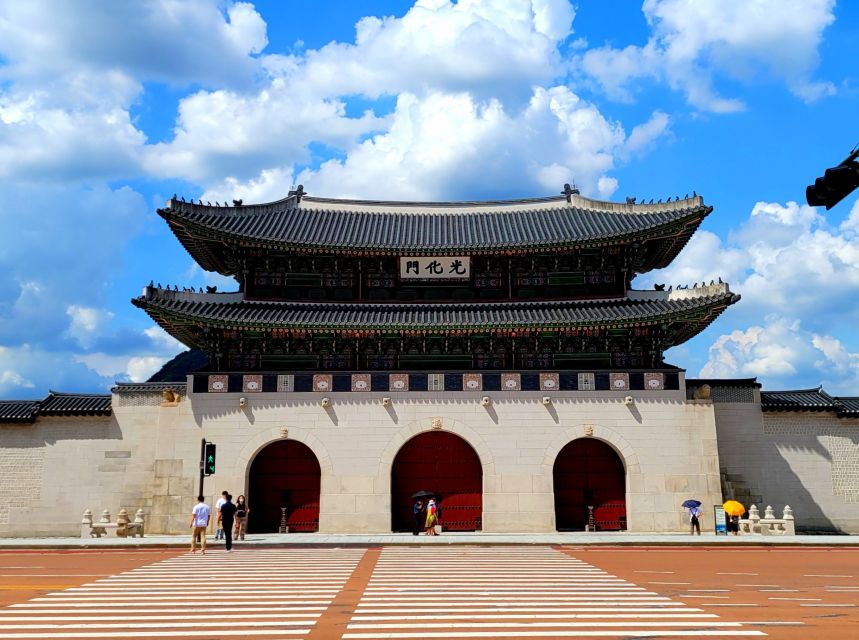
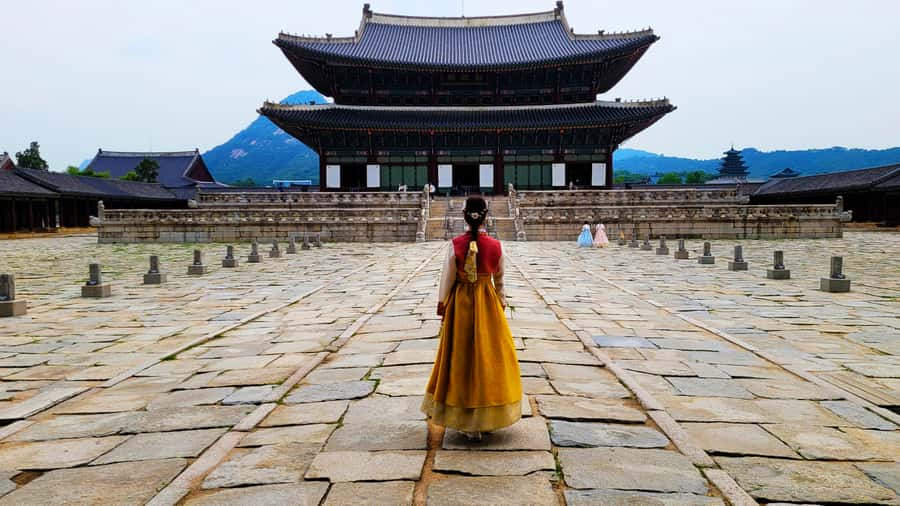
Gyeongbokgung is the center of the tour. Established in 1395, it served as the main palace of the Joseon Dynasty. The entrance ticket is included, which matters because this is the stop where the tour’s value is easiest to judge.
A palace visit can become a blur of gates, courtyards and rooflines if you walk without context. Your guide’s role is to explain what you are seeing and connect the buildings to Korean history. The tour promises historical background along the way, with attention to the era and its traditions.
You should expect a guided stroll rather than a private deep study of every structure. The tour lasts around three hours and also includes three other major locations. That is enough time to understand the palace’s importance and enjoy its architecture, but not enough to inspect every corner at leisure.
One pleasant touch is the traditional drink included at the palace. The tour describes it as traditional herbal tea. This gives you a short pause in the middle of the walk and adds a taste of Korean culture to the history lesson. Food is not included, so do not count on this tea as a meal.
A palace break has also included a Korean traditional board game, adding a hands-on cultural moment to the route. You should treat that as a possible bonus rather than the main promise of the tour. It is the sort of small detail that can make a history walk easier to remember, especially for families and younger visitors.
A few more palace visits around Seoul worth a look
- Small-Group Royal Palace and Seoul City Tour (hotel pick-up)
★ 5.0 · 1,474 reviews - Seoul: Gyeongbok Palace, Bukchon Village, and Gwangjang Tour
★ 5.0 · 1,044 reviews - Seoul Half-Day City Highlight, Palace Tour with Hanbok
★ 4.9 · 764 reviews - Seoul: Palace, Temple and Market Guided Foodie Tour at Night
★ 4.9 · 750 reviews
Bukchon village: beautiful houses, real neighborhood
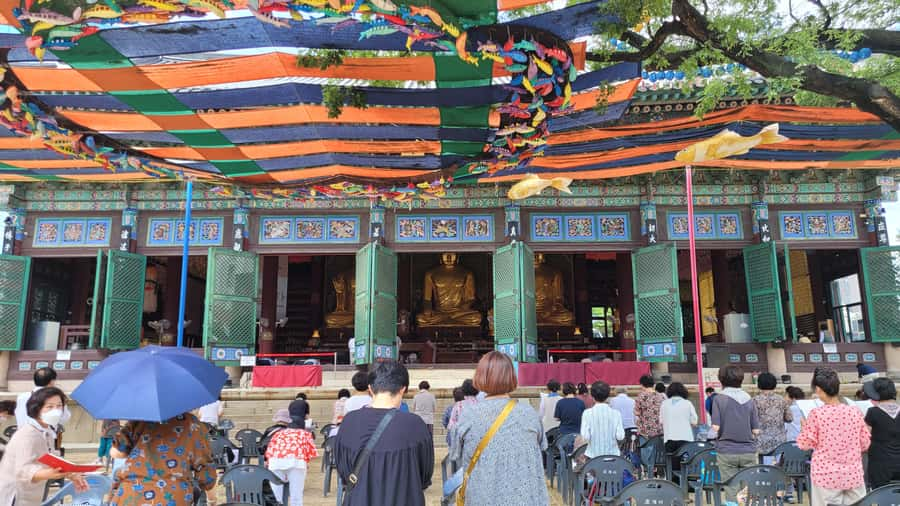
The final major area is Bukchon traditional village. Here, the palace-scale architecture gives way to residential lanes and traditional Korean houses. Bukchon is one of the most photogenic parts of the route, but its appeal comes from the contrast between old homes and the surrounding city.
The walk through the village is described as moderate, with some beautiful views. You will need to manage slopes and uneven streets. Comfortable shoes are not a throwaway recommendation here. They are the difference between enjoying the rooftops and spending the final part of the tour thinking about your feet.
Bukchon is also a living neighborhood, not simply an open-air museum. Keep your voice down in residential lanes and follow the guide’s lead about where to stop. The provided information does not promise a large number of village stops, and one useful limitation is that you may want more time here for photos and historical explanation.
I would particularly recommend this route if architecture interests you. You can compare the formal scale of Gyeongbokgung with the more intimate lines of Bukchon’s traditional homes. If you want a longer village visit, plan to return independently after the tour, but remember that the activity ends back at the meeting point.
Guide Lee and the human side of the walk
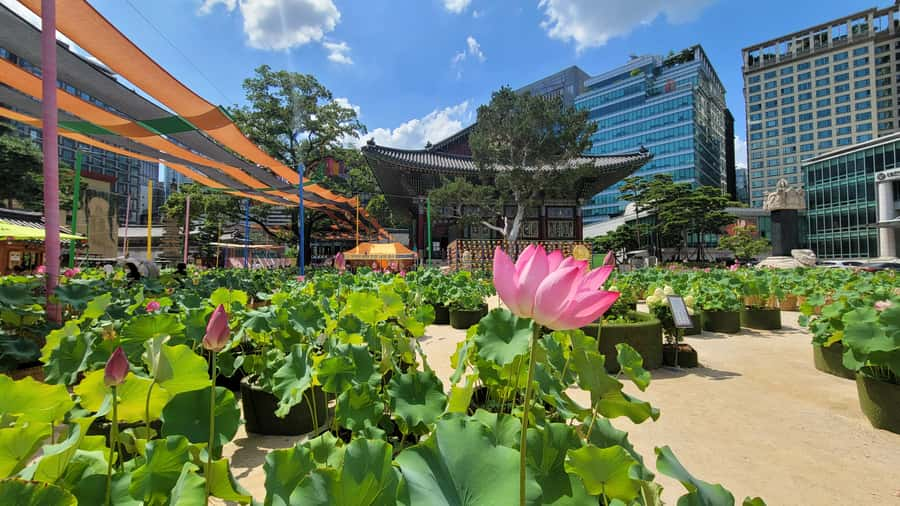
The guide can make or break a history tour, and Lee is the named guide associated with the strongest praise in the supplied material. Her approach is described as friendly, patient, timely and willing to discuss questions rather than simply recite facts.
That matters on a route with several different subjects. You move from Buddhism to the Joseon Dynasty, then to Korean language, architecture and everyday traditions. A guide who can explain those links clearly gives the outing more value than a guide who only points out buildings.
Lee has also been able to communicate with visitors by email when they did not have a Korean phone number. That is a practical plus for international visitors. Still, you should follow the booking instructions carefully and arrive at Anguk Station Exit 6, since no hotel transfer is included.
The tour is offered in English. If you need another language, this experience is not presented as a multilingual option. The small amount of detail available about group size means you should not assume a private tour or a very small party.
What $82 includes, and what it does not
At $82 per person, this is not the cheapest way to walk around central Seoul. You are paying for an English-speaking guide, the Gyeongbokgung entrance ticket, historical interpretation and a traditional herbal tea. You are also paying for a route that joins four important cultural areas without requiring you to plan the sequence yourself.
The value is strongest if you are visiting Seoul for the first time, want context at the sights and prefer a guided introduction over independent research. It is less compelling if you already know the palace, speak Korean or prefer to spend hours taking photographs at your own speed.
Food is not included. Neither are hotel pickup and drop-off. Budget separately for meals or snacks around Insadong and Anguk, and allow for the cost of reaching the station by public transport or taxi.
The reserve-and-pay-later option lets you hold a place without paying immediately. You can also cancel up to 24 hours in advance for a full refund. Those terms make the tour easier to fit around changing Seoul plans.
Who will enjoy this three-hour walk
I would recommend this tour to first-time visitors who want a clear introduction to Seoul’s traditional center. Families may also like the relaxed style, especially if the guide includes the traditional game during the palace break. The guide’s patience is useful when children or older relatives need more time.
It suits people who enjoy a mix of explanation and walking. You will not spend the entire outing inside a museum, and you will not be left to decode the palace alone. The route gives you visual variety, but you need to be comfortable walking between stops.
It is also a good fit for visitors with only a short stay. In three hours, you can see a Buddhist temple, a royal palace, a major public square and a traditional village. That is an efficient cultural introduction.
I would hesitate to recommend it if you have mobility limits. Mobility scooters are not allowed, and the route includes walking through Bukchon. The activity also carries the usual warning that the provider is not responsible for loss, illness, injury, accidents or damage to people or property. Take reasonable care on the streets and slopes.
Practical tips before you go
Wear comfortable shoes with good support. This is the clearest practical requirement, and Bukchon makes it important.
Arrive at Anguk Station Exit 6 with enough time to find the guide. The listed starting point is specific, while the route itself includes Jogyesa, Gwanghwamun, Gyeongbokgung and Bukchon.
Keep your schedule flexible after the tour. The walk ends back at the meeting point, and you may want more time in Insadong, around the palace or in Bukchon. The tour gives you an overview, not unlimited time at each site.
Bring questions. Korean language, Buddhist practice, palace customs and traditional architecture all appear along the way, and the guide’s conversational style is part of the experience. If you are interested in local food, ask for suggestions, but remember that meals are not included.
Pets, alcohol and drugs are not allowed. The activity is also not designed for mobility scooters.
Should you book it?
Book this tour if you want a well-shaped first introduction to Seoul and value a guide who can make history feel approachable. The included palace ticket, herbal tea and English guiding help explain the $82 cost, especially when you would otherwise need to plan the route yourself.
Choose something else if your priority is an unhurried palace visit, extensive time in Bukchon or a private itinerary. For most first-time visitors who can manage a moderate three-hour walk, this is a sensible way to connect Seoul’s major traditional sights without wasting time finding your way between them.
FAQ
Where does the tour start?
The tour starts at Anguk Station Exit 6.
Where does the tour end?
The activity ends back at the meeting point.
How long does the tour last?
The tour takes about three hours.
Which sights are included?
The route includes Jogyesa Buddhist Temple, Gwanghwamun Square, Gyeongbokgung Palace and Bukchon traditional village.
Is the Gyeongbokgung entrance ticket included?
Yes. The Gyeongbokgung Palace entrance ticket is included in the price.
Is a traditional drink included?
Yes. A traditional herbal tea is included.
Is the tour offered in English?
Yes. English is the listed tour language.
Is hotel pickup available?
No. Hotel pickup and drop-off are not included.
Can I cancel for a full refund?
Yes. You can cancel up to 24 hours in advance for a full refund.
Just added around Seoul
- Time Travel in Seoul: Gyeongbokgung, Folk Museum & Bukchon★ 5.0 · 10 reviews
- Seoul: Royal Palace Morning Tour including Cheongwadae★ 4.5 · 12 reviews
- Seoul: Vegan Temple Food Class, Jogyesa & Changdeokgung Tour★ 4.6 · 34 reviews
- Seoul: UNESCO Palace and Street Foods Guided Tour★ 5.0 · 6 reviews
- Seoul: UNESCO Sites tour: Palace, Shrine & Bukchon Village★ 4.8 · 26 reviews
- Seoul: Gyeongbokgung, Lotte Tower & Gangnam Trendy Day Tour★ 4.4 · 3 reviews
- Seoul: Hanbok Photo Tour at Gyeongbokgung Palace★ 5.0 · 9 reviews
- Seoul: Gyeongbokgung Palace Tour & Lunch at Authentic Market★ 4.5 · 2 reviews
Korean Palace Tours, compared.
Gyeongbok Palace, Bukchon Village, and Gwangjang Tour
Read our review →
Best Seoul City Tour (Gyeongbokgung Palace,Insadong,Namsan Tower)
Read our review →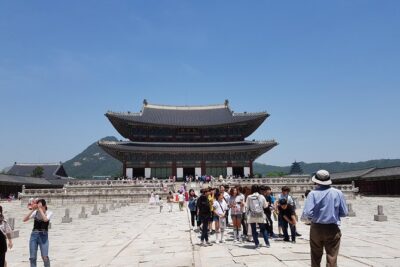
Seoul City Sightseeing Tour Including Gyeongbokgung Palace, N Seoul Tower, and Namsangol Hanok Village
Read our review →Gyeongbok Palace, Bukchon Village, and Gwangjang Tour
Read our review →
Seoul Half-Day City Highlight, Palace Tour with Hanbok
Read our review →
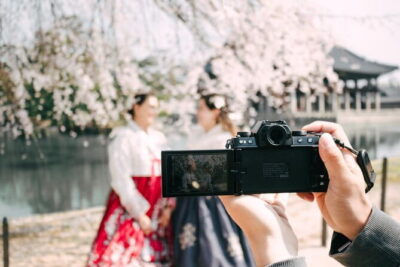
Hanbok Photoshoot and History Tour at Gyeongbokgung Palace
Read our review →Browse the lists this tour appears in