
REVIEW · KOREAN PALACE TOURS
Korean Palace and Market Tour in Seoul Including Insadong and Gyeongbokgung Palace
Seoul’s royal past and modern street life come together neatly on this full-day outing. You move from painted palace halls and a 500-year-old Buddhist temple to Insadong teahouses and the crowded stalls of Namdaemun Market. It is a useful first look at the city, especially if you want someone else to handle transport and explain what you are seeing.
I like the wide range of stops, from Gyeongbokgung and its National Folk Museum to Changdeokgung’s garden grounds. I also like the human touch of the guides. Lizzy, BK, Daria, Miel, Yujeong, Bonnie, and others are praised for clear explanations, good energy, and keeping a long day moving.
The main drawback is the pace. Eight and a half hours, several palace compounds, market walks, lunch, and a shopping-center stop make for a full schedule. The ginseng-center visit is not everyone’s idea of sightseeing, and one poor experience involved cramped transport, so I would confirm pickup details and prepare for a group of up to 30 people.
Key points at a glance
- Three major heritage stops: Visit Gyeongbokgung Palace, Changdeokgung Palace, and Jogyesa Buddhist Temple in one day.
- A useful first-day overview: Hotel pickup, a guide, lunch, and coach transport remove much of the planning burden.
- Two very different markets: Insadong focuses on art, crafts, galleries, and tea, while Namdaemun offers a wider range of everyday goods and souvenirs.
- Real walking is involved: Palace courtyards, bridges, gardens, alleys, and market streets call for comfortable shoes.
- A guide can make the difference: Guides such as BK, Lizzy, Miel, Daria, and Yujeong are praised for history, organization, and friendly help.
- Watch the calendar: Gyeongbokgung is closed Tuesdays, and Changdeokgung is closed Mondays, with substitute sights provided.
Why this makes a strong first day in Seoul
At $89 per person, this tour is priced as a practical introduction rather than a quiet palace study. You get hotel pickup and drop-off, an air-conditioned vehicle, a professional guide, palace admissions, and lunch. If you are new to Seoul, that bundle can be worthwhile because the city’s sights are spread across busy streets and the palace history is easier to follow with context.
I would not choose it if you prefer to linger at one site, shop at your own speed, or avoid organized group travel. The tour moves through several parts of central Seoul and allows only short visits at some stops. But for a first day, it gives you a useful framework: royal Seoul, Buddhist Seoul, traditional shopping streets, and the city’s working market culture.
The group can reach 30 people. Some experiences have been described as small-group outings in a comfortable minibus, while one account describes two groups sharing a vehicle and cramped transfers. That variation may depend on the day, so expect group-tour logistics rather than a private car.
Hotel pickup begins around 8:30 a.m., and the day lasts about 8 hours and 30 minutes. You should leave the evening free. Palace grounds involve walking, and market streets can be busy, so comfortable shoes matter more than stylish ones.
More Korean palace tours in Seoul:
- Seoul: Gyeongbok Palace, Bukchon Village, and Gwangjang Tour
★ 4.9 · 2,321 reviews - Best Seoul City Tour (Gyeongbokgung Palace,Insadong,Namsan Tower)
★ 5.0 · 1,647 reviews - Seoul City Sightseeing Tour Including Gyeongbokgung Palace, N Seoul Tower, and Namsangol Hanok Village
★ 5.0 · 1,423 reviews
Jogyesa Temple and a glimpse of the Blue House
Jogyesa Buddhist Temple is often a calm opening to the day. The tour allows about 20 minutes here, enough to see the entrance trees, enter the main hall, and look at the Buddha statue inside. The temple is the chief temple of the Jogye Order of Korean Buddhism, and the main hall dates back five centuries according to the tour description.
I like this stop because it gives you a different starting point from the usual palace-only route. The palace buildings can feel formal and monumental. Jogyesa adds an active religious setting, with Buddhist details that help you understand another part of Korean culture.
The short time is also the limitation. You will not have a long period for quiet observation or independent exploration. A guide can make those 20 minutes count by explaining the temple’s role and pointing out details you might otherwise pass.
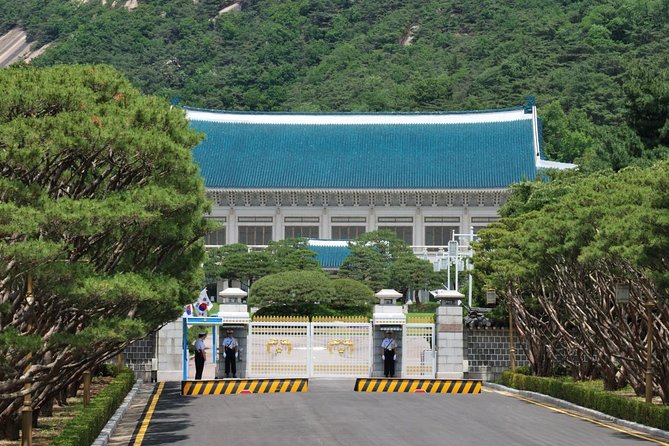
The coach also passes the Blue House, the former executive office and official residence of South Korea’s head of state. It is a drive-by view rather than a full visit, but it adds a present-day political note to a morning focused on older Seoul.
Gyeongbokgung Palace and the National Folk Museum
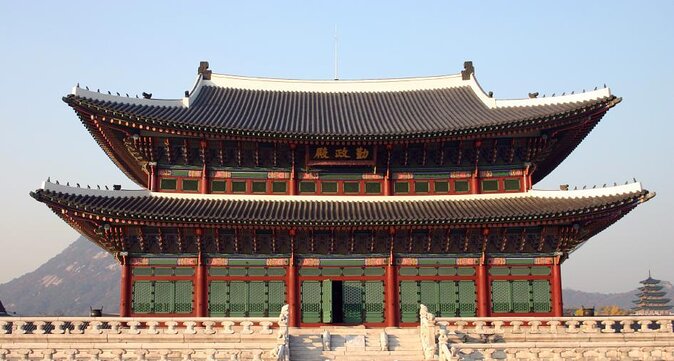
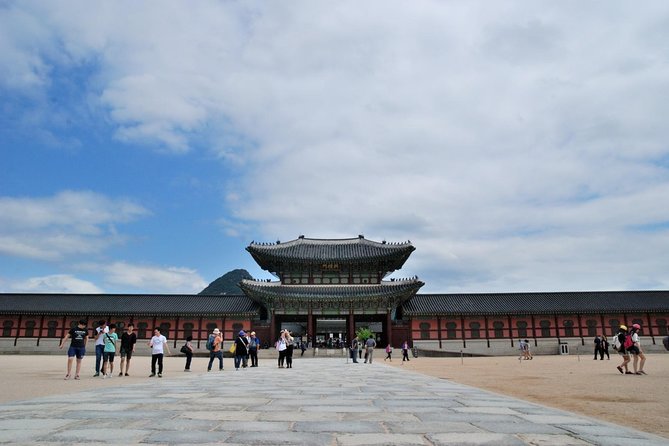
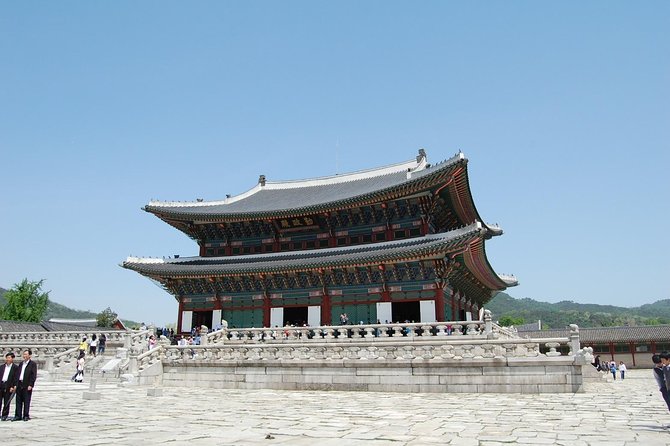
Gyeongbokgung is the largest of Seoul’s Five Grand Palaces and was built in 1395 during the Joseon Dynasty. Its gates, halls, pavilions, and broad grounds give you the clearest sense of royal scale on this tour.
About an hour is scheduled here, including a guided walk. Much of the palace was destroyed during the Japanese occupation, so restoration work is part of what you see. That is worth knowing before you arrive. This is not an untouched medieval complex, but a carefully rebuilt royal setting where original and restored elements share the grounds.
I would pay attention to the guide’s explanations here. Without context, the courtyards can become a series of attractive roofs and painted beams. With a good guide, the layout, royal functions, and damage and restoration story become easier to follow. Several guides, including BK, Lizzy, and Miel, have been praised for explaining Korean history in clear, engaging English.
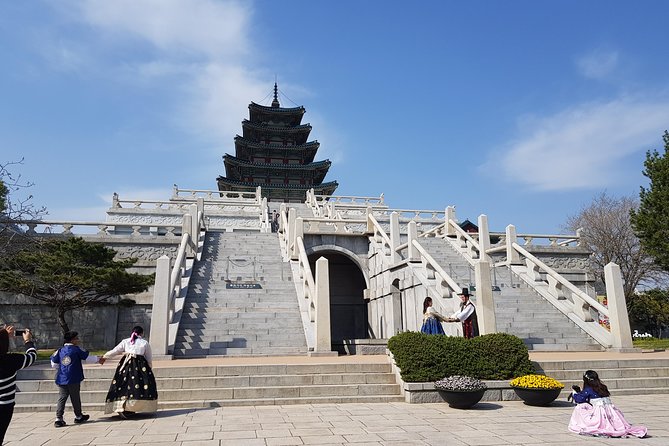
The National Folk Museum receives about 15 minutes. That is brief, but it gives you a useful change of focus. Instead of royal architecture, you see artifacts, replicas, and displays about Korean life from ancient times through the 20th century.
This museum stop is especially helpful if you are new to Korea. It connects palace culture with ordinary household life and traditional customs. Do not expect enough time to study every exhibit. Think of it as a compact introduction rather than a full museum visit.
The ginseng-center stop and Korean lunch
Around midday, the group stops at a ginseng center for about 30 minutes. This is a shopping visit, not a cultural attraction. You may hear about ginseng products and be encouraged to buy items linked with health and longevity.
I would treat this stop with a clear plan. Browse if you are interested, but do not feel obliged to purchase. One person who enjoyed the rest of the day felt strongly that this sales stop should have been skipped. That is the most consistent practical caution in the tour: the shopping center uses time that could otherwise go to a palace or market.
Lunch is included at a local Korean restaurant. The exact menu is not specified, so you should advise the operator of dietary requirements when booking. Several accounts describe the meal as good, and one solo participant specifically called it a highlight.
Lunch also breaks up the sightseeing rhythm. After a morning of courtyards and museum displays, sitting down for a Korean meal gives you a chance to rest before the afternoon walks. Still, do not assume the meal will suit every diet automatically. Send your requirements in advance.
More market and palace walks in Seoul:
- Seoul: Palace, Temple and Market Guided Foodie Tour at Night
★ 4.9 · 750 reviews - Seoul Night Palace & Market Food Tour with Vehicle
★ 5.0 · 275 reviews - Seoul: Nighttime Tour of Palace, Market, Naksan Park & More
★ 4.9 · 143 reviews - Seoul: Gyeongbok Palace, N Tower, & Local Market City Tour
★ 4.9 · 107 reviews
Changdeokgung Palace and the garden grounds
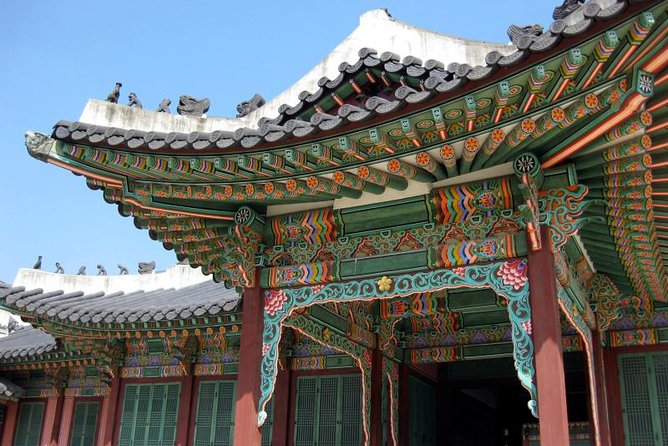
Changdeokgung is the day’s most refined palace visit. It is a UNESCO World Heritage site, and the tour focuses on its preserved gates, halls, pavilions, Geumcheongyo Bridge, and the grounds known as Huwon, or the Rear Garden.
The scheduled visit is about 40 minutes, which is enough for an introduction but not a leisurely garden walk. You may see lotus ponds, lawns, trees, flowers, and the bridge, but the group will keep moving. I would stay close to the guide here because palace compounds can make it easy to lose sight of a group.
Changdeokgung feels different from Gyeongbokgung. Gyeongbokgung gives you a large formal royal complex. Changdeokgung’s appeal is its careful preservation and the way buildings fit among the garden features. If royal architecture is your main reason for booking, this is the stop where you may wish the schedule allowed more time.
The calendar matters. Changdeokgung is closed Mondays. On those days, the tour visits Changgyeonggung Palace instead, another of the Five Grand Palaces of the Joseon Dynasty. The substitute still offers historic structures, but it is not the same place, so check the day of your booking if a particular palace matters to you.
Insadong’s galleries, tea houses, and old Seoul character
Insadong Antique Alley brings the tour into a more commercial but still traditional part of central Seoul. You have around 30 minutes to walk through alleys lined with craft galleries, antique shops, traditional restaurants, and teahouses.
This is a good place to browse rather than rush toward a major sight. You might find local artwork, antique objects, and small gifts, though the tour does not promise specific purchases or prices. The short visit works well as an introduction, but you will probably want to return independently if you enjoy shopping or want time in a teahouse.
I like Insadong because it connects heritage with present-day use. The streets are not simply preserved monuments. They are places to buy, eat, drink, and look at Korean craft traditions. The guide can help you understand what you are seeing, but you will also have some freedom to look around.
The tour may also include a duty-free shopping stop before Namdaemun. As with the ginseng center, this adds a retail element that some people appreciate and others would rather replace with more sightseeing.
Namdaemun Market and the final shopping walk
Namdaemun Market is described as Korea’s largest traditional market and opened in 1964. The tour gives you about 30 minutes to browse its many goods, seek bargains, and choose a souvenir.
This is a very different experience from Insadong. Insadong leans toward galleries, antiques, tea, and traditional design. Namdaemun is broader and more practical, with many kinds of goods sold across a large market area. You will get a quick taste of the market rather than enough time to learn every section.
Keep your expectations realistic. Thirty minutes is enough to see the atmosphere and make a quick purchase, but not enough for a relaxed shopping expedition. If you already know you want market time, note down what catches your eye and return later by yourself.
The tour ends with hotel drop-off. That is useful after a long day, especially if you are still learning Seoul’s transport system. It also means you do not need to navigate back from a market with shopping bags.
The guide matters more than the schedule
The strongest part of this experience is likely to be the person leading it. Names attached to especially positive experiences include Lizzy, AJ, Felicity, Daria, BK, Miel, Yujeong, Yeoni, Bonnie, Grace, Sadie, and Spring Kim. That does not guarantee which guide you will receive, but it shows how much the tour depends on individual leadership.
The most useful guide qualities are clear English, steady time management, historical explanation, and practical care. Lizzy is praised for being organized and for giving breaks during hot weather. BK is praised for explaining the Joseon Dynasty in a way that made the day feel orderly. Daria is described as cheerful and effective at making each location interesting. Miel is noted for keeping the group engaged and comfortable.
The feedback is not uniformly positive. One person felt a guide did not explain enough at the palace and was not welcoming at the start. That is a reminder that a guide-led tour can vary from day to day.
I would book this for the structure and transport, not on the assumption that every guide will deliver the same style. If you like asking questions and learning as you walk, you may get a great deal from the right guide. If you prefer total independence, the group format may frustrate you.
Walking, weather, and what to bring
The tour includes a moderate amount of walking across palace grounds, temple areas, market streets, and alleys. Some accounts praise the reasonable pace, while another notes that the heat made the walking harder. Rain has also affected the experience, though one guide adjusted the plan well during heavy weather.
Wear comfortable walking shoes. Bring water, sun protection, and weather protection suited to the forecast. You will also want room in your bag for small purchases at Insadong or Namdaemun.
The tour is open to most people, but the length and walking should still guide your decision. If you tire easily, tell the guide early and use the scheduled meal and vehicle transfers to rest. The day is not a demanding hike, but it is too active for someone hoping for mostly seated sightseeing.
Is the $89 price good value?
I see the $89 price as reasonable if you value convenience. The fee covers hotel transportation, a guide, air-conditioned travel, palace admissions, and lunch. Booking separate transport, entrance tickets, and a meal could take more time, especially if you are in Seoul for only a few days.
The value is weaker if you already know Seoul well or want long visits inside each palace. The 30-minute market stops and 40-minute Changdeokgung visit are introductions. You are paying for coverage and explanation, not a slow cultural study.
I also factor in the included hotel pickup and drop-off. That can be worth a great deal on your first morning, when Seoul’s size and traffic may make planning less pleasant. The tradeoff is a fixed route, a group that can reach 30 people, and shopping stops that are not optional parts of the published schedule.
Should you book this Seoul tour?
Book it if you want one organized day covering royal palaces, a Buddhist temple, museums, traditional shopping streets, and a Korean lunch. It suits first-time visitors, solo visitors who want company, and anyone who wants a guide to explain the Joseon period and the city’s cultural sites.
Skip it if you want to spend half a day at one palace, avoid retail stops, or set your own pace. If you do book, choose a day when both principal palaces are open, send dietary needs in advance, wear walking shoes, and keep your expectations clear about the ginseng center.
For many people, this is a useful way to get their bearings fast. You will not see every corner of Seoul, but you will leave with a workable map of its royal, religious, artistic, and market life.
FAQ
How long does the tour last?
The tour lasts approximately 8 hours and 30 minutes. It begins at about 8:30 a.m. and ends with drop-off at the hotel or meeting point in Seoul.
Is hotel pickup included?
Yes. Hotel pickup and drop-off are included, with transportation in an air-conditioned vehicle.
What sights are included?
The tour includes Jogyesa Buddhist Temple, Gyeongbokgung Palace, the National Folk Museum of Korea, Changdeokgung Palace, Insadong, and Namdaemun Market. The route also passes the Blue House and includes a ginseng-center stop.
Is lunch included?
Yes. Lunch at a local Korean restaurant is included. You should provide any dietary requirements when booking.
How much walking is involved?
A moderate amount of walking is involved at the palaces, temple, markets, and surrounding streets. Comfortable walking shoes are recommended.
What happens if Gyeongbokgung Palace is closed?
Gyeongbokgung Palace is closed on Tuesdays. On those days, the tour visits Deoksugung Palace and the Seoul Museum of History instead.
What happens if Changdeokgung Palace is closed?
Changdeokgung Palace is closed on Mondays. The tour visits Changgyeonggung Palace instead.
Can I cancel for a full refund?
Yes. You can cancel at least 24 hours before the experience start time for a full refund. Cancellations or changes made within 24 hours are not refunded or accepted.
Just added around Seoul
- Time Travel in Seoul: Gyeongbokgung, Folk Museum & Bukchon★ 5.0 · 10 reviews
- Seoul: Royal Palace Morning Tour including Cheongwadae★ 4.5 · 12 reviews
- Seoul: Vegan Temple Food Class, Jogyesa & Changdeokgung Tour★ 4.6 · 34 reviews
- Seoul: UNESCO Palace and Street Foods Guided Tour★ 5.0 · 6 reviews
- Seoul: UNESCO Sites tour: Palace, Shrine & Bukchon Village★ 4.8 · 26 reviews
- Seoul: Gyeongbokgung, Lotte Tower & Gangnam Trendy Day Tour★ 4.4 · 3 reviews
- Seoul: Hanbok Photo Tour at Gyeongbokgung Palace★ 5.0 · 9 reviews
- Seoul: Gyeongbokgung Palace Tour & Lunch at Authentic Market★ 4.5 · 2 reviews
Korean Palace Tours, compared.
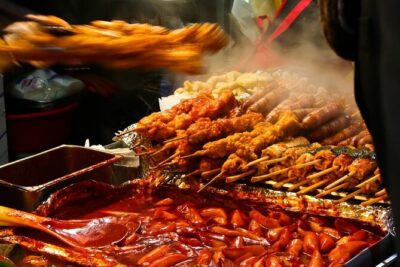
Gyeongbok Palace, Bukchon Village, and Gwangjang Tour
Read our review →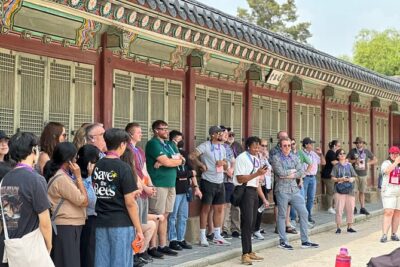
Best Seoul City Tour (Gyeongbokgung Palace,Insadong,Namsan Tower)
Read our review →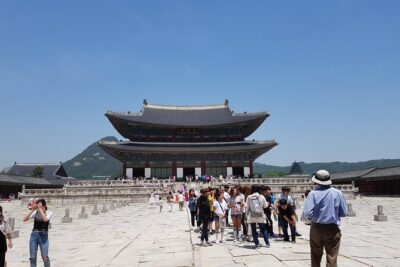
Seoul City Sightseeing Tour Including Gyeongbokgung Palace, N Seoul Tower, and Namsangol Hanok Village
Read our review →Gyeongbok Palace, Bukchon Village, and Gwangjang Tour
Read our review →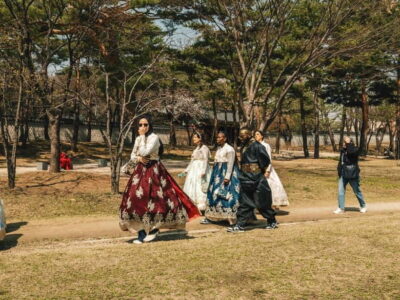
Seoul Half-Day City Highlight, Palace Tour with Hanbok
Read our review →
Hanbok Photoshoot and History Tour at Gyeongbokgung Palace
Read our review →Browse the lists this tour appears in