
REVIEW · KOREAN PALACE TOURS
Layover tour to Gyeongbokgung-Folk Museum-Bukchon-Insadong
Gyeongbokgung Palace gives this Seoul layover tour a strong center: it is the grandest expression of Joseon royal design, with the National Folk Museum, Bukchon’s old houses, and Insadong’s shops and temples filling in the everyday story. Guide Paul Koo brings years of study in Korean culture and Confucianism, which helps you see more than pretty roofs and painted gates.
I like the efficient airport plan and the private format. Your guide meets you at Incheon, handles the AREX connection, and walks you back to Seoul Station at the end. I also like the mix of palace grandeur and ordinary life, from royal ceremonies to household customs in the Folk Museum. The main caution is time: six hours includes airport transfers, so this is a brisk introduction, not a leisurely day in Seoul.
Key points to know before booking
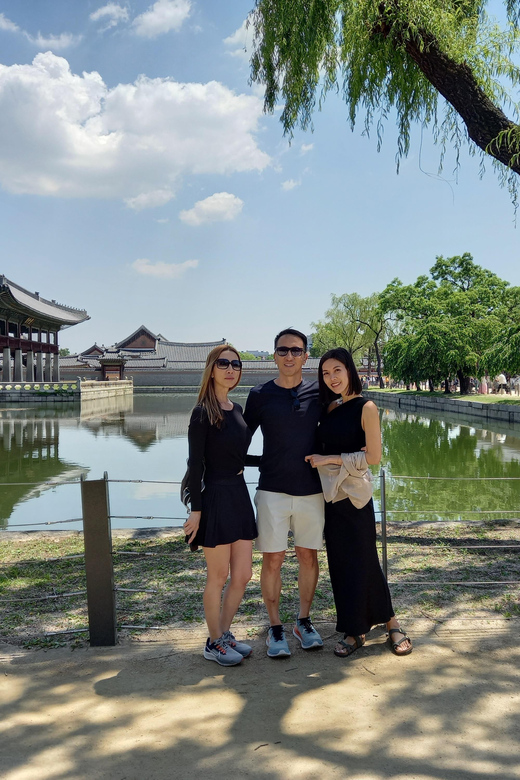
- Gyeongbokgung is the main event: Allow about two hours to understand Joseon palace design, Confucian values, and the role of Korea’s first royal palace.
- Paul Koo adds cultural context: His focus on Confucianism and Korean architecture gives the palace visit more meaning than a simple photo stop.
- AREX keeps the airport connection practical: Express and normal trains are included, with the normal train used when waiting for an express train would take too long.
- Bukchon combines old and new Seoul: Traditional hanok houses sit among modern buildings, with N Seoul Tower sometimes visible in the distance.
- Insadong adds a street-level finish: You get time for shops, food, and nearby Jogyesa Buddhist Temple.
- The tour ends at Seoul Station: You are escorted back there to continue to Incheon Airport, rather than being returned to your airport terminal.
Why this tour works well during a Seoul layover
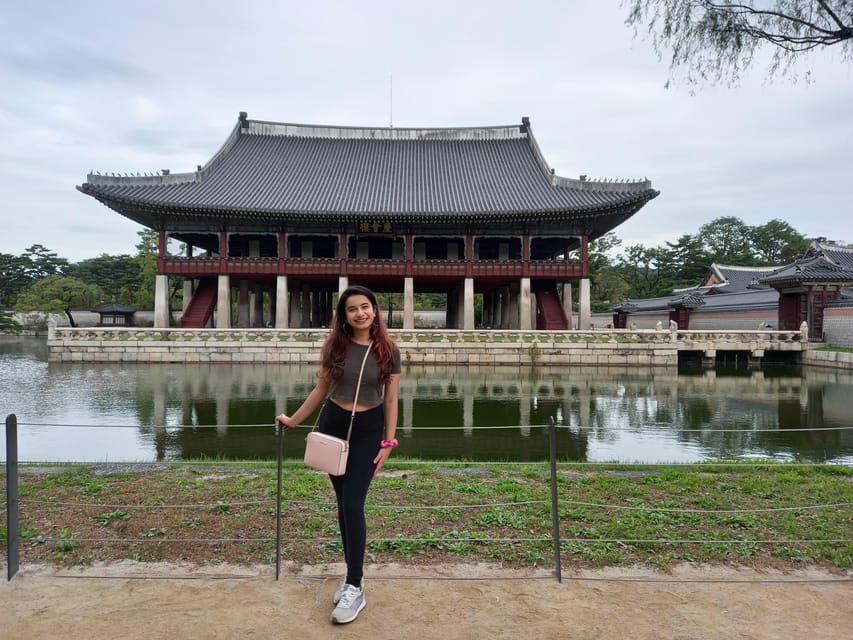
A long airport stop can easily disappear into train platforms, luggage storage, and guesswork. This private tour gives your layover a clear shape. You meet at Incheon Airport, travel into central Seoul, visit several major cultural sites, and return to Seoul Station with help from your guide.
The advertised price is $254 for a private group of up to one person, which effectively makes this a solo private tour at the stated rate. Transportation from Incheon Airport to Seoul, the return AREX journey, the Gyeongbokgung admission fee, and six hours of guiding are included. Food, drinks, and insurance are not.
For one person, that is not a cheap airport outing. The value depends on what you want. If you prefer a planned visit with a local guide, included rail arrangements, and direct help with the return connection, the price can make sense. If you are comfortable using Seoul’s trains and exploring at your own pace, you could spend less by going independently.
I see this as a time-saving service as much as a sightseeing tour. You do not need to work out which train to take, where to buy tickets, or how to connect the palace, Bukchon, and Insadong in a short window. Your guide also gives the buildings a cultural framework, which is especially useful if Korean architecture and Joseon-era customs are new to you.
More Korean palace tours in Seoul:
- Seoul: Gyeongbok Palace, Bukchon Village, and Gwangjang Tour
★ 4.9 · 2,321 reviews - Best Seoul City Tour (Gyeongbokgung Palace,Insadong,Namsan Tower)
★ 5.0 · 1,647 reviews - Seoul City Sightseeing Tour Including Gyeongbokgung Palace, N Seoul Tower, and Namsangol Hanok Village
★ 5.0 · 1,423 reviews
From Incheon Airport to central Seoul
The meeting point is Incheon International Airport, and you choose the meeting time after booking. A sample schedule begins at 7 a.m. and finishes around 1 p.m. at Seoul Station, but the exact start depends on the time you arrange.
The airport-to-city leg is planned around the AREX train. The express train runs almost every hour, uses assigned seats, and offers a more comfortable ride. In busy periods, it can sell out, so tickets may need to be arranged ahead of time.
The normal train takes about an hour to reach Seoul. The stated difference between the normal and express services is about 20 minutes. If waiting for the next express train would take more than 20 minutes, the guide may choose the normal train instead. That is a sensible choice during a layover, when an impressive train name matters less than reaching the city.
The total train portion is listed as about 1.5 hours in the schedule, while the normal train ride itself is described as about one hour. Either way, you should think of the rail connection as a substantial part of the six-hour outing. Leave enough time in your airport schedule for the return journey, security, and any airline requirements.
Gyeongbokgung Palace explains Joseon Korea
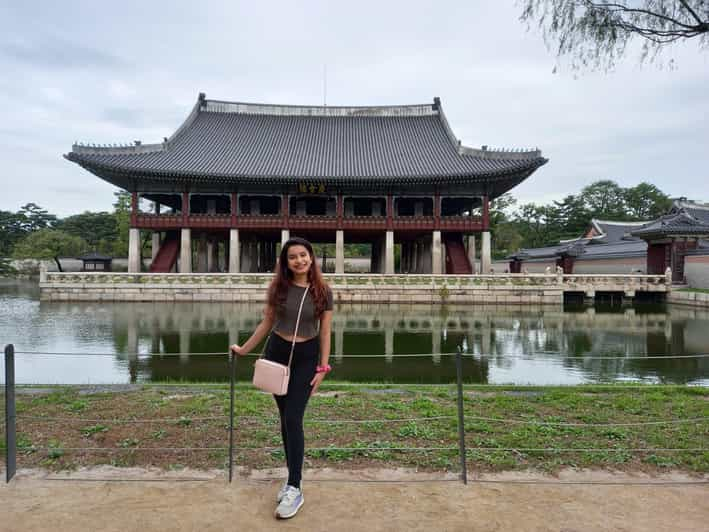
Gyeongbokgung is the highlight, and the tour gives it about two hours. That is enough time for a guided introduction rather than a rushed walk through the gate and a quick photograph.
The palace was built in 1395 as the main palace of the Joseon Dynasty. It is the largest of Korea’s major palaces and is distinctive for being built on relatively flat ground according to traditional palace planning. Its broad courtyards, formal buildings, rooflines, and ordered spaces reflect a political system shaped by Confucian ideas.
This is where Paul Koo’s approach matters. The tour places architecture at the center of Korean culture, treating buildings as expressions of the values of their time. You learn to consider why the palace is arranged as it is, how royal authority was presented, and how Confucian thought shaped Joseon society.
Without that background, Gyeongbokgung can look like a collection of handsome gates and painted timber. With it, the courtyards and halls become part of a larger story about hierarchy, ceremony, government, and family duty. You will still have time for photographs, but the visit is not built around photographs alone.
The two-hour stop may feel short if you want to inspect every corner of the palace grounds. It is a good length for a layover, though, especially because several other sites follow. Wear shoes suited to walking and expect a fair amount of time outdoors.
The National Folk Museum brings royal culture down to earth
The National Folk Museum of Korea receives about 30 minutes of guided attention. That is brief, but it adds an important counterpoint to Gyeongbokgung.
The palace shows official power and royal ceremony. The museum focuses on common people’s lives, seasonal customs, and the stages of life in Joseon society. Its exhibitions cover birth, growing up, marriage, aging, illness and treatment, and death, along with ceremonial and commemorative events.
This stop helps answer a basic question: how did the ideas represented at the palace affect ordinary families? You get a look at customs and routines rather than only court buildings. The museum is also useful if you want context for later visits elsewhere in Korea.
Thirty minutes will not allow a slow museum visit. You will get an introduction to selected displays, not a complete survey. Still, the short stop works well in this tour because it changes the focus from the state to the household.
More palace museums and galleries in Seoul:
- Time Travel in Seoul: Gyeongbokgung, Folk Museum & Bukchon
★ 5.0 · 10 reviews - Vienna: Skip-the-Line Sisi Museum, Hofburg and Gardens Tour
★ 4.8 · 5,918 reviews - Venice’s Best: Basilica, Doge’s Palace, Gondola & History Gallery
★ 4.5 · 2,478 reviews - Vienna: Hofburg and Empress Sisi Museum Guided Tour
★ 4.7 · 1,460 reviews
Bukchon shows Seoul’s old homes beside its modern city
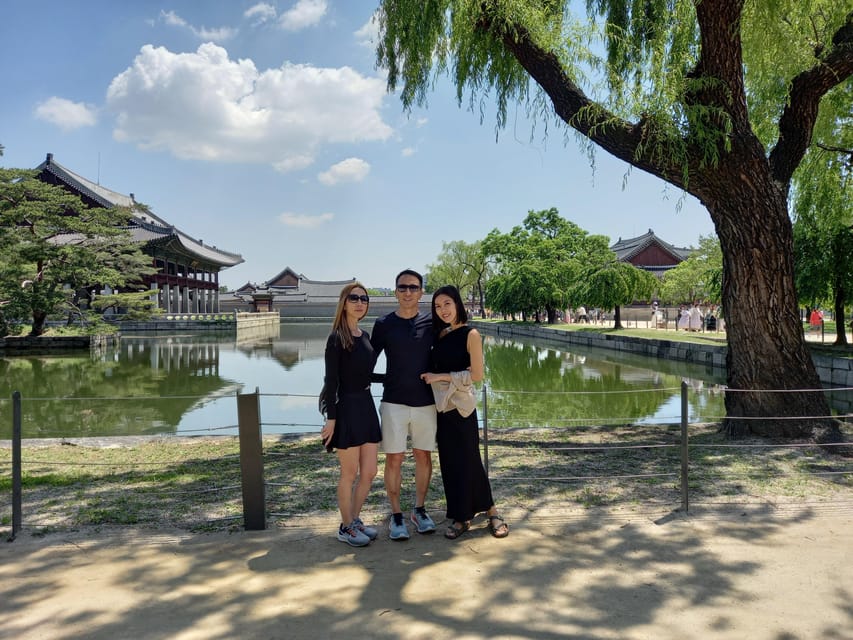
Bukchon Hanok Village receives about 40 minutes. The area is known for its traditional Korean houses, called hanok, and is described as the largest cluster of them, with about 1,000 homes.
The appeal is the contrast. You walk through an old residential area while modern Seoul rises around it. The view can include city buildings and N Seoul Tower in the distance, giving you a clear sense of how historic neighborhoods fit into the modern capital.
Bukchon is not a museum frozen away from city life. Its homes and lanes form a neighborhood, so you should follow your guide’s directions and keep your voice down in residential areas. Forty minutes is enough for an introduction and several photographs, but not for an unhurried exploration of every lane.
The stop can also be physically demanding. The tour information does not give an accessibility assessment, so you should ask before booking if hills, uneven streets, or walking pace are concerns. The village’s charm comes partly from its streets and slopes, but those same features can make the visit less comfortable for some people.
Insadong adds crafts, food, and a city-center feel
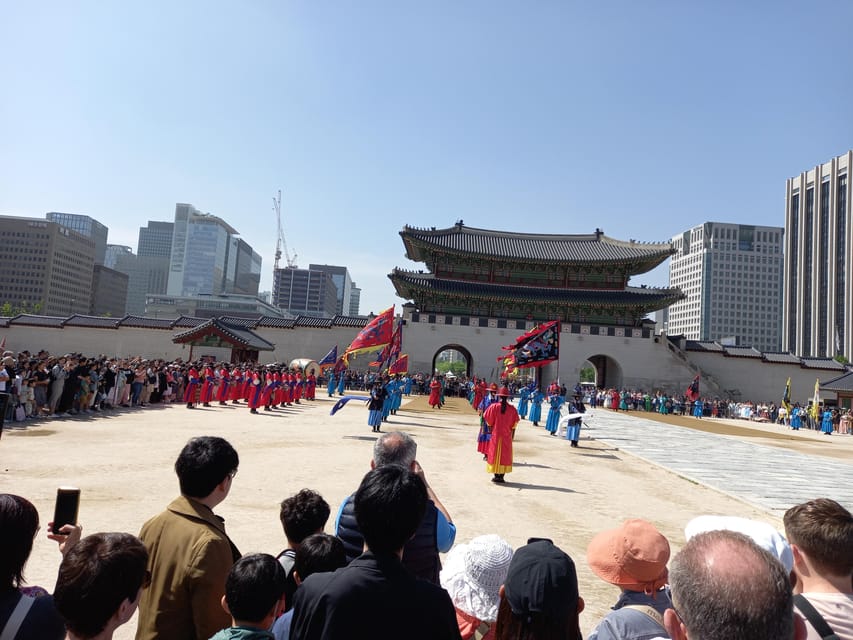
The tour allows about an hour in Insadong. This gives you a change of pace after the formal palace and quiet residential lanes.
Insadong is associated with traditional culture, shops, and street activity. You can use the hour to look at local crafts, browse shops, or sample food at your own expense. The tour does not include meals or drinks, so keep some Korean won available if you want to eat or buy anything.
The guide may also point out small details that are easy to miss when you are on your own. One of the strengths of this experience is that Paul is not only concerned with moving you from place to place. He can explain how architecture, religion, and daily customs connect across the different stops.
The hour is flexible in spirit, but the exact balance between shopping, food, and sightseeing depends on the day’s pace. If Gyeongbokgung or the rail connection takes longer than expected, Insadong is one place where time may need to be adjusted.
Jogyesa offers a Buddhist contrast
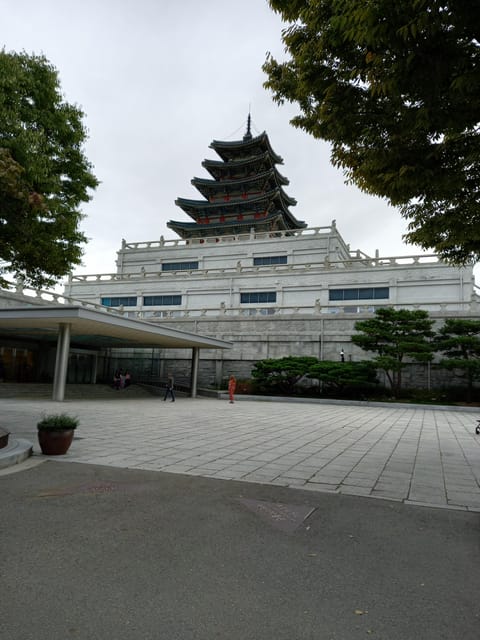
Jogyesa Buddhist Temple is described as the headquarters of Korea’s main Buddhist organization. It was built in 1926 in Insadong and lies close to Gyeongbokgung.
Its importance in the tour is partly the contrast it provides. Gyeongbokgung represents Joseon court culture and Confucian ideals, while Jogyesa introduces a Buddhist setting in the middle of central Seoul. The temple is relatively small, but its institutional role gives it importance beyond its size.
The supplied timing does not list Jogyesa as a separate timed stop, so you should confirm how much time will be spent there when arranging the tour. It is presented as part of the cultural route around Insadong rather than as a long standalone visit.
That distinction matters during a layover. You are getting a compact look at several parts of Korean culture, not a full religious or architectural study of each site.
Paul Koo’s guiding style adds real value
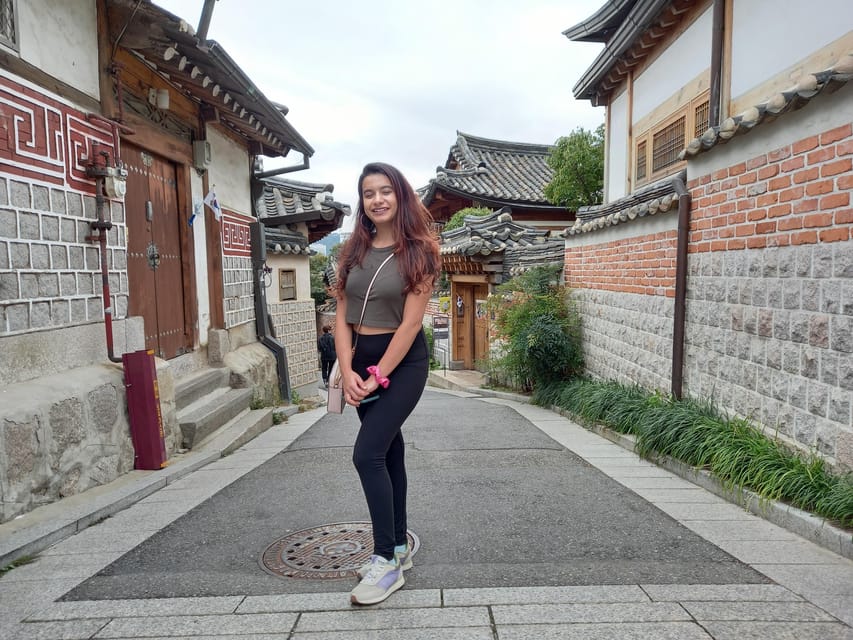
The guide named for this experience is Paul Koo. His background includes more than ten years of study of Seoul’s culture and history, with particular strength in Confucianism.
That subject is useful here because Joseon culture cannot be separated from Confucian ideas. Paul’s explanations can help you understand why palace spaces are formal, why family rituals mattered, and how Korean traditions developed in ways that differ from those of China and Japan.
He also takes care of practical matters. Paul meets you at the airport, helps you use public transportation, and escorts you to Seoul Station at the end. One useful extra noted in the supplied information is that he takes photographs for the people he guides and sends them afterward.
A private guide can also adjust the pace more easily than a large group tour. You can ask questions, spend longer at a point that interests you, or keep moving if your layover is tight. The tradeoff is that the price is high for a solo booking, and the quality of the day depends heavily on the guide assigned and the meeting arrangements being confirmed in advance.
The return to Seoul Station is part of the service
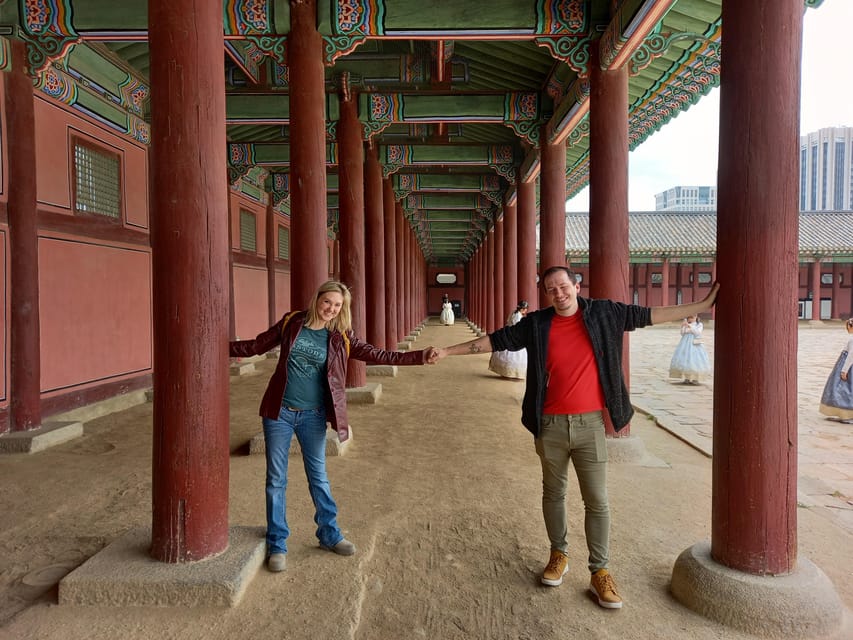
The tour does not finish back at Incheon Airport. After the sightseeing, your guide accompanies you to Seoul Station, where you continue to Incheon on the included train.
This arrangement is practical because Seoul Station is the departure point for the airport rail connection. It also gives you a clear handoff at the end of the tour. You are not left to find the station after a full morning in an unfamiliar city.
The experience description says the guide buys the return express ticket and that the tour ends at Seoul Station. It also says a normal train may be used when waiting for the express would waste time. Confirm the exact train plan and departure time with the guide before the day begins.
Your own flight schedule deserves careful attention. A six-hour activity ending at Seoul Station is not the same as a six-hour activity ending at your terminal. Build in the rail trip from Seoul to Incheon, airport procedures, and a buffer for delays.
Who should book this private layover tour?
I would recommend it to a solo visitor with a substantial daytime layover who wants a guided introduction to Seoul’s traditional culture. It is also a good match if you value direct airport assistance, prefer private touring, or want historical explanations rather than a simple sightseeing transfer.
It suits you especially well if Gyeongbokgung is high on your list and you want to understand why it matters. The combination of palace, folk museum, hanok neighborhood, temple, and Insadong gives you a useful first look at Korea’s royal, domestic, religious, and modern city life.
I would hesitate if your layover is tight, if you want long shopping time, or if you dislike a fixed schedule. The tour has several moving parts, and the airport transfer takes a large share of the day. You should also confirm the meeting time, guide availability, rail plan, and how Jogyesa fits into the route before paying.
Free cancellation is available up to 24 hours before the activity, and you can reserve now and pay later. Those terms help if your flight plans are not fully settled, but they do not remove the need to protect your return-to-airport time.
Should you book it?
Book this tour if you want a well-organized cultural snapshot of Seoul without having to manage the airport train and city connections yourself. Gyeongbokgung is the clear star, while Paul Koo’s focus on Confucianism and architecture can turn familiar sightseeing into a more informed visit.
Skip it if you are confident navigating Seoul alone and would rather spend the same money on a longer independent day. The tour is not slow, and $254 for one person is a serious price. For the right layover, though, the convenience, private guiding, included transportation, and clear return to Seoul Station make it a sensible way to see the historic heart of the city.
FAQ
Where does the tour begin?
The tour begins at Incheon International Airport, where the guide meets you.
Where does the tour end?
The sightseeing ends at Seoul Station, specifically at the airport rail station. You continue from there to Incheon Airport by train.
How long is the activity?
The tour lasts six hours. A sample schedule starting at 7 a.m. ends around 1 p.m. at Seoul Station.
Is the tour private?
Yes. It is offered as a private group experience, with the stated price applying to a group of up to one person.
What language is the tour conducted in?
The live tour guide language is English.
Is transportation included?
Yes. Transportation from Incheon Airport to Seoul, travel between the main tour areas, and the return journey from Seoul Station toward Incheon Airport are included as described.
Which train is used between Incheon and Seoul?
The tour may use the AREX express train or the normal train. The express train has assigned seats and runs almost every hour. If waiting for the express would take more than 20 minutes, the normal train may be used.
Is Gyeongbokgung Palace admission included?
Yes. Admission to Gyeongbokgung Palace is included.
Are food and drinks included?
No. Food and beverages are not included in the tour price.
Can I cancel the tour for a full refund?
Yes. You can cancel up to 24 hours in advance for a full refund. You can also reserve now and pay later.
Just added around Seoul
- Time Travel in Seoul: Gyeongbokgung, Folk Museum & Bukchon★ 5.0 · 10 reviews
- Seoul: Royal Palace Morning Tour including Cheongwadae★ 4.5 · 12 reviews
- Seoul: Vegan Temple Food Class, Jogyesa & Changdeokgung Tour★ 4.6 · 34 reviews
- Seoul: UNESCO Palace and Street Foods Guided Tour★ 5.0 · 6 reviews
- Seoul: UNESCO Sites tour: Palace, Shrine & Bukchon Village★ 4.8 · 26 reviews
- Seoul: Gyeongbokgung, Lotte Tower & Gangnam Trendy Day Tour★ 4.4 · 3 reviews
- Seoul: Hanbok Photo Tour at Gyeongbokgung Palace★ 5.0 · 9 reviews
- Seoul: Gyeongbokgung Palace Tour & Lunch at Authentic Market★ 4.5 · 2 reviews
Korean Palace Tours, compared.
Gyeongbok Palace, Bukchon Village, and Gwangjang Tour
Read our review →
Best Seoul City Tour (Gyeongbokgung Palace,Insadong,Namsan Tower)
Read our review →
Seoul City Sightseeing Tour Including Gyeongbokgung Palace, N Seoul Tower, and Namsangol Hanok Village
Read our review →Gyeongbok Palace, Bukchon Village, and Gwangjang Tour
Read our review →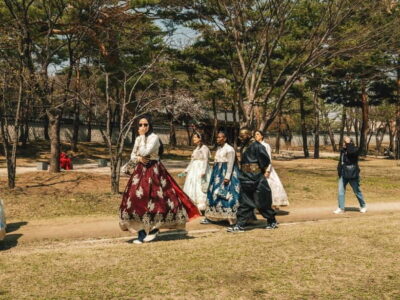
Seoul Half-Day City Highlight, Palace Tour with Hanbok
Read our review →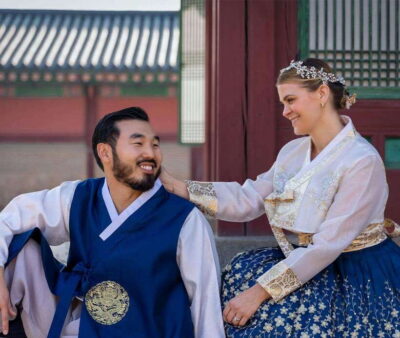
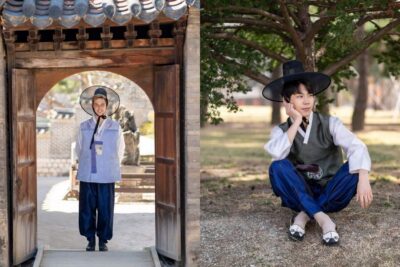
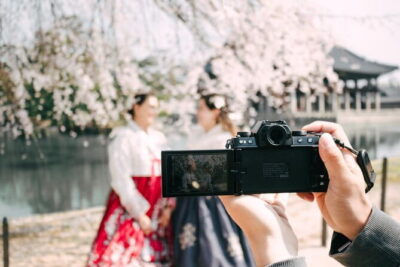
Hanbok Photoshoot and History Tour at Gyeongbokgung Palace
Read our review →Browse the lists this tour appears in