
REVIEW · MARRAKECH PALACE TOURS
Marrakech: Palace, Museum, Madrasa & Medina Highlights Tour
Marrakech’s best introduction often comes on foot, and this tour puts the city’s grandest interiors, oldest school, and maze-like souks into one four-hour route. Bahia Palace and Ben Youssef Madrasa are the main prizes: one shows royal domestic life, the other reveals the beauty of Islamic learning spaces.
I like the way the tour mixes major sights with ordinary Medina streets, and I like having a guide to explain zellij tilework, carved cedar, spices, and local customs. Guides including Yassine, Hassan, Youness, Ismail, and Mustapha have earned repeated praise for clear explanations, good humor, patience, and help with photographs. The main drawback is that the route includes a lot of walking and may include arranged shopping stops, which can feel less useful than extra time inside the monuments.
Key things to know before you book
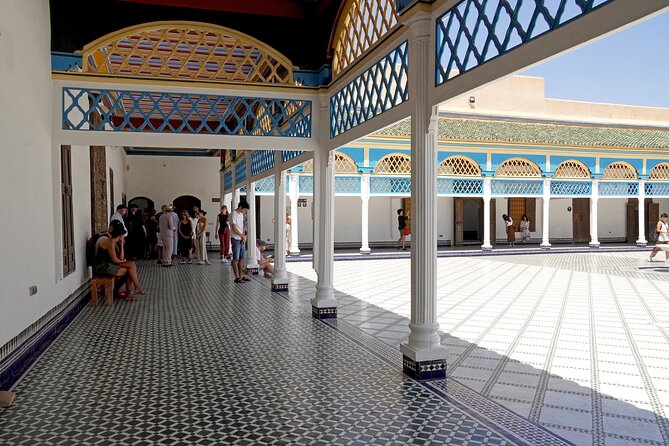
- Bahia Palace takes you through 160 rooms, courtyards, gardens, painted ceilings, and fine tilework.
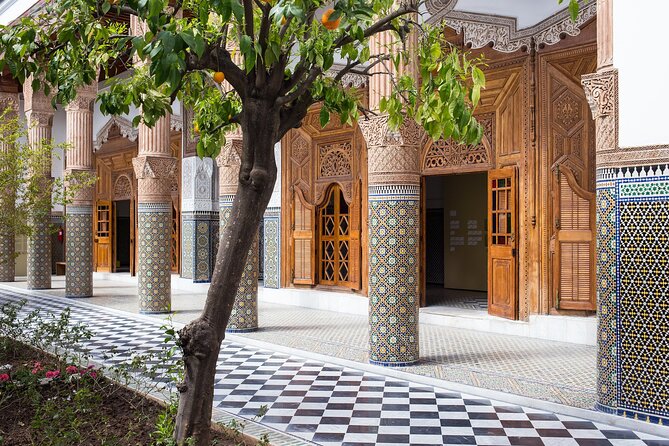
- Ben Youssef Madrasa is the architectural highlight, with zellij mosaics, carved cedar, and stucco decoration.
- The four-hour walk covers several different souks, including clothing, leather, spices, perfumes, and craft workshops.
- The $18 price is strong value, but monument tickets cost extra: 100 MAD for Bahia Palace and 50 MAD for Ben Youssef Madrasa per adult.
- Morning is the better choice in hot weather and heavy foot traffic, especially in the narrow souks.
- Dar El Bacha Museum is not guaranteed on every outing, since the schedule says it is visited if time allows and it is closed on Mondays.
Why this four-hour walk works as a first look at Marrakech
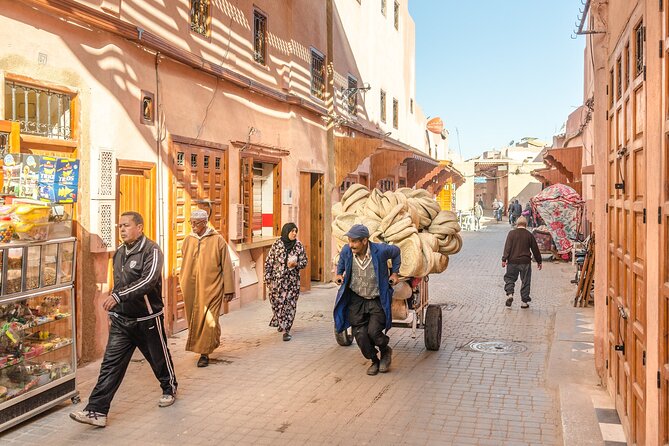
This is a good orientation tour for your first full day in Marrakech. You begin at Jemaa el Fna, move into the southern Medina, cross the souks, reach Ben Youssef Madrasa in the north, and return toward the central square. The route gives you a useful sense of how the old city fits together.
I like that the guide stays with you inside the monuments. You are not simply handed a ticket and left to read a plaque. The guide explains what you are seeing, then gives you free time for photographs and a closer look.
The pace seems manageable for most reasonably active walkers, but this is not a gentle sightseeing stroll. You will walk through crowded lanes, uneven surfaces, and busy market passages. One guide may also need to keep the group together while scooters, carts, and shoppers move around you.
Small groups are available, and the private option adds hotel or riad pickup within the Medina. Otherwise, you meet in front of Café de France at Jemaa el Fna. The operator normally contacts you a day or two before the walk to confirm the details.
More palace museums and galleries in Marrakesh:
- Vienna: Skip-the-Line Sisi Museum, Hofburg and Gardens Tour
★ 4.8 · 5,918 reviews - Venice’s Best: Basilica, Doge’s Palace, Gondola & History Gallery
★ 4.5 · 2,478 reviews - Vienna: Hofburg and Empress Sisi Museum Guided Tour
★ 4.7 · 1,460 reviews
Starting at Jemaa el Fna
Jemaa el Fna is the right place to begin. It is Marrakech’s central public stage, with activity changing through the day. Storytellers, musicians, snake charmers, food stalls, and vendors give the square its famous character.
Your stop here is brief, about 15 minutes, so think of it as an introduction rather than a full visit. The guide can help you understand the square’s role in Marrakech and point out useful landmarks before you enter the Medina lanes.
Café de France is an easy reference point, but the square can be confusing at first. Arrive early enough to find the meeting place without rushing. If you have a hotel or riad pickup through the private option, confirm the exact arrangement with the operator.
Bahia Palace and the language of Moroccan design
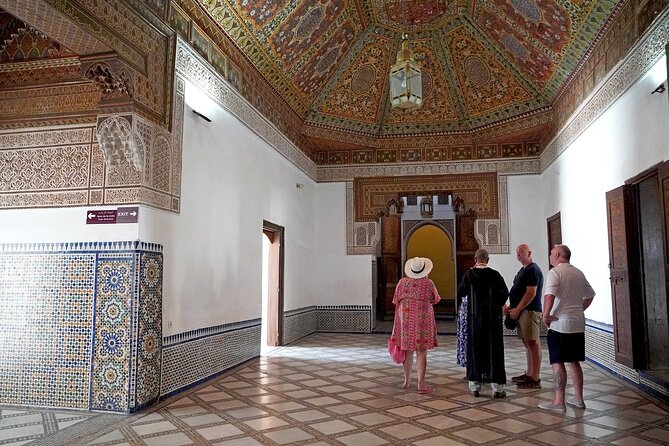
Bahia Palace receives around 40 minutes, and it deserves close attention. This 19th-century palace contains about 160 rooms arranged around peaceful courtyards, with an eight-hectare garden beyond the main buildings.
The appeal is not one single throne room. It is the repeated detail: painted wooden ceilings, marble surfaces, carved stucco, and zellij tile floors. The design brings Moroccan and Andalusian influences together, and a good guide helps you notice how the rooms, courtyards, and gardens work as one palace complex.
I especially like this stop for readers who want more than pretty photographs. Your guide can explain the craft behind the surfaces and give context for the palace’s royal setting. The patterns are not random decoration. Geometry, symmetry, wood carving, and tile color all help create the calm effect of the interiors.
The tour includes skip-the-line access, but entrance is not included in the $18 cost. Bahia Palace costs 100 MAD per adult. That extra charge is important when you compare the advertised price with the true cost of the morning.
Forty minutes is enough for an informed visit, but not enough to linger over every courtyard. If palace interiors are your main interest, a private tour may give you more control over the pace. On a group tour, you should expect the guide to keep the schedule moving.
Souk Semmarine, spice lanes, and craft workshops
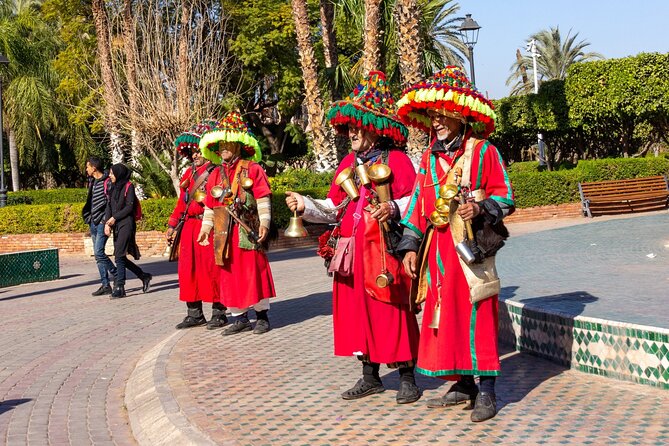
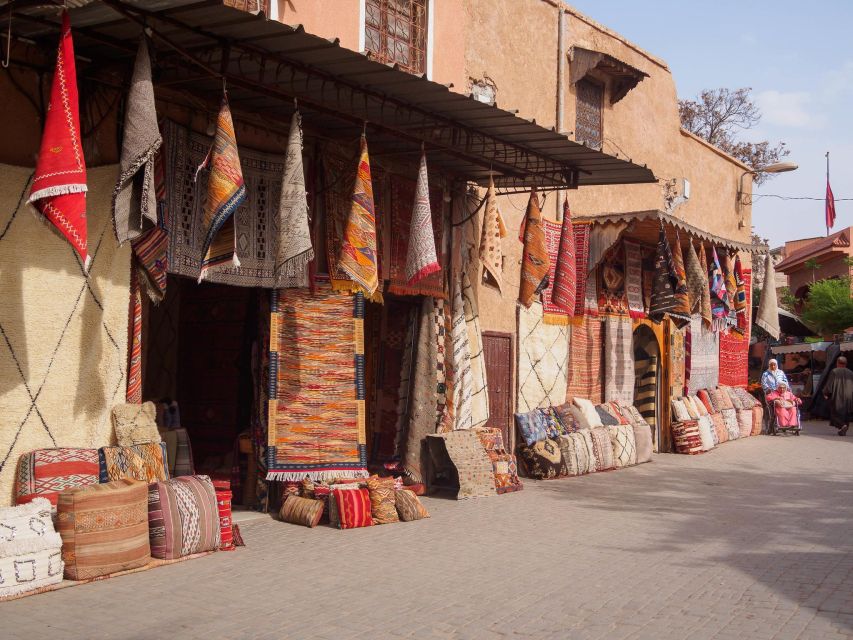
After Bahia Palace, the route enters the market streets. Souk Semmarine is associated with traditional clothing and leather goods, while Souk El Attarine focuses on spices, perfumes, and beauty products.
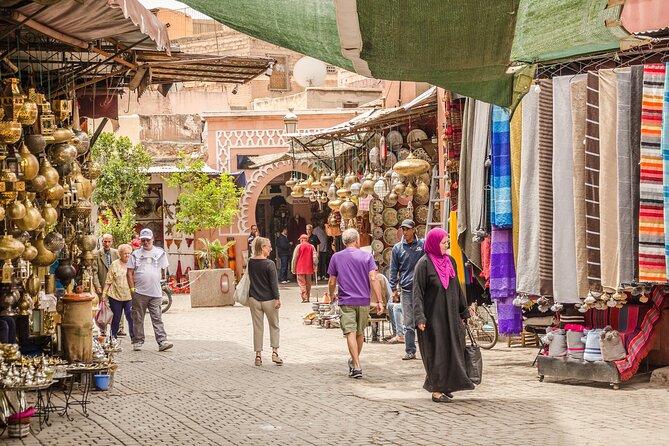
This is where the tour becomes less like a museum visit and more like a lesson in daily commerce. You will see shop displays, narrow lanes, and working craft traditions. The guide can point out the difference between product categories and explain how local artisans make pottery, metal goods, and wooden objects.
The souks are also the least predictable part of the route. They can be crowded, and it may be hard to hear the guide or keep sight of your group. Sarah and Joanna both singled out this issue, and it is sensible advice: stay close, listen for meeting instructions, and do not stop suddenly in the middle of a narrow lane.
You should also understand what the shopping portion may involve. Some departures include prearranged stops at a tea shop, rug shop, or argan oil and spice business. One experience included about 30 minutes at a tea shop, while another included a demonstration covering argan oil, curry powder, and perfume.
These stops may be useful if you want help understanding Moroccan products. They may feel like lost sightseeing time if you would rather keep walking. You are not promised a completely free-form market visit, so ask the operator what shopping stops are planned if that matters to you.
A few more palace visits around Marrakesh worth a look
- Marrakech: Bahia Palace, Saadian Tombs, Souk and Medina Tour
★ 4.7 · 4,974 reviews - Marrakech: Bahia Palace, Saadian Tombs, & Koutoubia Mosque
★ 4.5 · 2,529 reviews - Marrakech: Bahia Palace, Madrasa Ben Youssef and Medina Tour
★ 4.7 · 1,347 reviews - Marrakech: Bahia Palace Guided Tour with Skip-the-Line Entry
★ 4.7 · 811 reviews
Ben Youssef Madrasa, the tour’s visual highlight
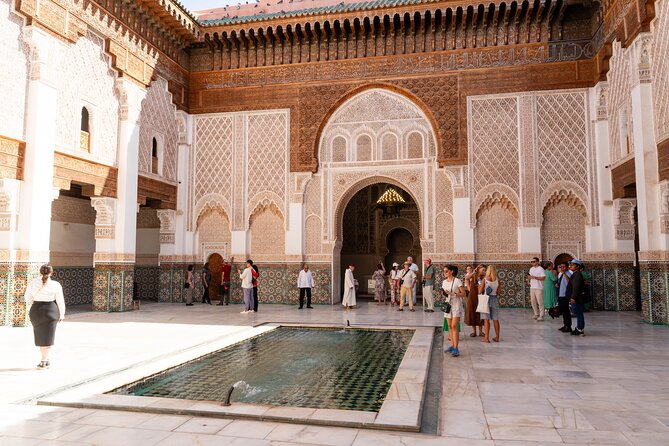
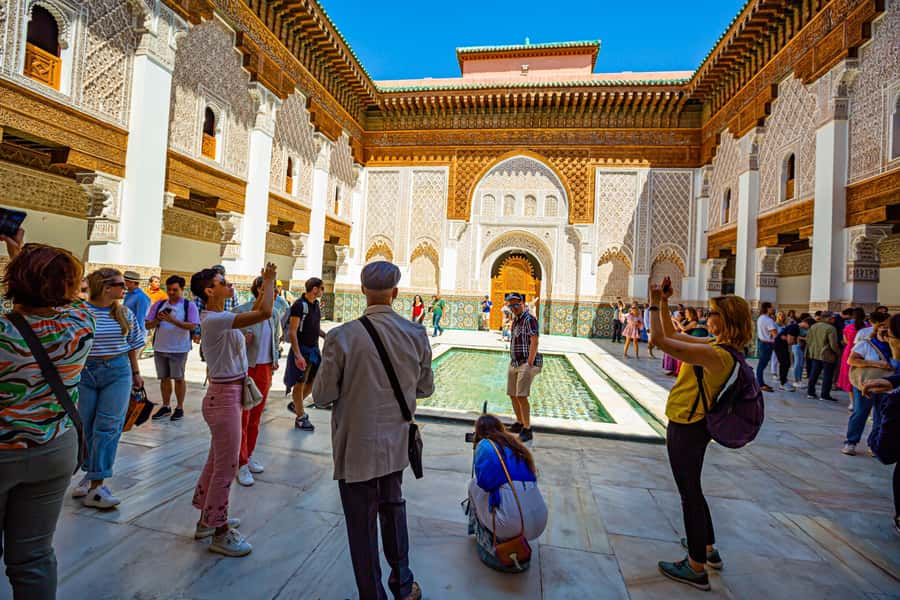
Ben Youssef Madrasa is scheduled for about 40 minutes, and I would protect this part of the route. The school began in the 14th century and was rebuilt in the 1560s. It once housed about 800 students.
The central courtyard is the reason to come. Zellij tilework, carved cedar, and detailed stucco create a strong contrast with the plain student rooms. The decoration is carefully arranged, and the building feels both scholarly and ceremonial.
This is also where a guide’s architectural knowledge matters most. One especially strong guide, Achraf, was praised for explaining the meaning behind arches, mosaics, courtyards, and the geometry used in madrasa and mosque design. You do not need a background in Islamic architecture to appreciate the visit, but clear interpretation makes the building far more readable.
The madrasa is a calm counterpoint to the noise of the souks. You can take photographs and have some time to look around after the explanation. Since the tour includes the ticket-line shortcut but not the ticket itself, budget another 50 MAD per adult for admission.
The route reaches Ben Youssef after a fair amount of walking. If you visit during a hot month, drink water before this stop and wear shoes with solid support. A family with a stroller completed the walk at an unhurried pace, but the overall activity is officially not suited to people with mobility impairments.
Dar El Bacha Museum and a flexible final stop
Dar El Bacha Museum is listed for about 30 minutes, but it is included only if time allows. That wording matters. If the palace, souks, or madrasa take longer than planned, this may receive a shorter visit or be left out.
The museum occupies a historic palace linked with Marrakech’s wealthy and powerful past. Inside, you may see Moroccan art, woodwork, textiles, and ceramics in grand rooms. It offers a different experience from Bahia Palace: Bahia is about palace courtyards and domestic grandeur, while Dar El Bacha gives you another setting for Moroccan decorative arts.
Dar El Bacha is closed on Mondays, so do not choose a Monday tour if this museum is high on your list. You can arrange a separate visit, but the advertised route cannot promise it on that day.
This flexibility is one of the tour’s small weaknesses. The title gives Dar El Bacha equal billing with the other sights, yet the schedule treats it as conditional. I would book this experience mainly for Bahia Palace, Ben Youssef Madrasa, and the Medina. Treat Dar El Bacha as a welcome extra.
Rahba Kedima and the walk back to the square
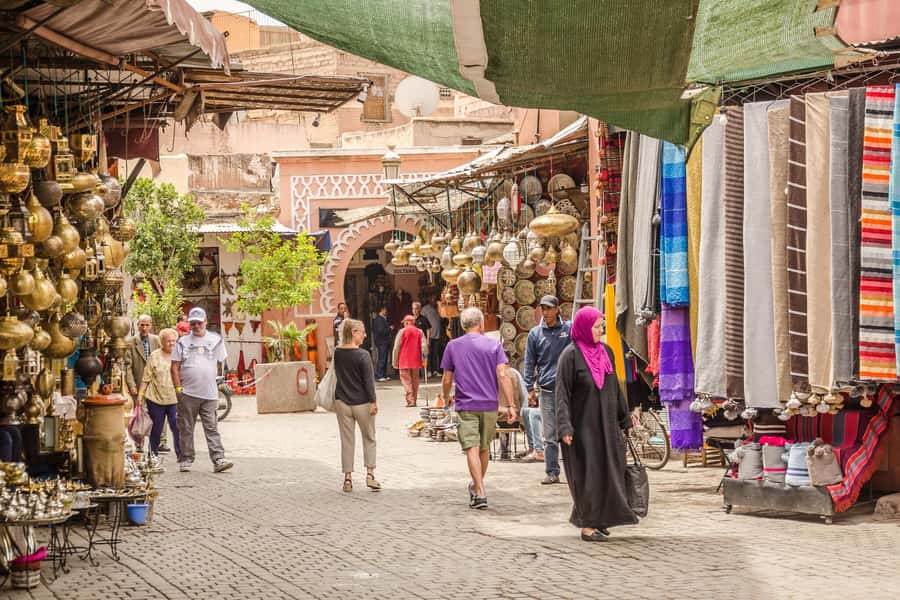
Rahba Kedima provides another look at the old market area before the route heads back toward Jemaa el Fna. The stop lasts about 20 minutes and includes a guided walk and photographs.
This part helps connect the separate sights. You see how the market lanes, open spaces, stalls, and main square relate to one another. It is also a practical chance to note shops or streets you may want to revisit later on your own.
The tour finishes around Jemaa el Fna, with drop-off at Café de France or in the Medina. Food and drinks are not included, so this is a good point to stop for lunch or tea. One group enjoyed Berber tea during the outing, but you should not assume refreshments are part of the standard price.
What the guides add
The guide is the main reason to book this instead of simply visiting the monuments independently. Names that appear often in the tour’s guide pool include Yassine, Hassan, Youness, Ismail, Mustapha, Mouhssine, Achraf, Hamza, and Hasan.
The strongest pattern is clear communication and a friendly manner. Yassine is noted for humor, history, and photography. Hassan is often praised for patience and clear explanations. Youness receives credit for giving groups enough time for pictures and for explaining the city without rushing. Ismail is a good choice for visitors who want local advice alongside monument history.
Of course, your exact guide depends on the departure. The practical benefit is that a licensed local guide can explain the culture in English or French, answer questions, and help you find your way through the Medina during your first hours in town.
Price, extra costs, and overall value
At $18 per person, the tour is inexpensive for four hours with a licensed guide, monument access shortcuts, and a route through several key areas. For a first visit, that is good value even after adding the two stated admission fees.
For one adult, the known extra monument costs total 150 MAD: 100 MAD for Bahia Palace and 50 MAD for Ben Youssef Madrasa. Dar El Bacha admission is not specified here, so confirm that separately if it is included in your departure.
The low base price makes a group tour attractive. You get structure and local explanation without paying for a full private day. A private option makes more sense if you want hotel pickup, a slower pace, or firm control over shopping stops and photographs.
Cancellation is free up to 24 hours before departure, and you can reserve now and pay later. Those terms help if your Marrakech plans are still shifting, but the more important decision is timing. Morning departures are best for cooler conditions and thinner crowds, especially in the souks.
Who should book this experience?
I would choose this tour if you are visiting Marrakech for the first time, have only a few days, or want help finding your feet before exploring alone. It suits couples, families with older children, and solo visitors who prefer a guide in the Medina. One solo visitor found the tour easy to join, while another family appreciated the guide’s patience and help with photographs.
It is less suitable if you dislike walking, shopping environments, or fixed schedules. It is also not a good fit for serious museum fans who want long, quiet visits at every site. Four hours covers a lot, but it does so by giving each location a defined window.
Wear comfortable shoes, bring water and sunglasses, and dress for heat if you are visiting in summer. In very hot weather, the morning is the sensible choice. The route is wheelchair accessible in the activity information, but it is also marked as unsuitable for people with mobility impairments, so ask the provider for a clear assessment before booking.
Should you book the Palace, Museum, Madrasa and Medina tour?
Book it if you want a well-priced first chapter to Marrakech, with the main monuments explained by a local guide and the Medina made less confusing. The best parts are Bahia Palace, Ben Youssef Madrasa, and the chance to connect those polished interiors with real market streets.
Go in with realistic expectations. You will walk a lot, entrance fees come extra, Dar El Bacha may be shortened or skipped, and shopping stops can take time. If that trade-off suits you, the $18 starting price is hard to argue with. Choose a morning departure, confirm the Dar El Bacha schedule, and ask what market stops are planned.
FAQ
How long is the tour?
The walking tour lasts four hours.
Where does the tour begin?
The standard meeting point is in front of Café de France in Jemaa el Fna square. Private tours may include pickup from your riad or hotel within the Medina.
Which languages are available?
The tour is available with live guides speaking English or French.
Are monument tickets included?
No. Bahia Palace costs 100 MAD per adult, and Ben Youssef Madrasa costs 50 MAD per adult. The tour includes skip-the-line access but not the admission fees.
Is transportation included?
No. This is a walking tour. Transportation is not included.
Is Dar El Bacha Museum guaranteed?
No. The schedule says the museum is visited if time allows. It is also closed on Mondays.
What should I bring?
Bring comfortable shoes, sunglasses, and water.
Can I cancel the booking?
You can cancel up to 24 hours before the tour for a full refund. Reserve now and pay later is also available.
Just added around Marrakesh
- Marrakech Private Medina Tour: Bahia Palace & Ben Youssef★ 4.8 · 48 reviews
- Marrakesh: Bahia Palace, Ben Youssef Medersa & Secret Garden★ 4.8 · 55 reviews
- Marrakech: Bahia Palace, Madrassa & Souks Guided Tour★ 4.8 · 47 reviews
- Marrakech Palaces and Monuments Half-Day Tour★ 5.0 · 11 reviews
- Marrakech Palaces and Monuments Half-Day Tour★ 4.1 · 13 reviews
- Marrakech: Bahia Palace, Saadian Tombs & Medina Walking Tour★ 4.6 · 63 reviews
- Marrakech: Medina, Souks, Artisans Guided Tour with Mint Tea★ 4.8 · 19 reviews
- Marrakech City Tour: Souks, Palaces & Hidden Gems★ 4.7 · 35 reviews
Marrakech Palace Tours, compared.
Bahia Palace, Saadian Tombs, Souk and Medina Tour
Read our review →
Bahia Palace, Saadian Tombs, & Koutoubia Mosque
Read our review →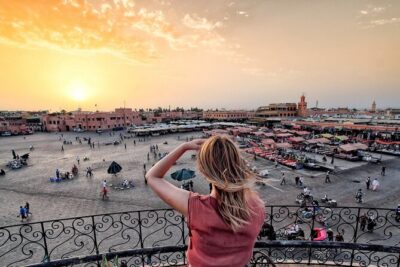
Bahia Palace, Madrasa Ben Youssef and Medina Tour
Read our review →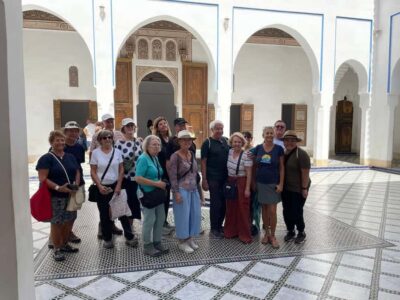
Bahia Palace Guided Tour with Skip-the-Line Entry
Read our review →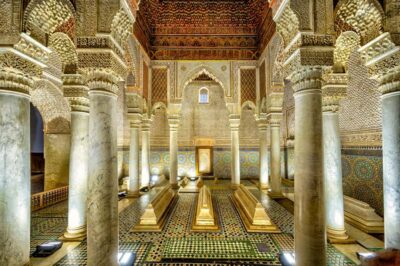
Saadian Tombs, Bahia Palace, Medina and Souk Tour
Read our review →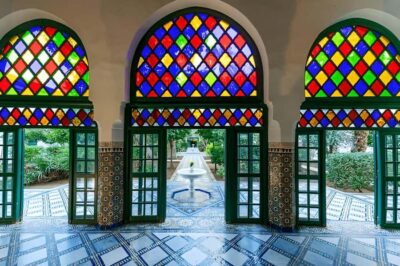
Bahia Palace, Ben Youssef Medersa, & Souks Tour
Read our review →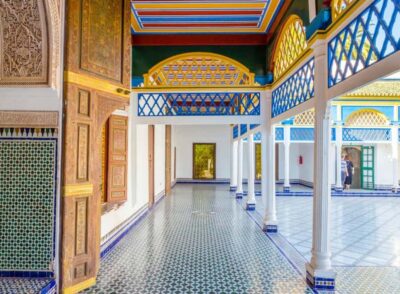
Bahia Palace, Madrasa Ben Youssef & Secret Garden
Read our review →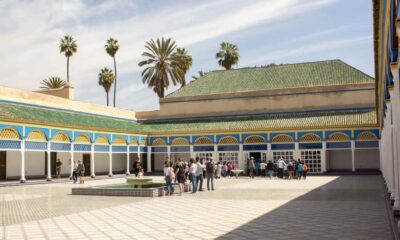
Bahia Palace, Saadian Tombs & Medina Guided Tour
Read our review →Browse the lists this tour appears in