
REVIEW · ITALIAN PALAZZO TOURS
Pitti Palace, Palatina Gallery and the Medici: Arts and Power in Florence.
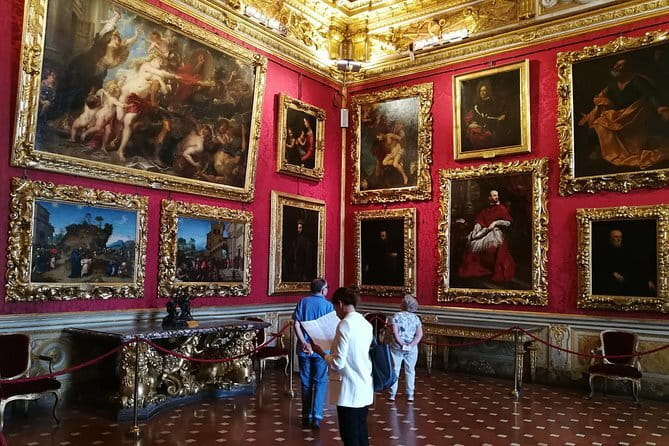
The best part of this tour is the Palatine Gallery’s wall-to-wall art, seen in the grand rooms where the Medici once lived as rulers of Tuscany. Paintings by Raphael, Rubens, Caravaggio, Titian, and Pietro da Cortona appear in rooms arranged for visual drama rather than a neat timeline.
I like the small group, capped at 14, and the timed entry that gets you past the main entrance line. I also like the chance to hear a guide such as Camilla, an art restorer praised for explaining both technique and history. The main caution is simple: this is primarily an art tour, not a full study of the Medici family or a tour of the Boboli Gardens.
Key Points to Know Before You Book
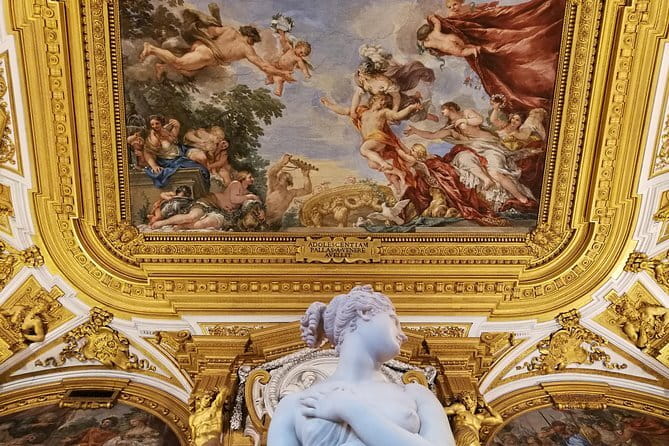
- See masterpieces in their original palace setting: Raphael, Caravaggio, Rubens, Titian, and other major painters fill the Palatine Gallery.
- Expect an art-led tour: The Medici story provides context, but the guide spends most of the time on paintings and artistic details.
- Small groups make a difference: The maximum is 14 people, with earsets provided when the group has more than four participants.
- Plan for about two hours: The visit includes Piazza Pitti, a short palace introduction, and roughly 90 minutes in the gallery.
- Gardens cost extra: The Boboli Gardens are visible from the palace windows but are not part of this ticket.
- Bring matching identification: Every person needs a passport or ID matching the full name supplied at booking.
The Pitti Palace Setting Across the Arno
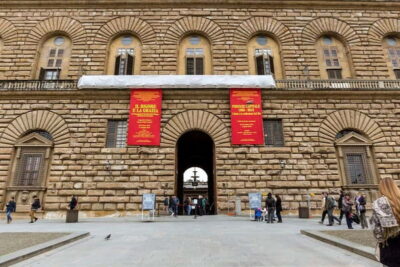
Piazza Pitti gives you a fine opening to the visit. The square is broad and imposing, with the palace filling one side in a long, serious Renaissance façade. It lacks the delicate charm of some of Florence’s smaller streets, but it makes the right first impression: this was a building designed to project power.
Your guide begins outside with about 10 minutes of orientation. That short pause matters because the palace can feel overwhelming once you enter. You get the basic story first: the Pitti family began the building, and the Medici took it over in the 16th century. It became the residence of the ruling family of Tuscany until the Medici line fell from power in the 18th century.
The palace is across the river from Florence’s best-known museums, but it is easy to reach by public transportation and sits in the Oltrarno area. I like placing this tour in a day that includes the Santo Spirito neighborhood, although the activity itself begins and ends at Palazzo Pitti, not at your hotel.
More Palazzo Tours in Florence
- Florence: Palazzo Vecchio Entrance Ticket & Audioguide
★ 4.4 · 4,822 reviews - Florence: Uffizi, Pitti Palace & Boboli Combined 5-Day Pass
★ 4.5 · 1,726 reviews - Florence: Palazzo Vecchio Guided Tour
★ 4.8 · 1,260 reviews
A Short Introduction to Florence’s Biggest Palace
The next stop lasts about 15 minutes and focuses on Palazzo Pitti itself. The guide explains the building and its role in Florence before taking you inside with your timed ticket.
Do not expect a long architectural lecture here. The value of this introduction is that it gives you a frame for the rooms ahead. You are not simply walking into another museum full of paintings. You are entering former apartments connected with the Medici court and later rulers.
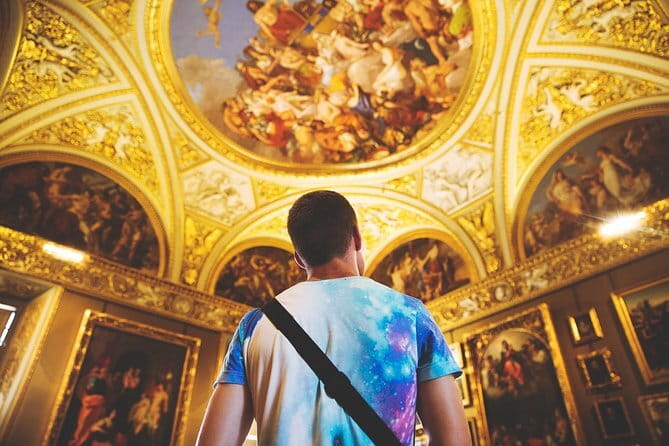
The palace’s exterior is grand but plain compared with the spectacle inside. Once you reach the gallery apartments, the mood changes quickly. Ornate ceilings, decorated walls, and paintings packed close together create a very different experience from the spacious, carefully ordered rooms of the Uffizi.
That density is part of the appeal, but it can also tire you. If you prefer one artwork at a time with plenty of open space, the Palatine Gallery may feel crowded even when the building itself is not busy.
Ninety Minutes Among Raphael, Rubens, and Caravaggio
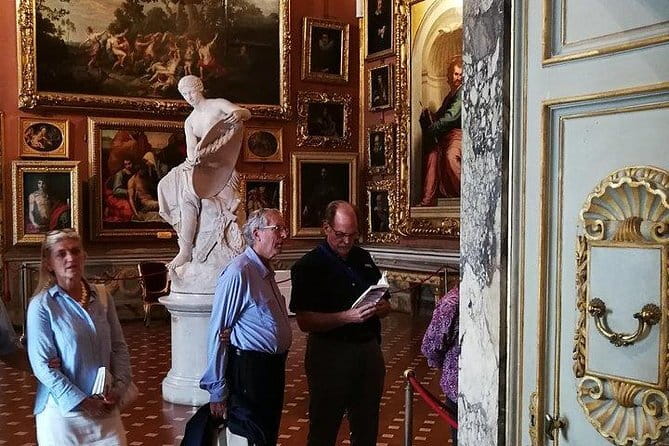
Most of the tour takes place in the Palatine Gallery. You spend about an hour and a half moving through rooms lined with hundreds of paintings. The collection is arranged for beauty and effect, not by date or school, so a guide is especially useful.
On your own, you may notice the famous names but miss the connections. A skilled guide points out what to look for in the colors, gestures, composition, and subject matter. Several people have praised guides who explain not only what a painting shows, but also how it was made and why it mattered to the people who owned it.
Camilla is singled out for her work as an art restoration specialist. That background can add a useful technical layer, especially when she explains paint, restoration, or the details that disappear when you simply walk past a picture. Cristiano is also described as bringing three decades of experience and a strong interest in both Florence and art. Sarah has been praised for clearly presenting the palace and its collections. Guides can vary by departure, so treat these names as examples rather than a guarantee.
The strongest part of the experience is the conversation around individual works. You can ask about a painting that catches your eye, and the guide may shift attention to it. That flexibility helps in a museum where there is far too much to absorb in one visit.
Raphael is one of the main draws. The gallery contains several works associated with him, and the guide can place them within the wider story of Renaissance painting. Caravaggio brings a sharper, more dramatic mood, while Rubens offers grand movement and bold color. Titian and Pietro da Cortona add further range to the collection.
I would not expect a full lecture on every major artist. The time is limited, and a good guide has to choose highlights. Still, the format works well for people who want to understand a handful of important paintings rather than march past every wall without context.
Why the Medici Story Helps, and Where It Stops

The tour connects the art to the Medici family’s power. That link is important. These paintings were not gathered at random. They helped demonstrate wealth, taste, learning, and political authority.
You hear about the Medici takeover of the palace, their life as grand dukes of Tuscany, and the family’s eventual fall from power. The palace becomes easier to read once you understand that the rooms were meant to impress diplomats, guests, and rival courts.
But keep your expectations in check. This is not a room-by-room account of Medici personalities, marriages, conflicts, and political decisions. The guide uses the Medici as a way into the collection, then returns to the art.
Some rooms do not retain their original furnishings, which limits how much you can picture daily life inside the palace. You will see some furniture and decorative details, but the central experience is the paintings. If your main goal is to understand how the Medici lived, choose a tour specifically built around the family and palace interiors.
If your interest is art and power, the balance is better. You see how a ruling family used a collection to shape its public image, while standing inside the setting where that image was displayed.
Same city, a very different set of state rooms:
- Florence: Palazzo Vecchio Entry Ticket with Audio Guide
★ 4.4 · 837 reviews - Florence: Pitti Palace and Boboli Gardens Ticket & eBook
★ 4.5 · 835 reviews - Florence: Uffizi, Pitti, Boboli and 7 Attractions 5-Day Pass
★ 4.5 · 652 reviews - Florence: Palazzo Vecchio Skip-the-Line Entry Ticket
★ 4.2 · 349 reviews
The View Toward Santo Spirito and Boboli
Do not rush from room to room without looking out the windows. The palace offers views toward Brunelleschi’s Santo Spirito Basilica and the Boboli Gardens.
These views give you a useful break from the dense picture display. Santo Spirito helps place the palace within Florence’s larger architectural story, while the gardens show the scale of the Medici grounds.
The views also make clear what your admission does not cover. The Boboli Gardens are not included in this tour. You may need to leave, join another line, and pay separately if you want to visit them. That extra cost is the most common source of disappointment for people who assume the palace ticket includes the gardens.
If the gardens matter to you, budget for a separate admission and allow extra time. If your schedule is tight, the two-hour gallery visit can work well on its own.
Small Group Size and Guide Style
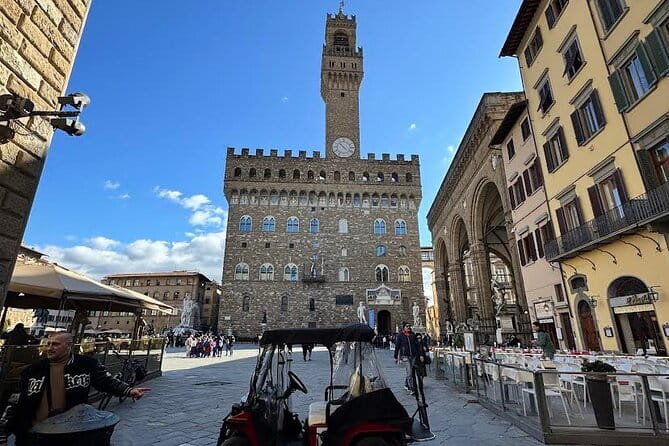
A group maximum of 14 is a real advantage in a museum with so many details. You can usually stay close enough to hear and ask a question without stopping the entire group.
Earsets are supplied when there are more than four participants. That matters in the large rooms, where voices can scatter and the group may need to keep moving. A good headset lets you look at the painting while still following the explanation.
The strongest guide style here is focused and interactive. The best guides do not simply recite dates. They ask what interests you, point out details across different rooms, and adjust the pace when a particular painting catches your attention.
There is one possible downside. Some guides may explain a picture at considerable length. For an art lover, that is the point. For someone who wants a quick overview, the detail can feel heavy. You should choose this tour if you enjoy stopping to discuss technique, symbolism, and artistic choices.
Is $82.27 a Fair Price?
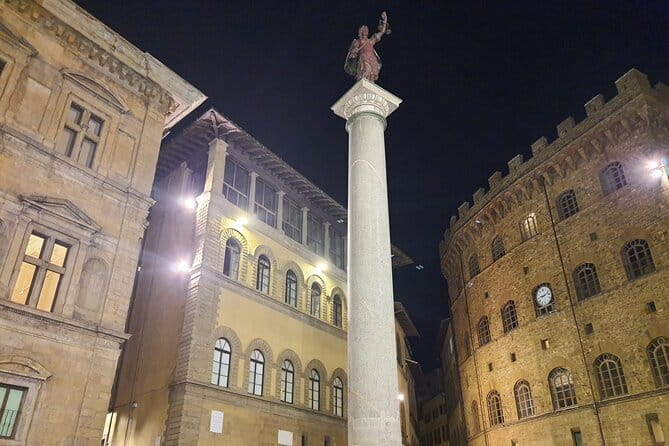
At $82.27 per person, this is not a cheap museum entrance with a brief orientation. You are paying for the timed entry ticket, a licensed English-speaking guide, and a small group rather than a large crowd.
The value depends on how you use the guide. If you already know Renaissance and Baroque painting well, you may prefer to enter independently and set your own pace. The gallery is easy enough to walk through, and an independent visit avoids the cost of the guided service.
For most first-time visitors, the guide can justify the price because the collection is so dense. The Palatine Gallery does not present its paintings in a simple chronological sequence. A guide helps you choose the important works and explains why they belong together in this setting.
The price does not include food, drinks, hotel transportation, or Boboli Gardens admission. You should also note that the listed palace admission value is €19, so much of the tour price covers the guide, organization, timed access, and small-group format.
I see this as a reasonable splurge for someone who wants an informed introduction to the Pitti Palace without spending half a day studying the collection alone. It is less appealing if you only want to see the building quickly or if you plan to visit the gardens as your main goal.
Practical Details That Matter
The tour is offered in English and lasts approximately two hours. The meeting point is Palazzo Pitti, Piazza de’ Pitti 1, and the activity ends back at the same meeting point.
Book with the full names of everyone in your party. Each person must show a valid passport or ID that matches the name provided at booking. A missing name or mismatched document can cause trouble at the ticket office, so this is not a detail to leave until the morning of the visit.
Children must be accompanied by an adult, and the minimum age is six. Most people can participate, and the meeting point is near public transportation. Hotel pickup and drop-off are not included.
The experience can be canceled for a full refund up to 24 hours before the start time. Changes or cancellations inside that 24-hour window are not accepted for a refund. If the minimum number of participants is not reached, the provider offers another date or activity, or a full refund.
The activity has a 4.7 rating from 223 ratings, and it is recommended by 92 percent of people who booked it. Those figures point to a consistently strong experience, though the main dividing line is clear: people who want detailed art discussion tend to get more from it than those expecting a broad Medici family tour.
Who Should Book This Pitti Palace Tour?
Book it if you want to see major art in a former ruling palace and prefer a guide to help you sort the highlights. It suits first-time visitors to the Pitti Palace, couples who enjoy museums, and anyone curious about how collecting art supported Medici power.
It is also a good choice if the Uffizi sounds too familiar or crowded. The Pitti collection is often missed, yet it offers close views of important works in a setting with its own character.
Skip it if your priority is the Boboli Gardens, original palace furnishings, or a detailed family saga about the Medicis. You may get better value from a self-guided visit or a tour that includes both the palace and gardens.
For the right audience, I would book it. The small group, timed entry, and art-focused guide turn a large and potentially confusing collection into a manageable two-hour visit. Just understand what you are buying: a guided look at Medici art and power, not a complete tour of every part of the Pitti complex.
FAQ
How long does the Pitti Palace and Palatine Gallery tour last?
The experience lasts approximately two hours. The schedule includes about 10 minutes in Piazza Pitti, 15 minutes introducing Palazzo Pitti, and about 90 minutes in the Palatine Gallery.
What language is the tour offered in?
The tour is offered in English with an English-speaking licensed guide.
How many people can join the tour?
The maximum group size is 14 participants.
Are headsets provided?
Earsets are provided when there are more than four participants.
Does the ticket include the Boboli Gardens?
No. The tour includes timed entry to Palazzo Pitti and the Palatine Gallery, but Boboli Gardens admission is not included.
What identification do I need to bring?
Each person must present a valid passport or ID matching the full name supplied at booking.
What is included in the price?
The price includes a licensed English-speaking guide, timed entry to Palazzo Pitti and the Palatine Gallery, and the small-group experience. Food, drinks, and hotel transportation are not included.
Can I cancel for a refund?
Yes. You can cancel at least 24 hours before the local start time for a full refund. Cancellations or changes made less than 24 hours before the start time are not accepted for a refund.
More Palace Museums and Galleries in Florence
- Pitti Palace, Boboli Garden & Palatina Gallery Guided Tour
★ 5.0 · 264 reviews - Florence: Pitti Palace and Palatina Gallery Ticket and Tour
★ 4.9 · 255 reviews - Florence: Palatina Gallery and Pitti Palace Guided Tour
★ 4.6 · 158 reviews - Florence: Museum Pass–David, Uffizi, Pitti Palace & Gardens
★ 4.2 · 134 reviews
Just added around Florence
- Pitti Palace and Palatina Gallery★ 4.0 · 41 reviews
- Pitti Palace Small Group Tour★ 5.0 · 6 reviews
- Private Guided Tour of Palazzo Vecchio in Florence★ 3.5 · 4 reviews
- Florence: Palazzo Vecchio Skip the line Entry ticket★ 4.0 · 49 reviews
- Pitti Palace: The Royal Palace of Florence★ 4.5 · 12 reviews
- PALAZZO VECCHIO Private tour in Florence★ 5.0 · 35 reviews
- Private Tour of Pitti Palace with Boboli Garden★ 5.0 · 28 reviews
- Pitti Palace and Palatine Gallery: A Royal Art and History Tour★ 4.5 · 42 reviews
Italian Palazzo Tours, compared.
Uffizi, Pitti Palace & Boboli Combined 5-Day Pass
Read our review →
Palazzo Vecchio: Skip-the-Line Entry and Secret Passage Tour
Read our review →
Opera Concert at Palazzo Poli – Fontana di Trevi
Read our review →
Browse the lists this tour appears in