
REVIEW · PRAGUE PALACE TOURS
Prague: Clam-Gallas Palace Entry Ticket with Audio Guide
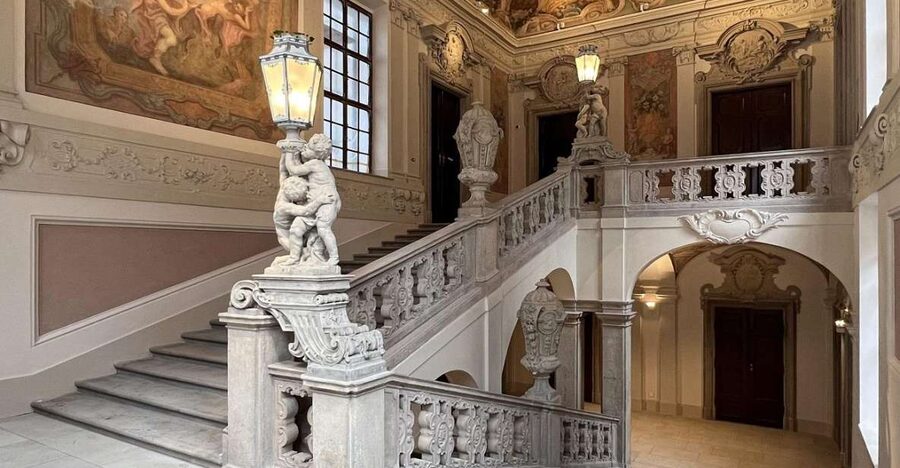
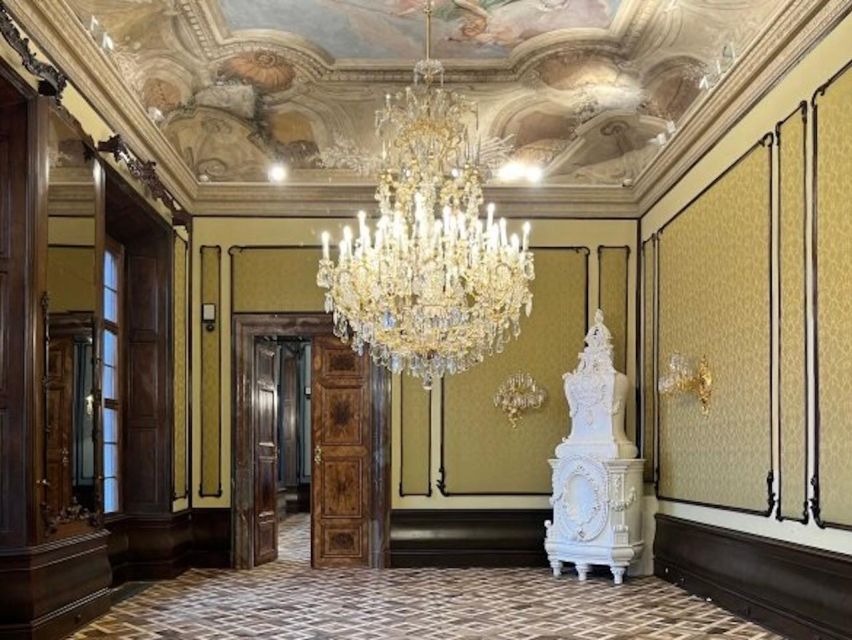
Clam-Gallas Palace gives you a close look at Prague’s Baroque high life, from a grand ceremonial staircase to restored halls with tiled stoves, lamps, stucco, and painted decoration. I like the freedom to move at your own pace, and I like that the audio guide adds useful context without tying you to a scheduled group.
The $8 price is another strong point, especially if you want an indoor sight with real architectural detail rather than another quick photo stop. The main consideration is that this is a self-guided palace visit, not a live tour, and one visitor found the rooms too sparsely furnished for the price of admission.
Key points
- Built between 1713 and 1718: The palace was designed by Johann Bernard Fischer from Erlach and decorated by major Baroque artists.
- Restored Golden and Turquoise Halls: Look for tiled stoves, hanging lamps, and elaborate door fittings.
- Audio guide included: Download it to your phone, or borrow a kit and rent headphones at the palace.
- Ceremonial staircase to the second floor: This gives you a clear view of the building’s design and decoration.
- Marble Hall and Chinese Lounge: These rooms provide some of the tour’s most striking changes in mood and style.
- Winter garden rooms and courtyard: The route ends with later adaptations made for the noble family’s comfort.
Why Clam-Gallas Palace deserves a place in your Prague plans
Prague has no shortage of grand interiors, but Clam-Gallas Palace offers something different from the city’s churches and castle rooms. You are looking at a noble residence designed around daily life, formal entertaining, performance, and display.
The palace was built from 1713 to 1718, a period when Baroque design favored movement, theatrical staircases, rich ornament, and carefully staged rooms. Johann Bernard Fischer from Erlach created the plan, while Carlo Carlone and the workshop of Matyáš Bernard Braun supplied much of the artistic decoration.
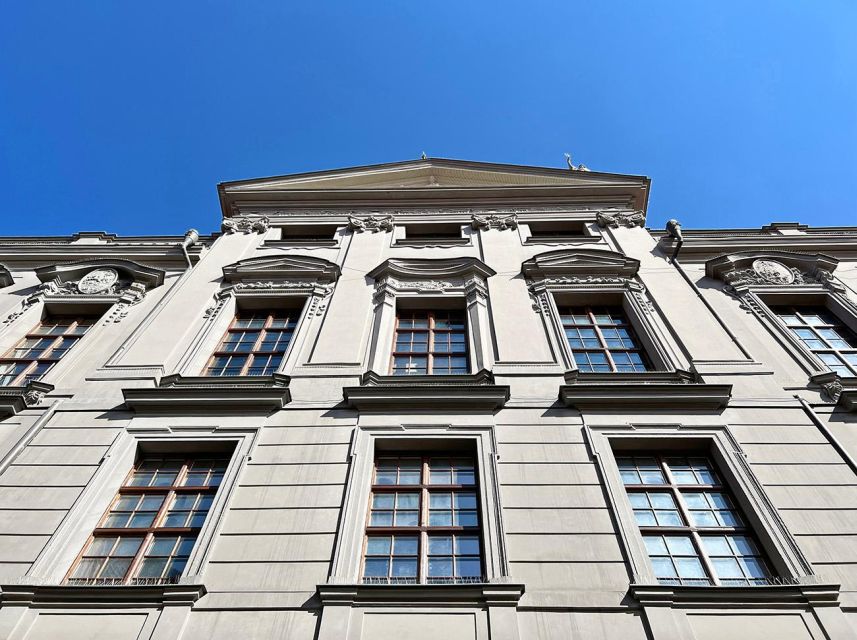
The building is especially interesting because it sits within Prague’s old urban fabric. From the ceremonial staircase, you can see how the architect handled the tight conditions of the historic center. The palace had to fit into an established setting, yet its interiors were meant to make visitors feel they had entered a much grander world.
The route also shows that the palace did not remain frozen in its original form. Some spaces were altered in the early 19th century, including rooms adapted for palace theater use and others converted into a winter garden. That mix of original Baroque design and later changes gives you a more honest picture of how an aristocratic residence evolved.
More self-guided palace routes in Prague:
- Prague: Prague Castle Complex Smartphone Audio Guide
★ 3.8 · 163 reviews - Prague: Lobkowicz Palace Ticket & Audio Guide
★ 4.5 · 130 reviews - Amsterdam: Royal Palace Entry Ticket + Audio guide
★ 4.6 · 7,889 reviews
A self-guided visit with room to set your own pace
There is no live guide included, so you will not be led from room to room by a person. Instead, you walk through the representative interiors independently and use the audio guide for background and explanation.
That format works well if you prefer to linger. You can spend more time studying a ceiling, staircase, stove, or doorway without worrying about holding up a group. It also lets you keep the visit short if you have a busy day in central Prague.
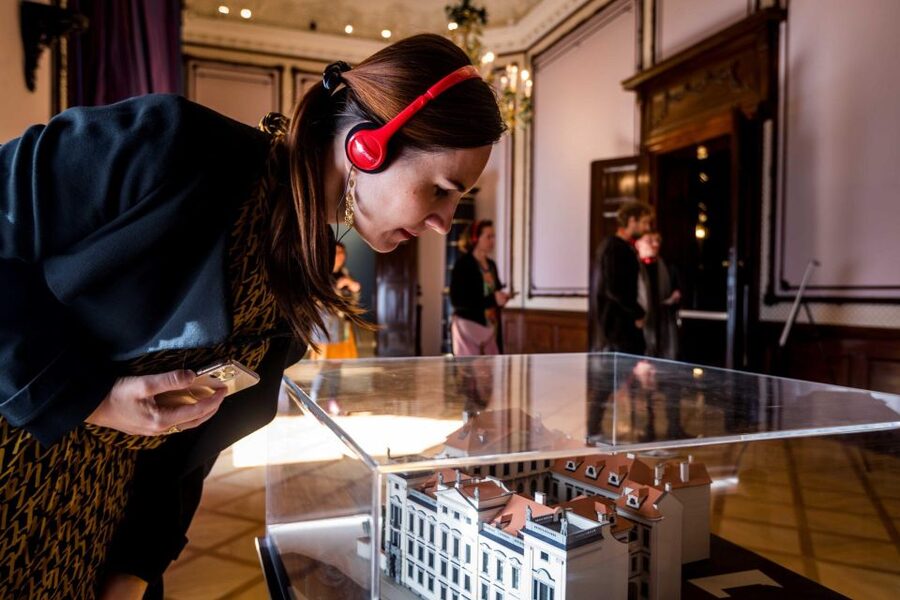
The audio guide can be downloaded to your smartphone inside the palace. If you cannot use your phone, staff can lend you an audio guide kit, and headphones are available to rent on-site. The listed audio languages are English and Czech, while on-site hosting or assistance is available in English.
The audio guide is particularly useful here because much of the appeal is architectural. Without some explanation, you might notice that a room is pretty without understanding how its decorative pieces fit together. The commentary is intended to provide more extensive text, so you can treat it as either a basic companion or a deeper source of information.
Bring enough time to listen. The ticket is valid for one day, but that does not mean you need to spend the entire day inside. The useful point is flexibility. You can fit the palace around a walk through Prague’s Old Town instead of committing to a long fixed departure.
The ceremonial staircase and the second floor
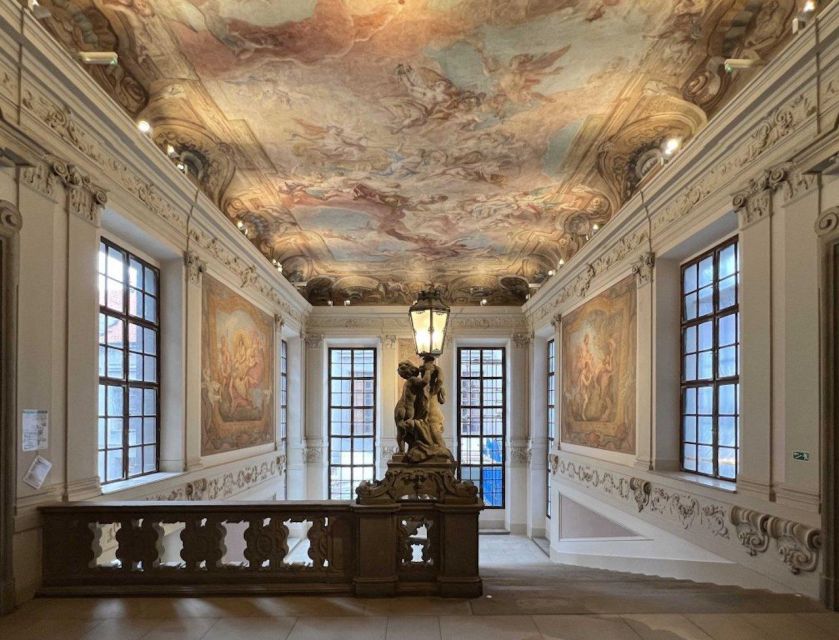
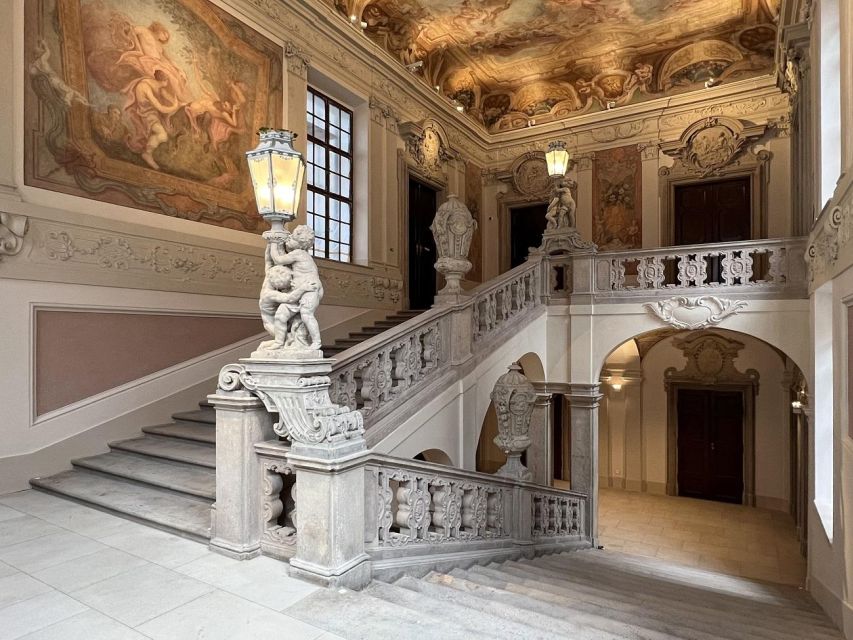
The route takes you up a majestic ceremonial staircase to the second floor. This is one of the most important moments of the visit, because the staircase shows how the palace announces its power before you even reach the formal rooms.
Look up and around as you climb. The staircase brings together sculpture, stucco, and painting from artists working in the first third of the 18th century. It also gives you a practical sense of the building’s scale and structure.
The staircase is not just a way to reach the next room. It was part of the performance of noble life. A formal visitor would not simply walk into a private home. The approach itself created a sense of ceremony, movement, and expectation.
I find this kind of space more revealing than a room filled with furniture alone. It shows how architecture directed people through the building and controlled what they saw at each stage. The audio guide can help explain those design choices, especially if you are not familiar with Baroque interiors.
The climb is also where the building’s urban challenge becomes clearest. Fischer from Erlach had to create a grand palace within the cramped blocks of Prague’s old center. From above, you can better appreciate how the residence was arranged within that limited setting.
The antecamera and its later theater use
The piano nobile, or noble floor, begins with the antecamera. An antecamera is an anteroom, a space used before entering the main reception rooms.
This room was adapted for the needs of the palace theater at the beginning of the 19th century. That later use matters because it reminds you that the palace was a working residence, not simply a finished monument.
You can see the difference between the building’s original Baroque purpose and its later adjustments. Aristocratic households changed with fashion, technology, and social habits. Rooms were repurposed when a new use became more important than the old one.
The antecamera may not be the most visually overwhelming stop on the route, but it helps frame the rooms that follow. It gives you a transition from circulation space to formal entertainment rooms.
More audio-guided palace visits in Prague:
- Granada: Alhambra Entry Ticket with Audio Guide
★ 4.1 · 5,950 reviews - Topkapi Palace and Harem Skip-the-Line-Tickets & Audio Guide
★ 4.3 · 4,745 reviews - Istanbul: Topkapi Palace and Harem Ticket with Audio Guide
★ 4.4 · 2,401 reviews - Crete: Knossos Palace Entry Ticket with Optional Audio Guide
★ 3.9 · 2,251 reviews
The Golden and Turquoise Halls
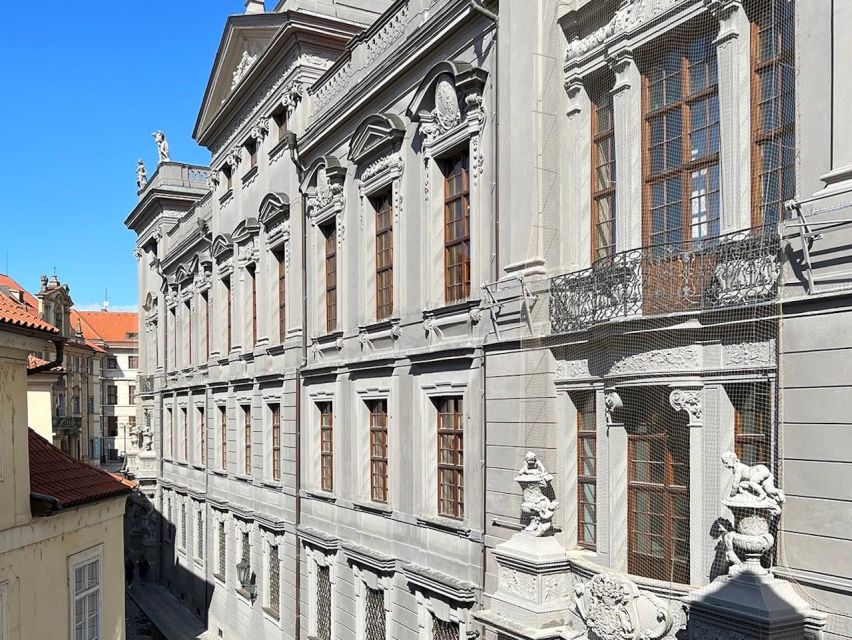
The adjacent Golden and Turquoise Halls are among the route’s main attractions. Their names suggest color and decoration, but the details are what make the rooms worth your attention.
Restored elements include tiled stoves, hanging lamps, and impressive door fittings. These are easy to overlook if you focus only on painted ceilings or wall decoration. Take a moment to inspect the practical objects. A stove was a functional source of heat, yet it also had to suit the room’s design. Door hardware likewise turned an ordinary necessity into part of the palace’s visual statement.
The restoration gives you a chance to see how the rooms were intended to work as complete interiors. The effect did not depend on one famous painting. It came from the combined use of color, light, fittings, heating, and ornament.
I recommend using the audio guide in these rooms rather than rushing through them. You will get more from the visit if you know which features were restored and which details connect to the building’s later life.
The rooms are also a good test of your expectations. If you want a palace packed with furniture, portraits, and personal possessions, you may find parts of the route restrained. The appeal is more about structure and decoration than a full reconstruction of aristocratic life.
The Marble Hall and Chinese Lounge
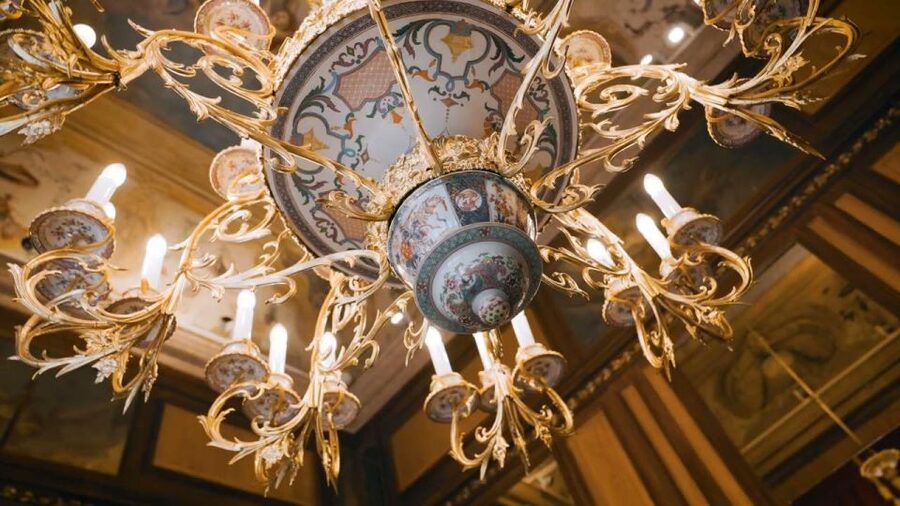
The Marble Hall changes the mood of the visit. It is described as airy and white, with a sense of openness after the more colorful Golden and Turquoise Halls.
The room’s impact comes partly from contrast. Baroque interiors often rely on movement and surprise, and the Marble Hall provides a lighter pause in the sequence. Look at how the whiteness affects the room’s sense of space.
The nearby Chinese Lounge adds another shift. It has a different decorative character and brings an element of fashion into the palace route. The two rooms work well together because you can compare their atmosphere rather than viewing each space in isolation.
The palace’s designers understood that a series of rooms should not all feel identical. Changes in color, material, and ornament kept the progression lively for people moving through the residence. Today, that arrangement helps prevent the visit from becoming one long blur of gold and stucco.
This is also a section where the audio guide can add value. The rooms may be visually clear, but the reasons behind their design and their place in the palace’s social life are less obvious. Listening as you walk gives you a better sense of how formal interiors were meant to impress and entertain.
The conservatory and winter garden rooms
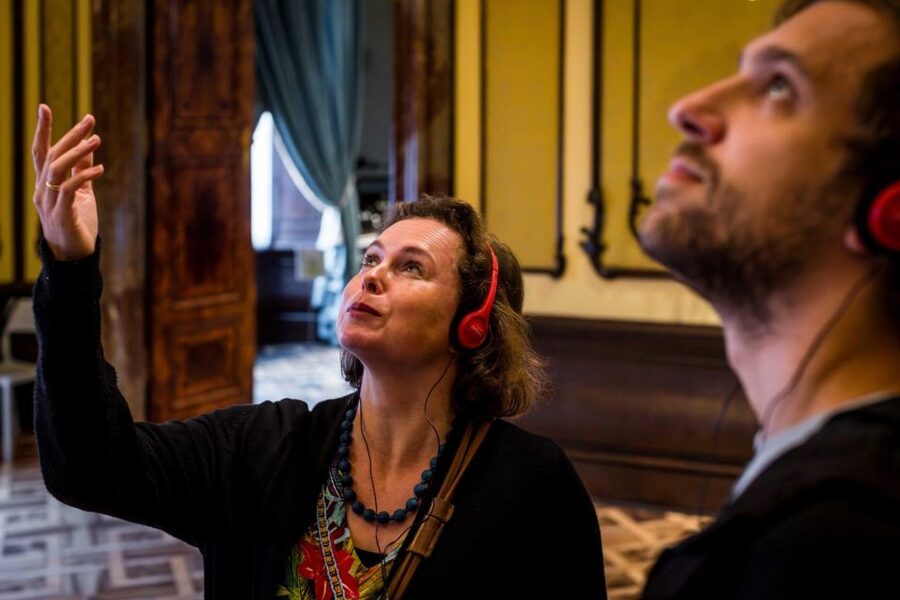
The route continues into the north wing and includes the conservatory. At the end, you visit two rooms adapted as a winter garden during the first third of the 19th century.
These rooms show a later idea of comfort. The palace was not only a place for formal audiences and ceremonies. It was also adjusted to suit changing tastes and the private routines of the noble family.
The winter garden rooms are valuable because they broaden the story beyond the original Baroque construction. You see how later occupants modified the building instead of treating it as untouchable. That makes the palace feel more connected to real use over time.
Do not expect a large garden visit in the modern sense. The information describes interior rooms adapted for a winter garden, along with the courtyard when weather allows. The attraction is the change in function and atmosphere, not a long outdoor walk.
In fine weather, the sightseeing route ends in the courtyard. This gives you a chance to appreciate the full size of the palace after seeing its rooms one by one. The courtyard can also help you understand the relationship between the wings and the interior route.
How the art and decoration shape the visit
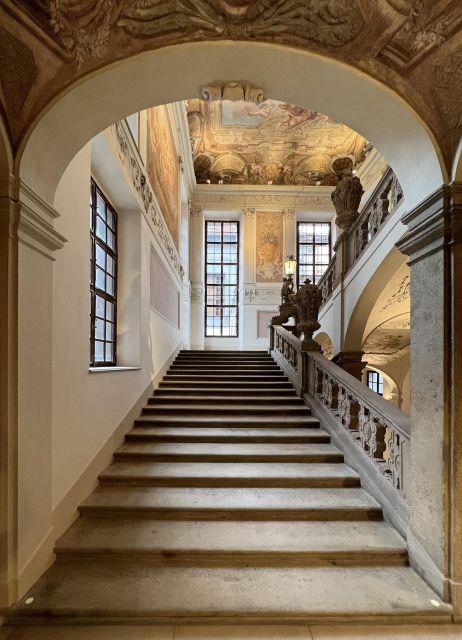
Carlo Carlone, also identified in the palace description as Carlo Innocenzo Carloni, contributed artwork to the interiors, while the workshop of Matyáš Bernard Braun handled additional decoration. Their work belongs to the visual language of the early 18th-century Baroque: movement, theatrical effect, sculptural detail, and close cooperation between painting and architecture.
You do not need specialist art knowledge to enjoy the palace. Start with broad questions. How does the room direct your eyes? Where does the light seem to collect? Which details are meant to impress from a distance, and which reward a closer look?
The stucco and sculpture are as important as the paintings. In a palace of this type, the decoration is part of the building itself. Walls, ceilings, doors, stoves, and lamps were designed to work together.
The recent renovation makes these elements easier to appreciate, but it also means you should adjust your expectations. Restored does not mean every room is filled with original furniture. One visitor found the palace too bare and felt there was little to see. That criticism is fair if you prefer historic houses presented through personal objects and dense collections.
I would choose this visit for the architecture and room sequence. If your main goal is to see a large collection of paintings or a fully furnished aristocratic home, you may want to pair it with another Prague museum.
Is the $8 ticket good value?
At $8 per person, this is one of the easier palace visits to justify financially. You get entry to a major Baroque residence, a self-guided audio tour, access to several formal rooms, and the option to spend as much or as little time as your schedule allows.
The value improves if you use the audio guide. Without it, you may finish quickly and leave with only a general impression of ornate rooms. With it, the staircase, room functions, later alterations, and artwork have more context.
The price is less compelling for visitors who want a large, object-filled museum. The route focuses on selected representative spaces, and the furnishings are not described as extensive. That is the main reason someone might find the palace sparse.
For me, the ticket works best as a focused Old Town stop. You are paying for the building, the restoration, and the chance to see how a noble residence was planned. At this price, it does not need to occupy half a day to be worthwhile.
Who should book this palace visit?
I would recommend Clam-Gallas Palace to you if you enjoy:
- Baroque architecture, stucco, sculpture, and painted interiors
- Self-guided sightseeing rather than a fixed group schedule
- Short cultural stops with a low ticket price
- Comparing original palace design with later 19th-century alterations
- Using an audio guide to add context to rooms that might otherwise seem bare
Families with small children should note that baby strollers are not allowed. The visit is also not suitable for wheelchair users or people with mobility impairments, since the route includes a substantial ceremonial staircase and access limitations.
Art and architecture students may find the palace especially useful because the route brings several decorative techniques together in one setting. Casual sightseers can enjoy it too, but you will get the most from the visit if you pay attention to the sequence of rooms rather than simply counting them.
Practical details before you go
The ticket is valid for one day, with starting times available according to the selected schedule. The visit itself is self-paced, so you are not tied to the timing of a live guide.
Audio commentary is available in English and Czech. You can use your smartphone or request a kit at the palace if needed. Headphones can be rented on-site.
There is no live guide included. English-speaking staff or a host is available for on-site assistance, but the main interpretation comes through the audio guide.
You can cancel up to 24 hours in advance for a full refund, and a reserve now, pay later option is available. Those terms are useful if your Prague plans are still shifting.
Should you book Clam-Gallas Palace?
Book it if you want an affordable, independent look at one of Prague’s best-preserved Baroque palaces, especially for the Golden and Turquoise Halls, the ceremonial staircase, Marble Hall, Chinese Lounge, and winter garden rooms.
Skip it if you need a fully furnished palace, a live guide, or step-free access. The $8 admission is fair for architecture and restored interiors, but the visit may feel slight if you measure value by the number of objects on display.
For most visitors already exploring central Prague, I would add it to the list. Use the audio guide, slow down on the staircase and in the formal halls, and treat the palace as a study in design rather than a large museum collection.
FAQ
How much does entry to Clam-Gallas Palace cost?
The listed price is $8 per person.
How long is the ticket valid?
The ticket is valid for one day.
Is a live guide included?
No. The entry includes an audio guide, but not a live guide.
Which audio guide languages are available?
The audio guide is available in English and Czech.
Can I use my smartphone for the audio guide?
Yes. You can download the audio guide to your smartphone inside the palace.
What if I cannot use my smartphone?
An audio guide kit can be lent to you at the palace, and headphones can be rented on-site.
Are baby strollers allowed?
No. Baby strollers are not allowed.
Is the palace suitable for wheelchair users?
No. The visit is not suitable for wheelchair users or people with mobility impairments.
Just added around Prague
- Tour of Prague Castle in italian language ticket included★ 4.9 · 25 reviews
- Skip-the-line Lobkowicz Palace Private Tour & Concert★ 3.2 · 3 reviews
- Private Walking tour: From Charles Bridge to Prague Castle★ 4.7 · 13 reviews
- Prague: Tour to Prague Castle with tickets included. Spanish★ 4.8 · 4 reviews
- Prague: Professional Photoshoot at Prague Castle★ 5.0 · 4 reviews
- Prague: Private Tour of the Prague Castle Grounds★ 4.4 · 7 reviews
- Prague: Prague Castle Walking Tour with Golden Lane in German★ 5.0 · 45 reviews
- Prague: Prague Castle Private Walking Tour★ 5.0 · 4 reviews
Prague Palace Tours, compared.

Prague Castle 2.5-Hour Tour Including Admission Ticket
Read our review →
3-Hour Walking Tour of Old Town & Prague Castle
Read our review →
3-Hour Old Town and Prague Castle Tour in German
Read our review →
Prague Castle and Lobkowicz Palace Entry Tickets
Read our review →
Prague 3-hour Afternoon Walking Tour including Prague Castle
Read our review →
Prague Castle Tour Including Admission Ticket – 2.5 Hour
Read our review →
Prague Castle: Midday Classical Concert at Lobkowicz Palace
Read our review →
Full-Day Prague Tour with Prague Castle, Lunch and Vltava Cruise
Read our review →Browse the lists this tour appears in