
REVIEW · ROME PALACE TOURS
Rome: Hadrian’s Villa and Villa d’Este Half-Day Tour
Hadrian’s Villa and Villa d’Este give you two very different views of Tivoli in one outing. At the first, you walk among the remains of an emperor’s enormous second-century retreat. At the second, you follow water through Renaissance gardens filled with fountains, grottoes, and terraces inspired by the Hanging Gardens of Babylon.
I like the contrast between the two sites, and I like that entrance fees and coach transport are included in the $113.29 price. The route also gives you fine views of the Roman Campagna and the travertine quarries near Bagni di Tivoli. The main drawback is time: four hours leaves roughly an hour at each villa, so the visit can feel rushed.
A guide such as Antonio can add useful context in English or Spanish, and the tour is organized to return you to the same Rome meeting point. Still, if Villa d’Este is your main reason for going, you may wish you had more time among its fountains and terraces.
Key points to know before booking
- Two villas, two eras: Compare Hadrian’s imperial retreat with Villa d’Este’s Renaissance gardens in a single trip.
- About one hour at each site: You can see the main sights, but you will not cover every corner at a leisurely pace.
- Villa d’Este is often the visual highlight: Its fountains, grottoes, mosaics, and terraces make a strong impression even on a short visit.
- The route follows Via Tiburtina: Watch for the Campagna countryside, Bagni di Tivoli, and broad travertine marble quarries.
- Seasonal departure times matter: The tour leaves at 2:15 PM from April through September and at 7:45 AM from October through March.
- Useful cancellation flexibility: You can cancel up to 24 hours before departure for a full refund and reserve without paying immediately.
Why these two Tivoli villas work well together
Tivoli sits outside Rome in the Tiburtini Hills, an area long valued for its springs, stone, fresh air, and views across the Campagna. This tour uses two grand properties to show how different patrons shaped the same setting.
Hadrian’s Villa belongs to the second century, when Emperor Hadrian created a sprawling retreat away from central Rome. Villa d’Este came much later, during the Renaissance, when its owners reshaped the hillside with formal gardens and an extraordinary water system.
The contrast is the point. At Hadrian’s Villa, you see scale, fragments, open spaces, and the remains of an imperial complex. At Villa d’Este, you see a more controlled garden design, where water, stone, shade, and sound create the experience.
I find this pairing more satisfying than visiting two similar Roman sites. You are not simply looking at ruins twice. You are comparing imperial architecture with Renaissance garden design, and you can do it without arranging separate transport from Rome.
More half-day palace trips in Rome:
- Hadrian’s Villa and Villa d’Este Half-Day Trip from Rome
★ 3.5 · 808 reviews - Seoul Half-Day City Highlight, Palace Tour with Hanbok
★ 4.9 · 764 reviews - Lisbon: Half-Day Sintra Tour with Pena Palace and Regaleira
★ 4.9 · 570 reviews
Leaving Rome along Via Tiburtina
The tour begins at 32 Via Giovanni Amendola, the GLT Terminal in Rome. Check your exact departure time when booking, because the schedule changes with the season.
From April through September, departure is listed for 2:15 PM. From October through March, it is 7:45 AM. The afternoon departure suits a day when you want a later start, while the winter morning option leaves more of the afternoon free after you return.
The coach follows the ancient route of Via Tiburtina toward Tivoli. Along the way, look out toward the Roman Campagna and the wide travertine quarries near Bagni di Tivoli. Travertine is the pale building stone used across Rome, so these quarries help connect the scenery around Tivoli with the monuments you have already seen in the capital.
The road also passes near natural springs that helped make Bagni di Tivoli a spa town. This is a useful reminder that the area was chosen for more than its distance from Rome. Water shaped both the natural setting and the grand properties you visit.
The transportation is included, which makes the price easier to assess. You avoid arranging regional transport, finding the entrances, and working out how to fit both villas into a single half-day. Food and drinks are not included, so plan to eat before or after the outing rather than counting on a meal during the visit.
Walking through Hadrian’s Villa
Hadrian’s Villa is the more archaeological of the two stops. The remains spread across the foot of the Tiburtini Hills, and the site is large enough that one hour gives you an introduction rather than a full examination.
The villa was built in the second century and was once more impressive and powerful than the center of Imperial Rome. That claim makes sense once you consider the scale of the complex. You are not visiting one preserved residence. You are moving through the remains of a vast imperial retreat with gardens, fountains, courtyards, ceremonial spaces, and structures built for comfort and display.
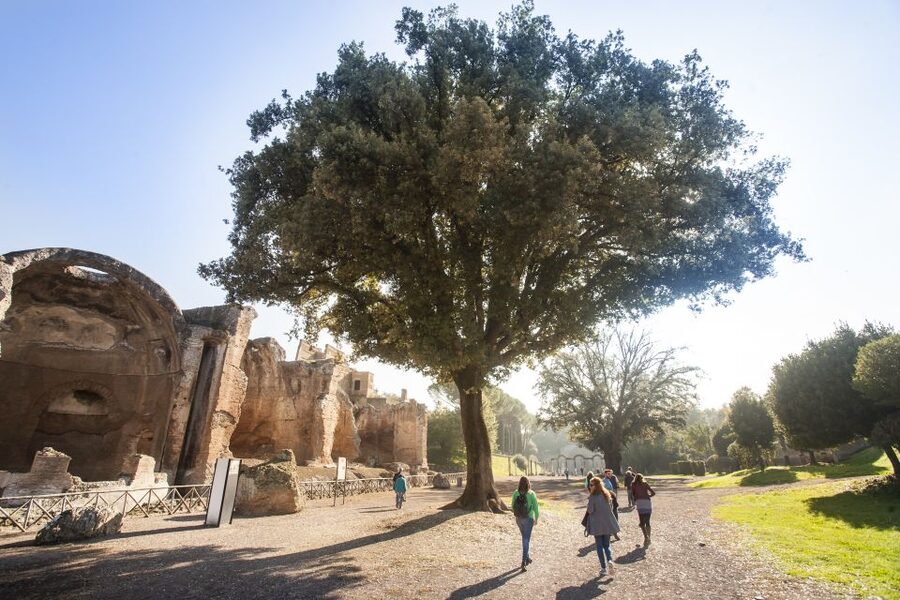
The Canopus and Serapeum are among the most memorable areas. Caryatids and columns frame the long pool, while the Serapeum takes the form of an artificial grotto named after an Egyptian temple to the god Serapis. These details show how Hadrian drew ideas from across the Roman world.
The setting is just as important as the individual remains. Open views toward the hills and countryside help you understand why an emperor might choose this site for a retreat. The ruins are not presented as a compact indoor museum, so comfortable walking shoes are sensible.
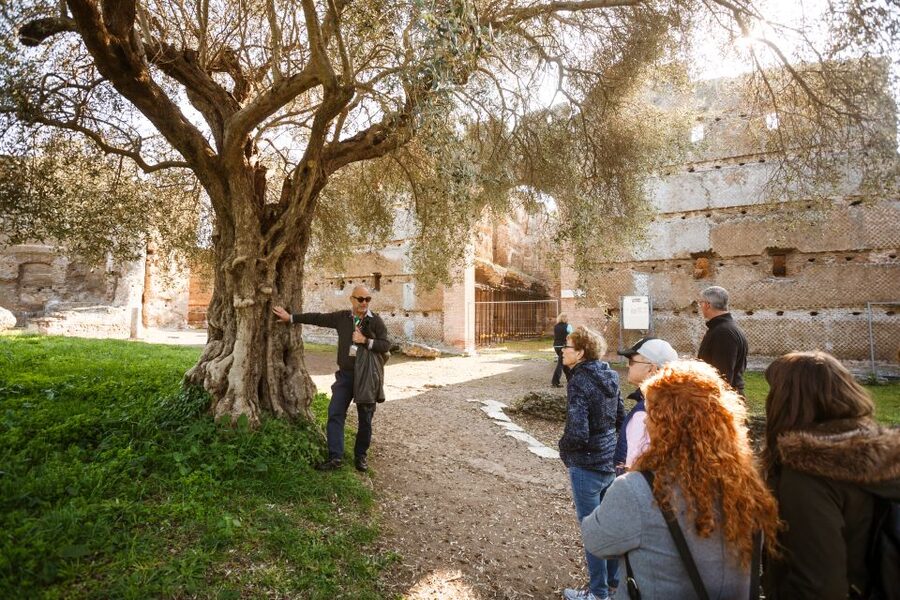
Your guide helps fill in what the broken walls cannot. Antonio, who has led departures in English and Spanish, is noted for providing substantial information in both languages. That sort of explanation matters here because the site’s size can otherwise make it difficult to understand how the pieces fit together.
The limitation is time. Plan on about an hour at Hadrian’s Villa, enough to reach the main areas and hear the key story, but not enough to wander without checking the clock. If Roman architecture and archaeology are your main interests, you may find this stop too brief.
From imperial retreat to Renaissance garden
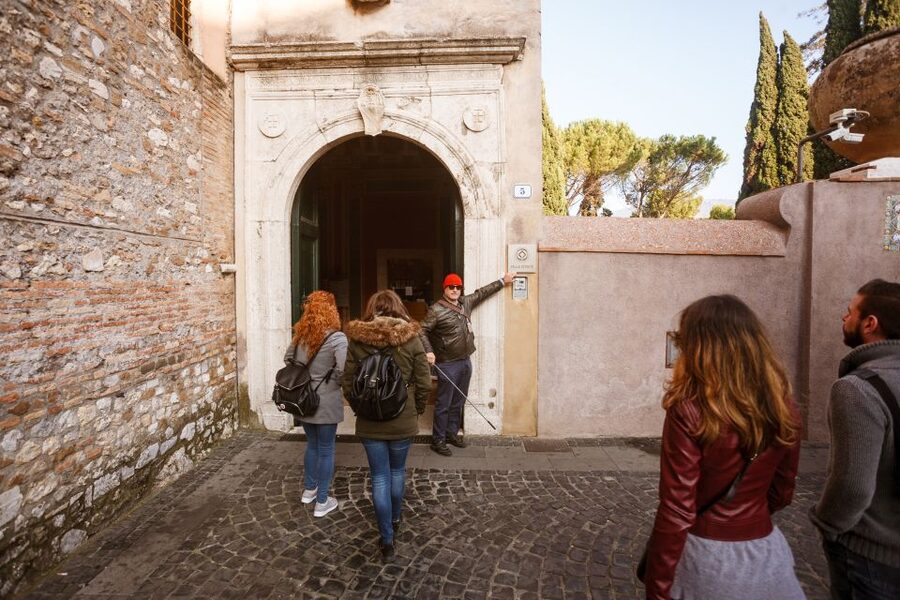
After Hadrian’s Villa, the coach continues to Villa d’Este. The mood changes at once. Instead of broad ruins and scattered structures, you enter a designed garden where the main attraction is movement: water running, falling, spraying, and echoing through the grounds.
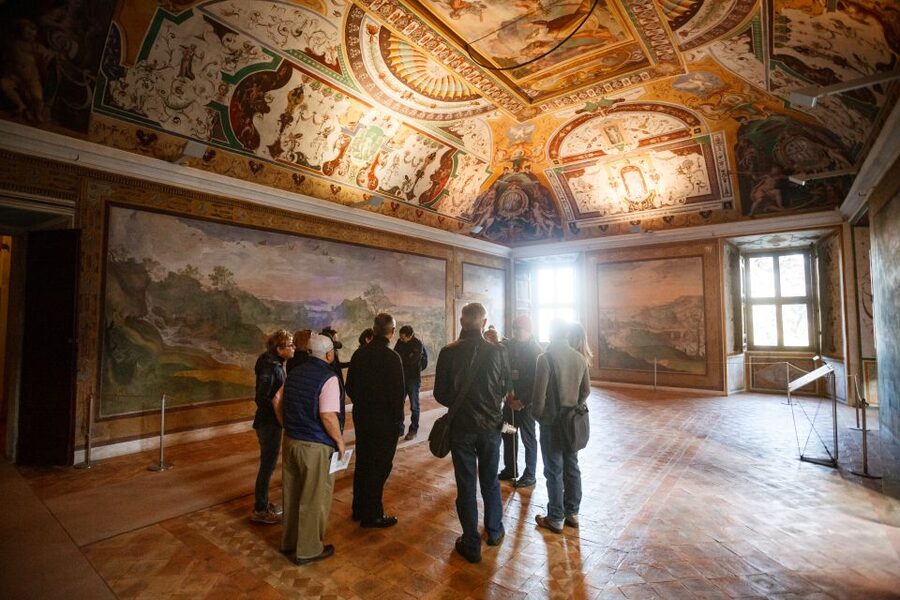
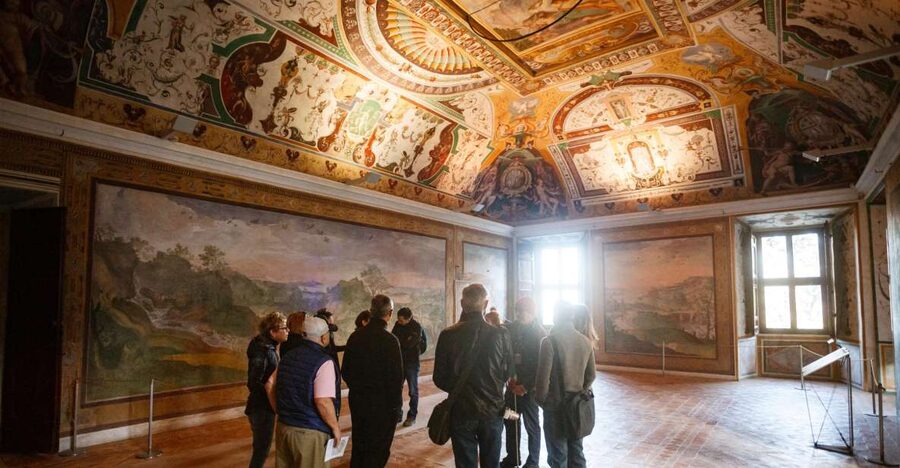
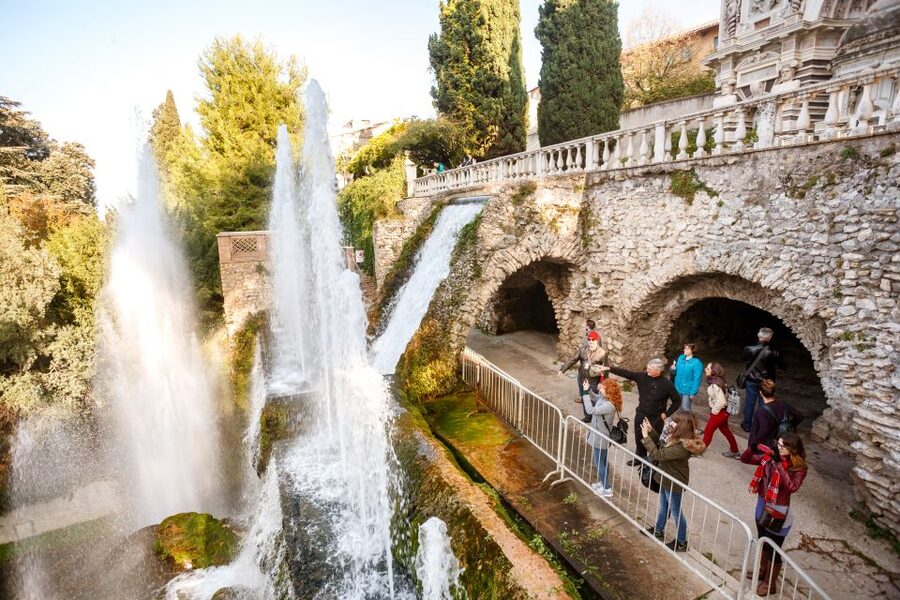
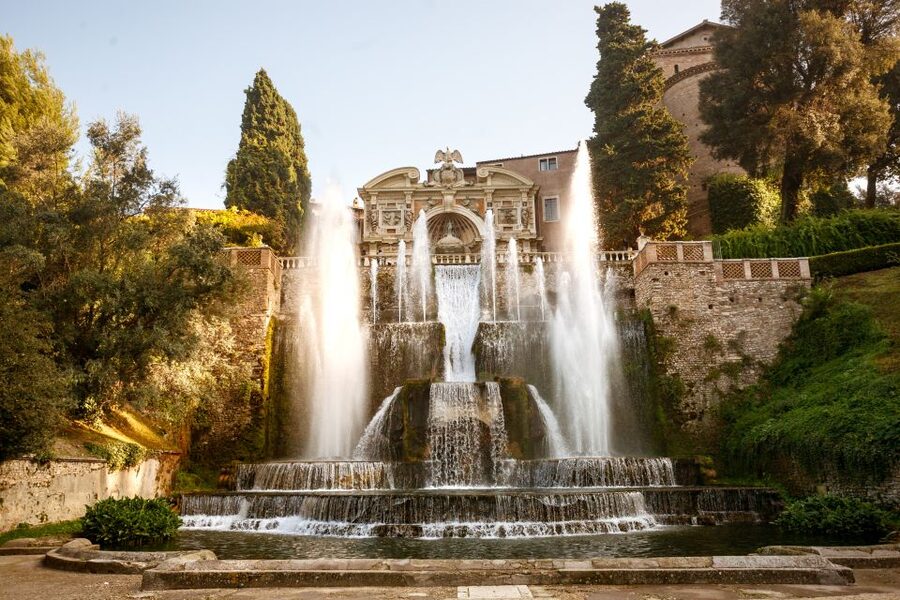
Villa d’Este is known for its fountains, grottoes, frescoes, mosaics, and Italianate terraces. The gardens descend across the hillside, creating changing views as you walk. From one level, you look down across rows of fountains. From another, you see carved stone, shaded paths, and water channels arranged as part of the design.
The fountains are not just decoration. They depend on a sophisticated system that brings water through the gardens, including an underground aqueduct. This engineering link reaches back to Roman methods, making Villa d’Este a fitting second stop after Hadrian’s Villa.
The garden’s terraces are often compared with the Hanging Gardens of Babylon. You do not need to know every architectural detail to enjoy the place. The simple pleasure is following the sound and movement of water from one section to the next.
Many visitors find Villa d’Este the strongest part of the afternoon, particularly if fountains and gardens appeal to you more than archaeological ruins. The famous collection of roughly 100 fountains gives the stop a strong visual payoff even when your time is limited.
But one hour is still short. You can see the central highlights, yet you may need to choose between lingering at a favorite fountain, exploring side paths, studying the mosaics, or taking photographs. There is also little room for relaxed shopping near either villa, so do not expect much free time for browsing.
Same city, a very different set of state rooms:
- Tivoli Full Day Trip from Rome: Hadrian’s Villa and Villa D’Este
★ 4.5 · 1,730 reviews - Rome: Opera Concert at Palazzo Poli – Fontana di Trevi
★ 4.7 · 1,026 reviews - Rome: Colonna Palace Entry Ticket
★ 4.8 · 609 reviews - The Great Opera Arias Concert at Palazzo Poli – Trevi Fountain
★ 5.0 · 533 reviews
How much can you see in four hours?
The advertised duration is four hours, with both villa entrances and transport included. In practice, the sightseeing time is limited by the transfer between Rome and Tivoli and by the need to keep the group moving.
A useful way to think about this tour is as a sampler. You get the main idea of each property, see the most famous areas, and leave with a clear sense of which site deserves a longer return visit.
At Hadrian’s Villa, focus on the large imperial concept, the Canopus, the Serapeum, the columns, and the setting near the Tiburtini Hills. At Villa d’Este, give priority to the main terraces, the most elaborate fountains, and the grottoes.
Some departures may run longer than four hours. One reported experience returned about an hour later than expected, which is worth keeping in mind if you have dinner reservations or evening plans in Rome. The schedule can also feel compressed even when the tour runs on time.
I would not book this outing on a day when you need to catch a train or make a fixed evening appointment immediately afterward. Allow a buffer after the stated return time.
The guide and language options
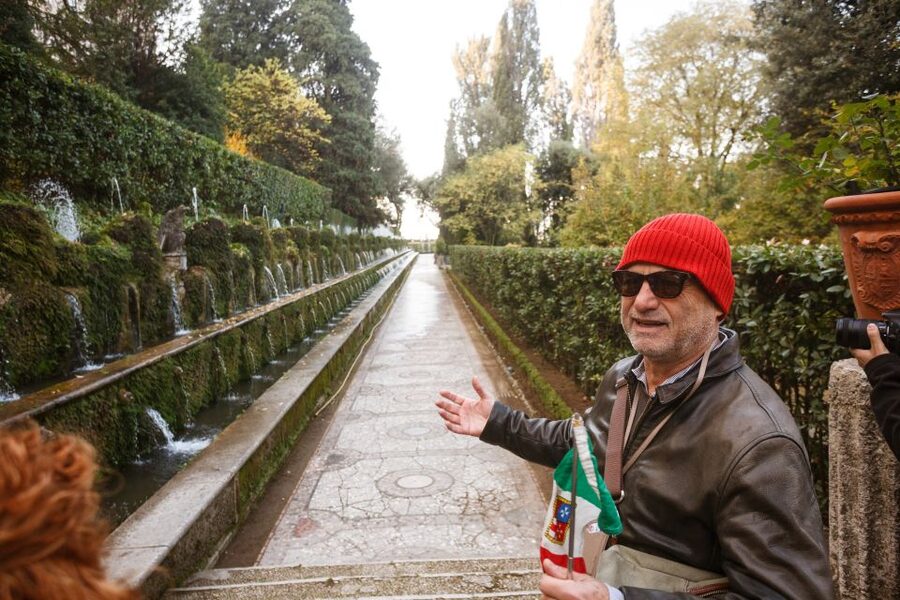
A live guide is included, with departures offered in English, French, and Spanish. This is important at Hadrian’s Villa, where many structures are incomplete and the original purpose of each space may not be obvious from the ruins alone.
A guide also helps at Villa d’Este by explaining how the water system works and why the gardens were arranged across terraces. You will still have time to look around independently, but the commentary gives the site a clearer shape.
Antonio is one guide associated with the experience, leading in English and Spanish. The supplied information does not identify every guide or guarantee a particular guide on every departure, so choose your language carefully when booking.
The tour is designed for a broad audience, but it is not ideal for anyone who needs a slow pace or has difficulty walking over uneven ground. Wheelchair users can join if traveling with a companion who can help them on and off the bus. The wheelchair can be stored in the coach luggage area. At the same time, the activity is marked as unsuitable for people with mobility impairments, so contact the provider before booking if access is a serious concern.
Is $113.29 a fair price?

At $113.29 per person, this is not the cheapest way to reach Tivoli. The value comes from combining transport, a local guide, and admission to both Hadrian’s Villa and Villa d’Este.
If you arranged the trip yourself, you would need to coordinate transportation from Rome, buy two entrance tickets, find both sites, and keep track of opening arrangements. The organized format removes that work and makes the two-site combination practical in half a day.
The tradeoff is control. You pay for convenience, but you do not decide how long to spend at each villa. Someone who wants to study ancient structures in detail may prefer a longer visit to Hadrian’s Villa. Someone who wants to photograph every fountain may find Villa d’Este too rushed.
I see the price as reasonable for a first visit, especially if you have limited time in Rome and want to add Tivoli without building a separate day trip. It is less appealing if you already have transport sorted or if your priority is slow, independent exploration.
Who should book this Tivoli tour?
I would recommend it to you if you want to see both villas, prefer organized transport, and value a guide’s explanation over complete freedom. It also suits a first-time visit to Tivoli, since the route covers the two best-known properties in the area.
It is a good fit for history fans who want both Roman and Renaissance material in one outing. Garden lovers may especially appreciate Villa d’Este, while architecture fans may prefer Hadrian’s Villa.
I would hesitate if you dislike fixed schedules, need frequent breaks, or want time for shopping around the sites. The four-hour format is efficient, but not leisurely.
The seasonal departure time also matters. The summer afternoon start may work well if you want a slower morning in Rome, while the winter morning departure may be better for making the most of a short day. Check availability for the exact date and language before committing.
Final verdict: a strong introduction, not a slow exploration
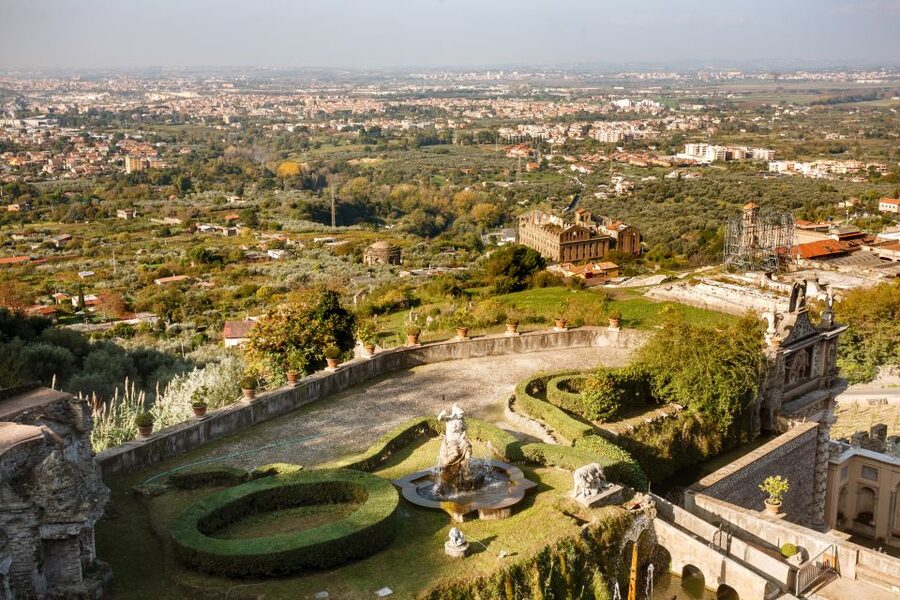
Book this tour if you want a convenient first look at Tivoli and accept that each villa receives only about an hour. The combination is well chosen, the included admissions simplify the day, and Villa d’Este’s fountains provide a memorable finish.
Skip it if your ideal visit involves lingering over ruins, tracing every garden path, or keeping a strict evening schedule. For most visitors with limited time, though, this is a practical way to reach two remarkable sites beyond Rome without spending a full day arranging the details yourself.
FAQ
Where does the tour begin?
The tour begins at 32 Via Giovanni Amendola, at the GLT Terminal in Rome.
What time does the tour leave?
From April through September, the departure is at 2:15 PM. From October through March, it is at 7:45 AM. Check availability for the exact starting time on your date.
How long does the tour last?
The stated duration is four hours. Some departures may return later than scheduled, so leave extra time before evening plans.
Where does the tour end?
The activity ends back at the meeting point in Rome.
Are entrance tickets included?
Yes. Admission to Hadrian’s Villa and admission to Villa d’Este and its gardens are included.
Is transportation included?
Yes. Coach transportation from Rome and back to the meeting point is included.
Is food included?
No. Food and drinks are not included in the tour price.
What languages are available?
Live guide service is available in English, French, and Spanish.
Can wheelchair users join?
The tour is wheelchair accessible if the passenger has a companion who can assist with getting on and off the bus. Wheelchairs are stored in the luggage area. The activity is not considered suitable for people with mobility impairments, so confirm your needs before booking.
Can I cancel for a refund?
Yes. You can cancel up to 24 hours before departure for a full refund. The reserve-now-and-pay-later option lets you hold a place without paying immediately.
Just added around Rome
- Day trip Rome by car : Tivoli Unesco Villa D’este & Hadrian★ 5.0 · 56 reviews
- From Rome: Villa d’Este & Hadrian’s Villa Tickets & Transfer★ 4.5 · 32 reviews
- Tivoli: Hadrian’s Villa and Villa d’Este Guided Tour★ 4.5 · 73 reviews
- Rome: Villa D’Este & Tivoli Tour with Skip-the-Line Entry★ 5.0 · 4 reviews
- Rome: Palazzo Altemps Reserved Entrance Ticket★ 4.5 · 49 reviews
- Rome: Palazzo Venezia Reserved Entrance with Museum★ 4.2 · 52 reviews
- Rome: Colonna Palace Guided Tour★ 4.9 · 70 reviews
- Rome: Monuments and Belvederes Guided E-Bike Tour★ 4.2 · 6 reviews
Rome Palace Tours, compared.
Tivoli Full Day Trip from Rome: Hadrian’s Villa and Villa D’Este
Read our review →
Opera Concert at Palazzo Poli – Fontana di Trevi
Read our review →
Hadrian’s Villa and Villa d’Este Half-Day Trip from Rome
Read our review →

The Great Opera Arias Concert at Palazzo Poli – Trevi Fountain
Read our review →
Colosseum Underground, Roman Forum & Cesar Palace Special Access
Read our review →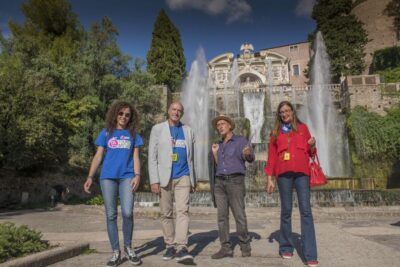
Villa d’Este and Hadrian’s Villa Tour with Lunch
Read our review →
Palazzo Barberini Galleria Corsini Ticket & Audioguide
Read our review →Browse the lists this tour appears in