
REVIEW · SPLIT PALACE TOURS
Split: Old Town and Diocletian Palace Walking Tour
Diocletian’s Palace is not a quiet ruin. It is the working heart of Split, with homes, cafés, shops, lanes, and modern life packed inside a Roman imperial complex. This walking tour helps you read the place properly, from the Golden Gate and Peristyle to Saint Domnius Cathedral and the Riva promenade. I like the way it turns scattered stones into a clear story.
I also like the local touch. Guides such as Mia, Slavko, Antonia, Ivana, and Tino are praised for humor, personal stories, and practical advice about food and sightseeing. The tour is a smart first activity in Split because it gives you a map in your head before you explore alone. The main drawback is that the standard walk can be crowded and exposed to sun, while the uneven palace streets are not suitable for wheelchair users.
Key points to know before booking
- The palace is still part of daily life: You walk through a living town, not a fenced-off archaeological site.
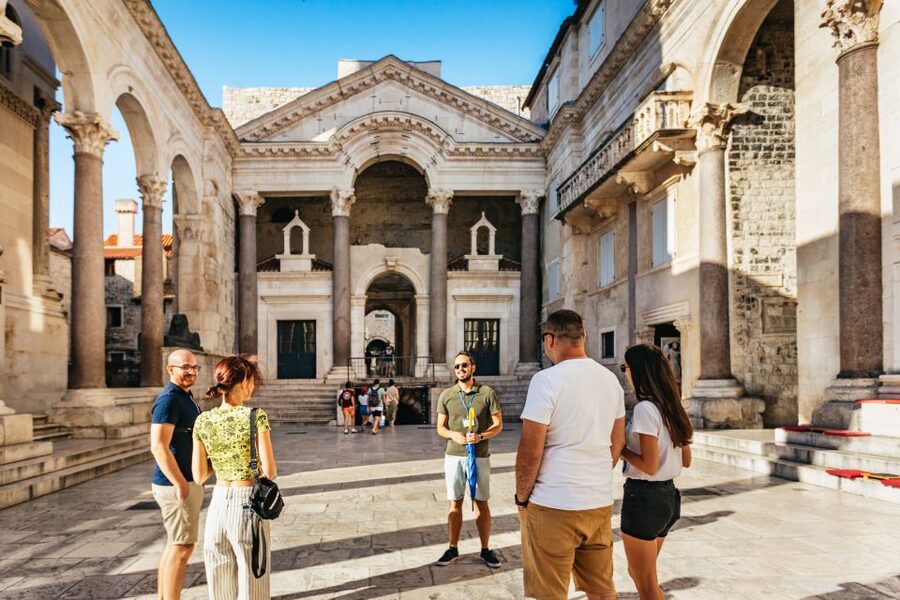
- The Peristyle is the visual centerpiece: Open columns, stone steps, and later buildings reveal how Roman and medieval Split overlap.
- Local guides add useful context: Mia, Slavko, Antonia, Ivana, and others bring in Croatian history, family stories, restaurants, and tourist-trap warnings.
- The tour suits a first day in Split: You finish where you began at the Golden Gate, with the main Old Town layout easier to understand.
- Longer options change the experience: Depending on the booking, you may have wine or food tasting, or an add-on visit to Trogir.
- Expect walking on old surfaces: Wear comfortable clothes and plan carefully if you have mobility concerns.
Why a guide helps inside Diocletian’s Palace
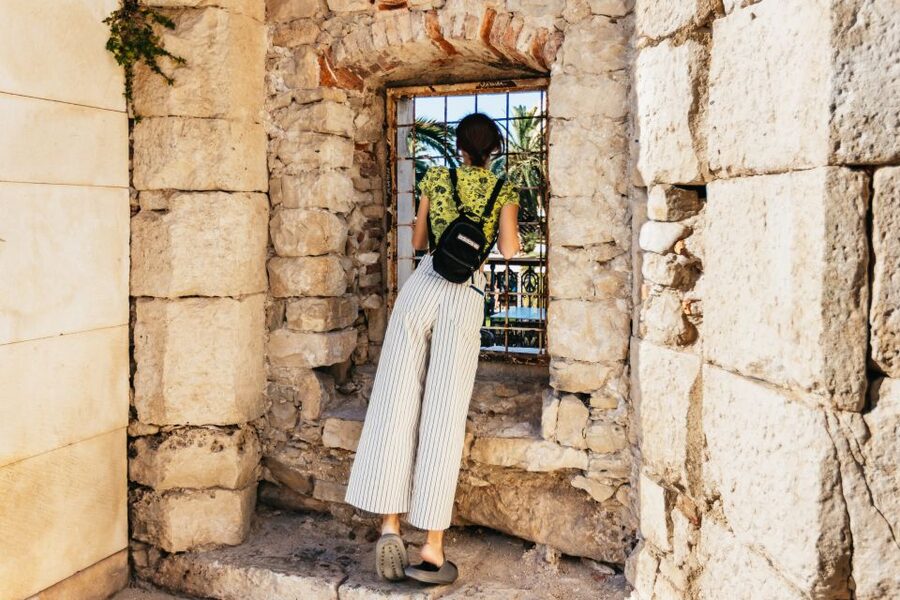
Split’s Old Town can look confusing at first. A Roman wall becomes the side of a modern apartment. A narrow alley leads through what was once an imperial passage. A café table sits beside a column built for an emperor nearly 1,700 years ago.
That mixture is the point, but it is easy to miss without explanation. The guide shows you how the palace became the core of the medieval and modern city. You are not simply looking at ruins. You are following the way people reused them.
The palace was built for Roman Emperor Diocletian around 305 CE. It served as a retirement residence, a military complex, and a fortified compound. Today, it makes up about half of Split’s Old Town. The tour gives you the broad timeline, from Roman construction to the city’s place as Croatia’s second largest city.
I find this especially useful for visitors who want history in plain language. The best guides do not leave you with a list of dates. They explain what a space was for, how it changed, and why the building still matters to people living in Split today.
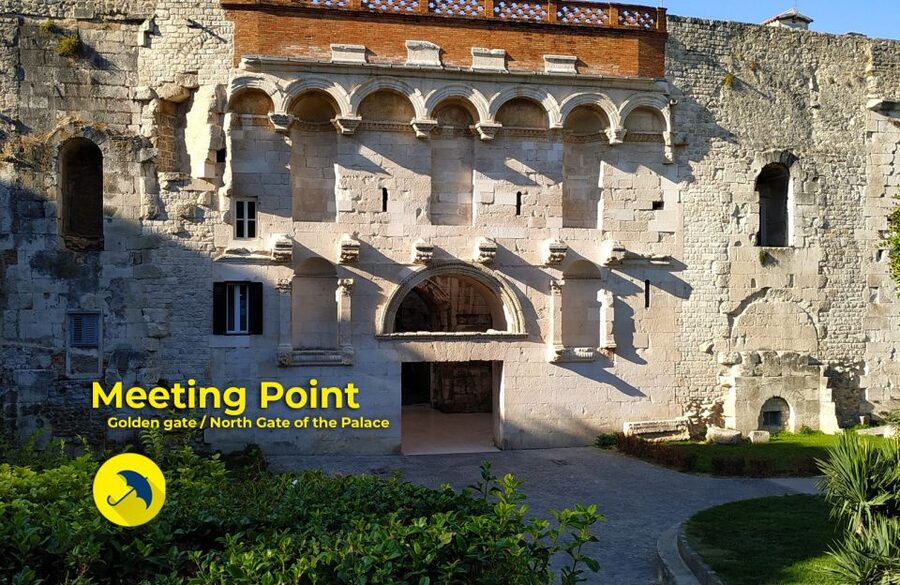
The meeting point is at the Golden Gate, although the precise point can vary by the option you book. Check your confirmation rather than assuming every version begins in exactly the same place.
More walking tours past the palaces in Split:
- Walking Tour of Split and Diocletian’s Palace
★ 5.0 · 2,588 reviews - Split & Diocletian’s Palace Walking Tour
★ 5.0 · 1,125 reviews - Split: Diocletian Palace & Old Town Guided Walking Tour
★ 4.7 · 882 reviews
Starting at the Golden Gate
The Golden Gate is one of the most impressive entrances to Diocletian’s Palace. It gives you an immediate sense of scale and power, even though later buildings and city life have softened the original Roman effect.
Your guide uses the gate to explain how people entered the palace and how the fortified complex was arranged. This is a good opening because you begin with the outer structure before moving into the more confusing interior lanes.
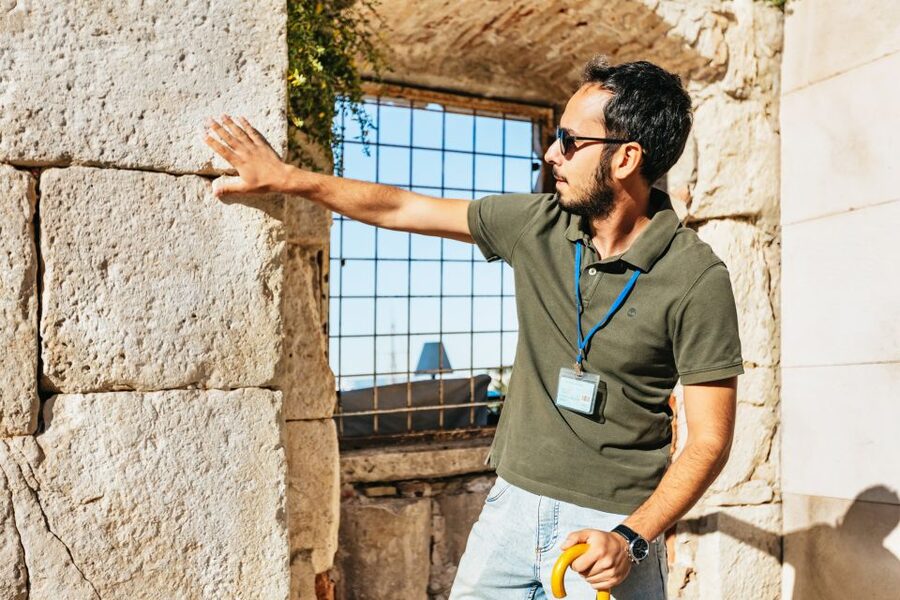
Look closely at the stonework and surrounding streets. Split does not present its history in a tidy sequence. Roman masonry, medieval changes, and modern businesses appear within a few steps of one another. A guide can point out the difference between what belongs to the original palace and what came later.
The Golden Gate is also a practical place to begin because the tour finishes there. You will not need to find a new ending point across town. If you are staying in Split, that makes it easy to continue with lunch, shopping, or another walk after the guide says goodbye.
The Peristyle and the heart of the palace
The Peristyle is the tour’s central visual moment. This open square was the ceremonial center of the palace, framed by tall columns and open colonnades. It feels grand, but not distant. People cross the square, sit nearby, and pass through on ordinary errands.
Your guide explains how the space worked in the Roman period and how later generations adapted it. The contrast between imperial ceremony and modern city life is what makes the Peristyle memorable.
This is where a guide’s storytelling style matters most. Several guides, including Slavko, Mia, Antonia, and Martha, are praised for keeping the history lively rather than turning it into a lecture. Expect anecdotes, questions, humor, and chances to ask about details that catch your eye.
The square can be sunny and crowded, especially at popular times. A guide may look for shade when possible, but you should still bring water and wear light, comfortable clothing in warm weather. The stone can also be uneven, so sturdy shoes are more useful than stylish sandals.
The tour does not appear to focus only on the palace’s grandest remains. It also helps you understand how the surrounding lanes connect. That makes the later part of your stay easier. You can return to the Peristyle and recognize it as a starting point rather than getting lost among similar-looking streets.
Saint Domnius Cathedral and the palace’s changing purpose
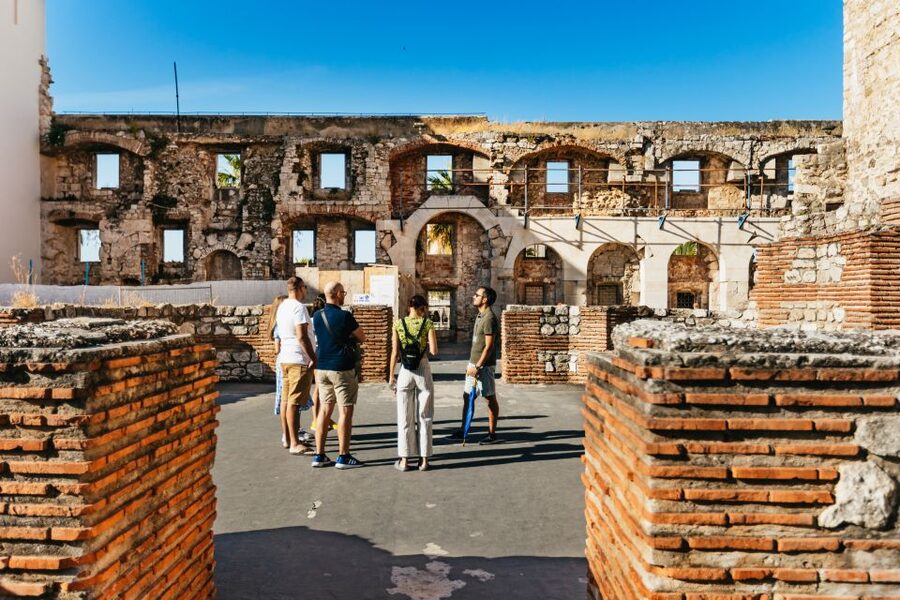
The route continues to Saint Domnius Cathedral, one of Split’s most unusual buildings. It began as Diocletian’s mausoleum and was later adapted into a Christian cathedral. The building shows, in a single place, how the palace changed from an imperial residence into a Christian and civic center.
The cathedral is often described as the oldest Catholic cathedral still in use in its original form. Your guide explains the claim and places it within the broader story of Split. Even if you do not enter the cathedral, seeing its exterior in relation to the Roman palace is valuable.
This stop also helps explain why Split cannot be treated as only an ancient Roman site. Roman, medieval, religious, and modern layers all occupy the same compact area. The guide connects those periods so you understand why the city looks the way it does.
The available information does not promise admission inside every monument, so think of this primarily as a guided outdoor walking experience. If entering Saint Domnius Cathedral is a priority, ask when booking what your selected option includes.
A few more palace visits around Split worth a look
- Split Old Town and Diocletian’s Palace Tour
★ 4.8 · 716 reviews - Split: Game of Thrones Tour with Diocletian’s Palace Cellar
★ 4.8 · 545 reviews - Diocletian’s Palace and Old Town SMALL GROUP Walking Tour
★ 5.0 · 502 reviews - SPLIT-PRIVATE Walking Tour of Diocletian’s Palace & Old Town
★ 5.0 · 467 reviews
Gregory of Nin in Giardin Park
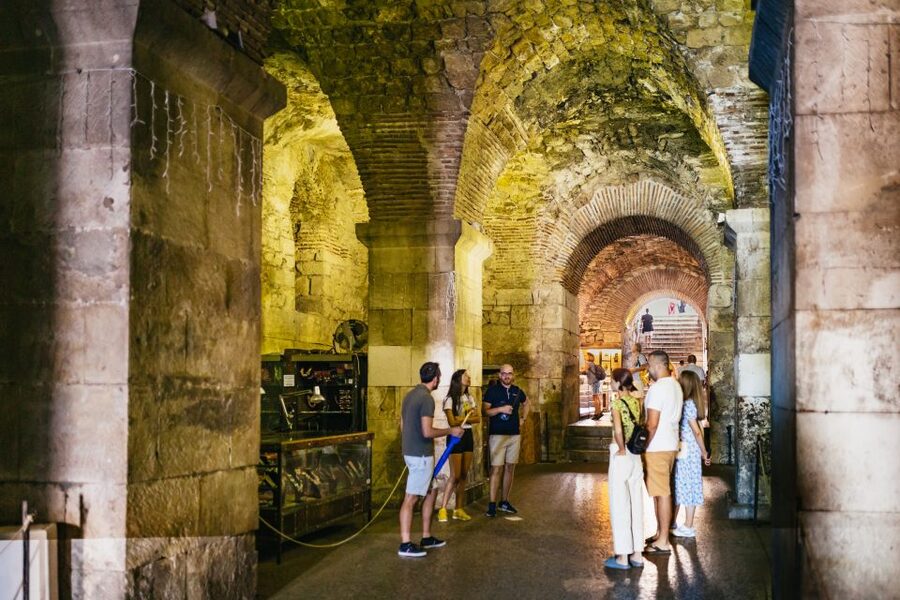
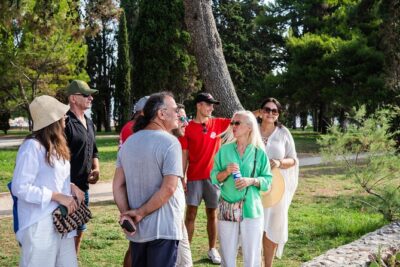
The stop at Gregory of Nin’s statue in Giardin Park adds a different kind of history. Instead of focusing on an emperor or a building, the guide introduces a major figure connected with Croatian religious and cultural identity.
This is a useful pause in the route because it shifts attention from Roman architecture to the people and traditions that shaped later Croatia. The statue also gives your guide a chance to explain local customs and the meaning attached to the bishop.
You may notice the statue’s polished toe. The supplied information does not promise a specific ritual or guarantee time for photographs, but the well-known feature is easy to spot when you are standing there. Listen closely to the explanation rather than treating the stop as a quick photo opportunity.
Several guides are described as bringing in personal experiences and family connections. That local voice can make this part feel less like a standard monument stop and more like an introduction to how Split residents understand their own past.
The Riva promenade and views toward Marjan
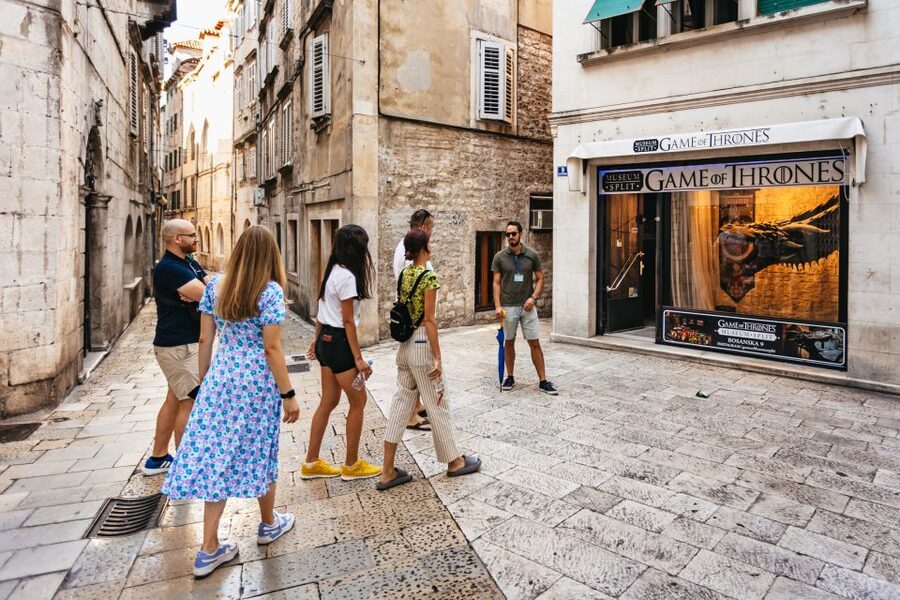
From the enclosed Old Town, the tour heads to the Riva promenade. This waterfront walk gives you a break from narrow lanes and stone walls, with views toward Marjan Hill and the Adriatic Sea.
The Riva is one of the best places to understand Split’s public life. It is not simply a scenic finish. It shows how the city faces the water and how the palace district connects to the wider modern city.
The views are most appealing when the light is softer. One booking experience specifically recommends a sunset departure for people not arriving by cruise ship, since the promenade may feel less crowded then. That is useful advice, though starting times depend on availability and the option you select.
The waterfront is also a good place to ask your guide for food suggestions. Mia, Slavko, Antonia, Ivana, and other guides are repeatedly praised for offering recommendations about restaurants, sightseeing, and places to avoid. I would ask for advice before the tour ends, when the details are still fresh.
The route returns to the Golden Gate. That simple ending is helpful. You can use the new orientation to revisit the palace, walk farther along the Riva, or head toward your next stop without arranging transport.
The guides make the difference
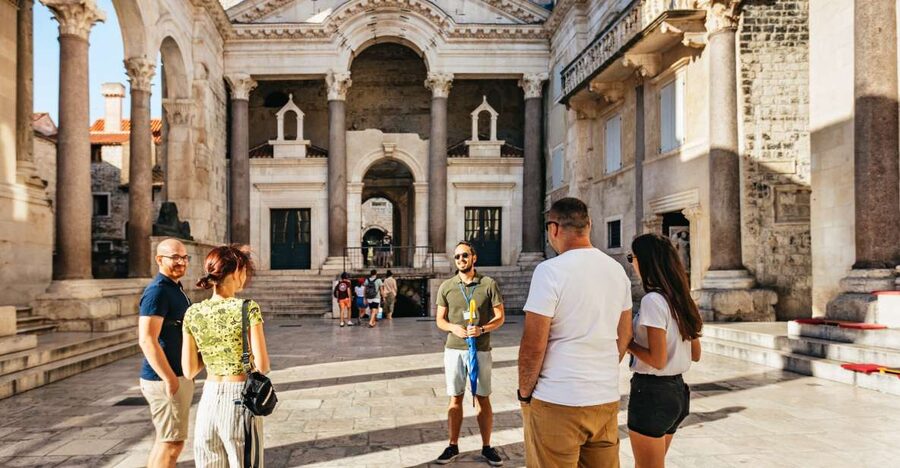
The strongest feature of this experience is the quality of the guiding. The named guides include Mia, Slavko, Antonia, Ivana, Tino, Ante, Frane, Martha, and others. The exact guide depends on the date and option, so you should not book expecting one particular person unless the provider confirms it.
The repeated strengths are clear: strong command of Split’s past, easy-to-follow English, humor, and a friendly manner. Slavko is especially praised for combining palace architecture with wider Dalmatian and Croatian history. Mia is noted for dry humor, practical advice, and an ability to adjust when weather causes problems. Antonia is described as an engaging storyteller who offers plenty of food and sightseeing suggestions.
Some guides have a close personal connection to the palace. One guide is described as having grown up inside Diocletian’s Palace, while another guide’s studies are connected with history. Those details can bring an extra sense of place, but the guide assigned to your tour may be different.
The experience works best when you take part. Ask why a room was used, how the palace changed, or where the guide would eat after the tour. Questions are welcomed, and the small-group format reported by some participants makes conversation easier than on a large bus tour.
Choosing between the 90-minute walk and longer options
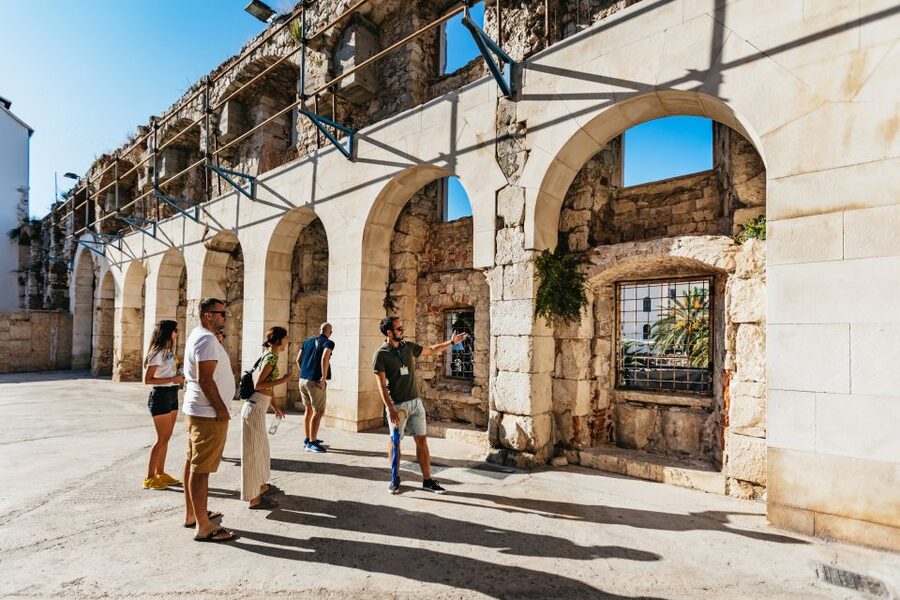
The basic experience lasts about 90 minutes. That is enough time to cover the Golden Gate, Peristyle, Saint Domnius Cathedral, Giardin Park, and the Riva at a steady pace. It is a good choice if you have limited time, a cruise stop, or young children who may not manage a long historical walk.
The listed duration can extend as far as six hours, depending on the option. Longer versions may include food tasting, wine tasting, or additional activities. One option includes an add-on trip to Trogir, about a 40-minute drive away, giving you a second historic town with a different character.
Do not assume every booking includes the same extras. Wine and food tasting are included only if that option is selected, and the meeting point may vary. Read the exact choice before paying, especially if you want Trogir or a longer half-day experience.
I would choose the standard 90-minute tour for a first introduction to Split. Choose a longer option if you want the day planned for you and prefer combining the Old Town with another destination. The longer version costs more in time and energy, but it may offer better value if you would otherwise arrange separate transport and research.
Is $17 a fair price?
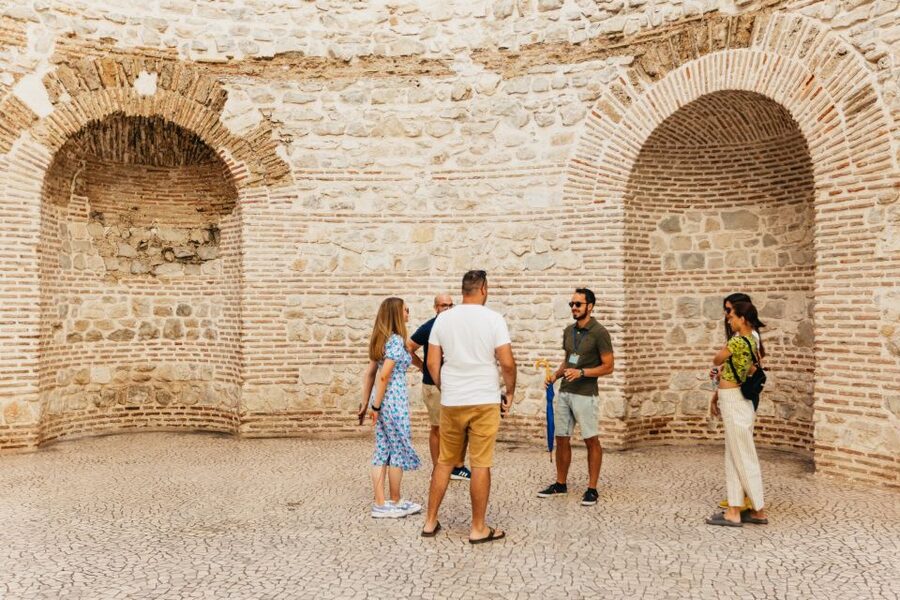
At $17 per person, the standard tour offers good value for a city whose most important sights are easy to walk past without context. You are paying for a local guide, a structured route, and the ability to ask questions. You are not paying for hotel pickup, and admission to every possible monument is not listed as part of the basic experience.
That distinction matters. If you prefer to wander alone and read information at each stop, you can see many exterior sights without booking a tour. But you will probably miss the connections between the Roman palace, the cathedral, the bishop’s statue, and the modern city.
For me, the price makes most sense on the first day. The guide can point out restaurants, places to revisit, and areas where tourists may pay too much. That practical advice can save more than the tour price if it helps you avoid one poor meal or an unnecessary detour.
Private groups are available. A private option usually makes the most sense for families, friends, or anyone who wants more control over the pace and questions. A shared tour should be enough for most people who want a clear introduction at the lowest price.
Who should book this walking tour?
I would recommend it to first-time visitors, history fans, cruise passengers, couples, families with older children, and anyone who wants a quick sense of direction. It is suitable for all ages, and the 90-minute length is manageable for many people.
It is particularly useful if architecture is not your strong point. The palace can seem like a jumble of columns and alleyways. A guide explains where you are and what each part was likely used for, making later solo exploring far more rewarding.
You should think twice if you need step-free access. The tour is not suitable for wheelchair users, and old palace streets may be uneven. It may also be less appealing if you dislike walking in busy public areas or prefer a quiet museum setting.
Bring comfortable clothes and sensible shoes. In warm weather, water and sun protection are practical additions even though only comfortable clothing is specifically listed. If you want a quieter atmosphere, check for a sunset departure or another time with lower demand.
Booking flexibility and practical details
The tour offers free cancellation up to 24 hours before the start time, with a full refund. It also allows you to reserve and pay later, which is useful when your ferry, cruise, or weather plans are still shifting.
Guiding is available in English, Italian, Spanish, German, and French. Starting times depend on availability, so check the calendar for your date rather than relying on a fixed daily schedule.
The tour provider is Split Walking Tour, at splitwalkingtour.com. Since meeting points vary by option, confirm the exact location before setting out. The standard meeting point is generally associated with the Golden Gate, but your booking details take priority.
My verdict: book it if you want Split to make sense
Book this tour if you want more than attractive stones and quick photographs. At a modest price, you get a clear introduction to Diocletian’s Palace, the Peristyle, Saint Domnius Cathedral, Gregory of Nin, and the Riva, plus local advice that can shape the rest of your stay.
I especially like it as a first-day activity. The palace is easier to enjoy once you understand its layout and long change of purpose. Pick the 90-minute version for a focused introduction, or choose a longer option if food, wine, or Trogir appeal to you.
Skip it only if you strongly prefer exploring without a guide, need wheelchair access, or already know Split well. For most first-time visitors, this is a practical and engaging way to get oriented without spending much.
FAQ
Where does the Split walking tour begin?
The meeting point may vary depending on the option booked. The standard tour meets at the Golden Gate of Diocletian’s Palace, so check your booking details for the exact location.
How long does the tour last?
The available duration ranges from 90 minutes to six hours. Check the selected option and availability for the precise length and starting time.
What sights are included?
The route includes the Golden Gate, Diocletian’s Palace, the Peristyle, Saint Domnius Cathedral, Gregory of Nin’s statue in Giardin Park, and the Riva promenade.
Does the tour return to the starting point?
Yes. The described route finishes at the Golden Gate, where the tour begins.
Is hotel pickup included?
No. Hotel pickup is not included.
Is the tour suitable for children?
Yes. The activity is listed as appropriate for all ages.
Is the tour suitable for wheelchair users?
No. The activity is not suitable for wheelchair users.
What languages are available?
Live guiding is available in English, Italian, Spanish, German, and French.
Are food and wine included?
Food tasting and wine tasting are included only if you select an option that specifically offers them.
Can I cancel the booking?
Yes. You can cancel up to 24 hours in advance for a full refund. Reserve-now-and-pay-later booking is also available.
Just added around Split
- Split: Private Walking Tour and Diocletian’s Palace★ 5.0 · 3 reviews
- Split and Diocletian’s Palace walking tour with a local guid★ 4.9 · 36 reviews
- Split: Diocletian’s Palace Private walking tour★ 5.0 · 3 reviews
- Split: Jewish Heritage & Diocletian’s Palace Walking Tour★ 5.0 · 3 reviews
- Split: Private Walking Tour with Diocletian’s Palace★ 5.0 · 30 reviews
- Split: Old Town and Diocletian’s Palace Walking Tour★ 3.3 · 3 reviews
- Essential Diocletian’s Palace Tour for First-Time Visitors★ 4.9 · 79 reviews
- Split: Old Town & Diocletian’s Palace Earlybird Walking Tour★ 4.0 · 12 reviews
Split Palace Tours, compared.
Walking Tour of Split and Diocletian’s Palace
Read our review →
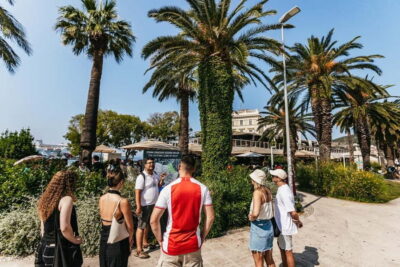
Diocletian Palace & Old Town Guided Walking Tour
Read our review →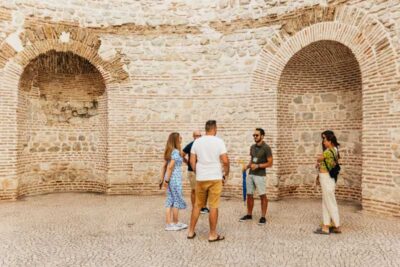

Game of Thrones Tour with Diocletian’s Palace Cellar
Read our review →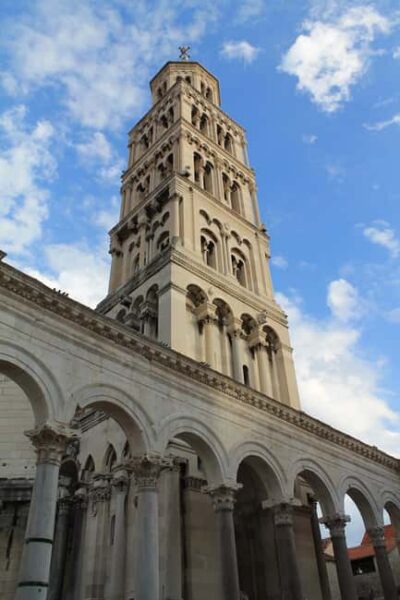
Diocletian’s Palace and Old Town SMALL GROUP Walking Tour
Read our review →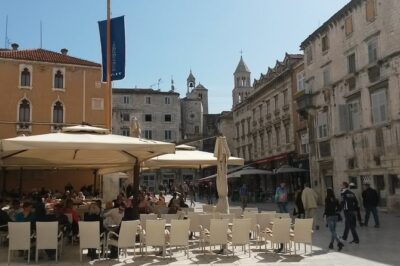
Split by Private Electric Rickshaw – Palace & Hidden Gems
Read our review →Browse the lists this tour appears in