
REVIEW · ITALIAN PALAZZO TOURS
Rome: Palazzo Barberini Guided Tour
Palazzo Barberini gives you two great Roman sights in one visit: a grand 17th-century palace and a serious collection of Renaissance and Baroque art. The star is Caravaggio’s Judith Beheading Holofernes, but the palace itself may be the bigger surprise, especially the vast ceiling fresco in the Salone Pietro da Cortona.
I like the way a guide connects the building to the powerful Barberini family, including the bee emblem repeated across the palace. I also like the useful extra ticket to Corsini Gallery, which you can use on your own within 20 days. The main caution is simple: if you book this expecting a large Caravaggio exhibition, you may find the collection smaller than imagined.
Key points at a glance
- Caravaggio’s Judith Beheading Holofernes: See the artist’s sharp light, dark shadows, and tense storytelling in person.
- The Barberini bee symbol: Learn how the family used this emblem throughout the palace to signal status and power.
- Salone Pietro da Cortona: Look up at The Triumph of Divine Providence, one of Rome’s most dramatic painted ceilings.
- Three major architects: Bernini, Borromini, and Maderno all shaped the palace.
- Extra Corsini Gallery access: Use the included ticket within 20 days, though that visit is on your own.
- A focused two-hour tour: The pace suits visitors who want a guided introduction without spending a whole day in a museum.
Why Palazzo Barberini is worth your time
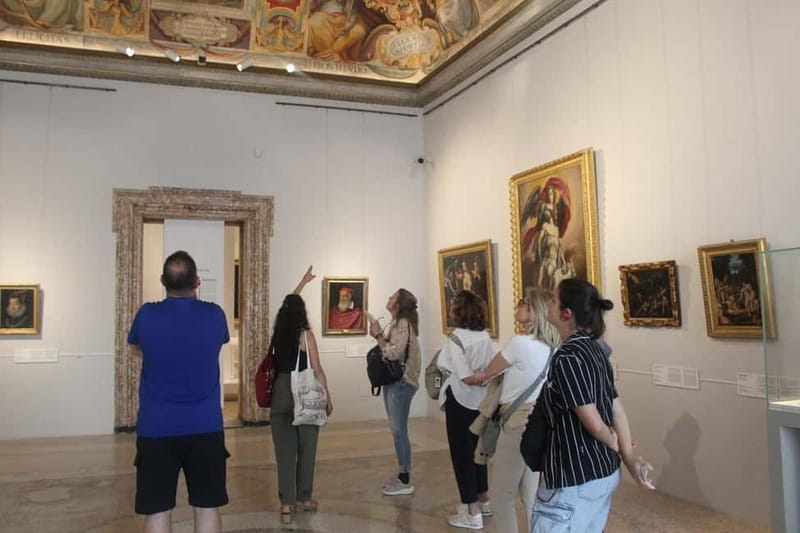
Rome has no shortage of famous museums, yet Palazzo Barberini often receives less attention than the Vatican Museums, Borghese Gallery, or Capitoline Museums. That can work in your favor. Here, you get important art in a palace setting without committing to a huge museum complex.
The Galleria Nazionale d’Arte Antica, or National Gallery of Ancient Art, occupies the palace. Its collection covers major works from the Renaissance and Baroque periods. You can expect paintings by Raphael, Caravaggio, and other leading artists, along with sculpture and decorative details tied to the building.
I like this combination because the setting explains the art. Palazzo Barberini was not built as a quiet home for a private family. It was a public statement of wealth and influence. The Barberini family commissioned an impressive palace, filled it with art, and used symbols such as the bee to make their presence impossible to miss.
A guide helps turn those details into a story. Without that context, you might admire the rooms and paintings but miss why the palace feels so grand. The tour gives you a way to connect architecture, family ambition, papal power, and Baroque theatrical style.
More Palazzo Tours in Rome
- Rome: Opera Concert at Palazzo Poli – Fontana di Trevi
★ 4.7 · 1,026 reviews - The Great Opera Arias Concert at Palazzo Poli – Trevi Fountain
★ 5.0 · 533 reviews - Rome: Palazzo Barberini Galleria Corsini Ticket & Audioguide
★ 3.9 · 322 reviews
Entering the palace courtyard
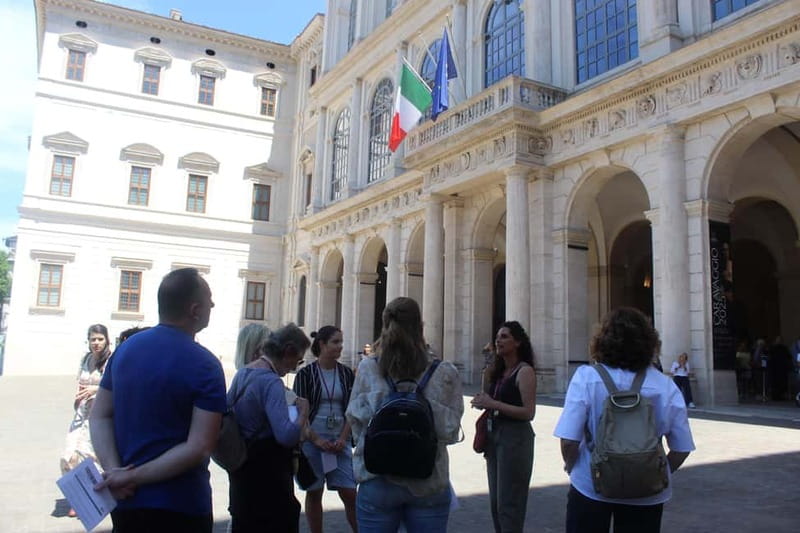
Your meeting point is inside the first entrance of the building, in the courtyard. Look for the host holding a light blue flag marked Inside Out Italy. This detail matters in a busy city like Rome, where arriving at the right doorway can save you from an anxious start.
The tour includes a timed entrance ticket, so you are not buying a standard ticket and then waiting to get inside. You still need to arrive at the correct meeting point and find the host, but the arrangement is designed to reduce the usual ticket-line hassle.
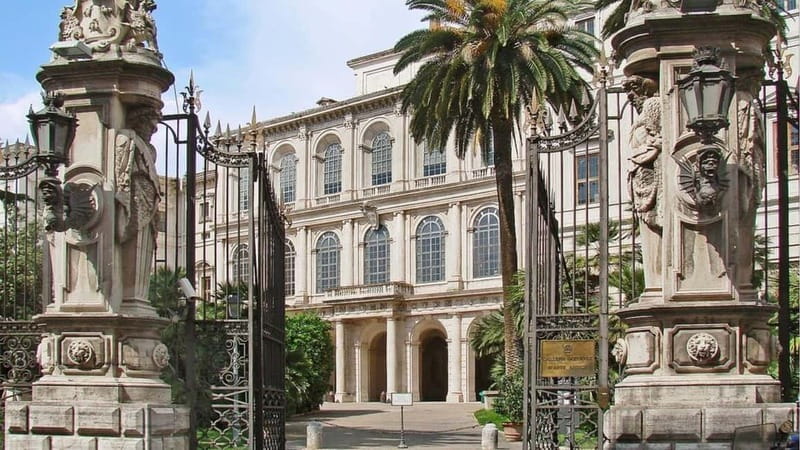
Once inside, pause to take in the palace before rushing toward the paintings. Palazzo Barberini was designed through the work of Bernini, Borromini, and Maderno. Their involvement gives the building an unusual architectural interest: you are not simply walking through rooms that happen to contain art. The structure itself is part of the collection.
Comfortable shoes are a good idea. The tour lasts two hours, and the route includes rooms and staircases. Large backpacks and luggage are not allowed inside, so pack lightly. Food and drinks also stay outside, and flash photography is prohibited.
Following the Barberini family’s bees
One of the most enjoyable details is the bee emblem. The Barberini family used bees as a symbol of power and prestige, and you will see them worked into the palace’s decoration.
This is the kind of small detail that can make an old building easier to read. Instead of seeing a pattern on a wall or ceiling, you begin to recognize a family mark. It tells you that the building was meant to communicate something about its owners.
Your guide explains the meaning of these decorations as you move through the palace. The tour is not only about identifying famous names on labels. It also shows how art and architecture worked together to display status in 17th-century Rome.
The palace’s impressive rooms and staircases help set the mood for the paintings. The grand scale is intentional. It reflects the Barberini family’s wealth and their place in Roman public life.
Caravaggio’s Judith Beheading Holofernes
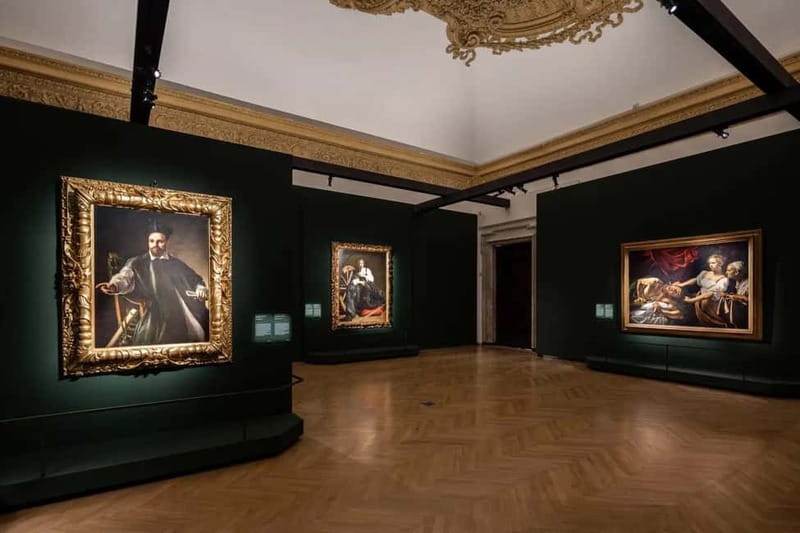
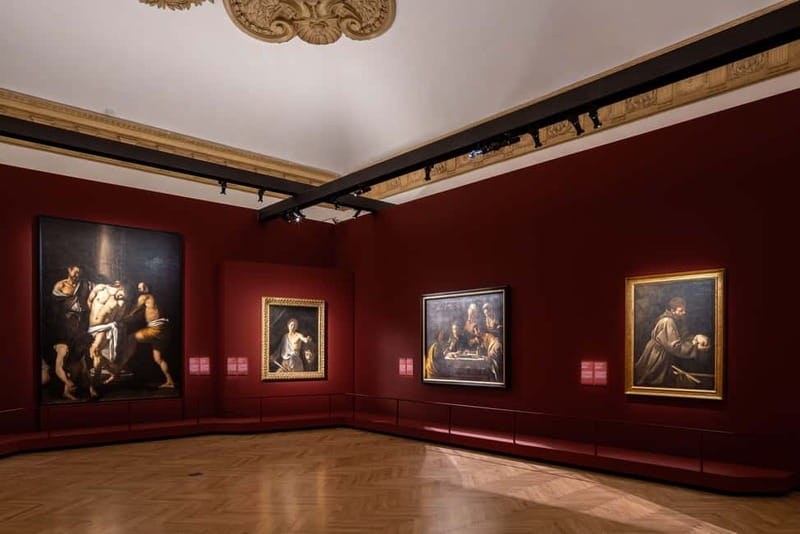
For many people, Caravaggio is the main reason to book this tour. His Judith Beheading Holofernes is the most gripping work on the route.
The scene captures Judith as she kills Holofernes, but Caravaggio does not present it as a distant historical event. His strong contrast between light and shadow pulls your attention toward the action. The figures feel close, physical, and emotionally charged.
A guide can point out how Caravaggio changed the way religious and historical scenes were painted. His work often places dramatic human action at the center, using light to control your eye. The result is direct and unsettling, rather than calm or decorative.
You should set your expectations carefully. Palazzo Barberini owns an important Caravaggio, but it is not a dedicated Caravaggio museum. Several of the artist’s best-known Roman paintings are in churches around the city, and this tour does not take you to those churches.
That is the main weakness for anyone booking mainly for Caravaggio. You will see a major painting, but the Caravaggio selection is limited. The palace and the wider gallery make up much of the two-hour experience.
Same city, a very different set of state rooms:
- Tivoli Full Day Trip from Rome: Hadrian’s Villa and Villa D’Este
★ 4.5 · 1,730 reviews - Hadrian’s Villa and Villa d’Este Half-Day Trip from Rome
★ 3.5 · 808 reviews - Rome: Colonna Palace Entry Ticket
★ 4.8 · 609 reviews - Colosseum Underground, Roman Forum & Cesar Palace Special Access
★ 4.5 · 421 reviews
Raphael, Bernini, and the wider gallery
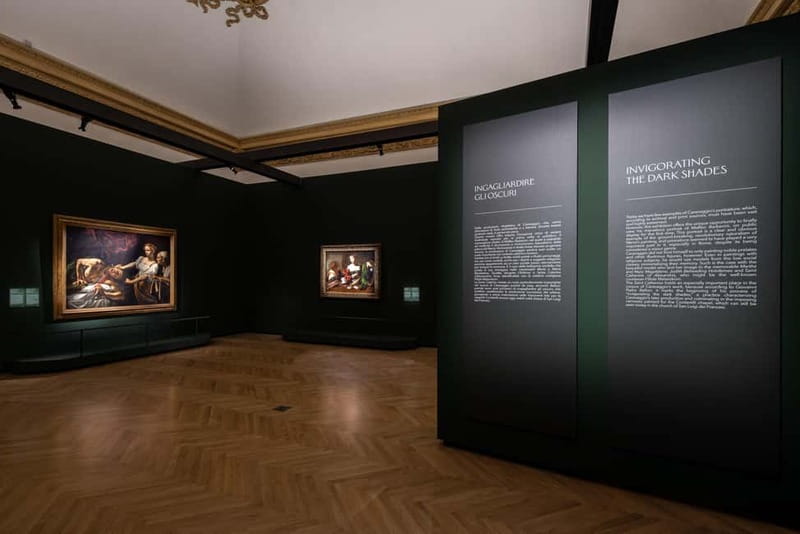
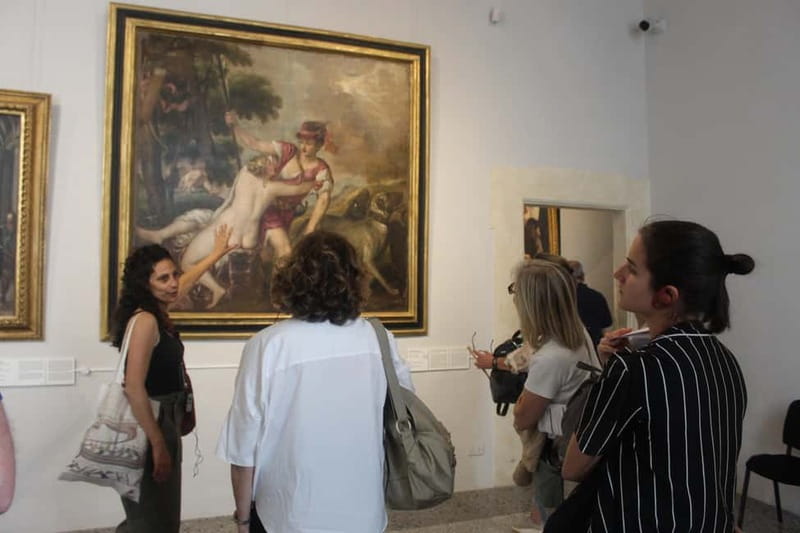
The tour also includes works by Raphael and Bernini. These names give you a useful sense of the gallery’s range, from Renaissance balance and refinement to the more dramatic Baroque style.
Raphael offers a different visual language from Caravaggio. His work is associated with controlled composition and graceful figures, while Caravaggio pushes drama, contrast, and emotional force. Seeing both within the same museum helps you notice how artistic ideas changed over time.
Bernini connects the paintings back to the building. He was one of the architects involved in Palazzo Barberini, and his name also appears in the gallery’s art collection. That overlap is valuable because it shows how Baroque Rome brought painting, sculpture, architecture, and power into the same setting.
The guide’s role is especially useful here. A two-hour visit can move quickly, and you may not have time to read every label. A live English-speaking guide selects the major works and explains why they matter, while headsets help you follow along in the rooms.
One guide named in the available information is Aliscia, who was praised for her clear explanations, charm, and enthusiasm for the collection. The specific guide for your date may be different, but you can expect the tour to be led in English by a licensed guide.
Looking up in the Salone Pietro da Cortona
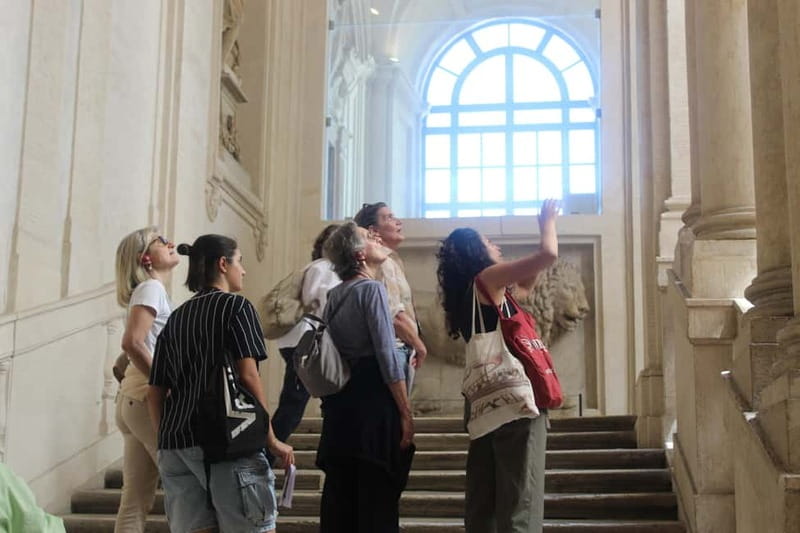
The great visual payoff is the Salone Pietro da Cortona. Before focusing on the walls, look up.
The ceiling fresco, The Triumph of Divine Providence, was designed to glorify the Barberini family. It fills the space with movement and decoration, creating the kind of theatrical effect that defines Roman Baroque art.
This is one of the places where a guide adds real value. Ceiling frescoes can be hard to understand from floor level. You may notice figures, clouds, and bright colors, but an explanation helps you see how the scene serves the family’s political and religious message.
The room also gives you a needed pause from close looking at paintings. After studying individual works, you can step back and take in an entire environment. The palace’s grand scale makes sense here. This was art designed to impress from across a large room.
Bring a camera if you like, but remember that flash photography is not allowed. Since the room is a major highlight, take a moment to enjoy it without trying to photograph every inch of the ceiling.
What the two-hour schedule feels like
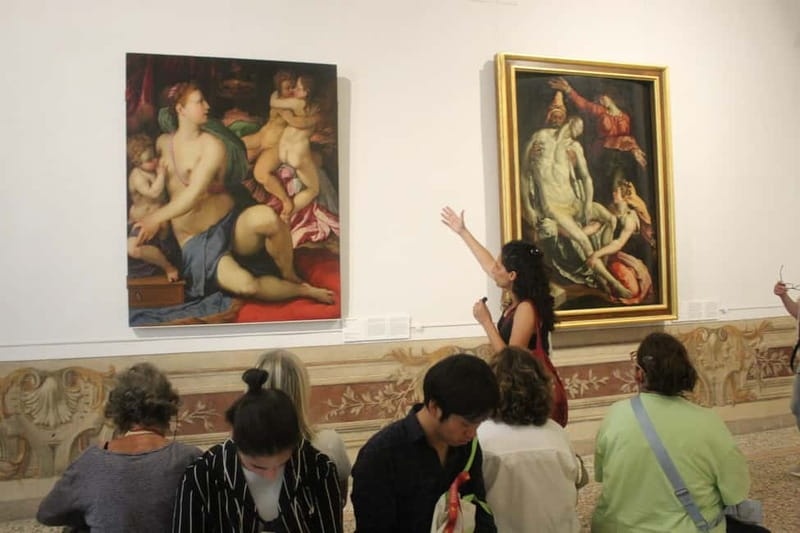
Two hours is long enough for a focused introduction, but not enough for every room and painting in detail. That is a fair trade for visitors who want structure and a clear route through the museum.
You will spend the time moving between the palace architecture, the gallery’s major paintings, Caravaggio, and the large ceiling fresco. The tour is not designed as a slow, independent museum visit. It is better for learning the main story and seeing the most important sights without having to plan the route yourself.
The headset is useful if the group is spread across a room. You can keep looking at the art instead of standing close to the guide. The provided information does not specify the group size, so do not assume an intimate private tour.
If you like to read every museum label, two hours may feel short. If you prefer a guide to point out the best works and explain the setting, the length should feel manageable.
Is the $77 price a good value?
At $77 per person, this is not a bargain museum ticket. The standard adult museum admission is listed as €15, with the rest of the cost covering the booking service, meeting-point assistance, licensed guide, headsets, and related arrangements.
The value depends on how much help you want. If you are comfortable navigating Rome’s museums alone and enjoy reading labels, you may prefer to buy a regular ticket and explore independently. You would pay less, but you would also lose the guide’s explanations and the timed arrangement.
For a first visit to Palazzo Barberini, I think the guided format has a reasonable case. The palace is architecturally important, the collection includes major artists, and the ceiling fresco can be difficult to appreciate without context. You are paying for interpretation and convenience, not just entry.
The included Corsini Gallery ticket improves the calculation. You can visit that gallery on your own within 20 days, giving you a second museum experience from the same admission. It is not a guided visit, so you will need to arrange that outing yourself.
One practical warning: the total price may feel high if your main goal is only to see Caravaggio. A disappointed customer paid £178 for two people and felt the cost was excessive, especially because the Caravaggio selection was smaller than expected. That criticism makes sense if the marketing has led you to picture a full exhibition devoted to him.
Who should book this Palazzo Barberini tour?
I would recommend it to you if you want a short, guided introduction to Baroque Rome. It suits first-time visitors who want help understanding both the art and the building.
It is also a good fit if you enjoy famous names but do not want a giant museum visit. Raphael, Bernini, and Caravaggio provide a clear artistic focus, while the palace and its decorations give the visit a strong sense of place.
Art lovers should book with accurate expectations. The gallery is important, but it is not a single-artist exhibition. Caravaggio’s Judith Beheading Holofernes is a major highlight, not the whole event.
The experience is not suitable for wheelchair users or people with mobility impairments. Large backpacks and luggage are not permitted, so carry only what you need. Food and drinks must remain outside.
Practical details before you go
The tour is offered in English and lasts two hours. It includes a timed ticket to Palazzo Barberini, a licensed guide, and headsets.
Your ticket also provides access to Corsini Gallery for 20 days after the Palazzo Barberini visit. That second visit is self-guided, so check your plans before assuming you can fit it in.
You can cancel up to 24 hours before the start for a full refund, and the reserve-now, pay-later option keeps your plans flexible. Starting times vary, so check availability for your chosen date.
Wear comfortable shoes and arrive ready to find the host in the courtyard. Look for the light blue Inside Out Italy flag after passing through the first entrance.
Should you book it?
Book this tour if you want a guide to explain the Barberini family, the palace’s architecture, Caravaggio’s Judith, and Pietro da Cortona’s ceiling in a focused two-hour visit. The extra Corsini Gallery ticket adds useful value if you have another museum stop in your Rome plans.
Skip it if you mainly want a large Caravaggio display or if you prefer to explore museums slowly on your own. Palazzo Barberini is the real subject here, with Caravaggio as a major part of the story, not the entire show.
FAQ
How long is the Palazzo Barberini guided tour?
The guided tour lasts two hours.
What language is the tour offered in?
The tour is offered in English with a live guide.
What artworks can I expect to see?
The visit includes works by Caravaggio, Raphael, and Bernini. A key highlight is Caravaggio’s Judith Beheading Holofernes.
What is the main architectural highlight?
The Salone Pietro da Cortona is a major highlight. Its ceiling features The Triumph of Divine Providence, a large fresco created to glorify the Barberini family.
Is the Corsini Gallery ticket included?
Yes. The ticket allows access to Corsini Gallery within 20 days of the Palazzo Barberini visit. You visit Corsini Gallery on your own.
Where is the meeting point?
Pass through the gates of the building’s first entrance and meet the host in the courtyard. The host holds a light blue flag marked Inside Out Italy.
Are food and drinks allowed inside?
No. Food and drinks are not allowed inside the museum.
Can I bring a backpack or luggage?
Large backpacks and luggage are not permitted inside. Carry a small amount of personal belongings instead.
Is the tour suitable for wheelchair users?
No. The experience is listed as unsuitable for wheelchair users and people with mobility impairments.
Just added around Rome
- Day trip Rome by car : Tivoli Unesco Villa D’este & Hadrian★ 5.0 · 56 reviews
- From Rome: Villa d’Este & Hadrian’s Villa Tickets & Transfer★ 4.5 · 32 reviews
- Tivoli: Hadrian’s Villa and Villa d’Este Guided Tour★ 4.5 · 73 reviews
- Rome: Villa D’Este & Tivoli Tour with Skip-the-Line Entry★ 5.0 · 4 reviews
- Rome: Palazzo Altemps Reserved Entrance Ticket★ 4.5 · 49 reviews
- Rome: Palazzo Venezia Reserved Entrance with Museum★ 4.2 · 52 reviews
- Rome: Monuments and Belvederes Guided E-Bike Tour★ 4.2 · 6 reviews
- Rome: Opera Concert in Palazzo Doria Pamphilj★ 4.1 · 28 reviews
Italian Palazzo Tours, compared.
Uffizi, Pitti Palace & Boboli Combined 5-Day Pass
Read our review →
Palazzo Vecchio: Skip-the-Line Entry and Secret Passage Tour
Read our review →
Opera Concert at Palazzo Poli – Fontana di Trevi
Read our review →
Browse the lists this tour appears in