
REVIEW · ITALY PALACE TOURS
Guided visit to the Ducal Palace in Mantua
The Ducal Palace of Mantua is not simply a grand house with a few decorated rooms. It is a maze-like court city of courtyards, squares, gardens, apartments, and chapels, built around the Gonzaga family’s power. The best reason to take this tour is that a guide gives that sprawling complex a clear shape, leading you from one major work to the next without leaving you to wander past the important rooms.
I like two things in particular: the route includes the celebrated Camera degli Sposi, painted by Andrea Mantegna, and it also reaches less familiar but important works by Pisanello, Giulio Romano, Raphael, and Rubens. I also like the focused 90-minute length, which works well for a short stay in Mantua. The main limitation is that the tour is conducted in Italian, and the palace is so large that even a skilled guide can only show you its essential rooms.
Key points to know before booking
- Mantegna’s Camera degli Sposi: See one of the great illusionistic rooms of the Italian Renaissance.
- A palace that feels like a city: Courtyards, apartments, hanging gardens, and squares make the route much more than a standard residence tour.
- Cecilia’s guided route: Cecilia is praised for explaining details and curiosities while keeping the group moving through the rooms.
- Major artists in one visit: The itinerary includes Pisanello, Raphael, Giulio Romano, and Rubens alongside the Gonzaga apartments.
- Italian-language experience: The guide speaks Italian, and some content appears in its original language.
- Wheelchair accessible and flexible booking: The activity lasts 1.5 hours, costs $27 per person, and allows cancellation up to 24 hours ahead for a full refund.
Why Mantua’s Ducal Palace needs a guide
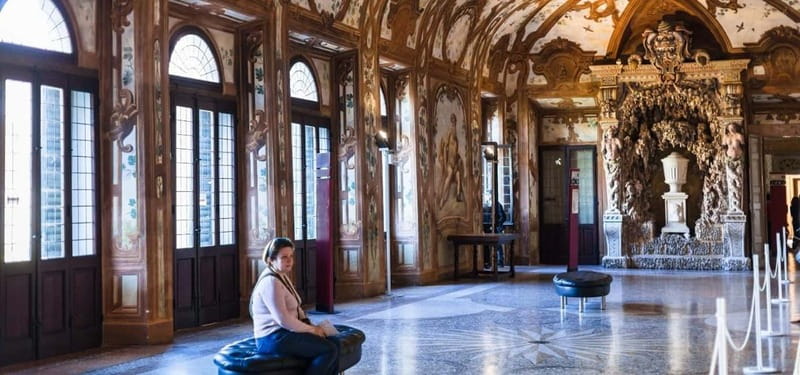
Mantua’s Ducal Palace grew over time rather than following one tidy architectural plan. That is part of its charm, but it can also make a self-guided visit feel scattered. You move through grand spaces, smaller passages, courtyards, and decorated apartments, and it is not always obvious which room matters most or how one part connects to the Gonzaga family’s story.
A licensed guide helps you read the palace as a working court rather than a collection of beautiful rooms. The Gonzagas used art, architecture, and ceremony to show their influence. Their residence had to house a ruling family, receive important visitors, display religious devotion, and present wealth at every turn.
The guide’s job here is not just to point at paintings. It is to connect the palace’s parts: the private apartments, the public spaces, the Palatine Basilica of Santa Barbara, and the decorative schemes created by leading artists. That context gives the palace more meaning than a quick walk through ornate rooms.
More guided palace visits in Italy:
- Venice: Doge’s Palace, Bridge of Sighs & Prisons Guided Tour
★ 4.3 · 2,549 reviews - Skip-the-Line: Doge’s Palace & St. Mark’s Basilica Fully Guided Tour
★ 4.5 · 1,892 reviews - Florence: Palazzo Vecchio Guided Tour
★ 4.8 · 1,260 reviews
Starting at Piazza Sordello
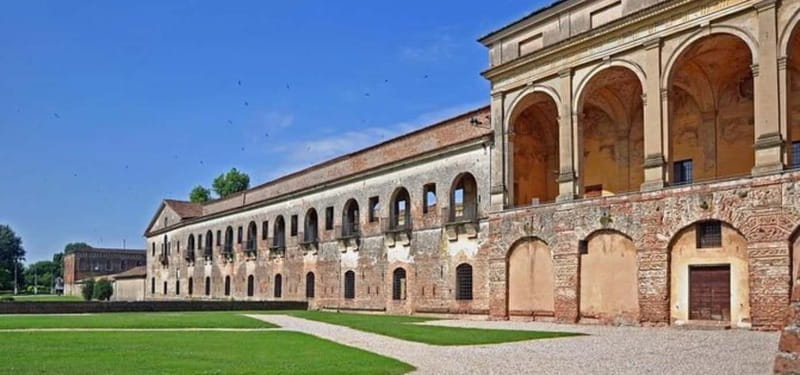
You meet in front of the Ducal Palace entrance at Piazza Sordello, 40, in Mantua. This is a useful meeting point because the palace is not a single isolated building. You want to begin with the guide already orienting you to the complex before you step inside.
The palace’s scale is the first thing to grasp. Think less of one enormous façade and more of buildings gathered into a courtly district. The route brings together hanging gardens, courtyards, squares, apartments, and religious spaces. That variety explains why a 90-minute visit can feel full even though it cannot cover every corner.
I recommend arriving with a little time to spare. The provided meeting point is specific, and a palace complex is not the place to start searching for the group at the last minute. Once the tour begins, the value comes from keeping pace and listening as the guide explains how the spaces fit together.
The Gonzaga apartments and courtly life
The Gonzaga family ruled Mantua for centuries and used the Ducal Palace to express both private taste and public authority. The apartments reveal the family’s refined way of life, but they also show how a Renaissance court functioned. Rooms were not decorated only for comfort. They helped create an image of rank, culture, and control.
As you move through these apartments, pay attention to the relationship between decoration and purpose. A room can feel intimate one moment and ceremonial the next. The palace’s power comes from this sequence, with one space leading into another and each contributing to the sense of an active court.
A guide is especially useful here because the rooms may not speak for themselves. Cecilia, one of the guides associated with this activity, has been praised for pointing out small details and curiosities while moving smoothly through the palace. That balance matters. You want enough explanation to understand what you are seeing, but not so much that the visit becomes a lecture in one room.
The tour is also designed for families. Younger visitors may not want a long technical discussion of Renaissance patronage, but the movement through courtyards, apartments, and decorated chambers gives the visit a natural rhythm. The guide can turn the palace’s art into a story about a powerful family, its ambitions, and its taste.
Pisanello’s Gothic details
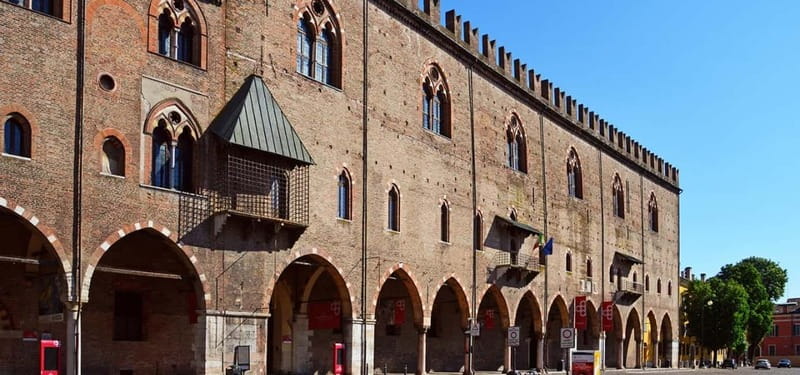
The tour includes Gothic details connected with the work of Pisanello. This part of the route adds an important contrast to the better-known Renaissance rooms. Instead of viewing Mantua as a place shaped by one artistic period, you see how older Gothic elements and newer Renaissance ideas sit within the same court complex.
Pisanello is known for careful observation, elegant line, and interest in courtly subjects. The Gothic details reward a slower look, especially if you enjoy small visual features rather than only famous masterpieces. You might notice how ornamental patterns, figures, and architectural details create a different mood from Mantegna’s bold illusionism.
This is one reason I prefer a guided visit here. Without some direction, it is easy to focus only on the palace’s biggest names. A guide can tell you where to look and why a detail matters, helping you appreciate works that might otherwise become background decoration.
A few more palace visits around Italy worth a look
- Venice: Doge’s Palace Reserved Entry Ticket
★ 4.6 · 42,716 reviews - Doge’s Palace & St. Mark’s Basilica with Terrace Access Tour
★ 4.7 · 10,697 reviews - Venice: Doge’s Palace and St Mark’s Basilica Walking Tour
★ 4.4 · 6,291 reviews - Legendary Venice: Doge’s Palace, St Mark’s & VIP Terrace Access
★ 4.5 · 5,033 reviews
The Camera degli Sposi and Mantegna’s illusion
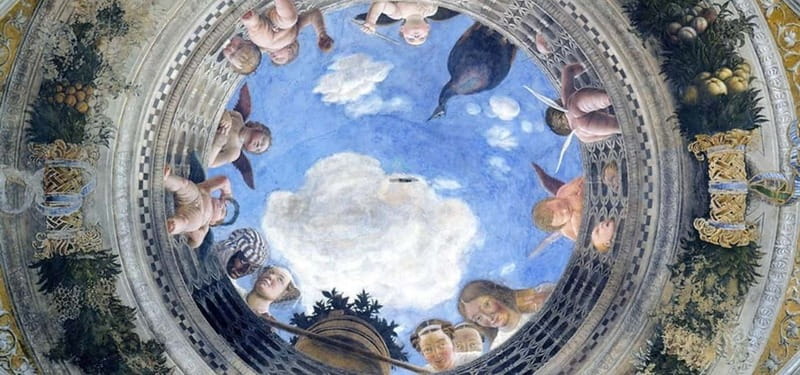
The Camera degli Sposi, or Bride and Groom’s Chamber, is the main artistic prize of the visit. Andrea Mantegna painted the room for the Gonzaga court, and its decoration is famous for making a contained interior feel far more open and theatrical.
The room deserves quiet attention. Mantegna uses painted architecture and carefully arranged figures to create an illusion that extends beyond the real walls. The effect depends on looking upward and across the room, not just at one framed image. A guide can help you notice how the painting plays with space and why the chamber became such an important example of Renaissance art.
This is also the point where the palace’s political purpose becomes clear. The Gonzagas were not decorating a neutral gallery. They were presenting themselves as cultured rulers with access to one of the leading artists of their time. The room blends family identity, artistic innovation, and courtly display.
Ninety minutes is enough to see the chamber and understand its role, but it is not enough for a long, unhurried study of every painted detail. If Mantegna is your main reason for visiting, keep that in mind. The guided route gives you the essential view and explanation, then continues to other major works.
Santa Barbara, the palace’s spiritual center
The Palatine Basilica of Santa Barbara forms the religious heart of the palace complex. Its presence helps you understand that the Ducal Palace was not only a residence. Religion, ceremony, and dynastic identity were tied closely to court life.
The basilica also gives the route a change of pace. After the apartments and painted rooms, a sacred space reminds you that the Gonzaga court expressed power through worship as well as art and architecture. Its position within the palace helps explain the complex’s almost city-like character.
The tour description places Santa Barbara at the center of the palace’s network of spaces. That is useful context, even if the 90-minute schedule means the guide must keep the visit moving. You will get a sense of how the palace’s religious and residential functions worked side by side.
Raphael’s designs in the palace tapestries
The route continues to tapestries designed by Raphael. These works show how the Gonzaga court valued art in many forms, not only wall paintings and architecture. Tapestries could soften large rooms, add color, and display expensive craftsmanship while also carrying ambitious artistic designs.
Raphael’s role gives these textiles special interest. You are not simply seeing decorative fabric. You are seeing how designs by a major artist could be translated into a different medium and used within a court setting.
This stop is valuable for visitors who want more than a parade of famous frescoes. The palace’s collection brings together painting, architecture, textiles, sculpture, and religious art. The guide’s explanation helps you see the Gonzaga taste as a complete program rather than a random collection of objects.
Giulio Romano and the Corte Nuova
The tour reaches the Corte Nuova, a newer court area decorated by Giulio Romano. This section adds another layer to the palace’s story. The complex was not frozen at one moment in the Renaissance. It changed as the Gonzagas expanded, updated, and reshaped their residence.
Giulio Romano brought a more dramatic and playful style to court decoration. The Corte Nuova is important because it shows the Gonzaga family continuing to commission ambitious work as artistic fashions changed. You can compare its feel with Mantegna’s earlier visual language and with the Gothic details linked to Pisanello.
That comparison is one of the strongest features of the itinerary. Instead of seeing isolated masterpieces, you move through different ideas about beauty, authority, and spectacle. A good guide makes those shifts easier to follow, especially when the rooms themselves do not explain their dates and purpose.
Rubens brings the route to a close
The final major art stop is a masterpiece by Rubens. Its place near the end of the route gives the visit a broad time span, from Gothic details through the Renaissance and into a later period of European court art.
Rubens is a useful closing point because his work links Mantua to a wider world of artistic exchange. The Gonzaga court was not culturally cut off. Its collection and commissions reflected contact with leading artists and styles beyond the immediate region.
Ending with Rubens also reinforces the palace’s central theme: the Gonzagas used art to tell the story of their authority. By the end of the visit, you have seen how one ruling family shaped rooms, religious spaces, textiles, painted illusion, and grand court decoration to create a powerful public image.
What $27 buys you in 90 minutes
At $27 per person, this is a reasonable choice if you want a guided introduction rather than a quick independent look. The palace contains enough art and architecture to occupy far more than an hour and a half. Your fee pays for structure and interpretation, which are particularly helpful in a complex of this size.
The value is strongest if you care about the major works but do not already know the palace well. You will be taken to the essential rooms and given a usable framework for understanding the Gonzagas. You also avoid spending your limited time wondering which corridor leads to the next important section.
The tradeoff is coverage. A 90-minute tour cannot give every apartment equal time, and you may want to return to a favorite room afterward if independent visiting time is available. The itinerary is best viewed as a carefully chosen introduction, not a complete study of the entire palace.
The activity has a 4.6 rating from 14 bookings, with particularly strong praise for Cecilia’s preparation, clarity, and ability to bring out small details. One practical note is worth taking seriously: an Italian-language group can be easier to follow with audio equipment, especially in busy rooms. One rating specifically suggested using earphones or an audio system so the guide can be heard clearly and people without reservations do not simply follow along.
Language, access, and booking flexibility
The live guide speaks Italian, and some content is presented in its original language. You should choose this tour only if Italian works for you, or if someone in your group can translate comfortably. The strongest benefit of a live guide is lost if you cannot follow the explanations about the artworks and Gonzaga family.
The activity is wheelchair accessible, which makes it a practical option for visitors who need an accessible route. The available information does not specify details about every surface or room, so you may still want to confirm any particular access needs before booking.
You can cancel up to 24 hours in advance for a full refund. There is also a reserve-now, pay-later option, which helps if your Mantua schedule is still shifting. Starting times vary, so you need to check availability for the date you want.
Who should book this Mantua palace tour?
I would choose this visit if you have a limited amount of time in Mantua, want to see the palace’s most important art, or prefer a guide to provide the story behind the rooms. It is especially useful for first-time visitors who might otherwise underestimate the palace’s size.
Families can also make good use of the compact route. The visit has enough variety to keep the experience moving, and the guide’s use of stories, details, and curiosities can make the art easier to approach.
Art lovers should book it for the concentration of major names: Mantegna, Pisanello, Raphael, Giulio Romano, and Rubens. Just remember that the tour is in Italian and that the famous rooms may receive only the time needed for a clear introduction.
Should you book the Ducal Palace tour?
Book this tour if you want a focused, art-centered introduction to Mantua’s vast Gonzaga residence. The price is fair for a licensed guide, the route reaches the essential masterpieces, and Cecilia appears to bring both energy and close attention to detail.
Skip it only if you need an English-language tour or if you want to spend several hours examining every room at your own pace. For everyone else, 90 minutes offers a sensible first look at a palace that could easily swallow a full day.
FAQ
Where does the Ducal Palace tour meet?
The meeting point is in front of the Ducal Palace entrance at Piazza Sordello, 40, 46100 Mantua, Italy.
How long does the guided visit last?
The visit lasts 1.5 hours, or 90 minutes.
How much does the tour cost?
The listed price is $27 per person.
What language is the tour conducted in?
The live tour guide speaks Italian. Some content is shown in its original language.
Is the Ducal Palace tour wheelchair accessible?
Yes, the activity is listed as wheelchair accessible.
What major artwork will I see?
The route includes Andrea Mantegna’s Camera degli Sposi, Gothic details connected with Pisanello, tapestries designed by Raphael, Giulio Romano’s Corte Nuova, and a Rubens masterpiece.
Does the tour include the Gonzaga apartments?
Yes. The visit includes the elegant apartments of the Gonzaga family.
Can I cancel for a full refund?
Yes. You can cancel up to 24 hours in advance for a full refund.
Can I reserve now and pay later?
Yes. The activity offers a reserve-now, pay-later option.
Just added around Italy
- Pitti Palace and Palatina Gallery★ 4.0 · 41 reviews
- Pitti Palace Small Group Tour★ 5.0 · 6 reviews
- Private Guided Tour of Palazzo Vecchio in Florence★ 3.5 · 4 reviews
- Florence: Palazzo Vecchio Skip the line Entry ticket★ 4.0 · 49 reviews
- Pitti Palace: The Royal Palace of Florence★ 4.5 · 12 reviews
- PALAZZO VECCHIO Private tour in Florence★ 5.0 · 35 reviews
- Private Tour of Pitti Palace with Boboli Garden★ 5.0 · 28 reviews
- Pitti Palace and Palatine Gallery: A Royal Art and History Tour★ 4.5 · 42 reviews
Italy Palace Tours, compared.
Doge’s Palace & St. Mark’s Basilica with Terrace Access Tour
Read our review →
Doge’s Palace and St Mark’s Basilica Walking Tour
Read our review →
Legendary Venice: Doge’s Palace, St Mark’s & VIP Terrace Access
Read our review →
Venice In a Day: St Mark’s, Doges Palace Gondola Ride & City Tour
Read our review →Browse the lists this tour appears in