
REVIEW · SEOUL PALACE TOURS
Seoul: 6-Hour Guided Tour to City Highlights, Palace & More
Seoul’s old and new worlds come into sharp focus on this private tour with Paul Koo, who explains how Confucian ideas shaped Joseon palaces, homes, ceremonies, and daily life. You begin at Gwanghwamun Square and move through Gyeongbokgung, the National Folk Museum, Bukchon Hanok Village, and Gwangjang Market, with Bongeunsa Temple listed among the cultural highlights of the broader experience.
I like the tour’s strong focus on architecture and ideas, not just photo stops. I also like the flexibility: Paul can adjust the meeting time and place, meet you at your hotel, and change the plan when weather turns sour. The main caution is pace. Expect around five miles of brisk walking, and one six-hour booking may feel tight if you want every palace detail explained at length.
Key points at a glance
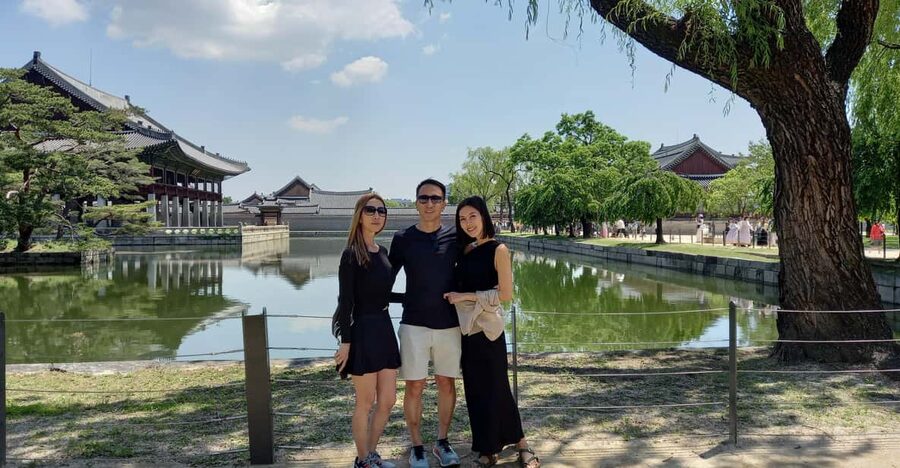
- Gyeongbokgung gets the biggest share of your time, with about two and a half hours devoted to Korea’s grandest Joseon palace.
- Paul Koo teaches through Confucian culture, helping you understand why traditional buildings look and function as they do.
- The National Folk Museum adds everyday life, from birth and marriage to work, illness, seasonal customs, and death.
- Bukchon Hanok Village connects old Seoul with modern Seoul, including views toward skyscrapers and N Seoul Tower.
- Gwangjang Market brings food into the tour, though meals, snacks, and drinks are not included.
- Transport and admission are extra, so the $193 private-group price is not the final cost for two people.
Why the Confucian focus changes the tour
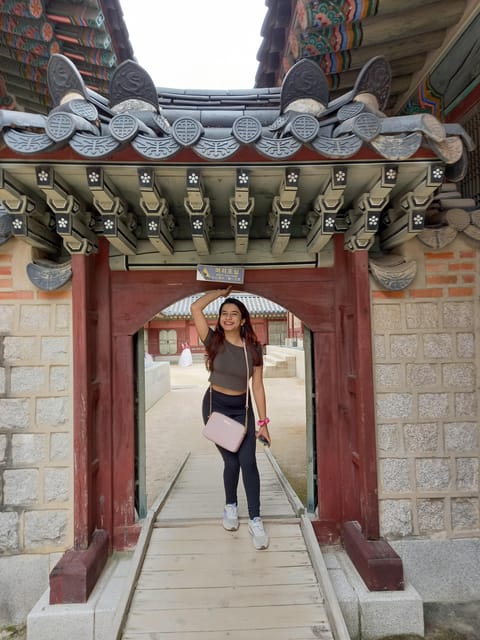
Many palace tours give you names, dates, and royal anecdotes. This one takes a different route. Paul Koo frames Seoul’s traditional buildings through Confucianism, the guiding philosophy of the Joseon Dynasty.
That matters because architecture is never only decoration. The size of a gate, the position of a hall, the spacing of courtyards, and the relationship between ruler, family, and society all carry meaning. Once you have that basic idea, Gyeongbokgung becomes easier to read. You are not only looking at painted roofs and timber halls. You are seeing a carefully ordered expression of Joseon values.
Paul is described as a specialist in Confucian culture and a docent guide for Korean traditional culture. His approach suits you if you want more than a quick introduction. It may be less appealing if you prefer to wander independently, take photographs, and keep explanations short.
The tour is private for your group, up to two people at the listed price. That gives you room to ask questions and adjust the pace, though the schedule still has several major stops to cover.
More guided palace visits in Seoul:
- Seoul: Palace, Temple and Market Guided Foodie Tour at Night
★ 4.9 · 750 reviews - Seoul: UNESCO Palace and Street Foods Guided Tour
★ 5.0 · 6 reviews - Seoul: 4-Hour Guided Tour to Palace, Bukchon, Jogyesa Temple
★ 5.0 · 3 reviews
Starting at Gwanghwamun Square
The stated starting point is Gwanghwamun Square, a central location in front of Seoul’s main palace area. After booking, you can arrange a different meeting point and time with the guide, including your hotel.
This flexibility is useful if you are arriving from another part of Seoul or want to avoid crossing the city before the tour begins. It also means you should confirm the final meeting details in advance. The tour requires advance reservation and guide confirmation.
The plan may be adjusted as the day unfolds. In rainy weather, Paul changed the order and explained his suggestions along the way, which is exactly the sort of practical judgment that helps on a long walking day.
Gyeongbokgung: the main lesson in Joseon design
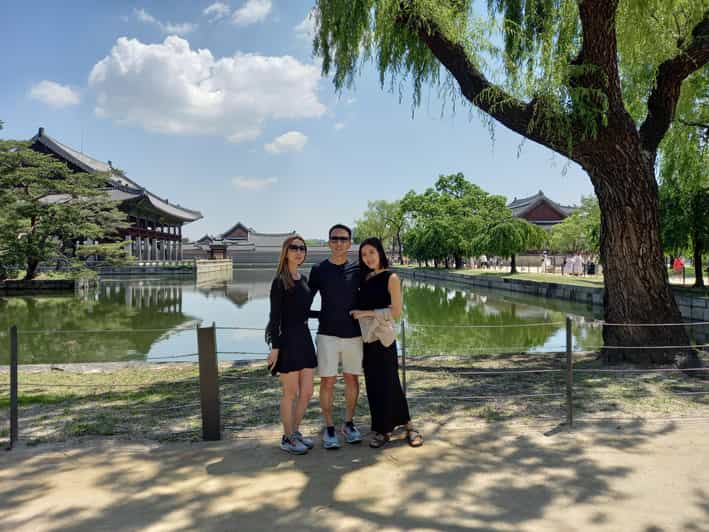
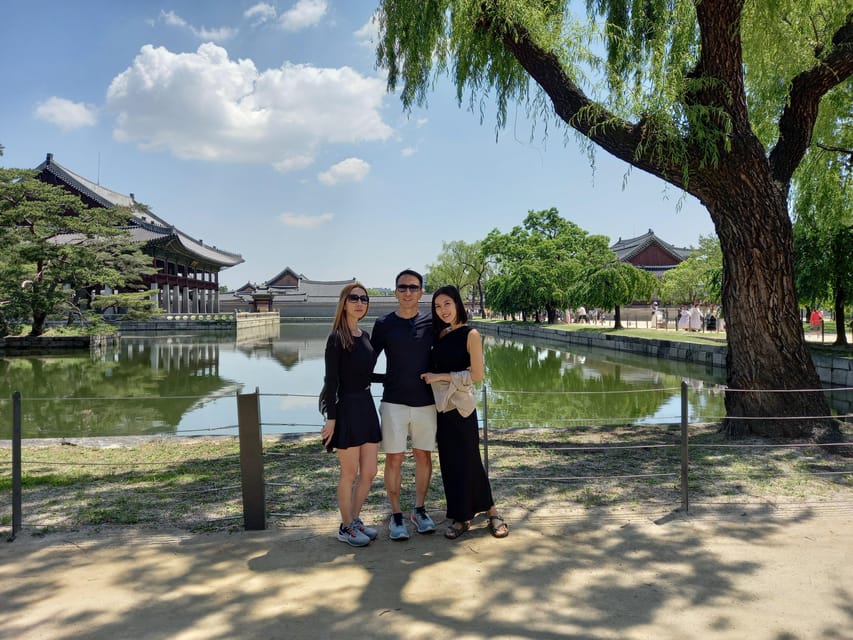
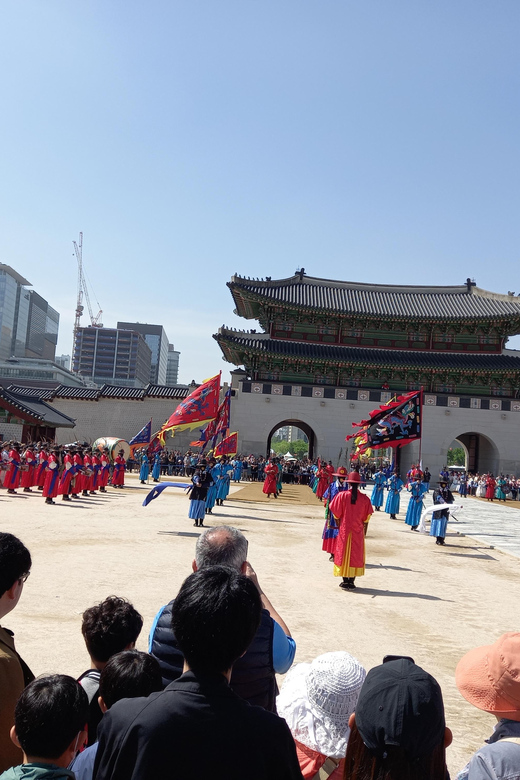
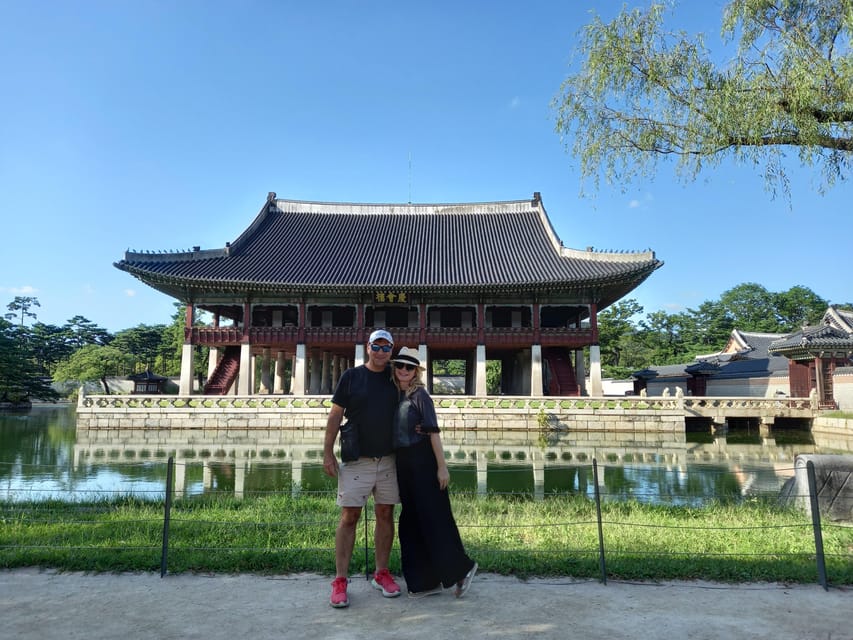
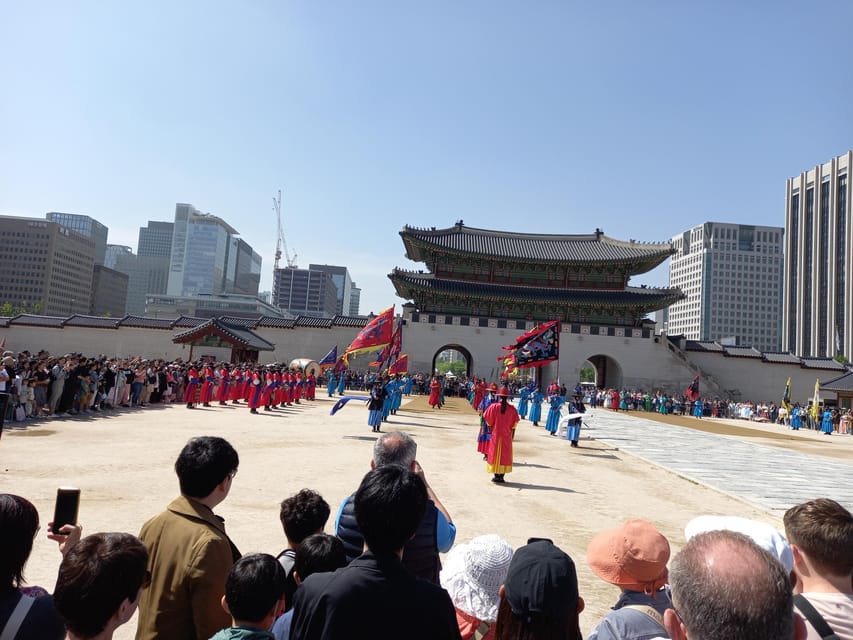
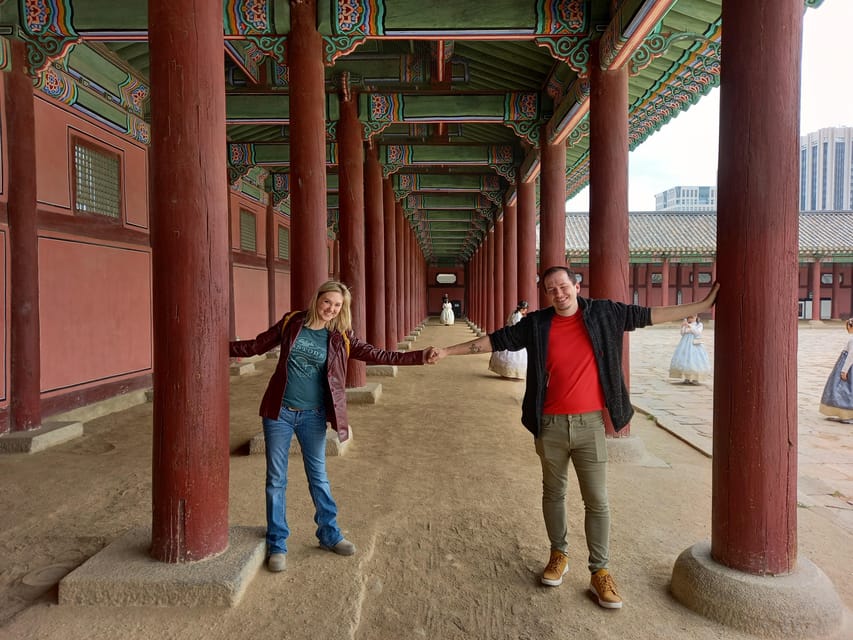
Gyeongbokgung receives about two and a half hours, making it the clear centerpiece. Built in 1395, it was the main palace of the Joseon Dynasty and is presented here as the most complete expression of Confucian palace planning in Korea.
The palace is the largest and grandest of Korea’s royal palaces. Its position on relatively flat ground and its formal arrangement follow an authentic Confucian structure. That makes this stop especially useful early in the day, since Paul can introduce ideas here that return in the museum and traditional village.
Allow yourself time to look beyond the most famous gates. The value of a guide is strongest when you want to know why one building sits where it does, how royal authority was arranged, and how the palace reflected the order of Joseon society.
There is a tradeoff. Two and a half hours is a substantial block, and Paul’s explanations can be detailed. One person who took the tour felt the palace section could have been shorter, leaving more time for the later stops. If you love architecture and historical context, this may be the best part of your day. If your attention fades during long explanations, tell Paul early that you prefer a brisker overview.
Palace admission is not included in the $193 price. You should also plan for the walk between major sites and any local transportation needed during the day.
The National Folk Museum and ordinary Joseon life
The National Folk Museum of Korea receives about an hour. It shifts the focus from royal architecture to the customs of ordinary people.
Its exhibitions cover seasonal activities and the stages of life, including birth, growing up, marriage, aging, illness and treatment, and death. Ceremonies and commemorative events show how family and community shaped daily life in Joseon Korea.
I like this stop because it prevents the palace from becoming the whole story. Gyeongbokgung shows official power and national ideals. The folk museum shows how people lived those ideals, adapted them, and marked important moments in family life.
The museum can also help you make sense of customs that may otherwise seem unfamiliar. You are given a framework for understanding rituals, seasonal practices, and social expectations rather than simply looking at displays without context.
The schedule lists 61 minutes here. That is enough for a guided introduction, but not necessarily enough for a slow museum visit if you want to examine every exhibit. Stay focused on the sections Paul selects, and ask questions about anything connected to your own interests.
A few more palace visits around Seoul worth a look
- Seoul: Gyeongbok Palace, Bukchon Village, and Gwangjang Tour
★ 4.9 · 2,321 reviews - Best Seoul City Tour (Gyeongbokgung Palace,Insadong,Namsan Tower)
★ 5.0 · 1,647 reviews - Small-Group Royal Palace and Seoul City Tour (hotel pick-up)
★ 5.0 · 1,474 reviews - Seoul City Sightseeing Tour Including Gyeongbokgung Palace, N Seoul Tower, and Namsangol Hanok Village
★ 5.0 · 1,423 reviews
Bukchon Hanok Village and Seoul’s two faces
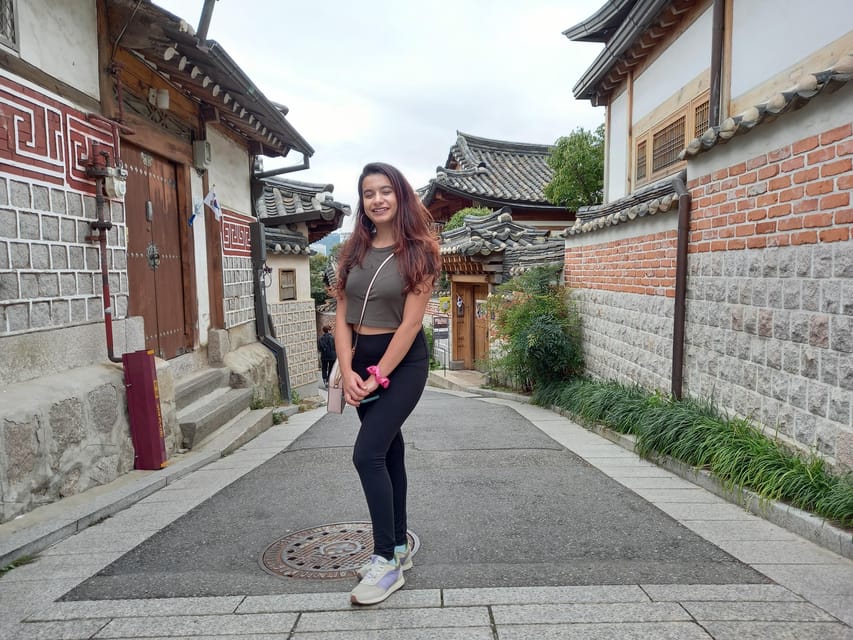
Bukchon Hanok Village is a historic residential area with about 1,000 hanoks, or traditional Korean houses. It is known for its narrow streets, tiled roofs, and hillside views that place traditional homes against Seoul’s modern buildings and N Seoul Tower.
This is the stop that best shows how old and new Seoul occupy the same city. You can look across traditional rooftops toward the metropolitan skyline, then turn down a lane where the scale changes completely.
Bukchon is not a museum frozen in time. It is a village area with homes and streets, so you should follow the guide’s advice about where to walk and how to behave. The tour description does not promise entry into private houses, so expect to view the hanok buildings and streets from public areas.
The village also adds a physical challenge. Slopes and uneven streets can make the walking feel harder than the distance suggests. Add this to the palace grounds, market visit, and transfers, and comfortable shoes become essential.
Gwangjang Market: the most hands-on stop
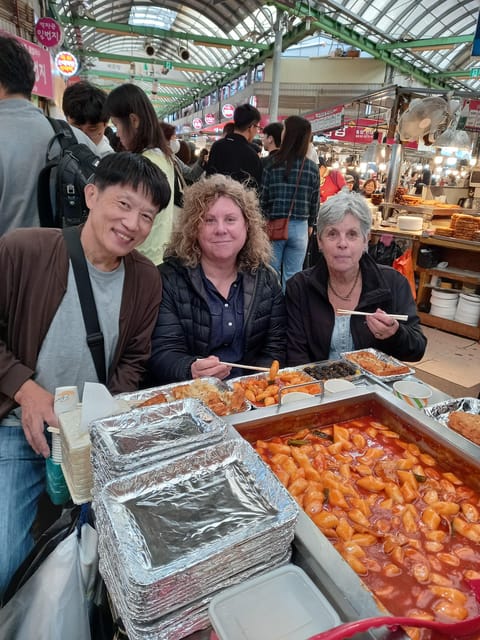
At Gwangjang Market, the tour turns toward Korean street food. You can try local snacks and dishes in a busy market setting, but food and drinks are not included in the tour fee.
This is a welcome change after the palace and museum. Instead of learning about food customs from a display, you get a chance to look at what is being prepared and choose something to taste. Paul can help explain what you are seeing, though the specific dishes and prices are not stated in the tour details.
Bring some Korean won or another practical way to pay for food, and leave room in your budget. Since the guide fee covers six hours of guiding and information only, your meals, drinks, palace entry, and transport all come separately.
The market is scheduled for about an hour. That should give you time to sample food and take in the setting, but not necessarily time for a long meal. If eating is a major reason you want this tour, ask Paul how to use the market hour before the day begins.
Bongeunsa Temple and the modern city
Bongeunsa Buddhist Temple is highlighted as another place where older Korean culture meets modern Seoul. Its traditional buildings provide a striking contrast with the city around them.
The detailed four-stop schedule specifically lists Gyeongbokgung, the National Folk Museum, Bukchon, and Gwangjang Market. Bongeunsa is included in the broader description of the experience, but the supplied timing does not assign it a separate stop. Confirm the final route with Paul before booking if seeing Bongeunsa is important to you.
That point matters because a six-hour day has limits. The listed guided sections total a little over five and a half hours before you account for moving between places. A temple visit may require changes to the order or shorter stays elsewhere.
Walking, transport, and the real price
The listed price is $193 per private group of up to two people. For two people, that is about $96.50 each before admissions, transport, food, and drinks. You are paying for a private English-language guide for six hours, not an all-inclusive package.
That can be good value if you want personal explanations and the ability to ask questions. It is less attractive if you only want transportation and a quick look at the sights, since moving around the city is not included.
Plan for around five miles of brisk walking. One person who took the tour specifically advised bringing a water bottle, and I agree with that practical tip. The route includes palace grounds, museum floors, village streets, market walking, and transfers.
The day is not described as wheelchair accessible, and no accessibility details are provided. If mobility, stairs, slopes, or standing time matter to you, ask the provider before booking rather than assuming the route will be easy.
Who will get the most from Paul’s approach
I would choose this tour if you want to understand the meaning behind Korean architecture and traditional culture. It is a good match for first-time visitors who want the major historic sights connected by one clear theme.
You will likely appreciate it most if you:
- Enjoy history, architecture, and cultural explanation
- Prefer a private guide to a large group
- Want to combine a palace, museum, residential village, and food market
- Are comfortable walking at a brisk pace
- Like having the route adjusted around weather or your questions
I would think twice if you want a relaxed day with lots of unstructured time. The palace section can become quite detailed, and the full route covers a lot of ground. Families with short attention spans may prefer a shorter palace visit, while serious students of Korean culture may wish the schedule allowed even more time.
Paul’s strongest quality is his enthusiasm for Korea’s culture and architecture. He also adapted the plan during continuous rain, which suggests the private format has real practical value rather than being private in name only.
Booking advice and final verdict
Book this tour if you want Seoul explained through its ideas, not just photographed from the outside. Paul Koo’s Confucian focus gives Gyeongbokgung a clear purpose, while the folk museum, Bukchon, and Gwangjang Market keep the day from becoming a palace-only lesson.
Before you commit, budget for admission fees, local transport, food, and drinks. Confirm whether Bongeunsa is part of your final route, agree on the meeting place and time, and tell Paul how much historical detail you prefer.
I would recommend it to couples, friends, and solo visitors who value a private guide and can handle a brisk walking day. I would not choose it for a slow sightseeing schedule. The price is fair for two people who want a personal cultural guide, but the experience depends on your willingness to walk, listen, and let the palace receive the time it deserves.
FAQ
How long is the Seoul cultural tour?
The tour duration is six hours. The listed visits include about two and a half hours at Gyeongbokgung, 61 minutes at the National Folk Museum, one hour in Bukchon Hanok Village, and one hour at Gwangjang Market.
Where does the tour start?
The stated starting point is Gwanghwamun Square. The meeting place and time can be adjusted after booking, and your hotel can be used as the meeting place.
Is the tour private?
Yes. It is a private group experience for up to two people at the listed price.
Who is the guide?
The experience provider is Paul Koo. The tour is conducted in English.
Is palace admission included?
No. Admission to the palace is not included in the tour price.
Is transportation included?
No. Transportation for moving between locations is not included.
Are food and drinks included?
No. Food and beverages at Gwangjang Market are paid for separately.
How much walking should I expect?
The route involves about five miles of brisk walking. Bringing a water bottle is recommended.
Can I cancel for a full refund?
Yes. You can cancel up to 24 hours in advance for a full refund. You can also reserve now and pay later, according to the booking terms.
Just added around Seoul
- Time Travel in Seoul: Gyeongbokgung, Folk Museum & Bukchon★ 5.0 · 10 reviews
- Seoul: Royal Palace Morning Tour including Cheongwadae★ 4.5 · 12 reviews
- Seoul: Vegan Temple Food Class, Jogyesa & Changdeokgung Tour★ 4.6 · 34 reviews
- Seoul: UNESCO Palace and Street Foods Guided Tour★ 5.0 · 6 reviews
- Seoul: UNESCO Sites tour: Palace, Shrine & Bukchon Village★ 4.8 · 26 reviews
- Seoul: Gyeongbokgung, Lotte Tower & Gangnam Trendy Day Tour★ 4.4 · 3 reviews
- Seoul: Hanbok Photo Tour at Gyeongbokgung Palace★ 5.0 · 9 reviews
- Seoul: Gyeongbokgung Palace Tour & Lunch at Authentic Market★ 4.5 · 2 reviews
Seoul Palace Tours, compared.
Gyeongbok Palace, Bukchon Village, and Gwangjang Tour
Read our review →
Best Seoul City Tour (Gyeongbokgung Palace,Insadong,Namsan Tower)
Read our review →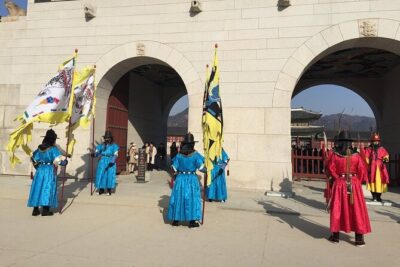
Small-Group Royal Palace and Seoul City Tour (hotel pick-up)
Read our review →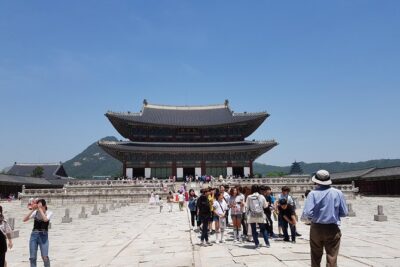
Seoul City Sightseeing Tour Including Gyeongbokgung Palace, N Seoul Tower, and Namsangol Hanok Village
Read our review →Gyeongbok Palace, Bukchon Village, and Gwangjang Tour
Read our review →
Seoul Half-Day City Highlight, Palace Tour with Hanbok
Read our review →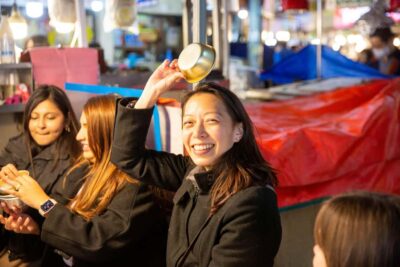
Palace, Temple and Market Guided Foodie Tour at Night
Read our review →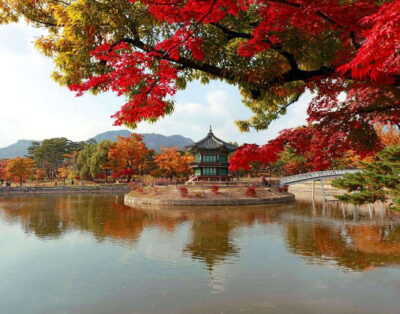
Seoul Highlights: Gyeongbok Palace, Insadong & N Seoul Tower
Read our review →Browse the lists this tour appears in