
REVIEW · MOROCCAN PALACE AND KASBAH TOURS
Marrakech: Bahia Palace, Saadian Tombs & Medina Walking Tour
The best part of this three-hour Marrakech walk is the way it connects grand monuments with ordinary city life. You move from the Koutoubia Mosque and royal Kasbah to the Saadian Tombs, the former Jewish quarter, Bahia Palace, and the narrow Medina lanes where daily business still unfolds around you.
I like two things in particular: the local guides, who can add personal context to the streets, and the relaxed pace, with shade breaks, water stops, bathrooms, and time for photos. Guides named Abdel, Abdul, Momo, Ismael, and Mo have led this experience, and Abdul received special praise for planning well during a very hot June morning.
The main consideration is cost at the monuments. The $16 tour price does not include admission to Bahia Palace or the Saadian Tombs, and you must pay in cash on-site. The Koutoubia Mosque is an exterior stop only, and some planned sights may not always be visited, so you should confirm the exact route with your guide.
Key points to know before booking
- The tour links four distinct sides of Marrakech: royal architecture, Saadian funerary art, the Mellah, and the working souks.
- Guides can make the difference: Abdel, Abdul, Momo, Ismael, and Mo have led tours in the past, with strong praise for clear explanations and friendly service.
- Monument admission costs extra: Bring cash for the Bahia Palace and Saadian Tombs.
- Koutoubia is viewed from outside: Entry is restricted to Muslims during prayer times.
- The heat matters: Comfortable shoes, a sun hat, water, and a willingness to pause in the shade will make the walk much easier.
- Private and shared options are available: A private group gives you more control, while a shared walk should cost less per person.
Starting beside Marrakech’s most famous minaret
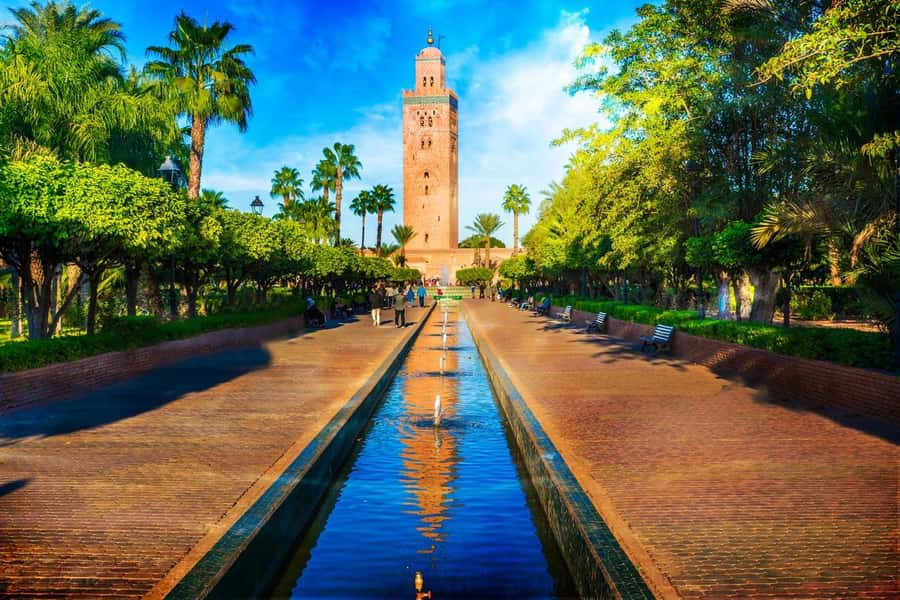
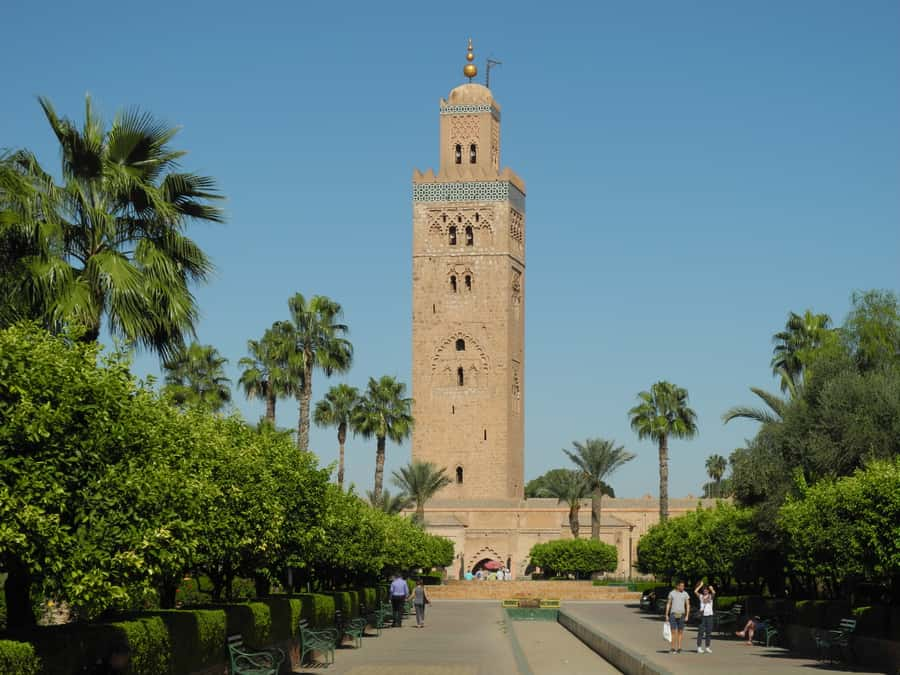
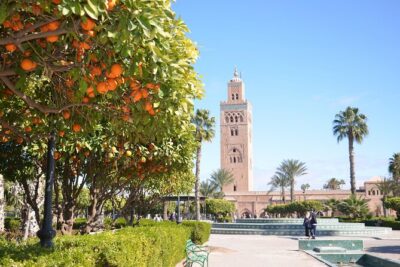
Your guide welcomes you and gives a short introduction before setting off through the old city. The route begins with the Koutoubia Mosque, Marrakech’s largest and most recognizable mosque, whose tall minaret helps you get your bearings in the Medina.
You view Koutoubia from outside. This is not a mosque interior tour, since entry is reserved for Muslims during prayer times. Still, the exterior stop is worthwhile. The mosque’s Almohad design and soaring minaret provide an immediate lesson in the city’s visual identity, and your guide can explain what you are seeing before the walk moves into denser streets.
Do not expect a long stop here. This is an orientation point rather than a full monument visit. One previous participant wished the tour had included a wider walk around the mosque enclosure, so if Koutoubia is a major reason for booking, ask what the current route includes.
From Koutoubia, you head toward the Kasbah, the old fortified royal quarter. The change in atmosphere is part of the appeal. Instead of only looking at restored buildings, you pass through narrow streets where the historic district remains part of everyday life.
More Moroccan palace and kasbah tours in Marrakesh:
- Marrakech: Bahia Palace, Saadian Tombs, Souk and Medina Tour
★ 4.7 · 4,974 reviews - Marrakech: Bahia Palace, Saadian Tombs, & Koutoubia Mosque
★ 4.5 · 2,529 reviews - Marrakech: Bahia Palace, Madrasa Ben Youssef and Medina Tour
★ 4.7 · 1,347 reviews
Bab Agnaou and the royal Kasbah
Near the Kasbah, the tour pauses at Bab Agnaou, a grand 12th-century gate with detailed stone carving and royal symbols. It is one of Marrakech’s most striking surviving entrances, and it gives you a sense of how carefully the city’s rulers presented power to anyone approaching the royal district.
The gate is mainly an exterior sight, so this part of the tour depends on your guide’s explanation. You will get more from it if you pause to study the decoration instead of treating it as a quick photo stop. Look at the carved forms around the arch and the way the gate frames the passage into the Kasbah.
The walking here is not difficult because of distance alone. The challenge is the surface underfoot, the narrow passages, the heat, and the steady movement of people around you. This tour is not suitable for people with mobility impairments, and anyone who finds uneven walking tiring should think carefully about joining.
The Saadian Tombs and their fine detail
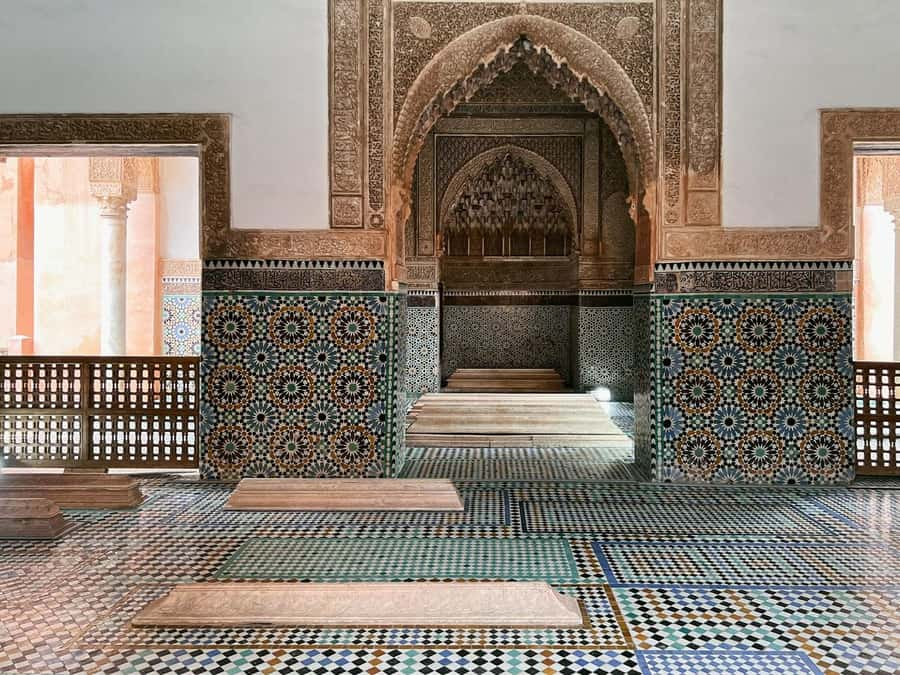
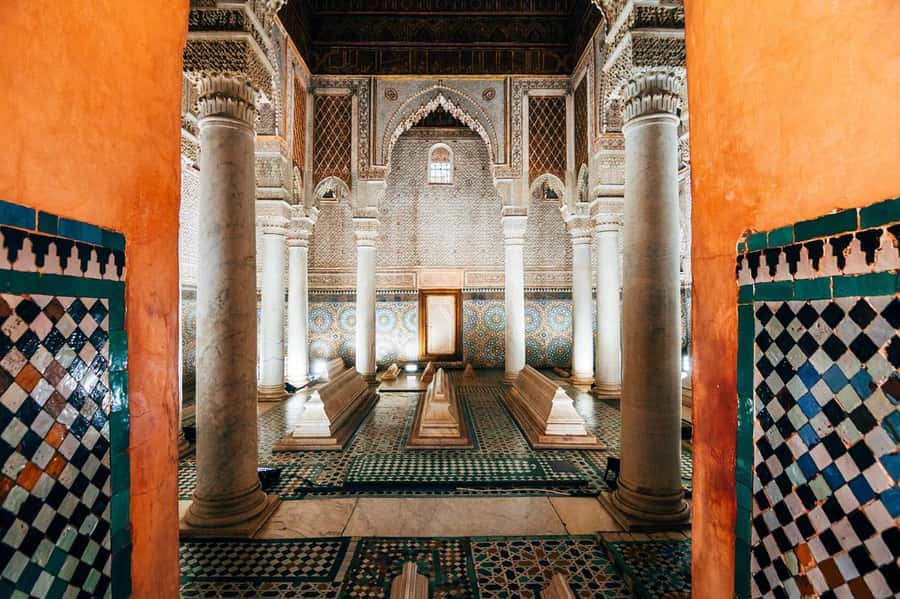
The Saadian Tombs are one of the strongest stops on the route. This burial complex belonged to the Saadian dynasty and remained concealed for centuries before being rediscovered in 1917. Its small chambers and courtyards reveal a level of decoration that can surprise you after the more public scale of Koutoubia and Bab Agnaou.
Inside, you see zellij tilework, marble columns, carved ceilings, and carefully finished surfaces. The beauty is close-up rather than monumental. This is a place where you should look down, look up, and take your time with small details.
The guide accompanies you inside, then allows free time for photographs and personal exploration. That arrangement works well. You receive context first, but you are not forced to remain beside the guide every second.
The site can be crowded, especially at busy times. Skip-the-line access is offered for selected monuments, but it does not mean every internal queue disappears. You may still need to wait once inside or move through a narrow viewing area with other people.
Admission is not included in the tour price. Bring cash, and keep a little extra time in mind for the entry process. At $16, the walk is inexpensive, but the final cost is higher once you add the required monument tickets.
The Mellah, Marrakech’s former Jewish quarter
The walk continues into the Mellah, the former Jewish quarter of Marrakech. This is an important change of subject. You are no longer looking only at palaces and dynasties. The street plan and architecture point to the different communities that helped shape the city.
The Mellah offers useful context because it places Marrakech’s religious and cultural life within a wider story. Your guide can help explain how the quarter fitted into the old city, while the streets themselves show how neighborhoods developed around trade, worship, family life, and royal administration.
Do not expect a separate museum visit or a long formal lecture here. The value is in walking through the area and noticing how it differs from the royal quarters and commercial souks. This is one reason a local guide helps. Without some explanation, the Mellah can look like another set of old lanes.
More walking tours past the palaces in Marrakesh:
- Venice: Doge’s Palace and St Mark’s Basilica Walking Tour
★ 4.4 · 6,291 reviews - Prague: 3-Hour Walking Tour of Old Town & Prague Castle
★ 4.7 · 5,696 reviews - Split: Old Town and Diocletian Palace Walking Tour
★ 4.9 · 4,727 reviews - Budapest: Buda Castle Walk with Saint Stephen’s Hall
★ 4.5 · 3,012 reviews
Bahia Palace, built for display
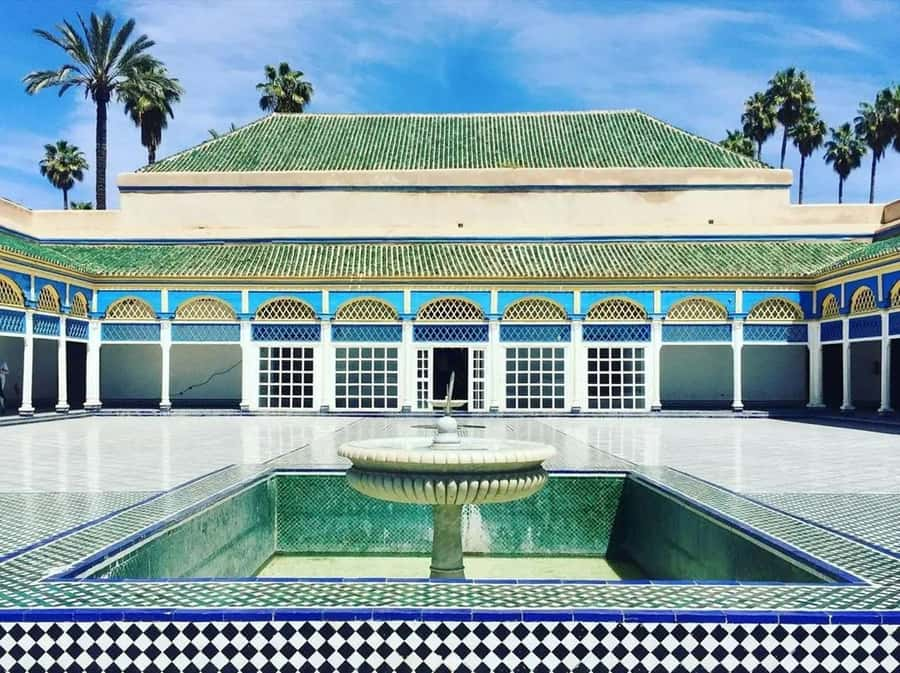
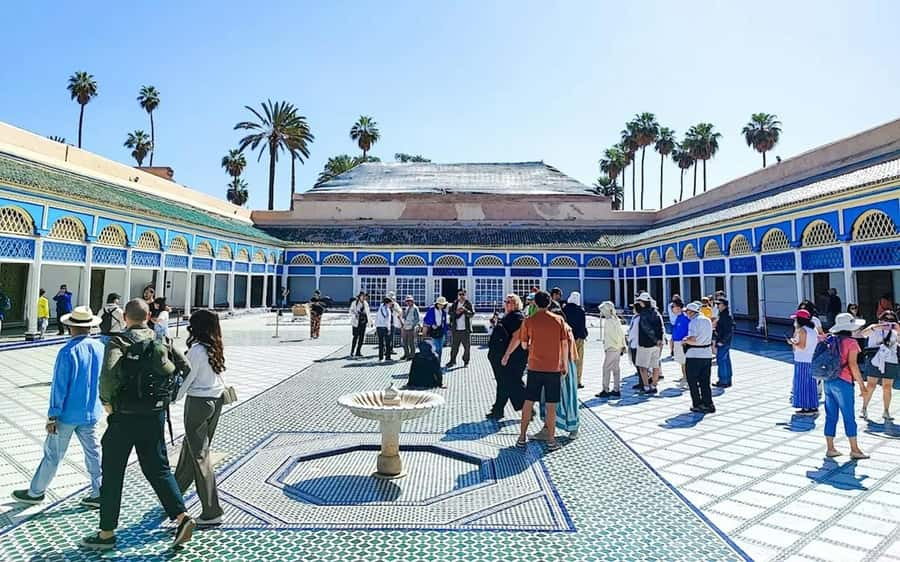
Bahia Palace is the tour’s major decorative showpiece. Built in the 19th century, it was designed to display wealth, authority, and the finest artistic work available at the time.
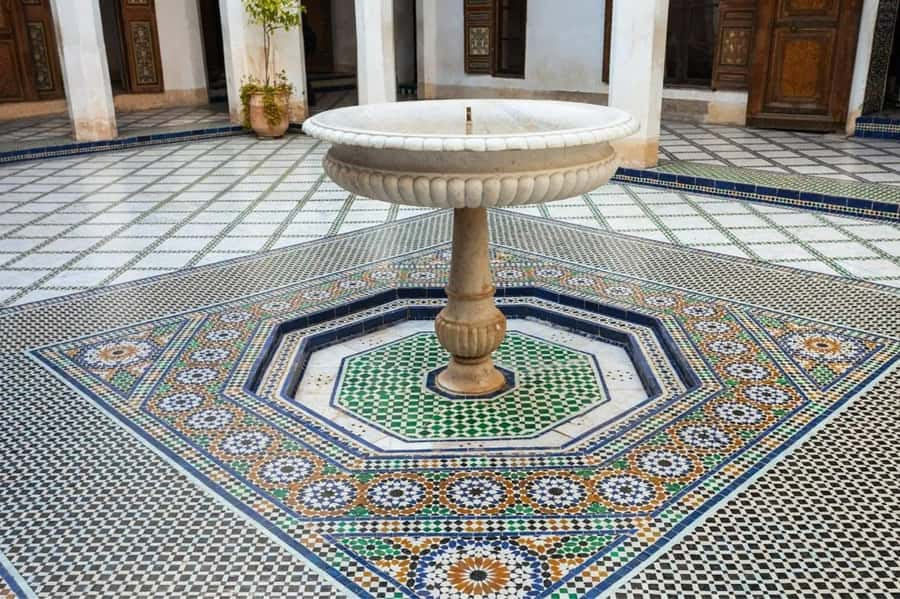
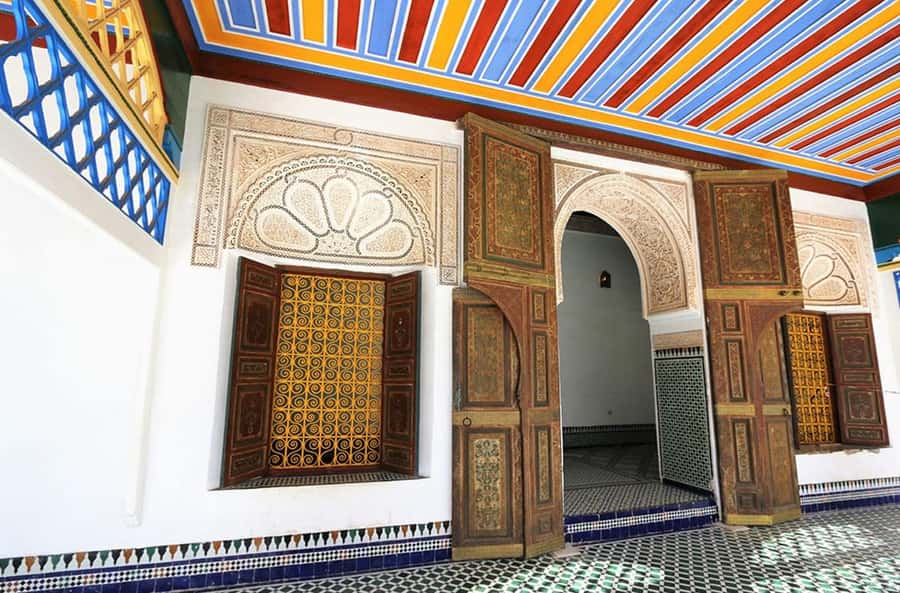
You move through courtyards with colorful tile, carved cedarwood ceilings, and intricate surfaces. The layout also gives you a chance to see how light, shade, and open space shape a traditional palace. After the tight streets of the Medina, the courtyards provide a welcome pause.
I like this stop because it rewards slow looking. A quick visit can leave you with a few attractive photographs, but your guide’s explanation helps you understand why the materials matter. Zellij tile, carved wood, marble, and painted details are not random decoration. Together, they show the resources and craftsmanship used to create a residence fit for powerful patrons.
Some parts of the palace may be under renovation. That means the exact experience can change, and you should not assume every room will be open. Crowds can also build inside the palace, even when you have skipped the main ticket line.
As at the Saadian Tombs, admission is separate from the tour fee and paid in cash. This is the point where the low advertised price needs a practical reading. The tour itself offers a guide and a structured route for $16, but you should budget for both monument entries.
The souks, where the old city goes to work
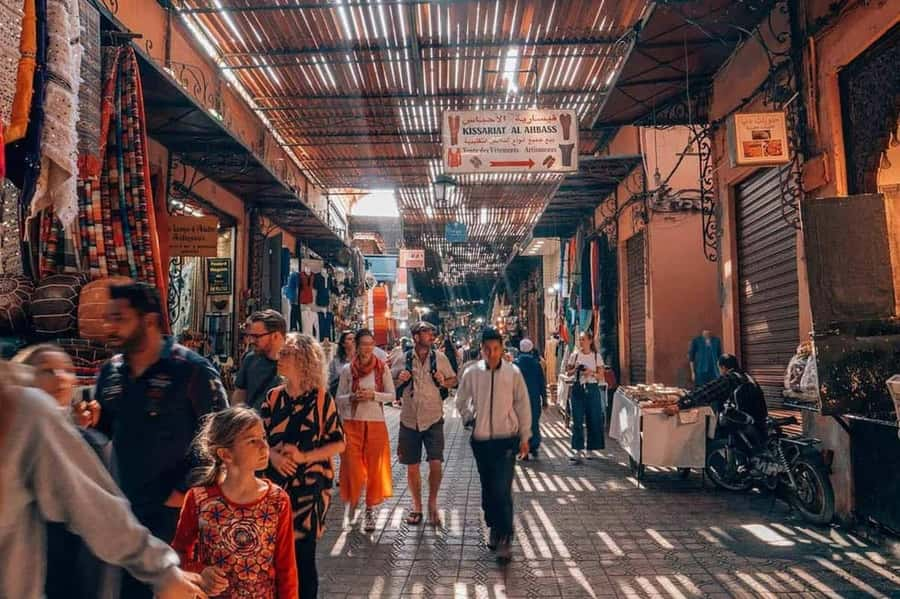
After Bahia Palace, the route enters the souks. Here the tour shifts from royal decoration to commerce and craft. You pass stalls with spices, textiles, lanterns, leather goods, pottery, metalwork, and woodcraft.
The souks are not arranged like a neat open-air museum. They are working markets, and the paths can feel confusing at first. A guide helps you understand the different trades and keeps the walk moving through the maze of lanes.
You may visit artisan workshops where traditional methods are still used. The key word is may, since the exact stops can depend on the day, the route, and the group. Expect opportunities to see local production and browsing, but do not treat the walk as a guaranteed shopping itinerary.
If you want to buy something, bring cash and take your time. You are not required to purchase anything, and a guided walk should give you a better sense of what you are seeing before you decide. The tour includes water, but food and other drinks are not included.
The market section is also where the group format matters most. A small shared group can move fairly well, but a private group gives you more room to pause at a workshop, ask questions, or move along when shopping is not your priority.
The Medina and Jemaa el-Fna
The Medina is a UNESCO World Heritage Site, but its value is not only its official status. The old city works best when you pay attention to small details: a quiet courtyard, a shaded passage, a doorway, a shopfront, or a family business operating in a building with centuries of use behind it.
Your guide leads you through the lanes and points out corners you could easily pass without noticing. The route concludes around the lively Jemaa el-Fna Square, one of Marrakech’s main public spaces and a useful place to continue exploring after the tour.
The square can be crowded and energetic. It is a good finishing point because you can continue on your own, but it is not a quiet ending. If you are tired after three hours of walking, you may prefer to treat the square as a final orientation stop and return to your accommodation.
The tour does not list a separate extended visit to every major Medina sight. One past participant noted that a Quranic school expected on the program was not visited. Routes can vary, so ask your guide early in the walk which stops are confirmed that day.
What the guides add to the walk
The strongest part of this experience is likely to be the guide. Abdul, who was born and raised in Marrakech, has been praised for explaining the city’s religion and history while keeping a comfortable pace. During a June tour with temperatures above 100 degrees, he planned shade stops, breaks, bathroom opportunities, and chances to buy cold water.
That practical care matters more than a long speech. Marrakech can be hot, crowded, and tiring, and a guide who watches the group’s energy can make the difference between an enjoyable outing and an uncomfortable one.
Abdel has also been described as friendly and professional, while Momo, Ismael, and Mo have each led tours praised for their clear explanations and helpful local advice. You cannot choose a particular guide unless the booking option confirms it, but the named guides give you an idea of the personal approach this experience aims for.
The tour is offered in English or French. If you need detailed historical explanation, choose the language in which you can ask questions comfortably.
How the $16 price really works
At $16 per person, this is a low-cost way to get a planned introduction to central Marrakech. You receive a local guide, water, a three-hour walking route, and access to a private or small shared format depending on the option selected.
The value is strongest if you are visiting Marrakech for the first time and want help connecting the main sights. You save time figuring out how the Kasbah, Mellah, monuments, souks, and square relate to one another.
The price is less simple than it first appears because monument tickets are extra. Bahia Palace and the Saadian Tombs must be paid for in cash on-site. Food and drinks are also excluded, so carry cash and bring your own water even though water is included in the activity.
Skip-the-line access can save time at selected monuments, but it is not a promise of instant entry. Internal lines may still form, and busy periods can affect the pace. That is normal for popular historic sites, but it is worth knowing before you book.
Free cancellation up to 24 hours before the start gives you useful flexibility, and the reserve-now-pay-later option means you do not need to pay at once. The meeting point depends on the option you select, so check that detail carefully before setting off.
How to prepare for three hours on foot
Wear comfortable shoes. The route uses narrow Medina streets and historic areas where the walking surface may not be perfectly even.
Bring a sun hat, water, and cash. Water is included, but extra drinking water may be useful on a hot day, and the monument tickets require cash. A small amount of cash also helps if you want to buy food, drinks, or crafts after the tour.
Morning timing can help with heat, though availability depends on the selected start time. The experience has been completed in very hot conditions with careful breaks, but you should not assume the weather will be easy. Pace yourself, use shade, and tell the guide if you need a pause.
A private group makes sense if you want more control over stops and questions. A shared group is the better value if you are comfortable keeping to a set pace and meeting other people.
Who should book this Marrakech walk?
I would recommend it to first-time visitors who want a clear introduction to the old city without committing to a full-day excursion. It suits anyone interested in architecture, decorative arts, local craft, and the relationship between royal districts and working neighborhoods.
It is also a good fit if you prefer a guide who can explain what you are seeing rather than simply lead you from one entrance to another. The named guides have shown a useful mix of local background, historical explanation, and practical care.
I would be more cautious if you have limited mobility, dislike crowded markets, or want guaranteed entry to every sight named in a broad program. The tour is active, monument lines can still occur, and the exact route may change. You should also be comfortable paying extra for admission.
Should you book this tour?
Book it if you want an affordable, well-structured first look at Marrakech’s old city, and you are happy to walk, carry cash, and accept that the Koutoubia Mosque is exterior-only. The combination of Saadian decoration, Bahia Palace, the Mellah, the souks, and Jemaa el-Fna gives you a useful spread of the city in three hours.
Skip it if you need a fully accessible outing, a guaranteed visit to every listed monument, or a tour price that includes all entrance fees. For most independent visitors, though, the low base price and strong guide focus make this a sensible way to get oriented before exploring Marrakech on your own.
FAQ
How long does the Marrakech walking tour last?
The tour lasts three hours.
What languages are available?
The live tour guide is available in English or French.
Are the Bahia Palace and Saadian Tombs included in the price?
No. Entry tickets for Bahia Palace and the Saadian Tombs are not included and must be paid in cash on-site.
Can I enter the Koutoubia Mosque?
No. The tour includes an exterior visit only. Entry is reserved for Muslims during prayer times.
Does the tour include water?
Yes. Water is included, while food and other drinks are not included.
Is a private tour option available?
Yes. A private group option is available, along with a shared walking experience.
What should I bring?
Bring comfortable shoes, a sun hat, water, and cash.
Can I cancel the booking?
Yes. You can cancel up to 24 hours in advance for a full refund. The reserve-now-pay-later option also lets you book without paying immediately.
Just added around Marrakesh
- Marrakech Private Medina Tour: Bahia Palace & Ben Youssef★ 4.8 · 48 reviews
- Marrakesh: Bahia Palace, Ben Youssef Medersa & Secret Garden★ 4.8 · 55 reviews
- Marrakech: Bahia Palace, Madrassa & Souks Guided Tour★ 4.8 · 47 reviews
- Marrakech Palaces and Monuments Half-Day Tour★ 4.1 · 13 reviews
- Marrakech Palaces and Monuments Half-Day Tour★ 5.0 · 11 reviews
- Marrakech: Medina, Souks, Artisans Guided Tour with Mint Tea★ 4.8 · 19 reviews
- Marrakech City Tour: Souks, Palaces & Hidden Gems★ 4.7 · 35 reviews
- Marrakech: Bahia Palace, Saadian Tombs & Top Highlights Tour★ 4.6 · 104 reviews
Moroccan Palace and Kasbah Tours, compared.
Bahia Palace, Saadian Tombs, Souk and Medina Tour
Read our review →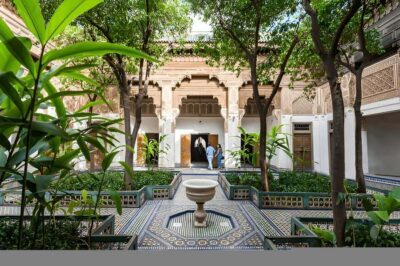
Bahia Palace, Saadian Tombs, & Koutoubia Mosque
Read our review →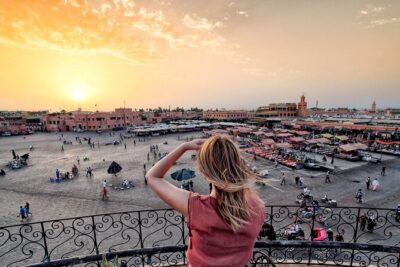
Bahia Palace, Madrasa Ben Youssef and Medina Tour
Read our review →
Bahia Palace Guided Tour with Skip-the-Line Entry
Read our review →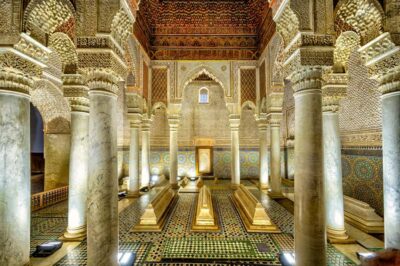
Saadian Tombs, Bahia Palace, Medina and Souk Tour
Read our review →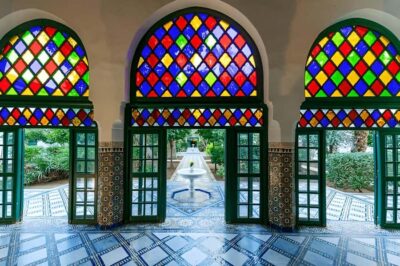
Bahia Palace, Ben Youssef Medersa, & Souks Tour
Read our review →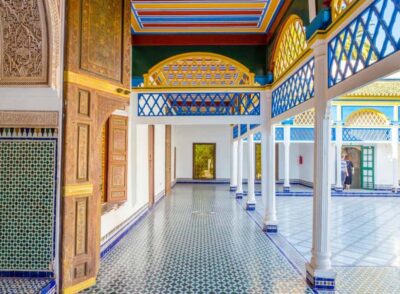
Bahia Palace, Madrasa Ben Youssef & Secret Garden
Read our review →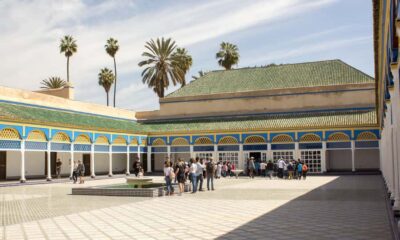
Bahia Palace, Saadian Tombs & Medina Guided Tour
Read our review →Browse the lists this tour appears in