
REVIEW · KOREAN PALACE TOURS
Seoul: Bukchon Village, Gyeongbokgung, Gwangjang Market
Seoul’s old heart comes together neatly on this 210-minute tour: tiled hanok rooftops, royal palace courtyards, a ceremonial guard change, herbal tea, and market food. I like the way it gives you both grand sights and ordinary city life in one morning, especially the shift from Gyeongbokgung’s formal gates to the noisy food stalls of Gwangjang Market. I also like the practical route, which begins at Myeongdong and returns there.
The tradeoff is pace. Bukchon and Gwangjang Market each deserve more than an hour, and this tour only gives you a well-chosen introduction. The ginseng center adds useful cultural context, but shoppers who want only sightseeing may find the stop less appealing.
Key points at a glance
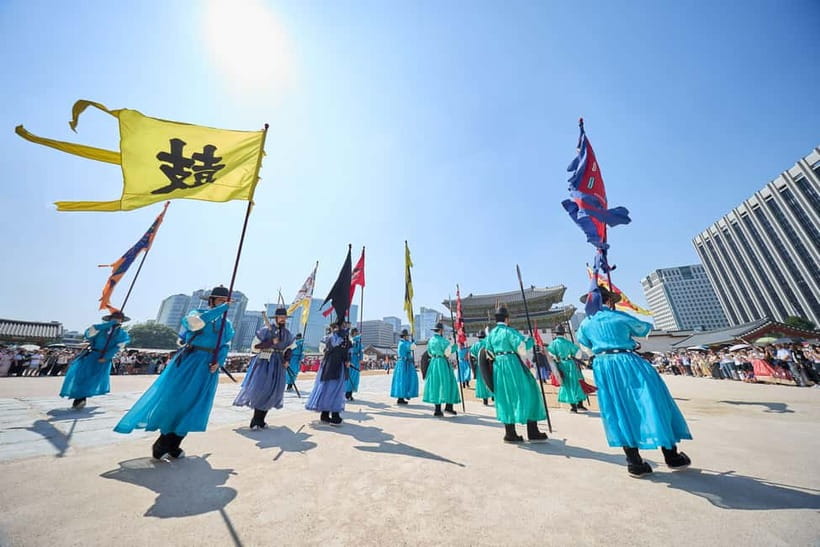
- Royal ceremony first: The guard-changing performance at Gyeongbokgung includes colorful uniforms, traditional instruments, and carefully timed movements.
- Bukchon is a walking stop: Narrow lanes and steep sections make comfortable shoes a must.
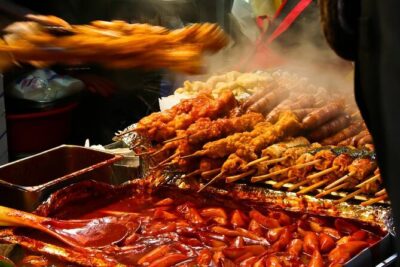
- Gwangjang Market is your food finale: Bindaetteok, mayak gimbap, and tteokbokki are available, but food costs are not included.
- Tuesday means a different palace: Gyeongbokgung and the ceremony close, so the route visits Changdeokgung Palace and Insadong instead.
- The guide makes the difference: Guides including Alice, Lina, Kelly, Eva, Claire, Alex, and Judy have been praised for history explanations, patience, and helping with photos.
- Good value for a first Seoul morning: At $30 per person, transport between stops and a live English-speaking guide make this a useful orientation tour.
Why this route works for a first Seoul morning
I see this as a get your bearings fast outing rather than a slow, specialized cultural tour. In three and a half hours, you see a traditional neighborhood, Korea’s best-known royal palace, a former presidential site, a ginseng center, and one of Seoul’s major food markets.
That range is the main value. You are not looking at old buildings in isolation. Your guide can explain the Joseon royal period at the palace, point out how traditional homes fit into modern Seoul at Bukchon, and then send you into a market where locals shop and eat.
The tour begins at Myeongdong Subway Station Exit 8, with additional pickup points listed at Itaewon Station Exit 1 at 8:20, Myeongdong Station Exit 9 at 8:50, and City Hall Station Exit 6 at 9:00. The meeting information deserves close attention because the starting details mention both Exit 8 and Exit 9 at Myeongdong. Check your booking confirmation carefully, then arrive early.
If you are coming directly from Incheon Airport, allow plenty of time. One participant needed at least two and a half hours for the airport train and subway connection before reaching the meeting point. For groups of five or more, hotel pickup within Seoul can be requested.
More Korean palace tours in Seoul:
- Seoul: Gyeongbok Palace, Bukchon Village, and Gwangjang Tour
★ 4.9 · 2,321 reviews - Best Seoul City Tour (Gyeongbokgung Palace,Insadong,Namsan Tower)
★ 5.0 · 1,647 reviews - Seoul City Sightseeing Tour Including Gyeongbokgung Palace, N Seoul Tower, and Namsangol Hanok Village
★ 5.0 · 1,423 reviews
Bukchon Hanok Village, Seoul’s best old-city introduction
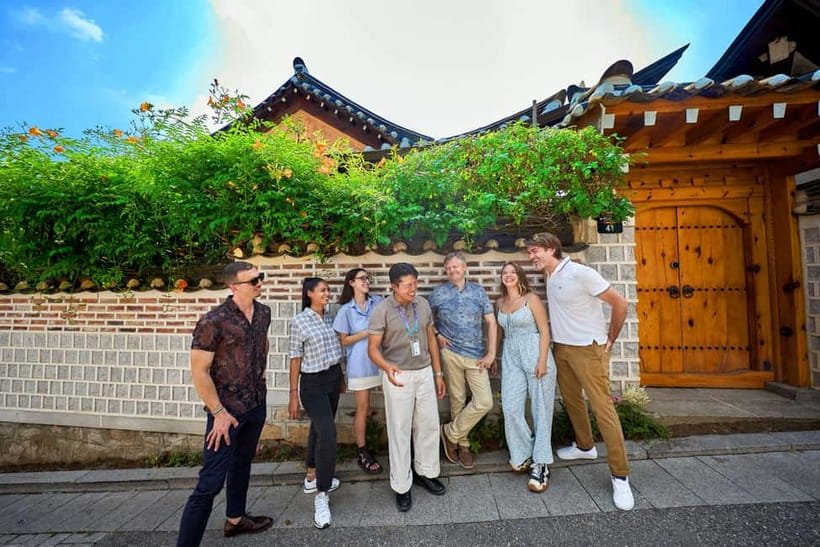
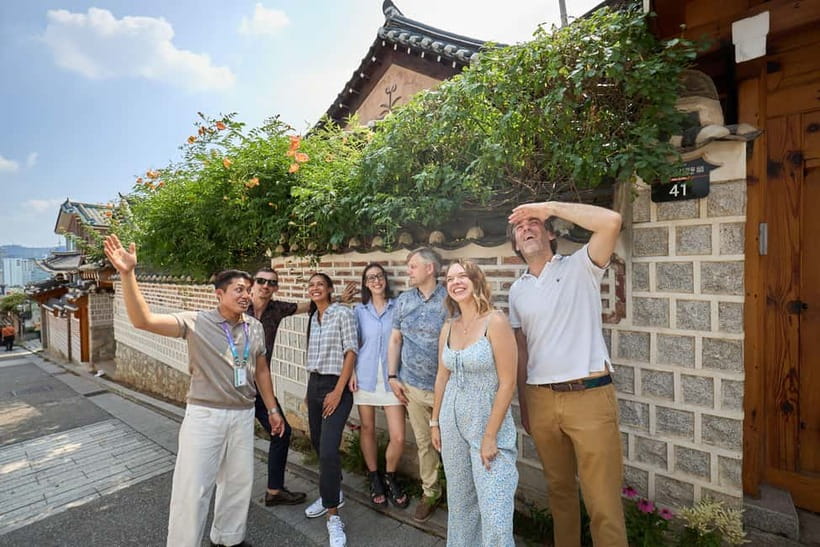
Bukchon Hanok Village is the most atmospheric opening stop. The neighborhood sits between two major palaces and is made up of narrow lanes lined with hanok, traditional Korean houses with tiled roofs and carefully shaped wooden details.
I like Bukchon because it gives you a sense of how old and new Seoul overlap. From certain streets, you can frame traditional rooftops against the modern skyline. That contrast makes the stop especially good for photographs, but the appeal is not only visual. The lanes show how Korean domestic architecture feels at street level, away from the grand scale of royal gates.
Expect about an hour here, including walking, sightseeing, and photo stops. The route is not simply a quick bus view. You will walk through the neighborhood, so comfortable shoes matter. Some lanes can feel steep or tight, and the area is also a lived-in residential district. Stay with your guide and keep your voice down around homes.
The limitation is time. If you want to explore small shops, linger over every viewpoint, or stop for tea, an hour will feel short. One useful suggestion from the tour feedback was to give Bukchon more time and possibly add tea. I agree. Treat this visit as an introduction, then return on your own later if the neighborhood captures your interest.
Gyeongbokgung and the royal guard ceremony
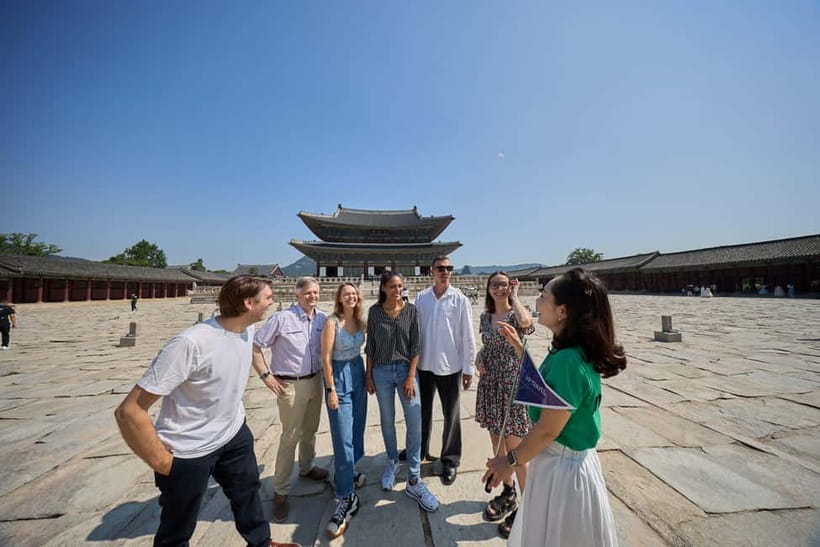
The route then moves to Gyeongbokgung Palace, the largest and most famous of Seoul’s five grand palaces. Built in 1395, it served as the principal royal palace of the Joseon dynasty.
The Royal Guard Changing Ceremony is the liveliest part of the palace visit. Guards appear in colorful traditional clothing, accompanied by ceremonial instruments and formal movements. It is a staged reconstruction rather than a working military handover, but that does not make it dull. The uniforms, music, and orderly choreography give you a clear visual sense of royal ceremony.
Try to stand where you have a clean view of the performers. One guide, Judy, was especially attentive about getting her group to the front and taking photographs for them. Guides such as Alice and Kelly have also been praised for explaining the Joseon period in a clear, patient way.
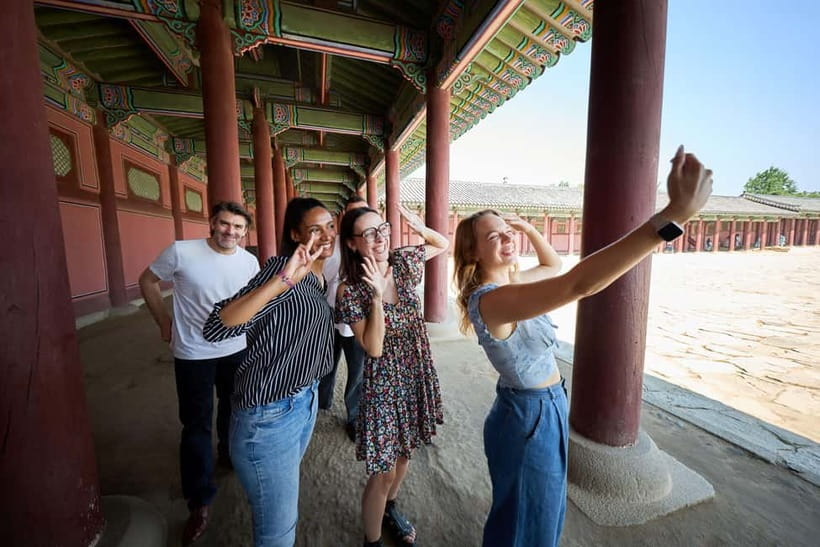
After the ceremony, you spend time inside the palace grounds. Expect grand gates, open courtyards, traditional buildings, and quieter garden areas with lotus ponds. Your guide provides the setting and historical explanation, while you get time to look around and take pictures.
The palace portion lasts about an hour, so do not expect to see every corner. Gyeongbokgung is large, and an independent visit could easily fill half a day. Still, this short guided visit works well if you want the main architectural views without handling the palace layout alone.
The Tuesday switch to Changdeokgung and Insadong
Gyeongbokgung Palace and the guard ceremony are closed on Tuesdays. The tour does not simply remove the palace stop. Instead, it visits Changdeokgung Palace and Insadong.
Changdeokgung is a UNESCO World Heritage site and is often considered the most graceful of Seoul’s palaces because its buildings fit so naturally with the surrounding grounds. Its quieter mood differs from the broad ceremonial scale of Gyeongbokgung. If you prefer calm courtyards and gardens to a formal guard performance, Tuesday’s alternative may suit you very well.
The information supplied for this tour does not promise a full Secret Garden visit, so check the exact route and admission details when booking. The palace itself is the key Tuesday replacement.
Insadong adds a useful cultural district to the day. You can browse traditional craft stores, antique shops, art galleries, and tea houses. It is also a better place than the standard palace route for souvenir shopping. Since the tour ends at Myeongdong, you can return later if you want to shop at a slower pace.
A Tuesday booking is not an inferior version of the experience. It is simply a different one. Choose another day if the guard ceremony is your priority. Choose Tuesday if Changdeokgung’s quieter setting and Insadong’s shops sound more appealing.
More market and palace walks in Seoul:
- Seoul: Palace, Temple and Market Guided Foodie Tour at Night
★ 4.9 · 750 reviews - Seoul Night Palace & Market Food Tour with Vehicle
★ 5.0 · 275 reviews - Korean Palace and Market Tour in Seoul Including Insadong and Gyeongbokgung Palace
★ 4.0 · 174 reviews - Seoul: Nighttime Tour of Palace, Market, Naksan Park & More
★ 4.9 · 143 reviews
Passing the Blue House
The coach passes Cheongwadae, known in English as the Blue House, which served as South Korea’s former presidential residence and executive office.
This is a brief five-minute drive-by, not a full visit. You will see it from the vehicle and hear some explanation from the guide, but you should not expect time to stop, enter, or explore the grounds.
I think this works as a small connecting detail rather than a main reason to book. It adds modern political history to a route otherwise focused on older Seoul, but do not count it as one of the major sightseeing stops.
Ginseng tea and the shopping question
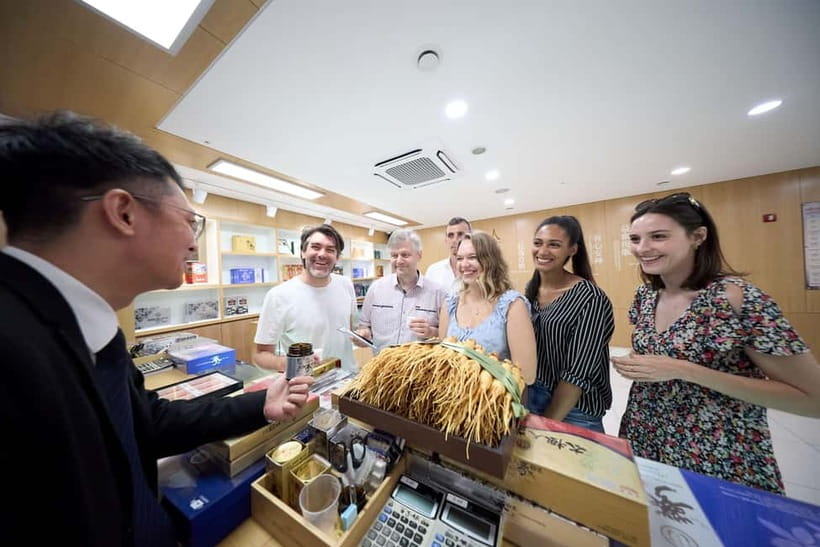
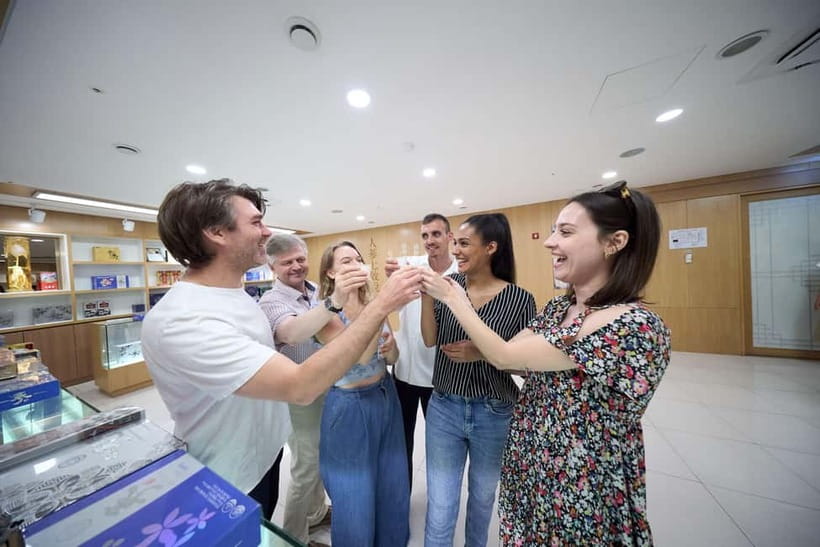
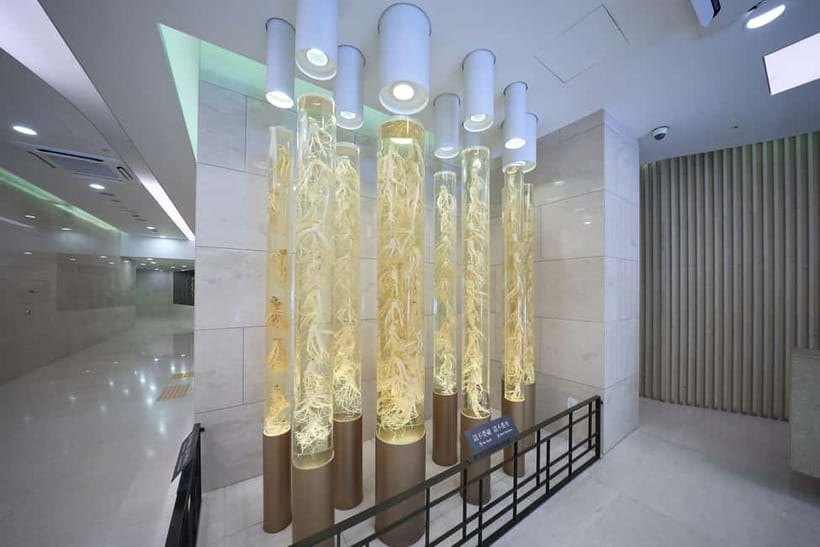
The stop at the Cheongha Korean Ginseng Museum lasts about 30 minutes. You can drink a cup of traditional Korean herbal tea and hear about ginseng’s place in Korean wellness traditions, its history, and its claimed health uses.
This is the most commercial-feeling part of the route, so it helps to set expectations. You will have free time to browse ginseng products, and you can buy something if you wish. There is no obligation to purchase.
I would treat the stop as a cultural explanation with a shopping option, not as a necessary retail visit. One participant who had been unsure about the stop found the history talk worthwhile and did not feel pressured to buy. That matches the sensible approach: listen, sample the tea, ask questions, and purchase only if you genuinely want a product.
The timing also provides a short break between walking-heavy sections. That matters in Seoul’s summer heat or during a full day of sightseeing. In hot weather, guide Alex was praised for finding shade while explaining the palace, a small detail that can make a half-day tour much more pleasant.
Eating your way through Gwangjang Market
Gwangjang Market is the final major stop, and it is where the tour shifts from historical Seoul to everyday food culture. This is one of the city’s oldest and best-known traditional markets, with food stalls, shopping aisles, and a lively indoor atmosphere.
You will have about an hour to walk, look, and taste. The classic choices listed for the tour are:
- Bindaetteok: Savory mung bean pancakes, often crisp outside and soft inside.
- Mayak gimbap: Small seaweed rice rolls, easy to eat while walking.
- Tteokbokki: Chewy rice cakes in a spicy sauce.
Food is not included in the $30 price, so bring cash. You can decide how much or how little to sample. If you want a full meal, budget extra time and money, but the guided visit lets you begin with familiar local favorites rather than guessing at every stall.
The market can be crowded and noisy. That is part of its appeal, but it is not a restful place for a long sit-down meal. Keep your belongings close, stay aware of the meeting time, and do not wander too far from the group.
The market stop was singled out as a favorite part of the experience by those who enjoyed trying local food and seeing ordinary city life. I understand why. After the polished palace grounds, Gwangjang gives the morning a more direct, practical connection to Seoul’s food traditions.
The guides and the value of personal attention
The experience is conducted in English, and the guide can shape the day more than any single sight. Alice has been praised for explaining the Joseon dynasty and for patiently finding people at the subway exit. Lina was noted for bringing palace history to life and taking photographs at scenic stops. Kelly was appreciated for staying patient and coordinating the group well.
Other praised guides include Eva, Claire, Alex, and Judy. Eva was described as friendly and helpful with everyday Korean life and Seoul history. Claire was credited with going beyond the basic tour explanation, while Judy helped a small group reach the best ceremony viewpoint and took pictures.
The group size is not specified, and the experience may sometimes feel more personal if numbers are low. One booking became a private tour, but you should not assume that will happen. For groups of five or more, request Seoul hotel pickup when booking.
Is $30 a fair price?
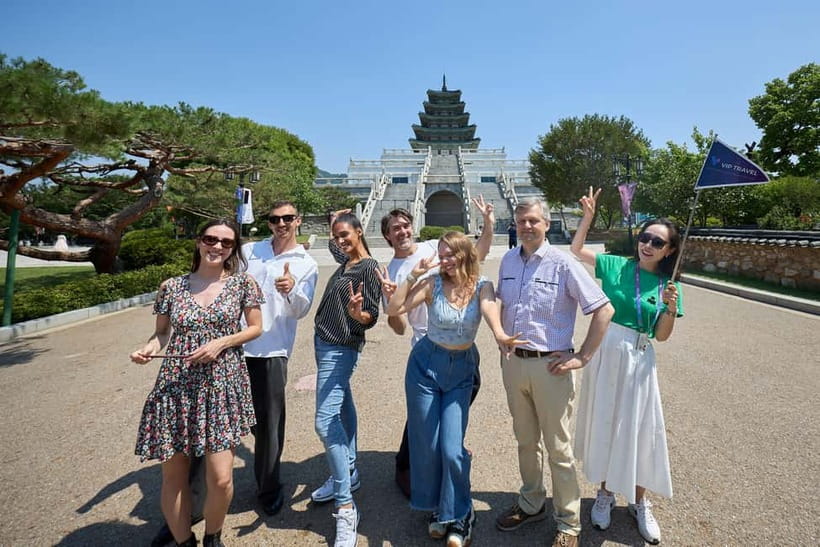
At $30 per person, I consider this good value if you want transport, a live English-speaking guide, and a tidy route through several major sights. The price is especially sensible for a first visit, a short stopover, or a morning when you do not want to work out palace transport and timing yourself.
The cost does not cover food at Gwangjang Market or personal spending. You may also want to return independently to Bukchon, Gyeongbokgung, Changdeokgung, or Insadong, since the guided schedule only gives you a taste of each place.
The strongest value comes from the guide’s explanations and the efficient movement between districts. If you are already comfortable navigating Seoul and want long, unhurried visits, booking each sight on your own may suit you better.
Who should book this half-day tour?
I would recommend it to first-time visitors who want a clear introduction to Seoul’s traditional side without spending a full day on one palace. It also fits a short layover well, as long as you allow enough time to reach the meeting point from the airport.
Families and older visitors may appreciate the included transport between stops, though Bukchon still involves walking. Food-focused visitors will enjoy the final market stop, but should remember that the food cost is extra.
Independent history fans may find the pace too quick, especially at Bukchon and Gyeongbokgung. The tour gives you a useful framework, then leaves you with a list of places worth revisiting.
You can cancel up to 24 hours ahead for a full refund, and the reserve-now, pay-later option keeps the booking flexible. Comfortable shoes, a camera, and cash are the practical items to bring.
Should you book it?
Book this tour if you want a well-priced Seoul orientation with history, architecture, food, and a live guide in one morning. The guard ceremony and Gwangjang Market give the day plenty of energy, while Bukchon and the palace grounds provide the quieter visual moments.
Choose a non-Tuesday date if Gyeongbokgung and the royal guard ceremony are your priorities. Choose Tuesday if Changdeokgung and Insadong appeal more. Either way, expect a quick overview rather than deep independent exploration, and plan to return to your favorite stop later.
FAQ
Where does the tour begin?
The main meeting point is Myeongdong Subway Station. The information provided lists Exit 8 as the starting location and also gives a Myeongdong Station Exit 9 pickup at 8:50. Check your confirmation for the exact exit.
Where does the tour end?
The tour ends at Myeongdong Station for all participants.
How long does the tour last?
The tour lasts 210 minutes, or three and a half hours.
What happens on Tuesdays?
Gyeongbokgung Palace and the Royal Guard Changing Ceremony are closed on Tuesdays. The tour visits Changdeokgung Palace and Insadong instead.
Is food included at Gwangjang Market?
Meals are not included. You can buy street food at your own expense, including bindaetteok, mayak gimbap, and tteokbokki.
Is the ginseng center visit compulsory shopping?
No. You can enjoy the herbal tea and presentation, browse the products, or buy something if you choose. There is no obligation to purchase.
What language is the tour conducted in?
The tour has a live English-speaking guide.
Just added around Seoul
- Time Travel in Seoul: Gyeongbokgung, Folk Museum & Bukchon★ 5.0 · 10 reviews
- Seoul: Royal Palace Morning Tour including Cheongwadae★ 4.5 · 12 reviews
- Seoul: Vegan Temple Food Class, Jogyesa & Changdeokgung Tour★ 4.6 · 34 reviews
- Seoul: UNESCO Sites tour: Palace, Shrine & Bukchon Village★ 4.8 · 26 reviews
- Seoul: UNESCO Palace and Street Foods Guided Tour★ 5.0 · 6 reviews
- Seoul: Gyeongbokgung, Lotte Tower & Gangnam Trendy Day Tour★ 4.4 · 3 reviews
- Seoul: Hanbok Photo Tour at Gyeongbokgung Palace★ 5.0 · 9 reviews
- Seoul: Gyeongbokgung Palace Tour & Lunch at Authentic Market★ 4.5 · 2 reviews
Korean Palace Tours, compared.
Gyeongbok Palace, Bukchon Village, and Gwangjang Tour
Read our review →
Best Seoul City Tour (Gyeongbokgung Palace,Insadong,Namsan Tower)
Read our review →
Seoul City Sightseeing Tour Including Gyeongbokgung Palace, N Seoul Tower, and Namsangol Hanok Village
Read our review →Gyeongbok Palace, Bukchon Village, and Gwangjang Tour
Read our review →
Seoul Half-Day City Highlight, Palace Tour with Hanbok
Read our review →
Hanbok Photoshoot and History Tour at Gyeongbokgung Palace
Read our review →Browse the lists this tour appears in