
REVIEW · SPLIT PALACE TOURS
Split: Private Walking Tour and Diocletian’s Palace
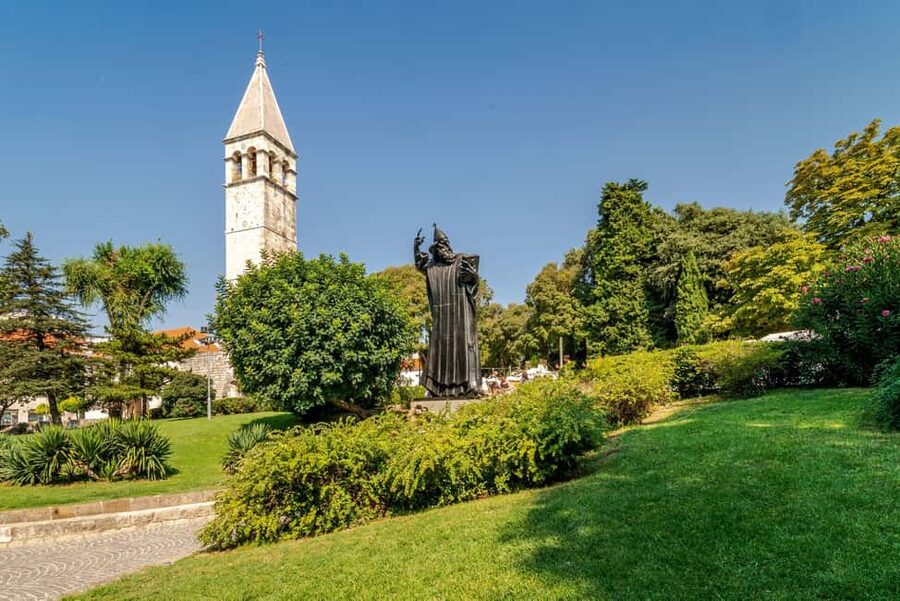
Split’s old town is not just a collection of Roman ruins. It is a living city built inside and around Diocletian’s Palace, where ancient stone walls frame cafés, shops, squares, and daily life. This private walk gives you a clear route through that 1,700-year-old center, with time for the palace cellars and the waterfront Riva.
I like the private format, since you can ask questions and set the pace more easily than on a large group walk. I also like the focus on the city’s main landmarks, including the Golden Gate, Peristil, Saint Domnius Cathedral, and Vestibul. Ana is one named guide, and the strongest feedback points to guides who are friendly, engaged, and well prepared.
The main consideration is time. The advertised duration is 90 minutes, although the description also refers to a two-hour walk. The scheduled stops add up to 90 minutes, so confirm the exact timing when you book. With so much to see, this is an efficient introduction rather than a slow, detailed tour of every corner.
Key points at a glance
- A private walk through a living Roman palace: Diocletian’s Palace is part historic monument, part working city center.
- Nine main sights in 90 minutes: The route includes the Golden Gate, three squares, Riva, the cellars, Peristil, Saint Domnius Cathedral, and Vestibul.
- Cellar admission is included: You get to see the beautifully preserved underground spaces without paying a separate entry fee.
- English and Spanish are available: You receive a live guide and an audio guide in one of those two languages.
- A compact route with no food stop: Food and drinks are not included, so plan a café break before or after.
- Best for mobile walkers: Uneven old-town streets and the pace make this unsuitable for people with mobility impairments.
Why Diocletian’s Palace makes this walk different
The name Palace can give you the wrong idea. This is not a single empty building that you enter, inspect, and leave. Diocletian’s Palace forms the core of Split’s old town, and its streets and squares have been used for centuries.
The Roman Emperor Diocletian built the complex around the turn of the fourth century. The walls, gates, courtyards, and underground rooms give the tour its main structure. At the same time, Split’s old town has layers from later periods, so you are walking through a place where Roman, medieval, and modern city life meet.
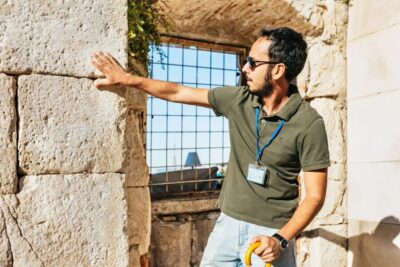
I find that a guided walk is especially useful here because the palace can feel confusing at first. The streets do not follow a simple modern grid, and a guide can explain how each space fits into the larger plan. You are not simply checking off monuments. You are learning why a square, gate, or basement matters.
The private group setup is valuable if you want to ask about details as you go. It also gives you more room to pause for photographs, though the short schedule means you should not expect long visits inside every sight.
More walking tours past the palaces in Split:
- Split: Old Town and Diocletian Palace Walking Tour
★ 4.9 · 4,727 reviews - Walking Tour of Split and Diocletian’s Palace
★ 5.0 · 2,588 reviews - Split & Diocletian’s Palace Walking Tour
★ 5.0 · 1,125 reviews
Starting at South Tours on Mrčelina 1
The tour begins at the South Tours office on Mrčelina 1. Arrive 15 minutes early, giving yourself time to find the office and meet your guide without cutting into the walk.
The language choices are English and Spanish. Both a live guide and an audio guide are listed in those languages. The named guide in the available feedback is Ana, who led the walk in Spanish and was praised for her attentive manner and strong command of the subject. Other comments also highlight a friendly, engaged approach.
That personal connection matters on a short tour. You have limited time, so a guide who explains clearly and responds to questions can make the difference between a useful introduction and a hurried list of names.
Wear comfortable shoes. Split’s historic center is made for walking, not rolling luggage or delicate footwear. The experience is specifically not suitable for people with mobility impairments, so consider that carefully before booking.
The Golden Gate and the edge of the old town

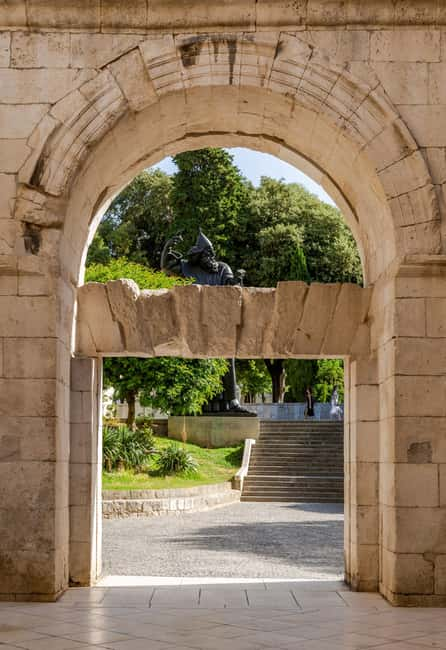
The first major stop is the Golden Gate, one of the best-known entrances to Diocletian’s Palace. The stop lasts about 10 minutes, enough for an explanation of the gate and a look at the way the palace walls shaped the city.
This is a good place to begin because a gate gives you a sense of scale. Diocletian’s complex was not a small residence. Its entrances and fortified walls formed a large planned area, and the Golden Gate helps you understand that the old town grew from a substantial Roman foundation.
You may also get an early lesson in how Split works today. The historic remains are not sealed off from ordinary life. Streets, buildings, and businesses occupy the same area as the ancient structure.
A quick look at the Game of Thrones Museum
The route then includes a five-minute guided stop at the Game of Thrones Museum. This is the briefest stop on the walk, so treat it as a quick orientation rather than a full museum visit.
Its place on the route reflects Split’s modern screen connection as well as its ancient past. The stop may interest you if you recognize the city from television, but it is not the main reason to choose this experience. The Roman palace, the squares, and the cellars receive more attention.
The five-minute timing also tells you something important about the tour. You are moving steadily from one sight to the next. If you want extended time inside museums, you will need to return on your own.
A few more palace visits around Split worth a look
- Split: Diocletian Palace & Old Town Guided Walking Tour
★ 4.7 · 882 reviews - Split Old Town and Diocletian’s Palace Tour
★ 4.8 · 716 reviews - Split: Game of Thrones Tour with Diocletian’s Palace Cellar
★ 4.8 · 545 reviews - Diocletian’s Palace and Old Town SMALL GROUP Walking Tour
★ 5.0 · 502 reviews
People’s Square and the old town’s public life

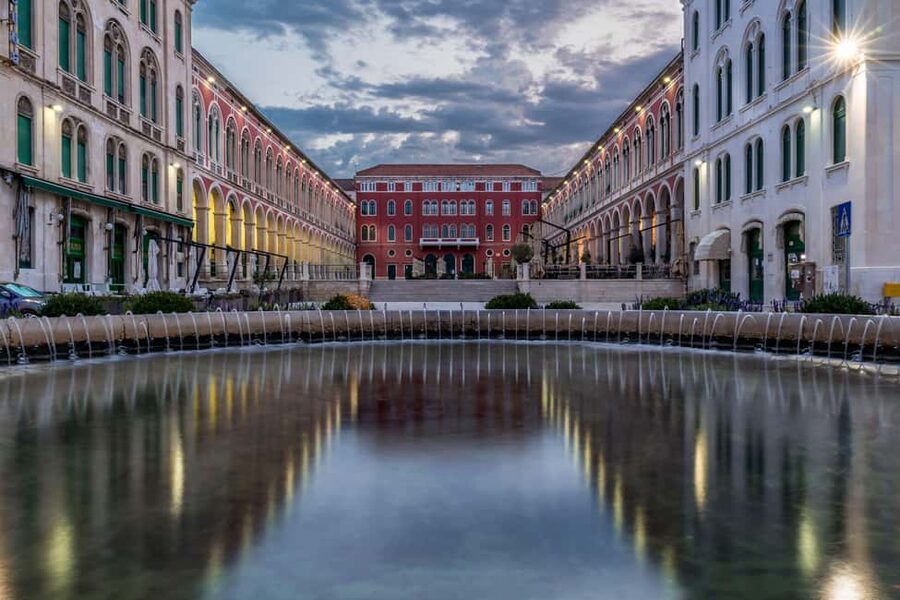
People’s Square receives about 10 minutes. This is one of the city’s main public spaces, and it helps broaden the tour beyond Roman architecture.
The value here is the connection between history and daily life. A square is not only a backdrop for photographs. It shows how the old center functions as a place for meeting, passing through, and spending time. Your guide can point out the stories behind its buildings and explain how Split developed beyond the original palace plan.
I like having this stop between the palace landmarks because it prevents the tour from becoming a narrow Roman history lesson. You see how the old town belongs to the people who live and work there now.
Fruit Square and a look at Split’s local character
Fruit Square, with about 10 minutes set aside, offers another view of central Split. Its name connects it with the city’s traditional market life, and the stop gives you a chance to understand how commerce shaped the old center.
The square is also a useful reminder that the palace is not an isolated archaeological site. Modern Split grew around its old spaces, and the market areas help explain the practical side of city life.
This part of the walk should appeal to you if you prefer historic places that still feel connected to the present. Do not expect a food tasting, though. Food and drinks are not included, and the tour does not provide a dedicated market meal or refreshment stop.
A 10-minute stroll along the Riva
The route continues to the Riva, Split’s waterfront promenade, for roughly 10 minutes. This is a welcome change from the tighter streets of the old center.
The Riva gives you a broader view of Split’s setting and a more relaxed walking stretch. Your guide can connect the waterfront with the city center, while you get a chance to pause and take photographs. It is also a practical place to return after the tour if you want to sit down for a drink or meal, though that cost is your responsibility.
I like this part of the route because it gives the walk some breathing room. The palace can feel dense with stone, gates, and narrow lanes. The promenade offers a visual reset before you head into the underground cellars.
Down into Diocletian’s Cellars
The cellars receive about 15 minutes, the longest single stop on the scheduled route. Entry is included, which is important because this is one of the tour’s clearest paid inclusions.
The underground rooms are among the best-preserved parts of Diocletian’s Palace. They help you see the palace plan from below and give your guide a chance to explain how the complex was built. The cellars also make the Roman site feel more complete. Above ground, later construction can make the original arrangement difficult to read. Below ground, the surviving structure gives you a stronger sense of the ancient design.
Fifteen minutes is enough for an introduction, but not for a slow inspection of every room. I would pay close attention to the guide here, since the value comes from understanding what you are looking at rather than simply walking through stone corridors.
If you have seen photographs of Split’s underground palace spaces, this is the stop most likely to meet those expectations. It is also the one place on the route where the included entry ticket directly saves you an extra expense.
Peristil, the palace’s central square
Peristil is the heart of the route and receives about 10 minutes. This central square of Diocletian’s Palace is where the Roman plan becomes easiest to picture.
The space brings together columns, palace architecture, and the surrounding old town. It is a natural point for your guide to explain the emperor’s residence and the ceremonial role of the square. The setting also shows how later Split grew around Roman structures rather than replacing them completely.
Allow yourself time to look upward and around, not just ahead. The square is one of the most memorable places on the walk because it combines the grand scale of the original palace with the close, active feel of the modern center.
The short stop may leave you wanting more. That is not a flaw so much as a limit of a 90-minute introduction. If Peristil catches your interest, it is an obvious place to revisit later when you are not following a schedule.
Saint Domnius Cathedral and the old Roman core
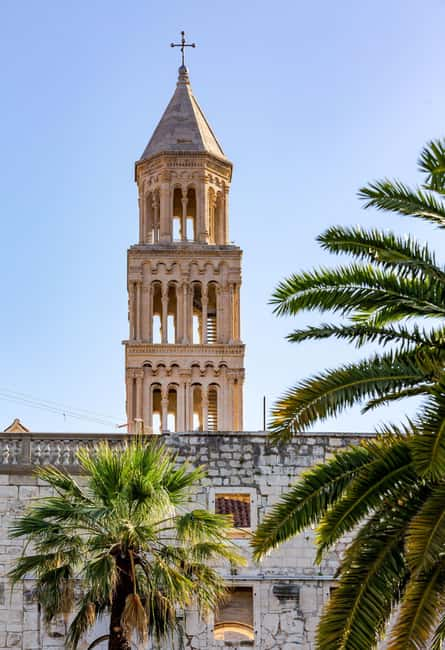
The tour next visits the Cathedral of Saint Domnius for about 10 minutes. The cathedral is closely tied to the Roman palace, making it a useful stop for understanding how the site changed over time.
Here, you can see how a building created for an emperor later became part of a Christian city. That shift gives the walk greater depth than a simple tour of Roman walls. Your guide can explain the cathedral’s place within the palace center and show how the old and newer uses overlap.
The time is limited, so the stop is best understood as a guided look rather than an extended religious or architectural visit. If you want a detailed examination of the cathedral interior, ask your guide what can be seen during the tour and plan extra time afterward if needed.
Vestibul and the final photographs
Vestibul is the last listed stop, with about 10 minutes for a guided visit, walking, and photographs. Its position near the palace center makes it a fitting close to the route.
This is a place to gather the main ideas of the walk: the emperor’s palace, the formal central spaces, and the later city that grew inside the ancient walls. The photo stop gives you a chance to record the architecture after you have learned how to read it.
Because the tour covers many sites, Vestibul works best as a final visual reminder rather than a long final lecture. You may find yourself wanting to continue exploring afterward, especially if the old town’s side streets have sparked your curiosity.
Is $117 per person a fair price?
At $117 per person, this is not a budget city walk. The price makes the most sense for you if you value a private guide, want a focused introduction to Split, and plan to use the 90 minutes well.
You are paying for a private group rather than a standard large walk, a live English or Spanish guide, sightseeing through the main center, and entry to Diocletian’s Cellars. That last inclusion helps, but the main value is the guide’s explanation of a complicated historic area.
The price is harder to justify if you only want to stroll through the old town independently or if you expect a long museum visit. The tour moves quickly, and food, drinks, and any extra activities are not included.
I would view it as a strong orientation for a first visit, especially if you have limited time in Split. After the walk, you will know which parts of the old town deserve a slower second look.
Who should book this private Split tour?
I would recommend it to couples, families, or small groups who want a personal introduction to the city without joining a large crowd. It also suits you if you prefer to ask questions as you walk and want both ancient landmarks and modern city spaces in one route.
The tour is especially useful early in a Split stay. The Golden Gate, Peristil, cathedral, cellars, squares, and Riva give you a practical map of the center. You can then return to the places that interested you most.
It is less suitable if you have trouble walking, need a slow pace, or want a detailed visit inside every landmark. The tour is not designed around food, drinks, or extended free time.
Book it if you want a compact, private history walk with cellar admission included. Skip it if the $117 price feels high for 90 minutes or if you prefer exploring independently. Before paying, confirm the exact duration, since the description refers both to 90 minutes and to two hours, while the scheduled stops total 90 minutes.
FAQ
How long does the Split walking tour last?
The stated duration is 90 minutes. The description also refers to a two-hour walk, so confirm the exact timing when booking.
Where does the tour begin?
It begins at the South Tours office at Mrčelina 1 in Split. Arrive 15 minutes before the scheduled start.
What languages are available?
The live guide and audio guide are available in English and Spanish.
Is admission to Diocletian’s Cellars included?
Yes. The entry ticket to Diocletian’s Cellars is included in the tour price.
Is this a private tour?
Yes. The activity is offered for a private group.
Is the tour suitable for people with mobility impairments?
No. The activity is listed as unsuitable for people with mobility impairments. Comfortable shoes are recommended.
Just added around Split
- Split: Jewish Heritage & Diocletian’s Palace Walking Tour★ 5.0 · 3 reviews
- Split and Diocletian’s Palace walking tour with a local guid★ 4.9 · 36 reviews
- Split: Diocletian’s Palace Private walking tour★ 5.0 · 3 reviews
- Split: Private Walking Tour with Diocletian’s Palace★ 5.0 · 30 reviews
- Split: Old Town and Diocletian’s Palace Walking Tour★ 3.3 · 3 reviews
- Essential Diocletian’s Palace Tour for First-Time Visitors★ 4.9 · 79 reviews
- Split: Old Town & Diocletian’s Palace Earlybird Walking Tour★ 4.0 · 12 reviews
- Split: Palace & Old Town Private Walking Tour-Entrance incl.★ 4.8 · 8 reviews
Split Palace Tours, compared.
Walking Tour of Split and Diocletian’s Palace
Read our review →

Diocletian Palace & Old Town Guided Walking Tour
Read our review →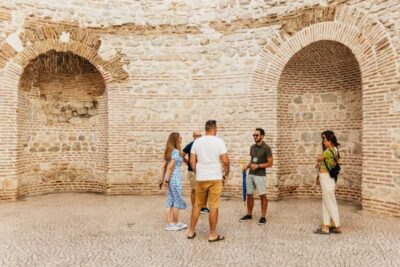

Game of Thrones Tour with Diocletian’s Palace Cellar
Read our review →
Diocletian’s Palace and Old Town SMALL GROUP Walking Tour
Read our review →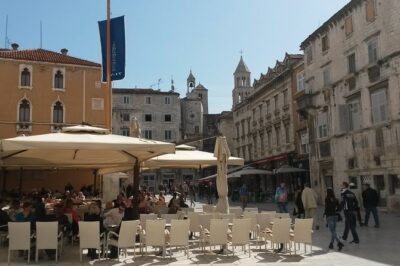
Browse the lists this tour appears in