
REVIEW · SPLIT PALACE TOURS
Essential Diocletian’s Palace Tour for First-Time Visitors
Split’s Diocletian’s Palace is not a quiet museum behind velvet ropes. It is the center of modern Split, with homes, cafés, shops, squares, and ancient Roman walls all sharing the same streets. This 90-minute walking tour gives first-time visitors a clear way into that unusual mix.
I like the small group, limited to 10 people, and Jelena’s lively way of explaining complicated history without turning it into a lecture. I also like the practical finish: you receive personal suggestions for food, sights, and local experiences, along with discounts at selected restaurants and bars. The main drawback is that the tour does not include entry to the Cathedral of Saint Domnius, its bell tower, the cathedral museum, or the museum section of the cellars.
Key points at a glance

- A smart first look at Split: The route links the palace’s Roman core with today’s squares, streets, and Riva promenade.
- Jelena keeps history moving: Her English is clear, and her style mixes facts, humor, questions, and stories about present-day Split.
- Small groups make a difference: With no more than 10 people, it is easier to hear, ask questions, and get personal help.
- The Vestibule selfie is part of the fun: You’ll pause beneath the famous dome for a group photo.
- Useful after-tour help: Restaurant and sightseeing suggestions make the tour more valuable than a simple walk around old stones.
- Know what is not included: The cathedral and bell tower are discussed from outside, and the cellars visit does not include the museum section.
Why this is a good first tour of Split
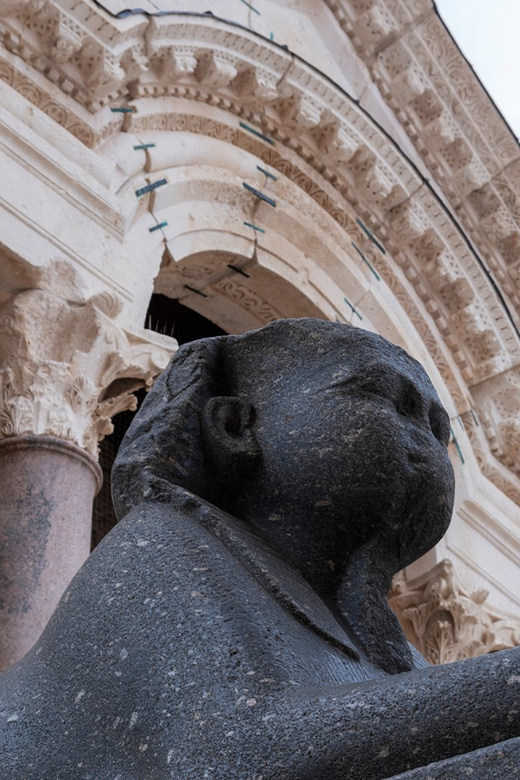
Diocletian’s Palace can be confusing at first. It is large, irregular, and woven into the living center of town. You may walk through an ancient gate and then find yourself beside a café table, a clothing shop, or a residential doorway. Without context, the palace can feel like a collection of impressive fragments.
This tour gives those fragments a clear order. You begin at the northern entrance, see the major imperial spaces, move through the old town, and finish on the Riva. I like that shape because it helps you understand both the original Roman complex and the city that grew inside it.
Jelena also brings a useful regional viewpoint. She is originally from Bosnia and Herzegovina and has lived in Split for many years, so her explanation reaches beyond palace dates and architectural labels. You get context about Dalmatia, Croatia, the wider Balkans, and daily life in Split today.
The tone is relaxed rather than formal. Parents should appreciate that the route includes humor and audience questions, while younger visitors may find the stories easier to follow than a long series of dates. One 13-year-old gave the tour a thumbs up, which is a useful sign for families trying to keep a history walk enjoyable.
A few more palace visits around Split worth a look
- Split: Old Town and Diocletian Palace Walking Tour
★ 4.9 · 4,727 reviews - Walking Tour of Split and Diocletian’s Palace
★ 5.0 · 2,588 reviews - Split & Diocletian’s Palace Walking Tour
★ 5.0 · 1,125 reviews
Meeting Gregory of Nin beside the Golden Gate
The meeting point is in front of the large statue of Gregory of Nin, beside the north entrance to the Palace, known as the Golden Gate. Look for Jelena’s black umbrella. It is a simple landmark, but the area can be busy, so arrive with enough time to locate the statue and guide.
The Golden Gate is one of the best places to begin because it immediately shows the scale and purpose of the Roman complex. The gate was built as a formal entrance, not simply as a passage for local foot traffic. From here, Jelena can explain how the palace was organized and why this northern approach mattered.
The statue of Gregory of Nin adds a later layer to the setting. Rubbing the statue’s toe is a familiar Split custom, and the meeting point gives you a quick first encounter with the city’s public traditions before the walking tour gets underway.
Golden Gate to People’s Square
From the Golden Gate, the route moves into the old center and toward People’s Square, known locally as Pjaca. This shift is important because you begin to see how Roman foundations, medieval buildings, and modern city life occupy the same compact space.
Pjaca is a useful contrast to the more formal palace interiors. It feels like an everyday city square rather than an archaeological site. Jelena’s explanations connect the architecture to how Split developed and how people use the center now.
I like this part for orientation. First-time visitors often focus so closely on Roman remains that they miss the town around them. The square helps you see Split as a working city, not only a historic attraction.
Jupiter’s Temple and the palace’s old religious world
Jupiter’s Temple is one of the compact but memorable stops. Its remains help explain the palace’s religious side and the beliefs tied to imperial power. This is where a guide matters, since the structure itself may not tell you why it was important or how it fit into the larger complex.
Jelena’s method is to explain each stop in plain language, then add more detail as questions come up. That approach suits this site. You get enough background to understand what you are seeing, without being buried under technical terms.
The temple is not a large, open monument in the way some visitors may expect. The setting is tight, and the route passes through active city streets. Keep that in mind if you want a quiet archaeological visit. The value here is the explanation and the connection to the palace plan.
Same city, a very different set of state rooms:
- Split: Diocletian Palace & Old Town Guided Walking Tour
★ 4.7 · 882 reviews - Split Old Town and Diocletian’s Palace Tour
★ 4.8 · 716 reviews - Split: Game of Thrones Tour with Diocletian’s Palace Cellar
★ 4.8 · 545 reviews - Diocletian’s Palace and Old Town SMALL GROUP Walking Tour
★ 5.0 · 502 reviews
Peristyle, the palace’s grand central space
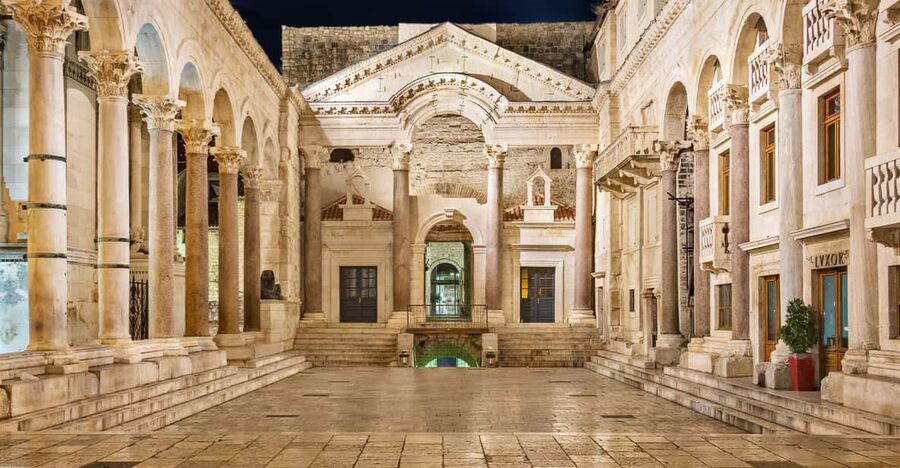
Peristyle is the visual center of the tour. This open court gives you a better sense of imperial ceremony and the palace’s original scale. Tall stone elements and surrounding buildings frame the space, while modern city life continues around it.
This is one of the places where Split’s layers are easiest to read. Roman remains, later religious buildings, tourist activity, and ordinary city movement all meet in one spot. Jelena explains how the area worked in Diocletian’s time and how it functions now.
Expect people around you, especially at popular times. The tour is not designed as a private photo session, and the square may be active. The small group helps because you can stay close to the guide without trying to follow a flag through a crowd of 30 or more.
Saint Domnius and the limits of the visit
The Cathedral of Saint Domnius is included as a guided stop, but the tour discusses it from outside rather than taking you into the cathedral, monastery, mausoleum, or bell tower. This is one of the most important details to understand before booking.
The cathedral occupies a former imperial mausoleum, making it a powerful example of how Split reused the palace over time. Jelena explains that transformation from the exterior, along with the building’s place in the city.
If you want to climb the bell tower or see the interior, you will need to do that separately. That is not a serious problem for a visitor with limited time, since the tour keeps moving and covers many sights. It does mean you should not expect the ticket to function as a full entry pass to every palace attraction.
The Vestibule and the group selfie
The Vestibule is one of the most atmospheric stops. Its rounded form and dome create a strong sense of enclosure, and this is where the group pauses for the promised selfie.
The photo is a small touch, but it fits the style of the tour. You are not only collecting dates and building names. You are making a simple memory of the walk, and Jelena takes the group photo inside one of the ancient palace structures.
This is also a good place to pay attention to sound and shape. The space is more about the feeling of the architecture than a long list of facts. Since the tour is limited to 90 minutes, the stop stays focused.
Diocletian’s Cellars and what you actually see
The cellars offer another view of how the palace was built. They help you understand the layout above and show how Roman construction survived beneath the later city.
You do enter the cellar area, but the tour does not include the museum section. That distinction matters because some visitors may assume that any reference to the cellars includes every underground display. It does not.
The cellar stop works best as part of the larger explanation of the palace rather than as a separate museum visit. You see how the lower level supported the imperial complex, then continue toward the waterfront. If underground spaces are a major priority, plan extra time for a separate visit after the tour.
Finishing on the Riva promenade
The tour ends on the Split Riva, the broad waterfront promenade that serves as one of the city’s main gathering places. Ending here gives you a practical next step. You can continue along the water, stop for a drink, or use the guide’s suggestions to plan your next meal and outing.
I like this finish because it connects the ancient palace with the part of Split most people want to enjoy after sightseeing. The Riva is not an isolated monument. It is where the city opens toward the harbor and where you can shift from guided history to your own time.
Jelena’s recommendations are a useful part of the ending. You can ask where to eat, what sights to visit next, and which local experiences may suit your schedule. The tour also provides access to vouchers and discounts at selected restaurants and bars. Treat those as a bonus rather than the main reason to book, since the real value is the orientation and local advice.
What the $41 price buys you
At $41 per person, this is not the cheapest way to walk through Split, but the price is reasonable if you want a guide who explains the city rather than simply points out buildings. The group limit is important. A 10-person maximum gives you a better chance to hear clearly and ask questions than a large coach-style walking tour.
The 90-minute length also makes sense for a first introduction. You cover the essential route without giving up half a day. If you are arriving by cruise ship, traveling with children, or fitting Split between other plans, that compact schedule is useful.
The value is strongest if you use the tour as a starting point. Listen for places you want to revisit, write down food suggestions, and ask Jelena about sights beyond the palace. If you only want paid entry to the cathedral, bell tower, or cellar museum, this is not the right product because those admissions are not included.
The flexible booking terms add peace of mind. You can cancel up to 24 hours ahead for a full refund, and the reserve-now, pay-later option lets you hold a place without paying immediately.
Who should book this walk
I would recommend it most strongly to first-time visitors who want a clear introduction to Split’s history, layout, and daily life. It suits solo visitors, couples, families, and small groups who prefer conversation over a large crowd.
It is also a good match if you enjoy history but do not want a stiff academic presentation. Jelena has been praised for being funny, patient, organized, and easy to understand. Her English is clear enough for people who are still building confidence with the language.
Families should find the pace manageable, though the route is on foot and includes uneven historic areas. Anyone using a wheelchair should choose another option, since the experience is not suitable for wheelchair users.
You may want a different tour if your main goal is interior access. The Cathedral of Saint Domnius, bell tower, cathedral museum, and museum section of the cellars are not part of this experience. The walk is about understanding the palace and city, not checking off every ticketed site.
My call: book it for orientation, not full admission
Book this tour if you want to make sense of Split quickly, hear the story behind the stones, and leave with useful local advice. The small group, lively explanations, regional perspective, and Riva finish make it a strong first-day activity.
Skip it if you already know the palace well or want a detailed visit inside every major attraction. For most first-time visitors, though, $41 buys a well-paced introduction, a group photo in the Vestibule, and a better understanding of where to spend the rest of your time in Split.
FAQ
How long does the Diocletian’s Palace tour last?
The tour lasts 90 minutes.
What language is the tour in?
The live tour is conducted in English.
How large is the group?
The group is limited to 10 participants.
Where does the tour meet?
Meet in front of the large statue of Gregory of Nin, beside the Golden Gate, the north entrance to Diocletian’s Palace. Look for a black umbrella.
Does the tour enter Saint Domnius Cathedral?
No. The cathedral is explained from outside. Entry to the cathedral, monastery, mausoleum, and bell tower is not included.
Does the tour include the Diocletian’s Cellars museum?
No. You visit the cellar area, but the museum section is not included.
Is the tour suitable for wheelchair users?
No. The activity is not suitable for wheelchair users.
Just added around Split
- Split: Private Walking Tour and Diocletian’s Palace★ 5.0 · 3 reviews
- Split and Diocletian’s Palace walking tour with a local guid★ 4.9 · 36 reviews
- Split: Diocletian’s Palace Private walking tour★ 5.0 · 3 reviews
- Split: Jewish Heritage & Diocletian’s Palace Walking Tour★ 5.0 · 3 reviews
- Split: Private Walking Tour with Diocletian’s Palace★ 5.0 · 30 reviews
- Split: Old Town and Diocletian’s Palace Walking Tour★ 3.3 · 3 reviews
- Split: Old Town & Diocletian’s Palace Earlybird Walking Tour★ 4.0 · 12 reviews
- Split: Palace & Old Town Private Walking Tour-Entrance incl.★ 4.8 · 8 reviews
Split Palace Tours, compared.
Walking Tour of Split and Diocletian’s Palace
Read our review →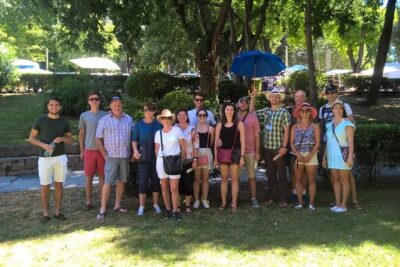

Diocletian Palace & Old Town Guided Walking Tour
Read our review →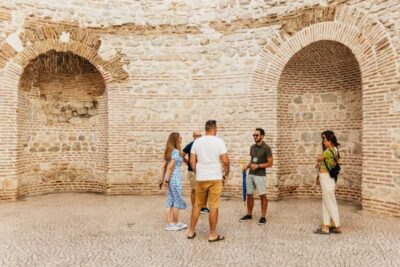

Game of Thrones Tour with Diocletian’s Palace Cellar
Read our review →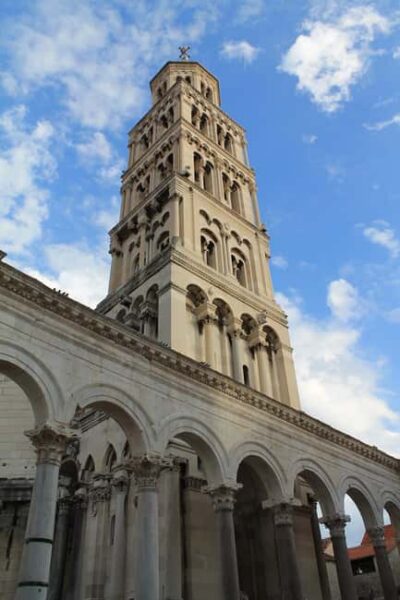
Diocletian’s Palace and Old Town SMALL GROUP Walking Tour
Read our review →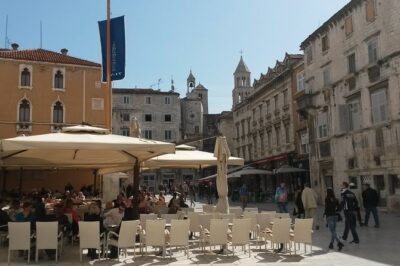
Browse the lists this tour appears in