
REVIEW · KOREAN PALACE TOURS
Best Walking Tour to Gyeongbok Palace Bukchon Hanok Village
Gyeongbokgung Palace and Bukchon Hanok Village give you Seoul’s clearest lesson in how royal Korea and modern city life fit together. In about three hours, this small-group walk moves from Gwanghwamun Gate and the King Sejong Statue into the palace grounds, then uphill through old residential lanes toward Bukchon and on to Insadong.
I like the maximum group size of eight, which keeps the guide close enough for questions and makes the narrow lanes easier to manage. I also like the mix of a guard-changing ceremony, palace buildings, the National Folk Museum’s collection of more than 98,000 objects, and everyday neighborhood streets.
The main caution is simple: this is a real walking tour, not a gentle stroll. Bukchon includes steps and uphill sections, and guide quality can vary. Names praised in the feedback include Jay Kim, Stella, Jack, Paul, and Joe, but a few visitors found their guide low-energy or unable to answer basic questions.
Key points to know before booking
- Gyeongbokgung’s guard-changing ceremony: Time at the palace includes this colorful, highly photogenic tradition.
- A small group of up to eight: The format allows more personal questions than a large bus tour.
- The National Folk Museum: More than 98,000 artifacts help connect palace life with ordinary Korean customs.
- Bukchon’s uphill lanes: You see traditional hanok homes, but comfortable shoes are essential.
- A useful first-day introduction: The route links Seoul’s royal past, language, architecture, food, and daily life.
- A finish near Insadong: You end in one of central Seoul’s best areas for further exploring and lunch.
Why this route works so well on a first day
Seoul can feel enormous at first. Modern towers, busy streets, palace walls, old alleys, cafés, and shopping districts all crowd into the same city. This tour gives you a firm starting point by linking several major sights on foot.
You begin near Taepyeongno in Jung District and make your way toward Gwanghwamun Gate and the King Sejong Statue. From there, the focus shifts to Gyeongbokgung Palace, the grandest royal stop on the route. The walk then moves toward Bukchon Hanok Village, where old-style homes sit among contemporary Seoul streets.
I like this sequence because it gives you more than isolated photo stops. The guide can explain how the Joseon Dynasty shaped the palace, how traditional construction worked, and how Korean life changed from the royal era to the present day. That context matters. Without it, palace halls can look beautiful but disconnected.
The tour finishes around 75-5 Insa-dong, in the Insadong area. That is a practical ending point. You can continue exploring on your own, stop for food, or use the neighborhood as a base for the rest of your afternoon.
More Korean palace tours in Seoul:
- Seoul: Gyeongbok Palace, Bukchon Village, and Gwangjang Tour
★ 4.9 · 2,321 reviews - Best Seoul City Tour (Gyeongbokgung Palace,Insadong,Namsan Tower)
★ 5.0 · 1,647 reviews - Seoul City Sightseeing Tour Including Gyeongbokgung Palace, N Seoul Tower, and Namsangol Hanok Village
★ 5.0 · 1,423 reviews
Gyeongbokgung Palace and the royal guard ceremony
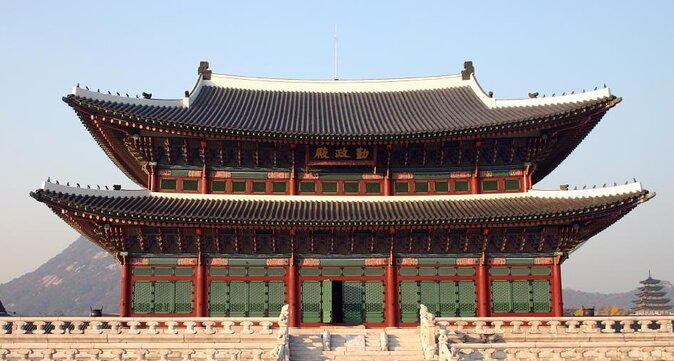
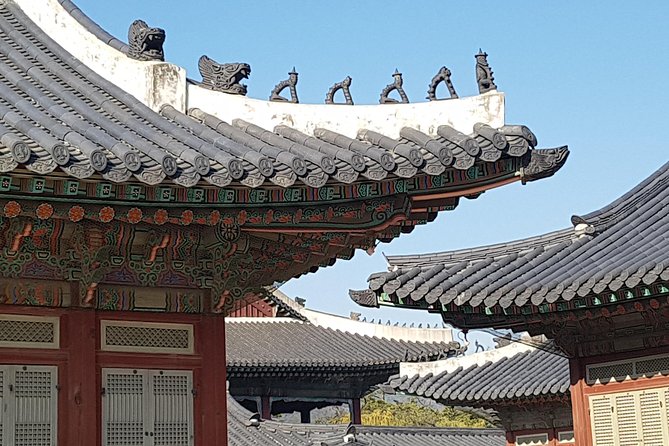
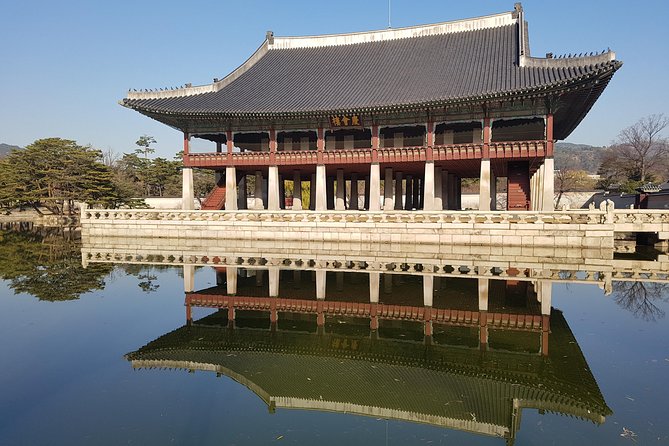
Gyeongbokgung Palace is the centerpiece of the experience. You receive the admission fee as part of the tour, so you do not need to sort out a separate palace ticket. The guide leads you through the complex while explaining Joseon-era history, royal customs, and the traditional building methods visible in the gates, courtyards, roofs, and wooden halls.
The royal guard-changing ceremony is one of the strongest reasons to time your visit with this tour. It gives the palace a sense of occasion rather than leaving you to wander through quiet buildings without a clear story. Expect a formal public display connected to the palace guards, with striking uniforms and careful movements that make good photographs.
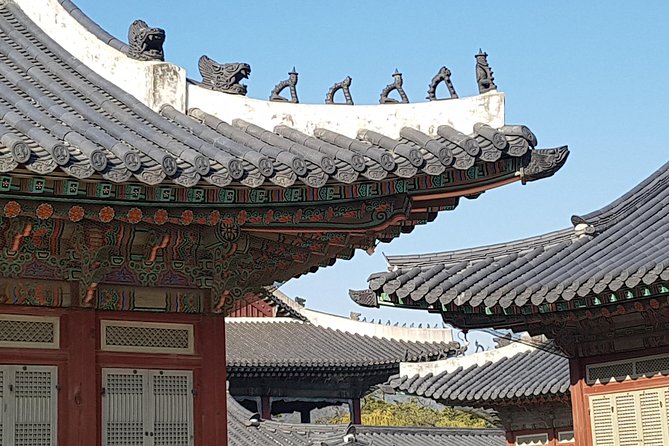
Your guide’s explanation is especially useful here. The palace is large, and the important details are easy to miss. You may notice roof lines, painted beams, courtyards, and layers of gates, but a good guide explains why these elements were used and how they reflected royal order.
The experience can be especially rewarding if you are new to Korean history. Jay Kim has been praised for linking palace events to Seoul’s wider story, while Stella has been singled out for clear English and detailed explanations. Jack has also received strong praise for connecting separate sights and showing how one period of Korean history leads into another.
Allow time for photographs, but remember that the palace is only one part of the tour. The schedule gives about an hour to Gyeongbokgung, including the ceremony and palace grounds. That is enough for a strong introduction, not enough for every building or a slow, independent visit.
The National Folk Museum and ordinary Korean life
The National Folk Museum of Korea adds an important layer to the palace visit. Its collection contains more than 98,000 artifacts connected with South Korea’s history and everyday culture. The museum helps shift the focus from kings and royal buildings to homes, work, customs, and daily routines.
This is one of the tour’s best ideas. Palace tours can sometimes leave you with the impression that Korea’s past belonged only to rulers. The museum helps correct that. You can learn how ordinary people lived and see objects that place royal history in a wider social setting.
The exact amount of museum time may depend on the guide and the pace of the group. At three hours, the walk cannot give you a full museum visit and a slow palace tour. If the museum is a top priority for you, ask your guide how much time is planned. If you want a broad introduction to Seoul, the short visit works well as part of the larger route.
Paul has been praised for explaining both history and culture, while Joe has been noted for using pictures and facts to answer questions. Those details matter in a museum. A guide who can explain an object in plain language will help you remember it long after the tour ends.
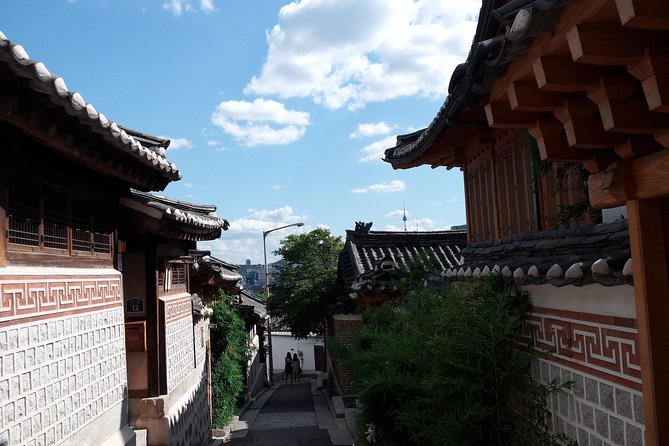
Bukchon Hanok Village, old houses and steep streets
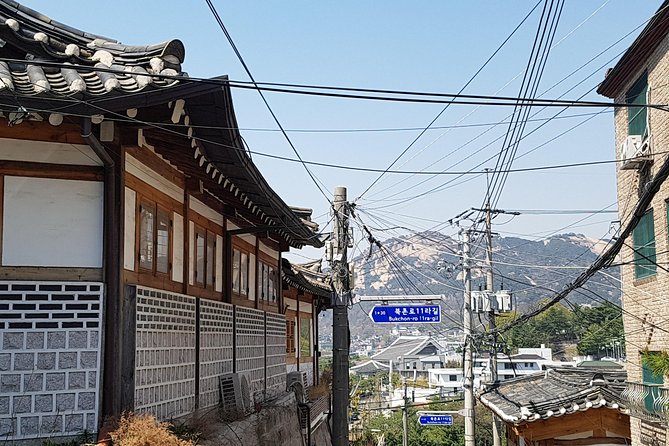
From the palace area, the route continues toward Bukchon Hanok Village. Hanok are traditional Korean homes, and Bukchon is known for its preserved streets, tiled roofs, wooden details, and hillside setting.
The planned time here is about 30 minutes, so think of this as a focused introduction rather than an exhaustive walk through every lane. You will peer into traditional houses and hear how older Korean lifestyles compare with present-day Seoul. The contrast is part of the appeal: these homes sit in a living urban neighborhood, not behind a museum barrier.
Bukchon is also the physically demanding part of the route. The streets include uphill sections and steps, so wear comfortable shoes and practical clothing. The tour information advises against booking if you have difficulty walking on steps or uphill paths. That warning is worth taking seriously.
The short Bukchon stop also means you may want to return later if you enjoy the area. The tour gives you orientation and historical meaning. A separate visit lets you move more slowly, take photographs, and explore the lanes without watching the clock.
More walking tours past the palaces in Seoul:
- Seoul: Gyeongbok Palace and Bukchon Hanok Walking Tour
★ 4.8 · 157 reviews - Seoul: Deoksugung Palace Heritage Walking Tour
★ 4.9 · 5 reviews - Venice: Doge’s Palace and St Mark’s Basilica Walking Tour
★ 4.4 · 6,291 reviews - Prague: 3-Hour Walking Tour of Old Town & Prague Castle
★ 4.7 · 5,696 reviews
Guides make the difference
The strongest theme in the feedback is the importance of the individual guide. Several guides have earned warm praise for making history clear, personal, and fun.
Jay Kim has been described as friendly, responsive, and strong on Seoul and palace history. Stella has been praised for excellent English, enthusiasm, and keeping a child interested during a history-focused afternoon. Jack has been credited with connecting historical events across the route, welcoming questions, and even singing traditional Korean songs.
Paul’s performances appear more mixed, but several accounts describe him as experienced, fluent in English, and generous with his time. On some private-feeling departures, he has added street food, restaurant suggestions, photographs, or an extra stop based on the group’s interests. Joe has also been praised for explaining Korea’s past through both historical facts and personal stories.
There is a less flattering side. One account describes a guide who frequently sent questions back to Google or YouTube, while other comments describe low energy and limited explanation. That does not make the route itself poor, but it means you are partly booking a guide-led experience without a guaranteed individual guide.
A small group helps when the guide is engaged. You can ask about architecture, language, food, royal customs, or modern Seoul and receive a direct answer. If the guide is not prepared, the same small group can make the weakness more noticeable.
Price, group size, and what you receive
At $88 per person, this is not the cheapest way to see Gyeongbokgung and Bukchon. You are paying for a professional guide, admission to the palace, a structured route, and the convenience of fitting several major sights into about three hours.
The value depends on how much explanation you want. If you are comfortable reading signs, using a guidebook, and finding the palace and village yourself, you can spend less by visiting independently. You will also have more time at each stop.
I think the price makes more sense for a first visit, a short stay, or anyone who wants Korean history explained in clear English. A good guide can save you from simply walking past important details. The maximum of eight also gives this experience a more personal feel than a large sightseeing group.
Some departures have ended up with only one or two people. That can turn the scheduled group walk into a private-style experience, though it is not something you should assume will happen. It may also explain why some guides have been able to add a food stop, extra photographs, or a restaurant recommendation.
Timing, meeting point, and physical effort
The tour begins at 24-1 Taepyeongno 2-ga in Jung District and ends near 75-5 Insa-dong in Jongno District. It is close to public transportation, but check the exact meeting instructions when you book and allow time to find the starting point.
The three-hour estimate is useful for planning, but the walk can feel full. You cover a palace complex, museum material, residential lanes, and the route toward Insadong in one outing. You should not plan a tight appointment immediately afterward.
Start with comfortable walking shoes. Bring water, especially in warm weather, and expect uneven surfaces, steps, and uphill streets. The tour requires good weather, and poor conditions can lead to a new date or a full refund.
The group size is capped at eight, which is a strong practical feature. Still, narrow streets and palace crowds can slow the pace. The changing ceremony can also draw many people, so staying close to the guide will help.
Who will enjoy this walking tour most
I would choose this tour for a first full day in Seoul, particularly if you want a clear introduction before exploring on your own. Families may appreciate the variety of sights and the chance to ask questions. One account specifically praised the guide for keeping a child interested, while another found the experience suitable for a 20-year-old.
It also suits visitors who want history with daily life, not just royal architecture. The palace, museum, Bukchon homes, and Insadong finish create a useful cross-section of the city.
You may prefer an independent visit if you want long museum time, extensive palace photography, or a slower pace. The tour is also a poor fit if hills and steps are difficult for you. And if your main goal is shopping, food, or nightlife, only the ending area points strongly in that direction.
Should you book the Gyeongbokgung and Bukchon walk?
Book it if you want a compact, guided introduction to Seoul’s royal past and traditional neighborhoods. The route is well chosen, the admission fee is included, and the small group can make the experience feel personal. The best guide accounts show how much a strong storyteller can add, especially at the palace and museum.
Skip it if you want to explore at your own pace or need a flat, low-effort walk. Also keep your expectations realistic: three hours gives you a useful overview, not a complete study of Gyeongbokgung, the National Folk Museum, or Bukchon.
At $88, I see the tour as a convenience purchase. You are paying for direction, interpretation, and a sensible first look at several central Seoul sights. If you book, wear good shoes, keep your afternoon flexible, and ask plenty of questions. That is how you get the most from the guide you are assigned.
FAQ
How long does the walking tour last?
The tour lasts approximately three hours.
What sights are included?
The route includes Gwanghwamun Gate, the King Sejong Statue, Gyeongbokgung Palace, the royal guard-changing ceremony, the National Folk Museum of Korea, Bukchon Hanok Village, and the Insadong area.
Is the Gyeongbokgung Palace admission fee included?
Yes. The admission fee is included, along with a professional guide.
How large is the tour group?
The tour has a maximum of eight travelers.
Where does the tour begin and end?
It begins at 24-1 Taepyeongno 2-ga in Jung District, Seoul, and finishes near 75-5 Insa-dong in Jongno District.
Is the walk difficult?
You need a moderate level of physical fitness. The route includes steps and uphill sections, especially around Bukchon Hanok Village, and is not recommended if you have difficulty walking on steps or uphill paths.
Can I cancel for a full refund?
Yes, if you cancel at least 24 hours before the local start time. Cancellations or changes made less than 24 hours before departure are not refunded. If poor weather or an insufficient number of bookings cancels the experience, you are offered another date or a full refund.
Just added around Seoul
- Time Travel in Seoul: Gyeongbokgung, Folk Museum & Bukchon★ 5.0 · 10 reviews
- Seoul: Royal Palace Morning Tour including Cheongwadae★ 4.5 · 12 reviews
- Seoul: Vegan Temple Food Class, Jogyesa & Changdeokgung Tour★ 4.6 · 34 reviews
- Seoul: UNESCO Palace and Street Foods Guided Tour★ 5.0 · 6 reviews
- Seoul: UNESCO Sites tour: Palace, Shrine & Bukchon Village★ 4.8 · 26 reviews
- Seoul: Gyeongbokgung, Lotte Tower & Gangnam Trendy Day Tour★ 4.4 · 3 reviews
- Seoul: Hanbok Photo Tour at Gyeongbokgung Palace★ 5.0 · 9 reviews
- Seoul: Gyeongbokgung Palace Tour & Lunch at Authentic Market★ 4.5 · 2 reviews
Korean Palace Tours, compared.
Gyeongbok Palace, Bukchon Village, and Gwangjang Tour
Read our review →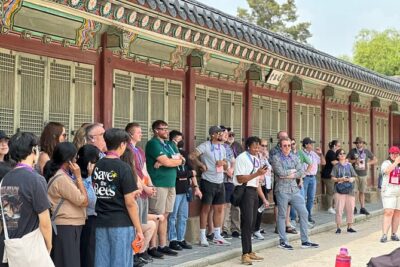
Best Seoul City Tour (Gyeongbokgung Palace,Insadong,Namsan Tower)
Read our review →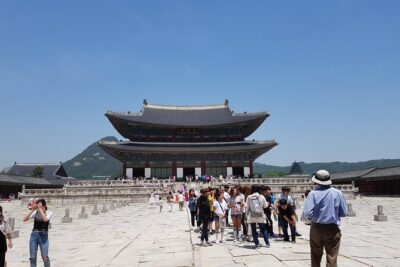
Seoul City Sightseeing Tour Including Gyeongbokgung Palace, N Seoul Tower, and Namsangol Hanok Village
Read our review →Gyeongbok Palace, Bukchon Village, and Gwangjang Tour
Read our review →
Seoul Half-Day City Highlight, Palace Tour with Hanbok
Read our review →
Hanbok Photoshoot and History Tour at Gyeongbokgung Palace
Read our review →Browse the lists this tour appears in