
REVIEW · SPLIT PALACE TOURS
Diocletian’s Palace & Old Town Split Walking Tour
Split’s Old Town is not a museum behind glass. It is a living city built into a 1,700-year-old Roman palace, with people passing through ancient gates, cafés tucked beside stone walls, and laundry hanging above streets laid out for an emperor. This 90-minute walk gives you a clear introduction before you explore on your own.
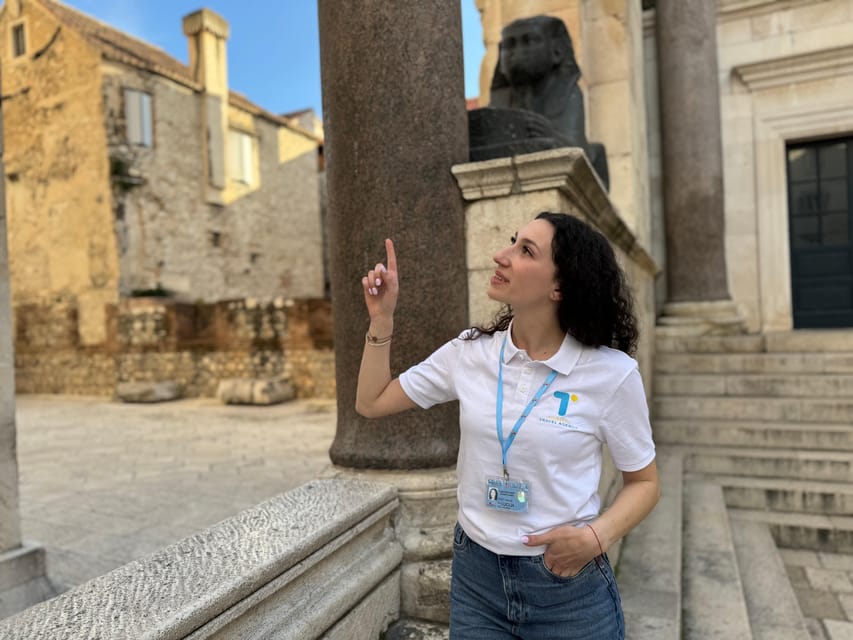
I like the small-group format, which leaves room for questions, and I like having a local guide such as Lucija, a Split native who can talk about present-day life as well as Diocletian. The main consideration is that the tour moves through cobbled streets and does not include entry tickets, so you will see important sites from the outside unless you return later and pay to enter.
Key points at a glance
- Split-born local perspective: Guide Lucija combines Roman history with stories about daily life in her hometown.
- A compact 90-minute route: You visit the Riva, Diocletian’s Palace, Vestibule, Peristil, Golden Gate, People’s Square, and Fruit Square.
- A practical first-day introduction: The walk helps you understand the Old Town’s layout before you return to explore on your own.
- Small-group atmosphere: The setting is better suited to questions and conversation than a large, noisy group.
- Good value at $23: The price covers a licensed English-speaking guide, while admission to cultural and religious sites costs extra.
- Bring sensible shoes: Uneven cobbles, stone paving, and frequent standing make comfort more important than style.
Why this is a smart first walk in Split
I like tours that help you read a city instead of simply pointing at buildings. That matters in Split because the Old Town can seem confusing at first. Roman walls, medieval lanes, later homes, shops, cafés, and public squares all occupy the same compact area.
This walk gives you the broad story. Emperor Diocletian chose Split for his retirement residence, and the palace complex has remained part of the city for more than 1,700 years. The result is unusual: you are not only looking at an ancient monument, you are walking through streets that still function as part of everyday Split.
The route also gives you a useful sense of direction. You begin near the waterfront and move through the palace and older squares before finishing close to the Riva. Afterward, you can return to the places that caught your attention instead of wandering without a plan.
At $23 per person, the tour is priced as an affordable introduction rather than a full archaeological visit. You receive a licensed guide for 90 minutes, but not entrance tickets. I consider that fair for a first orientation, especially if you want local context before deciding which interiors deserve your time and money.
More walking tours past the palaces in Split:
- Split: Old Town and Diocletian Palace Walking Tour
★ 4.9 · 4,727 reviews - Walking Tour of Split and Diocletian’s Palace
★ 5.0 · 2,588 reviews - Split & Diocletian’s Palace Walking Tour
★ 5.0 · 1,125 reviews
Starting beside the Riva
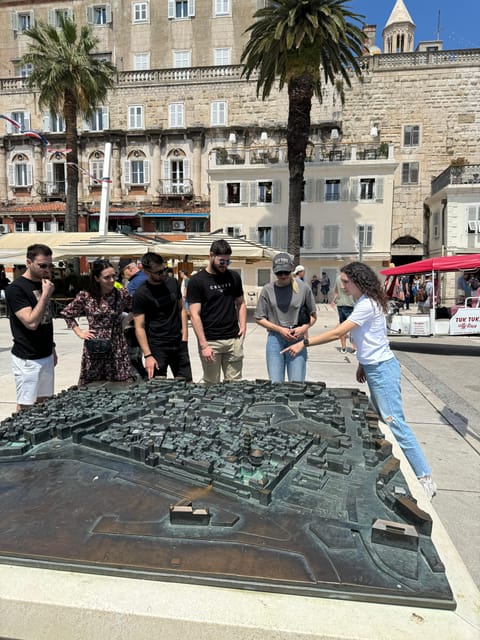
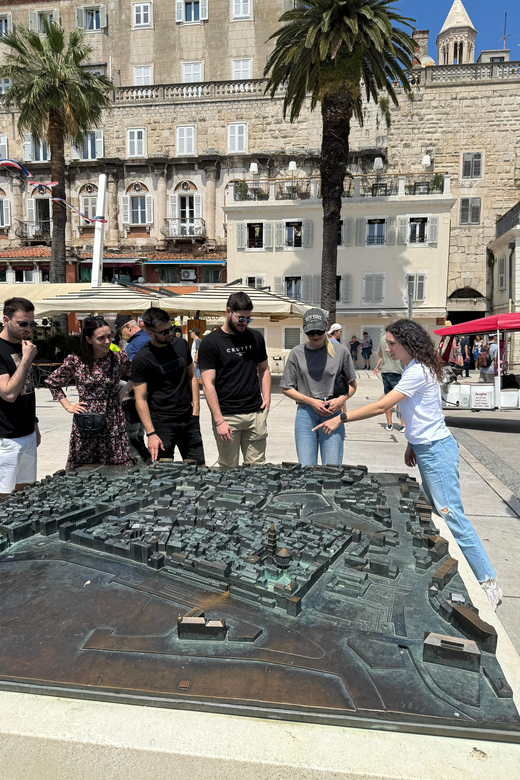
The meeting point can be one of two locations, including the model of Split’s historic core at Obala Hrvatskog narodnog preporoda 22 or the Riva. Check the exact option attached to your booking, since the starting point can vary.
Beginning near the Riva makes sense. Split’s waterfront is the city’s natural front door, and it gives you an immediate contrast between the open promenade and the tight stone lanes behind it. The walk then turns inland toward the palace, where the scale changes quickly.
The route is entirely on foot, so arrive ready to stand and walk for the full 90 minutes. Comfortable shoes are not a minor suggestion here. Cobbled streets and hard stone surfaces can be tiring, particularly if you are wearing thin sandals or stiff footwear.
Entering Diocletian’s Palace
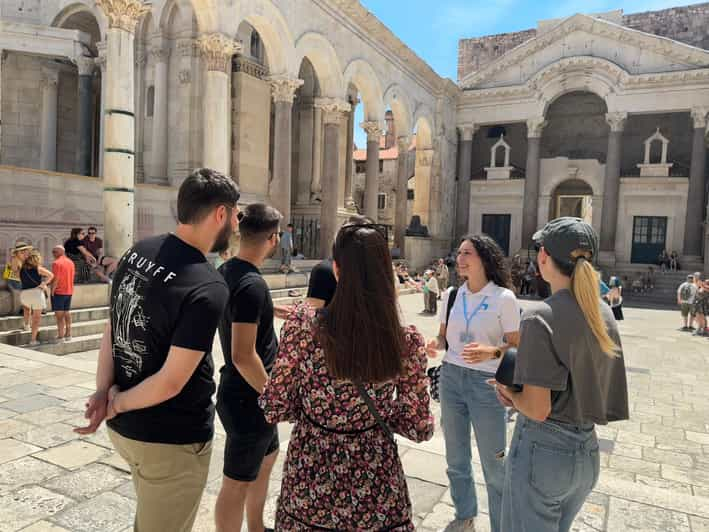
Diocletian’s Palace is the central subject of the tour, but it is important to understand what the name means today. This is not a single preserved building with a clear entrance and a fixed visitor path. It is a large historic complex that became part of the town around it.
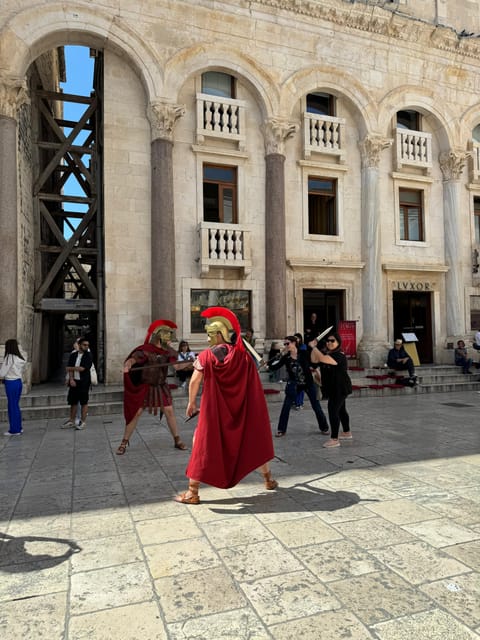
Your guide explains how the palace developed from an imperial residence into the core of modern Split. That change is what makes the walk so interesting. You might pass through a Roman space, turn into a medieval lane, and find a modern business operating in a building that began life as part of Diocletian’s home.
The palace walls and architecture provide the main visual lesson. You can see how the complex was planned, how its entrances relate to the waterfront and inland approaches, and how later life filled in the spaces between the original structures.
This is also where a local guide adds value. Lucija can explain not just what a stone feature was built for, but how the area fits into Split today. The personal connection is useful because the tour includes both old stories and more recent details about life around the city.
Looking up inside the Vestibule

The Vestibule is one of the palace’s memorable spaces. Its form makes more sense when you hear how it worked as an approach to the imperial apartments. The rounded interior and strong stone construction show the ceremony and power attached to the palace.
The stop is guided rather than presented as a long independent visit. You will hear the historical explanation, look at the structure, and continue with the group. Since entry tickets are not included, ask Lucija what you can visit later if you want more time inside the cultural or religious sites.
That arrangement keeps the tour moving. It also means you should not expect a detailed interior examination of every major site. Think of the Vestibule as part of a connected story, not a separate museum visit.
A few more palace visits around Split worth a look
- Split: Diocletian Palace & Old Town Guided Walking Tour
★ 4.7 · 882 reviews - Split Old Town and Diocletian’s Palace Tour
★ 4.8 · 716 reviews - Split: Game of Thrones Tour with Diocletian’s Palace Cellar
★ 4.8 · 545 reviews - Diocletian’s Palace and Old Town SMALL GROUP Walking Tour
★ 5.0 · 502 reviews
Peristil, the palace’s grand central space
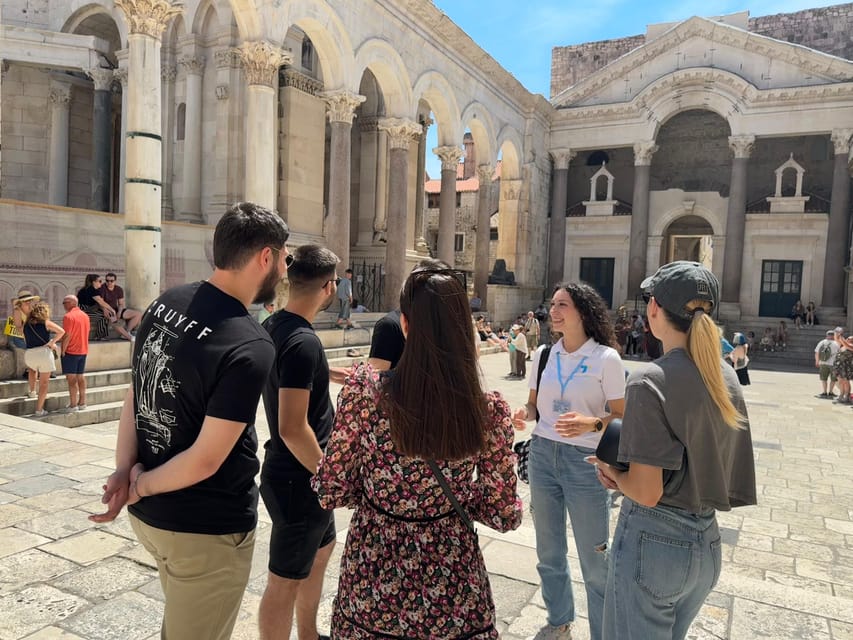
Peristil is likely to be one of the tour’s strongest visual moments. This open square gives you a clearer sense of the palace’s formal design and its connection to Diocletian’s imperial role.
Here, your guide can connect the architecture to the emperor’s residence and explain why this space mattered within the palace. The setting also helps you understand the difference between the official areas of the complex and the everyday lanes that grew around them later.
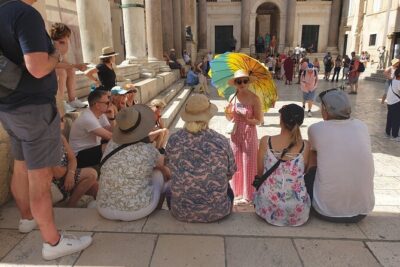
Allow yourself time to look beyond the guide’s immediate point. Stone columns, walls, paving, and surrounding buildings work together here, and the square can be busy with ordinary city activity. That mixture is part of Split’s character, though it can also make close listening harder at busy times.
A small group is especially helpful in a place like this. You are less likely to lose the guide, and it is easier to ask a quick question without interrupting the whole experience.
The Golden Gate and the shape of the old city
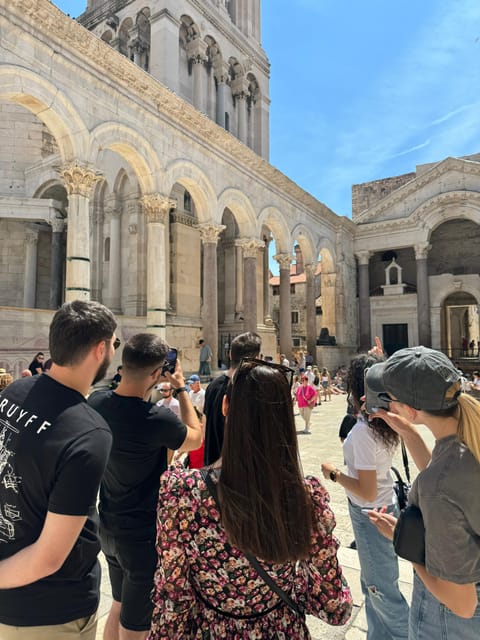
The Golden Gate is one of the palace’s major entrances and an important point for understanding Split’s original plan. The stop helps connect the central palace spaces with the routes leading through the old city.
Your guide can explain the role of the gate and the way the palace was organized around its walls and access points. You will also see how the ancient structure has been absorbed into later urban life rather than left apart from it.
This is a good place to pay attention to scale. The palace was designed for an emperor, yet the present-day lanes around it feel intimate. That contrast tells much of Split’s story without needing a long lecture.
The Golden Gate stop is also useful for orientation. Once you know where one of the main entrances sits, it becomes easier to find your way back to the palace after the tour.
People’s Square and the city beyond the palace
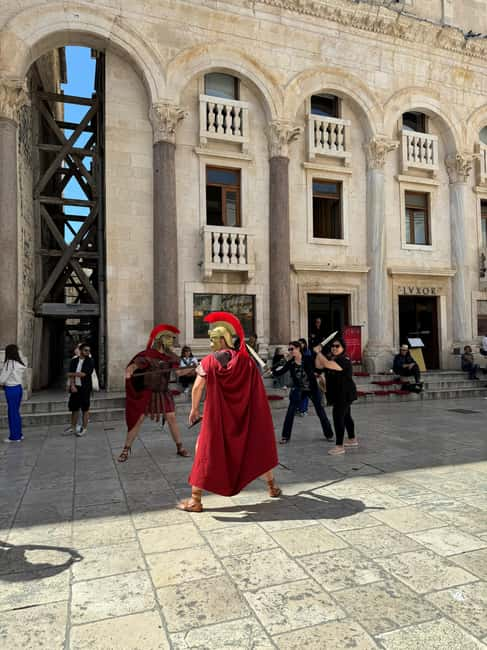
People’s Square shifts the focus from the imperial complex to Split’s later civic life. It shows how the city continued to grow outside the original palace walls and how public space became part of the Old Town’s identity.
The point of including this square is not simply to add another photo stop. It widens the story beyond Roman Split. You begin to see the Old Town as a place shaped by many periods, with the palace providing the foundation rather than the entire story.
I appreciate that the tour does not stop at the emperor’s residence and call the job finished. Split is more than Diocletian’s retirement home. The walk gives you a short but useful look at how the town expanded, changed, and remains in use.
Because the tour is in English, you need to be comfortable following a spoken explanation while walking. The guide can answer questions, but this is not a multilingual tour. Children must remain with an adult throughout.
Fruit Square and a relaxed finish
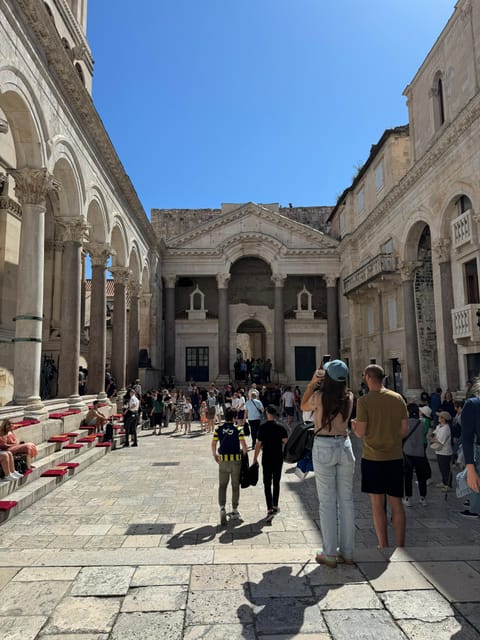
Fruit Square is the final major sightseeing stop on the route. Like People’s Square, it helps you see the Old Town as a network of public spaces rather than a single ancient monument.
The square provides a natural close to the historical walk before you return toward the waterfront. By this point, you should have a working map in your head: the Riva outside, the palace at the center, the main gate and formal spaces within it, and the later squares around the old core.
The tour ends at one of two drop-off points, including the model of the historic city core at Obala Hrvatskog narodnog preporoda 22. That makes it easy to continue exploring nearby after the guide says goodbye.
A useful habit is to note the places you want to revisit while walking. Since the tour covers several stops in 90 minutes, you may want a slower second look at Peristil, the Vestibule, or one of the religious and cultural sites.
What the local guide adds
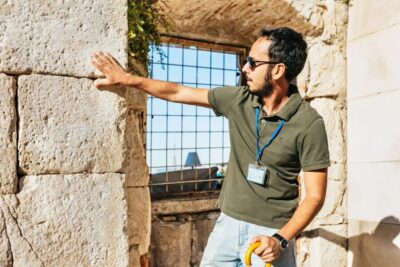
The strongest feature here is the guide’s connection to Split. Lucija is from the city, and her approach includes more than dates and architectural labels. She can talk about local life, answer questions about how people live in Split today, and add recent details around the historic sights.
That local angle matters most if you want a sense of place rather than a basic checklist. A guide who grew up in Split can explain the difference between seeing the palace as an ancient monument and seeing it as part of the city you use every day.
The guiding style also appears well suited to a small group. The walk is described as friendly and conversational, with time for questions and discussion. That makes it a better choice for curious visitors who want to ask about local life, not just listen quietly from the back of a crowd.
You should still keep your expectations realistic. A 90-minute tour cannot cover every layer of Split in detail. Lucija can give you a strong framework, but you will need to explore independently if you want a long visit inside individual sites.
How much value do you get for $23?
The $23 price works well if you see the tour as a city orientation with a licensed guide. You are paying for structure, context, and local access to information. You are not paying for admission to the palace’s cultural or religious interiors.
That distinction is important when comparing tours. A cheaper self-guided walk costs less in cash, but it requires you to work out the route and background yourself. This option gives you a planned path through the main sights and lets you ask questions as you go.
The value is strongest for a first visit, a short stay, or the first morning of a longer trip. It can also help if you are arriving in Split and want to understand the Old Town before returning for meals, shopping, or independent sightseeing.
A private group is available if you prefer a more personal format. The standard small-group setup should suit most people who want conversation without paying for a private guide.
Who should book this walking tour?
I would choose this tour if you are visiting Split for the first time and want the main historic areas explained in one manageable outing. It is also a good fit if you enjoy local stories and want to ask about modern life as well as the Roman past.
The tour suits couples, families with older children, and solo visitors who prefer some company while getting oriented. Children are welcome, but an adult must accompany them throughout.
You should think twice if you need a wheelchair-accessible route. The tour is not suitable for wheelchair users, and the old city’s cobbled surfaces may also be tiring for anyone with mobility concerns.
It may not be the right choice if you want a long archaeological lecture or included admission to major interiors. In that case, use this walk as an introduction only, then plan separate visits to the sites that interest you most.
Weather can also affect the outing. The tour operates subject to weather conditions, with a choice of rescheduling or a full refund if poor weather forces cancellation. You can cancel up to 24 hours before the start for a full refund, and the reserve-now, pay-later option keeps your plans flexible.
My verdict on the Split Old Town walk
Book this tour if you want a friendly, efficient introduction to Split from someone who knows the city personally. The route covers the right first stops, the price is reasonable, and the small-group setting gives you a better chance to ask questions than a large group would.
The main limitation is its short length. You will see and understand the major points, but you will not have time for a slow, detailed visit to every interior. That is not a flaw if you treat the tour as your starting map.
For most first-time visitors, I would take the walk early in a Split stay, wear comfortable shoes, and keep the rest of the day open for returning to the places that interest you most. At $23, it offers a practical way to make sense of a city where ancient walls and modern life share the same narrow streets.
FAQ
How long does the Diocletian’s Palace and Old Town tour last?
The walking tour lasts 90 minutes.
What language is the tour conducted in?
The tour operates in English with a live English-speaking guide.
Which places are included on the walking route?
The route includes the Riva, Diocletian’s Palace, the Vestibule, Peristil, the Golden Gate, People’s Square, and Fruit Square.
Are entrance tickets included?
No. Entrance tickets to cultural and religious sites are not included. The guide provides information so you can decide what to visit later at your own pace.
Where does the tour start?
The meeting point can vary based on the option booked. Starting locations include the model of Split’s historic core at Obala Hrvatskog narodnog preporoda 22 and the Riva.
Is a private group available?
Yes. A private group option is available.
Is the tour suitable for wheelchair users?
No. The tour is not suitable for wheelchair users. Comfortable shoes are recommended for the walking route.
Just added around Split
- Split: Private Walking Tour and Diocletian’s Palace★ 5.0 · 3 reviews
- Split and Diocletian’s Palace walking tour with a local guid★ 4.9 · 36 reviews
- Split: Diocletian’s Palace Private walking tour★ 5.0 · 3 reviews
- Split: Jewish Heritage & Diocletian’s Palace Walking Tour★ 5.0 · 3 reviews
- Split: Private Walking Tour with Diocletian’s Palace★ 5.0 · 30 reviews
- Split: Old Town and Diocletian’s Palace Walking Tour★ 3.3 · 3 reviews
- Essential Diocletian’s Palace Tour for First-Time Visitors★ 4.9 · 79 reviews
- Split: Old Town & Diocletian’s Palace Earlybird Walking Tour★ 4.0 · 12 reviews
Split Palace Tours, compared.
Walking Tour of Split and Diocletian’s Palace
Read our review →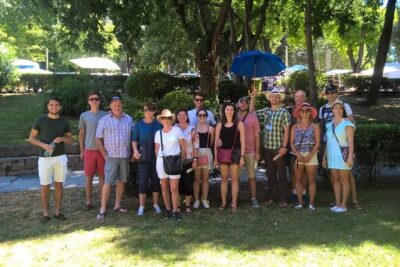

Diocletian Palace & Old Town Guided Walking Tour
Read our review →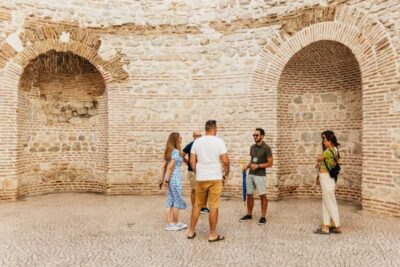

Game of Thrones Tour with Diocletian’s Palace Cellar
Read our review →
Diocletian’s Palace and Old Town SMALL GROUP Walking Tour
Read our review →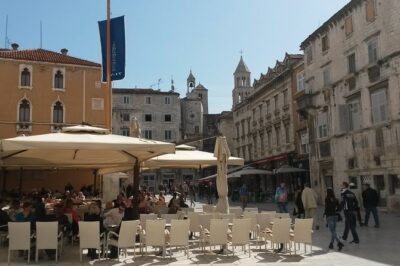
Browse the lists this tour appears in