
REVIEW · SPLIT PALACE TOURS
Grand Split Walking Tour with Diocletian’s Palace
Split’s old center is not a museum behind glass. It is a living city built into a 1,700-year-old Roman palace, with cafés, shops, homes, churches, and laundry tucked among ancient stone walls. This tour gives you a useful introduction before you wander off on your own.
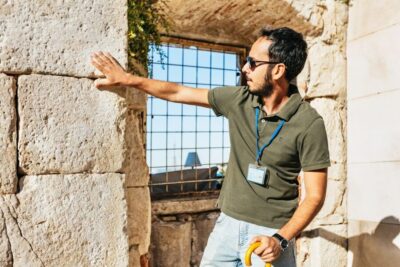
I like the short 90-minute format, which keeps the history moving without taking over your day. I also like the local guides, including Tino, Ivan, Slavko, Antonia, and others who explain Split’s past while adding restaurant tips, local context, and the occasional Game of Thrones reference.
One point to watch: the tour is advertised as a small-group experience of 15 or fewer, but the general activity limit allows up to 49 people. Most groups seem manageable, yet one reported an overcrowded departure and long waits while everyone gathered.
Key points about the Split walking tour
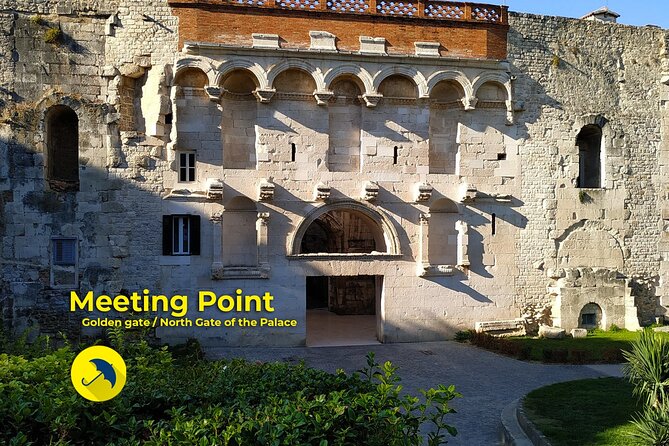
- You enter Diocletian’s Palace through the Golden Gate, meeting below or near the Statue of Gregory of Nin.
- The tour covers the main old-town sights in about 90 minutes, including Peristil, the Vestibul, Riva, Pjaca, City Hall, and the City Clock.
- Local English-speaking guides provide the real value, with historical detail, stories, humor, and practical food suggestions.
- The palace is still part of everyday Split, so you see ancient Roman spaces alongside modern streets and businesses.
- Most of the tour is outdoors, with no food, drinks, museum admission, or hotel transportation included.
- Timing matters in summer, when heat, crowds, and occasional rain can affect your comfort and the pace of the walk.
Start at Split’s Golden Gate
The meeting point is the Golden Gate at Dioklecijanova 7, near the Statue of Gregory of Nin. This is a sensible place to begin because the gate puts you right at the edge of the old city and inside the story of Emperor Diocletian’s palace.
Look for the guide around the statue and gate area. The meeting spot is easy to find, but Split’s center can be crowded, especially during the main summer season. I would arrive a little early rather than trying to locate the group at the exact start time.
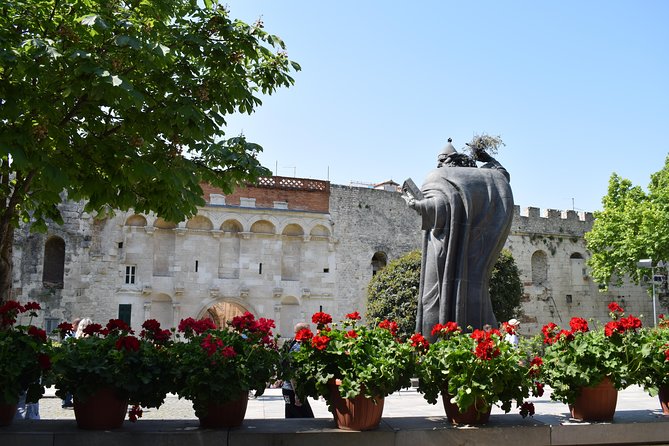
The Statue of Gregory of Nin is more than a landmark for finding your guide. It is one of Split’s recognizable public artworks, and the tour uses it as an early point of reference before moving into the palace. You may hear about the statue, the city, and the way Split combines Roman remains with later Croatian life.
The tour operates in English, and children must be accompanied by an adult. Service animals are allowed, and the activity is near public transportation. Since this is a walking tour over old stone streets, wear shoes that can handle uneven pavement and dress for the weather.
More walking tours past the palaces in Split:
- Split: Old Town and Diocletian Palace Walking Tour
★ 4.9 · 4,727 reviews - Walking Tour of Split and Diocletian’s Palace
★ 5.0 · 2,588 reviews - Split & Diocletian’s Palace Walking Tour
★ 5.0 · 1,125 reviews
Diocletian’s Palace is the main event
The palace is the reason to book this walk. Built roughly 1,700 years ago, it is not one isolated building waiting for you at the end of a path. Its remains form the core of modern Split, so you move through lanes and squares where city life continues around the ancient structure.
That setting is what makes a guided visit useful. Without help, you can see impressive stonework but miss how the palace was organized, how different rulers shaped the city, and why Split is often described as a living museum. Your guide connects the pieces as you walk.
The palace tour includes architectural details, historical changes, and art. Guides such as Ante, Mia, Jakob, and Karla have been praised for explaining the past clearly while keeping the group involved. Several guides also bring personal knowledge of Split, which can make the city feel less like a sequence of dates and more like a place with an ongoing identity.
Do not expect a full archaeological excavation tour or a museum visit. Admission to the palace itself is included because you are walking through public areas, but entry to churches and museums is not included. If you want to go inside those places afterward, you will need to arrange and pay for that separately.
Peristil and the Vestibul: Roman space with a local pulse
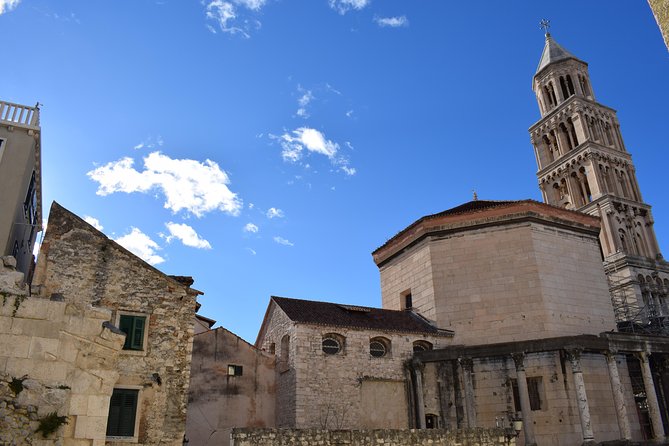
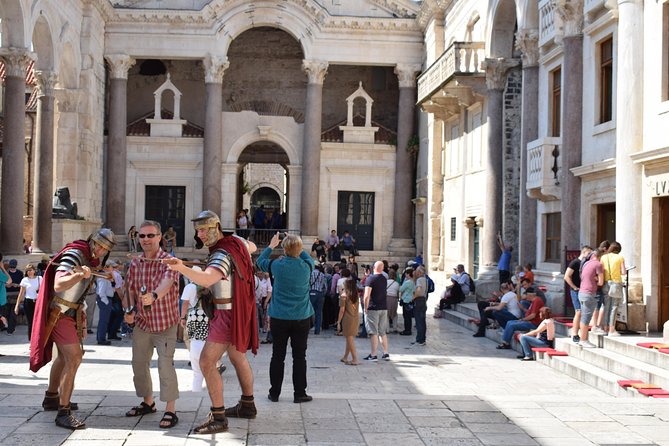
Peristil is one of the tour’s most important stops. This central square gives you a strong sense of the palace’s scale and Roman planning. It is also one of the places where the past and present meet most clearly, with visitors, local activity, and historic stonework sharing the same space.
Your guide can help you read the square instead of simply taking a photograph and moving on. You learn why it mattered, how it fitted into the palace, and how later generations adapted the Roman remains.
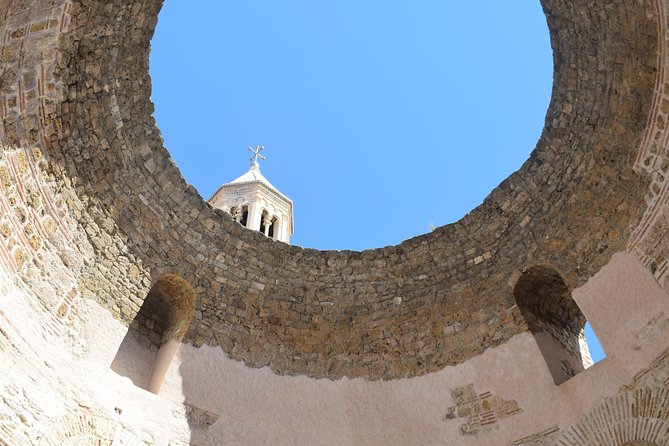
The Vestibul offers a different mood. This circular entrance space once served as a formal approach to the imperial rooms and public areas. One guide arranged time for the group to hear a quartet singing traditional Croatian harmony in the rotunda, a memorable moment that shows how music and old architecture can work together.
That kind of addition depends on timing and the guide, so you should not assume every departure includes the same performance. Still, the stop shows why a local guide can add something beyond a basic route through the stones.
The City Clock and Narodni Trg
The City Clock stop lasts about 10 minutes. You will see the famous 24-hour sun clock at City Square and hear about its place in Split’s public life. It is a brief stop, but it helps you notice details that are easy to pass without a guide.
Narodni Trg, also called Pjaca, gives you another look at Split’s later urban development. The square has long played an important role in city life, and the guide explains why it mattered. This is a good counterpoint to the Roman palace because it shows that Split’s story did not end with Diocletian.
The stops are short by design. You get the basic context, time for a photograph, and a chance to ask a question before moving on. If you want long periods at each site, detailed art analysis, or extended time inside religious buildings, this is not the right format.
A few more palace visits around Split worth a look
- Split: Diocletian Palace & Old Town Guided Walking Tour
★ 4.7 · 882 reviews - Split Old Town and Diocletian’s Palace Tour
★ 4.8 · 716 reviews - Split: Game of Thrones Tour with Diocletian’s Palace Cellar
★ 4.8 · 545 reviews - Diocletian’s Palace and Old Town SMALL GROUP Walking Tour
★ 5.0 · 502 reviews
Riva Harbor and the modern face of Split
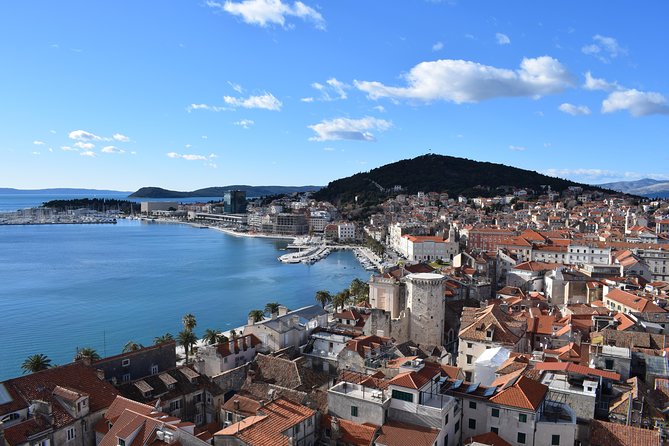
Riva is Split’s famous waterfront promenade and one of the busiest streets in the city. The walk takes you away from the palace stones for a moment and places the old center beside the harbor.
This stop helps explain how Split works today. The palace is not an isolated historic quarter. It connects directly with the waterfront, city squares, restaurants, public spaces, and everyday movement through town.
You will have time for photographs and a short explanation rather than a long harbor walk. That is enough for a first visit, especially if you plan to return to Riva later for a slower stroll. The guide may also offer practical suggestions for restaurants and other activities, a useful benefit if this is your first afternoon in Split.
What the guides add
The strongest part of this tour is the guide’s ability to make a compact route feel connected. Several guides have been praised for humor, clear explanations, strong local knowledge, and an obvious affection for Split.
Tino is described as organized and good at keeping each stop focused. His approach included short talks of about five to 10 minutes, attention to questions, and careful management of the group in crowded areas. Ivan has been praised for being lively, friendly, and informative, while Slavko is known for making the palace both interesting and fun.
Antonia combines historical detail with restaurant suggestions, and Mia is a native of Split who offers practical advice along with the city’s story. Jakob and Ante are also noted for their passion and detailed explanations of Split’s place in Croatian history.
Guide quality can vary, of course. One departure was described as dry, while another guide did little to make the material engaging. The tour depends heavily on who leads it, so keep your expectations realistic. The basic route is strong, but the personality and storytelling can change from one departure to another.
Group size, pace, and crowded streets
The tour highlights a maximum of 15 people or fewer, which is the group size you want for narrow lanes and busy squares. A smaller group lets you hear the guide, ask questions, and move through the palace with less stopping.
The general activity information also gives a maximum of 49 participants. That does not mean every departure has 49 people, but it explains why group conditions may not always match the small-group promise. One complaint described an overbooked departure that had to split into two still-large groups, with too much waiting while people gathered.
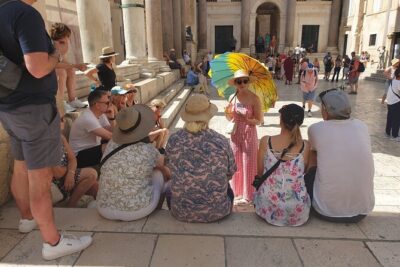
This is worth considering if you dislike crowds or have limited time. The tour works best when the guide can keep people close and move efficiently. One strong guide was specifically praised for keeping the group together in a packed old town, which is a real skill in Split during August.
The walk is suitable for most people, but you should be comfortable walking for about 90 minutes. There are no hotel pickups or drop-offs, so you make your own way to the Golden Gate and return there at the end.
Weather and the best time to go
The activity runs in all weather conditions, so dress appropriately. Rain did not prevent one highly praised tour from being enjoyable, but wet stone and poor visibility can make any walking route less comfortable.
Summer heat is another concern. A guide who seeks shady places can make a major difference, and one guide did exactly that during a very hot August outing. Still, you should bring water, wear light clothing, and consider an early or later departure if you have a choice.
A 6 p.m. departure was especially well received as a pleasant way to avoid the hottest part of the day. Morning can also work well if you want to use the tour as your first orientation before exploring independently.
Is $21.78 good value?
At $21.78 per person, this is a strong value if you want a clear introduction to Split without committing half a day. The price includes a professional local guide and the tour’s taxes and handling charges. You pay for interpretation, not a ticket to a museum or a private entrance.
I think the price makes sense for first-time visitors who want to understand the palace before returning to favorite areas on their own. A guide can point out small details, explain the succession of rulers, and show how the Roman structure became a working city.
The value is lower if you already know Split well or prefer to explore without a set pace. You also need to budget separately for food, drinks, museums, and churches. Hotel transportation is not included, though the central meeting point and nearby public transport make the start practical.
Free cancellation is available if you cancel at least 24 hours before the start time. Changes made later are not accepted for a refund. If bad weather causes the operator to cancel, you are offered another date or a full refund.
Who should book this tour?
I would choose this tour for a first visit to Split, especially if you want the main sights explained in a short window. It suits couples, families with older children, and anyone who likes history in small, manageable portions rather than long lectures.
It is also a smart first activity after arrival. You finish back at the Golden Gate with a better sense of the palace, Riva, Pjaca, and the city’s layout. That makes later wandering easier, and the guide’s restaurant tips may help with your next meal.
History fans will appreciate the Roman architecture and the discussion of Split’s changing rulers. Casual sightseers will appreciate the photographs, short stops, and occasional humor. If you need guaranteed quiet, a private group, or extended indoor visits, consider another format.
Should you book the Grand Split Walking Tour?
Yes, if you want an affordable orientation to Split’s old center and Diocletian’s Palace. The route covers the essential sights, the duration is reasonable, and the best guides add local stories that you would be unlikely to pick up by simply walking around.
Book it early if your schedule is tight, and arrive prepared for the possibility of a larger group. If you can choose, a morning or early evening departure may be more comfortable than the hottest part of the day. For most first-time visitors, this is a practical way to begin seeing Split, not the final word on the city.
FAQ
How long is the Grand Split Walking Tour?
The advertised duration is approximately 1 hour and 30 minutes.
Where does the tour start?
The tour starts at the Golden Gate at Dioklecijanova 7 in Split, near the Statue of Gregory of Nin.
Where does the tour finish?
The activity ends back at the original meeting point.
What language is the tour operated in?
The tour operates in English.
What sights are included?
The route includes Diocletian’s Palace, the City Clock, Riva Harbor, Narodni Trg, Peristil, the Vestibul, City Hall, the Statue of Gregory of Nin, and St. Duje Cathedral.
Is admission to Diocletian’s Palace included?
Sightseeing in the 1,700-year-old palace is included, with no separate admission ticket listed. Entry to churches and museums is not included.
Are food and drinks included?
No. Food and drinks are not included in the tour price.
Is hotel pickup available?
No. Hotel pickup and drop-off are not included.
How large is the group?
The tour is promoted as a small-group activity limited to 15 people or fewer, while the general activity information lists a maximum of 49 participants.
Can I cancel for a refund?
Yes. You can cancel at least 24 hours before the local start time for a full refund. If poor weather causes the operator to cancel, you are offered another date or a full refund.
Just added around Split
- Split: Private Walking Tour and Diocletian’s Palace★ 5.0 · 3 reviews
- Split and Diocletian’s Palace walking tour with a local guid★ 4.9 · 36 reviews
- Split: Diocletian’s Palace Private walking tour★ 5.0 · 3 reviews
- Split: Jewish Heritage & Diocletian’s Palace Walking Tour★ 5.0 · 3 reviews
- Split: Private Walking Tour with Diocletian’s Palace★ 5.0 · 30 reviews
- Split: Old Town and Diocletian’s Palace Walking Tour★ 3.3 · 3 reviews
- Essential Diocletian’s Palace Tour for First-Time Visitors★ 4.9 · 79 reviews
- Split: Old Town & Diocletian’s Palace Earlybird Walking Tour★ 4.0 · 12 reviews
Split Palace Tours, compared.
Walking Tour of Split and Diocletian’s Palace
Read our review →

Diocletian Palace & Old Town Guided Walking Tour
Read our review →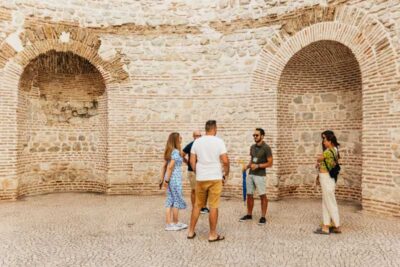

Game of Thrones Tour with Diocletian’s Palace Cellar
Read our review →
Diocletian’s Palace and Old Town SMALL GROUP Walking Tour
Read our review →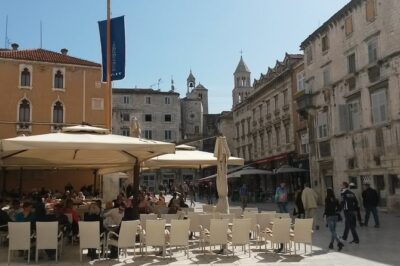
Browse the lists this tour appears in